 Skip to content



Overview
Homeowners upgrading their garage floors often face a critical decision: metallic epoxy vs flake floor systems. Both options transform ordinary concrete into stunning surfaces, but they behave very differently when exposed to Florida’s intense sunlight. This article breaks down how each coating type performs under UV exposure, what happens to metallic finishes over time, and why flake systems have become the go-to choice for Southwest Florida garages. Understanding these differences before installation can save thousands in premature repairs and recoating costs.
Key Takeaways
- Metallic epoxy coatings are vulnerable to UV degradation, causing yellowing and loss of visual depth within months of direct sun exposure
- Vinyl flakes used in chip floor systems are inherently UV stable and maintain their color for 10 to 20 years with proper topcoat protection
- Florida garages receive among the highest UV radiation levels in the country, making coating selection more critical than in other regions
- Full flake broadcast systems provide UV protection for the underlying epoxy base coat, preventing amber discoloration
- Polyaspartic topcoats offer superior UV stability compared to standard epoxy clear coats for either system
- Proper coating selection based on sun exposure can extend floor lifespan by a decade or more
How UV Light Damages Garage Floor Coatings
Ultraviolet radiation triggers a chemical process called polymer degradation in most floor coatings. When UV rays contact the coating surface, they break down molecular bonds within the resin, causing visible changes to the finish. The front section of a garage, where sunlight streams in through open doors, typically shows damage first.
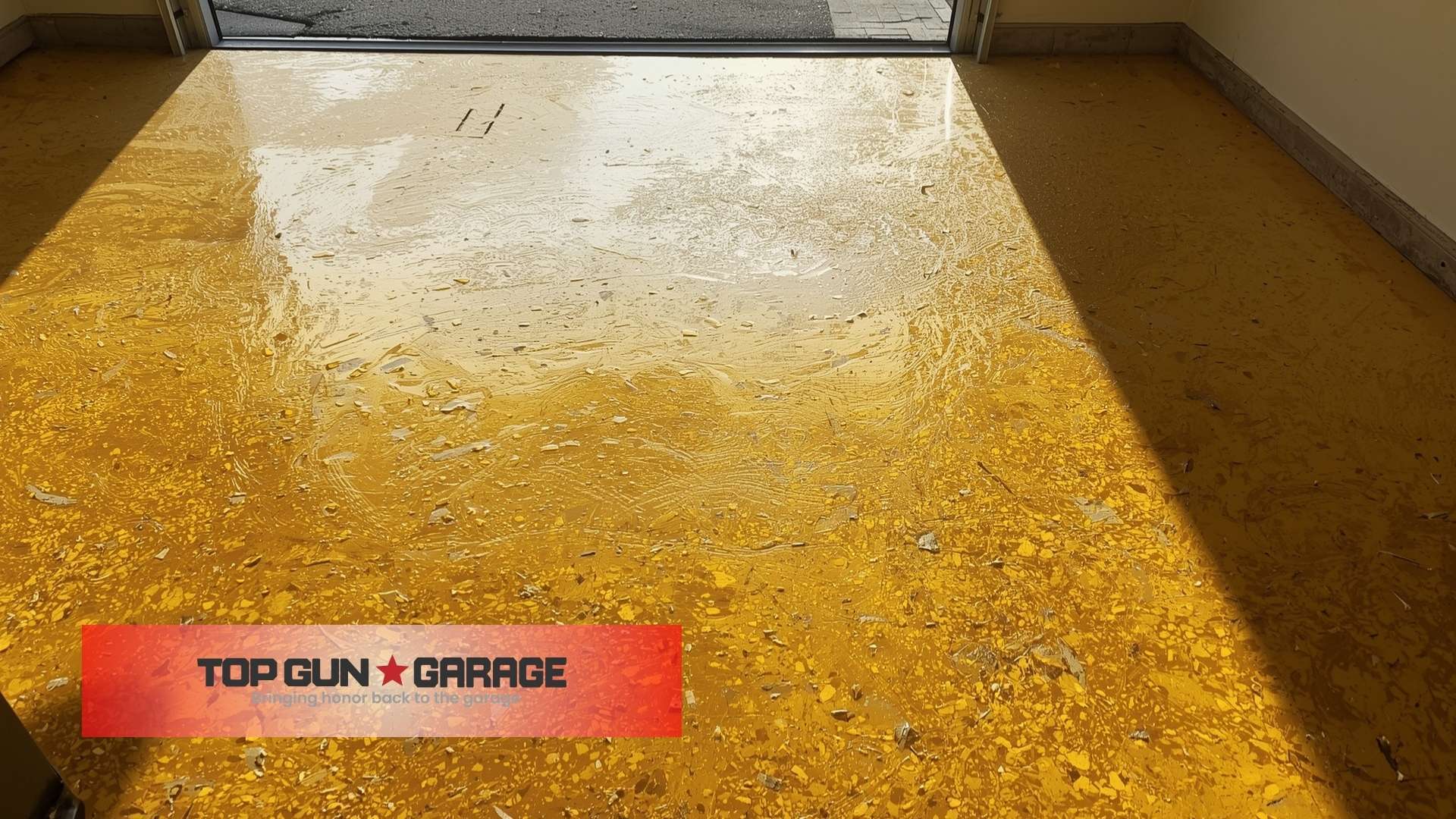
Standard epoxy formulations contain aromatic compounds that absorb UV energy readily. This absorption destabilizes the polymer structure over time. The most noticeable result is ambering, where clear or light-colored coatings develop a yellow tint. Glossy surfaces lose their shine and eventually develop a chalky texture as the degradation progresses deeper into the coating.
Florida’s geographic position creates uniquely harsh conditions for garage coatings. Southwest Florida receives intense UV exposure year-round, with summer months delivering radiation levels that can cause visible coating damage in weeks rather than months. Garages facing south or west take the most punishment, often showing yellowing within the first year of installation.
Temperature compounds the problem. Florida pavement heats vehicle tires to extreme temperatures. Hot tires parked on UV-weakened coatings accelerate peeling and delamination. This combination of UV damage and thermal stress creates the perfect storm for coating failure in the Sunshine State.
Metallic Epoxy: Visual Impact vs Practical Limitations
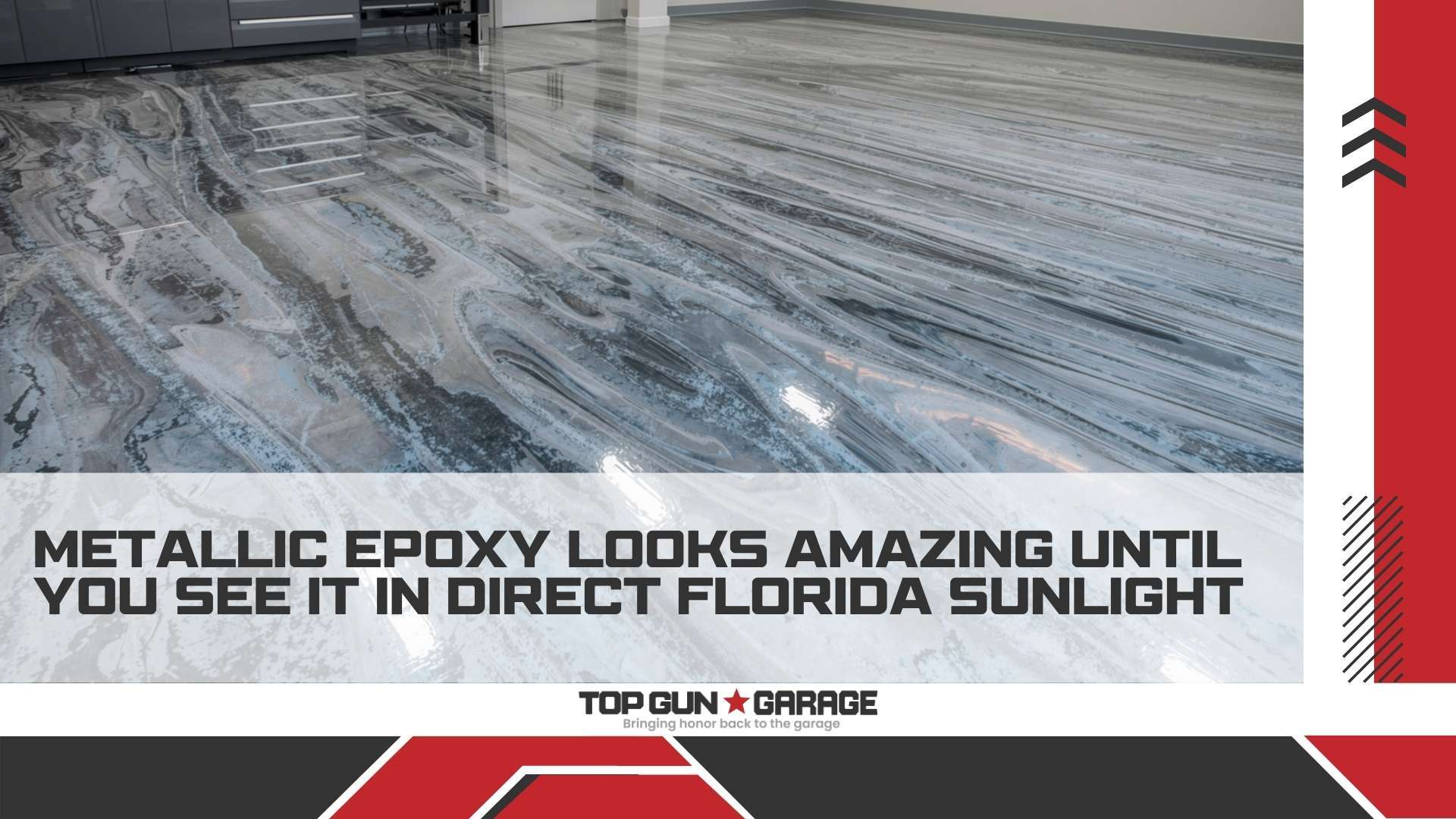
Metallic epoxy floors create striking three-dimensional effects that mimic marble, molten metal, or ocean waves. Installers manipulate metallic pigments suspended in clear epoxy to produce one-of-a-kind patterns. The results photograph beautifully and draw immediate attention in showrooms and design galleries.
The technology relies on clear epoxy as its foundation. Those flowing metallic patterns require transparency to achieve depth and movement. This transparency creates the central problem for Florida applications: clear epoxy coatings offer no UV protection for the metallic layer beneath.
When sunlight hits a metallic floor, multiple types of damage occur simultaneously. The clear topcoat begins yellowing, which dulls the overall appearance and shifts the color temperature of the entire floor. Meanwhile, the metallic pigments themselves can fade or shift in hue. A floor installed with rich copper tones may look muddy orange within two years of regular sun exposure.
The National Association of Home Builders notes that epoxy floor coatings require UV-stable topcoats for areas receiving any direct sunlight. Even with protective clear coats, metallic epoxy floors in high-exposure environments need regular maintenance and periodic recoating to maintain their appearance.
Southwest Florida homeowners considering metallic finishes should evaluate their garage’s sun exposure carefully. North-facing garages with minimal window coverage present the lowest risk. South or west-facing garages with the door open frequently during daylight hours will see accelerated degradation regardless of topcoat quality.
Flake Floors: Built-In UV Protection
Vinyl flake systems take a fundamentally different approach to garage floor aesthetics. Rather than relying on clear coatings for visual depth, these systems broadcast colored chips into wet epoxy or polyaspartic base coats. The flakes themselves provide color, texture, and slip resistance.
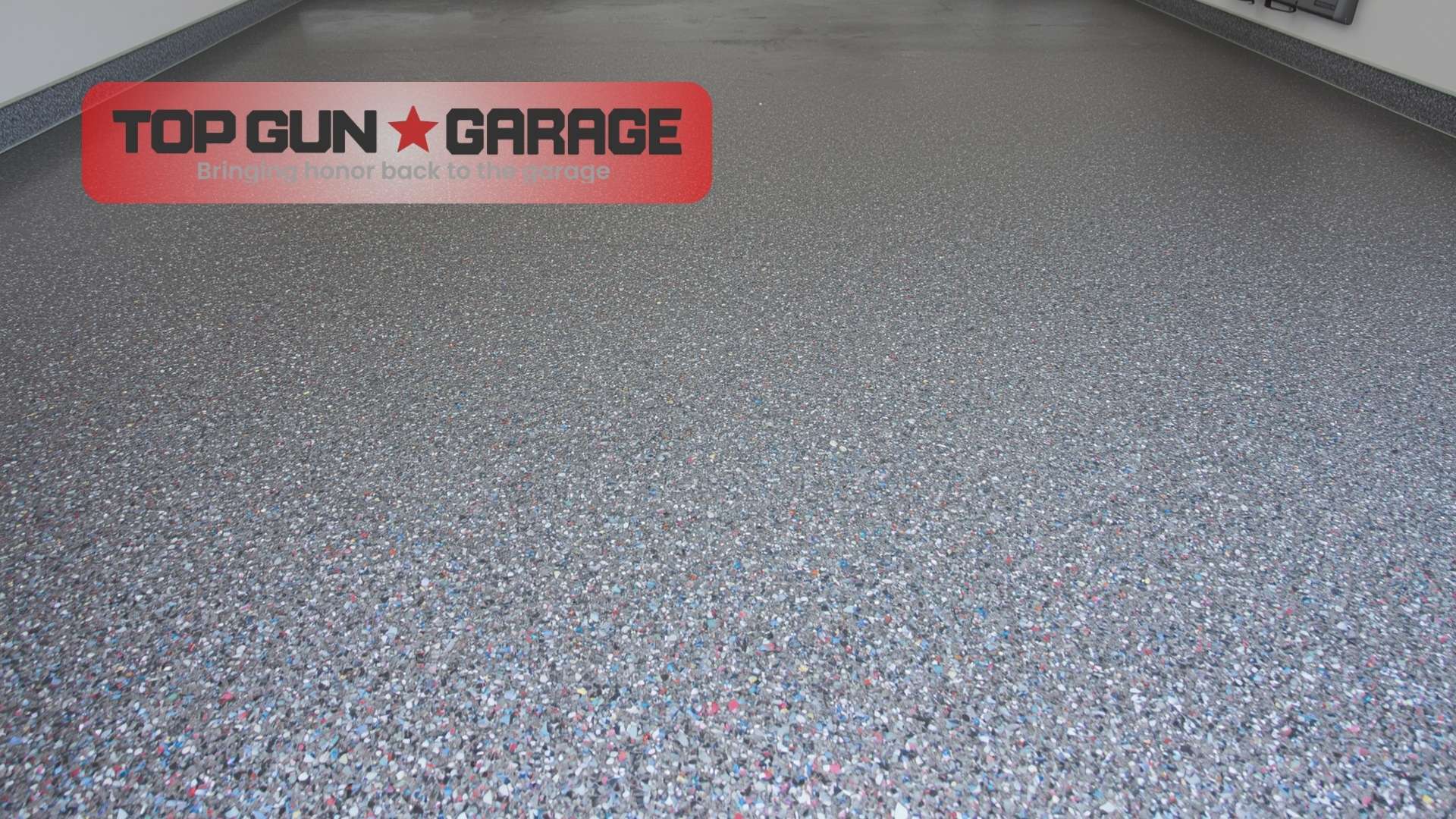
The materials used for decorative flakes are manufactured with UV stability in mind. Vinyl and acrylic compounds used in quality flake blends resist fading and maintain color consistency for years. This inherent stability means the primary decorative element of the floor remains unchanged by sun exposure.
Full broadcast installations, where flakes completely cover the base coat, provide an additional benefit. The dense layer of UV-stable material shields the underlying epoxy from direct sunlight. This physical barrier prevents the ambering that affects clear metallic systems. Even if some UV penetration occurs, the discoloration remains hidden beneath the opaque flake layer.
Partial flake coverage offers less protection. Areas where the base coat remains visible between scattered chips can still yellow over time. Professional installers in Florida typically recommend full flake coverage for garages with significant sun exposure, specifically for this protective benefit.
The color options available in modern flake systems rival or exceed metallic varieties. Blends ranging from subtle earth tones to bold multi-color combinations allow homeowners to customize their floors without sacrificing UV performance. Commercial applications benefit from this flexibility while gaining floors that maintain their appearance through years of exposure.
Comparing Long-Term Performance in Florida Conditions
Real-world performance data from Southwest Florida installations reveals consistent patterns. Metallic epoxy floors in high-exposure garages typically require topcoat refresh within three to five years to address yellowing and gloss loss. Floors receiving direct afternoon sun may need attention sooner.
Flake floors installed with polyaspartic topcoats routinely exceed 15 years without significant color change or coating failure. The combination of UV-stable flakes and UV-resistant polyaspartic creates a system designed for Florida’s climate. Many Naples and Fort Myers garages coated a decade ago still look recently installed.
Maintenance requirements differ substantially between systems. Metallic floors demand careful attention to cleaning products and methods to preserve their finish. Harsh chemicals can accelerate topcoat degradation. Flake floors tolerate standard cleaning solutions and pressure washing without concern for damaging the decorative surface.
Hot tire resistance also varies. Metallic epoxy topcoats can soften under extreme tire temperatures, potentially transferring tire marks to the surface. Quality flake systems with polyaspartic clear coats maintain their integrity at temperatures exceeding 140 degrees Fahrenheit, preventing the lifting and peeling common with lesser coatings.
Cost comparisons should include long-term maintenance expenses. Initial installation prices may be similar for both systems when using professional-grade materials. However, the reduced maintenance and longer service life of flake floors typically result in lower total ownership costs over a 20-year period.
Making the Right Choice for Your Garage
Garage orientation matters significantly for coating selection. Evaluate how much direct sunlight enters your garage throughout the day and across seasons. Track the sunlight path from morning through evening to understand exposure patterns. Garages with eastern exposure receive morning sun, which is less intense but still contributes to UV damage over time.
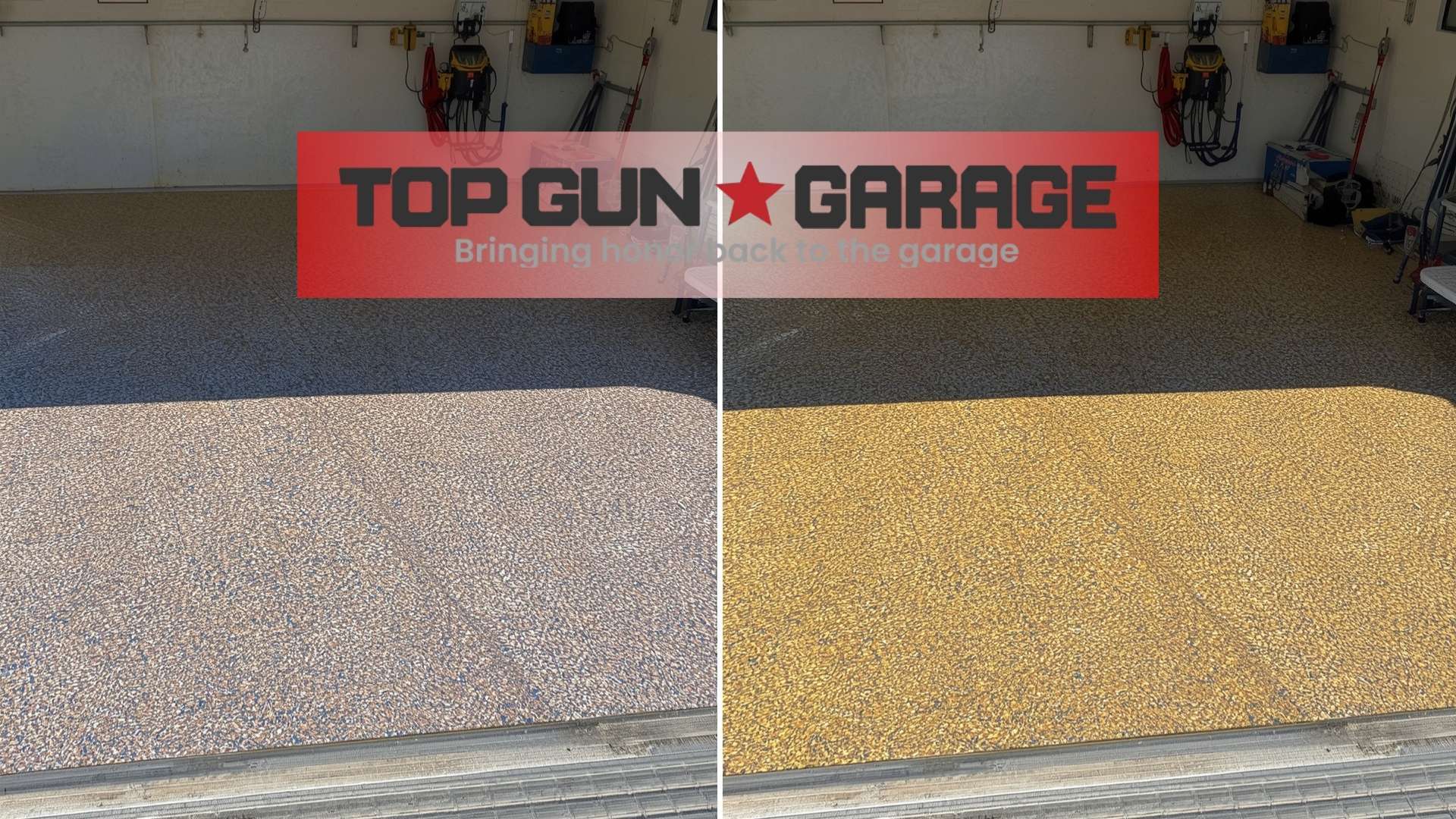
Consider how you use your garage. If the door stays closed most of the time and the space functions primarily as vehicle storage, UV exposure becomes less critical. Garages that double as workshops, home gyms, or recreation spaces with doors open for ventilation face much higher UV loads.
Professional assessment provides valuable insight. Experienced flooring contractors can evaluate your specific conditions and recommend appropriate systems. They understand how local climate factors interact with different coating technologies and can predict likely performance based on your garage’s characteristics.
For homeowners committed to metallic aesthetics despite UV concerns, several mitigation strategies exist. Installing UV-filtering window film on garage windows reduces indirect exposure. Using pigmented rather than clear topcoats over metallic bases provides some protection, though this can alter the visual effect. Limiting garage door opening during peak sun hours extends coating life.
Most Southwest Florida residents find flake systems offer the optimal balance of appearance, durability, and value. The variety of available blends ensures options for every design preference, from solid colors to complex multi-tone patterns. Combined with proper preparation and professional installation, these floors deliver decades of service without the UV anxiety associated with metallic alternatives.
Frequently Asked Questions
How quickly does metallic epoxy yellow in direct sunlight? Visible yellowing can appear within three to six months in garages with significant sun exposure. The rate depends on UV intensity, exposure duration, and the specific epoxy formulation used. North-facing garages with minimal exposure may maintain appearance for several years.
Are all vinyl flakes UV stable? Quality flakes from reputable manufacturers are designed for UV stability. However, some budget materials may fade over time. Request documentation confirming UV stability when comparing products. The topcoat selection also affects long-term color retention.
Can I apply a UV-resistant clear coat over existing metallic epoxy? Yes, but results vary based on current coating condition. If yellowing has already occurred, adding a clear coat locks in the discoloration. Complete removal and recoating provides better results for significantly damaged floors.
What causes the chalky residue on old epoxy floors? Chalking results from advanced UV degradation where the coating surface breaks down into powder. This indicates the protective layer has failed and the underlying material is exposed to further damage. Professional restoration is typically required at this stage.
Do flake floors hide dirt better than metallic floors? Multi-color flake patterns do an excellent job concealing dust, minor debris, and small imperfections in the concrete beneath. Metallic floors, particularly lighter colors, show dust and footprints more readily and require more frequent cleaning.
How does humidity affect coating performance in Florida? High humidity can cause moisture issues regardless of coating type. Vapor transmission through concrete creates bubbling and delamination if moisture barriers are not properly installed. Both metallic and flake systems require appropriate moisture testing before application.
What topcoat offers maximum UV protection? Polyaspartic and aliphatic polyurethane topcoats provide superior UV stability compared to standard epoxy clear coats. These materials resist yellowing and maintain gloss for years under intense sun exposure. They also cure faster than traditional epoxy topcoats.
Can damaged sections of metallic floor be repaired without redoing the entire surface? Spot repairs on metallic floors are challenging because matching the existing pattern is nearly impossible. The artistic nature of metallic finishes means each installation is unique. Flake floors allow for easier section repairs since matching blend ratios is straightforward.
Is professional installation necessary for UV-resistant coatings? While DIY kits exist, achieving proper UV protection requires correct material selection, surface preparation, and application technique. Professional installers understand how to maximize coating performance in specific conditions. Warranty coverage typically requires professional application.
How do I know if my garage needs UV-stable coating? If sunlight reaches any portion of your garage floor during the day, UV-stable coating is recommended. Even indirect exposure through windows or reflected light can cause gradual damage. When in doubt, choose UV-stable materials for the entire floor to ensure consistent long-term performance.
Sources
- U.S. Environmental Protection Agency: UV Index Information
- American Society for Testing and Materials (ASTM): Standard D4587 for QUV Testing of Coating Durability
- High Performance Coatings Organization: UV Resistant Epoxy Testing
Get a Professional Assessment
Choosing between metallic epoxy and flake flooring involves more than comparing photos. Your garage’s specific conditions determine which system delivers lasting results. Schedule a consultation to evaluate your floor’s sun exposure, moisture levels, and usage patterns before making this important investment.