 Skip to content



Homeowners often question whether professional epoxy worth the cost when DIY garage floor kits sell for $200-$500 at big-box retailers. The initial price difference seems substantial spending $2,500 on professional installation versus a few hundred dollars for do-it-yourself materials appears fiscally irresponsible at first glance. However, this short-term thinking overlooks the comprehensive cost analysis that reveals professional epoxy garage flooring delivers superior long-term value through extended lifespan, reduced maintenance expenses, eliminated replacement costs, and increased property values. When homeowners calculate total ownership costs over 10-15 years, professional installations costing $2,500-$4,000 consistently outperform DIY alternatives that require replacement every 2-5 years. Understanding when professional epoxy worth the cost requires examining material quality differences, installation expertise, warranty protection, and the hidden expenses of failed DIY projects that professional contractors help homeowners avoid.
Overview
This comprehensive analysis examines why professional epoxy garage floor installations represent smart financial decisions despite higher upfront costs. You’ll discover the true expense differences between DIY and professional installations, how material quality affects longevity, the cost of common DIY failures, maintenance expense comparisons, property value impacts, warranty protection benefits, and break-even calculations that reveal when professional installations deliver superior return on investment. These insights help homeowners make informed decisions based on total cost of ownership rather than initial purchase price alone.
Key Takeaways
-
Professional epoxy installations last 10-20 years versus 2-5 years for DIY applications, eliminating multiple replacement cycles
-
DIY failure rates exceed 40% within first 3 years, creating repair costs that surpass professional installation expenses
-
Maintenance costs average 60-70% lower with professional coatings due to superior stain resistance and durability
-
Professional installations increase home resale value by 4-10%, delivering 70-100% ROI at sale
-
Total 15-year ownership costs favor professional installations by $2,000-$4,000 compared to repeated DIY attempts
-
Comprehensive warranties covering materials and labor protect homeowners from unexpected replacement expenses
-
Professional surface preparation prevents adhesion failures that plague 60%+ of DIY installations
True Cost Comparison: DIY vs Professional Epoxy
DIY epoxy garage floor kits advertise costs of $2-$5 per square foot, making a standard 400-square-foot two-car garage appear achievable for $800-$2,000. These calculations include only the epoxy kit itself, overlooking essential equipment rentals, surface preparation materials, and protective gear homeowners must purchase. Adding concrete grinder rentals ($100-$200), cleaning solutions ($50-$100), crack repair materials ($75-$150), and safety equipment ($50-$100) brings realistic DIY costs to $1,200-$2,500 before accounting for time investment or potential mistakes.
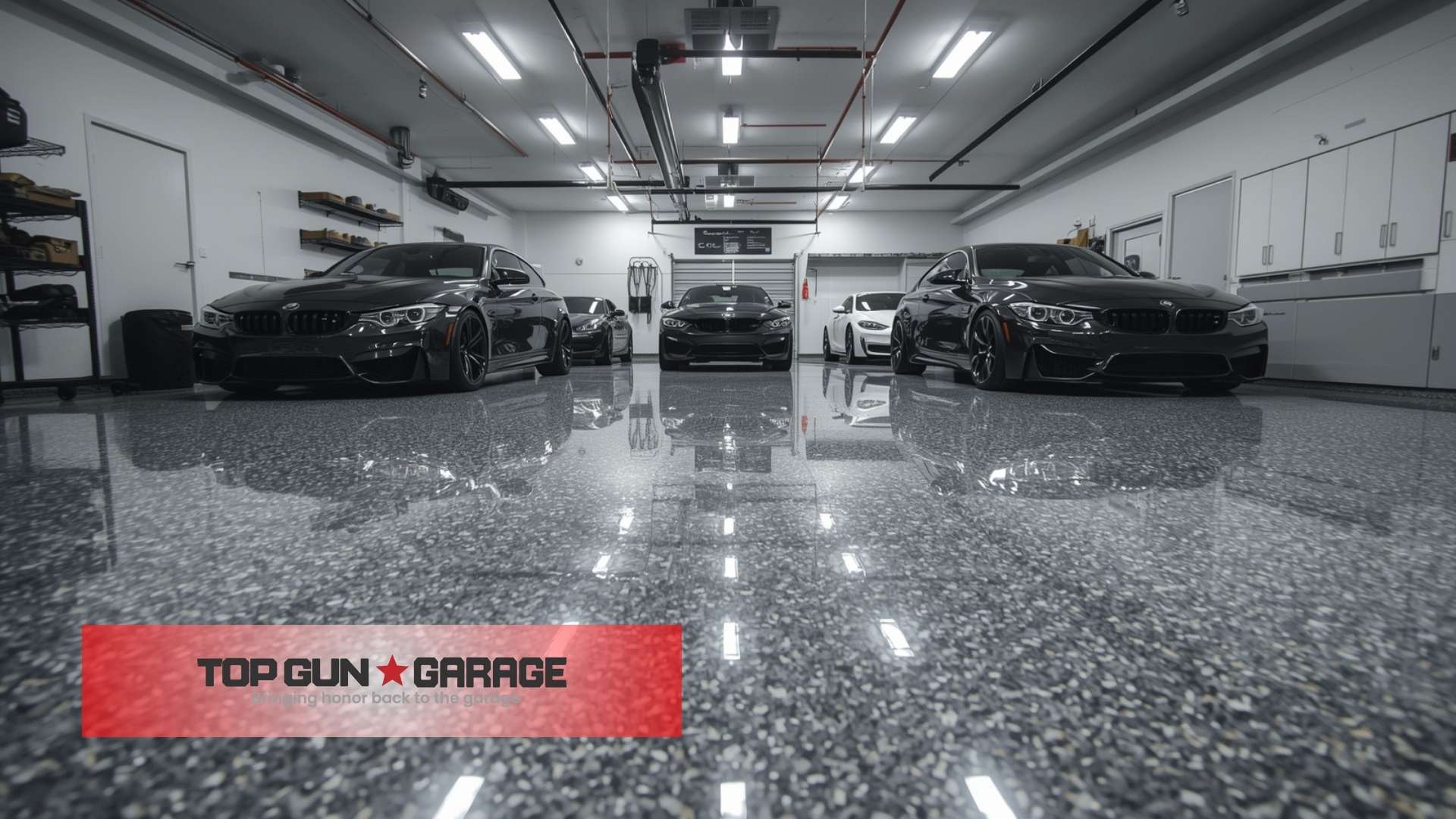
Professional epoxy installations range from $3-$12 per square foot depending on coating system quality, surface condition, and decorative options. A typical two-car garage receives professional coating for $2,400-$4,800, with premium systems reaching $5,000-$7,000. This investment includes industrial-grade materials, comprehensive surface preparation, multi-layer coating systems, labor, cleanup, and warranty protection. The price difference between DIY and professional installations narrows to $800-$2,500 when homeowners account for all DIY expenses and time investment valued at reasonable hourly rates.
Material Quality Makes the Difference
Big-box store epoxy kits contain water-based formulations with 30-40% solids content, significantly lower than professional-grade systems using 80-100% solids epoxies or polyurea/polyaspartic coatings. This fundamental difference affects coating thickness, durability, and chemical resistance—professional systems apply at 10-20 mils thickness compared to 2-5 mils for DIY products. Thicker coatings withstand abrasion, impact, and chemical exposure far better than thin DIY applications that wear through to bare concrete within 18-36 months under normal vehicle traffic.
Professional contractors use specialized coating systems engineered for specific environmental conditions and usage patterns. Florida installations require moisture barriers and UV-stable topcoats that DIY kits don’t include, leading to premature failures in humid climates. Commercial-grade materials resist hot tire pickup, maintain color stability under UV exposure, and provide superior stain resistance against automotive fluids—performance characteristics absent in consumer-grade products. The material cost difference of $1-$3 per square foot translates to exponentially better performance over the coating’s 10-20 year lifespan.
Surface Preparation: Where DIY Fails Most
Proper surface preparation accounts for 70-80% of garage floor coating success, yet this critical step represents where DIY installations most commonly fail. Professional contractors use industrial diamond grinders to achieve CSP-3 to CSP-5 concrete profiles that create mechanical bonding for coating adhesion. DIY homeowners typically attempt chemical etching with muriatic acid—a method that leaves residues, doesn’t open concrete pores adequately, and creates inconsistent surface profiles.
Moisture testing before coating application prevents the most common cause of premature delamination, especially in humid climates where concrete slabs emit vapor that builds pressure beneath coatings. Professional installers perform calcium chloride tests or use moisture meters to measure vapor transmission rates, applying moisture barriers when emission exceeds coating tolerances. DIY installations skip moisture testing entirely, resulting in bubbling and peeling within 6-18 months when groundwater vapor compromises adhesion. The cost of failed DIY installations requiring complete removal and reinstallation averages $2,500-$4,000—exceeding the initial professional installation price.
Hidden Costs of DIY Failures
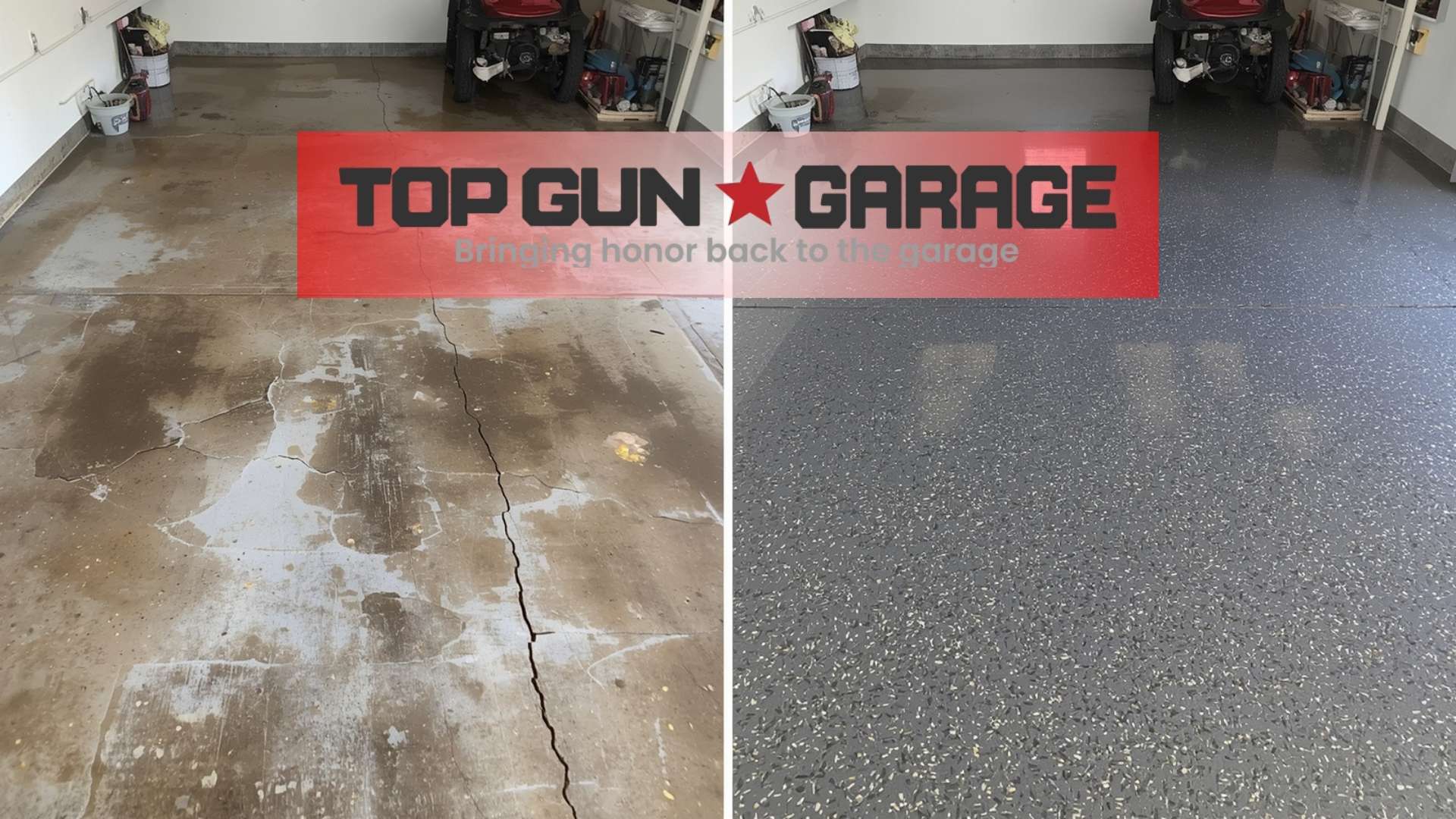
DIY epoxy installation failure rates exceed 40% within the first three years, with homeowners facing decisions to live with deteriorated floors or invest in professional corrections. Common failures include adhesion loss from inadequate surface preparation, hot tire pickup from insufficient coating thickness, yellowing from UV exposure, and widespread staining from porous coating surfaces. Correcting these issues requires complete coating removal at $1-$3 per square foot plus disposal fees, followed by proper surface preparation and professional coating application.
Equipment damage represents another hidden DIY cost homeowners often overlook. Inexperienced users frequently damage concrete surfaces with grinders, requiring professional crack repair or resurfacing before coating application. Spilled epoxy on walls, stored items, or vehicles creates cleanup expenses and potential property damage claims. Time investment for DIY projects averages 20-40 hours including surface preparation, coating application, and cleanup—time valued at $500-$1,500 when calculated at reasonable hourly rates. When homeowners factor in failure risk, repair costs, equipment expenses, and time investment, DIY installations rarely deliver the anticipated savings.
Maintenance Cost Comparison Over Time
Professional epoxy garage floors require minimal maintenance beyond routine sweeping and occasional mopping with pH-neutral cleaners. The non-porous, seamless surface resists oil stains, chemical damage, and moisture penetration without requiring periodic resealing or specialized cleaning products. Homeowners report annual maintenance costs under $50 for professional installations, primarily for cleaning supplies. The durable coating surface maintains appearance and protective properties for 10-20 years without interim repairs or touch-up applications.
DIY epoxy installations require significantly more maintenance due to inferior materials and thinner coating layers that wear through faster. Homeowners need specialized stain removers ($30-$75 annually) to address automotive fluid absorption that professional coatings resist. Hot tire marks require chemical removers or sanding to minimize appearance, adding $50-$150 in annual expenses. Many DIY installations need interim resealing every 2-3 years at $500-$1,200 per application to maintain basic protective properties. Over a 10-year period, DIY maintenance costs total $1,500-$3,000 compared to $500-$800 for professional installations—a difference of $1,000-$2,200 favoring professional coatings.
Property Value Impact and Resale ROI
High-quality garage floors enhance home appeal to potential buyers, with professionally installed systems serving as premium selling features that differentiate properties in competitive markets. A 2024 Zillow report found homes with upgraded garages sold 5-8% faster and commanded 4-6% higher sale prices than comparable properties with bare or damaged concrete floors. For median-priced homes, this translates to $10,000-$25,000 increased sale values directly attributable to garage improvements including professional floor coatings.
The National Association of Realtors 2023 study documented that garage improvements, including professional flooring upgrades, yield 70-85% ROI at resale. A $4,000 professional garage floor coating investment returns $2,800-$3,400 at sale while providing enjoyment and utility throughout ownership. DIY installations showing wear, staining, or deterioration negatively impact buyer perceptions, often requiring remediation before listing or resulting in price reductions that eliminate any initial installation savings. Professional installations with transferable warranties provide buyer confidence that adds measurable value during negotiations.
Warranty Protection and Long-Term Security
Professional garage floor contractors provide comprehensive warranties covering materials and labor for 5-15 years, with premium systems offering lifetime coverage. These warranties protect against adhesion failure, premature wear, coating defects, and environmental damage including moisture intrusion and UV degradation. When covered issues occur, professional contractors repair or replace floors at no cost to homeowners, eliminating unexpected expenses.
DIY installations carry zero warranty protection beyond manufacturer defects on unused materials. Application errors, surface preparation inadequacies, or improper mixing void any limited manufacturer coverage, leaving homeowners financially responsible for all repairs or replacement. The financial security of professional warranties holds substantial value when calculating total cost of ownership—homeowners avoid the $2,500-$5,000 risk of complete floor replacement if installations fail prematurely. Insurance backing on premium warranties ensures coverage remains valid even if contractors cease operations, providing long-term protection DIY installations cannot match.
Lifespan Analysis: Professional vs DIY
Professional epoxy garage floor installations deliver 10-20 year service life when properly maintained, with premium polyurea or polyaspartic systems lasting 15-25 years. This longevity results from superior materials, proper surface preparation, adequate coating thickness, and professional application techniques that ensure uniform coverage without thin spots or bubbles. Homeowners who invest in professional installations at age 35-45 often never need garage floor replacement during their ownership period, avoiding all recoating expenses and disruptions.
DIY epoxy applications typically last 2-5 years before showing significant wear, staining, or adhesion failure requiring replacement. This shorter lifespan means homeowners face 3-4 complete recoating cycles over the same 15-year period that professional installations serve without intervention. Each DIY recoating cycle costs $1,200-$2,500 including materials, equipment rentals, and time investment. Total DIY costs over 15 years reach $3,600-$10,000 compared to $2,500-$5,000 for a single professional installation—a difference of $1,100-$5,000 favoring professional coatings. Proper installation timing and technique create durability differences that compound dramatically over extended timeframes.
Break-Even Timeline and Total Cost of Ownership
Financial break-even analysis reveals when professional installations become more economical than DIY alternatives. A professional installation costing $3,500 for a two-car garage compared to $1,500 DIY costs represents a $2,000 initial premium. However, when the DIY coating fails after 3 years requiring $1,500 replacement, cumulative DIY costs reach $3,000. Including higher maintenance expenses ($150 annually for DIY versus $50 for professional) adds another $300 over 3 years. By year 3, total DIY costs reach $3,300 versus $3,650 for professional installations near parity.
By year 6, DIY homeowners face second replacement costs bringing cumulative expenses to $4,800 plus $600 in excess maintenance for $5,400 total. Professional installations at year 6 still perform optimally with cumulative costs of $3,800 including minimal maintenance. The financial advantage of professional coatings grows annually thereafter by year 10, DIY cumulative costs exceed $7,500 while professional installations remain under $4,500, a $3,000 difference. This analysis excludes time value of money, property value impacts, and the convenience of avoiding repeated installation projects that further favor professional investments.
When DIY Makes Sense vs When to Hire Professionals
DIY epoxy installations may suit homeowners with concrete experience, proper equipment access, and low-use garage spaces where appearance matters less than basic protection. Workshops, storage sheds, or secondary garages housing vintage vehicles rarely driven represent scenarios where DIY coating acceptable performance. Homeowners in dry climates with newer concrete slabs face fewer moisture and surface preparation challenges that increase DIY success rates marginally.
Professional installation becomes essential for primary garages with daily vehicle traffic, homes in humid climates, properties with older concrete showing cracks or spalling, and situations where appearance significantly impacts property value. Coastal residents, homes with high moisture vapor transmission, or garages converted to living spaces require professional expertise and specialized materials DIY methods cannot replicate. Homeowners planning to sell within 3-5 years should always choose professional installations to maximize ROI and buyer appeal. The decision ultimately balances initial budget constraints against long-term cost efficiency, performance expectations, and risk tolerance for potential installation failures.
Smart Investment Strategy for Garage Flooring
Viewing garage floor coating as a long-term investment rather than an expense changes the decision-making calculus dramatically. Professional installations represent capital improvements that provide daily utility, require virtually no maintenance, and deliver measurable returns at resale. Homeowners who amortize professional installation costs over 10-15 year service life pay $15-$30 monthly for premium garage flooring that enhances functionality and appearance.
Strategic timing maximizes professional installation value. Coating floors during initial home purchase allows inclusion in mortgage financing at low interest rates rather than requiring cash outlays. Coordinating installations with broader garage organization projects or home renovations reduces project management overhead and creates cohesive upgraded spaces. Selecting contractors during slower seasons (late fall or winter in many regions) often yields 10-15% pricing discounts while ensuring contractor availability and attention. These strategic approaches optimize both financial returns and practical outcomes from professional garage flooring investments.
Frequently Asked Questions
Is professional epoxy garage flooring really worth the extra cost? Yes, professional installations lasting 10-20 years cost less over time than DIY coatings requiring replacement every 2-5 years. Total 15-year ownership costs favor professional installations by $2,000-$4,000 including materials, maintenance, and avoided replacement expenses. Professional warranties eliminate failure risks that plague 40%+ of DIY attempts.
How much does professional garage floor coating typically cost? Professional installations range $3-$12 per square foot depending on coating system and garage condition. Standard two-car garages (400-500 sq ft) cost $2,400-$5,000 for quality systems with comprehensive warranties. Premium polyurea or decorative metallic coatings reach $5,000-$7,000 but offer superior durability and appearance.
What makes professional installations last longer than DIY? Professionals use industrial-grade materials with 80-100% solids content versus 30-40% in DIY kits, apply coatings 3-4 times thicker, perform proper surface preparation with diamond grinding, conduct moisture testing, and follow manufacturer specifications precisely. These factors combine to deliver 10-20 year lifespan versus 2-5 years for DIY.
Can I really save money with DIY garage floor epoxy? DIY rarely saves money long-term despite lower upfront costs. Failure rates exceeding 40% create repair expenses averaging $2,500-$4,000 that surpass professional installation prices. Hidden costs including equipment rentals ($200-$400), time investment (20-40 hours), and higher maintenance ($150+ annually) eliminate initial savings within 3-5 years.
How does professional garage flooring affect home value? Professional installations increase home resale value by 4-10%, delivering 70-100% ROI according to National Association of Realtors data. Homes with upgraded garages sell 5-8% faster and command $10,000-$25,000 higher prices than comparable properties with deteriorated floors. DIY installations showing wear negatively impact buyer perceptions.
What warranty protection do professional contractors provide? Quality contractors offer 5-15 year warranties covering materials and labor for adhesion failure, premature wear, and environmental damage. Premium systems include lifetime coverage with insurance backing ensuring protection remains valid regardless of contractor status. DIY installations carry zero warranty protection for application errors.
How long does professional installation take compared to DIY? Professional installations complete in 1-2 days including surface preparation, coating application, and cleanup, with floors ready for light traffic within 24 hours. DIY projects require 20-40 hours spread over multiple days for preparation and application, with 3-5 day cure times before vehicle use.
What surface preparation do professionals perform that DIY misses? Professionals use diamond grinding to achieve proper concrete profiles, conduct moisture testing, repair cracks and spalling, apply moisture barriers when needed, and ensure surfaces meet coating manufacturer specifications. DIY attempts rely on inadequate chemical etching that causes 60%+ of adhesion failures.
When does DIY garage floor coating make financial sense? DIY may suit low-use spaces like workshops or storage sheds, homeowners with concrete experience and proper equipment, and dry climates with newer slabs. Primary garages with daily traffic, humid regions, older concrete, or homes selling within 5 years should always use professional installations.
How do maintenance costs compare between DIY and professional? Professional coatings require minimal maintenance under $50 annually for basic cleaning supplies. DIY installations need specialized stain removers, hot tire mark treatments, and periodic resealing totaling $150-$300 annually. Over 10 years, DIY maintenance costs exceed professional by $1,000-$2,200.
Conclusion
Professional epoxy worth the cost becomes undeniably clear when homeowners analyze total ownership expenses, lifespan differences, maintenance requirements, property value impacts, and failure risk protection. While $2,500-$4,000 professional installations appear expensive compared to $800-$1,500 DIY alternatives, comprehensive analysis reveals professional coatings deliver superior value through 10-20 year service life, minimal maintenance needs, comprehensive warranty protection, and increased home resale values. The financial break-even occurs within 3-6 years as DIY replacement cycles, higher maintenance costs, and potential failure expenses accumulate, with professional installations ultimately saving $2,000-$5,000 over 15 years while providing better performance and peace of mind throughout.
Top Gun Garage provides professional epoxy and polyurea installations backed by comprehensive warranties, superior materials, and expert application techniques. Contact us today for a detailed consultation and discover why Naples, Fort Myers, and Bonita Springs homeowners choose professional installations that deliver lasting value, eliminated maintenance headaches, and beautiful floors that perform flawlessly for decades.