 Skip to content



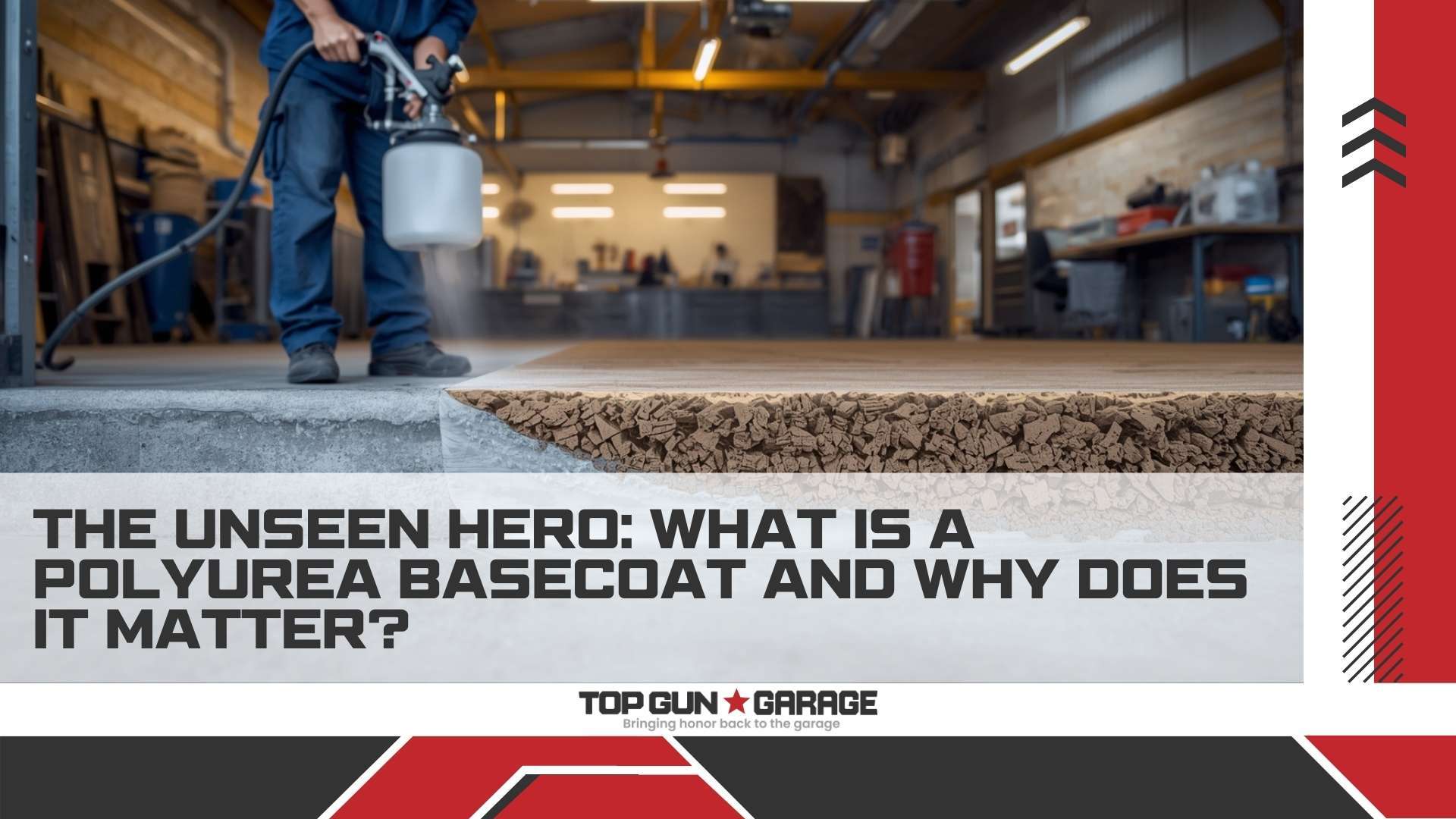
When it comes to protecting and enhancing concrete floors, most property owners focus on the visible topcoat – the shiny, colorful surface that catches the eye. However, beneath this attractive exterior lies an unsung hero that often determines the success or failure of the entire flooring system: the polyurea basecoat. This critical foundation layer serves as the backbone of modern floor coating systems, yet many people remain unaware of its existence or importance.
Understanding what a polyurea basecoat is and why it matters can be the difference between a flooring investment that lasts decades and one that fails within months. Unlike traditional primer systems that simply prepare the surface for coating application, polyurea basecoats provide active protection, enhanced adhesion, and long-term durability that extends far beyond what conventional materials can offer.
The flooring industry has witnessed a significant shift toward polyurea-based systems in recent years, driven by their superior performance characteristics and ability to withstand extreme conditions. From residential garages to industrial warehouses, polyurea basecoats have become the preferred choice for contractors and property owners who demand reliability and longevity from their flooring investments.
At Top Gun Garage, we’ve seen firsthand how the right basecoat system can transform not just the appearance of a floor, but its entire performance profile. The difference between a properly applied polyurea basecoat and inferior alternatives becomes apparent within months of installation, affecting everything from chemical resistance to thermal stability.
This comprehensive guide will explore the science behind polyurea basecoats, their numerous benefits, and why they’ve become indispensable in modern flooring applications. Whether you’re a property owner considering a floor coating project or simply curious about advanced flooring technologies, understanding polyurea basecoats will help you make informed decisions about your flooring investments.
Key Takeaways
Foundation Performance: Polyurea basecoats serve as the critical foundation layer in multi-coat flooring systems, providing superior adhesion to concrete substrates while creating an ideal surface for topcoat application. Unlike traditional primers, these basecoats actively contribute to the system’s overall performance and longevity.
Chemical Resistance: The molecular structure of polyurea provides exceptional resistance to chemicals, oils, and solvents that would typically penetrate and damage concrete floors. This resistance extends to both acidic and alkaline substances, making it ideal for automotive, industrial, and commercial applications.
Rapid Cure Technology: Modern polyurea basecoats cure significantly faster than epoxy alternatives, often achieving full cure within hours rather than days. This rapid cure time reduces project timelines and minimizes disruption to business operations or daily activities.
Temperature Flexibility: Polyurea basecoats maintain their integrity across extreme temperature ranges, from sub-zero conditions to high-heat environments. This thermal stability prevents cracking, delamination, and other common failure modes associated with temperature fluctuations.
Moisture Tolerance: Advanced polyurea formulations can be applied over concrete with higher moisture content than traditional systems allow, expanding installation windows and reducing preparation requirements in challenging environments.
Longevity Investment: While polyurea basecoats may require higher initial investment compared to conventional primers, their extended lifespan and reduced maintenance requirements provide superior long-term value for property owners.
Professional Application: Proper polyurea basecoat installation requires specialized equipment and expertise, making professional application essential for achieving optimal performance and warranty coverage.
Understanding Polyurea Basecoat Technology
Polyurea basecoats represent a significant advancement in flooring technology, utilizing sophisticated polymer chemistry to create protective barriers that far exceed the capabilities of traditional coating systems. At its core, polyurea is formed through the reaction of isocyanate components with amine-terminated compounds, creating a highly cross-linked polymer network that exhibits remarkable durability and flexibility.
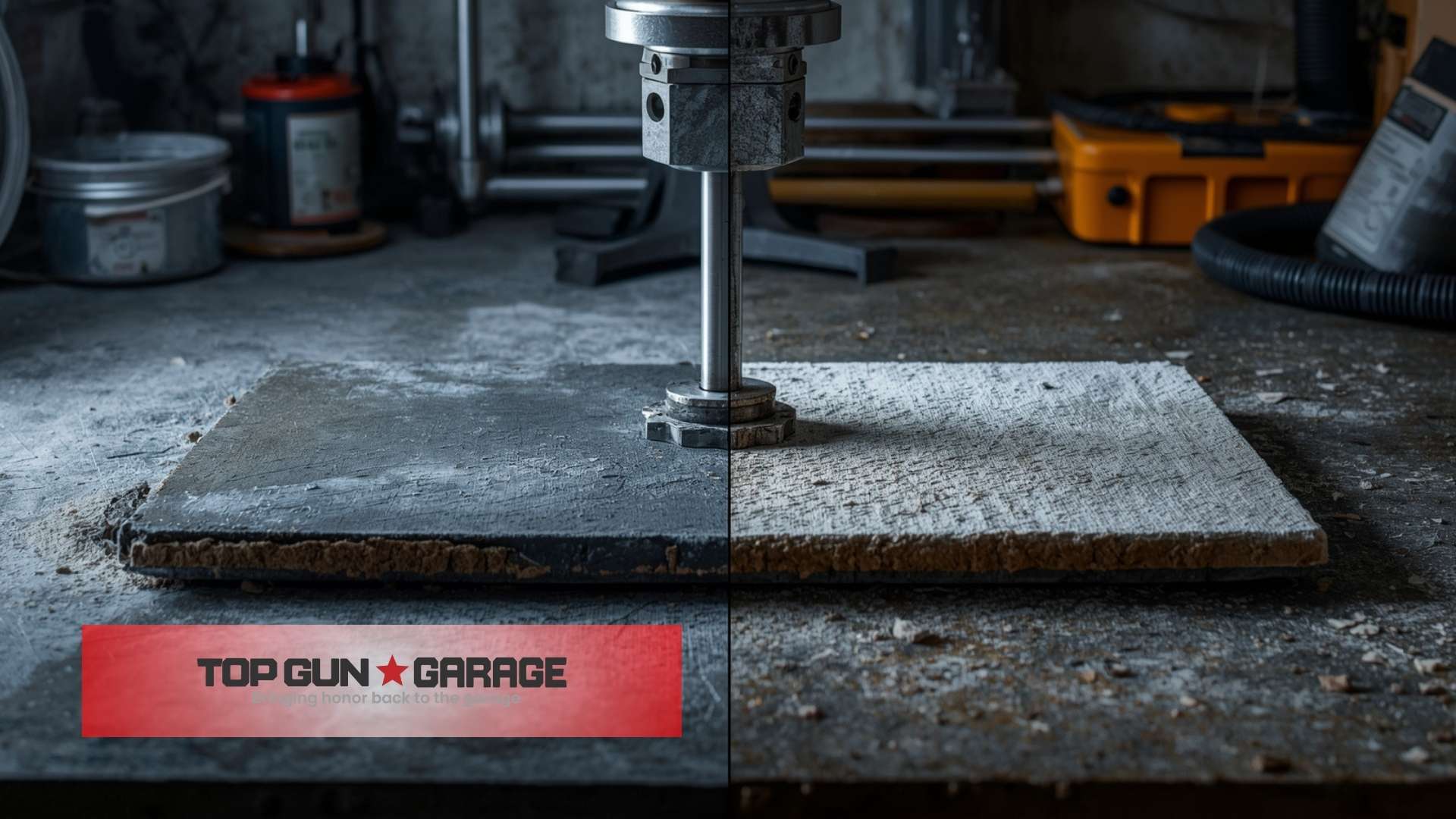
The molecular structure of polyurea gives it unique properties that make it particularly well-suited for basecoat applications. Unlike epoxy systems that rely primarily on mechanical adhesion, polyurea basecoats form both mechanical and chemical bonds with properly prepared concrete substrates. This dual bonding mechanism creates an incredibly strong foundation that resists delamination even under extreme stress conditions.
What sets polyurea basecoats apart from other primer systems is their ability to penetrate deeply into concrete pores while simultaneously building thickness on the surface. This penetration creates a transition zone where the coating and substrate become integrated, eliminating the weak interface that often leads to coating failure in traditional systems. The result is a monolithic barrier that moves and flexes with the concrete substrate rather than fighting against it.
The chemistry behind polyurea also provides inherent resistance to moisture vapor transmission, a critical factor in concrete floor applications. Moisture vapor drive from below the concrete slab is one of the leading causes of coating failure, but polyurea basecoats create an effective barrier that prevents this moisture from reaching the topcoat layers. This moisture resistance extends to both vapor transmission and direct liquid contact, making polyurea basecoats suitable for areas prone to spills or cleaning with water-based solutions.
Superior Adhesion and Bonding Characteristics
The adhesion characteristics of polyurea basecoats represent one of their most significant advantages over alternative coating systems. Traditional epoxy primers rely primarily on mechanical adhesion, depending on surface roughness and porosity to create grip between the coating and substrate. While this approach can be effective under ideal conditions, it creates potential failure points where stress concentrations can lead to delamination.
Polyurea basecoats employ a multi-faceted adhesion strategy that combines mechanical interlocking with chemical bonding mechanisms. When properly applied to prepared concrete, the low-viscosity polyurea penetrates into the concrete matrix, creating mechanical anchors within the substrate’s pore structure. Simultaneously, reactive groups within the polyurea chemistry form chemical bonds with alkaline compounds naturally present in concrete, creating a chemical weld that significantly enhances adhesion strength.
This superior adhesion becomes particularly important in high-stress environments where thermal cycling, mechanical loads, and chemical exposure can challenge the coating-substrate interface. Testing has consistently shown that properly applied polyurea basecoats often achieve adhesion strengths that exceed the tensile strength of the concrete substrate itself. This means that failure, when it occurs, happens within the concrete rather than at the coating interface – a clear indication of superior bonding performance.
The flexibility inherent in polyurea chemistry also contributes to its exceptional adhesion characteristics. Unlike rigid coating systems that can crack or delaminate when the substrate moves, polyurea basecoats flex and move with the concrete, maintaining their bond integrity even when subjected to thermal expansion, settling, or minor structural movement. This flexibility is particularly valuable in garage applications, where temperature fluctuations and vehicle loads create dynamic stress conditions.
At Top Gun Garage, we’ve observed that floors with properly applied polyurea basecoats maintain their integrity for decades, even in challenging environments with heavy vehicle traffic and exposure to automotive chemicals. The superior adhesion provided by these basecoats creates a foundation that supports long-term performance across the entire coating system.
Chemical Resistance and Protection Benefits
The chemical resistance properties of polyurea basecoats provide critical protection that extends far beyond what traditional primer systems can offer. The cross-linked polymer structure of cured polyurea creates a barrier that resists penetration by a wide range of chemicals commonly encountered in automotive, industrial, and commercial environments. This resistance includes petroleum products, automotive fluids, cleaning chemicals, de-icing salts, and many industrial solvents that would readily penetrate and damage unprotected concrete.
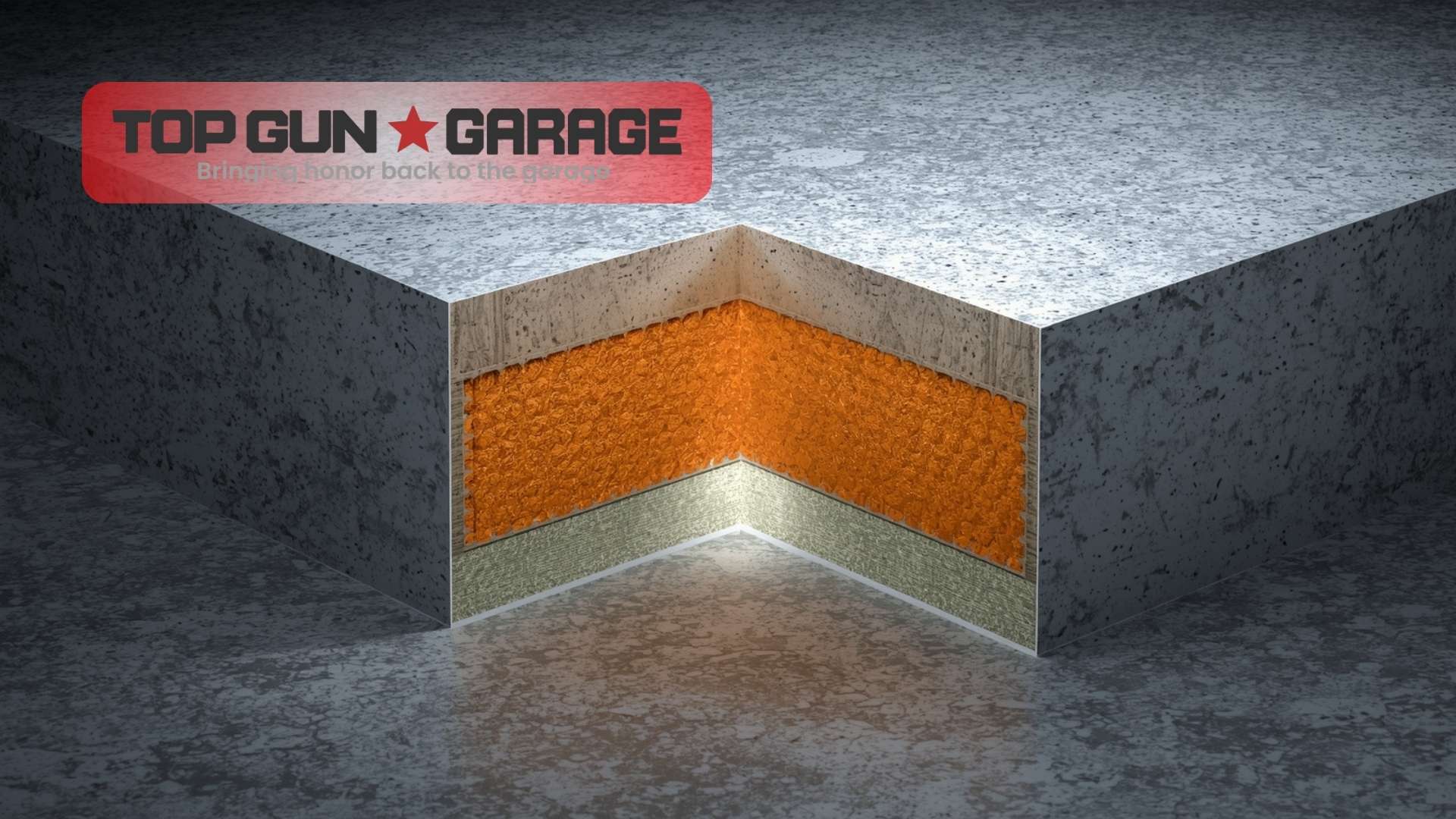
Understanding the mechanism behind this chemical resistance helps explain why polyurea basecoats are so effective. The highly cross-linked polymer network creates a tortuous path for chemical penetration, significantly slowing the rate at which aggressive substances can reach the concrete substrate. Additionally, the chemical inertness of the cured polyurea means that most common chemicals cannot react with or degrade the coating material itself, maintaining protection integrity over extended periods.
This chemical resistance becomes particularly important when considering the long-term effects of chemical exposure on concrete floors. Automotive fluids like motor oil, transmission fluid, and brake fluid contain additives and detergents that can gradually break down concrete, leading to surface deterioration and structural weakening. Battery acid and other corrosive substances can cause immediate and severe damage to unprotected concrete surfaces. Polyurea basecoats create an effective barrier against these threats, preserving the structural integrity of the concrete substrate.
The protection provided by polyurea basecoats also extends to freeze-thaw damage caused by de-icing salts and moisture penetration. In climates where road salt and ice melting compounds are regularly tracked onto floors, unprotected concrete can suffer severe damage from salt crystallization and freeze-thaw cycles. The moisture barrier properties of polyurea basecoats prevent these damaging substances from penetrating into the concrete, eliminating the conditions that lead to spalling and surface deterioration.
Professional contractors have documented cases where polyurea-based floor systems have withstood decades of exposure to aggressive chemicals without showing signs of degradation or failure. This long-term chemical resistance translates directly into reduced maintenance costs and extended service life for the entire flooring system, making polyurea basecoats a wise investment for any application where chemical exposure is a concern.
Installation Advantages and Application Benefits
The installation characteristics of polyurea basecoats provide significant advantages for both contractors and property owners, streamlining the application process while delivering superior results. One of the most notable benefits is the rapid cure time that allows for accelerated project schedules without compromising quality or performance. While traditional epoxy primers may require 12-24 hours between coats, polyurea basecoats often achieve sufficient cure for topcoat application within 2-4 hours under normal conditions.
This rapid cure capability becomes particularly valuable in commercial and industrial settings where extended downtime can result in significant operational costs. Businesses can often have their floors back in service within a single day rather than the multiple days required for traditional coating systems. The fast cure also reduces the risk of contamination during the curing process, as the window of vulnerability to dust, moisture, and other environmental contaminants is dramatically shortened.
Temperature tolerance during application represents another significant advantage of polyurea basecoats. While epoxy systems typically require carefully controlled temperature conditions for proper cure, polyurea formulations can be successfully applied across a much wider temperature range. This flexibility expands the installation window and reduces the likelihood of application delays due to weather conditions. Some polyurea systems can even be applied to substrates at temperatures approaching freezing, opening up installation possibilities that would be impossible with traditional materials.
The self-leveling properties of many polyurea basecoats also contribute to installation efficiency and final appearance quality. These formulations flow and level naturally during application, reducing the skill level required for achieving uniform thickness and eliminating many of the application marks that can telegraph through to the final topcoat. This self-leveling behavior is particularly beneficial when coating large areas or floors with minor surface irregularities.
Moisture tolerance during application provides another practical advantage that sets polyurea basecoats apart from epoxy alternatives. While epoxy systems are notoriously sensitive to moisture and can fail catastrophically when applied over damp concrete, many polyurea formulations can tolerate higher substrate moisture levels without compromising performance. This tolerance reduces preparation requirements and expands the conditions under which successful installation can be achieved.
Long-Term Performance and Durability
The long-term performance characteristics of polyurea basecoats represent perhaps their most compelling advantage, delivering decades of reliable service under conditions that would quickly degrade alternative coating systems. Field studies and real-world installations have consistently demonstrated that properly applied polyurea basecoats maintain their protective properties and structural integrity far longer than traditional primer systems, often exceeding their design life by significant margins.

Thermal cycling resistance stands out as one of the most important durability characteristics of polyurea basecoats. In environments where temperatures fluctuate regularly – such as garages that experience seasonal temperature swings or facilities with heating and cooling cycles – the ability to expand and contract without cracking or delaminating is crucial. The inherent flexibility of polyurea allows it to accommodate these thermal movements without developing stress cracks or losing adhesion to the substrate.
UV stability, while primarily a concern for topcoat materials, also plays a role in basecoat longevity. Quality polyurea basecoats incorporate UV-stable chemistry that prevents degradation even when exposed to indirect sunlight through windows or skylights. This stability ensures that the basecoat continues to provide effective support for the topcoat system throughout the installation’s service life, preventing the substrate-level failures that can occur when basecoats become brittle or lose their protective properties.
Mechanical durability under traffic loads represents another critical performance factor, particularly in automotive and industrial applications. Polyurea basecoats distribute loads effectively across the concrete substrate while maintaining their own structural integrity under repeated stress cycles. This load distribution capability helps prevent the localized failures that can occur when rigid coating systems concentrate stresses at specific points on the substrate surface.
The economic implications of this extended durability are significant. While polyurea basecoats may require higher initial investment compared to conventional alternatives, their extended service life and reduced maintenance requirements typically result in lower total cost of ownership over the installation’s lifetime. Property owners can expect decades of reliable performance without the need for major repairs or recoating, making polyurea basecoats an excellent long-term investment in floor protection and appearance.
Frequently Asked Questions
What makes polyurea basecoats different from epoxy primers?
Polyurea basecoats cure through a different chemical reaction that creates more flexible, durable bonds with concrete substrates. They cure faster, tolerate wider temperature ranges, and provide superior long-term chemical resistance compared to traditional epoxy primers.
How long does a polyurea basecoat take to cure?
Most polyurea basecoats achieve sufficient cure for topcoat application within 2-4 hours under normal conditions, compared to 12-24 hours for epoxy systems. Full mechanical properties are typically achieved within 24 hours.
Can polyurea basecoats be applied over existing coatings?
This depends on the condition and type of existing coating. Properly prepared surfaces with compatible existing coatings may accept polyurea basecoats, but professional evaluation is recommended to ensure proper adhesion and system compatibility.
What temperature conditions are required for polyurea basecoat application?
Polyurea basecoats can typically be applied across a wider temperature range than epoxy systems, often from 35°F to 90°F, though specific products may have different requirements. Professional contractors can provide guidance based on specific environmental conditions.
How thick should a polyurea basecoat be applied?
Typical polyurea basecoat thickness ranges from 4-8 mils, depending on substrate conditions and system requirements. Proper thickness is crucial for achieving optimal performance and should be determined by qualified flooring professionals.
Do polyurea basecoats require special surface preparation?
Yes, proper surface preparation is critical for polyurea basecoat success. This typically includes mechanical preparation such as diamond grinding or shot blasting to achieve proper surface profile and remove contaminants that could interfere with adhesion.
What is the expected lifespan of a polyurea basecoat system?
When properly applied and maintained, polyurea basecoat systems can provide 20-30 years or more of reliable service, significantly longer than traditional coating systems. Actual lifespan depends on environmental conditions and usage patterns.
Can homeowners apply polyurea basecoats themselves?
While some consumer-grade polyurea products are available, professional application is strongly recommended for optimal results. Polyurea application requires specialized equipment, proper safety procedures, and technical expertise to achieve the performance benefits these systems can provide.
Conclusion
Polyurea basecoats represent a significant advancement in floor coating technology, providing the foundation for durable, long-lasting flooring systems that outperform traditional alternatives in virtually every measurable category. From superior adhesion and chemical resistance to rapid cure times and exceptional longevity, these advanced materials have revolutionized the flooring industry’s approach to substrate preparation and protection.
Understanding what a polyurea basecoat is and recognizing its critical role in flooring system performance empowers property owners to make informed decisions about their flooring investments. While the initial cost may be higher than conventional alternatives, the long-term benefits – including reduced maintenance, extended service life, and superior performance under challenging conditions – make polyurea basecoats an excellent value proposition for serious flooring applications.
At Top Gun Garage, we’ve witnessed firsthand the transformative impact that quality polyurea basecoats can have on flooring system performance and longevity. The difference between floors installed with proper polyurea basecoats and those using inferior alternatives becomes apparent within months and continues to grow more pronounced over years of service.
As flooring technology continues to evolve, polyurea basecoats will undoubtedly play an increasingly important role in delivering the performance and durability that modern applications demand. Property owners who invest in these advanced systems today are positioning themselves for decades of reliable, low-maintenance floor performance that will continue to provide value long into the future.