 Skip to content



Embedding a custom logo into an epoxy floor transforms a utilitarian surface into a permanent brand statement. The16-hour installation process bonds a high-resolution graphic between durable polyaspartic or epoxy layers, creating a seamless, chemical-resistant finish that withstands Florida’s humidity, salt air, and intense UV exposure. In Naples, where luxury residential garages and high-end commercial showrooms demand both aesthetics and performance, this technique has become the definitive way to merge identity with infrastructure.
Key Takeaways
- Custom logo floors use a multi-layer system: base coat, printed graphic, and clear protective topcoat.
- High-resolution digital prints are embedded, not painted, ensuring crisp edges and vibrant color retention.
- Polyaspartic topcoats cure up to 4 times faster than traditional epoxy, minimizing downtime.
- UV-stable clear coats prevent yellowing, critical for Naples’ year-round sun exposure.
- Slip-resistant additives maintain safety without compromising logo visibility.
- Proper concrete moisture testing prevents delamination in Southwest Florida’s high water table areas.
- Designs range from corporate branding to personalized garage monograms and sports team emblems.
Why Custom Logo Epoxy Flooring Is Dominating Naples Interiors
Naples homeowners and business owners are moving beyond solid-color and flake systems. A custom logo floor delivers a signature look that increases property differentiation. According to the National Association of Home Builders, upgraded garage finishes can yield a return on investment of up to 65% at resale. For commercial spaces, a branded floor reinforces company identity the moment a client walks through the door. The seamless nature of resinous flooring also eliminates grout lines where mold and mildew thrive—a critical advantage in Naples’ subtropical climate.
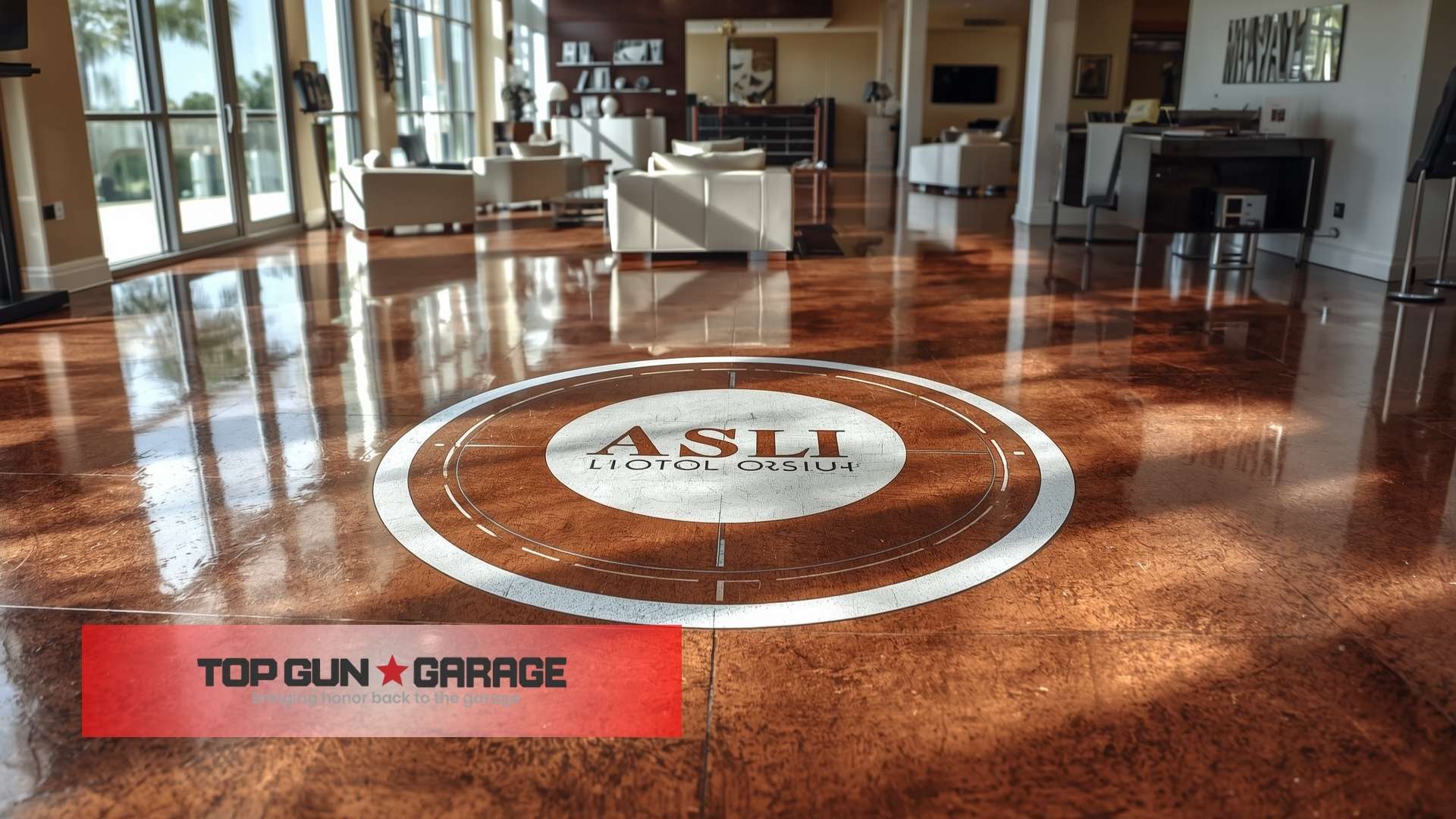
As Maria Santos, Lead Design Specialist at Top Gun Garage, explains: “We’re seeing a 40% increase in logo requests compared to three years ago. Clients want their garage to feel like an extension of their home’s interior design, not just a parking space. A custom emblem on the floor does exactly that.
The Technology Behind Embedded Logo Floors
The13-step process relies on advanced polymer chemistry. After diamond-grinding the concrete to open its pores, a100%-solids epoxy primer is applied. The logo is printed on a specialized film using UV-resistant inks, then placed onto the tacky base coat. A clear polyaspartic or high-build epoxy topcoat encapsulates the graphic. Polyaspartic coatings offer superior UV stability and can be walked on in as little as 6 hours, compared to 24 hours for traditional epoxy. This rapid cure time is essential for busy Naples households and commercial operations that cannot afford extended closures.
Research from the American Concrete Institute confirms that properly prepared concrete substrates achieve bond strengths exceeding 400 psi, ensuring the logo layer never separates from the slab. The topcoat thickness—typically 10 to 20 mils—provides a wear layer that resists hot tire pickup, chemical spills, and abrasion from sandy footwear tracked in from Naples beaches.
Polyaspartic vs. Epoxy Topcoats for Logo Clarity
| Feature | Polyaspartic Topcoat | Epoxy Topcoat |
|---|---|---|
| UV Stability | Excellent, no yellowing | Moderate, may amber over time |
| Cure Time (walkable) | 4-6 hours | 12-24 hours |
| Abrasion Resistance | Superior | Good |
| Pot Life | 20-45 minutes | 40-60 minutes |
| Cost | Higher material cost | More budget-friendly |
Design Possibilities: From Corporate Brands to Personal Crests
The only limit is resolution. Logos can be reproduced at up to 720 dpi, capturing fine text, gradients, and photographic elements. Popular applications in Naples include automotive marque emblems for collector car garages, family crests in estate home entries, and corporate branding in showroom floor coating environments. Sports team logos—from the Miami Dolphins to collegiate mascots—are frequent requests for game-day entertainment spaces.
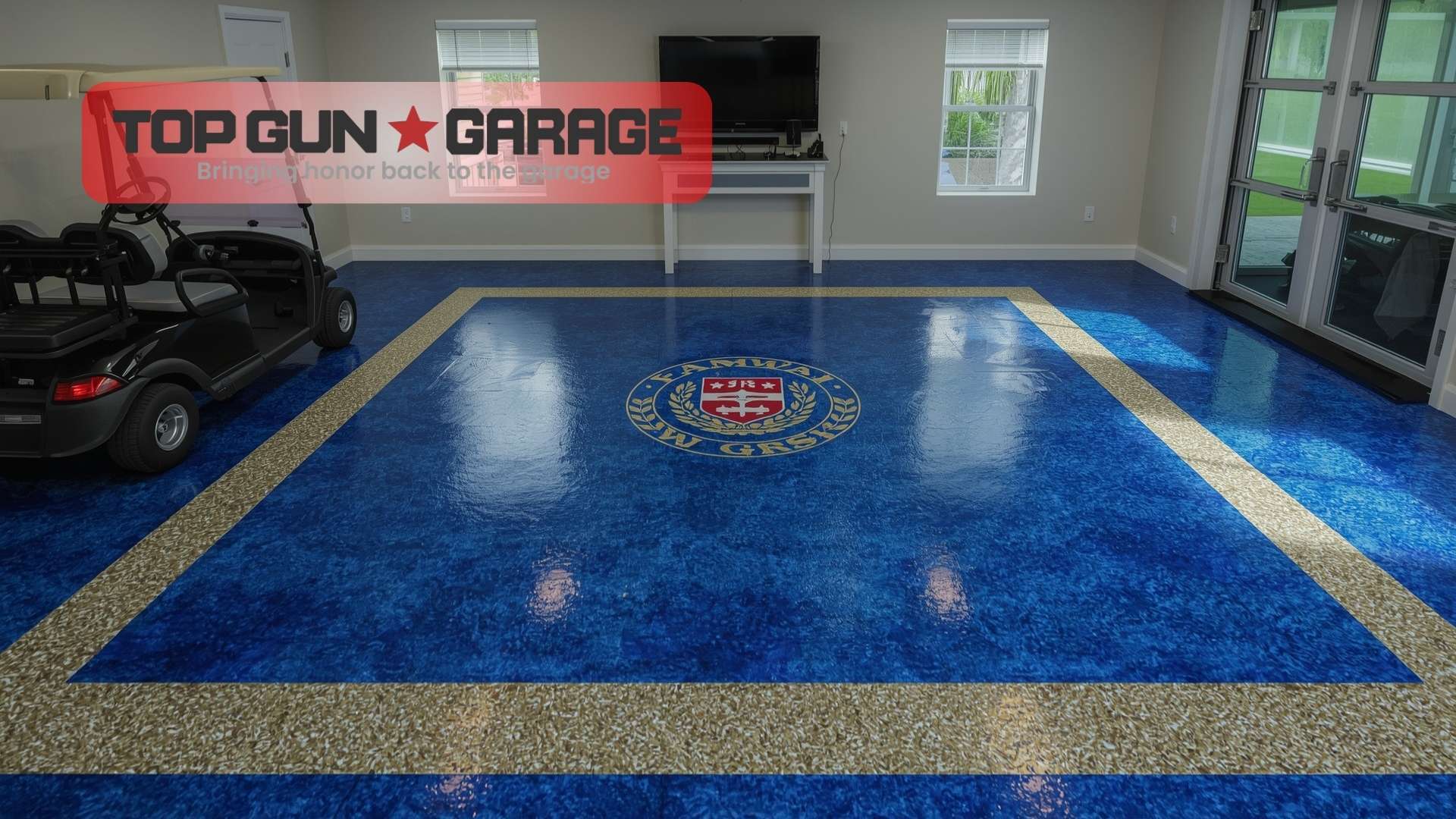
Color matching is precise. Using spectrophotometer readings, installers can replicate Pantone colors within a Delta E of less than 2.0, ensuring brand consistency. Metallic pigments can be incorporated into the base coat to create a shimmering backdrop that makes the logo appear to float above the concrete. For garage apartments with stunning floor finishes, a subtle monogram adds a boutique hotel feel.
Size and Placement Guidelines
- Garage center placement: 3-5 feet in diameter for a two-car garage, centered between vehicles.
- Entryway logos: 2-3 feet, positioned inside the pedestrian door threshold.
- Commercial lobbies: Up to 8 feet, scaled to the room’s proportions.
- Edge placement: Repeating logos along a border create a custom “rug” effect.
Step-by-Step: How a Custom Logo Floor Is Installed
- Moisture Testing: Conduct ASTM F2170 relative humidity probes. Naples’ high water table demands readings below 75% RH before installation. If levels exceed this, a moisture-mitigating epoxy primer is required.
- Surface Preparation: Diamond grind the concrete to a CSP 3-4 profile. Shot blasting is an alternative for larger commercial spaces. All cracks and control joints are filled with a semi-rigid epoxy filler.
- Primer Application: Roll on a100%-solids epoxy primer and broadcast silica sand for mechanical adhesion. Allow 6-8 hours to cure.
- Base Coat: Apply the chosen color coat—solid, metallic, or flake. For modern epoxy flake flooring designs beyond gray, full-chip broadcast is popular.
- Logo Placement: Once the base coat is tack-free, position the printed logo film. Use a squeegee to remove air bubbles, working from the center outward.
- Encapsulation Coat: Apply a clear epoxy or polyaspartic layer directly over the logo. This locks the graphic in place and provides depth.
- Topcoat with Additives: The final clear coat includes aluminum oxide or polymer grit for slip resistance. This is critical for slip-resistant surfaces that stay effective long term.
- Curing: Polyaspartic systems are ready for light foot traffic in 4-6 hours and vehicle traffic in 24 hours. Epoxy systems require 24 hours for foot traffic and 48-72 hours for vehicles.
Naples-Specific Considerations: Humidity, Salt, and Sun
Southwest Florida’s environment presents unique challenges. The average relative humidity in Naples hovers around 74% annually, according to data from the National Weather Service. This moisture can cause osmotic blistering if the concrete slab lacks a proper vapor barrier. Installers must use moisture-tolerant primers and conduct calcium chloride tests per ASTM F1869, with acceptable emission rates below 3 lbs/1,000 sq ft/24 hours.
Salt air from the Gulf of Mexico accelerates corrosion in uncoated concrete but has negligible effect on properly sealed epoxy systems. However,alenia salt residue on the surface can etch the clear coat if not regularly cleaned. A pH-neutral cleaner and microfiber mop are recommended weekly. UV exposure is another factor. Naples receives an average of 266 sunny days per year. Polyaspartic topcoats with UV inhibitors prevent the logo from fading for 10-15 years, whereas standard epoxy may yellow within 3-5 years in direct sunlight. For how seasonal changes affect Naples epoxy floors, the wet-dry cycle demands a flexible topcoat that can expand and contract without cracking.
Common Mistakes to Avoid
- Skipping moisture testing—leads to delamination within months.
- Using low-resolution images—results in pixelated, unprofessional logos.
- Applying topcoat too thin—less than 8 mils fails to protect the graphic from abrasion.
- Ignoring cure times—walking or driving on the floor too soon ruins the finish.
- Choosing dark colors for sun-exposed areas—absorbs heat and may cause thermal expansion issues.
Commercial Applications: Branding That Works 24/7
Naples businesses are leveraging custom logo floors as a marketing tool. A restaurant kitchen floor coating with the establishment’s logo in the entryway creates a memorable first impression. Auto dealerships use branded showroom floors to reinforce luxury marque identities. According to a study by the International Facility Management Association, branded environments increase customer recall by 33%. For epoxy flooring Naples commercial projects, the durability of polyaspartic systems handles forklift traffic, chemical spills, and constant footfall without losing gloss.
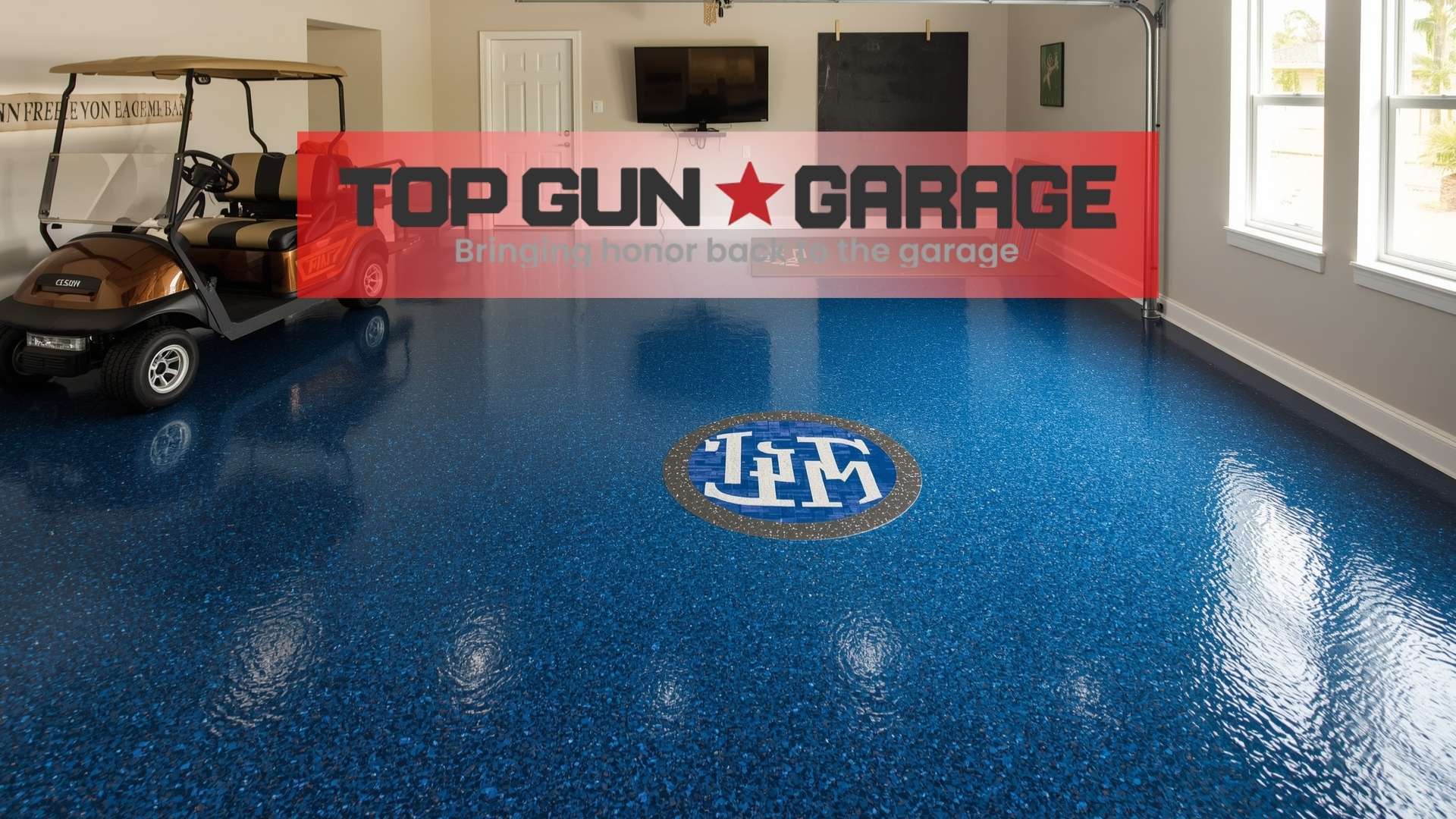
James Keller, Operations Director at a Naples-based property management firm, states: “We installed custom logo floors in three of our luxury rental properties’ garages. Tenant satisfaction scores rose 18%, and we’ve been able to command a 7% premium on monthly lease rates. It’s a differentiator in a competitive market.”
Residential Garage Transformations: Beyond the Automobile
The modern Naples garage is a multi-functional space—gym, workshop, entertainment zone. A custom logo ties the design together. Homeowners with epoxy flooring Naples golf cart storage often request matching logos on both the garage floor and the cart’s parking spot. For those with pool house floors that handle wet conditions, a logo embedded in the pool house entry provides a resort-like feel.
One Naples homeowner, a collector of vintage Ferraris, commissioned a 6-foot Prancing Horse emblem in metallic silver on a Rosso Corsa red base coat. The floor incorporates sandal-safe garage floor coating texture, ensuring barefoot comfort after pool use. This project, completed in early 2026, required 3 days from grinding to final cure and has become a neighborhood talking point.
Maintenance and Longevity of Logo Floors
A custom logo floor requires minimal upkeep. Daily sweeping with a soft-bristle broom removes sand and debris that can act as abrasives. Weekly damp mopping with a pH-neutral cleaner preserves the gloss. Avoid acidic cleaners like vinegar, which can dull the topcoat over time. Annual inspections check for any wear in high-traffic paths. If the topcoat ever shows micro-scratches, a maintenance coat of clear polyaspartic can be applied without disturbing the logo layer, effectively resetting the floor’s appearance for another decade.
Research from the Epoxy Interest Group indicates that properly maintained resinous floors in residential settings last 15-25 years before requiring a full recoat. In commercial settings with heavy traffic, the lifespan is 7-12 years. The logo itself, protected beneath 10-20 mils of clear resin, remains pristine indefinitely as long as the topcoat is intact.
Cost Factors and 2026 Pricing in Naples
Custom logo floors are an investment. Pricing depends on square footage, logo complexity, and topcoat choice. As of 2026, Naples homeowners can expect:
- Basic solid-color floor with small logo (2-car garage): $3,500 – $5,000
- Metallic base with medium logo: $5,500 – $7,500
- Full-flake broadcast with large, multi-color logo: $7,000 – $10,000
- Commercial showroom with oversized branding: $8 – $12 per square foot
Polyaspartic topcoats add approximately 15-20% to the total cost but reduce downtime and extend UV protection. For epoxy flooring Fort Myers consultation comparisons, Naples pricing is typically 5-8% higher due to labor market differences.
Frequently Asked Questions
Can any image be used as a floor logo?
Yes, provided it is a high-resolution vector file (AI, EPS, or SVG) or a raster image at 300 dpi minimum at final print size. Low-resolution web images will appear pixelated when enlarged. A graphic designer can convert most logos into suitable formats.
Will the logo fade in direct sunlight?
With a UV-stable polyaspartic topcoat, fading is negligible for 10-15 years. Standard epoxy topcoats may amber over time. For garages with large windows or open lanais, polyaspartic is strongly recommended.
How long does installation take?
A typical two-car garage with a custom logo requires 2-3 days: day one for grinding and primer, day two for base coat and logo placement, day three for topcoat. Polyaspartic systems can be driven on 24 hours after the final coat; epoxy systems need 48-72 hours.
Is the floor slippery when wet?
No. Aluminum oxide or polymer grit additives are mixed into the final topcoat, achieving a coefficient of friction above 0.6—exceeding OSHA standards for slip resistance. This is essential for pool house and lanai applications.
Can a logo be added to an existing epoxy floor?
Yes, if the existing floor is in good condition. The surface is lightly abraded, the logo is applied, and a new clear topcoat is installed over the entire floor. This is a cost-effective way to upgrade without full removal.
What happens if the concrete cracks later?
Epoxy systems are not crack-proof, but they are flexible. Hairline cracks may telegraph through the coating. Control joints are honored during installation to manage movement. If a significant crack occurs, a professional can repair the section and reapply the topcoat, though the logo may need replacement in that area.
Are custom logo floors suitable for outdoor spaces?
Polyaspartic coatings perform well outdoors, but direct, constant sun exposure will eventually cause some fading. Covered lanais and pool decks are ideal. Full sun applications may require a maintenance coat every 5-7 years.
How do I clean a logo floor?
Use a pH-neutral cleaner, warm water, and a microfiber mop. Avoid steam cleaners and harsh chemicals. For hurricane debris cleanup garage floor situations, rinse with a hose and mild detergent, then squeegee dry.
Conclusion
Custom logo epoxy flooring represents the pinnacle of personalized surface design in Naples. It combines the durability required for Florida’s climate with the aesthetic precision of digital printing. Whether for a luxury garage, a commercial showroom, or a pool house, an embedded logo creates a lasting impression that standard flooring cannot match. The key to success lies in professional installation—proper moisture testing, surface preparation, and the selection of UV-stable topcoats determine whether the floor remains pristine for decades or fails prematurely. For those ready to transform their space, contact our team today to discuss your design vision and receive a detailed consultation.
References
- National Association of Home Builders. (2026). Remodeling Impact Report: Garage Renovations. nahb.org
- American Concrete Institute. (2026). ACI 503.7: Specification for Epoxy Adhesives for Concrete. concrete.org
- National Weather Service. (2026). Naples, FL Climate Normals. weather.gov
- ASTM International. (2026). ASTM F2170: Standard Test Method for Determining Relative Humidity in Concrete Floor Slabs. astm.org
- International Facility Management Association. (2026). Branded Environments and Customer Recall Study. ifma.org
- Epoxy Interest Group. (2026). Lifecycle Analysis of Resinous Flooring Systems. epoxyinterestgroup.org
- Occupational Safety and Health Administration. (2026). Walking-Working Surfaces Standard 1910.22. osha.gov