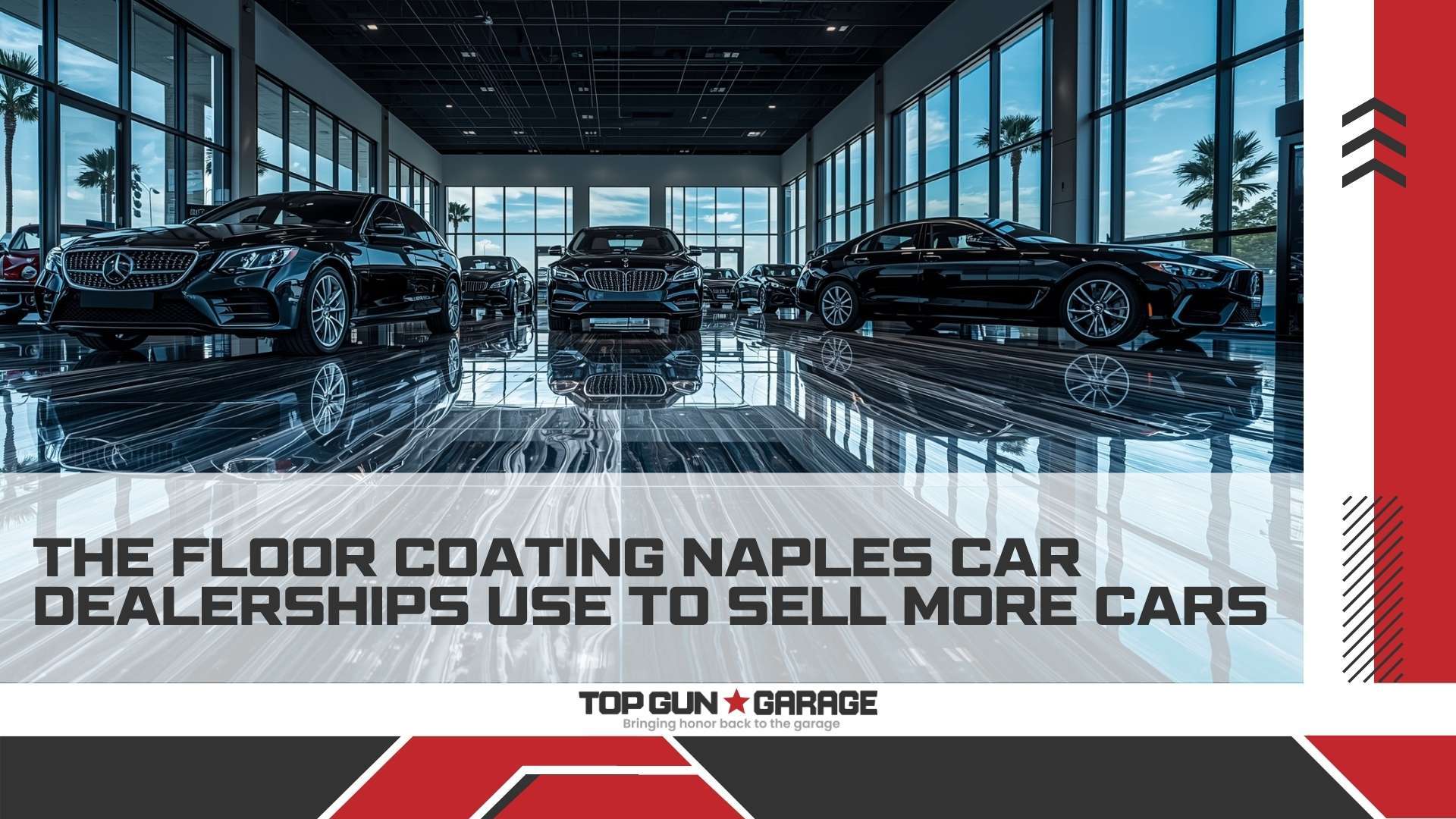
The right showroom floor coating in Naples does more than look impressive. It directly influences how customers perceive the vehicles on display and, ultimately, whether they buy. Car dealerships across Southwest Florida are upgrading to professional-grade epoxy and polyaspartic floor systems because these coatings create the high-gloss, reflective surfaces that make inventory shine.
Research from retail analytics shows that every 10% increase in customer dwell time can boost sales by 2-5%. A polished, well-lit showroom floor encourages customers to stay longer, explore more vehicles, and connect emotionally with their purchase. When the floor looks like it belongs in a luxury environment, customers perceive the cars as more valuable.
According to automotive industry experts, the beauty of a showroom floor is directly proportionate to the perceived quality of the automobiles on display. A cracked, stained, or dull concrete floor sends the wrong message about both your inventory and your business. Professional floor coatings solve this problem while delivering durability that outlasts standard flooring options by years.
Why Naples Dealerships Choose Professional Floor Coatings
Naples car dealerships face unique challenges that make professional floor coatings essential. The combination of high humidity, salt air exposure, and year-round vehicle traffic demands a flooring system engineered for Southwest Florida conditions.
Professional showroom floor coatings deliver several critical advantages over standard concrete or tile flooring:
High reflectivity that enhances vehicle presentation and maximizes lighting effectiveness
Chemical resistance to fuel, oil, brake fluid, and cleaning solutions
Seamless surface that eliminates grout lines where dirt, bacteria, and tire marks accumulate
Impact resistance that handles heavy vehicle traffic without cracking or chipping
Customizable slip resistance for both customer-facing showrooms and service areas
Tile flooring, while common in older dealerships, creates ongoing maintenance headaches. Grout lines absorb stains from tires and foot traffic, requiring constant attention. According to industry standards from Sherwin-Williams, seamless resinous flooring systems eliminate these issues while providing superior durability. Learn more about how concrete is prepared for epoxy to understand the professional installation process.
Best Floor Coating Options for Automotive Showrooms
Three primary coating systems dominate the automotive showroom market: metallic epoxy, solid-color epoxy with polyaspartic topcoat, and quartz broadcast systems. Each offers distinct advantages depending on your dealership’s aesthetic goals and operational requirements.
Metallic Epoxy for Luxury Showrooms
Metallic epoxy coatings create stunning visual effects that mimic polished marble, flowing water, or liquid metal. The metal particulates within the coating produce unique swirling patterns that differ in every installation. This makes each showroom floor one-of-a-kind. Luxury dealerships in Naples and Fort Myers often choose metallic epoxy because it creates a premium environment that matches high-end vehicle brands. For a deeper look at options, read our guide on metallic epoxy vs flake floor systems.
Metallic epoxy delivers the same durability as standard epoxy systems. The metallic pigments sit within the resin without weakening the coating, providing identical scratch resistance, chemical protection, and moisture barrier properties. With professional installation, metallic epoxy showroom floors can last 10-20 years or more depending on traffic levels and maintenance.
Polyaspartic Systems for Fast Turnaround
Polyaspartic floor coatings offer superior UV stability and faster cure times compared to traditional epoxy. A polyaspartic system can be installed and ready for traffic within 24 hours, minimizing business disruption. This makes it ideal for dealerships that cannot afford extended downtime. For details on how these systems compare, see our article on polyaspartic vs epoxy garage floor coatings.
Polyaspartic coatings resist yellowing from UV exposure, which is critical for showrooms with large windows or skylights. In Naples, where sunlight is abundant year-round, this UV resistance helps maintain the floor’s original color and gloss for years. The coating also provides excellent chemical resistance, handling everything from tire marks to cleaning solutions without staining or degradation.
Quartz Broadcast Systems for Service Areas
While showrooms benefit from high-gloss finishes, service drive-up lanes and repair bays require different priorities. Quartz broadcast systems combine decorative aggregate with industrial-strength epoxy to create slip-resistant, highly durable surfaces. These systems handle the heavy equipment, tool drops, and chemical exposure common in automotive service environments.
Many Naples dealerships use a combination approach: metallic or solid-color epoxy in customer-facing showrooms, quartz systems in service areas, and polyaspartic topcoats throughout for maximum UV protection. This creates a cohesive look while meeting the specific demands of each space. For more information on these coating differences, explore industrial epoxy vs residential systems.
How Showroom Floors Impact Customer Perception and Sales
The psychology of automotive retail reveals that customers make purchasing decisions based heavily on their showroom experience. According to J.D. Power research, customers who have a positive dealership experience recommend that dealership an average of six times. The physical environment, including flooring, plays a significant role in shaping that experience.
Consider these facts about automotive buying behavior:
78% of customers who visit a showroom buy a vehicle somewhere
85% have already decided to purchase before leaving home
71% say they bought because they liked, trusted, and respected the dealership
86% indicate that personalization and experience quality impact their purchase decisions
A high-gloss showroom floor does more than reflect light. It creates a psychological association between your dealership and the quality of vehicles you sell. When customers see their potential purchase displayed on a pristine, mirror-like surface, they perceive greater value. This perception translates directly into buying confidence and willingness to pay premium prices.
Bright, highly reflective flooring colors improve illumination throughout the showroom, allowing customers to see vehicle details from multiple angles. This enhanced visibility helps sales staff demonstrate features like interior finishes, paint quality, and technology displays. For information on color selection, check out our guide on epoxy floor color inconsistency and solutions.
Floor Coating Performance Comparison
Understanding the performance differences between coating types helps dealership owners make informed decisions. The following comparison highlights key factors for automotive showroom applications:
Coating Type
Lifespan
UV Resistance
Cure Time
Best For
Metallic Epoxy
10-20 years
Moderate
48-72 hours
Luxury showrooms
Solid Epoxy + Polyaspartic
10-20 years
High
24-48 hours
Most dealerships
Full Polyaspartic
15-20+ years
Excellent
24 hours
Fast turnaround
Quartz Broadcast
15-20 years
Good
48-72 hours
Service areas
DIY Kits
1-3 years
Poor
24-72 hours
Not recommended
Professional installation significantly impacts performance and lifespan. DIY kits from hardware stores typically use lower-quality, water-based epoxies that last only 1-3 years. Professional systems using commercial-grade materials and proper surface preparation routinely deliver 10-20+ year lifespans. Learn about the difference between epoxy and polyaspartic coatings to determine which system fits your needs.
Installation Process for Automotive Showrooms
Professional floor coating installation for automotive showrooms follows a systematic process that ensures maximum adhesion, durability, and visual appeal. Cutting corners on any step compromises the entire system.
Concrete Assessment and Moisture Testing: Before any coating application, the concrete substrate must be evaluated for moisture content, porosity, and existing damage. In Naples, where humidity levels regularly exceed 70%, moisture testing is critical. Concrete with excessive moisture vapor transmission will cause coating delamination.
Surface Preparation: Diamond grinding or shot blasting creates the proper surface profile for coating adhesion. This step removes existing coatings, contaminants, and weak concrete to expose a clean, textured surface. Industry standards require a CSP-2 to CSP-3 profile for epoxy adhesion.
Crack and Joint Repair: All cracks and control joints must be addressed before coating application. Flexible joint fillers accommodate concrete movement while maintaining a seamless appearance.
Primer Application: A moisture-vapor barrier primer penetrates the concrete and creates a bond between substrate and coating. In high-humidity environments like Southwest Florida, this step is essential.
Base Coat Application: The epoxy or polyaspartic base coat is applied at specified thickness, typically 10-20 mils for showroom applications.
Topcoat and Sealing: A UV-stable polyaspartic or polyurethane topcoat protects the color and provides the final gloss level. High-traffic showrooms benefit from additional topcoat thickness.
The entire process typically requires 2-5 days depending on showroom size and system complexity. Polyaspartic systems can reduce this timeline significantly. For a complete breakdown, read our article on how long garage floor installation takes.
Maintenance Requirements for Showroom Floors
Professional floor coatings require minimal maintenance compared to tile, carpet, or uncoated concrete. Dealerships report significant labor savings after installation. The seamless surface eliminates grout cleaning, and the chemical-resistant finish means spills wipe up without staining. For specific cleaning guidance, refer to our tips for epoxy floor coating maintenance.
Recommended maintenance schedule for automotive showroom floors:
Daily: Dust mop or sweep to remove abrasive particles
Weekly: Damp mop with pH-neutral cleaner
Monthly: Inspect for any chips, scratches, or wear patterns
Annually: Professional inspection and touch-up if needed
Avoid harsh chemicals, abrasive scrubbing pads, and power washing at high pressure. These can damage the topcoat and reduce the floor’s lifespan. Most dealerships find that a simple dust mop and occasional wet mop keeps the showroom floor looking showroom-ready.
Cost Considerations for Dealership Floor Coatings
Professional showroom floor coating costs typically range from $4-12 per square foot, depending on system complexity and preparation requirements. Metallic epoxy systems fall on the higher end, while solid-color epoxy with polyaspartic topcoat offers a more budget-friendly option without sacrificing durability. For detailed pricing information, see our garage floor coating price per square foot guide.
When evaluating floor coating investments, consider the total cost of ownership rather than upfront price alone:
Installation cost: Higher-quality systems cost more initially but last 3-5x longer than budget options
Property value: Commercial real estate professionals confirm that facilities with professional floor coatings are more marketable
Dealerships that view floor coating as a marketing investment rather than a maintenance expense typically see better returns. A pristine showroom floor contributes to customer perception, employee morale, and brand image. These factors are difficult to quantify but significantly impact sales performance. For more on garage floor coating ROI and home value, read our dedicated analysis.
Choosing the Right Contractor for Your Naples Showroom
Not all floor coating contractors have experience with automotive showroom applications. The scale, performance requirements, and aesthetic expectations differ significantly from residential garage projects. When selecting a contractor, look for demonstrated experience in commercial automotive environments. For guidance on contractor selection, review our article on questions to ask your epoxy contractor.
Key qualifications to verify:
Florida contractor licensing: Verify active licensing through the Florida Department of Business and Professional Regulation
Insurance coverage: General liability and workers compensation protect your business
Portfolio of similar projects: Request photos and references from automotive showroom installations
Written warranty: Professional contractors stand behind their work with documented warranty terms
Detailed proposal: The quote should specify materials, preparation methods, thickness, and timeline
Be cautious of extremely low bids. Contractors who cut corners on preparation, materials, or labor create floors that fail prematurely. The cost of removing a failed coating and starting over exceeds the savings from a cheap installation. Learn to identify epoxy floor contractor red flags before signing any contract.
Frequently Asked Questions
How long does showroom floor coating last in Naples?
Professional showroom floor coatings typically last 10-20 years with proper maintenance. In high-traffic automotive environments, expect 10-15 years of excellent performance before recoating becomes necessary. The combination of quality materials, proper surface preparation, and UV-stable topcoats extends lifespan significantly compared to DIY alternatives.
Can vehicles be driven on epoxy floors immediately after installation?
No. Epoxy floors require 24-72 hours of cure time before vehicle traffic, depending on the coating system and environmental conditions. Polyaspartic systems cure faster and may allow vehicle traffic within 24 hours. Your contractor will provide specific return-to-service timelines based on the products used and current temperature and humidity levels.
Will the coating become slippery when wet?
High-gloss showroom coatings can become slippery when wet. However, professional installers can add slip-resistant aggregate to the topcoat without significantly affecting appearance. This is especially important for areas near entrances where customers may track in rain or moisture. The coefficient of friction can be customized to meet safety requirements while maintaining the aesthetic appeal.
How do I remove tire marks from a coated showroom floor?
Most tire marks wipe away easily with a damp mop and pH-neutral cleaner. For stubborn marks, a non-abrasive scrub pad and mild degreaser typically work without damaging the coating. Avoid harsh solvents or abrasive cleaning methods that can dull the finish. Quality coatings resist tire mark penetration, making removal straightforward.
Is metallic epoxy worth the extra cost for a car dealership?
Metallic epoxy costs 20-40% more than solid-color systems but creates a dramatic visual impact that standard coatings cannot match. For luxury dealerships or showrooms where aesthetics directly influence customer perception, the investment often pays for itself through enhanced brand image. Evaluate whether the unique appearance aligns with your vehicle brands and target customers.
Can you install floor coating in sections to keep the dealership operating?
Yes. Experienced contractors can phase the installation to minimize business disruption. Showrooms are often coated in sections overnight or during slower business periods. This approach requires careful planning to ensure seamless transitions between phases, but it allows dealerships to maintain operations throughout the project.
Transform Your Naples Showroom with Professional Floor Coating
Your showroom floor is one of the most powerful marketing tools in your dealership. It sets the tone for the customer experience from the moment they walk through the door. A professionally installed floor coating creates the polished, high-end environment that customers expect when shopping for a vehicle.
Top Gun Garage specializes in commercial floor coatings for automotive showrooms throughout Naples, Fort Myers, Cape Coral, and Southwest Florida. Our team understands the unique requirements of dealership environments and delivers coatings that perform as impressively as they look.
Contact us today for a free showroom assessment and discover how the right floor coating can help you sell more cars.
 Skip to content



 Professional showroom floor coatings deliver several critical advantages over standard concrete or tile flooring:
 Professional floor coating installation for automotive showrooms follows a systematic process that ensures maximum adhesion, durability, and visual appeal. Cutting corners on any step compromises the entire system.
 Key qualifications to verify: