Yes, you can walk barefoot or in sandals across your Florida garage floor without burning your feet — but only with the right coating system. Professional-grade polyaspartic and epoxy floor coatings with light-reflective pigments can reduce surface temperatures by 30°F to 50°F compared to bare concrete, keeping your garage floor comfortable even during Southwest Florida summers when uncoated surfaces regularly exceed 130°F.
According to the National Institute for Standards and Technology, human skin can sustain first-degree burns at just 118°F, with second-degree burns occurring at 131°F. That means an unprotected garage floor in Naples or Fort Myers isn’t just uncomfortable — it’s a genuine safety hazard for your family, guests, and pets.
The Hidden Danger of Bare Concrete Garage Floors in Florida
Concrete is a dense, non-porous material that absorbs and retains heat exceptionally well. When exposed to direct sunlight, concrete surfaces can reach temperatures 40°F to 60°F higher than the surrounding air. On a typical 95°F Florida afternoon, your garage floor can easily hit 140°F or higher — hot enough to cause burns in less than 30 seconds of contact.
This creates several real-world problems for Southwest Florida homeowners:
Stepping out of your car in sandals becomes painful
Children running through the garage risk burns on bare feet
Pets can suffer burned paw pads in seconds
Dropping items and kneeling down becomes hazardous
Heat radiates into your home through the garage entry door
The good news? A properly installed garage floor coating system addresses all of these issues while adding durability and visual appeal to your space.
How Professional Floor Coatings Create Sandal-Safe Surfaces
The science behind cooler garage floors comes down to two key properties: solar reflectance and thermal emissivity. Together, these factors determine how much heat a surface absorbs from sunlight and how quickly it releases that heat back into the environment.
Understanding Solar Reflectance Index (SRI)
Solar Reflectance Index measures a surface’s ability to reflect solar energy and emit absorbed heat. Standard gray concrete has an SRI of approximately 35, meaning it absorbs most of the sun’s energy. Light-colored floor coatings with high-SRI pigments can achieve ratings of 56 or higher, dramatically reducing heat absorption.
According to the Lawrence Berkeley National Laboratory, for every 1% increase in roof reflectance, surface temperature decreases by approximately 1°F. The same principle applies to floor coatings, which is why choosing the right epoxy floor colors matters for both aesthetics and comfort.
Why Light Colors Stay Cooler
Light-colored coatings reflect more visible light (about 44% of total solar energy) and near-infrared radiation (approximately 53% of solar energy). By reflecting rather than absorbing this energy, light tan, gray, and sand-toned floor coatings maintain temperatures 15°F to 25°F lower than dark colors under identical conditions.
At Top Gun Garage, we specifically recommend lighter flake blends and solid colors for clients prioritizing barefoot comfort. Our most popular sandal-safe options include our full flake systems in tan, beige, and light gray color combinations.
Surface Temperature Comparison: Coated vs. Uncoated Garage Floors
The following table illustrates typical surface temperatures measured under Southwest Florida summer conditions (95°F ambient air temperature, direct afternoon sun exposure):
Surface Type
Typical Temperature
Barefoot Safety
Bare Concrete (dark)
140°F – 150°F
Dangerous
Bare Concrete (standard gray)
122°F – 135°F
Burn Risk
Dark Epoxy Coating
115°F – 125°F
Uncomfortable
Light Polyaspartic/Epoxy
95°F – 105°F
Sandal-Safe
Light Coating (shaded garage)
80°F – 90°F
Comfortable
Why Polyaspartic Coatings Outperform Epoxy in Florida Heat
While both epoxy and polyaspartic coatings can reduce surface temperatures, polyaspartic systems offer significant advantages for Southwest Florida’s demanding climate. The thermal stability of cured polyaspartic coatings allows them to withstand temperatures up to 300°F to 350°F without softening or degrading — critical for resisting hot tire pickup and maintaining structural integrity during extreme heat.
Polyaspartic coatings also maintain their flexibility under temperature fluctuations, preventing the stress cracking that can affect rigid epoxy systems during Florida’s dramatic day-to-night temperature swings. This durability translates directly to longer-lasting comfort underfoot. Learn more about the differences between polyaspartic and epoxy to determine which system best suits your needs.
Additional Benefits Beyond Temperature Control
A sandal-safe floor coating delivers more than just comfortable temperatures. Professional installations also provide:
Slip resistance: Textured finishes and anti-slip additives create safe walking surfaces, even when wet. This addresses a common concern — is epoxy slippery? Not with proper finishing techniques.
UV stability: Aliphatic polyaspartic coatings resist yellowing from sun exposure, maintaining both appearance and reflective properties for 15+ years.
Chemical resistance: Professional coatings withstand oil, gasoline, brake fluid, and household chemicals that damage bare concrete.
Easy maintenance: Seamless surfaces clean quickly with simple mopping, eliminating the porous texture that traps dirt and absorbs stains. See our guide on proper epoxy floor maintenance.
Professional Installation: The Key to Long-Lasting Comfort
Achieving a truly sandal-safe garage floor requires more than just applying a light-colored coating. Proper surface preparation, correct product selection, and professional application techniques determine whether your coating will perform for decades or fail within months.
Why DIY Epoxy Kits Fail in Florida
Big-box store epoxy kits consistently underperform in Southwest Florida for several reasons. First, they typically lack the UV stabilizers necessary for our intense sun exposure. Second, their thin-mil application (often 2-4 mils) provides minimal thermal barrier compared to professional systems applied at 15-20+ mils. Third, DIY kits rarely include proper moisture testing, leading to coating failures from Florida’s high humidity.
Professional installations at Top Gun Garage include comprehensive concrete testing, diamond grinding for optimal adhesion profiles, and multi-layer systems designed specifically for our climate. We understand why DIY epoxy fails in Florida and build our systems to avoid those pitfalls.
What to Expect During Professional Installation
A properly installed sandal-safe floor coating typically requires 1-2 days for application. The process includes thorough concrete preparation, primer application, base coat with decorative elements (flakes or solid color), and protective topcoat. Full cure for vehicle traffic usually occurs within 24-48 hours with polyaspartic systems — significantly faster than traditional epoxy. See our detailed breakdown of how long garage floor installation takes.
Investment and Long-Term Value
Professional garage floor coatings in Southwest Florida typically range from $4 to $12 per square foot, depending on the system selected and floor condition. For a standard 2-car garage (400-500 square feet), expect to invest between $1,600 and $6,000 for a complete sandal-safe system.
This investment delivers substantial returns beyond comfort. Coated garage floors can increase home value by 2-3% according to real estate professionals, while simultaneously protecting your concrete from moisture damage, chemical staining, and surface deterioration. Learn more about epoxy garage floor costs and what factors influence pricing.
Frequently Asked Questions About Sandal-Safe Garage Floor Coatings
How much cooler will my garage floor be after coating?
Light-colored professional coatings typically reduce surface temperatures by 30°F to 50°F compared to bare concrete under the same conditions. A floor that would reach 140°F uncoated may stay around 95°F to 100°F with a high-SRI polyaspartic system — the difference between dangerous and comfortable for barefoot walking.
Can I walk on my coated garage floor barefoot year-round?
In most Southwest Florida conditions, yes. During peak summer months when your garage door is open during midday, floors may still feel warm but should remain below the burn threshold. Keeping your garage door closed or partially shaded dramatically improves comfort. Most homeowners find their coated floors comfortable in sandals or barefoot throughout the year.
Will dark colors make my floor too hot?
Dark colors absorb more solar energy and will run 15°F to 25°F warmer than light colors under identical conditions. If barefoot comfort is a priority, we recommend sticking with tan, beige, light gray, or multi-toned flake blends that incorporate lighter base colors. Dark accent colors in small quantities (as seen in decorative flake systems) have minimal impact on overall surface temperature.
Is a coated floor slippery when wet?
Properly installed coatings with textured finishes (flake systems or anti-slip additives) provide excellent traction, even when wet. Full-flake broadcast systems create a naturally textured surface that exceeds the slip resistance of bare concrete. We test all installations to ensure safe walking surfaces for families and pets.
How long does a sandal-safe garage floor coating last?
Professional polyaspartic systems installed with proper preparation typically last 15-25 years before requiring recoating. UV-stable aliphatic topcoats maintain their appearance and reflective properties throughout this lifespan, unlike standard epoxy which may yellow within 1-3 years of UV exposure. Explore our breakdown of how long epoxy floors last.
Can existing cracks in my concrete be repaired before coating?
Absolutely. Professional installations include crack repair, joint filling, and surface leveling as part of the preparation process. Minor cracks are filled with flexible polyurea materials that move with seasonal concrete expansion. Major structural issues may require additional repairs before coating. Learn more about why concrete repairs are needed before epoxy.
Get a Free Estimate for Your Sandal-Safe Garage Floor
Ready to transform your garage into a comfortable, sandal-safe space? Top Gun Garage specializes in professional floor coatings designed specifically for Southwest Florida’s demanding climate. Our polyaspartic systems deliver the heat resistance, UV stability, and durability needed to keep your floors cool and beautiful for decades.
We serve homeowners throughout Naples, Fort Myers, Cape Coral, Bonita Springs, Estero, Marco Island, and surrounding communities. Every installation includes comprehensive concrete testing, professional diamond grinding, and our commitment to quality workmanship.
Contact Top Gun Garage today to schedule your free on-site consultation. We’ll assess your concrete’s condition, discuss color options that maximize comfort, and provide a detailed quote for your sandal-safe garage floor coating. Visit our free estimate page or call us to get started.
 Skip to content



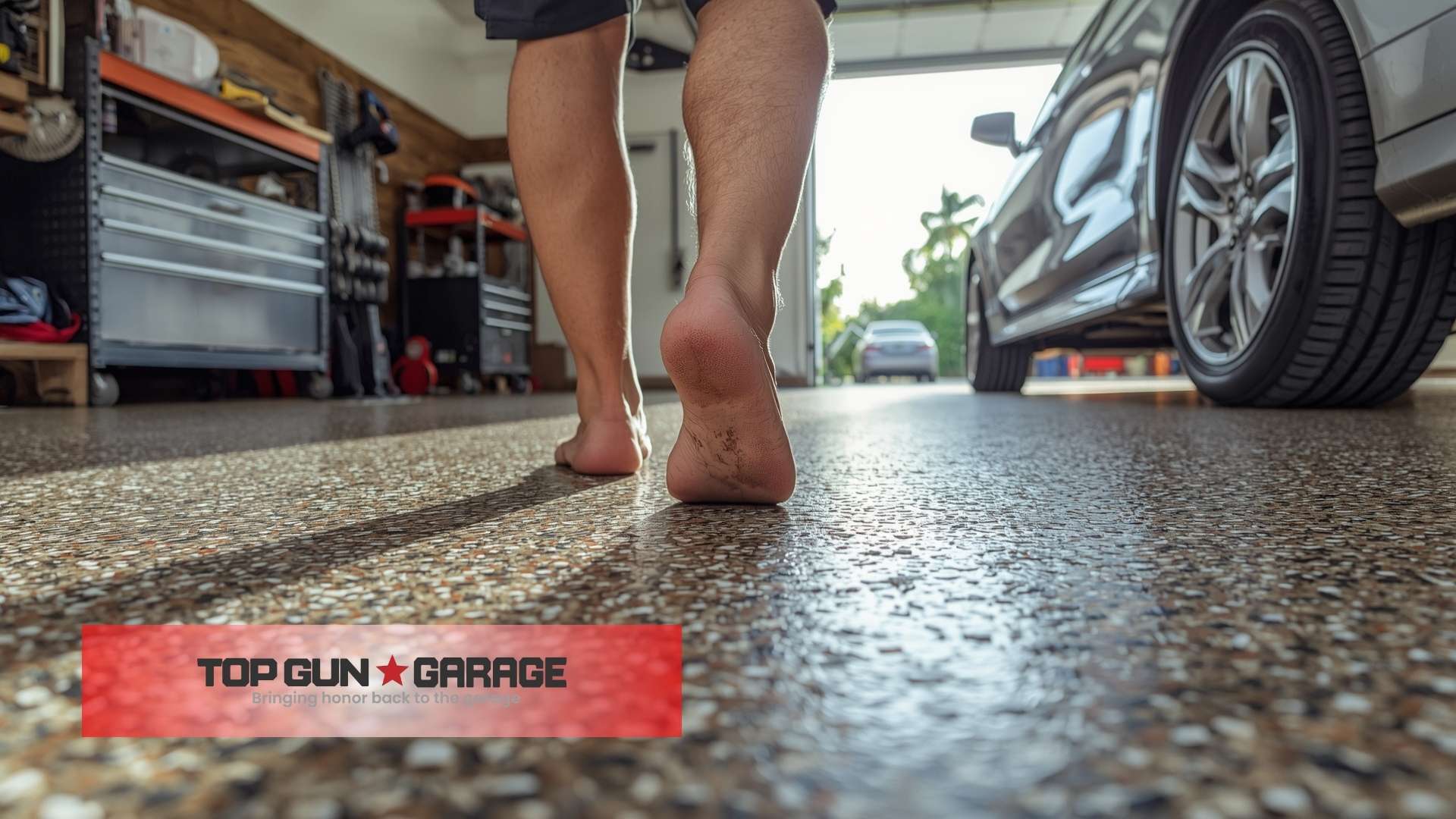 According to the National Institute for Standards and Technology, human skin can sustain first-degree burns at just 118°F, with second-degree burns occurring at 131°F. That means an unprotected garage floor in Naples or Fort Myers isn’t just uncomfortable — it’s a genuine safety hazard for your family, guests, and pets.
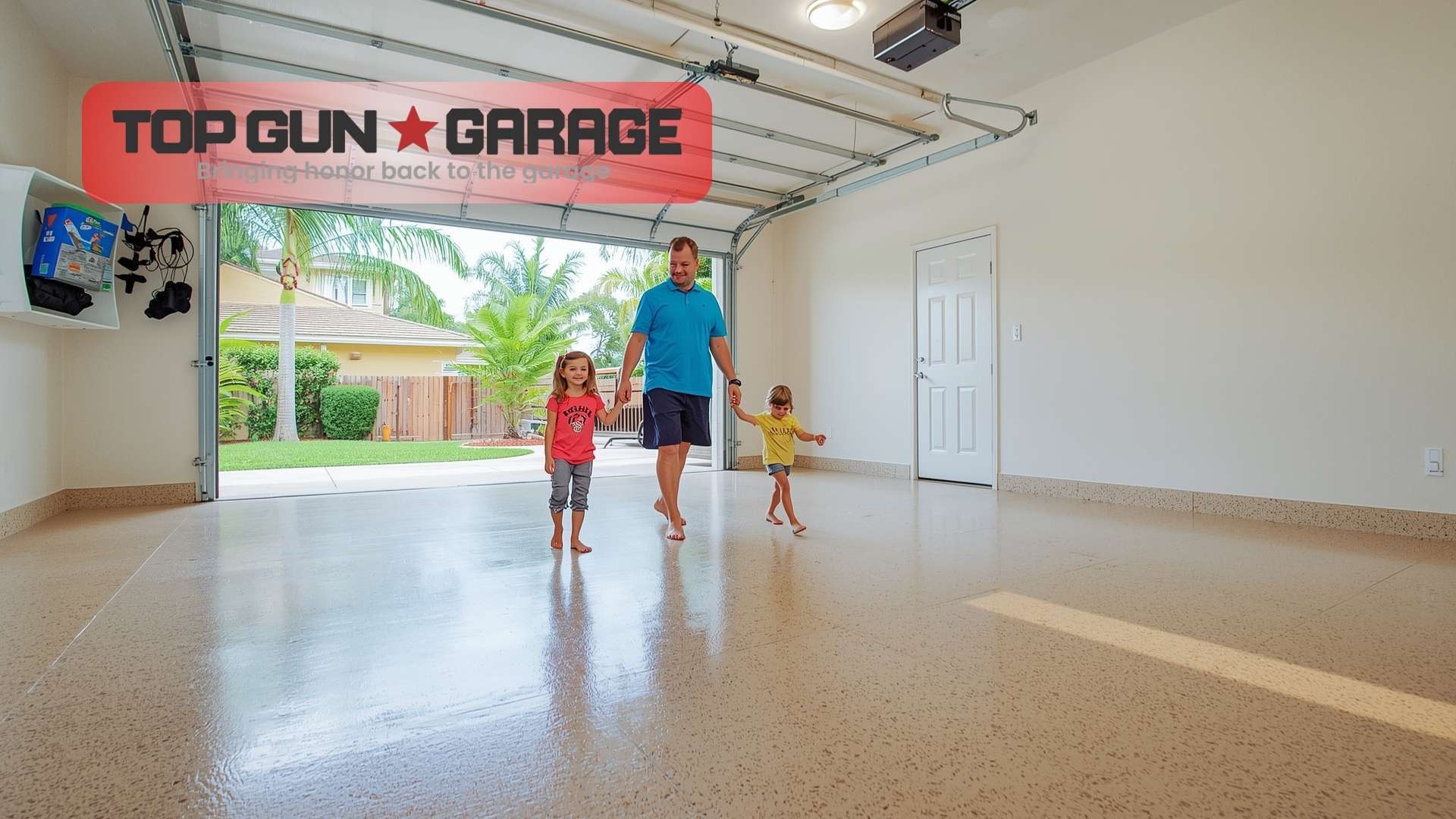 This creates several real-world problems for Southwest Florida homeowners: