 Skip to content



When converting a raw storage space into a livable accessory dwelling unit (ADU), the most critical decision is selecting the right floor finish. The best flooring for garage apartments balances residential comfort with the structural realities of concrete slabs, making luxury vinyl plank (LVP), polished concrete, and multi-layered resinous coatings the top choices in 2026. These materials provide superior moisture resistance, handle temperature fluctuations effectively, and offer stunning aesthetic versatility that elevates a basic conversion into a premium living space.
Key Takeaways
- Moisture Management is Mandatory: Concrete slabs transmit moisture; a proper vapor barrier is required regardless of the final surface material.
- Luxury Vinyl Plank (LVP) Leads in Versatility: Offering 100% waterproof cores and built-in acoustic underlayments, LVP is the most popular choice for rapid ADU conversions.
- Resinous Coatings Offer Seamless Durability: High-performance coatings provide an impenetrable, easy-to-clean surface ideal for multi-use spaces.
- Thermal Bridging Requires Attention: Uninsulated slabs draw heat away from the room; integrating radiant heating or insulating underlayments drastically improves comfort.
- Preparation Dictates Lifespan: Skipping mechanical surface profiling or moisture testing is the leading cause of premature flooring failure in converted spaces.
The Unique Challenges of Garage Apartment Conversions
Garage apartments present distinct structural and environmental challenges that differentiate them from traditional residential builds. According to a 2026 report by the National Association of Home Builders (NAHB), accessory dwelling unit construction has increased by 34% over the past three years, yet nearly 40% of DIY conversions experience flooring failures within the first 24 months due to improper subfloor assessment.
The primary culprit is the Moisture Vapor Transmission Rate (MVTR). Concrete is a porous material. Even if a slab appears bone-dry on the surface, hydrostatic pressure from the soil beneath can force water vapor upward. If an impermeable floor covering is installed without a proper vapor retarder, this trapped moisture leads to adhesive failure, buckling planks, and hazardous mold proliferation. The Environmental Protection Agency (EPA) notes that controlling indoor moisture is the single most effective strategy for maintaining healthy indoor air quality in converted ground-floor spaces.
Furthermore, standard garage slabs lack the thermal breaks found in modern home foundations. This thermal bridging means the floor will naturally acclimate to the temperature of the earth below it, often feeling uncomfortably cold in winter and sweating with condensation during humid summer months. Addressing these foundational realities is non-negotiable before selecting your aesthetic finish.
Top Floor Finishes for Garage Apartments in 2026
Modern material science has expanded the catalog of viable options for ground-level conversions. Today’s homeowners can achieve high-end aesthetics without compromising on the rugged durability required for spaces built directly on grade.
Polished Concrete: Industrial Chic Meets Durability
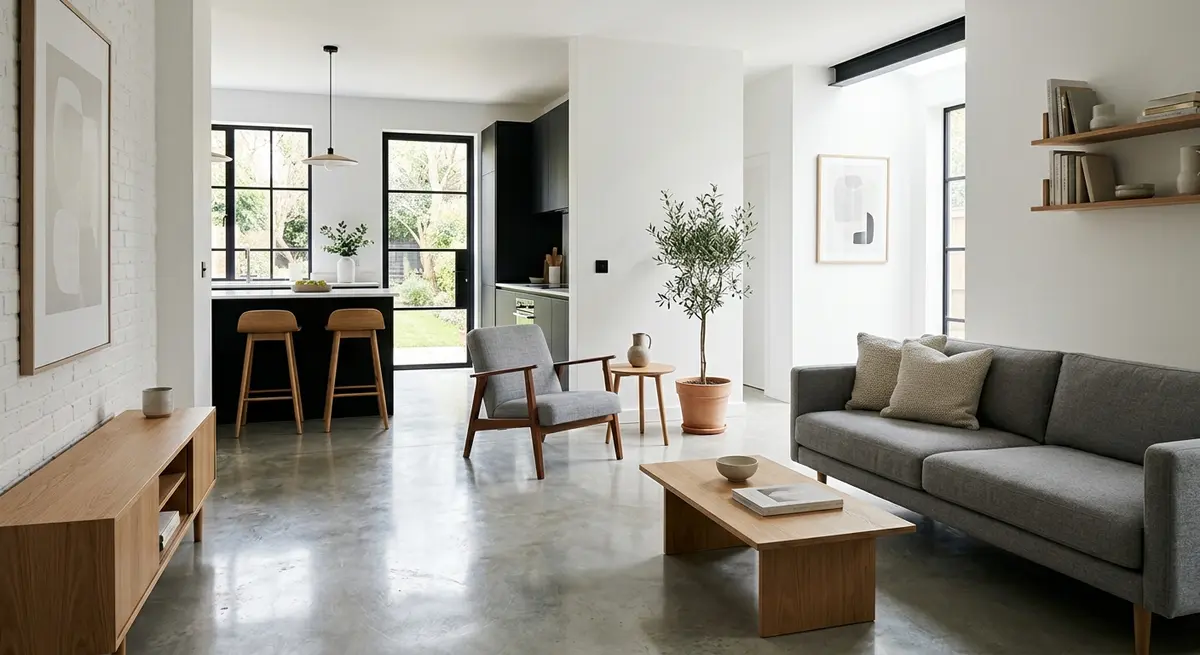
Polished concrete has evolved from a commercial staple into a highly sought-after residential finish. The process involves mechanically grinding the existing slab with progressively finer diamond abrasives, then applying a densifier to harden the surface before a final polish. The result is a lustrous, stone-like finish that reflects ambient light, making compact apartments feel significantly larger.
As Marcus Thorne, Lead Architect at the American Institute of Building Design, explains: “Polished concrete is the ultimate truth-teller in architecture. It embraces the original industrial nature of the space while providing a zero-VOC, hyper-durable surface that will outlast the building itself.” Homeowners can customize the look with penetrating acid stains, integral dyes, or by exposing the aggregate beneath the surface cream.
Luxury Vinyl Plank (LVP): Waterproof and Versatile
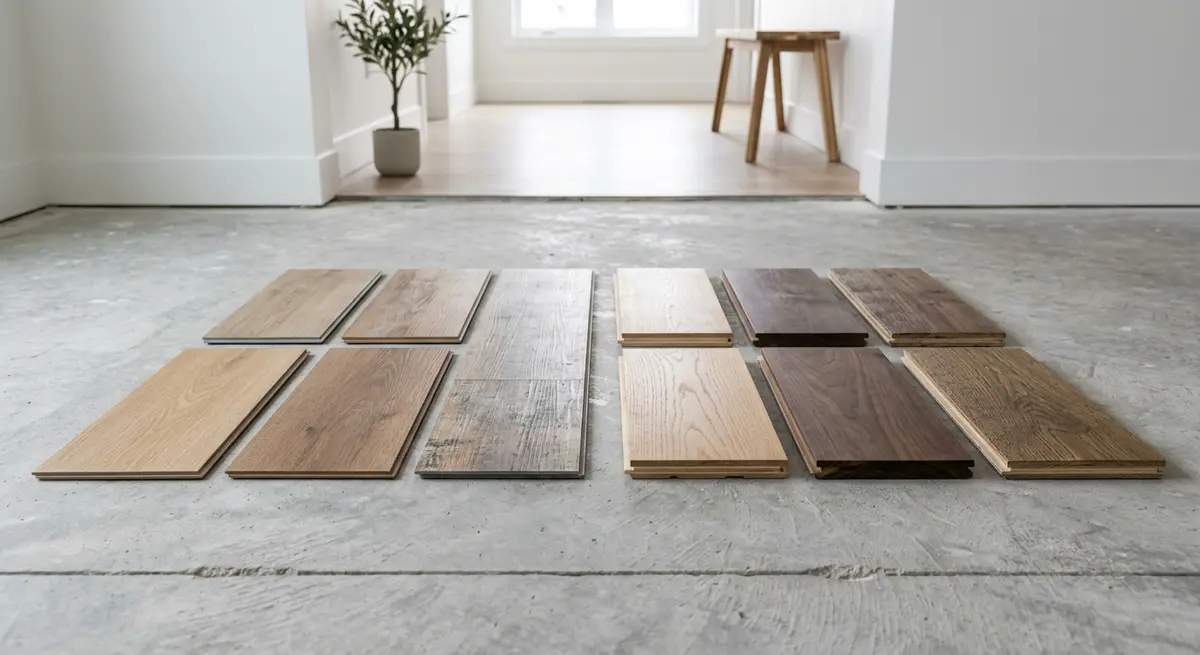
Luxury Vinyl Plank remains the undisputed champion of residential garage conversions. Premium LVP features a rigid core construction—often Stone Polymer Composite (SPC) or Wood Plastic Composite (WPC)—making it dimensionally stable and 100% waterproof. Advanced high-definition photographic layers and embossed-in-register (EIR) textures create an appearance indistinguishable from natural hardwood or stone.
For spaces where noise transmission is a concern, LVP with an attached cork or cross-linked polyethylene (IXPE) underlayment provides excellent acoustic dampening. Furthermore, its floating installation method allows it to bridge minor subfloor imperfections that would otherwise require extensive self-leveling compounds.
High-Performance Resinous Coatings
For those seeking a truly seamless, modern aesthetic, multi-layered resinous systems offer unparalleled resilience. While often associated with vehicle storage, decorative flake systems, metallic pigments, and solid-color polyaspartic topcoats have found a permanent home in modern ADU design. These systems create an impermeable barrier that is highly resistant to spills, pet accidents, and heavy furniture indentations.
When selecting these systems, it is crucial to look beyond basic DIY kits. Professional-grade applications mirror the durability of commercial-grade floor coatings, ensuring the surface won’t peel or hot-tire pickup if the space is ever reverted to a traditional garage. Additionally, these seamless surfaces are exceptional at flood-resistant flooring solutions, offering peace of mind in coastal or low-lying areas.
Engineered Hardwood: Warmth with Structural Stability
While solid hardwood is universally discouraged for below-grade or on-grade concrete slabs due to its tendency to warp and cup, engineered hardwood provides a viable alternative. Constructed with a real wood veneer bonded to a dimensionally stable plywood or high-density fiberboard core, engineered planks resist the expansion and contraction caused by humidity swings.
However, engineered wood requires the most rigorous subfloor preparation. A premium moisture barrier and a perfectly flat subfloor are mandatory. When properly executed, it brings an unmatched warmth and traditional elegance to the living space.
Comparing Garage Apartment Flooring Options
To facilitate an informed decision, the following table compares the primary flooring categories across critical performance metrics relevant to garage apartment conversions.
| Flooring Material | Moisture Resistance | Thermal Comfort | Average Lifespan | Best Application |
|---|---|---|---|---|
| Luxury Vinyl Plank (LVP) | Excellent (100% Waterproof) | Moderate to High | 15 – 25 Years | Rapid conversions, budget-conscious projects |
| Polished Concrete | High (When properly sealed) | Low (Requires area rugs or radiant heat) | 50+ Years | Industrial aesthetics, high-traffic areas |
| Resinous Coatings | Exceptional (Seamless barrier) | Low to Moderate | 15 – 30 Years | Multi-use spaces, modern minimalist designs |
| Engineered Hardwood | Low to Moderate | High | 20 – 40 Years | Premium luxury apartments, traditional decor |
Step-by-Step: Preparing a Garage Floor for Living Space
The longevity of any stunning floor finish is entirely dependent on the quality of the subfloor preparation. Rushing this phase is a costly error. Follow these critical steps when preparing the space before contractors arrive or attempting a DIY installation.
- Conduct Rigorous Moisture Testing: Utilize a Calcium Chloride test (ASTM F1869) or an in-situ relative humidity probe (ASTM F2170) to quantify moisture vapor emissions. According to the Concrete Network, emissions exceeding 3 pounds per 1,000 square feet over 24 hours require mitigation.
- Mechanical Surface Profiling: Remove old paints, sealers, or oil stains using a walk-behind diamond grinder. This opens the concrete pores, ensuring proper adhesion for vapor barriers or leveling compounds.
- Apply a Moisture Vapor Retarder: Depending on the test results, apply a roll-on epoxy vapor barrier or lay down a 6-mil polyethylene sheet. This step is critical for handling severe weather and flooding in coastal climates.
- Address Structural Imperfections: Fill all control joints, cracks, and divots with a polyurea or epoxy filler. Use a Portland cement-based self-leveling underlayment to correct low spots. Most rigid flooring requires a subfloor flat to within 3/16 of an inch over a 10-foot span.
- Acclimate the Materials: Bring the flooring materials into the climate-controlled garage apartment for at least 48 hours prior to installation to prevent post-installation expansion or contraction.
Managing Climate and Temperature Fluctuations
Garage apartments frequently suffer from poor thermal regulation. Because the concrete slab sits directly on the earth, it acts as a massive heat sink. In colder climates, this creates an uncomfortably frigid floor; in warmer, humid climates, it can lead to surface condensation as warm air meets the cool concrete.
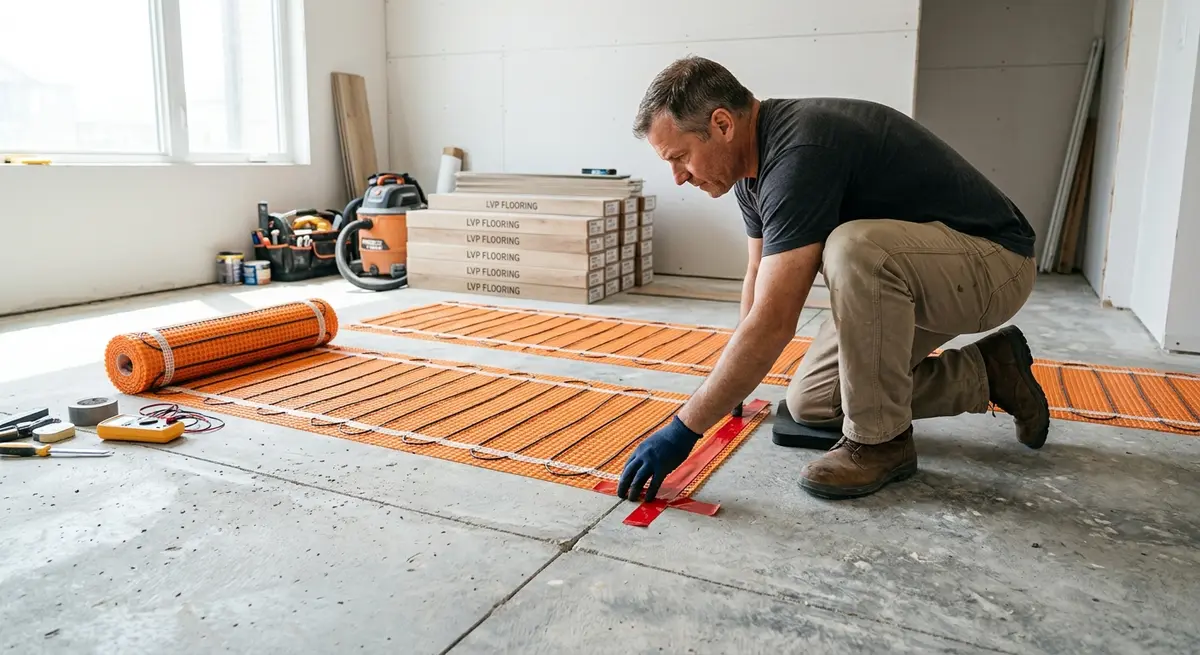
To combat this, the U.S. Department of Energy highly recommends integrating electric radiant floor heating systems during the conversion process. These ultra-thin heating mats can be embedded in self-leveling compound directly beneath LVP, engineered wood, or tile. Radiant heating warms the objects and people in the room rather than just the air, providing highly efficient, draft-free comfort.
In hot climates, managing extreme floor temperatures involves proper insulation of the garage doors (if kept intact) and utilizing UV-stable window treatments to prevent direct sunlight from warping synthetic flooring materials.
Avoiding Common Pitfalls and Contractor Scams
The surge in ADU conversions has unfortunately led to a rise in unqualified contractors offering subpar flooring installations. When hiring professionals, it is vital to understand the multi-day installation processes required for high-quality finishes. Contractors promising “one-day miracles” for complex moisture mitigation and leveling are often cutting corners that will lead to delamination within a year.
Always insist on seeing the moisture test results before any material is laid down. Furthermore, spend time evaluating contractor reviews specifically related to interior conversions rather than just exterior concrete work. A reputable installer will provide a detailed written warranty that covers both the material and the labor against moisture-related failures.
Frequently Asked Questions (FAQ)
Can I install solid hardwood in a garage apartment?
No, solid hardwood is highly susceptible to moisture and temperature fluctuations. It will inevitably warp, cup, or buckle when installed directly over an on-grade concrete slab. Engineered hardwood or wood-look LVP are the correct alternatives.
Do I need a vapor barrier if my garage floor looks completely dry?
Yes. Concrete is porous, and hydrostatic pressure can push invisible water vapor through the slab at any time, especially after heavy rains. A vapor barrier is a mandatory insurance policy against flooring failure.
How much ceiling height will I lose by adding flooring?
It depends on the system. Polished concrete and resinous coatings add virtually zero thickness. LVP with a built-in underlayment typically adds about 1/4 to 3/8 of an inch. If you require extensive self-leveling or sleeper subfloors for insulation, you could lose 1 to 3 inches of ceiling height.
Are resinous floor coatings safe for indoor living spaces?
Yes, modern high-quality resinous systems are formulated to be 100% solids with zero Volatile Organic Compounds (VOCs). Once fully cured, they are completely inert, odorless, and safe for continuous human habitation.
Can I leave the original garage floor slope?
Most garage floors are poured with a slight pitch toward the door for drainage. While minor slopes (less than 1/8 inch per foot) might be acceptable for flexible LVP, rigid flooring and furniture placement usually require the floor to be leveled using a self-leveling underlayment.
What is the most cost-effective flooring for a garage conversion?
Luxury Vinyl Plank (LVP) is generally the most cost-effective option. It balances a relatively low material cost with a fast, floating installation method that minimizes expensive subfloor preparation compared to tile or engineered wood.
Conclusion
Selecting the right floor finish for a garage apartment is a delicate balance of aesthetic ambition and structural reality. By understanding the unique challenges of concrete slabs—specifically moisture vapor transmission and thermal bridging—you can choose a material that will look stunning and perform flawlessly for decades. Whether you opt for the industrial elegance of polished concrete, the waterproof versatility of luxury vinyl plank, or the seamless resilience of a multi-layered coating, proper preparation remains the ultimate key to success. Don’t let a poor foundation ruin your investment in a new living space. Contact us today to consult with our flooring experts and ensure your garage apartment conversion is built on a solid, beautiful foundation.