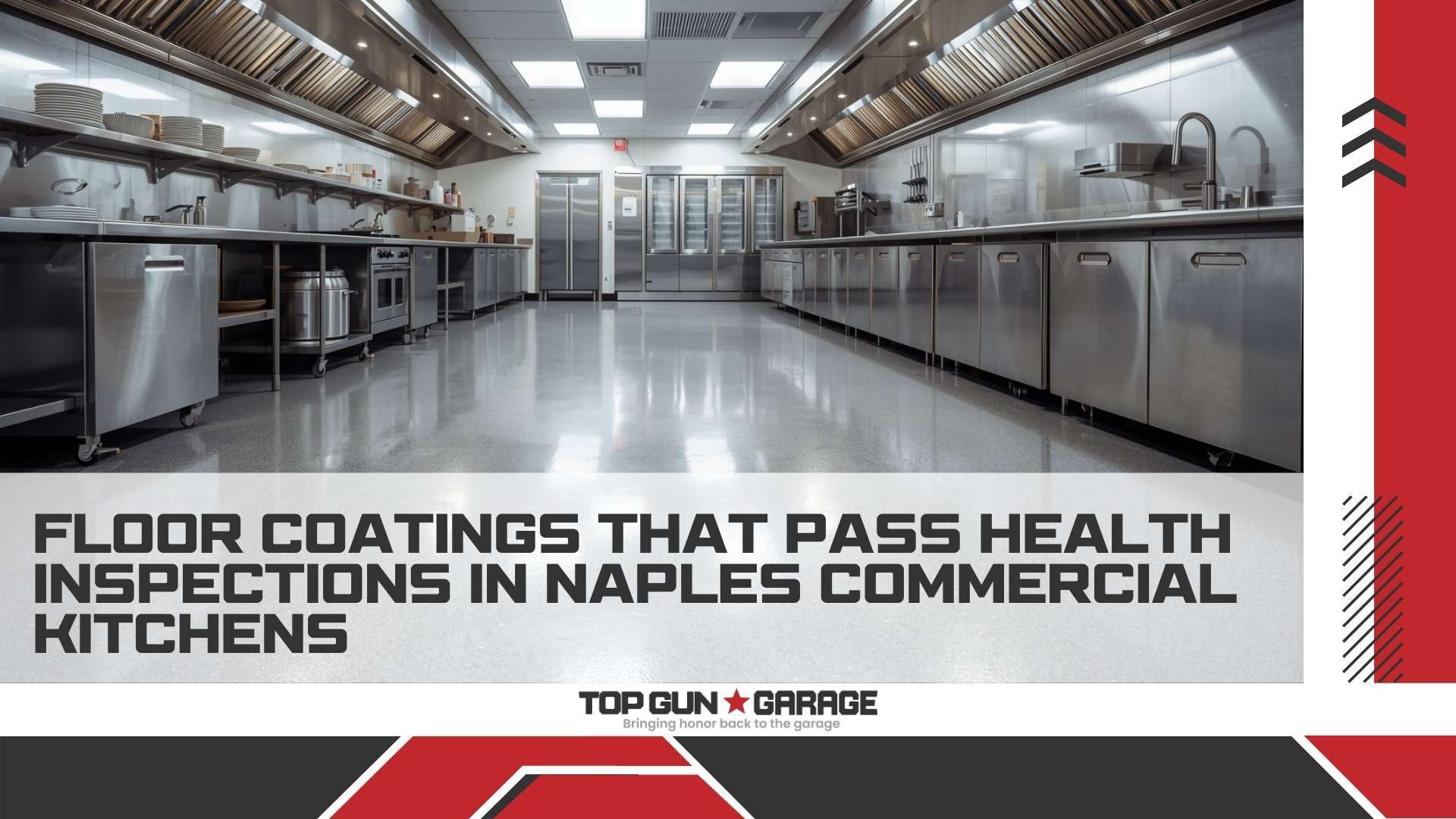
The right restaurant kitchen floor coating in Naples is a seamless, non-porous epoxy or polyaspartic system applied at 12-20 mils thickness with antimicrobial additives and a slip-resistant surface. These coatings meet FDA and USDA standards for food contact areas, pass Collier County health inspections, and withstand the constant abuse of commercial kitchen environments.
According to the National Restaurant Association, flooring violations account for 23% of health inspection failures in Florida restaurants. The difference between passing and failing often comes down to one factor: whether your floor coating creates a seamless, sanitary surface that inspectors can verify with a simple wipe test.
Naples restaurants face unique challenges. Humidity levels averaging 75% year-round accelerate coating degradation. Salt air from the Gulf corrodes inferior systems within 2-3 years. And the combination of hot cooking oil, acidic cleaning chemicals, and constant foot traffic destroys coatings not engineered for commercial kitchen abuse.
What Naples Health Inspectors Look For in Kitchen Floors
Collier County health inspectors evaluate kitchen floors against Florida Administrative Code 64E-11, which mandates smooth, durable, and easily cleanable surfaces in food preparation areas. Inspectors specifically check for cracks, pitting, grout lines, and any surface irregularities where bacteria can harbor.
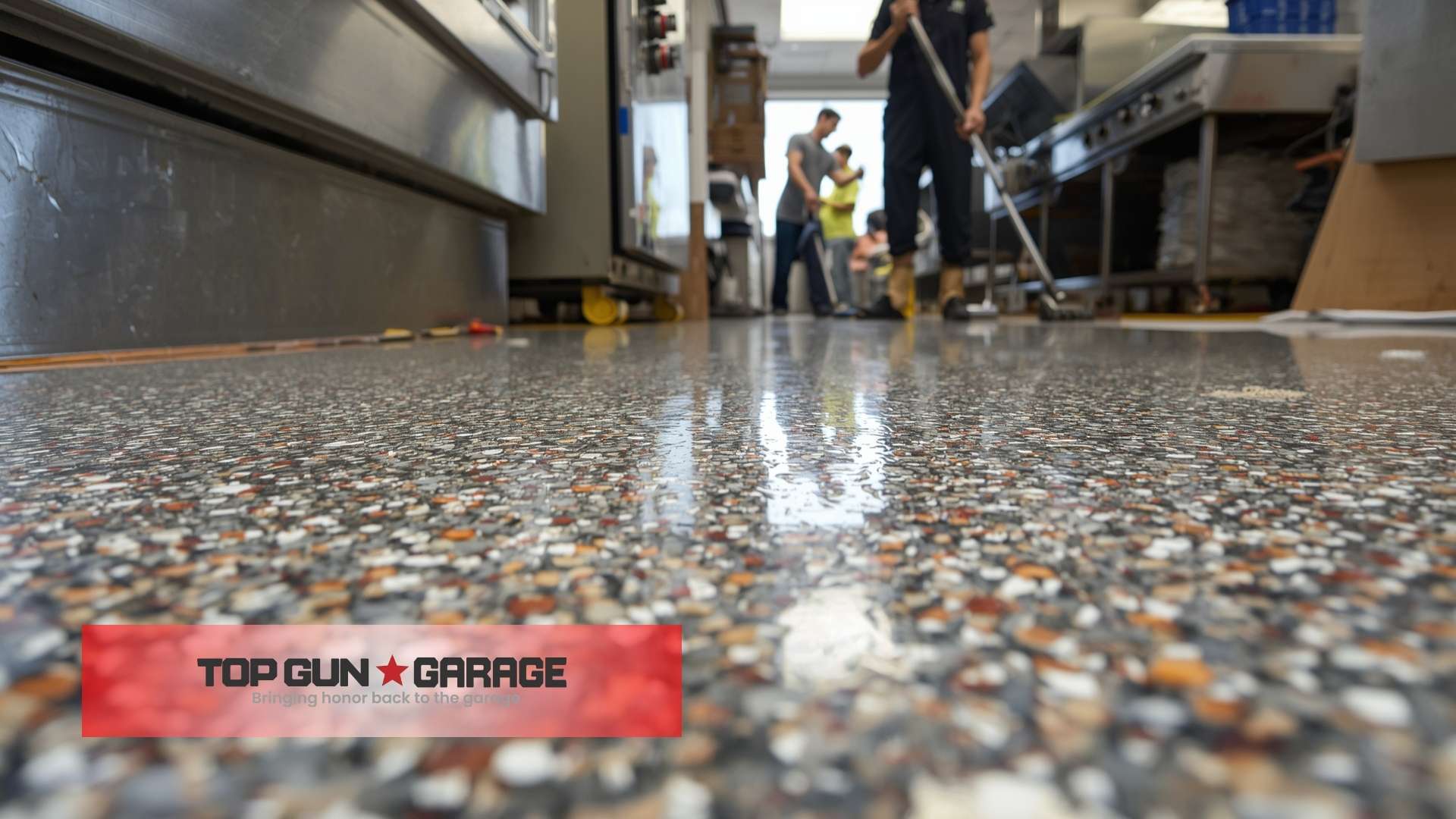
The Florida Department of Business and Professional Regulation (DBPR) requires commercial kitchen floors to be non-absorbent and resistant to acids, greases, and cleaning chemicals. Porous surfaces like unsealed concrete or degraded coatings automatically trigger violations.
Key Inspection Criteria for Commercial Kitchen Floors
Seamless construction: No grout lines, seams, or joints where bacteria can accumulate. Epoxy and polyaspartic coatings applied as monolithic systems meet this requirement.
Non-porous surface: The coating must prevent liquid absorption. Professional-grade epoxy systems achieve less than 0.1% water absorption per ASTM D570 testing.
Chemical resistance: Floors must withstand daily exposure to degreasers, sanitizers, and acidic food products without degradation. USDA-approved coatings are formulated for this environment.
Coved base integration: Health codes require floors to meet walls with a curved transition (typically 4-6 inches) that eliminates 90-degree corners where debris collects.
Adequate slope to drains: Kitchen floors must slope at 1/8 to 1/4 inch per foot toward drains. Coatings must be applied at consistent thickness without creating ponding areas.
Coating Systems That Meet Commercial Kitchen Standards
Not all floor coatings qualify for restaurant kitchen use. The coating must be FDA-compliant for incidental food contact (FDA 21 CFR 175.300) and USDA-accepted for use in food processing areas. Three coating types consistently meet these standards in Naples commercial kitchens.
Epoxy Mortar Systems
Epoxy mortar systems combine epoxy resin with silica aggregate to create floors capable of withstanding extreme abuse. Applied at 1/4 to 3/8 inch thickness, these systems handle thermal shock from boiling liquids, resist impact from dropped equipment, and provide the longest service life in high-volume kitchens.
The International Concrete Repair Institute (ICRI) classifies epoxy mortar as the preferred system for commercial kitchens processing over 500 meals daily. Initial cost runs $12-18 per square foot installed, but lifespan exceeds 15-20 years with proper maintenance.
Polyaspartic-Epoxy Hybrid Systems
Hybrid systems use an epoxy base coat for adhesion and chemical resistance, topped with a polyaspartic finish for UV stability and rapid cure times. This combination delivers 85% of the performance of epoxy mortar at 60% of the cost.
For Naples restaurants, the polyaspartic topcoat provides critical UV resistance that prevents yellowing from kitchen lighting and any natural light exposure. The system cures in 4-6 hours, minimizing business disruption compared to 24-72 hours for traditional epoxy alone.
Urethane Cement Systems
Urethane cement represents the highest-performance option for kitchens with extreme thermal demands. These systems withstand temperatures from -40 degrees F to 250 degrees F without cracking or delaminating, making them essential for kitchens with walk-in freezers, steam equipment, or high-temperature ovens.
According to the Concrete Polishing Association of America (CPAA), urethane cement systems maintain 95% of their bond strength after 1,000 thermal cycles. Cost ranges from $15-25 per square foot, justified by the 20+ year lifespan in demanding environments.
Commercial Kitchen Floor Coating Comparison
Coating Type
Cost/Sq Ft
Lifespan
Cure Time
Best For
Epoxy Mortar
$12-18
15-20 years
24-72 hours
High-volume kitchens
Polyaspartic-Epoxy
$8-14
10-15 years
4-6 hours
Quick turnaround
Urethane Cement
$15-25
20+ years
12-24 hours
Extreme temperatures
DIY Epoxy Paint
$2-4
1-2 years
24-48 hours
NOT RECOMMENDED
Why DIY Epoxy Fails in Commercial Kitchens
Box-store epoxy kits marketed for garage floors fail catastrophically in restaurant kitchens. The failure rate exceeds 90% within the first year according to industry data from the Concrete Polishing Association of America.
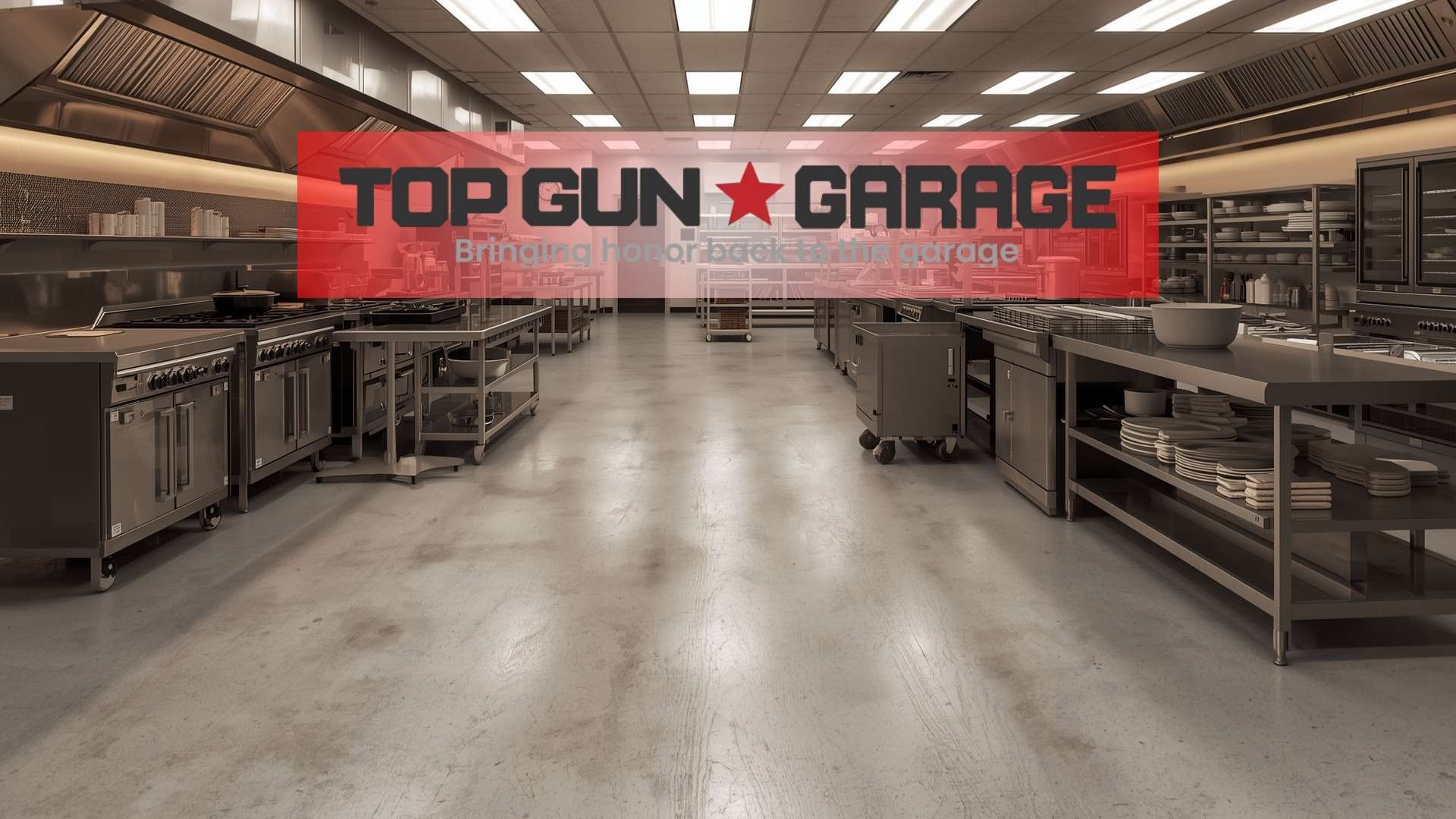
The fundamental problem is thickness. DIY kits apply at 2-4 mils, while commercial kitchen environments require 12-20 mils minimum. At 2 mils thickness, hot grease penetrates the coating within weeks. Chemical sanitizers dissolve the surface within months. Impact from dropped pans and equipment creates chips that become bacterial harboring points.
Surface preparation compounds the problem. Professional installations use diamond grinding to achieve a concrete surface profile (CSP) of 3-5 per ICRI standards. DIY acid etching achieves CSP 1-2 at best, resulting in coating adhesion failures that manifest as peeling, bubbling, and delamination.
A Naples restaurant owner who attempts DIY coating faces the worst outcome: failing a health inspection, closing for remediation, paying for professional coating removal ($3-5 per square foot), then paying for proper installation. Total cost often exceeds 300% of doing it right initially.
How Naples Climate Affects Kitchen Floor Coatings
Naples presents a unique combination of environmental stressors that accelerate coating degradation. Understanding these factors explains why coatings that perform adequately in northern climates fail prematurely in Southwest Florida.
Humidity and Moisture Vapor Transmission
Naples averages 75% relative humidity year-round, with summer months exceeding 85%. This humidity drives moisture vapor transmission (MVT) through concrete slabs at rates 2-3 times higher than northern states. According to the Portland Cement Association, Florida slabs commonly test at 8-12 pounds MVT per 1,000 square feet per 24 hours, well above the 3-pound threshold that causes coating failures.
Professional installers address MVT with moisture mitigation primers that bond to concrete and block vapor transmission. These primers add $2-4 per square foot to project cost but prevent the bubbling and delamination that plague installations where moisture testing was skipped.
Salt Air Corrosion
Restaurants within 5 miles of the Gulf experience accelerated coating degradation from airborne salt. Salt particles infiltrate HVAC systems and settle on floor surfaces, where they combine with cleaning chemicals to create corrosive compounds that attack coating adhesion.
Marine-grade epoxy formulations resist salt corrosion through modified resin chemistry and additional cross-linking agents. These formulations cost 15-20% more than standard commercial epoxy but extend service life by 40-50% in coastal locations.
Slip Resistance Requirements for Kitchen Safety
Commercial kitchen floors must balance two competing requirements: smooth enough for cleaning and sanitation, yet textured enough to prevent slip-and-fall accidents. The National Floor Safety Institute (NFSI) recommends a coefficient of friction (COF) of 0.60 or higher for wet commercial kitchens.
Professional coatings achieve this through aggregate broadcast systems. Aluminum oxide, quartz, or polymer beads are broadcast into wet coating, then sealed with a clear topcoat. The result is a surface with consistent texture that maintains traction when wet with water, grease, or food debris.
OSHA statistics indicate that slips and falls cause 25% of workplace injuries in food service, with average claims exceeding $40,000. A properly specified slip-resistant floor coating pays for itself by preventing a single serious injury.
Professional Installation Process for Restaurant Kitchens
Professional installation follows a systematic process designed to ensure coating adhesion, proper thickness, and compliance with health codes. Cutting corners on any step compromises the entire system.
Step 1: Concrete assessment and moisture testing. Technicians evaluate concrete condition using ASTM F2659 relative humidity testing and ASTM D4263 plastic sheet testing. Results determine whether moisture mitigation is required before coating.
Step 2: Surface preparation. Diamond grinding removes existing coatings, surface contamination, and weak concrete to achieve ICRI CSP 3-5. This mechanical preparation creates the profile needed for chemical and mechanical bonding.
Step 3: Crack and joint repair. Structural cracks receive epoxy injection. Control joints are cleaned and filled with semi-rigid polyurea that accommodates thermal movement. Spalls and divots are patched with epoxy mortar.
Step 4: Primer application. Moisture-mitigating or penetrating primer is applied to seal the concrete and provide a bonding surface for subsequent coats.
Step 5: Body coat application. The primary coating layer is applied at specified thickness (typically 10-20 mils per coat). Multiple coats may be required to achieve total system thickness.
Step 6: Aggregate broadcast. Slip-resistant aggregate is broadcast into wet coating at specified density (typically 15-25 pounds per 100 square feet).
Step 7: Topcoat application. Clear or tinted topcoat encapsulates aggregate and provides the wear surface. UV-stable polyaspartic topcoats are standard for areas with any light exposure.
Step 8: Cove base installation. Integral cove base is formed using the same coating system, creating a seamless transition from floor to wall that meets health code requirements.
Maintenance Requirements for Long-Term Performance
Proper maintenance extends coating life by 30-50% and maintains the sanitary surface required for health inspections. Daily and periodic maintenance protocols differ significantly from standard floor care.
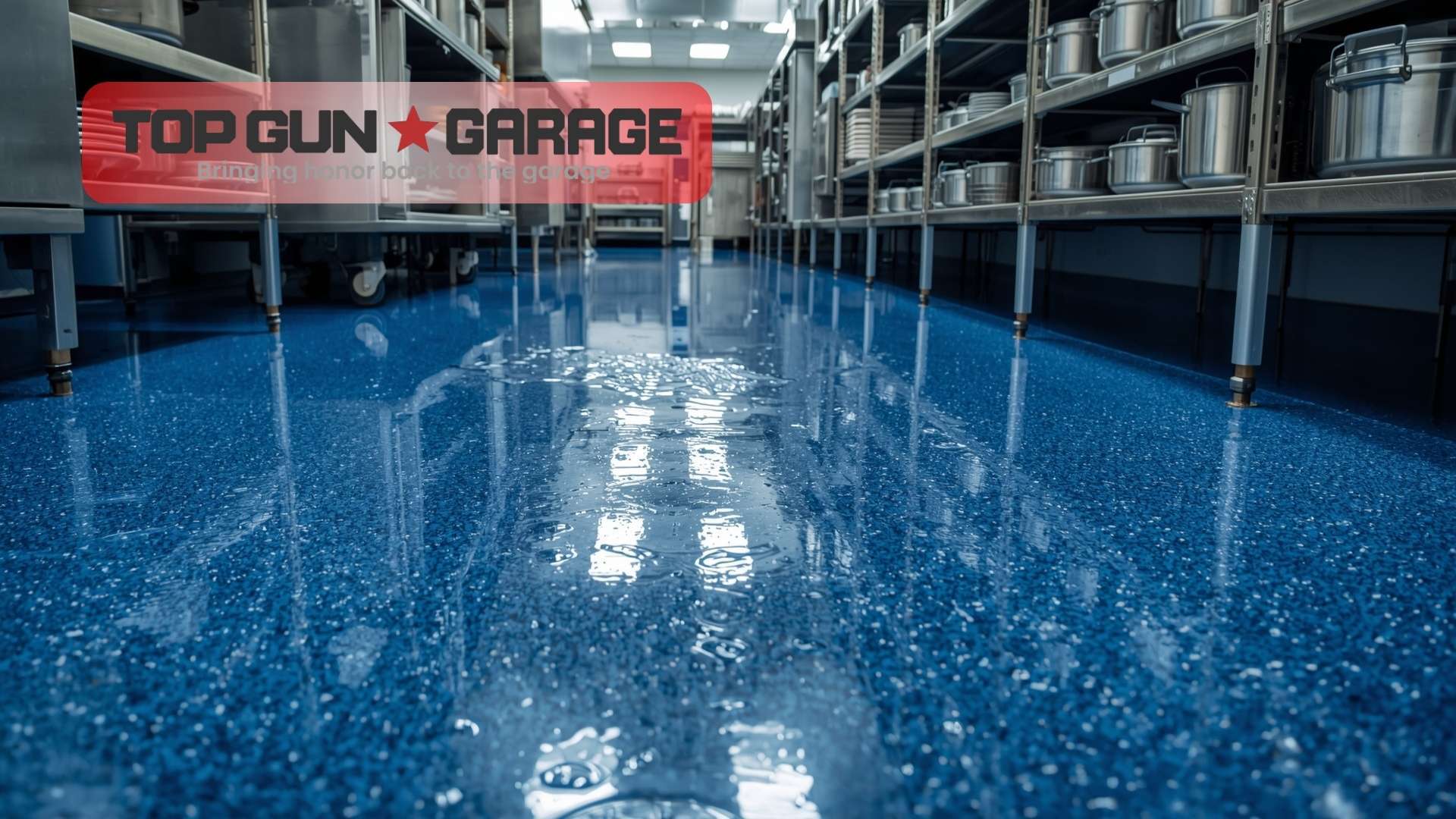
Daily cleaning: Remove debris with soft-bristle broom or dust mop. Mop with neutral pH cleaner (pH 7-9) diluted per manufacturer instructions. Avoid acidic cleaners below pH 5, which can dull the surface over time. Rinse thoroughly to remove cleaning residue.
Weekly deep cleaning: Apply enzymatic degreaser to break down accumulated grease films. Use auto-scrubber with non-abrasive pad (white or red) for large areas. Pay particular attention to cove base transitions and around equipment bases.
Quarterly maintenance: Inspect for chips, cracks, or wear patterns. Document any damage for warranty claims. Apply sacrificial wax or floor finish to high-traffic areas if specified by coating manufacturer.
Avoid these common mistakes: Never use abrasive pads (green or black), which scratch the surface. Avoid leaving standing water, which can penetrate micro-scratches. Do not use bleach concentrations above manufacturer recommendations.
Frequently Asked Questions
How long does restaurant kitchen floor coating installation take?
Professional installation typically requires 3-5 days for a standard restaurant kitchen (500-1,500 square feet). This includes 1 day for surface preparation, 1-2 days for coating application with cure time between coats, and final cure time before foot traffic (4-24 hours depending on system). Full chemical cure takes 7 days, during which heavy equipment should not be moved across the floor.
What is the cost of commercial kitchen floor coating in Naples?
Commercial kitchen floor coating in Naples ranges from $8-25 per square foot installed, depending on system selection and concrete condition. A typical 800 square foot kitchen costs $6,400-20,000 for professional installation. This includes surface preparation, moisture mitigation if needed, coating application, and coved base installation. Budget an additional 10-15% for concrete repairs if the existing slab has significant damage.
Can you coat a restaurant floor without closing the kitchen?
Complete closure is required during coating installation due to equipment removal, surface preparation dust, and coating fumes. However, phased installation can minimize closure time. Contractors can coat half the kitchen at a time, allowing limited operation with temporary equipment relocation. Polyaspartic systems with 4-6 hour cure times enable overnight installation for small areas, with the kitchen operational by morning service.
How often do commercial kitchen floor coatings need replacement?
Professional-grade coatings last 10-20 years before requiring full replacement. High-traffic areas may need spot repairs or topcoat refresh at 5-7 year intervals. Proper maintenance significantly extends service life. Signs that indicate replacement is needed include widespread delamination (more than 10% of surface area), deep scratches that penetrate to concrete, or coating that no longer passes health inspection standards.
Will epoxy floor coating make my kitchen floor slippery?
A properly specified epoxy floor coating with aggregate broadcast provides better slip resistance than bare concrete, quarry tile, or VCT in wet conditions. The coefficient of friction (COF) for commercial kitchen coatings ranges from 0.60-0.80 when tested per ANSI A137.1 standards. This exceeds the minimum 0.60 COF recommended by the National Floor Safety Institute for wet commercial kitchens. Without aggregate, smooth epoxy surfaces can become dangerously slippery when wet with grease.
What happens if my kitchen floor coating fails a health inspection?
A flooring violation typically results in a written warning with a specified correction period (usually 30 days for non-critical violations). Repeated violations or critical failures such as active bacterial contamination can result in temporary closure until remediation is complete. Remediation requires removing the failed coating, preparing the concrete surface, and installing a compliant coating system. Cost for emergency remediation often runs 40-60% higher than planned installation due to expedited scheduling and disposal of contaminated materials.
Get Your Naples Restaurant Kitchen Floor Coating Done Right
A professional floor coating protects your investment, passes health inspections, and creates a safer working environment for your staff. Top Gun Garage specializes in commercial-grade floor coatings engineered for Southwest Florida conditions.
Our team evaluates your specific kitchen environment, recommends the appropriate coating system, and provides detailed specifications that meet health code requirements. We stand behind our work with warranty coverage that protects your investment for years to come.
Contact Top Gun Garage for a free consultation and detailed quote for your Naples restaurant kitchen floor coating project.
 Skip to content



 The Florida Department of Business and Professional Regulation (DBPR) requires commercial kitchen floors to be non-absorbent and resistant to acids, greases, and cleaning chemicals. Porous surfaces like unsealed concrete or degraded coatings automatically trigger violations.
 The fundamental problem is thickness. DIY kits apply at 2-4 mils, while commercial kitchen environments require 12-20 mils minimum. At 2 mils thickness, hot grease penetrates the coating within weeks. Chemical sanitizers dissolve the surface within months. Impact from dropped pans and equipment creates chips that become bacterial harboring points.
Surface preparation compounds the problem. Professional installations use diamond grinding to achieve a concrete surface profile (CSP) of 3-5 per ICRI standards. DIY acid etching achieves CSP 1-2 at best, resulting in coating adhesion failures that manifest as peeling, bubbling, and delamination.
A Naples restaurant owner who attempts DIY coating faces the worst outcome: failing a health inspection, closing for remediation, paying for professional coating removal ($3-5 per square foot), then paying for proper installation. Total cost often exceeds 300% of doing it right initially.
The fundamental problem is thickness. DIY kits apply at 2-4 mils, while commercial kitchen environments require 12-20 mils minimum. At 2 mils thickness, hot grease penetrates the coating within weeks. Chemical sanitizers dissolve the surface within months. Impact from dropped pans and equipment creates chips that become bacterial harboring points.
Surface preparation compounds the problem. Professional installations use diamond grinding to achieve a concrete surface profile (CSP) of 3-5 per ICRI standards. DIY acid etching achieves CSP 1-2 at best, resulting in coating adhesion failures that manifest as peeling, bubbling, and delamination.
A Naples restaurant owner who attempts DIY coating faces the worst outcome: failing a health inspection, closing for remediation, paying for professional coating removal ($3-5 per square foot), then paying for proper installation. Total cost often exceeds 300% of doing it right initially.
 Daily cleaning: Remove debris with soft-bristle broom or dust mop. Mop with neutral pH cleaner (pH 7-9) diluted per manufacturer instructions. Avoid acidic cleaners below pH 5, which can dull the surface over time. Rinse thoroughly to remove cleaning residue.
Weekly deep cleaning: Apply enzymatic degreaser to break down accumulated grease films. Use auto-scrubber with non-abrasive pad (white or red) for large areas. Pay particular attention to cove base transitions and around equipment bases.
Quarterly maintenance: Inspect for chips, cracks, or wear patterns. Document any damage for warranty claims. Apply sacrificial wax or floor finish to high-traffic areas if specified by coating manufacturer.
Avoid these common mistakes: Never use abrasive pads (green or black), which scratch the surface. Avoid leaving standing water, which can penetrate micro-scratches. Do not use bleach concentrations above manufacturer recommendations.
Daily cleaning: Remove debris with soft-bristle broom or dust mop. Mop with neutral pH cleaner (pH 7-9) diluted per manufacturer instructions. Avoid acidic cleaners below pH 5, which can dull the surface over time. Rinse thoroughly to remove cleaning residue.
Weekly deep cleaning: Apply enzymatic degreaser to break down accumulated grease films. Use auto-scrubber with non-abrasive pad (white or red) for large areas. Pay particular attention to cove base transitions and around equipment bases.
Quarterly maintenance: Inspect for chips, cracks, or wear patterns. Document any damage for warranty claims. Apply sacrificial wax or floor finish to high-traffic areas if specified by coating manufacturer.
Avoid these common mistakes: Never use abrasive pads (green or black), which scratch the surface. Avoid leaving standing water, which can penetrate micro-scratches. Do not use bleach concentrations above manufacturer recommendations.