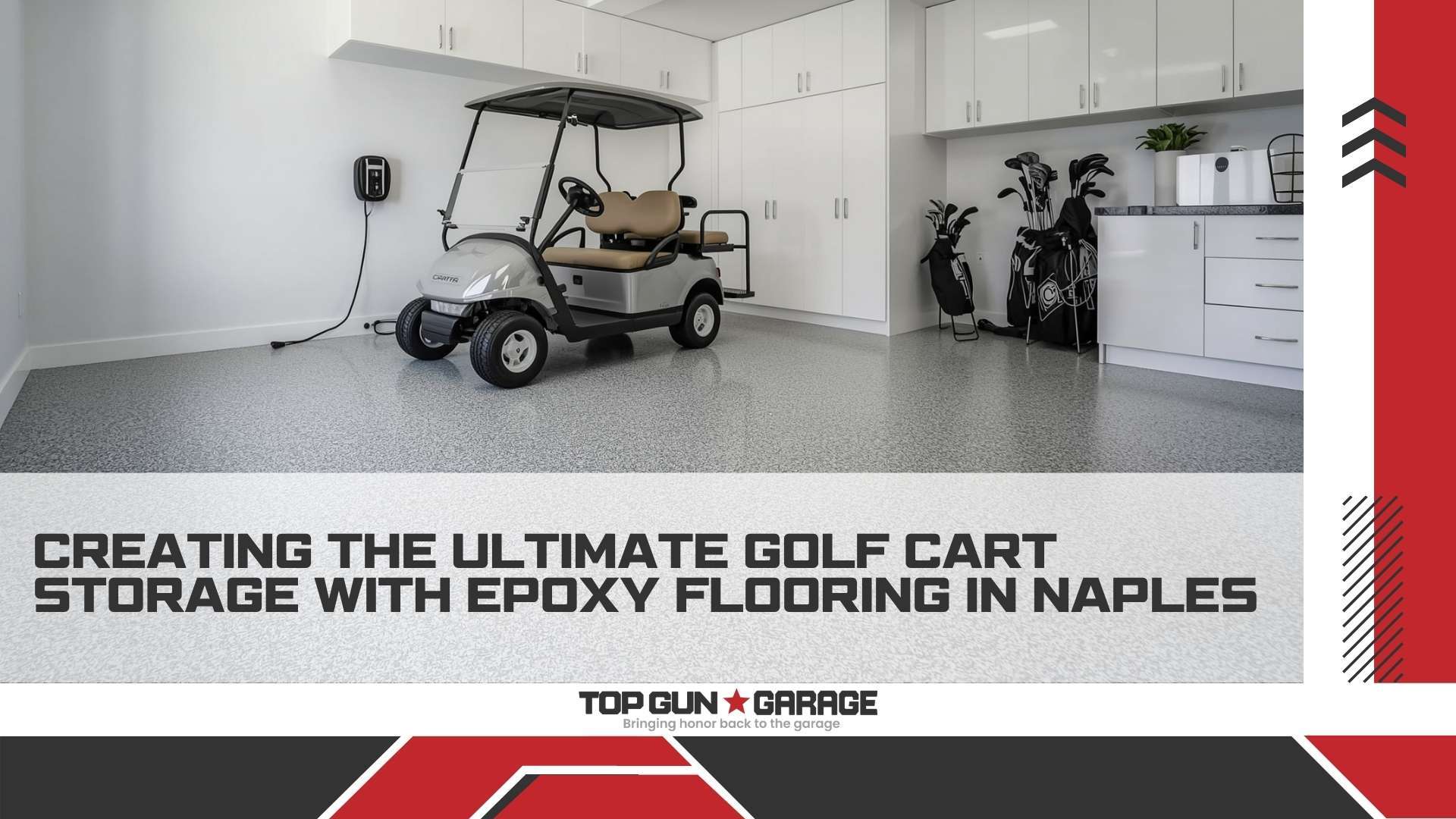
Epoxy flooring Naples golf cart storage requires specialized coatings engineered to resist battery acid spills, prevent hot tire pickup, and withstand the constant moisture exposure from daily cart washing. According to the National Golf Cart Owners Association, properly designed golf cart garages include chemical-resistant flooring rated for pH 1-3 acids, drainage systems that direct water away from storage areas, and surface treatments that maintain traction when wet. Professional epoxy systems meet all three requirements while transforming your garage into a functional, attractive space.
Naples residents who rely on golf carts for neighborhood transportation face unique flooring challenges. The combination of battery maintenance, frequent cleaning, and year-round use demands more than standard garage coatings can deliver. This comprehensive guide explains exactly how to build a golf cart storage space that performs flawlessly in Southwest Florida conditions.
Golf carts inflict different stresses on garage floors than automobiles. Their smaller wheel contact patches concentrate weight onto smaller surface areas, creating higher pounds-per-square-inch loads. Battery-powered carts introduce chemical hazards absent in conventional garages. Understanding these specific demands guides proper flooring selection.
Battery Acid Corrosion Risk
Lead-acid golf cart batteries contain sulfuric acid solution with pH levels between 1.0 and 3.0. During charging and routine maintenance, this acid escapes through vents and connections. According to battery manufacturer Trojan, a typical 6-volt golf cart battery releases approximately 2-4 ounces of hydrogen gas mixed with acid vapor during each charge cycle. This acidic condensation settles on the floor, corroding untreated concrete within months.
Concrete deterioration from battery acid follows a predictable pattern. Initially, the surface develops a rough, pitted texture as acid dissolves the cement paste. Within 12-18 months, larger sections spall and crumble. The American Concrete Institute documents that sulfuric acid attacks calcium hydroxide in concrete, forming calcium sulfate that expands and fractures the surface.
Constant Moisture Exposure
Naples golf cart owners wash their vehicles frequently, often weekly during summer months. Unlike cars that are washed outdoors, golf carts frequently get hosed down inside the garage due to their open design. This repeated water exposure creates standing puddles that penetrate porous concrete, supporting mold growth and accelerating surface degradation.
The Florida climate compounds this issue. Collier County averages 53 inches of rainfall annually, with carts tracking water into storage areas after every trip during rainy season. Traditional concrete absorbs this moisture, never fully drying between exposure cycles.
Hot Tire Pickup and Scuffing
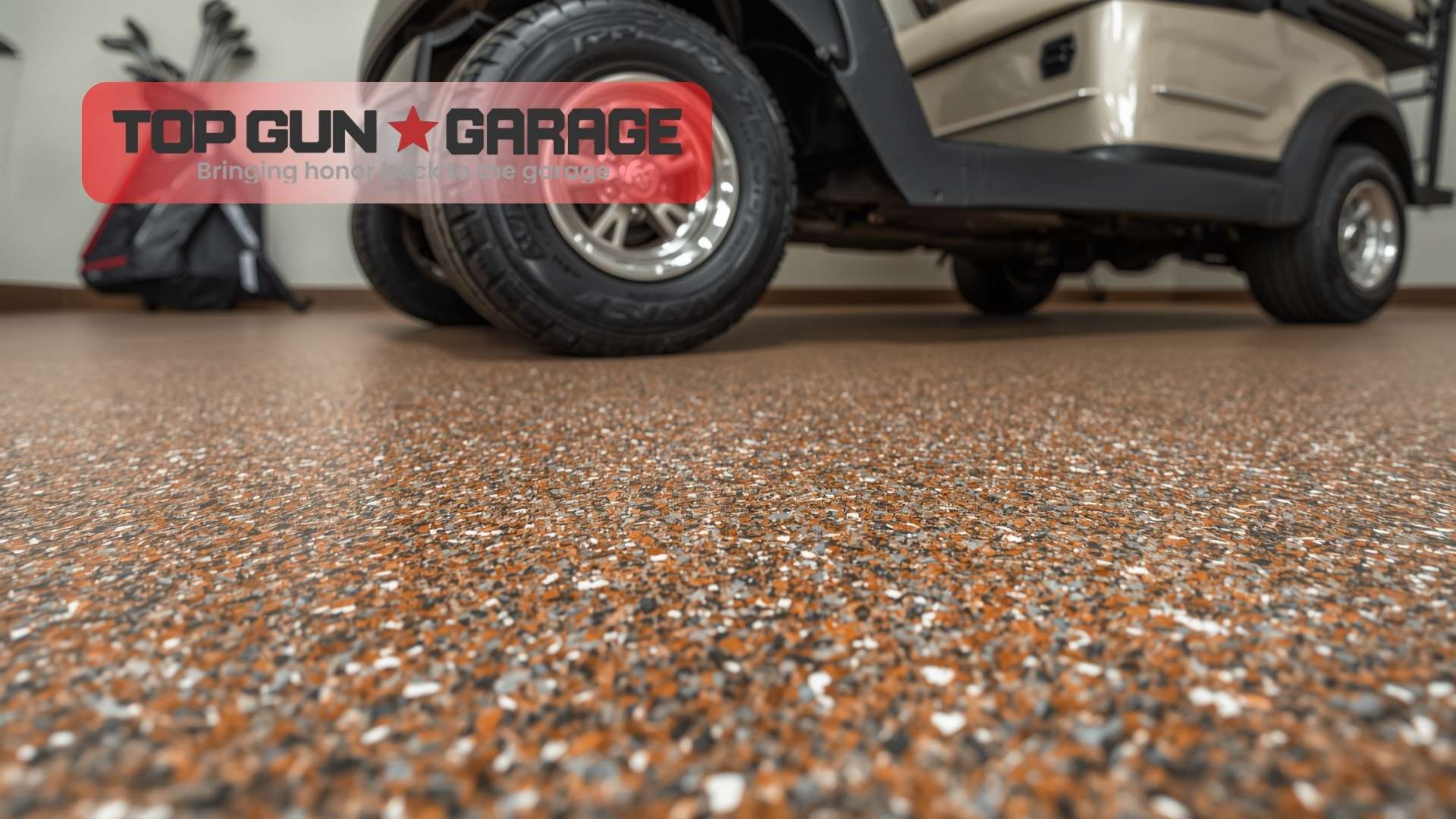
Golf cart tires heat up during use and can reach 120-140 degrees Fahrenheit on hot Naples pavement. When these heated tires contact certain floor coatings, the rubber softens and deposits black marks or actually bonds to the surface. This phenomenon, called hot tire pickup, ruins the appearance of improperly formulated floors.
Additionally, golf cart tires use softer rubber compounds than automotive tires for better traction on grass and pavement. This softer rubber scuffs more readily on abrasive surfaces, leaving permanent marks on bare or poorly sealed concrete. Learn more about what causes hot tire pickup on epoxy floors.
Golf Cart Garage vs. Standard Garage Requirements
The following table illustrates the key differences between golf cart and automobile garage flooring demands:
Factor
Standard Garage
Golf Cart Garage
Chemical Exposure
Motor oil, coolant
Battery acid (pH 1-3)
Water Exposure
Rain tracked in
Daily washing inside
Tire Temperature
100-110°F typical
120-140°F common
Usage Frequency
1-2 trips daily
4-8 trips daily
Floor Cleaning
Monthly or less
Weekly minimum
The Right Epoxy System for Golf Cart Storage
Not all epoxy coatings withstand golf cart garage conditions. The system must include specific formulations and application methods engineered for chemical resistance and thermal stability.
Chemical-Resistant Epoxy Base Coat
The base coat provides the primary defense against battery acid. Professional-grade 100% solids epoxy formulated for chemical resistance uses novolac or modified bisphenol resins rather than standard bisphenol-A formulations. These specialized resins maintain integrity when exposed to sulfuric acid concentrations up to 40%.
According to ASTM D543 testing standards for chemical resistance, novolac epoxy shows less than 2% weight change after 30 days of immersion in 25% sulfuric acid solution. Standard epoxy fails this test within 7 days. The performance difference is dramatic and non-negotiable for battery maintenance areas.
Hot Tire-Resistant Polyaspartic Topcoat
Polyaspartic topcoats prevent hot tire pickup through superior thermal stability and flexibility. Unlike traditional epoxy topcoats, polyaspartic formulations remain stable at temperatures up to 180 degrees Fahrenheit, well above the 120-140 degree tire temperatures common in Naples summers.
The flexible nature of polyaspartic coatings also matters. As tires heat and cool, rigid coatings develop microcracks where rubber can bond. Polyaspartic flexes with temperature changes, preventing this mechanical bonding. Read more about polyaspartic vs epoxy garage floors.
Anti-Slip Aggregate for Wet Traction
Golf cart garages stay wet more often than standard garages. Broadcasting aluminum oxide or polymer anti-slip aggregate into the topcoat creates a textured surface that maintains traction when damp. These aggregates increase coefficient of friction from approximately 0.5 (smooth epoxy, wet) to 0.8-0.9 (textured epoxy, wet).
Aggregate size matters. 60-grit aluminum oxide provides excellent slip resistance without creating a surface so rough that it’s difficult to clean. Finer aggregates (80-120 grit) offer insufficient texture, while coarser options (24-40 grit) trap dirt and debris.
Essential Features for Golf Cart Epoxy Flooring
Feature
Purpose
Specification
Cost Impact
Chemical Resistance
Battery acid protection
pH 1-3 rated
+$1-2/sq ft
Thermal Stability
Prevent hot tire pickup
180°F stable
Included
Anti-Slip Aggregate
Wet traction safety
60-grit broadcast
+$0.50/sq ft
Moisture Mitigation
Handle washing runoff
Vapor barrier primer
+$1-3/sq ft
Design Considerations for Golf Cart Garages
Beyond coating selection, several design elements optimize golf cart storage spaces for functionality and longevity.
Floor Slope and Drainage Integration
Proper drainage eliminates standing water that accelerates wear and creates slip hazards. Ideally, golf cart garage floors slope 1/8 to 1/4 inch per foot toward a drain or garage door opening. This minimal grade is imperceptible to the eye but provides gravity-driven water evacuation.
Many Naples garages lack adequate slope because builders prioritize car storage rather than frequent wash-downs. Professional epoxy installers can apply self-leveling underlayment to create proper drainage before coating. This addition costs $2-4 per square foot but prevents chronic moisture problems.
Dedicated Battery Charging Zone
Designate a specific charging area with enhanced chemical protection. This 4×4 or 4×6 foot zone receives extra primer coats and thicker epoxy application to maximize acid resistance. Some installers apply industrial-grade chemical-resistant epoxy in this section while using standard systems in the remainder of the garage, balancing cost with protection where it matters most.
Ventilation in the charging zone also deserves attention. Battery charging releases hydrogen gas, which is flammable in concentrations above 4%. While dangerous accumulation is rare in residential garages with normal air exchange, positioning the charging station near a window or vent improves safety.
Color Selection for Golf Cart Spaces
Light gray and tan colors remain the most practical choices for golf cart garages. These neutral tones hide the dirt, grass clippings, and sand particles that golf carts track in daily. Light colors also reflect more light, improving visibility in spaces that often lack abundant natural lighting.
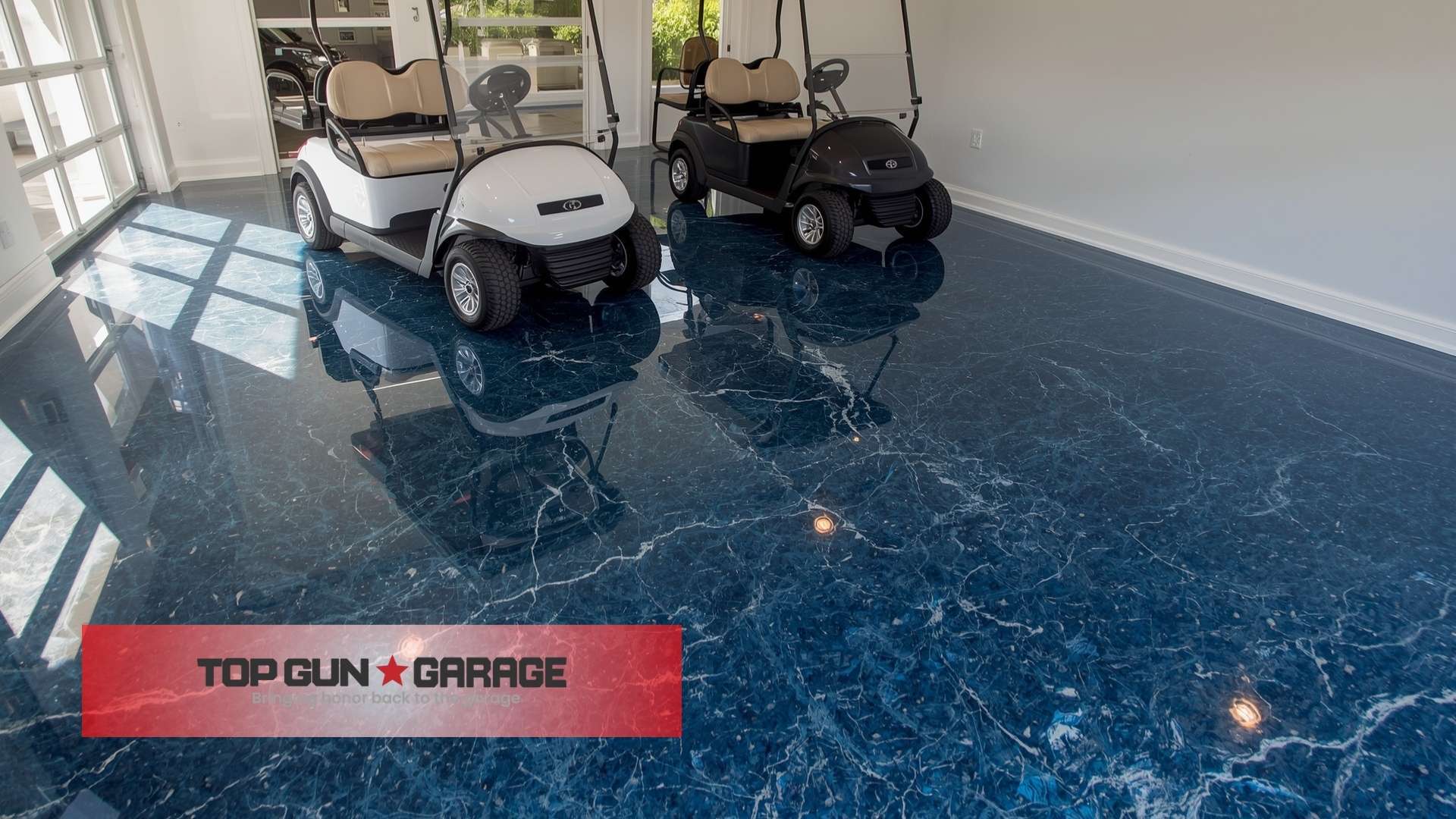
For golf enthusiasts who want to showcase their customized carts, metallic or flake epoxy systems create an attractive backdrop. These decorative finishes coordinate well with golf cart color schemes while maintaining the practical benefits of easy cleaning and chemical resistance. See more ideas in our guide on Naples epoxy garage floor colors.
Professional Installation Process for Golf Cart Floors
Proper installation requires more preparation than standard garage coatings. Skipping steps leads to premature failure, particularly in the high-stress environment of daily golf cart use.
Concrete Surface Preparation
Diamond grinding creates the surface profile required for chemical-resistant epoxy adhesion. This mechanical preparation removes surface laitance, opens concrete pores, and creates the ICRI CSP 3-4 profile that ensures maximum bond strength. Shot blasting offers an alternative method but generates more dust in enclosed spaces.
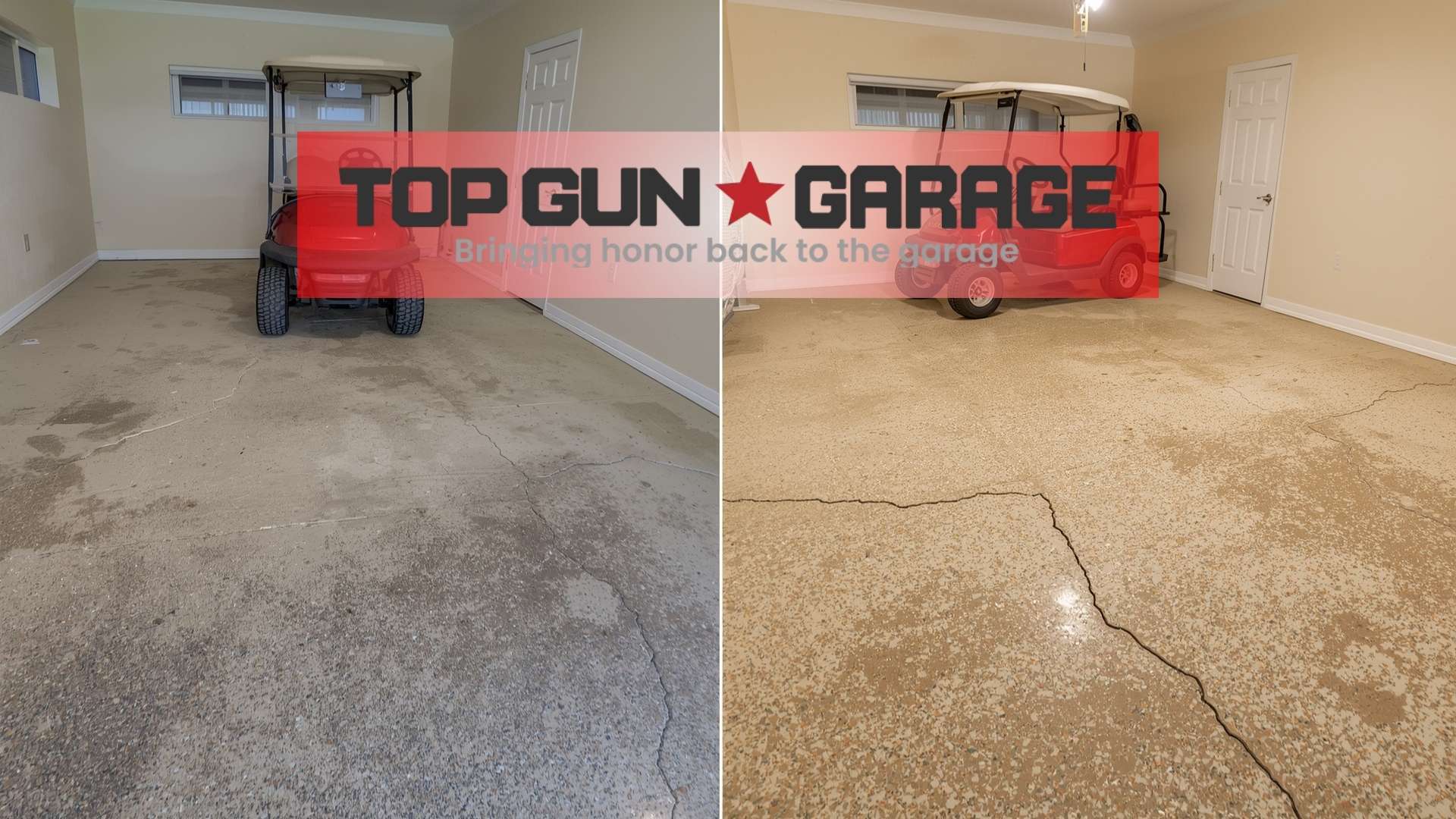
Any existing acid damage must be repaired before coating. Professional installers use polymer-modified patching compounds to fill pits and spalls created by battery acid exposure. These repairs cure to match concrete strength and accept epoxy bonding.
Moisture Content Verification
Naples slabs frequently test high for moisture vapor transmission due to inadequate vapor barriers installed during construction. Calcium chloride testing (ASTM F1869) quantifies MVT rates. Readings above 3 pounds per 1,000 square feet per 24 hours require moisture mitigation systems before coating.
This testing step cannot be skipped in golf cart garages. The constant water exposure from washing exacerbates any moisture-driven coating failure. Professional installers always test before guaranteeing their work. Understanding how moisture affects epoxy installation in Naples is essential.
Proper Curing Time
Chemical-resistant epoxy requires extended curing before exposure to acids and moisture. While standard epoxy accepts light foot traffic after 24 hours and vehicle traffic after 72 hours, specialized golf cart systems need 5-7 days before the first charging cycle. This additional curing time allows complete cross-linking of the chemical-resistant resins.
Naples humidity extends curing times compared to drier climates. Professional installers account for this by scheduling installations during low-humidity months (November through April) when possible. For more information, see our article on what affects epoxy cure time in Naples climate.
Maintaining Your Golf Cart Epoxy Floor
Regular maintenance preserves the floor’s appearance and protective properties. Golf cart garages require more frequent cleaning than automobile garages due to higher usage and exposure.
Weekly Cleaning Protocol
Sweep or blow out dirt and debris weekly to prevent abrasive particles from grinding into the coating. Monthly damp mopping with pH-neutral cleaner removes accumulated grime that sweeping misses. Avoid acidic cleaners that can gradually etch even chemical-resistant epoxy.
Battery Maintenance Best Practices
Place absorbent mats beneath batteries during maintenance and charging. These disposable mats capture acid drips before they contact the floor. While epoxy resists battery acid, preventing exposure extends coating life and maintains appearance.
If acid does spill, neutralize it immediately with baking soda solution before cleaning. The acid-base reaction stops the chemical attack and converts corrosive liquid to harmless salt that rinses away easily.
Annual Inspection and Touch-Up
Inspect the floor annually for areas showing wear, particularly in the charging zone and high-traffic paths. Small chips or scratches can be repaired with two-part epoxy repair kits before they expand. Professional recoating every 8-10 years restores optimal performance and appearance.
Understanding the complete cost picture helps homeowners make informed decisions about their golf cart storage investment.
Professional golf cart garage epoxy installation in Naples costs $8-14 per square foot for chemical-resistant systems. A typical single-cart garage (200-250 square feet) runs $1,600-$3,500, while dual-cart spaces (400-500 square feet) cost $3,200-$7,000. These prices include surface preparation, moisture mitigation, base coat, topcoat, and anti-slip aggregate.
This premium pricing reflects the specialized materials required. Chemical-resistant epoxy costs 40-60% more than standard formulations. However, this investment prevents the $2,000-$4,000 concrete replacement that becomes necessary after battery acid damage destroys unprotected slabs.
For detailed pricing information, see our comprehensive guide on golf cart garage floor coating costs.
Frequently Asked Questions
Can standard garage epoxy handle golf cart battery acid?
Standard garage epoxy is not formulated for battery acid resistance. It will deteriorate within 6-12 months of regular exposure to sulfuric acid. Golf cart garages require chemical-resistant epoxy formulated with novolac or modified bisphenol resins that withstand pH 1-3 acids according to ASTM D543 testing standards.
How do I prevent hot tire marks on my golf cart garage floor?
Use a polyaspartic topcoat rather than epoxy topcoat. Polyaspartic formulations remain thermally stable at temperatures up to 180 degrees Fahrenheit and flex with temperature changes, preventing the mechanical bonding that causes hot tire pickup. Allow the cart to cool for 5-10 minutes before parking if possible.
Is epoxy flooring safe when wet from washing my golf cart?
Yes, when anti-slip aggregate is broadcast into the topcoat. 60-grit aluminum oxide or polymer aggregate increases the coefficient of friction from approximately 0.5 to 0.8-0.9 when wet, providing safe traction. Without this texturing, smooth epoxy becomes slippery when wet and poses a safety hazard.
How long does epoxy flooring last in a golf cart garage?
Professional chemical-resistant epoxy systems last 12-15 years in golf cart garages with proper maintenance. This exceeds standard epoxy (8-12 years) due to the enhanced chemical formulation. The key factors affecting lifespan are proper surface preparation, adequate curing time, and routine cleaning to remove acid residue and debris.
Can I install epoxy flooring in my golf cart garage myself?
DIY installation is not recommended for golf cart garages. Chemical-resistant epoxy requires professional-grade surface preparation equipment, moisture testing, and precise application techniques. Failures are common with DIY installations and result in costly removal and reinstallation. The specialized nature of battery acid resistance makes professional installation essential.
What floor slope do I need for golf cart washing drainage?
Golf cart garages should slope 1/8 to 1/4 inch per foot toward a drain or door opening. This minimal grade provides gravity-driven water evacuation without creating a noticeable incline. If your existing slab lacks adequate slope, self-leveling underlayment can create proper drainage before epoxy application for an additional $2-4 per square foot.
Get Professional Golf Cart Garage Flooring in Naples
Protect your golf cart storage investment with flooring engineered specifically for battery maintenance, frequent washing, and daily use. Top Gun Garage specializes in chemical-resistant epoxy systems designed for the unique demands of Southwest Florida golf cart garages.
Our installation process includes comprehensive concrete assessment, moisture testing, acid-resistant primer systems, and polyaspartic topcoats that prevent hot tire pickup. We back our work with warranties that reflect our confidence in long-term performance under challenging conditions.
Request a free consultation for your Naples epoxy floor coating project. We serve Naples, Marco Island, Bonita Springs, and all Collier County communities. Schedule your assessment today to create a golf cart garage that performs flawlessly for decades.
 Skip to content



 Professional golf cart garage epoxy installation in Naples costs $8-14 per square foot for chemical-resistant systems. A typical single-cart garage (200-250 square feet) runs $1,600-$3,500, while dual-cart spaces (400-500 square feet) cost $3,200-$7,000. These prices include surface preparation, moisture mitigation, base coat, topcoat, and anti-slip aggregate.
This premium pricing reflects the specialized materials required. Chemical-resistant epoxy costs 40-60% more than standard formulations. However, this investment prevents the $2,000-$4,000 concrete replacement that becomes necessary after battery acid damage destroys unprotected slabs.
For detailed pricing information, see our comprehensive guide on golf cart garage floor coating costs.
Professional golf cart garage epoxy installation in Naples costs $8-14 per square foot for chemical-resistant systems. A typical single-cart garage (200-250 square feet) runs $1,600-$3,500, while dual-cart spaces (400-500 square feet) cost $3,200-$7,000. These prices include surface preparation, moisture mitigation, base coat, topcoat, and anti-slip aggregate.
This premium pricing reflects the specialized materials required. Chemical-resistant epoxy costs 40-60% more than standard formulations. However, this investment prevents the $2,000-$4,000 concrete replacement that becomes necessary after battery acid damage destroys unprotected slabs.
For detailed pricing information, see our comprehensive guide on golf cart garage floor coating costs.