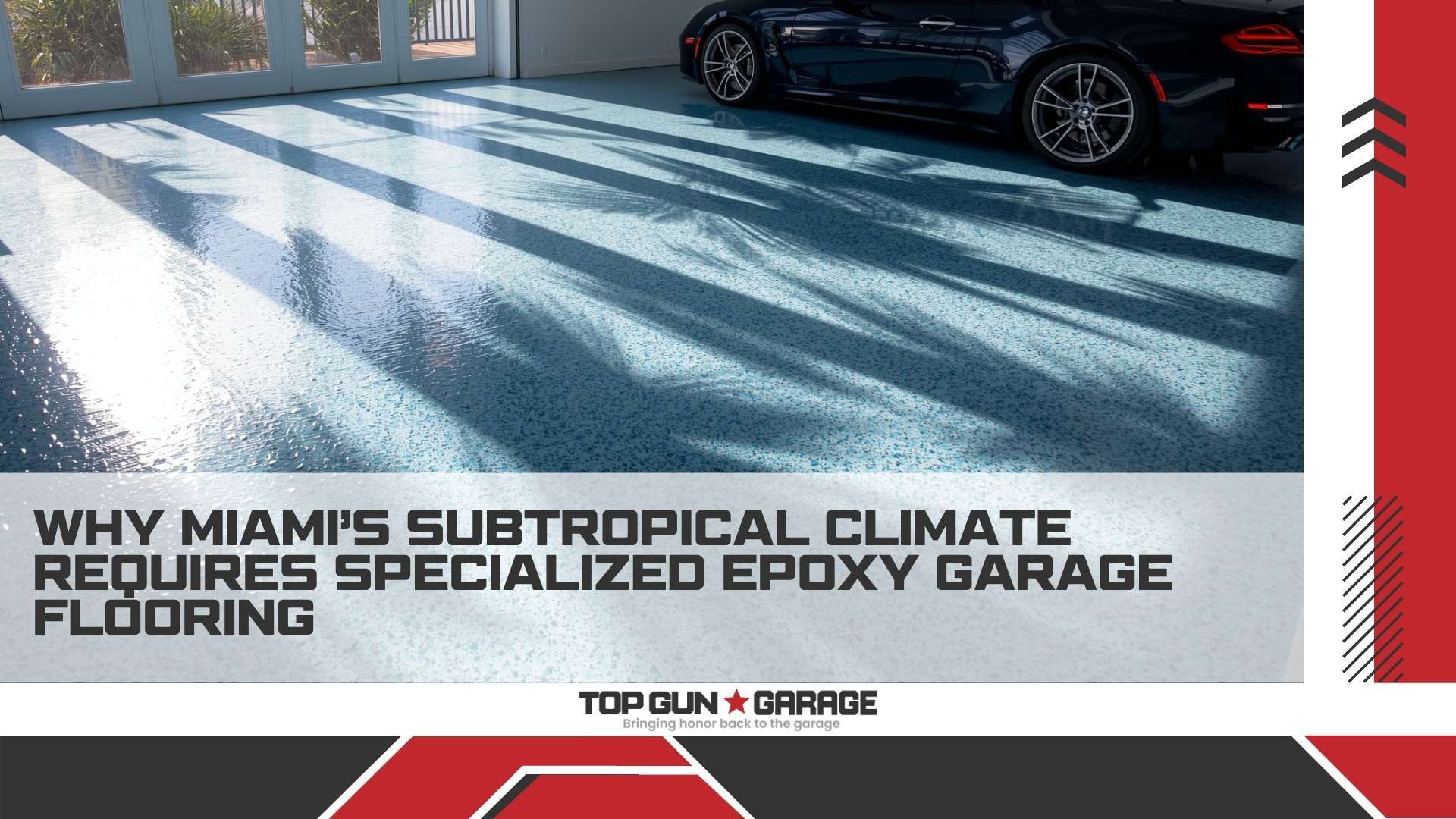
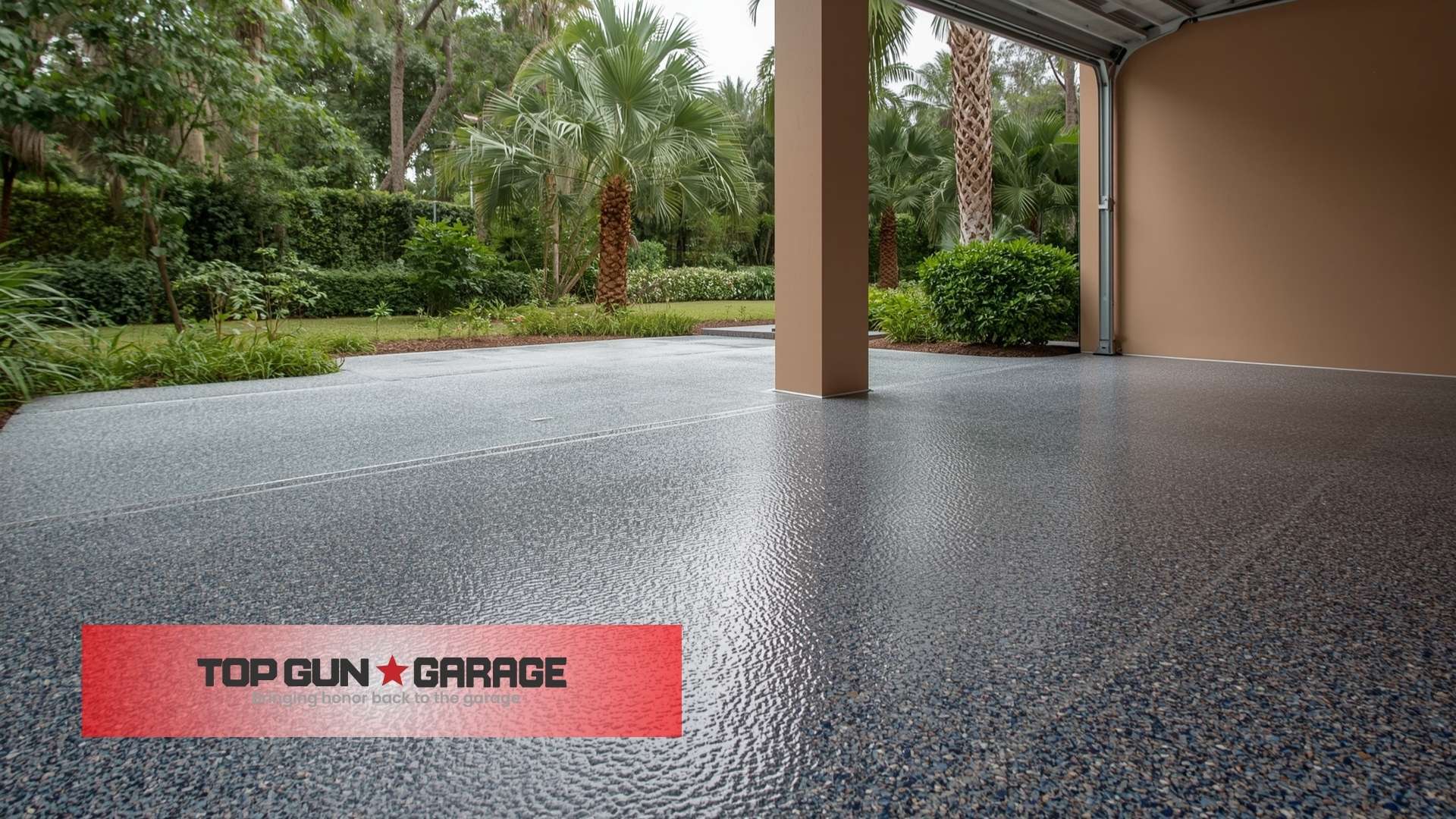
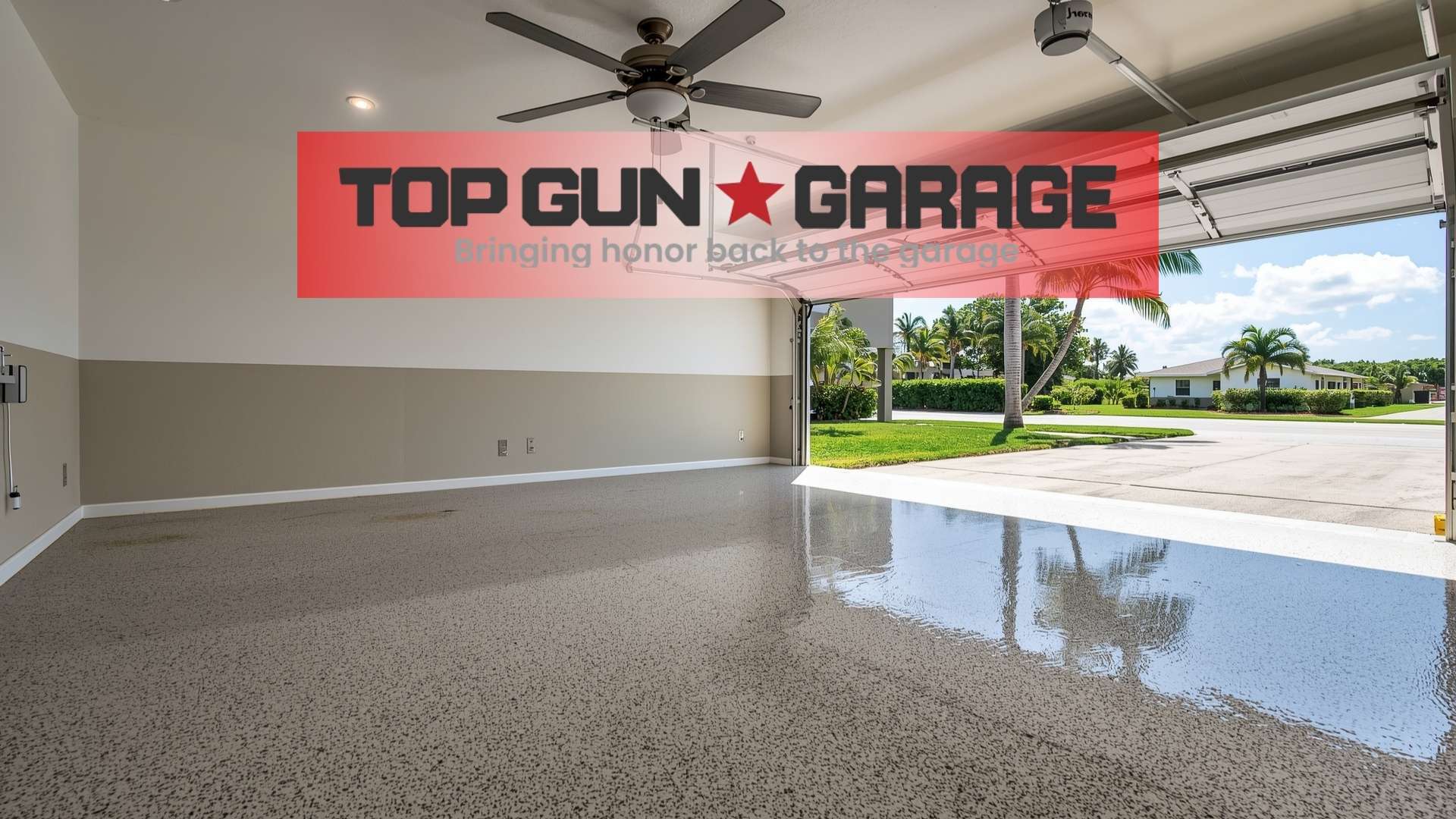
Standard epoxy garage flooring systems fail in Miami because they cannot handle the combination of 90% average humidity, year-round temperatures exceeding 85°F, and intense UV exposure. According to the International Concrete Repair Institute (ICRI), moisture-related coating failures account for 67% of all garage floor system breakdowns in subtropical regions. Miami homeowners need epoxy garage flooring Miami systems specifically engineered for these conditions to achieve the 15 to 20-year lifespan that quality installations should deliver.
The difference between a coating that lasts 3 years and one that lasts 15+ years comes down to moisture mitigation, UV-stable formulations, and proper installation protocols designed for South Florida’s unique environment. This guide breaks down exactly what makes Miami’s climate so demanding and what your garage floor system needs to survive it.
What Makes Miami’s Climate So Destructive to Garage Floor Coatings
Miami’s subtropical climate creates a perfect storm of conditions that attack garage floor coatings from multiple angles. Understanding these factors explains why off-the-shelf solutions from big-box stores fail within 2 to 3 years while professional-grade systems last decades.
Year-Round High Humidity (75% to 95%)
Miami’s average relative humidity hovers between 75% and 95% throughout the year, according to NOAA climate data. This creates constant moisture vapor transmission through concrete slabs. The American Concrete Institute reports that concrete in subtropical climates can transmit up to 8 pounds of moisture per 1,000 square feet every 24 hours. Without proper moisture barriers, this vapor pressure pushes against the coating from below, causing delamination, bubbling, and eventual peeling.
Extreme Temperature Fluctuations
While Miami does not experience freezing temperatures, garage concrete surfaces regularly reach 140°F or higher when exposed to direct sunlight. This creates a daily thermal cycling between ambient temperatures around 75°F at night and extreme surface temperatures during the day. Standard epoxy formulations become soft above 120°F, a phenomenon called “hot tire pickup” that leaves permanent marks and eventual coating failure. Research from the Florida Department of Transportation shows that thermal cycling causes micro-fractures in non-flexible coating systems within 18 to 24 months.
Intense UV Radiation Exposure
South Florida receives approximately 2,800 hours of direct sunlight annually, roughly 30% more than northern states. Garages with windows, open doors, or translucent panels expose floor coatings to UV degradation that causes yellowing, chalking, and loss of gloss. The Concrete Polishing Association of America notes that non-UV-stabilized epoxies show visible yellowing within 6 to 12 months of sun exposure.
Salt Air Corrosion
Properties within 3 miles of Miami’s coastline face accelerated deterioration from salt-laden air. Salt deposits on garage floors attract moisture and create concentrated corrosion points. Vehicles tracking in salt spray from coastal roads compound this problem. Standard coatings without chemical-resistant topcoats show visible degradation within 18 months in coastal zones.
Why DIY and Big-Box Store Epoxy Fails in Miami
Consumer-grade epoxy kits from home improvement stores are not formulated for subtropical conditions. A study comparing DIY vs professional epoxy installations reveals that DIY kits fail at 8 times the rate of professional systems in Florida climates. Here is why:
Factor
DIY/Big-Box Epoxy
Professional Miami Systems
Coating Thickness
2-4 mils
15-25 mils minimum
Moisture Barrier
None included
Polyurea moisture vapor barrier
UV Stability
Non-UV stabilized
Aliphatic polyurethane or polyaspartic topcoat
Heat Resistance
Softens at 120°F
Stable to 300°F+
Surface Prep
Acid etch only
Diamond grinding to CSP 2-3
Typical Lifespan in Miami
1-3 years
15-20+ years
Essential Components of Miami-Ready Epoxy Garage Flooring Systems
A proper epoxy garage flooring system for Miami must include multiple layers working together to combat humidity, heat, and UV exposure. Each component serves a specific function in protecting your investment.
Moisture Mitigation Layer
Before any coating application, professionals must address concrete moisture problems through proper testing and treatment. Miami’s water table and humidity levels mean most concrete slabs actively transmit moisture. ASTM F2170 in-situ relative humidity testing typically reveals readings between 80% and 95% in untreated Miami garage slabs. Successful installations require either a polyurea moisture vapor barrier or a breathable epoxy primer that tolerates elevated moisture levels.
Professional Surface Preparation
The Concrete Polishing Association of America states that 90% of coating failures trace back to inadequate surface preparation. In Miami’s humid environment, proper concrete grinding preparation is even more critical. Diamond grinding creates a concrete surface profile (CSP) of 2-3, which provides 60% more surface area for mechanical bond compared to acid etching. This mechanical bond resists moisture vapor pressure far better than the chemical bond alone that acid-etched surfaces provide.
High-Build Basecoat System
Professional Miami installations use 100% solids polyurea basecoats or high-performance epoxy systems applied at 15 to 25 mils thickness. This is 5 to 10 times thicker than DIY kits. The additional thickness provides abrasion resistance rated for 40+ years of foot traffic and chemical resistance to automotive fluids, gasoline, and cleaning chemicals.
UV-Stable Topcoat
The topcoat determines how well your floor resists Miami’s intense sunlight. The choice between polyaspartic vs epoxy coatings significantly impacts UV resistance. Polyaspartic and aliphatic polyurethane topcoats provide complete UV stability, maintaining color and gloss for 15+ years. Standard aromatic epoxy topcoats yellow within months of sun exposure.
Best Time to Install Epoxy Garage Flooring in Miami
Miami’s rainy season from May through October creates challenging installation conditions. Understanding how Florida’s rainy season affects epoxy curing helps you plan your project for optimal results.
November through April: Ideal installation window with lower humidity (65% to 75%) and minimal rain interference
May through October: Possible with humidity-tolerant systems but requires careful timing between afternoon storms
Morning installations recommended: Allows full cure before evening humidity spikes
Professional installers using polyaspartic systems can complete most Miami garage floors in a single day, allowing vehicle traffic within 24 hours. This fast cure time minimizes the window for humidity interference.
What Professional Epoxy Garage Flooring Costs in Miami
Quality epoxy garage flooring in Miami typically costs $6 to $12 per square foot installed, depending on system specifications and concrete condition. For a standard 400 to 500 square foot two-car garage, expect to invest $2,400 to $6,000. Understanding factors that determine epoxy flooring cost helps you evaluate quotes accurately.
System Type
Price Per Sq Ft (Miami)
DIY Big-Box Kit
$0.50-$2.00
Solid Color Epoxy (Professional)
$4.00-$6.00
Full Flake System
$6.00-$9.00
Metallic Epoxy
$8.00-$12.00
Quartz Broadcast System
$7.00-$10.00
Additional costs may apply for concrete repair, crack filling, or previous coating removal. When calculating ROI, consider that professional systems include warranties covering delamination, peeling, and hot tire pickup that DIY products do not offer.
Signs Your Miami Garage Floor Coating Is Failing
Early detection of coating failure saves money by allowing repairs before complete system replacement becomes necessary. Watch for these warning signs:
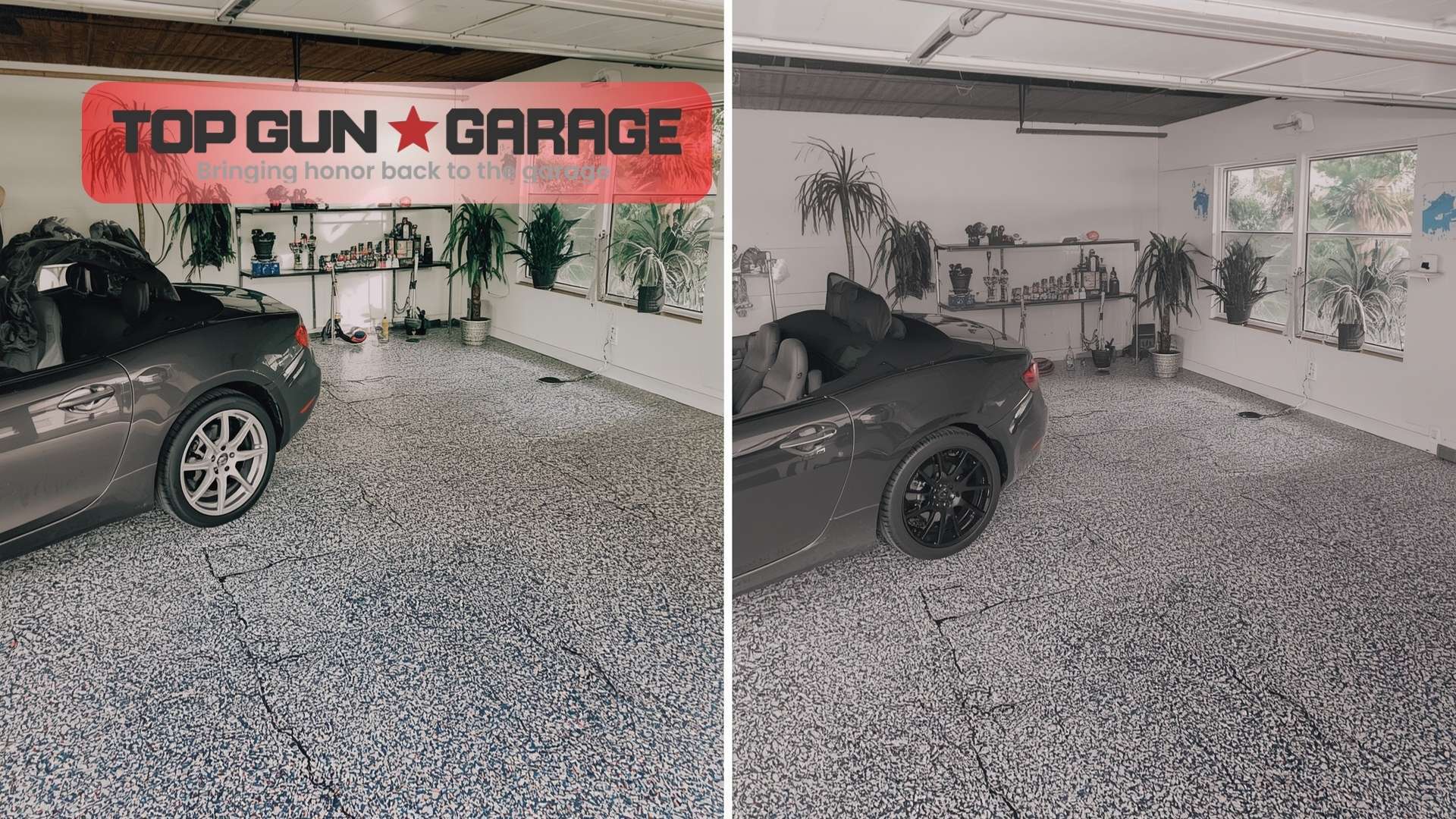
Bubbling or blistering: Moisture vapor trapped beneath the coating pushing it away from concrete
Yellowing or amber discoloration: UV degradation from sun exposure
Hot tire marks: Coating softening from insufficient heat resistance
Edge peeling: Moisture intrusion or inadequate surface preparation
White powder (efflorescence): Mineral deposits from moisture transmission through concrete
Chalky surface texture: Coating breakdown from combined UV and humidity exposure
Not all flooring contractors understand Miami’s unique requirements. When evaluating installers, verify their experience with subtropical climate challenges and ask about their specific system components. Review questions to ask your epoxy contractor to ensure you are getting a system designed for local conditions.
Key qualifications to verify:
Florida-specific licensing and insurance
Concrete moisture testing included in estimate
Diamond grinding (not acid etching) for surface preparation
UV-stable topcoat specified in writing
Written warranty covering delamination and hot tire pickup
Portfolio of Miami-area installations with references
Frequently Asked Questions About Epoxy Garage Flooring in Miami
How long does epoxy garage flooring last in Miami’s climate?
Professional epoxy systems with proper moisture mitigation and UV-stable topcoats last 15 to 20+ years in Miami. DIY kits typically fail within 1 to 3 years due to inadequate formulations for subtropical humidity and heat. The key difference is the combination of moisture barrier primers, 100% solids basecoats, and polyaspartic or aliphatic polyurethane topcoats that professional systems include.
Why does epoxy turn yellow in Miami garages?
Yellowing occurs when aromatic epoxy compounds are exposed to UV light. Miami’s 2,800+ hours of annual sunshine accelerates this process. The solution is using aliphatic polyurethane or polyaspartic topcoats, which contain UV stabilizers that prevent discoloration for 15+ years even in direct sunlight exposure.
Can epoxy be installed during Miami’s rainy season?
Yes, but timing becomes critical. Professional installers using fast-cure polyaspartic systems can complete installations between morning and afternoon storms. The coating reaches full cure within 4 to 6 hours, minimizing the humidity interference window. However, optimal results occur during the dry season from November through April when ambient humidity stays below 75%.
Do I need a moisture barrier under epoxy in Miami?
Almost always. The American Concrete Institute reports that 85% of Miami garage slabs show moisture vapor transmission rates exceeding safe levels for standard epoxy. Professional installations include either polyurea moisture barriers or moisture-tolerant primers as the first layer. Skipping this step is the primary reason DIY installations fail.
What causes hot tire pickup on garage floors in Miami?
Hot tire pickup occurs when tire heat softens the coating, causing it to bond to the rubber. In Miami, where garage surface temperatures reach 140°F, standard epoxy formulations become soft enough to stick to hot tires. Professional polyaspartic and high-temperature epoxy systems remain stable up to 300°F+, eliminating this problem entirely.
Is epoxy garage flooring worth the cost in Miami?
For homeowners planning to stay 5+ years, professional epoxy provides significant ROI. At $6 to $12 per square foot, a quality installation costing $3,000 to $6,000 for a standard garage lasts 15 to 20 years. This works out to $150 to $400 per year for a floor that requires minimal maintenance, resists all automotive chemicals, and adds approximately 3% to 5% to home resale value according to real estate valuation studies.
Get Expert Miami Epoxy Garage Flooring Installation
Miami’s subtropical climate demands specialized solutions. Top Gun Garage provides professional epoxy flooring systems engineered specifically for South Florida conditions, including comprehensive moisture testing, diamond-ground surface preparation, and UV-stable polyaspartic topcoats backed by industry-leading warranties.
Contact Top Gun Garage today for a free estimate and discover why Southwest Florida homeowners trust us for garage floor coatings that actually last in this demanding climate.
 Skip to content