Yes, you can successfully install garage floor coating during Florida’s rainy season. Professional contractors in Southwest Florida complete hundreds of installations between May and October each year by controlling humidity, conducting proper moisture testing, and selecting the right coating systems. The key is working with experienced installers who understand how to manage the unique challenges that daily afternoon thunderstorms and 70%+ humidity levels present.
According to the National Weather Service, Southwest Florida’s rainy season officially runs from May 15 to October 15, with 55% to 70% of annual rainfall occurring during June through September. This timing coincides with when many homeowners want to tackle garage improvement projects. The good news: modern coating technologies and professional installation techniques make rainy season installations not just possible, but highly successful.
Why Rainy Season Presents Unique Challenges for Floor Coatings
Humidity is the primary concern during Florida’s wet season. At 70% relative humidity, epoxy’s tensile strength can drop by up to 25% according to ASTM D638 testing standards. Moisture-laden air introduces water molecules into uncured resin, creating microscopic weak points that compromise long-term adhesion.
Southwest Florida’s rainy season brings several specific challenges:
Elevated concrete moisture. Summer storms cause rain to seep into cracks and poorly sealed edges. Without proper testing, this hidden moisture can cause coating failure within weeks of installation.
High ambient humidity. Dew point values consistently exceed 70 degrees Fahrenheit during rainy season. This moisture in the air directly affects how coatings cure and bond to concrete.
Daily temperature swings. Morning coolness followed by afternoon heat can cause condensation on concrete surfaces, creating adhesion problems if not properly managed.
Extended cure times. Traditional epoxy coatings may take significantly longer to cure in humid conditions, extending the time your garage is out of service.
How Professional Contractors Handle Rainy Season Installations
Experienced Southwest Florida contractors have developed proven protocols for successful rainy season installations. Understanding how Southwest Florida humidity affects installation allows professionals to adapt their approach and deliver lasting results regardless of the weather outside.
Comprehensive Moisture Testing Before Installation
Professional contractors never skip this critical step. The industry relies on two ASTM-standard testing methods to determine if a concrete slab is ready for coating:
Relative Humidity Probe Testing (ASTM F2170): This is the gold standard for measuring internal slab moisture. Holes are drilled to 40% of the slab’s depth, and probes measure the relative humidity within the concrete. Acceptable levels for most coatings are 75% RH or lower. Summer tests in Southwest Florida often show readings 30% higher than winter assessments.
Calcium Chloride Testing (ASTM F1869): This measures moisture vapor emission rate (MVER) at the surface level over 60-72 hours. Results should show 3-5 pounds per 1,000 square feet per 24 hours or less for most coating systems.
Learn more about what concrete moisture content is acceptable for epoxy to understand why testing timing matters as much as technique.
Climate-Controlled Installation Environment
Professional installers create controlled environments within your garage to counteract humid conditions:
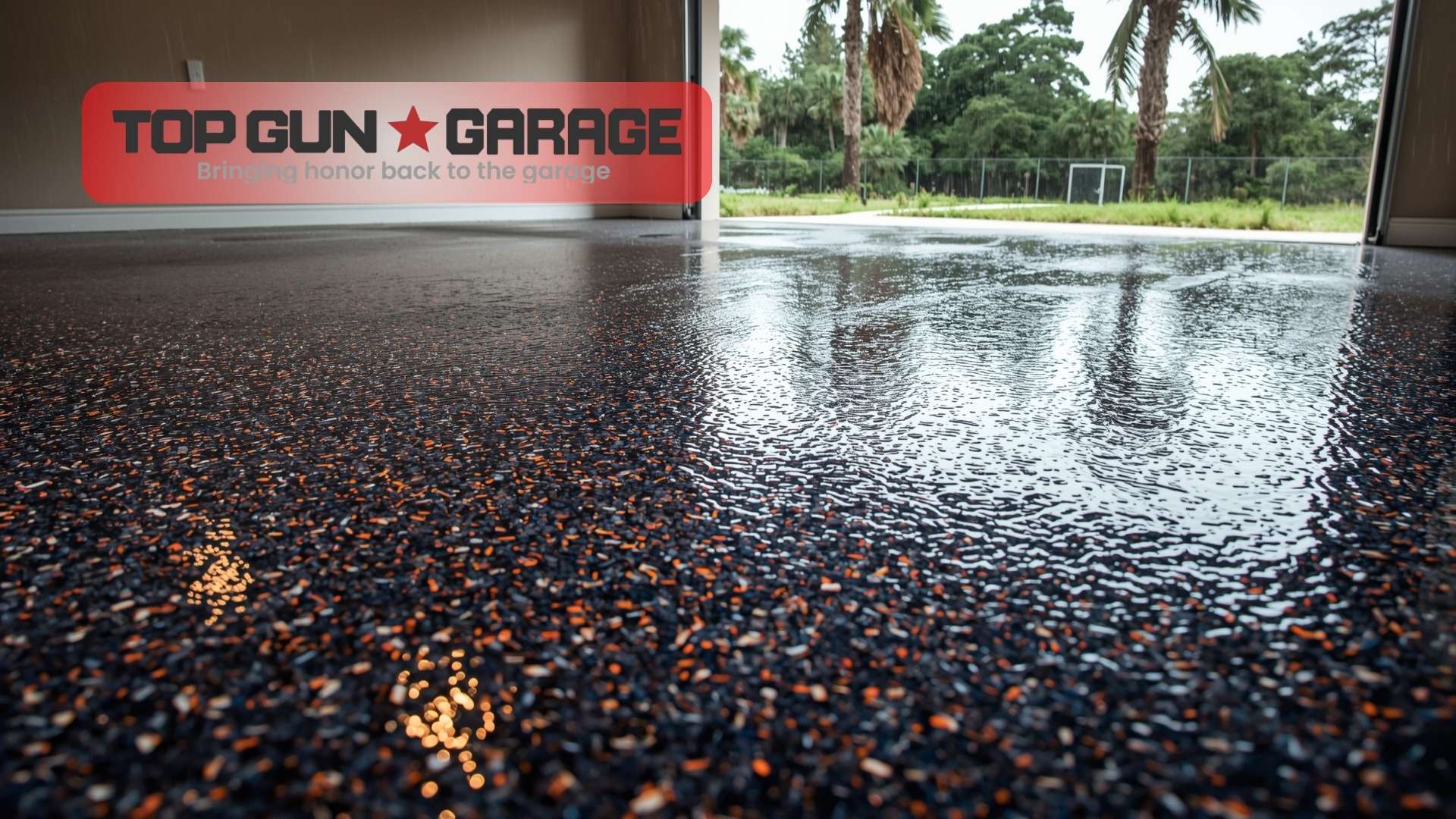
Air conditioning units reduce ambient humidity and stabilize temperatures. When paired with oscillating fans, this setup ensures even airflow that prevents sticky spots or uneven curing. Portable dehumidifiers provide targeted drying for problem areas, while hygrometers continuously monitor air moisture levels throughout the installation process.
Most manufacturers recommend applying coatings when humidity levels are below 85%. Professional contractors aim for conditions below 75% for optimal results.
Polyaspartic Coatings: The Rainy Season Solution
When comparing coating options for humid conditions, polyaspartic vs epoxy garage floor systems shows a clear advantage for polyaspartic during rainy season. While traditional epoxy can keep your garage out of service for 3-5 days or longer in humid conditions, polyaspartic coatings cure in as little as 24 hours.
Factor
Traditional Epoxy
Polyaspartic
Cure Time (Humid)
3-7 days
24-48 hours
Humidity Tolerance
Sensitive (below 85%)
Cures faster in humidity
Temperature Range
55-85°F optimal
20-120°F workable
UV Stability
Yellows over time
Color-stable
Vehicle Traffic
5-7 days after install
24-48 hours after install
Polyaspartic coatings use a moisture-cure chemistry that actually benefits from humidity. While high humidity causes traditional epoxy to slow down and potentially fail, polyaspartic formulations continue curing reliably. This makes them the preferred choice for best garage floor coating for Florida humidity.
When to Schedule Your Rainy Season Installation
Timing within the rainy season affects project success. Understanding the 3-month window when garage floor coating works best in Florida helps you plan strategically.
Early morning scheduling. Southwest Florida’s afternoon thunderstorms follow a predictable pattern. Professional installers schedule work to begin early, completing the most moisture-sensitive phases before typical afternoon storms develop.
Avoid testing immediately after storms. Moisture testing should not occur right after heavy rains or when new concrete has been recently poured. Allow conditions to stabilize so readings reflect your floor’s typical environment.
Consider coating before hurricane season peaks. If you’re also preparing your garage for garage floor coating before hurricane season, scheduling in early June or late September provides more predictable weather windows.
Moisture Mitigation Strategies for Rainy Season Success
When testing reveals elevated moisture levels, professional contractors employ specific mitigation strategies rather than postponing indefinitely. Understanding how moisture affects epoxy installation in Naples is critical for developing the right approach.
Moisture vapor barriers. Specialized epoxy primers with moisture-blocking properties create a barrier between the damp concrete and the coating system. Premium MVB primers can handle vapor emission rates up to 15-20 pounds MVER while providing adhesion strength exceeding 1,400 PSI.
Extended acclimation periods. Allowing materials to adjust to the garage environment temperature before mixing ensures proper chemical reactions during application.
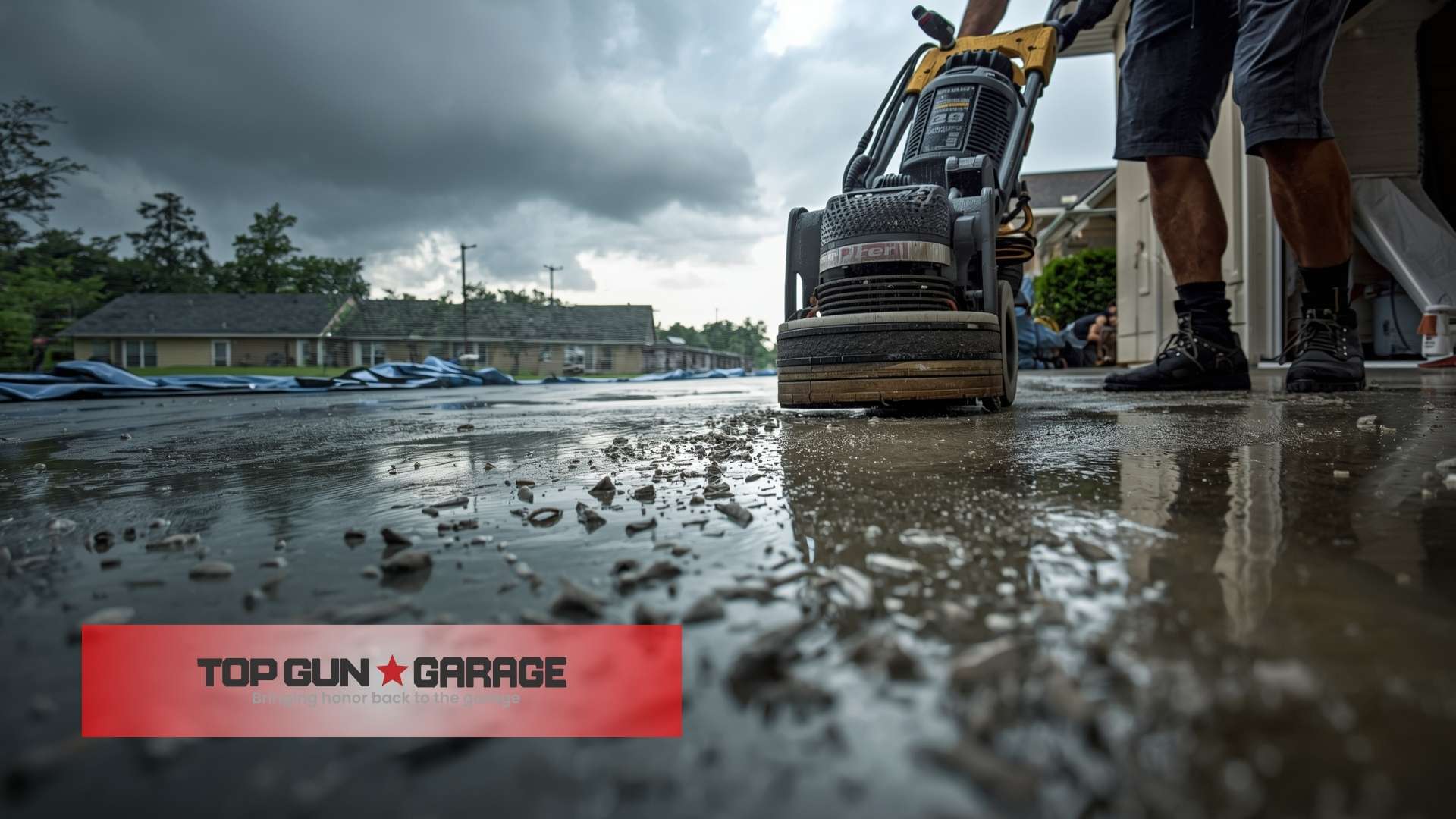
Proper surface preparation. Diamond grinding creates the optimal concrete surface profile for adhesion while removing any surface moisture or contamination. This step becomes even more critical during rainy season when concrete surfaces may hold more moisture than usual.
Learn more about what is epoxy moisture vapor barrier in Naples to understand how these systems protect your investment.
Signs of Moisture-Related Coating Failures to Avoid
Understanding what can go wrong helps you evaluate contractor quality. Learn why epoxy floors bubble in Southwest Florida and what warning signs indicate improper installation:
Osmotic blistering: Liquid-filled bubbles appear weeks or months after installation. This occurs when hydrostatic pressure from trapped moisture pushes against the coating from below.
Delamination: Large sheets of coating peel away from the concrete surface. Check the underside of peeled sections. If concrete dust adheres to the coating, moisture weakened the bond before proper adhesion occurred.
Efflorescence: White, chalky deposits push through cracks or lift coating edges. These salt deposits indicate ongoing moisture migration through the slab.
Amine blush: A waxy, cloudy film forms on the surface during curing due to excessive humidity exposure. This compromises inter-coat adhesion if not addressed before additional layers are applied.
Why DIY Floor Coating Fails During Rainy Season
The temptation to tackle this project yourself increases when big-box stores sell one-day coating kits. However, understanding why DIY epoxy fails in Florida is especially important during rainy season.
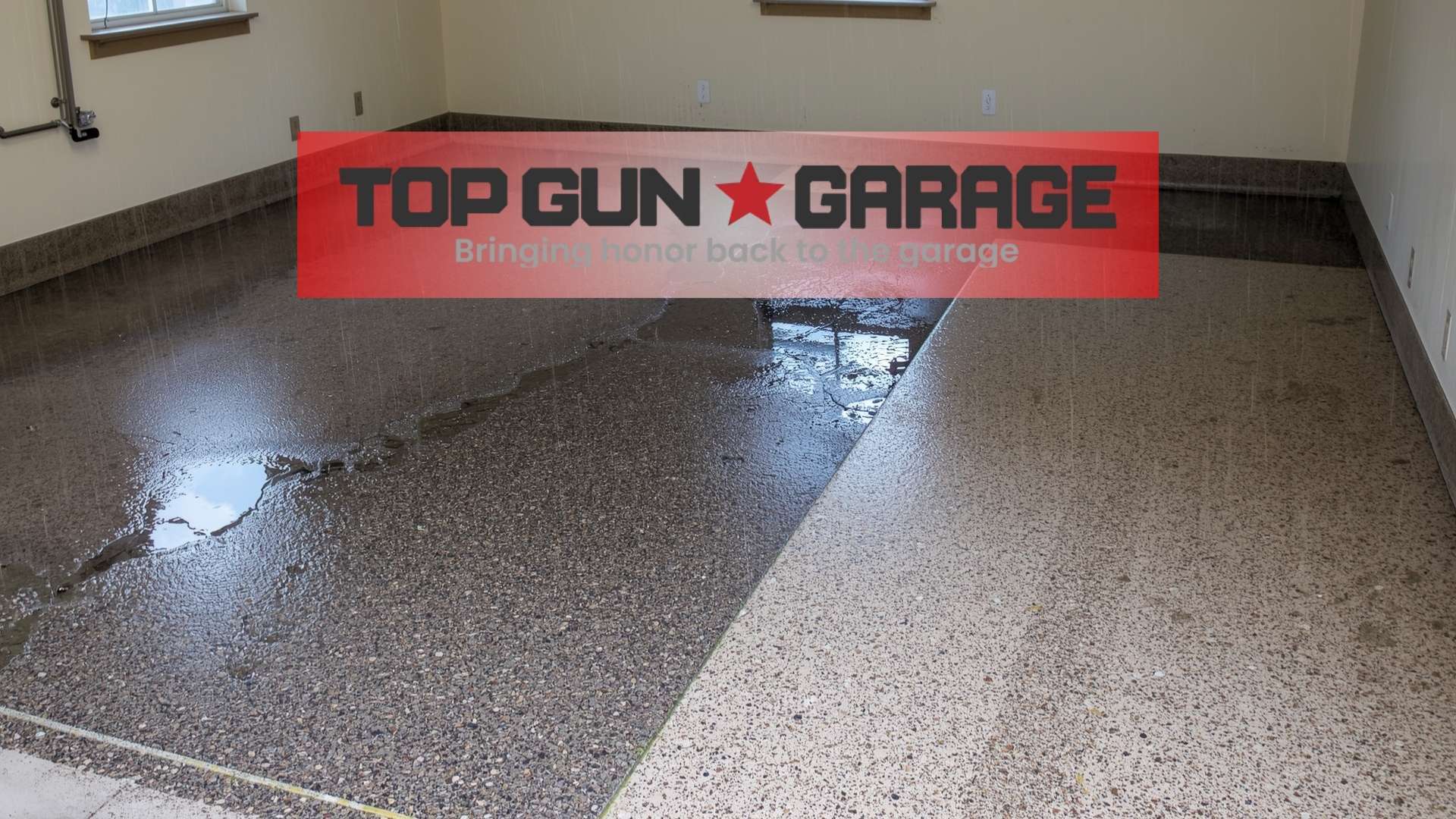
Box-store kits lack the moisture-tolerant formulations professionals use. Water-based epoxies in these kits take significantly longer to dry when humidity is high because the water they contain cannot evaporate efficiently. Without proper climate control equipment and moisture testing tools, DIY installers cannot create the conditions necessary for successful curing.
Professional-grade polyaspartic systems require specialized application techniques and have extremely short pot lives of 15-30 minutes. Without training and experience, achieving a smooth, bubble-free finish is nearly impossible under humid conditions.
Frequently Asked Questions
Can you apply epoxy floor coating when it’s raining outside?
Yes, but the rain affects ambient humidity levels that must be controlled. Professional installers create a climate-controlled environment within the garage using air conditioning, dehumidifiers, and fans. The concrete surface itself must remain dry and at the proper temperature, which is achievable even during active rainfall outside.
How long should I wait after rain before installing floor coating?
Wait at least 48-72 hours after heavy rain before conducting moisture testing. Testing immediately after storms produces artificially high readings. Professional contractors schedule moisture assessments when conditions mirror your floor’s typical environment to ensure accurate results that predict long-term performance.
What humidity level is too high for garage floor coating?
Most epoxy manufacturers recommend application when humidity is below 85%. Professional installers target 75% or lower for optimal results. At 70% relative humidity, epoxy’s tensile strength can decrease by 25%. Polyaspartic coatings are more forgiving and actually cure faster in humid conditions, making them ideal for Florida installations.
Is polyaspartic better than epoxy for Florida’s rainy season?
Polyaspartic coatings offer significant advantages during Florida’s rainy season. They cure in 24-48 hours compared to 3-7 days for epoxy, tolerate higher humidity levels, and resist UV yellowing. The faster cure time means less exposure to unpredictable weather changes and quicker return to normal garage use.
How do I know if my concrete has too much moisture for coating?
Professional contractors use ASTM-standard testing methods. The ASTM F2170 relative humidity probe test drills into the slab at 40% depth to measure internal moisture. Readings above 75-80% RH require moisture mitigation. The ASTM F1869 calcium chloride test measures surface emissions and should show less than 3-5 pounds per 1,000 square feet per 24 hours.
Will my garage floor coating last if installed during rainy season?
Absolutely. Professional installations during rainy season perform identically to dry-season installations when proper protocols are followed. Comprehensive moisture testing, climate control during application, and appropriate coating selection ensure your floor will last 15-20 years or more. The season matters far less than the contractor’s expertise and methods.
Get Your Rainy Season Installation Quote
Top Gun Garage specializes in garage floor coating installations throughout Southwest Florida’s challenging climate. Our team conducts free moisture assessments, uses commercial-grade climate control equipment, and applies professional polyaspartic systems designed for Florida’s unique conditions.
We serve Naples, Fort Myers, Cape Coral, Bonita Springs, Estero, Marco Island, and surrounding communities with coating systems backed by comprehensive warranties. Understanding how the epoxy curing process works in Florida humidity means we deliver lasting results regardless of the weather.
Call (239) 488-7000 today to schedule your free consultation and moisture assessment.
 Skip to content



 According to the National Weather Service, Southwest Florida’s rainy season officially runs from May 15 to October 15, with 55% to 70% of annual rainfall occurring during June through September. This timing coincides with when many homeowners want to tackle garage improvement projects. The good news: modern coating technologies and professional installation techniques make rainy season installations not just possible, but highly successful.
 Air conditioning units reduce ambient humidity and stabilize temperatures. When paired with oscillating fans, this setup ensures even airflow that prevents sticky spots or uneven curing. Portable dehumidifiers provide targeted drying for problem areas, while hygrometers continuously monitor air moisture levels throughout the installation process.
Most manufacturers recommend applying coatings when humidity levels are below 85%. Professional contractors aim for conditions below 75% for optimal results.
Air conditioning units reduce ambient humidity and stabilize temperatures. When paired with oscillating fans, this setup ensures even airflow that prevents sticky spots or uneven curing. Portable dehumidifiers provide targeted drying for problem areas, while hygrometers continuously monitor air moisture levels throughout the installation process.
Most manufacturers recommend applying coatings when humidity levels are below 85%. Professional contractors aim for conditions below 75% for optimal results.
 Box-store kits lack the moisture-tolerant formulations professionals use. Water-based epoxies in these kits take significantly longer to dry when humidity is high because the water they contain cannot evaporate efficiently. Without proper climate control equipment and moisture testing tools, DIY installers cannot create the conditions necessary for successful curing.
Professional-grade polyaspartic systems require specialized application techniques and have extremely short pot lives of 15-30 minutes. Without training and experience, achieving a smooth, bubble-free finish is nearly impossible under humid conditions.
Box-store kits lack the moisture-tolerant formulations professionals use. Water-based epoxies in these kits take significantly longer to dry when humidity is high because the water they contain cannot evaporate efficiently. Without proper climate control equipment and moisture testing tools, DIY installers cannot create the conditions necessary for successful curing.
Professional-grade polyaspartic systems require specialized application techniques and have extremely short pot lives of 15-30 minutes. Without training and experience, achieving a smooth, bubble-free finish is nearly impossible under humid conditions.