 Skip to content




When it comes to epoxy flooring installations, one of the most critical factors that determines both performance and longevity is the thickness of the applied coating. Understanding why epoxy thickness changes impact strength is essential for property owners, contractors, and anyone considering epoxy flooring solutions. The relationship between epoxy thickness and performance isn’t just a matter of applying more material – it’s a complex interplay of chemistry, physics, and engineering principles that directly affects how your floor will perform under real-world conditions.
Epoxy thickness variations can occur during application due to substrate irregularities, application techniques, environmental conditions, and material properties. These variations don’t just affect the aesthetic appearance of the finished floor; they create fundamental changes in the structural integrity, load-bearing capacity, chemical resistance, and overall durability of the coating system. A floor that appears uniform on the surface may have significant thickness variations underneath that could lead to premature failure, uneven wear patterns, or costly repairs down the line.
The science behind epoxy performance reveals that thickness directly correlates with the coating’s ability to distribute loads, resist impact, maintain chemical barriers, and provide long-term protection to the underlying substrate. When thickness varies across a surface, it creates weak points that can become failure initiation sites. These areas of reduced thickness may not provide adequate protection against chemical spills, may crack under lower loads than properly thick areas, and can allow moisture penetration that compromises the entire flooring system.
Professional flooring contractors understand that achieving consistent epoxy thickness requires careful planning, proper surface preparation, appropriate material selection, and skilled application techniques. The investment in proper thickness control pays dividends in extended floor life, reduced maintenance costs, improved safety, and enhanced performance characteristics that meet or exceed project specifications and user expectations.
Key Takeaways
Thickness directly impacts structural integrity: Epoxy coatings rely on adequate thickness to distribute loads evenly across the substrate, and variations can create stress concentration points that lead to premature failure.
Chemical resistance depends on barrier thickness: Thinner areas provide inadequate protection against chemical penetration, potentially allowing aggressive substances to reach and damage the concrete substrate below.
Impact resistance correlates with coating depth: Thicker epoxy sections can absorb and dissipate impact energy more effectively, while thin areas are prone to cracking and chipping under mechanical stress.
Thermal expansion management requires consistent thickness: Uniform thickness helps manage thermal stresses more predictably, preventing differential expansion that can cause delamination or cracking.
Adhesion performance varies with thickness: Both overly thick and excessively thin applications can compromise adhesion to the substrate, affecting long-term bond strength and durability.
Surface preparation affects thickness consistency: Proper substrate preparation, including profile depth and cleanliness, directly influences the ability to achieve uniform thickness across the entire floor area.
Application technique influences thickness control: Professional application methods, including proper mixing, timing, and spreading techniques, are crucial for maintaining consistent thickness throughout the installation process.
Quality control measures prevent thickness variations: Regular thickness monitoring during application, proper material calculations, and systematic application procedures help ensure consistent coating depth across the entire project area.
Understanding Epoxy Thickness Fundamentals
Epoxy flooring thickness is measured in mils (thousandths of an inch) or millimeters, and the specified thickness for any project depends on the intended use, expected loads, chemical exposure, and performance requirements. Standard decorative epoxy coatings typically range from 2-5 mils, while industrial applications may require 10-40 mils or more. Understanding these fundamentals helps explain why even small variations in thickness can have significant impacts on performance.
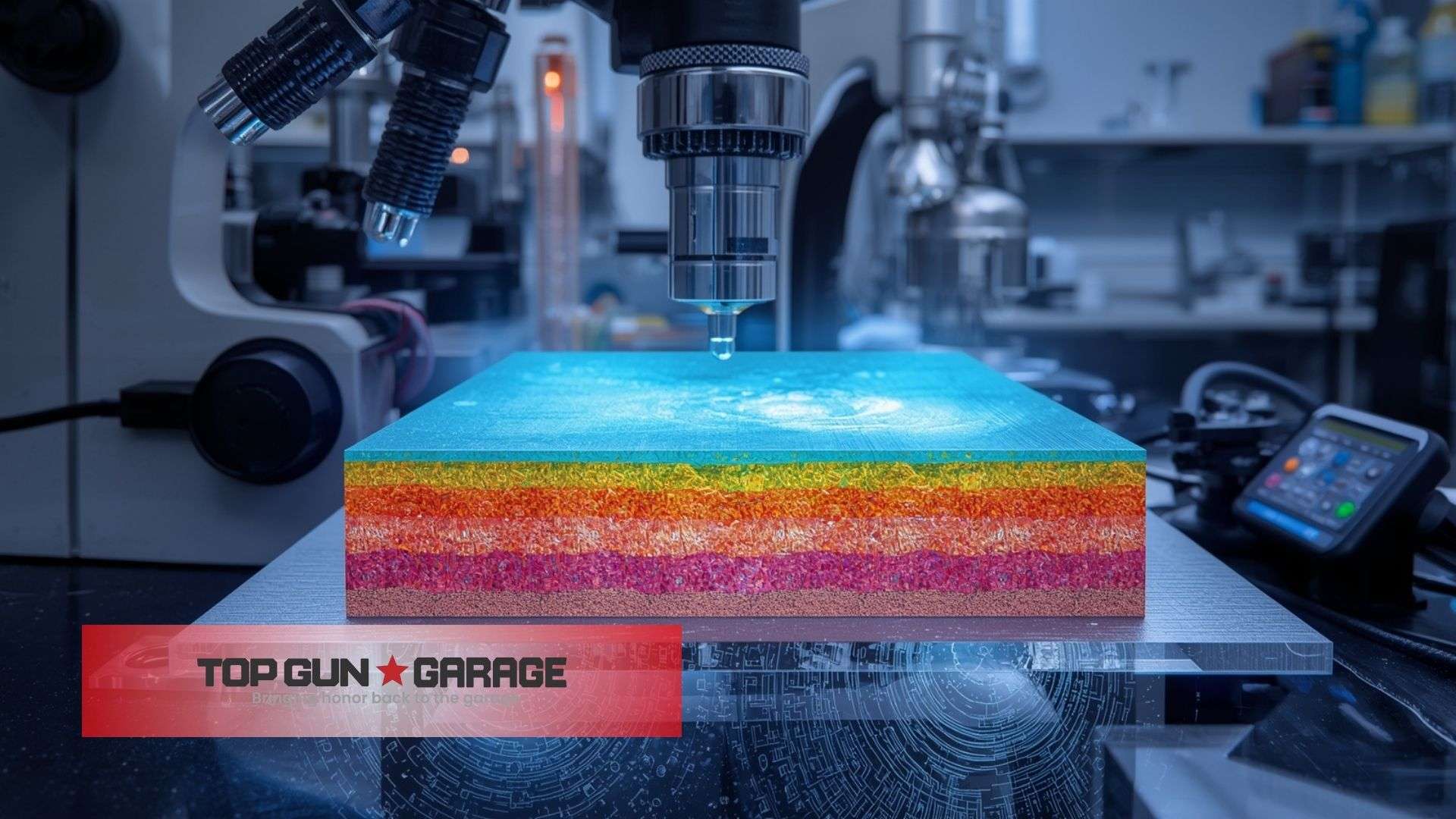
The relationship between thickness and strength in epoxy systems follows established engineering principles. As thickness increases, the coating’s ability to resist bending stresses, distribute point loads, and maintain structural integrity under various loading conditions improves significantly. However, this relationship isn’t linear – there are optimal thickness ranges for different applications, and exceeding these ranges can actually reduce performance due to increased brittleness, thermal stress, or adhesion issues.
Epoxy strength factors include not only thickness but also the quality of substrate preparation, environmental conditions during application, curing parameters, and the specific formulation of the epoxy system. These factors work together to determine the final performance characteristics, but thickness remains one of the most critical variables that contractors can directly control during installation.
When thickness varies across a floor surface, it creates a non-uniform stress distribution pattern. Areas of reduced thickness become stress risers – points where applied loads create higher stresses than the surrounding material. These stress concentrations can initiate cracks that propagate through the coating, leading to delamination, chemical penetration, and ultimately system failure. Understanding this mechanism helps explain why maintaining consistent thickness is so crucial for long-term performance.
How Thickness Variations Affect Mechanical Properties
The mechanical properties of epoxy flooring systems are fundamentally dependent on coating thickness, and variations in thickness create corresponding variations in performance characteristics across the floor surface. Tensile strength, compressive strength, flexural strength, and impact resistance all correlate directly with the thickness of the applied epoxy coating. When thickness varies, these properties vary proportionally, creating a floor system with inconsistent performance characteristics.
Tensile strength, which measures the coating’s ability to resist pulling forces, increases with thickness up to an optimal point. Thin areas of epoxy coating cannot develop the full tensile strength of the material because there isn’t sufficient cross-sectional area to distribute the applied loads. This reduction in tensile strength makes thin areas more susceptible to cracking under thermal expansion and contraction cycles, substrate movement, or applied loads that create tensile stresses in the coating.
Compressive strength, while generally high in epoxy systems, also benefits from adequate thickness. Thin coatings may experience premature failure under compressive loads because they cannot adequately distribute the load to the substrate. This is particularly important in industrial applications where heavy equipment, machinery, or high point loads are common. Thickness variations can create areas where the coating cannot properly transfer loads to the concrete substrate, leading to localized failures.
Impact resistance shows perhaps the most dramatic correlation with thickness. When an object strikes an epoxy floor, the coating must absorb and dissipate the impact energy to prevent damage. Thicker sections can absorb more energy before reaching their failure threshold, while thin areas may crack or chip under relatively minor impacts. This difference in impact resistance across the floor surface can create maintenance challenges and safety concerns, as damaged areas may expose the substrate or create trip hazards.
Flexural strength, which measures the coating’s ability to resist bending forces, is critically dependent on thickness. The flexural strength of a coating increases exponentially with thickness, following beam theory principles. This means that small reductions in thickness can result in disproportionately large reductions in flexural strength, making thin areas much more susceptible to cracking under loads that would not affect properly thick areas.
Chemical Resistance and Barrier Properties
One of the primary functions of epoxy flooring in many applications is to provide a chemical barrier that protects the underlying concrete substrate from aggressive chemicals, oils, acids, and other potentially damaging substances. The effectiveness of this chemical barrier is directly related to the thickness of the epoxy coating, and variations in thickness create corresponding variations in chemical protection across the floor surface.
Chemical resistance in epoxy coatings works through several mechanisms, including chemical inertness, barrier properties, and sacrificial protection. The barrier function is particularly dependent on thickness because it relies on providing a sufficient path length that chemicals must traverse to reach the substrate. Thin areas provide shorter diffusion paths, allowing chemicals to penetrate more quickly and reach the concrete below. This can lead to substrate damage, delamination, and system failure even when the majority of the floor has adequate chemical protection.
The permeability of epoxy coatings to various chemicals decreases significantly with increased thickness. This relationship follows established diffusion principles, where the time required for a chemical to penetrate through the coating increases exponentially with thickness. Areas of reduced thickness may allow chemical penetration in hours or days, while properly thick areas might resist the same chemicals for years or decades under identical exposure conditions.
Temperature effects on chemical resistance are also thickness-dependent. Higher temperatures generally increase the permeability of epoxy coatings to chemicals, and thin areas become even more vulnerable under elevated temperature conditions. This is particularly important in industrial environments where chemical spills may occur at elevated temperatures, or where the floor surface temperature varies due to process heat, radiant heating, or solar exposure.
The concentration and contact time of chemical exposures interact with thickness to determine the extent of chemical attack. High concentrations of aggressive chemicals can overwhelm thin coating areas quickly, while the same chemicals might require much longer contact times to affect properly thick areas. This difference in chemical resistance can create maintenance challenges, as some areas of the floor may require more frequent cleaning, protective measures, or eventual repair while other areas remain unaffected.
Thermal Performance and Expansion Management
Temperature fluctuations create thermal stresses in epoxy flooring systems that must be managed through proper design and installation practices. The thickness of the epoxy coating plays a crucial role in how these thermal stresses develop and how effectively the system can accommodate thermal expansion and contraction without damage. Variations in thickness create non-uniform thermal stress patterns that can lead to cracking, delamination, and premature failure.
Thermal expansion coefficients for epoxy materials are typically higher than those of concrete substrates, meaning that epoxy coatings expand and contract more than the underlying concrete when temperature changes occur. Thicker epoxy sections experience greater absolute dimensional changes than thinner sections, creating differential movement across the floor surface. This differential movement can generate internal stresses that exceed the tensile strength of the coating, particularly at the interface between thick and thin areas.
The thermal mass of epoxy coatings increases with thickness, affecting how quickly different areas of the floor respond to temperature changes. Thick areas heat up and cool down more slowly than thin areas, creating temperature gradients across the floor surface even when the ambient temperature is uniform. These temperature gradients translate into stress gradients that can cause cracking or delamination, particularly during rapid temperature changes or thermal cycling.
Thermal shock resistance, which measures the coating’s ability to withstand rapid temperature changes, is significantly affected by thickness variations. Thin areas may crack under thermal shock conditions that thicker areas can accommodate without damage. This is particularly important in applications where hot liquids might be spilled on the floor, where equipment operates at elevated temperatures, or where the floor is exposed to rapid temperature changes due to opening doors, process variations, or weather conditions.
Heat dissipation through epoxy coatings also varies with thickness, affecting the surface temperature of the floor and the thermal stresses that develop. Thicker coatings provide more thermal insulation, potentially leading to higher surface temperatures and greater thermal stresses. Understanding these thermal effects helps explain why maintaining consistent thickness is important for long-term thermal performance and why thickness variations can create unexpected failure patterns in temperature-variable environments.
Application Techniques for Consistent Thickness
Achieving consistent epoxy thickness requires careful attention to application techniques, surface preparation, material properties, and quality control measures throughout the installation process. Professional contractors like those at Top Gun Garage understand that thickness control begins with proper planning and continues through every step of the application process, from substrate preparation to final curing.
Surface preparation plays a fundamental role in thickness consistency because the profile and condition of the substrate directly affect how the epoxy flows and levels during application. Properly prepared concrete surfaces should have a uniform profile depth that allows the epoxy to achieve consistent thickness without excessive material usage or thin spots. Grinding, shot blasting, or acid etching techniques must be applied uniformly to avoid creating high and low spots that will translate into thickness variations in the finished coating.
Material mixing and handling procedures significantly impact the ability to maintain consistent thickness during application. Proper mixing ensures uniform viscosity and flow characteristics that promote even spreading and self-leveling. Temperature control of both the material and the substrate affects viscosity and working time, which in turn influence the contractor’s ability to achieve uniform thickness before the material begins to cure.
Application tools and techniques must be selected and used appropriately to maintain thickness control. Squeegees, rollers, and other spreading tools should be used systematically to ensure uniform coverage and thickness. The application rate, or coverage per unit area, must be carefully controlled and monitored throughout the process to prevent over-application in some areas and under-application in others. Professional contractors use measuring techniques and quality control procedures to verify thickness during application, allowing for corrections before the material cures.
Environmental conditions during application affect material flow, leveling, and curing characteristics, all of which impact final thickness uniformity. Temperature, humidity, air movement, and other environmental factors must be controlled within specified ranges to ensure proper application and curing. Top Gun Garage professionals monitor these conditions continuously during application to maintain optimal conditions for achieving consistent thickness and performance.
Quality Control and Thickness Monitoring
Effective quality control programs for epoxy flooring installations include specific procedures for monitoring and verifying thickness throughout the application process. These programs help ensure that the installed system meets project specifications and performance requirements while identifying and correcting thickness variations before they become permanent problems.
Wet film thickness measurements taken during application provide immediate feedback about coating thickness and allow for real-time adjustments to application techniques or material usage. Wet film thickness gauges are used systematically across the application area to verify that the applied material will cure to the specified dry film thickness. This monitoring allows contractors to add material to thin areas or adjust spreading techniques to improve uniformity before the coating cures.
Dry film thickness measurements taken after curing provide verification that the final coating thickness meets project specifications. These measurements are typically taken at regular intervals across the floor surface using electronic thickness gauges that can detect variations in coating thickness with high precision. Documentation of these measurements provides quality assurance records and helps identify any areas that may require additional coating or remedial work.
Statistical analysis of thickness measurements helps identify patterns or systematic variations that might indicate problems with application techniques, surface preparation, or material properties. Professional contractors use this data to continuously improve their application procedures and ensure consistent results across multiple projects. Understanding thickness variation patterns also helps in planning maintenance and predicting long-term performance characteristics.
Acceptance criteria for thickness variations should be established before beginning the application process, taking into account the intended use of the floor, performance requirements, and industry standards. These criteria provide clear guidelines for determining when thickness variations are acceptable and when corrective action is required. Professional installation teams use these criteria to ensure that completed projects meet or exceed client expectations for performance and durability.
Frequently Asked Questions
What is the ideal thickness for epoxy flooring in different applications?
The ideal thickness varies by application: decorative residential floors typically require 2-5 mils, commercial applications need 5-15 mils, and heavy industrial environments may require 20-40 mils or more. The specific thickness depends on expected loads, chemical exposure, and performance requirements.
How do thickness variations affect the warranty on epoxy flooring?
Thickness variations outside manufacturer specifications can void warranties because they directly impact performance and durability. Most warranties require compliance with specified thickness ranges and proper application procedures to remain valid.
Can thin spots in epoxy flooring be repaired without replacing the entire floor?
Yes, thin spots can often be repaired by applying additional coats to bring the thickness up to specification. However, proper surface preparation and compatible materials are essential for successful repairs that maintain uniform performance.
How is epoxy thickness measured during and after application?
Wet film thickness is measured during application using wet film thickness gauges, while dry film thickness is measured after curing using electronic thickness meters. Both measurements are important for quality control and specification compliance.
What causes thickness variations during epoxy application?
Common causes include uneven substrate preparation, improper application techniques, material viscosity variations, environmental conditions, and inadequate quality control during installation. Professional contractors control these factors to minimize variations.
Does epoxy thickness affect slip resistance?
Yes, thickness can affect slip resistance through its impact on surface texture and the ability to incorporate anti-slip additives. Consistent thickness helps maintain uniform slip resistance characteristics across the entire floor surface.
How do environmental conditions affect epoxy thickness consistency?
Temperature, humidity, and air movement affect material viscosity, flow characteristics, and curing rates, all of which impact thickness consistency. Proper environmental control during application is essential for achieving uniform thickness.
What role does substrate preparation play in thickness control?
Proper substrate preparation creates a uniform surface profile that promotes consistent epoxy thickness. Uneven preparation can create high and low spots that translate directly into thickness variations in the finished coating.
Conclusion
Understanding why epoxy thickness changes impact strength and durability is essential for anyone involved in epoxy flooring projects, from property owners to professional contractors. The relationship between thickness and performance encompasses mechanical properties, chemical resistance, thermal behavior, and long-term durability characteristics that directly affect the success of any flooring installation.
The science behind epoxy performance clearly demonstrates that thickness variations create corresponding variations in strength, chemical protection, and durability across the floor surface. These variations can lead to premature failure, increased maintenance costs, and safety concerns that could have been prevented through proper thickness control during installation. Professional contractors like Top Gun Garage understand these relationships and implement comprehensive quality control programs to ensure consistent thickness and optimal performance.
Achieving consistent epoxy thickness requires attention to every aspect of the installation process, from initial surface preparation through final curing. The investment in proper application techniques, quality control measures, and professional expertise pays dividends in extended floor life, reduced maintenance requirements, and reliable performance that meets or exceeds project expectations. By understanding and controlling the factors that affect epoxy thickness, property owners and contractors can ensure successful flooring installations that provide years of reliable service in demanding applications.