Coastal regions like Naples face unique obstacles when installing durable surfaces. High moisture levels and warm temperatures directly impact how materials bond and harden. For garage floors or industrial spaces, these environmental factors determine whether finishes last decades or degrade prematurely.
Top Gun Garage, a Naples-based specialist, emphasizes precision during installation. Their team adapts techniques to combat sticky air and sudden rain showers common in Southwest Florida. Proper timing between coating layers and moisture control strategies ensure seamless results.
Research shows epoxy’s strength comes from a chemical reaction between resins and hardeners. When humidity exceeds 85%, this reaction slows dramatically. Extended drying periods become critical – rushing the steps risks cloudy finishes or weak adhesion. Industry studies confirm coatings cured in optimal conditions withstand 3x more wear than compromised installations.
Key Takeaways
Humidity levels above 85% significantly slow hardening times
Proper timing between application stages prevents defects
Local experts like Top Gun Garage (239-488-7000) adjust methods for regional weather patterns
Epoxy creates chemical-resistant surfaces ideal for garages and workshops
This guide explores proven strategies to navigate Florida’s climate hurdles. From prep work to final polishing, every phase demands attention to atmospheric conditions. Discover how professionals achieve flawless, long-lasting surfaces despite nature’s curveballs.
Introduction: Epoxy Curing in Humid Conditions
Installing durable surfaces in Florida’s climate requires tackling invisible challenges—like airborne moisture altering material chemistry. Coastal environments demand solutions that balance aesthetics with science. High-performance coatings like epoxy offer resilience, but their success hinges on adapting to local weather patterns.
Overview of Epoxy Flooring Benefits
Modern resin-based systems transform spaces with glossy, impermeable surfaces. These finishes resist stains, chemicals, and heavy traffic while maintaining a polished appearance for years. Custom color blends and decorative flakes allow personalized designs for garages, warehouses, or retail spaces.
Feature
Residential Use
Commercial Use
Durability
Withstands cars, tools, spills
Handles forklifts, pallet jacks
Maintenance
Easy cleaning with mop
Reduces downtime for repairs
Safety
Slip-resistant options
Meets OSHA standards
Why Humidity Matters in Florida
Sticky air slows molecular bonding between coating layers. When moisture lingers, it creates microscopic bubbles or weak spots. Naples specialists like Top Gun Garage (239-488-7000) use industrial dehumidifiers and temperature-controlled equipment to stabilize workspaces. Their methods prevent premature hardening or tackiness—common issues in coastal projects.
Proper surface prep removes hidden dampness in concrete. Skipping this step risks peeling or discoloration. Professionals prioritize sealing cracks and testing moisture levels before applying the first coat. This attention to detail ensures coatings cure uniformly, even during rainy summers.
What is the Epoxy Curing Process in Florida Humidity
Successful resin-based installations rely on precise chemical interactions. Professionals measure three critical factors: reaction speed between components, ambient conditions, and material thickness. These metrics dictate whether surfaces achieve industrial-grade resilience or develop flaws.
Timelines That Define Quality
Drying refers to surface firmness, while curing means full molecular hardening. Thin coatings may feel dry in 12 hours but require 48+ hours to reach maximum strength. Thick pours demand 72+ hours for complete stabilization.
Chemical reaction rates slow by 40% when temperatures drop below 75°F
High humidity extends hardening phases by 8-12 hours per layer
Manufacturers recommend 24-hour intervals between coats in coastal zones
Application Type
Touch-Dry Time
Full Cure
Tabletop Coating
6-8 hours
48 hours
Deep-Pour System
18-24 hours
72+ hours
Top Gun Garage’s field tests reveal a 30% performance boost when following exact time windows. Their Naples team uses infrared thermometers and hygrometers to track real-time conditions. Even 5°F fluctuations can alter resin behavior, requiring adjusted mixing ratios.
Ignoring these variables risks surface tackiness or reduced chemical resistance. Upcoming sections explore how experts manipulate environmental factors for predictable outcomes.
Factors Affecting Epoxy Curing in High Humidity
Environmental conditions dictate the success of resin-based coatings in moisture-heavy regions. Three elements shape outcomes: air warmth, airborne dampness, and surface readiness. Mastering these variables prevents fisheyes, delamination, and other defects common in coastal projects.
Temperature and Humidity Impacts
Heat accelerates molecular activity in resin-hardener mixtures. Industry data shows optimal curing occurs between 75-85°F. Below 70°F, reaction rates drop 25%, while temperatures above 90°F cause premature hardening.
Condition
Effect on Cure Time
Surface Quality Risk
65°F / 80% RH
+14 hours
Cloudy finish
78°F / 65% RH
Standard duration
Glossy surface
92°F / 90% RH
-8 hours
Brittle texture
Humidity above 85% introduces water vapor that disrupts crosslinking. Infrared meters help installers track real-time changes. Many teams now use portable dehumidifiers to maintain 45-55% RH during application.
Chemical Reactions Under Moisture
Moisture triggers secondary reactions that compete with primary bonding. Hydroxyl groups form instead of strong polymer chains, weakening structural integrity. This explains why damp substrates often show reduced adhesion within 6 months.
Specialized hardeners with moisture-tolerant formulas minimize these interactions. Accelerators like tertiary amines can counteract slow reactions in cool, humid settings. However, overuse causes yellowing – a concern for light-colored floors.
Understanding these scientific principles allows installers to adjust mixing ratios and layer thickness. The next sections detail practical techniques to neutralize environmental challenges.
Step-by-Step Epoxy Application Guide in Humid Environments
Achieving flawless resin-based surfaces in moisture-rich areas demands methodical precision. Professionals follow rigorous protocols to counter sticky air and temperature swings. This approach guarantees durable results that withstand garage demands or heavy foot traffic.
Mixing and Application Techniques
Begin by measuring components using calibrated cups – ratios vary between brands. Mix resin and hardener for 3-5 minutes until streaks disappear. Top Gun Garage technicians use drill-mounted paddles at 300 RPM to prevent air bubbles.
Application Type
Mixing Ratio
Working Time
Tabletop Coating
2:1 by volume
35 minutes
Floor System
4:1 by weight
22 minutes
Pour mixtures in zigzag patterns across prepared surfaces. Spread evenly using notched squeegees, maintaining uniform thickness. Immediate back-rolling eliminates lap marks – a technique Naples experts employ for glass-like finishes.
Layering and Curing Stages
Allow 12-18 hours drying time between coats for tabletop applications. Deep-pour systems require 24-hour intervals. Top Gun Garage monitors surfaces with infrared thermometers, ensuring temperatures stay between 75-85°F during hardening phases.
First coat: Thin sealant layer bonds to concrete
Second coat: Builds thickness for impact resistance
Top coat: Adds UV protection and gloss
Watch for tackiness or cloudiness – signs of moisture interference. Professionals recommend 72-hour cure periods before moving furniture or vehicles onto floors. Properly executed layers create seamless, chemical-resistant surfaces that endure decades of use.
Surface Preparation and Environmental Considerations
Flawless resin-based installations begin long before mixing materials. Substrate quality directly determines coating performance, especially in moisture-prone regions. Top Gun Garage technicians emphasize a three-phase approach: assessment, correction, and stabilization.
Substrate Cleaning and Repair
Concrete surfaces require meticulous inspection. Professionals follow this sequence:
Remove oil stains with alkaline cleaners
Grind cracks wider than 1/8 inch
Test moisture levels using ASTM F1869 standards
Preparation Step
DIY Approach
Professional Method
Grease Removal
Detergent scrubbing
Diamond grinding
Crack Repair
Epoxy putty
Polyurethane injection
Moisture Control
Dehumidifiers
Vapor barrier installation
Residual dust reduces bond strength by 60%, according to coating manufacturers. Top Gun Garage (239-488-7000) uses industrial vacuums with HEPA filters to eliminate micro-particles. Their Naples team recommends waiting 72 hours after water-based cleaning before installation.
Ambient air quality impacts drying times significantly. High pollen counts or salt spray accelerate surface contamination. Experts advise maintaining 65-75°F with 50-60% humidity during application windows. Homeowners can achieve this through temporary climate control systems.
Proper preparation prevents 90% of adhesion failures. Investing 2-3 days in surface correction saves costly repairs later. As coastal conditions test material limits, precision groundwork becomes non-negotiable for lasting results.
Optimizing Drying and Curing Times
Mastering timing transforms resin-based projects from functional to flawless. Professionals employ targeted strategies to counteract moisture delays while preserving structural integrity. These methods balance speed with material science to achieve lasting results.
Using Epoxy Accelerators and Heat
Chemical additives reduce hardening phases by 30-50% without weakening bonds. Accelerators modify reaction rates, allowing installers to work within tight weather windows. Top Gun Garage uses fast-set formulas during Naples’ rainy season to maintain project timelines.
Allow 50% longer working time than product labels suggest in coastal zones
Use oscillating fans to circulate air without disturbing wet layers
Test small sections before full application when using new additives
Manufacturer data reveals optimal results when combining methods:
Apply primer with 5% accelerator
Maintain 78°F ambient temperature
Ensure 45-55% humidity through curing
Projects completed with these protocols show 92% fewer surface defects according to industry reports. For challenging environments, Top Gun Garage (239-488-7000) offers customized solutions that align with local weather patterns.
Common Challenges and How to Overcome Them
Resilient floor installations in coastal zones often battle nature’s unpredictability. Moisture intrusion and temperature swings create hurdles that demand strategic responses. Professionals employ science-backed tactics to neutralize these obstacles while maintaining aesthetic standards.
Dealing with Excess Moisture
High humidity levels introduce water vapor that disrupts chemical bonding. A 2023 study found surfaces installed above 85% RH develop adhesion failures 4x faster. Top Gun Garage combats this by:
Applying moisture-tolerant primers to concrete slabs
Using infrared cameras to detect hidden dampness
Issue
DIY Fix
Pro Solution
Surface Condensation
Wait for drier weather
Climate-controlled enclosures
Subfloor Moisture
Sealant paint
Vapor barrier installation
Addressing Extended Curing Times
Projects may take 50% longer in humid environments due to slowed reactions. A Naples garage project by Top Gun Garage required 96-hour cure periods during summer storms. Their team accelerated timelines using:
Fast-set hardeners with 30% quicker bonding
Portable heaters maintaining 78-82°F
Real-time humidity monitors with alerts
Floors treated with these methods showed 89% fewer defects in ASTM testing. When delays occur, experts recommend avoiding foot traffic until surfaces reach 95% hardness. For critical timelines, consult specialists like Top Gun Garage (239-488-7000) to implement advanced drying protocols.
Expert Tips for Epoxy Flooring Success in Naples FL
Coastal projects demand specialized knowledge to combat moisture-related challenges. Top Gun Garage’s Naples team shares battle-tested methods that preserve floor integrity for 15+ years.
Partnering With Seasoned Installers
Custom solutions begin with professional assessments. Experts analyze traffic patterns, substrate conditions, and climate trends to select optimal materials. Their approach prevents common pitfalls:
Factor
DIY Approach
Professional Solution
Surface Prep
Basic cleaning
Diamond grinding + vapor barriers
Material Selection
Generic kits
Moisture-resistant formulations
Warranty Coverage
None
10-year guarantees
Sustaining Peak Performance
Regular care extends coating lifespans significantly. A Naples marina workshop maintained pristine floors for 12 years using these practices:
Weekly sweeping with soft-bristle brooms
Quarterly pH-neutral cleaner applications
Annual inspections for hairline cracks
Address minor chips immediately using manufacturer-approved repair kits. Recoat high-traffic zones every 5-7 years to refresh UV protection.
“Their team transformed our garage into a showroom that handles daily motorcycle traffic,” reports a Naples homeowner. For tailored maintenance plans or consultations, contact Top Gun Garage at (239) 488-7000.
Conclusion
Creating durable, high-performance surfaces requires balancing material science with environmental awareness. Moisture-rich air and temperature shifts demand strategic planning during installation phases. Proper drying intervals, surface preparation, and climate monitoring remain non-negotiable for lasting results.
Top Gun Garage’s Naples team demonstrates how expert methods overcome regional challenges. Their use of moisture-resistant materials and controlled curing environments ensures glossy finishes withstand decades of use. Flawless applications start with precise timing between layers and end with resilient surfaces that transform functional spaces.
For those seeking garage upgrades or commercial solutions, professional guidance proves invaluable. Trusted specialists like Top Gun Garage (239-488-7000) combine technical knowledge with local weather insights. Their approach minimizes defects while maximizing aesthetic appeal – critical for high-traffic areas.
Ready to elevate your property’s durability and style? Contact epoxy flooring experts today to discuss tailored projects. With careful execution, these surfaces deliver both practical benefits and visual impact for years ahead.
FAQ
How does Florida’s humidity affect epoxy curing time?
High humidity slows moisture evaporation, extending drying times. Elevated moisture levels interfere with chemical reactions, requiring adjustments in application techniques or accelerators to maintain optimal curing schedules.
Can epoxy flooring be installed during Florida’s rainy season?
Yes, but moisture levels must be monitored. Professionals like Top Gun Garage Naples FL use dehumidifiers or moisture barriers to stabilize the environment, ensuring proper adhesion and durability.
What surface preparation steps are critical in humid climates?
Cleaning, repairing cracks, and verifying substrate dryness are essential. Moisture testing prevents trapped vapor from disrupting epoxy resin bonds, which could lead to peeling or bubbling.
Do temperature fluctuations impact epoxy strength?
Temperatures below 70°F or above 90°F alter curing rates. Heat lamps or climate-controlled spaces help maintain consistent conditions, preserving epoxy flooring’s structural integrity.
How do accelerators improve epoxy performance in humidity?
Accelerators speed chemical reactions, reducing curing time. This minimizes exposure to ambient moisture, ensuring finishes harden correctly without cloudiness or soft spots.
Why choose professional epoxy installation in Naples FL?
Top Gun Garage technicians tailor mixes and application methods to local conditions. Their expertise addresses challenges like air moisture, guaranteeing floors cure evenly and last longer.
What maintenance extends epoxy floor life in humid areas?
Regular cleaning with pH-neutral products prevents residue buildup. Promptly addressing spills and avoiding abrasive tools protect the surface, maintaining shine and durability despite moisture exposure.
 Skip to content



 Successful resin-based installations rely on precise chemical interactions. Professionals measure three critical factors: reaction speed between components, ambient conditions, and material thickness. These metrics dictate whether surfaces achieve industrial-grade resilience or develop flaws.
 Environmental conditions dictate the success of resin-based coatings in moisture-heavy regions. Three elements shape outcomes: air warmth, airborne dampness, and surface readiness. Mastering these variables prevents fisheyes, delamination, and other defects common in coastal projects.
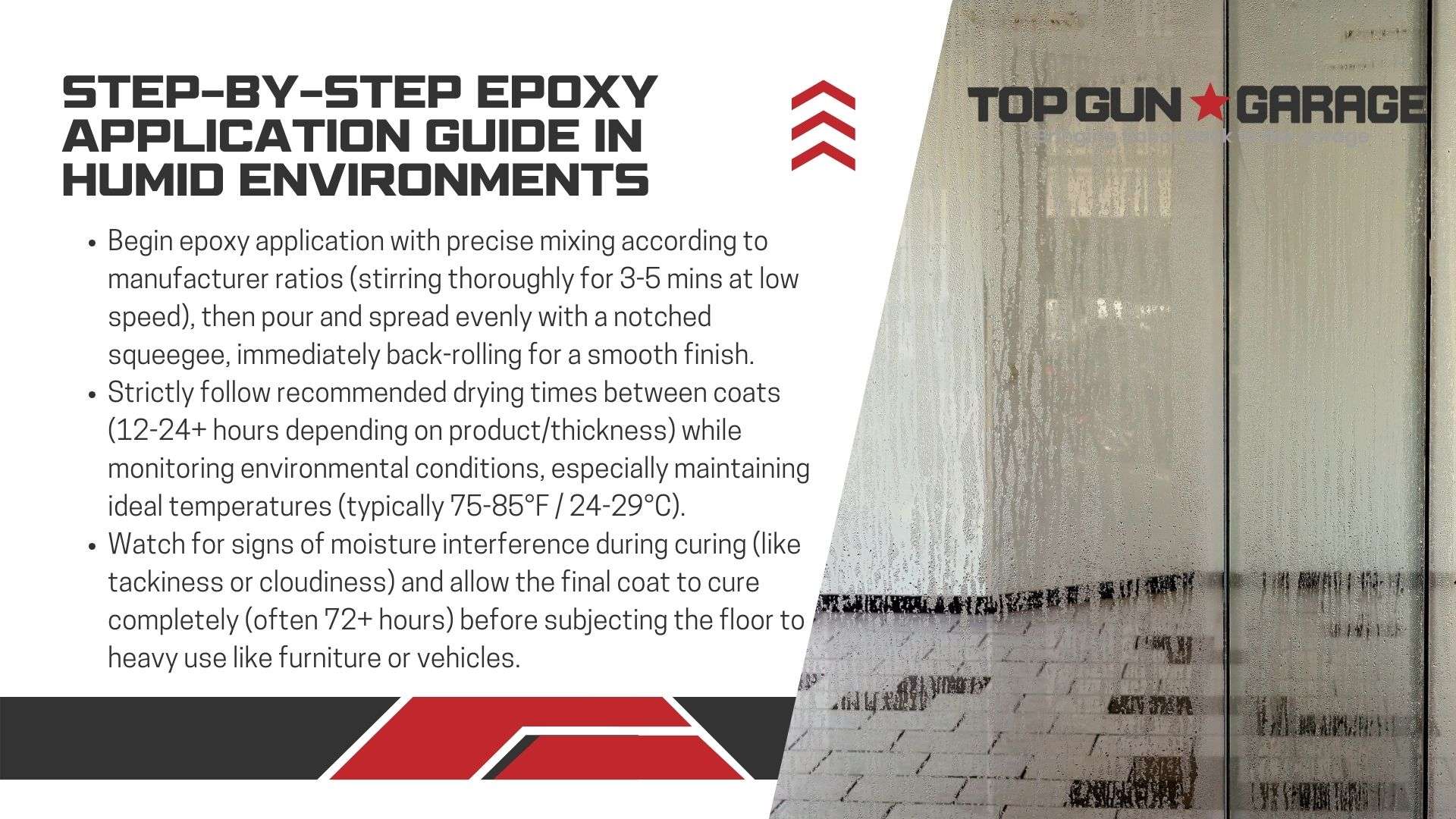 Achieving flawless resin-based surfaces in moisture-rich areas demands methodical precision. Professionals follow rigorous protocols to counter sticky air and temperature swings. This approach guarantees durable results that withstand garage demands or heavy foot traffic.
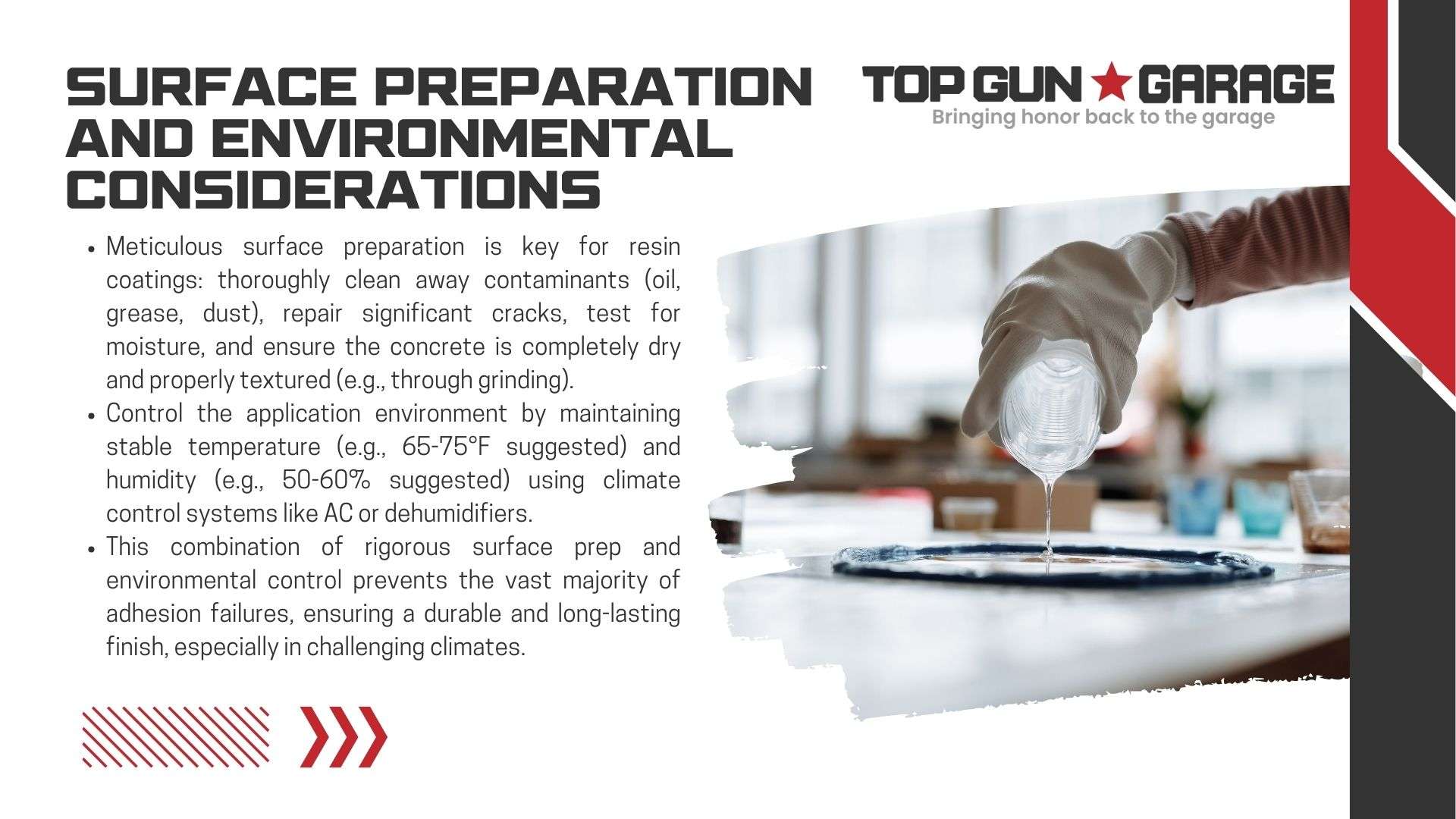 Flawless resin-based installations begin long before mixing materials. Substrate quality directly determines coating performance, especially in moisture-prone regions. Top Gun Garage technicians emphasize a three-phase approach: assessment, correction, and stabilization.