 Skip to content



Key Takeaways
- Exact resin-hardener ratios prevent premature coating degradation
- Proper concrete surface preparation ensures strong adhesion
- Humidity control during application avoids moisture-related defects
- Professional installers address local climate challenges effectively
- Regular maintenance extends epoxy flooring lifespan significantly
What Causes Epoxy Floor Failures Naples FL: Understanding Common Issues
High-quality installations require precision at every stage. Two critical factors often determine success: technical execution during application and environmental control throughout the curing phase.Precision in Material Preparation
Accurate resin-to-activator ratios form the foundation of durable surfaces. Deviations exceeding 5% during mixing create weak molecular bonds. This leads to peeling within months or uneven textures prone to cracking. Professional-grade products demand strict protocols. For example, two-part industrial epoxy coatings harden faster than DIY kits, requiring timed application. Air bubbles often emerge when amateurs use handheld mixers instead of industrial tools.| Factor | Professional Application | DIY Kits |
|---|---|---|
| Mixing Accuracy | ±2% tolerance | ±10% tolerance |
| Curing Temperature | 65-85°F controlled | Ambient conditions |
| Surface Prep | Mechanical grinding | Manual scrubbing |
Climate-Driven Curing Complications
Southwest Florida’s humidity levels often exceed 90%, slowing evaporation during curing. Moisture trapped beneath the floor coating creates cloudy patches or delamination. Temperature swings above 90°F accelerate hardening, reducing workability. Residual oil or grease on concrete surfaces blocks chemical adhesion. Specialized cleaners remove these contaminants more effectively than standard detergents. Without proper etching, coatings bond weakly to smooth substrates. These variables underscore why experienced technicians achieve better results. Up next: how surface preparation techniques combat adhesion challenges.Critical Factors Affecting Epoxy Adhesion
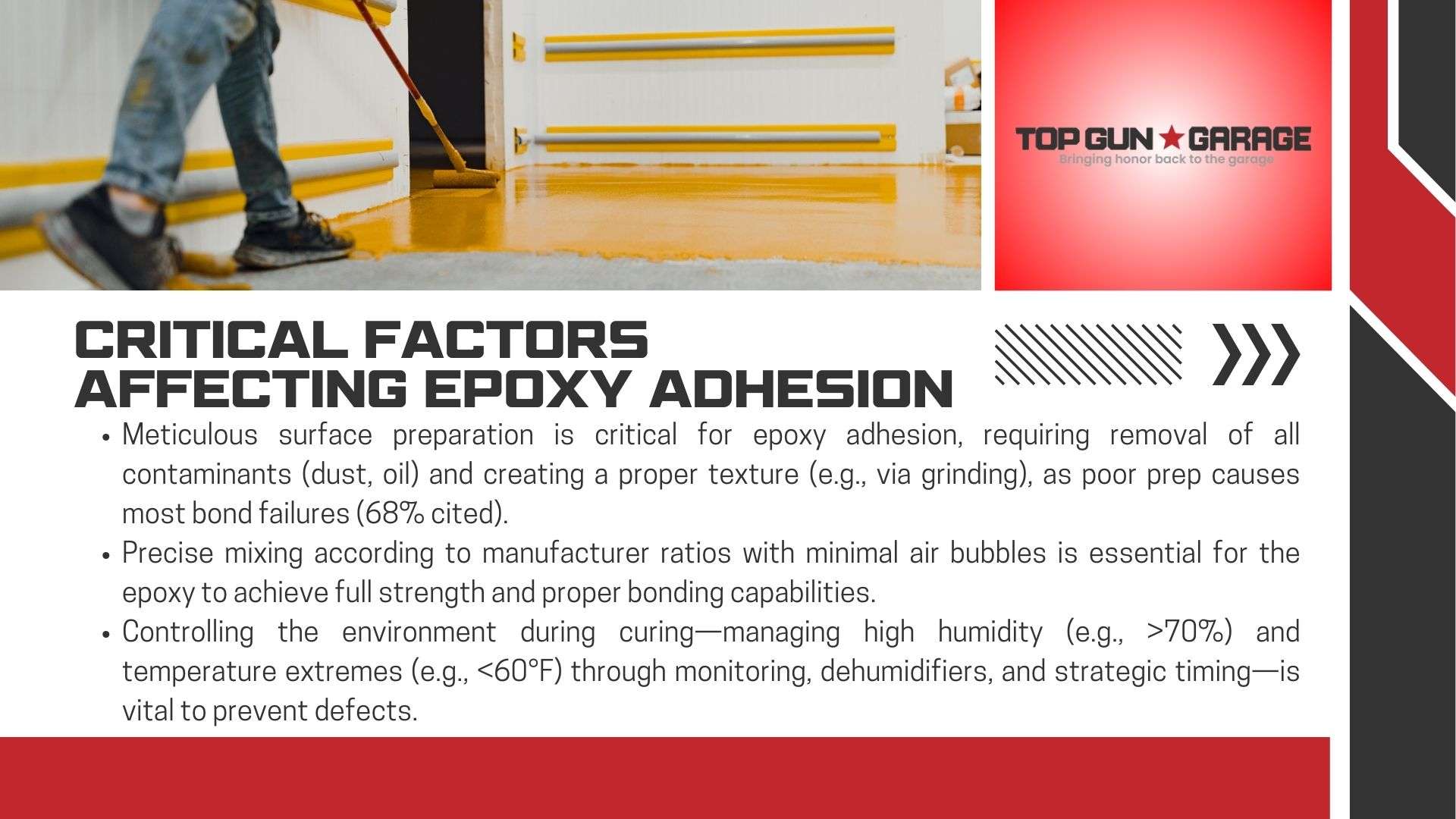 Achieving lasting bonds between epoxy and concrete demands more than just quality materials. Three interconnected elements determine whether coatings withstand daily wear: substrate readiness, mixture precision, and environmental awareness during curing.
Surface Contamination and Preparation Challenges
Even microscopic debris sabotages adhesion. Fatty acids from old spills or residual cleaning agents create invisible barriers. Industry studies show 68% of bonding failures trace back to inadequate substrate cleaning.- Mechanical grinding removes existing sealants and opens concrete pores
- Shot blasting eliminates 99.8% of surface oils compared to chemical cleaners
- Acid etching neutralizes alkaline residues that weaken resin bonds
Mixing Accuracy and Application Timing
Resin systems behave like precision clockwork. A 3% ratio error alters viscosity, causing uneven spreads. Professional installers use calibrated equipment to maintain strict 1:1 ratios.| Mixing Factor | Professional Standard | DIY Result |
|---|---|---|
| Ratio Accuracy | ±1% | ±8% |
| Air Entrapment | 0.2% bubbles | 5-7% bubbles |
| Work Time | 45-60 minutes | 20-30 minutes |
Impact of Weather Conditions on Curing
Humidity above 70% extends curing periods by 40%, while temperatures below 60°F prevent proper cross-linking. Skilled technicians monitor dew points and use industrial dehumidifiers to create optimal conditions. Morning applications often outperform afternoon ones in coastal areas. This avoids midday heat spikes that cause premature hardening. Proper timing ensures resins fully penetrate prepared surfaces.Effective Surface Preparation and Application Tips
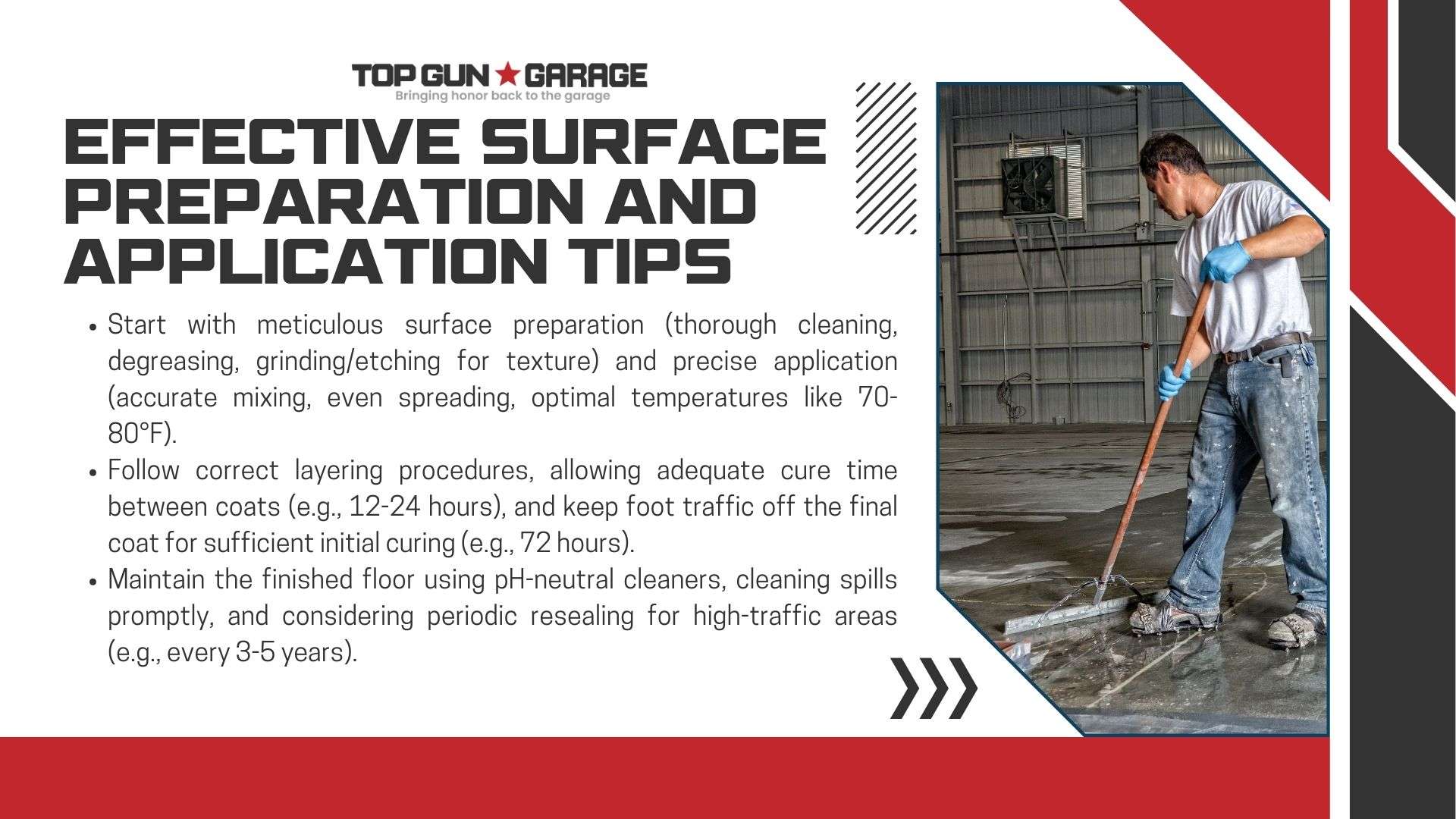 Long-lasting results start with meticulous groundwork. Proper techniques transform ordinary concrete into a receptive base for coatings, ensuring years of reliable performance.
Pre-Cleaning, Etching, and Pore Preparation
Thorough cleaning removes hidden threats to adhesion. Industrial degreasers eliminate oil residues, while pressure washing flushes out dirt particles. Top Gun Garage technicians scan surfaces using UV lights to detect contaminants invisible to the naked eye. Mechanical grinding outperforms manual methods by creating uniform texture. This process opens 85% more pores than acid etching alone, according to flooring industry studies. Shot blasting provides deeper penetration for heavily stained areas.| Method | Effectiveness | Time Required |
|---|---|---|
| Chemical Cleaning | Removes surface oils | 2-3 hours |
| Mechanical Grinding | Opens concrete pores | 4-6 hours |
| Acid Etching | Neutralizes alkalinity | 1-2 hours |
Best Practices for Professional Application
Precision mixing ensures resin and hardener bond correctly. Digital scales measure components within 1% accuracy—a standard DIY tools can’t match. Apply coatings in 70-80°F temperatures using zigzag patterns to minimize air pockets. Top Gun Garage layers materials in timed intervals. Each coat cures for 12-24 hours before recoating. This prevents tackiness and ensures chemical bonds form properly. Avoid foot traffic for 72 hours post-application. Regular maintenance preserves the finish. Use pH-neutral cleaners monthly, and address spills promptly. Professionals recommend resealing high-traffic zones every 3-5 years.Prevention and Maintenance Insights by Top Gun Garage
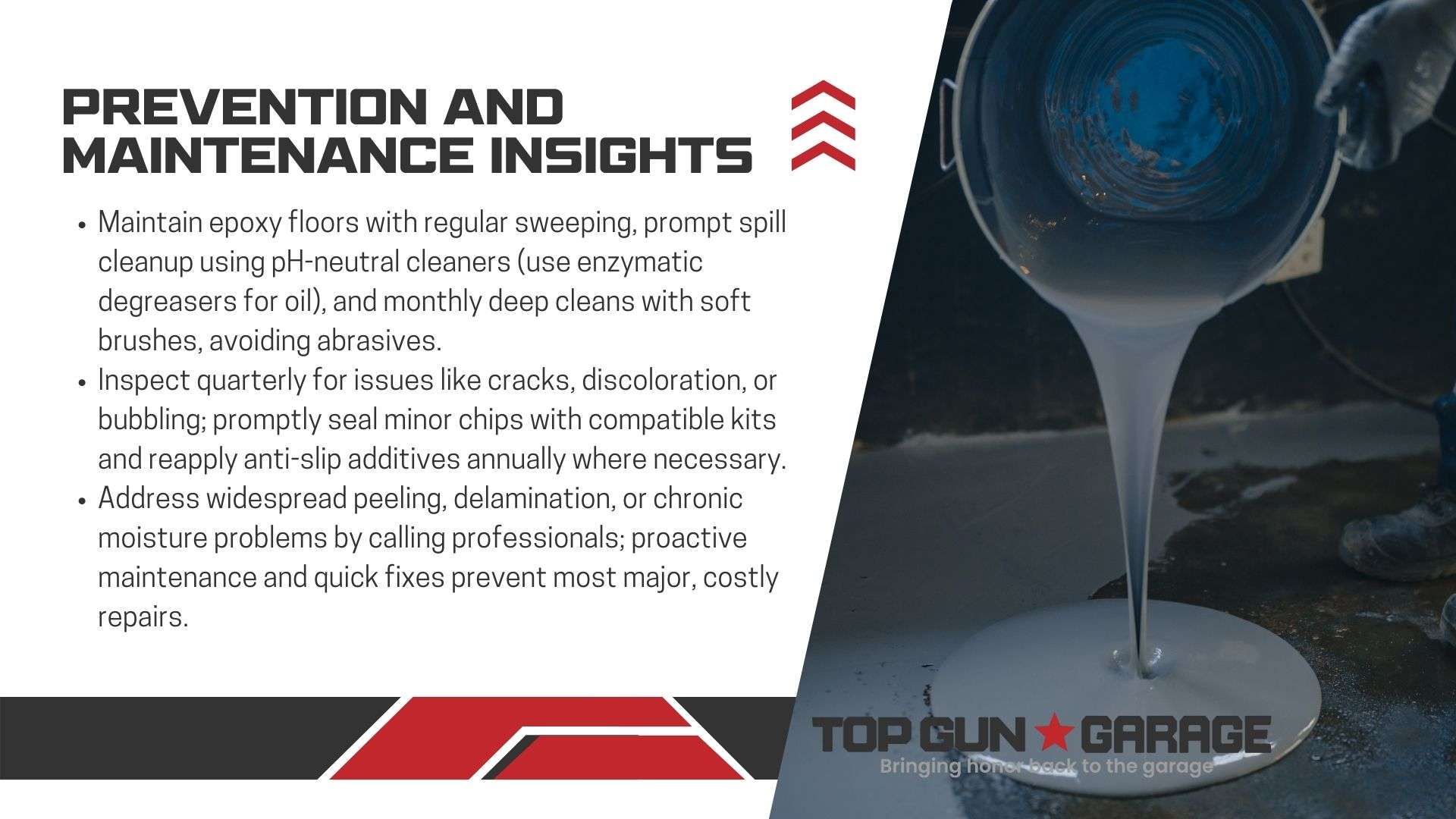 Maintaining epoxy surfaces requires consistent care and proactive measures. Property owners can significantly extend their floor coating’s lifespan through strategic routines and early problem detection.
Proper Cleaning and Removal of Debris, Oil, and Grease
Weekly sweeping prevents abrasive particles from scratching coatings. For spills, use pH-neutral cleaners within 30 minutes—acidic solutions degrade resin bonds. Tackle oil stains with enzymatic degreasers, which break down fats without harming the surface. Deep clean monthly using auto-scrubbers with soft brushes. Avoid steel wool or harsh pads that create micro-scratches. These tiny grooves trap dirt, accelerating wear in high-traffic zones.Regular Maintenance and Timely Inspection Strategies
Conduct quarterly inspections for:- Hairline cracks near expansion joints
- Discoloration from UV exposure
- Bubbling indicating moisture intrusion
When to Call the Experts: Contact (239) 488-7000
Persistent peeling or widespread delamination signals deeper issues. Top Gun Garage technicians diagnose problems using moisture meters and adhesion testers. Their industrial-grade materials withstand Florida’s humidity better than store-bought solutions. For complex jobs like recoating entire warehouses or resolving chronic dampness, professional services ensure lasting results. Call (239) 488-7000 for assessments—early intervention prevents 80% of major flooring overhauls.Conclusion
 Successful epoxy installations combine technical precision with environmental awareness. Proper concrete surface preparation eliminates contaminants while opening pores for stronger adhesion. Exact mixing ratios between resin and hardener prevent air bubbles and uneven curing—critical factors in Southwest Florida’s humid climate.
Professional services excel at managing these variables. They use industrial tools to control temperature during application and employ advanced cleaning methods. This ensures coatings bond flawlessly to concrete floors, resisting peeling or discoloration.
Regular maintenance preserves the finish. Prompt spill cleanup and annual inspections catch minor issues before they escalate. For complex jobs, experienced technicians deliver lasting results through timed layering and moisture testing.
Top Gun Garage’s expertise in local conditions makes them the go-to choice for durable flooring solutions. Their proven process eliminates common installation errors, transforming spaces with resilient surfaces. Make sure to follow these guidelines for coatings that withstand daily demands while maintaining visual appeal.
Successful epoxy installations combine technical precision with environmental awareness. Proper concrete surface preparation eliminates contaminants while opening pores for stronger adhesion. Exact mixing ratios between resin and hardener prevent air bubbles and uneven curing—critical factors in Southwest Florida’s humid climate.
Professional services excel at managing these variables. They use industrial tools to control temperature during application and employ advanced cleaning methods. This ensures coatings bond flawlessly to concrete floors, resisting peeling or discoloration.
Regular maintenance preserves the finish. Prompt spill cleanup and annual inspections catch minor issues before they escalate. For complex jobs, experienced technicians deliver lasting results through timed layering and moisture testing.
Top Gun Garage’s expertise in local conditions makes them the go-to choice for durable flooring solutions. Their proven process eliminates common installation errors, transforming spaces with resilient surfaces. Make sure to follow these guidelines for coatings that withstand daily demands while maintaining visual appeal.
FAQ
How do improper installation techniques affect epoxy flooring?
Incorrect material ratios or rushed application disrupt curing. Poor mixing creates weak spots, while uneven spreading leaves gaps. Professional installers ensure precise resin-to-hardener blends for optimal durability.
Why does humidity impact epoxy adhesion in Naples?
High moisture levels trap condensation beneath coatings. This prevents proper bonding, leading to bubbles or peeling. Concrete slabs must undergo moisture testing before resin application to avoid delamination.
Can oil stains compromise a new floor coating?
Yes. Grease or oil residues block pores, reducing surface grip. Degreasers and mechanical grinding remove contaminants, creating a clean slate for strong adhesion. Thorough pre-cleaning is non-negotiable.
What role does temperature play during curing?
Extreme heat accelerates drying, causing cracks. Cold slows chemical reactions, resulting in tacky finishes. Ideal conditions between 60°F–90°F ensure even hardening without air bubbles or weak spots.
How often should garage floors be inspected?
Bi-annual checks catch early wear like chips or discoloration. Prompt repairs prevent moisture infiltration. For persistent issues, Top Gun Garage offers expert evaluations at (239) 488-7000.
Why is etching critical before applying resin?
Etching opens microscopic pores in concrete, allowing coatings to penetrate deeply. Unprepared surfaces repel materials, leading to flaking. Acid washing or diamond grinding ensures optimal texture for lasting bonds.
Can old coatings be layered with new epoxy?
Only after stripping existing layers. Residual films create adhesion barriers. Professionals use scarifiers or shot blasting to expose bare concrete, ensuring seamless integration with fresh resin systems.