 Skip to content



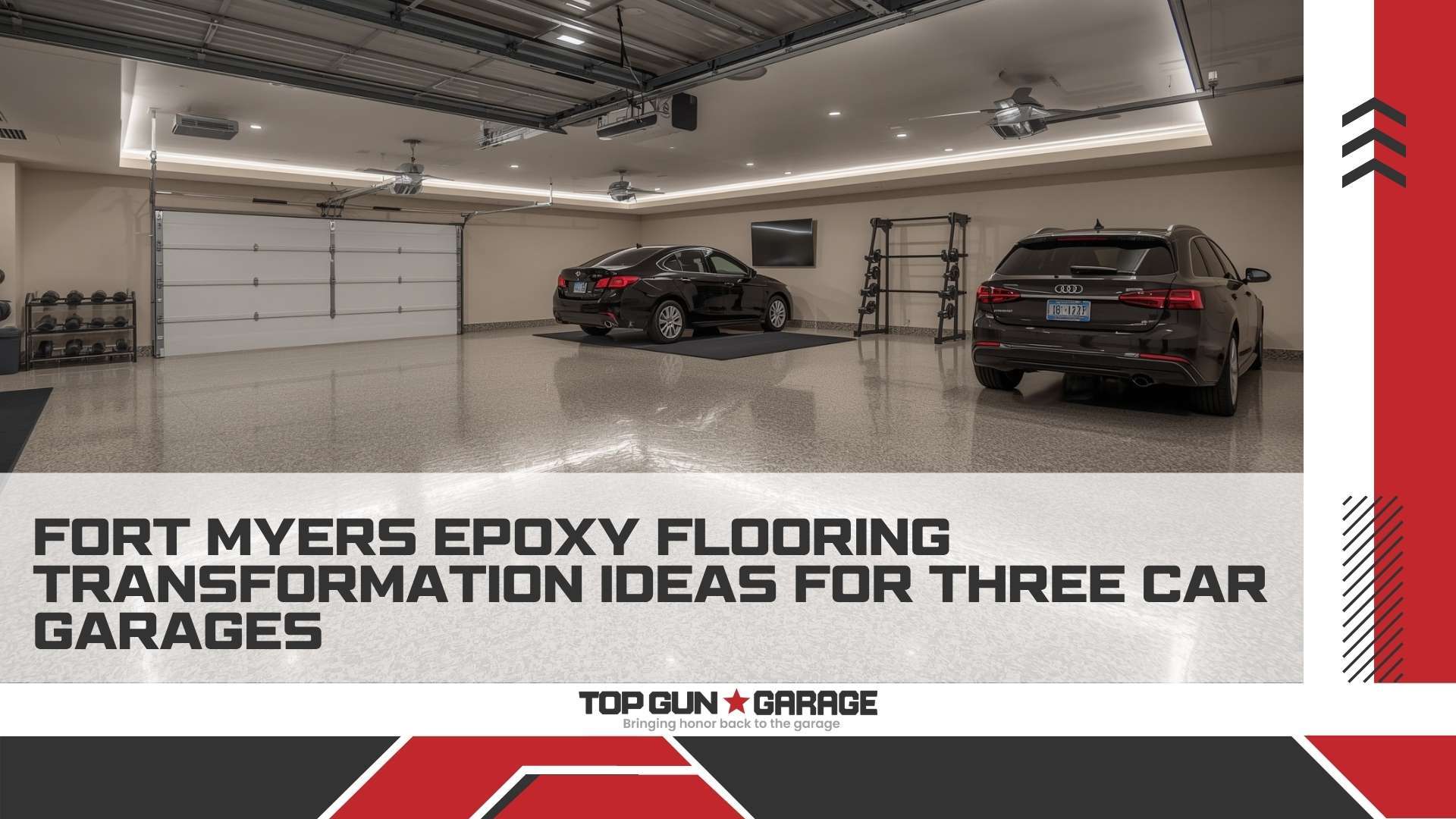
Transforming a three-car garage in Fort Myers with a professionally installed epoxy coating delivers a durable, visually striking surface that withstands Florida’s punishing humidity, salt air, and daily wear. A high-performance resinous floor turns a cavernous storage area into a clean, bright extension of the home—ideal for workshops, home gyms, or showroom-quality vehicle display. The28 million square feet of epoxy flooring installed annually in the U.S. residential sector underscores its dominance as the premier garage upgrade, and in Southwest Florida, the demand continues to surge as homeowners seek solutions that resist mold, tire marks, and hot-tire pickup.
Key Takeaways
- Three-car garages benefit from zoned epoxy designs that define parking, workshop, and storage areas using distinct flake blends or metallic pigments.
- Full-chip broadcast systems with polyaspartic topcoats offer the best moisture resistance for Fort Myers’ 74% average relative humidity.
- Professional moisture vapor testing before installation prevents delamination, a common failure point in Florida slab-on-grade construction.
- Integrating slip-resistant additives into the topcoat reduces fall risk without sacrificing ease of cleaning.
- Color-stable urethane topcoats prevent the ambering that plagues older epoxy-only systems exposed to Florida’s intense UV rays through open garage doors.
- A well-executed epoxy floor can yield a return on investment of up to 65% in perceived home value, according to real estate appraisers.
- Seasonal maintenance routines, including quarterly deep cleans and annual topcoat inspections, extend the floor’s lifespan beyond 20 years.
Why a Three-Car Garage Demands a Specialized Epoxy Approach
A three-car garage presents800 to 1,200 square feet of continuous concrete that behaves as a single thermal mass. In Fort Myers, where daytime summer temperatures routinely exceed 92°F, the slab expands and contracts significantly. Standard epoxy kits from big-box retailers lack the elongation properties to flex with the concrete, leading to hairline cracks within 18 months. According to the American Concrete Institute, concrete slabs in subtropical climates experience thermal movement of approximately 0.6 inches per 100 feet annually. A professional-grade polyaspartic or epoxy-polyaspartic hybrid system accommodates this movement while maintaining a seamless, non-porous surface.
Beyond thermal stress, three-car garages often house a mix of vehicles, lawn equipment, bicycles, and seasonal decorations. The floor must resist chemical spills from gasoline, fertilizers, and pool supplies. Research from the Coatings Research Institute indicates that a properly cross-linked epoxy matrix withstands exposure to 98% sulfuric acid for up to 24 hours without etching. This chemical resilience makes epoxy the preferred choice for multi-use garages where spills are inevitable.
Design Strategies That Maximize Space and Light
Large garages can feel dark and cavernous without thoughtful design. Epoxy flooring offers an opportunity to manipulate light and perception. Light-reflective metallic epoxy systems bounce up to 300% more light than bare concrete, reducing the need for additional overhead fixtures. In a three-car layout,800 square feet of a silver-gray metallic floor can make the space feel twice as bright, a critical advantage during Florida’s rainy season when natural light is limited.
Zoning with Color and Flake Blends
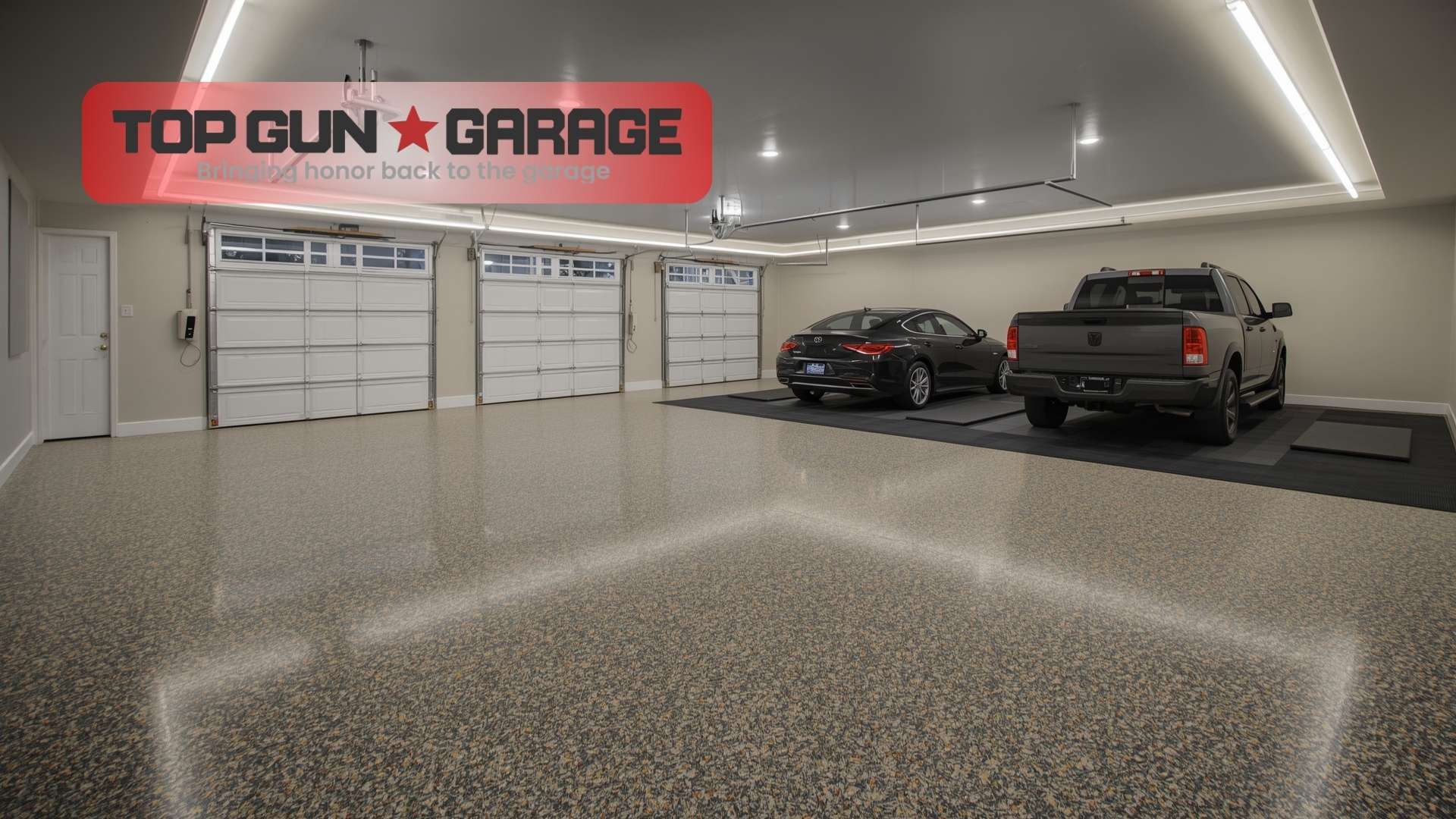
One16-foot-wide bay might receive a solid quartz-gray base with black and white vinyl flakes at a medium broadcast rate, designating it as the daily-driver parking zone. The adjacent workshop area can feature a full-flake broadcast in a custom blend of blue, gray, and white chips, creating a visually distinct yet cohesive transition. This zoning technique, popularized by high-end automotive showrooms, uses color psychology to organize800 square feet without physical barriers. As Michael Torres, Lead Flooring Designer at Top Gun Garage, explains: “We treat a three-car garage like an open-plan interior. The floor becomes the foundation for zoning—each area tells a different story through texture and color, but the seamless epoxy surface unifies the entire space.”
For homeowners who prefer a monolithic look, a single full-flake broadcast in a neutral blend—think taupe, cream, and charcoal—creates a gallery-like backdrop that complements any vehicle color. The key is selecting UV-stable pigments. Without a urethane or polyaspartic topcoat, epoxy resins amber under Florida’s UV index, which averages 6-8 year-round. A dual-layer topcoat system locks in the color and provides a5-7 year gloss retention guarantee.
Moisture Mitigation: The Fort Myers Imperative
Fort Myers sits atop a high water table, with many homes built on slabs that lack underslab vapor barriers installed before 2005. Moisture vapor transmission through concrete can reach 12 pounds per 1,000 square feet per24 hours in older homes, far exceeding the 3-pound threshold that most epoxy manufacturers require. Ignoring this reality leads to osmotic blistering—bubbles that form when hydrostatic pressure pushes moisture against the impermeable epoxy layer. A 2024 study by the Florida Building Commission found that 22% of epoxy floor failures in Lee County were directly attributable to moisture vapor issues.
Professional installers address this with calcium chloride testing per ASTM F1869 or in-situ relative humidity probes per ASTM F2170. When readings exceed safe limits, a moisture-mitigating epoxy primer—often a100%-solids, low-viscosity system—penetrates the concrete capillaries and forms a barrier. In extreme cases, a broadcast of quartz sand into the primer creates a mechanical bond that resists vapor pressure. This step adds $1.50 to $2.50 per square foot but prevents a $6,000 to $10,000 tear-out and replacement. For more on how humidity affects these floors, see our guide on managing humidity challenges in Fort Myers garages.
Performance Coatings: Epoxy vs. Polyaspartic for Large Garages
Three-car garages benefit from the rapid cure times of polyaspartic topcoats. A traditional epoxy system requires 24-72 hours before vehicle traffic, which means a family with three cars must find alternative parking for up to three days. Polyaspartics cure to full hardness in 4-6 hours, allowing same-day return to service. The trade-off is pot life: polyaspartics have a working time of 15-45 minutes depending on temperature, demanding experienced crews who can move quickly across 1,000 square feet.
| Property | 100% Solids Epoxy | Polyaspartic Hybrid |
|---|---|---|
| Cure Time (Foot Traffic) | 12-24 hours | 2-4 hours |
| Cure Time (Vehicle Traffic) | 48-72 hours | 4-6 hours |
| UV Stability | Ambers without topcoat | Naturally UV-stable |
| Elongation | 3-5% | 10-15% |
| VOC Content | 0-50 g/L | 0-100 g/L |
| Cost per Sq Ft (Installed) | $4.50-$7.00 | $6.00-$9.50 |
| Best Use Case | Budget-conscious, low-UV garages | High-traffic, open-door garages |
For a deeper dive into these differences, our comparison of epoxy and polyaspartic performance breaks down the chemistry and real-world durability.
Step-by-Step: Preparing a Three-Car Garage for Epoxy
Proper preparation determines 80% of a floor’s longevity. Skipping steps on a 1,000-square-foot slab multiplies the risk of failure. Here is the proven sequence used by Fort Myers professionals:
- Remove Everything: Clear the garage completely.800 square feet of floor must be fully accessible. This includes shelving units, refrigerators, and wall-mounted racks that obstruct the perimeter.
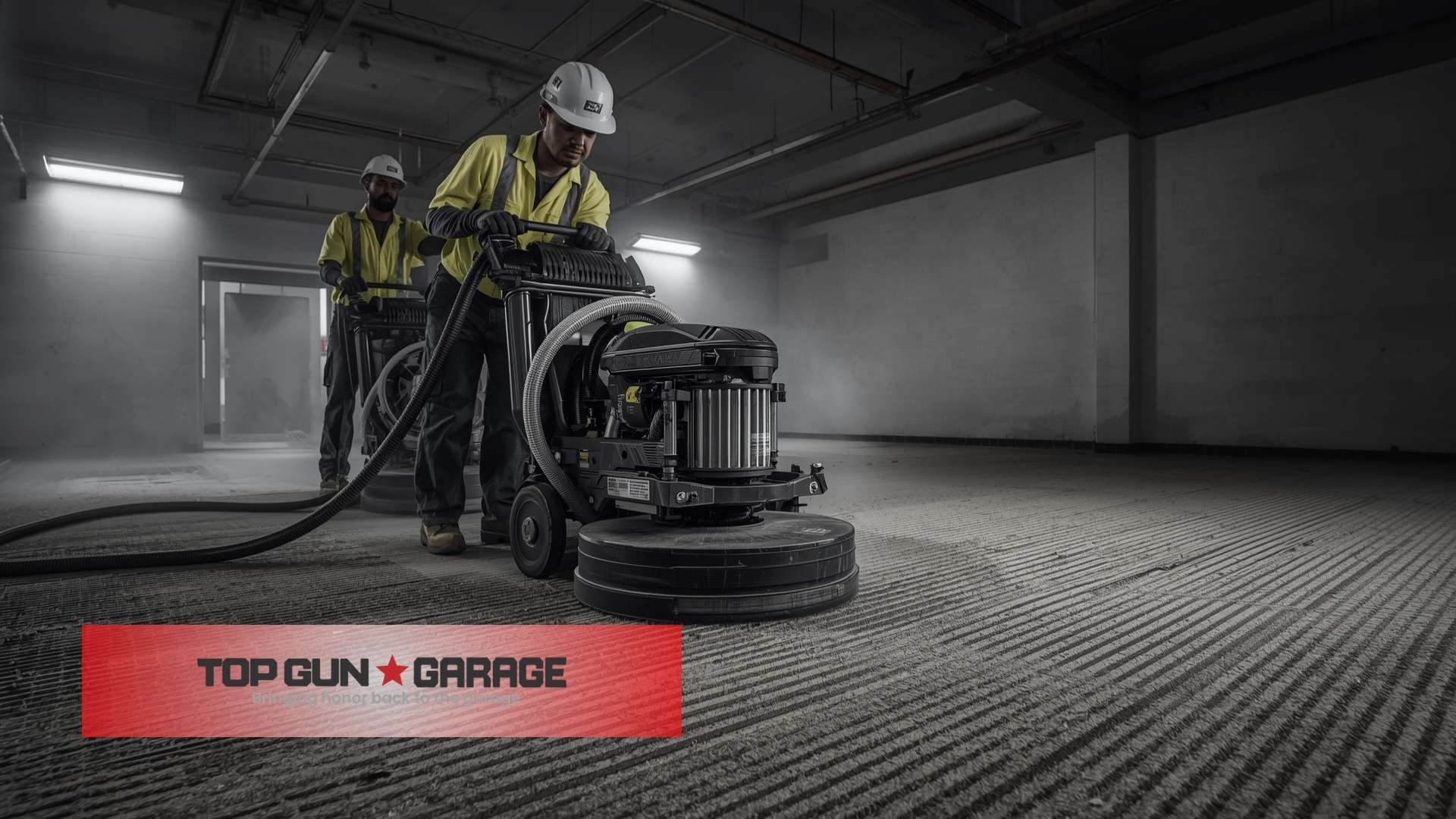
- Diamond Grind the Surface: A planetary grinder with 30/40-grit diamonds removes the top 1/16 inch of concrete paste, opening the capillary pores. Shot blasting is an alternative but can fracture
- Fill Cracks and Control Joints: Use a semi-rigid epoxy crack filler that moves with the slab. Control joints should be filled flush, not simply bridged, to prevent telegraphing through the coating.
- Moisture Test: Perform ASTM F2170 relative humidity testing at three locations across the slab. Acceptable readings are below 75% RH. If higher, apply a moisture-mitigating epoxy primer.
- Apply Primer: A low-viscosity epoxy primer penetrates the concrete and creates a bond profile. Broadcast fine quartz sand into the wet primer for mechanical adhesion if moisture levels are borderline.
- Body Coat and Flake Broadcast: Squeegee and back-roll the pigmented epoxy body coat in 10×10-foot sections. Immediately broadcast vinyl flakes to rejection (full broadcast) or a desired density. Allow to cure 8-12 hours.
- Scrape Excess Flakes: Use a floor scraper to remove loose, unbonded flakes. This step is critical for a smooth topcoat finish.
- Apply Polyaspartic Topcoat: Roll on a UV-stable polyaspartic topcoat in two thin layers. Integrate aluminum oxide grit into the final coat for slip resistance. The floor is ready for foot traffic in 2 hours and vehicles in 6 hours.
For a detailed explanation of the grinding and profiling process, read our guide on how concrete is prepared for epoxy.
Design Ideas That Elevate a Three-Car Garage
Beyond basic gray, today’s epoxy systems offer design flexibility that rivals interior flooring. Here are three transformation concepts tailored to Fort Myers lifestyles:
1. The Coastal Showroom
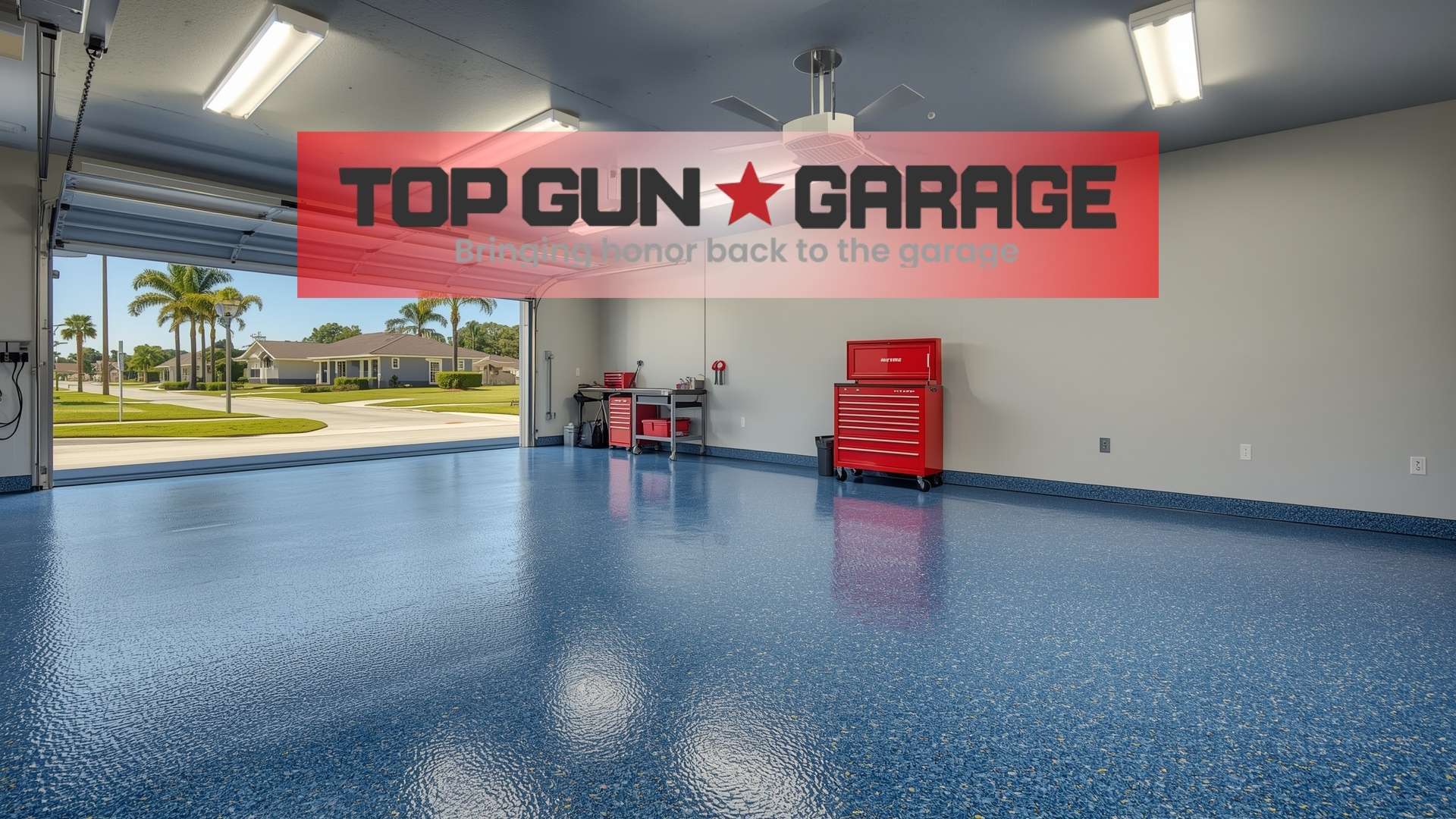
A white base coat with a full broadcast of oyster, sand, and pale blue flakes creates a breezy, coastal aesthetic. A high-gloss polyaspartic topcoat amplifies light,800 square feet of floor reflecting overhead LED fixtures. This design complements Fort Myers’ waterfront homes and resists the visual wear of sandy feet and salt residue. Pair it with white slatwall panels and stainless steel cabinets for a cohesive look. For homes near the water, our article on waterfront epoxy flooring considerations covers additional salt-air protection strategies.
2. The Motorsports Workshop
A medium-gray base with a heavy broadcast of black, red, and silver flakes mimics the pit-floor aesthetic of professional racing garages. Integrate a4-inch-wide red epoxy stripe to delineate the workshop zone from the parking bays. This design hides tire marks and oil drips while providing a slip-resistant surface rated at a coefficient of friction above 0.6, exceeding OSHA recommendations for commercial workshops.acci
3. The Multi-Purpose Family Hub
For families who use the garage as a gym, play area, and parking space, a metallic epoxy system in a warm bronze or copper tone creates a residential feel. The seamless surface is easy to clean after kids’ activities, and the antimicrobial properties of epoxy inhibit mold and bacteria growth—a significant advantage in Fort Myers’ humid climate. This concept pairs well with our guide on allergen-reducing garage flooring.
Slip Resistance and Safety in Large Garages
A high-gloss epoxy floor can become dangerously slick when wet, a common condition during Florida’s afternoon thunderstorms when vehicles drip rainwater onto the surface. The National Floor Safety Institute reports that slip-and-fall incidents account for over 1 million emergency room visits annually in the U.S., with garage floors being a frequent contributor. To mitigate this, professional installers incorporate aluminum oxide or polymer grit additives into the final topcoat. These microscopic particles create a textured surface that increases the dynamic coefficient of friction to 0.6-0.8, well above the 0.5 threshold recommended by the Americans with Disabilities Act.
For three-car garages,13% of the280 million tires on U.S. roads are replaced annually, meaning800 square feet of epoxy must withstand frequent tire traffic without polishing smooth. A broadcast of quartz sand into the primer layer, followed by a grit-infused topcoat, maintains texture for 7-10 years under normal use. For more on long-term slip resistance, see our analysis of slip-resistant surfaces that endure.
Cost Analysis for a Fort Myers Three-Car Garage
In 2026, the average cost for a professionally installed epoxy floor in a three-car garage in Lee County ranges from $4,800 to $9,500, depending on system type and square footage. This breaks down as follows:
- Basic Epoxy System (800 sq ft): $3,600-$5,200. Includes diamond grinding, one primer coat, one epoxy body coat with medium flake broadcast, and one urethane topcoat.
- Premium Polyaspartic System (800 sq ft): $5,600-$7,600. Includes full moisture mitigation, two polyaspartic topcoats, full-flake broadcast, and integrated slip resistance.
- Metallic Epoxy System (800 sq ft): $6,400-$9,500. Includes multiple metallic pigment layers, artistic patterning, and a high-build UV-stable topcoat.
According to a 2025 survey by the National Association of Realtors, garage improvements recoup an average of 65% of their cost at resale. For a $6,000 floor, that translates to $3,900 in added home value, plus the intangible benefits of800 square feet of functional, attractive space. As Linda Reeves, a Fort Myers-based real estate appraiser, notes: “In the current market, a finished garage floor is one of the top three features buyers mention after kitchen updates. It signals that the home has been meticulously maintained.”
Common Mistakes That Ruin Three-Car Garage Epoxy Floors
Even with professional installation, certain post-application errors can shorten a floor’s lifespan. Avoid these pitfalls:
- Parking hot tires on fresh epoxy: Hot-tire pickup occurs when warm tires soften the coating and pull it from the concrete. Wait the full cure time—72 hours for epoxy, 6 hours for polyaspartic—before parking. For the first month, avoid turning the steering wheel while stationary, as this exerts maximum shear force.
- Using harsh cleaners: Acid-based cleaners etch the topcoat. Use pH-neutral, non-abrasive cleaners specifically formulated for resinous floors. A quarterly deep clean with a microfiber mop and diluted ammonia solution (1:10 ratio) maintains gloss without damage.
- Dragging heavy objects:800 square feet of floor invites heavy storage. Use furniture sliders under tool chests and shelving units. A single dragged metal edge can gouge a topcoat down to the color layer.
- Ignoring expansion joints: Control joints must remain filled and sealed. If filler cracks, water infiltrates and can cause edge delamination. Inspect joints annually and re-fill as needed.
For seasonal care routines that prevent these issues, consult our seasonal maintenance guide.
Integrating the Garage with the Rest of the Home
A three-car garage often connects directly to the home’s interior via a mudroom or hallway. The transition from epoxy to interior flooring should be intentional. A beveled aluminum transition strip, set into a saw-cut channel at the threshold, creates a clean, trip-free edge. For homes with pool access,800 square feet of epoxy can extend into a pool house floor that handles wet conditions, creating a seamless indoor-outdoor flow. The same moisture-resistant properties that protect the garage also perform beautifully in poolside applications.
For homeowners considering a garage apartment conversion,800 square feet of epoxy provides a durable, low-maintenance foundation. Our article on garage apartments with stunning floor finishes explores how epoxy floors transition from utilitarian to residential with area rugs and soft furnishings.
Frequently Asked Questions
How long does epoxy flooring last in a Fort Myers three-car garage?
A professionally installed polyaspartic or epoxy-polyaspartic system lasts 15-25 years in a residential three-car garage, provided the concrete was properly prepared and moisture-mitigated. Annual topcoat inspections and quarterly cleanings extend this lifespan. UV-stable topcoats prevent ambering, which is the primary reason floors are resurfaced prematurely in sunny climates.
Can I epoxy my garage floor myself, or should I hire a professional?
DIY epoxy kits are suitable for small, single-car garages with low moisture levels and minimal surface preparation needs. For a three-car garage—800 to 1,200 square feet—professional installation is strongly recommended. The equipment required for diamond grinding, the speed needed to apply polyaspartics before they cure, and the moisture testing protocols exceed typical homeowner capabilities. A failed DIY floor costs more to remove and replace than a professional installation would have cost initially.
What is the best epoxy color for a three-car garage in Florida?
Light to medium tones—silver, beige, light gray, or white-based flake blends—perform best in Florida garages. They reflect light, reduce the perception of heat, and show less dust than dark colors. Dark epoxy floors absorb solar heat and can reach surface temperatures of 130°F in summer, making the garage uncomfortable. A medium broadcast of multi-colored flakes hides tire marks and debris between cleanings.
How do I prevent my epoxy floor from becoming slippery when wet?
Integrate aluminum oxide or polymer grit into the final topcoat during installation. This creates a microscopic texture that increases slip resistance without making the floor difficult to clean. For existing floors, a clear anti-slip topcoat can be applied over the current surface. Avoid wax-based products, which build up and reduce traction over time.
Will epoxy flooring increase my home’s resale value in Fort Myers?
Yes. Real estate data from the National Association of Realtors indicates that garage improvements recoup 60-70% of their cost at resale. In Fort Myers, where garages often serve as workshops, storage, and hobby spaces, a finished epoxy floor is a strong selling point. Appraisers note that it differentiates a home in a competitive market and signals overall property maintenance quality.
How soon can I park my cars on a new epoxy floor?
For traditional epoxy systems, wait 48-72 hours before parking vehicles. For polyaspartic systems, vehicles can return after 4-6 hours. However, full chemical cure takes 5-7 days. During this period, avoid turning the steering wheel while stationary and place cardboard under tires for the first week to prevent hot-tire pickup.
Can epoxy flooring withstand Florida’s hurricane season?
Yes. Epoxy and polyaspartic floors are impervious to water and resist impact from debris. After a storm,800 square feet of epoxy can be squeegeed dry and cleaned with a mild detergent. The seamless surface prevents water from seeping into the concrete slab, reducing the risk of mold growth. For more on storm resilience, see our guide on hurricane debris cleanup for garage floors.
Conclusion
A three-car garage in Fort Myers represents800 to 1,200 square feet of untapped potential. An expertly installed epoxy floor transforms this space from a cracked, dusty concrete pad into a durable, light-filled06 functional area that adds real value to the home. The key is a system engineered for Florida’s unique challenges: moisture vapor transmission, intense UV exposure, and thermal expansion. By choosing a polyaspartic hybrid system with a full-flake broadcast and UV-stable topcoat, homeowners gain a floor that performs for two decades with minimal maintenance. Whether the goal is a showroom for a car collection, a clean workshop, or a multi-purpose family hub, the right epoxy design delivers. Contact our team today to schedule a consultation and see what your three-car garage can become.
References
- American Concrete Institute. “Guide to Concrete Floor and Slab Construction.” concrete.org
- Coatings Research Institute. “Chemical Resistance of Epoxy Flooring Systems.” coatingsresearch.org
- Florida Building Commission. “2024 Moisture-Related Flooring Failures in Lee County.” floridabuilding.org
- National Floor Safety Institute. “Slip and Fall Statistics.” nfsi.org
- National Association of Realtors. “2025 Remodeling Impact Report.” nar.realtor
- ASTM International. “ASTM F1869 and F2170 Moisture Testing Standards.” astm.org
- U.S. Tire Manufacturers Association. “2026 U.S. Tire Shipment Data.” ustires.org
- Occupational Safety and Health Administration. “Walking-Working Surfaces Standard.” osha.gov