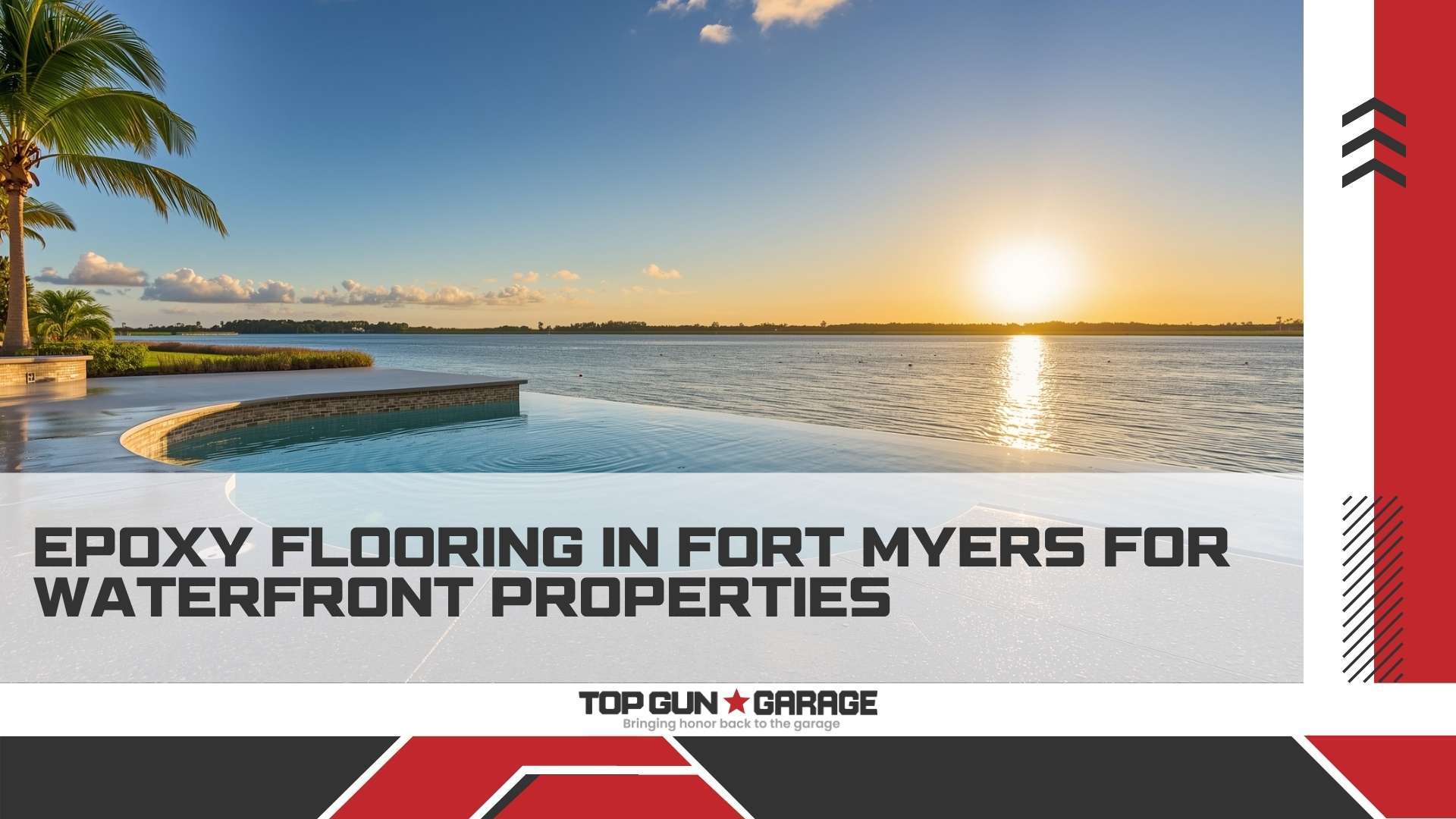
Epoxy flooring Fort Myers waterfront properties require differs significantly from standard garage coatings. Salt air corrosion, elevated humidity levels averaging 78% near the water, and the constant threat of storm surge flooding demand specialized coating systems that standard epoxy simply cannot provide. According to the National Association of Corrosion Engineers (NACE), coastal environments accelerate coating degradation by 300-400% compared to inland locations, making proper material selection critical for Southwest Florida waterfront homes.
The right waterfront epoxy system combines marine-grade primers, UV-stable topcoats, and moisture mitigation layers that work together to resist the unique challenges of coastal living. This guide covers everything Fort Myers waterfront homeowners need to know about protecting their garage floors, boat storage areas, and covered outdoor spaces from the harsh realities of saltwater exposure.
Why Waterfront Properties Need Specialized Epoxy Systems
Standard epoxy coatings fail prematurely in waterfront environments due to three compounding factors: salt air infiltration, extreme humidity fluctuations, and water intrusion events. The U.S. Army Corps of Engineers documents that concrete within 1,000 feet of saltwater absorbs chloride ions at rates 5-10 times higher than inland structures. These chlorides migrate through the concrete slab and attack coating adhesion from below.
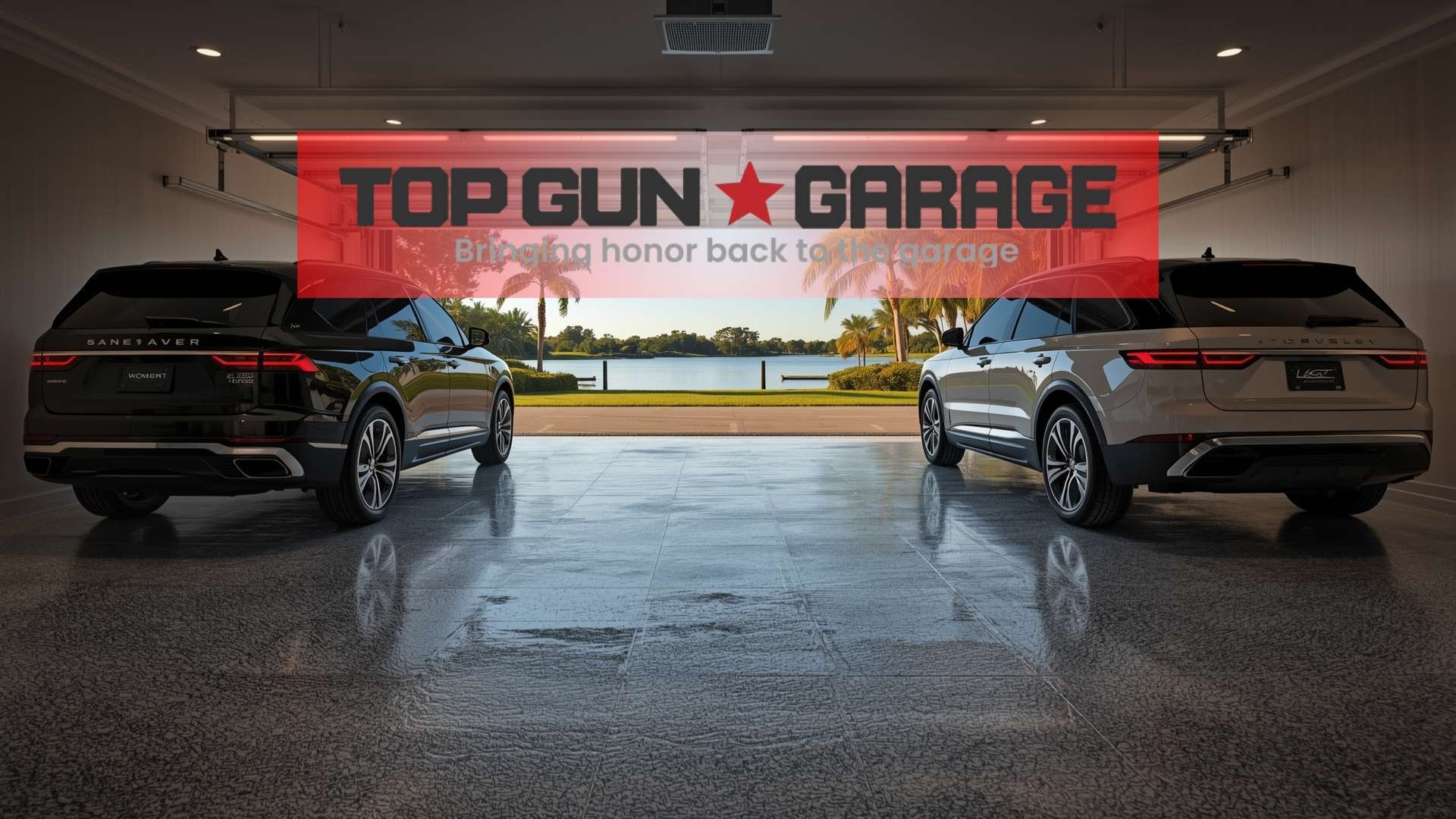
Humidity creates additional challenges. Waterfront garages in Fort Myers, Cape Coral, and Sanibel regularly experience relative humidity swings from 55% to 95% within single 24-hour periods. This cycling causes concrete to expand and contract microscopically, stressing coating bonds. Research from the Portland Cement Association confirms that humidity cycling causes more coating failures than constant high humidity alone.
Storm surge and flooding events introduce saltwater directly onto garage floors. Even minor flooding of 1-2 inches can deposit enough salt residue to compromise standard epoxy coatings within months. The Florida Building Code requires structures in flood zones to use water-resistant materials, and flooring systems must be designed for rapid drying and salt removal.
How Salt Air Damages Garage Floor Coatings
Salt air contains microscopic sodium chloride crystals that settle on every surface, including garage floors. These crystals are hygroscopic, meaning they absorb moisture from the air and form a corrosive solution. According to the research on Florida salt air effects, this salt-moisture combination attacks epoxy coatings through three mechanisms.
Osmotic Blistering
Salt deposits create concentration gradients that draw moisture through the coating film via osmosis. Water accumulates beneath the epoxy layer, forming blisters that eventually rupture. Once osmotic blistering begins, the entire coating system typically fails within 6-18 months. Marine coatings researchers at the University of Florida have documented blistering rates 4x higher in structures within 500 feet of tidal waters.
Adhesion Degradation
Chloride ions penetrate concrete pores and interfere with the chemical bond between epoxy and the substrate. This degradation occurs invisibly until sections of coating suddenly delaminate. The International Concrete Repair Institute (ICRI) recommends chloride testing for all waterfront concrete prior to coating application. Chloride levels exceeding 0.2% by weight of concrete require specialized primers or complete removal of the contaminated surface layer.
UV-Accelerated Chalking
Salt crystals act as micro-lenses that concentrate UV radiation onto coating surfaces. This accelerates photodegradation, causing epoxy to chalk and lose gloss faster than in inland environments. Waterfront coatings in Southwest Florida typically show visible chalking within 2-3 years without proper UV protection, compared to 5-7 years for inland installations.
Epoxy Coating Systems Engineered for Waterfront Conditions
Professional waterfront installations use multi-layer systems specifically designed to combat coastal challenges. Each layer serves a distinct protective function, and skipping any component compromises the entire system’s longevity.
Marine-Grade Moisture Mitigation Primer
The foundation of any waterfront coating system is a moisture-tolerant primer capable of bonding to damp concrete. Standard primers require bone-dry surfaces that rarely exist in coastal Florida. Marine-grade primers use modified epoxy chemistry that actually cures in the presence of moisture, creating a barrier against vapor transmission. These primers typically cost $0.75-$1.25 per square foot more than standard options but prevent the catastrophic failures common with inland-spec materials.
Understanding how moisture barriers work under Florida epoxy is essential for waterfront property owners evaluating contractor proposals.
High-Build Epoxy Body Coat
Waterfront applications demand thicker epoxy layers to resist the increased chemical and mechanical stresses of coastal environments. Standard garage coatings apply at 8-12 mils dry film thickness (DFT). Waterfront specifications call for 15-25 mils DFT, nearly double the material. This additional thickness provides greater chemical resistance and creates a more robust barrier against chloride penetration.
The body coat should use 100% solids epoxy rather than water-based or solvent-based alternatives. Solid epoxy contains no evaporating components that leave microscopic voids in the cured film. These voids serve as entry points for salt and moisture in lesser products. Review the details on what epoxy thickness works best for Florida garages for technical specifications.
Polyaspartic or Aliphatic Urethane Topcoat
The topcoat provides UV protection, chemical resistance, and the final aesthetic appearance. For waterfront properties, polyaspartic coatings outperform standard clear coats due to their superior UV stability and faster cure times that minimize exposure to humidity during installation. Aliphatic urethanes offer similar UV protection with slightly better chemical resistance but require longer cure times.
Both options prevent the yellowing and chalking that destroys standard epoxy within years of coastal exposure. Budget $1.50-$2.50 per square foot for professional-grade UV-stable topcoats. This investment extends system life from 5-7 years to 15-20 years in waterfront applications.
Waterfront vs. Standard Epoxy System Comparison
The following table highlights the key differences between standard garage epoxy and waterfront-grade systems:
Component
Standard System
Waterfront System
Primer Type
Standard epoxy primer
Marine-grade moisture mitigating
Total Thickness
8-12 mils DFT
15-25 mils DFT
UV Protection
Basic or none
Polyaspartic/aliphatic urethane
Salt Resistance
Minimal
Engineered for chloride exposure
Expected Life (Coastal)
3-5 years
15-20 years
Installed Cost/Sq Ft
$4-$7
$8-$14
Boat Garage and Marine Storage Flooring Requirements
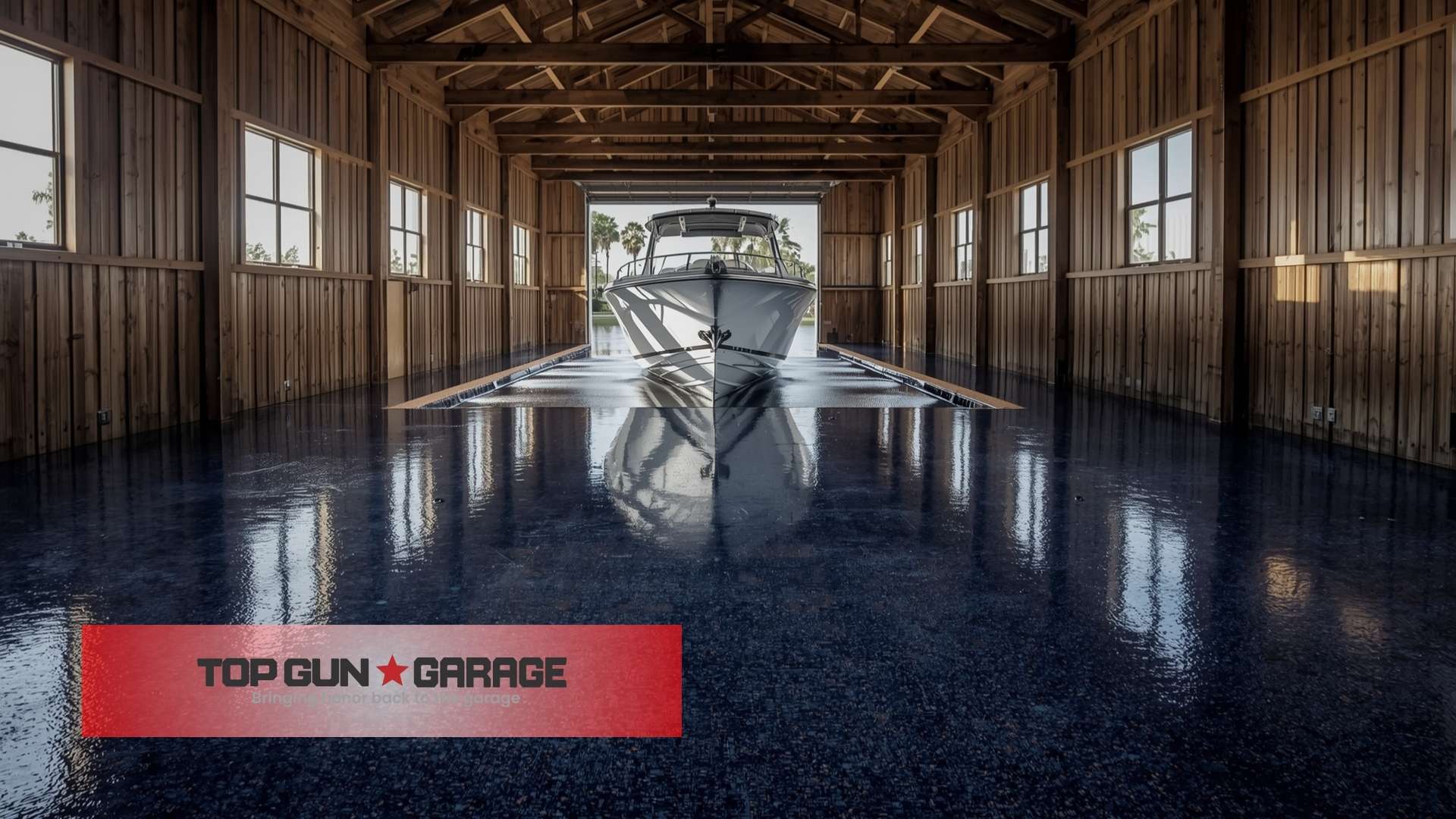
Boat garages face intensified versions of standard waterfront challenges. Vessels drip saltwater, bilge water, fuel, and hydraulic fluids directly onto floor surfaces. Trailer tires track in sand, shell fragments, and marine growth that abrade coatings. These spaces require the most robust flooring systems available for residential applications.
Chemical Resistance Requirements
Marine fuels, two-stroke oil, bottom paint solvents, and cleaning chemicals demand coatings with exceptional chemical resistance. Novolac epoxy formulations provide the highest chemical resistance available in flooring applications, withstanding concentrated acids, fuels, and solvents that would destroy standard epoxy within hours. These industrial-grade coatings add $2-$4 per square foot but eliminate the risk of chemical damage from routine boat maintenance.
Review the complete guide to epoxy floors that resist garage chemicals for detailed chemical resistance ratings.
Drainage and Slope Considerations
Boat garages must handle significant water volumes during vessel washdowns and storm events. Proper floor slope directs water toward drains or garage door openings. The minimum recommended slope is 1/8 inch per foot, with 1/4 inch preferred for high-volume applications. Self-leveling epoxy systems can correct minor slope deficiencies, but significant grade corrections require concrete grinding or overlay installation before coating.
Trench drains along the garage door threshold prevent water from pooling at the entrance. These drains should connect to appropriate stormwater systems and include sediment traps to prevent marine debris from clogging discharge lines. Learn more about garage floor drainage solutions for waterfront applications.
Boat Trailer Compatibility
Boat trailers present unique challenges for epoxy floors. Wet tires tracking saltwater, concentrated point loads from jack stands, and the scraping of bunks and rollers all stress coatings beyond normal garage use. Full broadcast flake systems provide the best performance for trailer storage, offering superior abrasion resistance and hiding the inevitable scuff marks from daily use.
Hot tire pickup becomes more severe with saltwater-soaked tires. The combination of heat from road travel and salt residue accelerates the chemical interaction between rubber and epoxy. Polyaspartic topcoats resist hot tire pickup better than standard epoxy clear coats, making them essential for active boating households. Explore the technical explanation in our guide on how garage epoxy stands up to saltwater exposure.
Epoxy Flooring in FEMA Flood Zones
Most Fort Myers waterfront properties fall within FEMA-designated flood zones AE or VE, requiring compliance with specific building codes for flood-resistant construction. The Florida Building Code mandates that materials below the base flood elevation (BFE) must be capable of resisting flood damage and facilitating cleanup. Properly specified epoxy systems meet these requirements when installed by knowledgeable contractors.
Post-Flood Cleaning and Recovery
Quality waterfront epoxy systems survive flood events that destroy carpet, wood, and tile flooring. After waters recede, cleanup involves removing debris, rinsing salt residue with fresh water, and allowing the coating to dry. Unlike porous flooring materials that harbor mold and bacteria after flooding, sealed epoxy surfaces can be sanitized and returned to service within days.
The key requirement is thorough salt removal. Any salt residue left to dry on the surface will begin attacking the coating through the mechanisms described earlier. Pressure washing with fresh water, followed by mopping with a dilute vinegar solution (1:10 ratio), neutralizes salt deposits and prevents long-term damage. Review our detailed guide on how epoxy garage floors perform in flooding conditions.
Flood Insurance Implications
Flood-resistant flooring may qualify for insurance premium reductions under certain circumstances. The National Flood Insurance Program (NFIP) recognizes the reduced replacement costs associated with flood-resistant materials. Document your flooring installation with photographs and specifications for insurance records. Some private flood insurers offer specific discounts for properties with flood-resistant improvements.
Understand the full financial implications by reading how epoxy garage floors impact flood insurance.
Coating Options for Outdoor and Semi-Exposed Areas
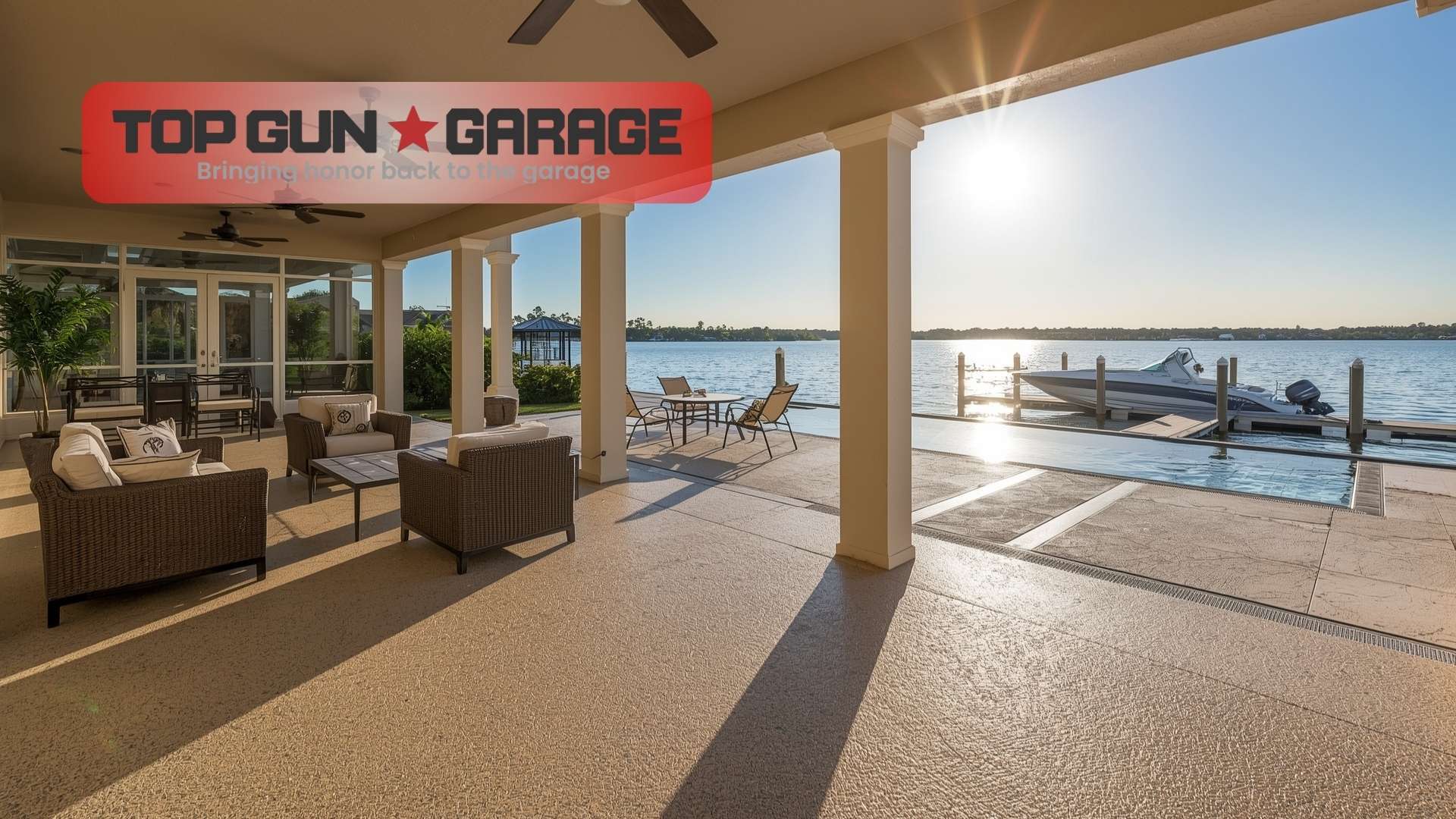
Waterfront properties often include covered patios, pool decks, outdoor kitchens, and dock walkways that benefit from epoxy-type coatings. These areas face full UV exposure and direct weather contact, requiring systems beyond what interior spaces demand.
Pool Deck and Patio Applications
Pool decks require coatings that remain slip-resistant when wet while withstanding chlorinated water, sunscreen oils, and constant UV bombardment. Textured polyurea and polyaspartic systems provide the best combination of durability and safety for these applications. These coatings apply in cool-surface formulations that reduce heat absorption, keeping barefoot-friendly temperatures even under intense summer sun.
Budget $8-$12 per square foot for pool deck coating systems, including surface preparation and slip-resistant aggregate. The investment eliminates the constant maintenance required by painted concrete and provides a seamless, cleanable surface that enhances outdoor living spaces. Learn more about epoxy coating for outdoor patios.
Dock Walkways and Fish Cleaning Stations
Dock surfaces and fish cleaning stations face the harshest conditions of any residential flooring application. Continuous saltwater exposure, fish blood and oils, extreme UV radiation, and constant foot traffic in wet conditions demand marine-grade systems typically reserved for commercial applications. Novolac epoxy with polyurea topcoats and aggressive anti-slip aggregate provides the necessary performance.
These specialized applications typically cost $12-$18 per square foot but deliver decades of service in conditions that destroy consumer-grade products within months. The seamless surface simplifies cleaning and eliminates the crevices where bacteria thrive in fish processing areas.
Optimal Installation Timing for Waterfront Properties
Waterfront locations experience more extreme humidity variations than inland areas, making installation timing more critical. The ideal window for coating application runs from late October through early April when humidity levels drop below 70% and temperature swings moderate. Summer installations face challenging cure conditions that require additional mitigation measures and may compromise long-term performance.
Professional contractors monitor both ambient humidity and concrete moisture content before beginning waterfront installations. Calcium chloride testing per ASTM F1869 measures moisture vapor emission rates from the slab, while relative humidity testing per ASTM F2170 provides in-situ moisture readings. Waterfront slabs frequently require extended drying periods or moisture mitigation systems before coating can proceed safely.
Detailed moisture testing protocols are covered in our technical guide on floor moisture testing for epoxy installation.
Maintaining Epoxy Floors in Saltwater Environments
Waterfront epoxy floors require more frequent maintenance than inland installations to prevent salt accumulation and catch developing issues before they become failures. The investment in proper maintenance extends coating life by 30-50% compared to neglected floors.
Weekly Maintenance Protocol
Rinse garage floors with fresh water weekly during periods of active use. This simple step removes salt deposits before they can concentrate and begin attacking the coating. Use a garden hose with moderate pressure or a bucket and mop for smaller areas. Avoid pressure washers on routine maintenance as the concentrated spray can damage coating edges and joint treatments over time.
Monthly deep cleaning with a pH-neutral floor cleaner removes oils, rubber marks, and embedded contaminants that fresh water alone cannot address. Avoid acidic cleaners that can etch polyaspartic topcoats and alkaline degreasers that may cloud the finish. Our complete epoxy floor cleaning guide details approved products and techniques.
Seasonal Inspection and Touch-Up
Inspect coating condition at the start and end of each boating season. Look for chips, scratches, and areas where the topcoat has worn thin. Small damages should be touched up promptly before salt and moisture can penetrate to the underlying layers. Most coating manufacturers offer touch-up kits compatible with their original systems.
Pay particular attention to high-wear areas including vehicle and trailer traffic paths, workbench locations, and areas around drains. These zones may require periodic recoating every 5-7 years even when the overall floor remains in good condition. Proactive spot maintenance prevents the need for complete system replacement.
Waterfront Epoxy Flooring Cost Analysis
Waterfront-grade epoxy systems cost 40-75% more than standard garage coatings, but the cost-per-year calculation favors the premium investment. A standard $2,500 coating that fails in 4 years costs $625 annually. A waterfront system at $4,000 lasting 18 years costs $222 annually, representing 65% savings over the ownership period.
Saltwater damages epoxy through three mechanisms: osmotic blistering where salt concentration gradients draw moisture under the coating, adhesion degradation as chloride ions attack the epoxy-concrete bond, and accelerated UV chalking where salt crystals concentrate sunlight on the surface. Standard epoxy systems can fail within 3-5 years of coastal exposure compared to 15-20 years for waterfront-grade formulations.
What type of epoxy works best for boat garages?
Boat garages require novolac epoxy base coats with polyaspartic topcoats. Novolac formulations provide superior chemical resistance against marine fuels, oils, and solvents. Polyaspartic topcoats resist hot tire pickup from saltwater-soaked trailer tires and provide excellent UV stability. Full broadcast flake systems hide scuff marks from trailer movement and provide slip resistance when wet.
Will epoxy flooring survive a flood event?
Quality waterfront epoxy systems survive flood events better than any other residential flooring option. After flood waters recede, cleanup involves removing debris, rinsing salt residue with fresh water, and allowing the surface to dry. The seamless coating prevents mold growth and can be sanitized for immediate reuse. Thorough salt removal within 48 hours of water recession prevents long-term coating damage.
How much more does waterfront epoxy cost than standard coatings?
Waterfront-grade epoxy systems cost 40-75% more than standard garage coatings, typically ranging from $8-$14 per square foot compared to $4-$7 for inland applications. However, the extended lifespan of 15-20 years versus 3-5 years makes waterfront systems more economical over time. A waterfront coating at $4,000 lasting 18 years costs less annually than a $2,500 standard coating failing every 4 years.
When is the best time to install epoxy on waterfront properties?
The optimal installation window for Southwest Florida waterfront properties runs from late October through early April. During this period, humidity levels typically stay below 70% and temperature swings moderate, creating ideal curing conditions. Summer installations require additional moisture mitigation measures and may experience compromised long-term performance due to challenging cure conditions.
How often should I clean epoxy floors in a waterfront home?
Rinse waterfront epoxy floors with fresh water weekly during active use periods to remove salt deposits. Monthly deep cleaning with a pH-neutral floor cleaner addresses oils, rubber marks, and embedded contaminants. Seasonal inspections at the start and end of boating season should check for chips, scratches, and thin spots that need touch-up before salt and moisture can penetrate the coating system.
Protect Your Waterfront Investment with Professional Epoxy Flooring
Waterfront properties in Fort Myers, Cape Coral, Sanibel, and throughout Southwest Florida face coating challenges that demand specialized solutions. Standard garage epoxy fails prematurely in these environments, wasting money and creating ongoing maintenance headaches. Professional waterfront systems protect your investment for decades while enhancing your property’s appearance and functionality.
Top Gun Garage specializes in coating systems engineered for Southwest Florida’s unique coastal conditions. Our team understands the specific requirements of waterfront garages, boat storage facilities, and outdoor living spaces. We specify marine-grade materials, test concrete conditions thoroughly before installation, and back our work with comprehensive warranties.
Schedule a consultation to discuss your waterfront flooring project. We serve Fort Myers, Cape Coral, Naples, Bonita Springs, Marco Island, Sanibel, and surrounding Lee and Collier County waterfront communities.
 Skip to content



 Humidity creates additional challenges. Waterfront garages in Fort Myers, Cape Coral, and Sanibel regularly experience relative humidity swings from 55% to 95% within single 24-hour periods. This cycling causes concrete to expand and contract microscopically, stressing coating bonds. Research from the Portland Cement Association confirms that humidity cycling causes more coating failures than constant high humidity alone.
Storm surge and flooding events introduce saltwater directly onto garage floors. Even minor flooding of 1-2 inches can deposit enough salt residue to compromise standard epoxy coatings within months. The Florida Building Code requires structures in flood zones to use water-resistant materials, and flooring systems must be designed for rapid drying and salt removal.
Humidity creates additional challenges. Waterfront garages in Fort Myers, Cape Coral, and Sanibel regularly experience relative humidity swings from 55% to 95% within single 24-hour periods. This cycling causes concrete to expand and contract microscopically, stressing coating bonds. Research from the Portland Cement Association confirms that humidity cycling causes more coating failures than constant high humidity alone.
Storm surge and flooding events introduce saltwater directly onto garage floors. Even minor flooding of 1-2 inches can deposit enough salt residue to compromise standard epoxy coatings within months. The Florida Building Code requires structures in flood zones to use water-resistant materials, and flooring systems must be designed for rapid drying and salt removal.
 Professional contractors monitor both ambient humidity and concrete moisture content before beginning waterfront installations. Calcium chloride testing per ASTM F1869 measures moisture vapor emission rates from the slab, while relative humidity testing per ASTM F2170 provides in-situ moisture readings. Waterfront slabs frequently require extended drying periods or moisture mitigation systems before coating can proceed safely.
Detailed moisture testing protocols are covered in our technical guide on floor moisture testing for epoxy installation.
Professional contractors monitor both ambient humidity and concrete moisture content before beginning waterfront installations. Calcium chloride testing per ASTM F1869 measures moisture vapor emission rates from the slab, while relative humidity testing per ASTM F2170 provides in-situ moisture readings. Waterfront slabs frequently require extended drying periods or moisture mitigation systems before coating can proceed safely.
Detailed moisture testing protocols are covered in our technical guide on floor moisture testing for epoxy installation.