 Skip to content



Your Park Shore residence reflects a commitment to coastal elegance, from the travertine entryway to the chef’s kitchen. Yet the garage—often the largest single room on the ground floor—remains a gray, dusty afterthought. Upgrading that surface to a seamless, high-performance coating transforms the space into a clean extension of your home, capable of handling humidity, salt air, and daily wear while boosting property value. A professionally installed resinous floor delivers the same design intentionality you applied indoors, with measurable benefits in durability and aesthetics.
Key Takeaways
- High-end garage coatings resist moisture, mold, and salt damage prevalent in Park Shore’s coastal environment.
- Modern flake and metallic systems offer design flexibility that mirrors interior flooring aesthetics.
- Proper concrete preparation, including moisture testing and diamond grinding, is non-negotiable for longevity.
- Resinous surfaces can increase home resale value by improving perceived square footage quality.
- Slip-resistant additives and UV-stable topcoats address safety and sun exposure concerns.
- Seasonal maintenance is minimal—routine dust-mopping and occasional pH-neutral cleaning preserve the finish.
- Professional installation avoids common failures like peeling, blistering, and amine blush.
The Disconnect Between Home Design and Garage Reality in Park Shore
Walk through a Park Shore estate and you will find meticulous attention to detail: wide-plank oak flooring, quartzite countertops, impact-rated windows framing Gulf views. Then you open the garage door. Bare concrete, stained with tire marks and efflorescence, greets you. This disconnect is not just visual; it is functional. Unsealed concrete acts as a sponge for moisture, pulling up ground vapor and releasing it into the space. According to the Portland Cement Association, untreated concrete slabs can transmit up to 12 gallons of water vapor per day per 1,000 square feet in humid climates. In Naples, where relative humidity averages 74% annually, that vapor feeds mold spores and corrodes metal storage units. A high-build coating system creates a vapor barrier, halting that migration and protecting everything stored in the garage.
Beyond moisture, raw concrete dusts continuously. The abrasion of car tires and foot traffic releases fine silica particles that coat stored belongings and migrate into the home. The American Lung Association notes that respirable crystalline silica is a known respiratory hazard. A seamless resinous floor encapsulates the concrete, eliminating dusting entirely. This is not merely a cosmetic upgrade; it is an indoor air quality intervention that aligns with the health-conscious mindset of today’s homeowners.
Understanding the Coastal Stressors Unique to Park Shore
Park Shore sits directly on the Gulf of Mexico, exposing properties to a cocktail of environmental aggressors. Salt spray travels inland on prevailing winds, depositing chlorides on horizontal surfaces. When those chlorides combine with moisture, they accelerate the corrosion of metal and the degradation of unsealed concrete. Research from the National Association of Corrosion Engineers (NACE) estimates that corrosion costs the U.S. economy over $450 billion annually, with coastal infrastructure bearing a disproportionate share. A properly formulated polyaspartic or epoxy topcoat resists chloride penetration, preserving the slab and any metal fixtures above it.
Intense UV radiation is another factor. The Florida sun delivers a solar radiation dose roughly 20% higher than the national average, according to data from the National Renewable Energy Laboratory. Standard epoxy coatings without UV-stable topcoats will amber and chalk within months. Advanced aliphatic polyaspartic systems, however, maintain color stability and gloss retention for years. This is critical for garages with windows or doors left open frequently—a common practice in Park Shore’s pleasant winter months.
Storm surge and flooding risks also demand attention. Even if your garage sits above the base flood elevation, wind-driven rain can inundate the space during hurricane season. Flood-resistant coatings bond tenaciously to concrete and do not delaminate when submerged, unlike tile or vinyl alternatives. After a storm event, cleanup involves little more than squeegeeing water out and wiping down the surface.
Concrete Preparation: The Invisible Foundation of a Lasting Finish
No coating system—regardless of its chemical sophistication—can compensate for inadequate surface preparation. The Concrete Polishing Association of America specifies a CSP (Concrete Surface Profile) of 3 to 4 for most resinous coatings, achieved through diamond grinding or shot blasting. This profile creates microscopic peaks and valleys that provide mechanical adhesion. Acid etching, a once-common method, is now discouraged because it weakens the paste layer and leaves behind salts that can cause osmotic blistering. As James Thornton, Senior Coatings Specialist at Top Gun Garage, explains: “We see failures in Park Shore garages every year where a contractor acid-etched and then applied a water-based epoxy from a big-box store. Within six months, hot tire pickup and peeling begin. The chemistry simply cannot handle the vapor drive.”
Moisture testing is equally critical. ASTM F2170 specifies in-situ relative humidity probes inserted into the slab at 40% depth. Readings above 75% RH require a moisture-mitigating primer, often an epoxy moisture vapor barrier with a permeance rating below 0.1 perms. Skipping this step in Park Shore, where the water table sits just a few feet below grade, guarantees delamination. Proper concrete preparation is the single most important variable in coating longevity.
Step-by-Step Preparation Protocol
- Visual Inspection: Identify cracks, spalls, and existing sealers. Cracks wider than 1/8 inch require routing and filling with a semi-rigid epoxy filler.
- Moisture Testing: Conduct ASTM F2170 RH probes or ASTM F1869 calcium chloride tests. Document results.
- Mechanical Profiling: Diamond grind the entire surface using 30/40-grit metal bond tooling to achieve CSP 3-4.
- Crack Repair: Fill all static cracks with a low-viscosity epoxy injection or polyurea filler.
- Dust Extraction: HEPA vacuum the entire surface to remove all dust and debris.
- Primer Application: Apply a penetrating epoxy primer or moisture-mitigating epoxy at the specified coverage rate.
- Broadcast (Optional): While the primer is wet, broadcast decorative flakes or quartz aggregate for texture.
- Body Coat: Apply the pigmented epoxy or polyaspartic body coat.
- Topcoat: Apply a UV-stable aliphatic polyaspartic or polyurethane topcoat with slip-resistant additive.
Design Language: Translating Interior Aesthetics to the Garage
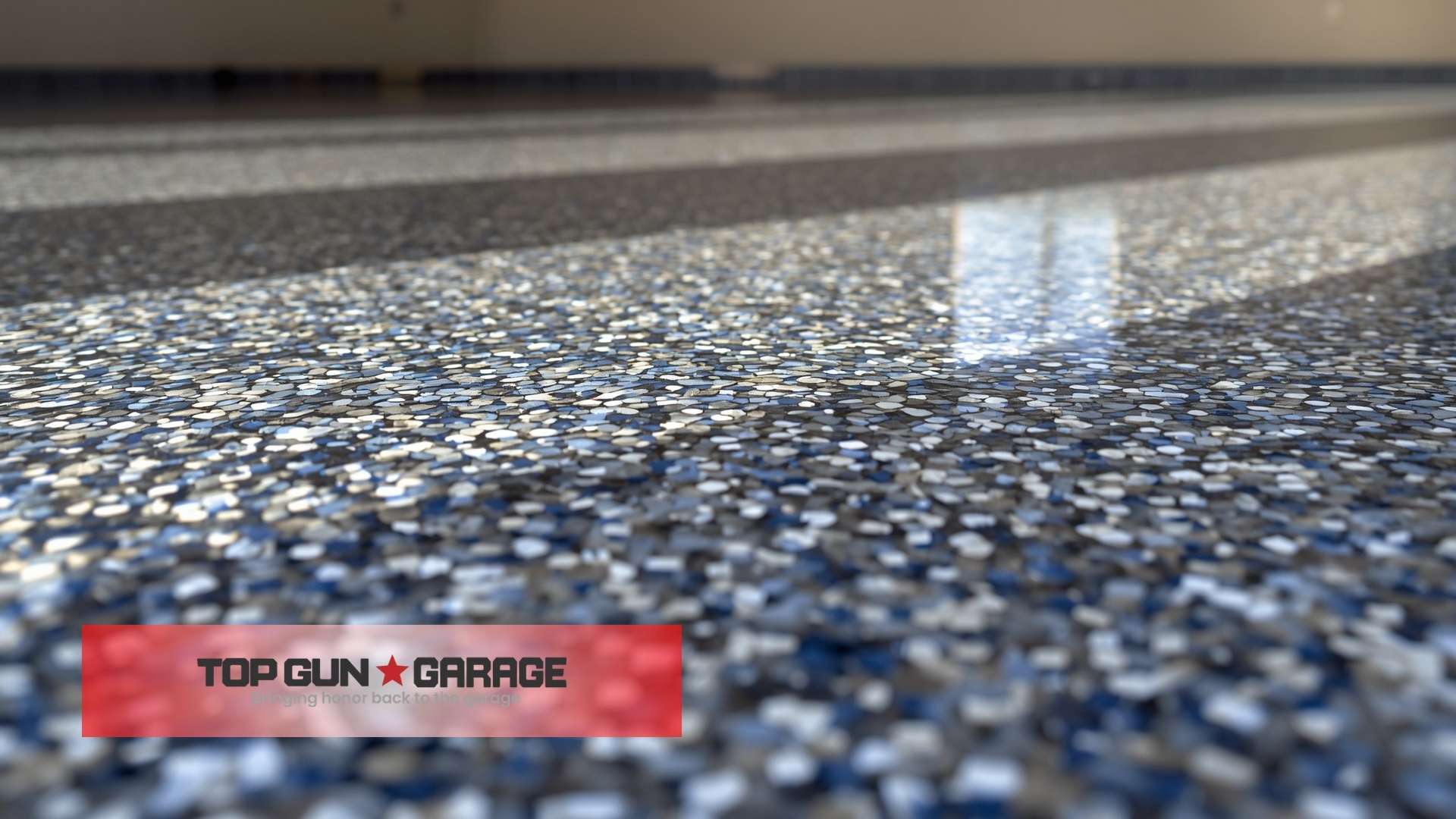
Park Shore homes often feature a refined palette: soft neutrals, coastal blues, and natural stone textures. Modern resinous flooring systems can mirror these choices with remarkable fidelity. Full-flake systems using a blend of 1/4-inch vinyl chips in custom color combinations create a terrazzo-like appearance that hides imperfections and provides a slip-resistant texture. For a more contemporary look, metallic epoxy systems use pigments suspended in a clear binder to produce a three-dimensional, marbled effect that resembles polished stone or flowing water. These systems are particularly striking in garages that double as entertainment spaces or home gyms.
Color stability is paramount. According to Dr. Elena Marchetti, Polymer Chemist at the Coatings Research Institute, “Aliphatic polyaspartic topcoats provide superior UV resistance compared to cycloaliphatic epoxies. We measure delta-E values below 2 after 3,000 hours of QUV accelerated weathering, which translates to years of Florida sun exposure without perceptible yellowing.” This technical performance means a white or light-gray floor stays white, maintaining the bright, airy feel that coastal homes demand.
For homeowners who want the look of natural stone without the maintenance, decorative chip systems can mimic the appearance of travertine or limestone. The texture also provides grip, an important safety consideration when transitioning from a wet pool deck to the garage. Sandal-safe surfaces with a fine aggregate broadcast prevent slips without being abrasive to bare feet.
Health and Indoor Air Quality Benefits
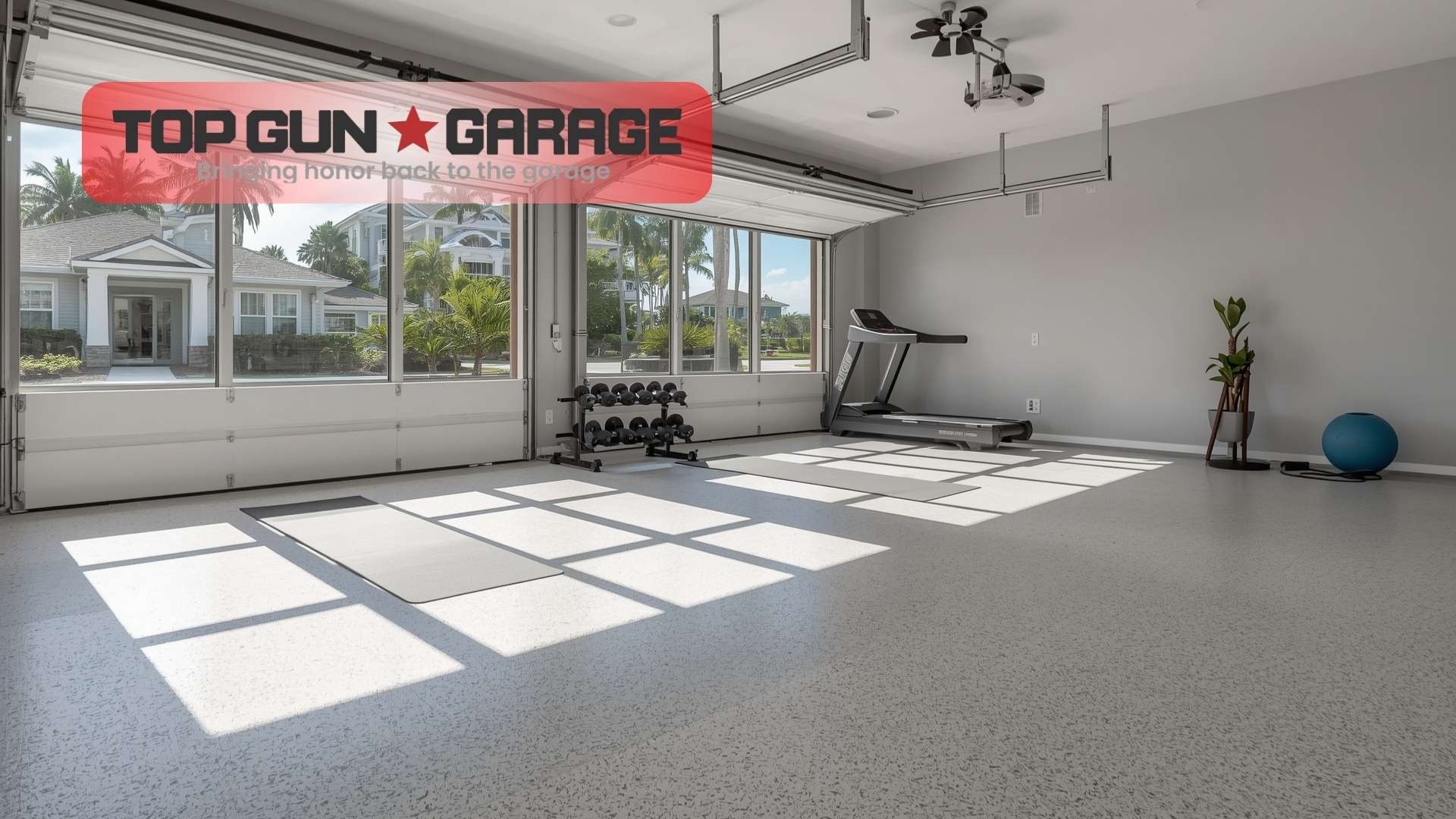
Garages in Park Shore often serve as more than parking spaces. They become workshops, home gyms, and storage for seasonal decorations. The air quality in these spaces matters. Bare concrete harbors dust mites, mold spores, and volatile organic compounds (VOCs) from vehicle exhaust and stored chemicals. A seamless, non-porous floor eliminates the micro-crevices where these contaminants accumulate. The Asthma and Allergy Foundation of America identifies hard, cleanable flooring as a key strategy for reducing indoor allergen loads. Garage flooring that reduces allergens contributes to a healthier overall home environment, especially for families with respiratory sensitivities.
Low-VOC and zero-VOC formulations are now standard in professional-grade coatings. Look for products meeting GREENGUARD Gold certification or California Department of Public Health (CDPH) Standard Method v1.2 for low-emitting materials. These coatings off-gas minimally during installation and cure to an inert, food-safe surface. This is particularly relevant for garages connected to living spaces via interior doors, where air exchange can carry fumes into the home.
Economic Value: ROI and Property Perception
Real estate professionals in Naples consistently note that a finished garage influences buyer perception. According to a 2026 survey by the National Association of Realtors, 78% of homebuyers consider garage condition an important factor in their purchasing decision, and 32% are willing to pay a premium for an upgraded garage. In the Park Shore market, where median home values exceed $1.5 million, a stained, cracked garage floor creates a negative impression that can cost sellers thousands in negotiations. Conversely, a gleaming, professionally coated floor signals meticulous maintenance and justifies a higher asking price.
Maria Gonzalez, a Park Shore real estate agent with 15 years of experience, states: “I’ve seen homes sit on the market because the garage looked neglected. When sellers invest in a high-end floor coating, it often becomes a talking point during showings. Buyers perceive it as one less project they have to tackle. In 2026, I estimate a finished garage adds between $8,000 and $15,000 in perceived value in this neighborhood.” Epoxy garage flooring and property value are directly linked in luxury coastal markets.
| Flooring Type | Cost per Sq Ft (Installed) | Lifespan (Years) | Moisture Resistance | UV Stability |
|---|---|---|---|---|
| Bare Concrete (Sealed) | $1.50 – $3.00 | 3 – 5 | Low | N/A |
| Acrylic Sealer | $2.00 – $4.00 | 1 – 3 | Low | Poor |
| Water-Based Epoxy | $4.00 – $6.00 | 3 – 7 | Moderate | Poor |
| 100% Solids Epoxy with Polyaspartic Topcoat | $7.00 – $12.00 | 15 – 25 | Excellent | Excellent |
| Full-Flake Polyaspartic System | $9.00 – $15.00 | 20+ | Excellent | Excellent |
Common Mistakes Park Shore Homeowners Should Avoid
The allure of a DIY kit from a home improvement store is strong, but the results are predictably poor in this climate. Water-based epoxies lack the cross-link density to resist hot tire pickup—the phenomenon where warm tires literally pull the coating off the concrete. They also have low solids content, meaning multiple coats are needed to build any meaningful thickness. A professional 100% solids epoxy or polyaspartic system cures to a film thickness of 10-20 mils, compared to 2-3 mils for a typical DIY product. That thickness translates directly to durability.
Another common error is neglecting expansion joints. Concrete slabs move with temperature fluctuations, and rigid coatings that bridge these joints will crack. Professionals saw-cut or honor existing joints, filling them with a flexible polyurea sealant that moves with the slab. Skipping this step leads to random cracking that mirrors the joint pattern—a telltale sign of an amateur installation.
Finally, many homeowners underestimate the importance of seasonal changes on coating performance. Installing during Naples’ rainy season (June through September) without proper dew point monitoring can cause amine blush—a waxy surface film that prevents intercoat adhesion. Professional installers use data loggers to track ambient conditions and adjust schedules accordingly.
Maintenance Routines That Preserve the Investment
A high-performance resinous floor requires surprisingly little upkeep. Weekly dust-mopping with a microfiber pad removes the fine grit that can dull the surface over time. For deeper cleaning, a pH-neutral cleaner and a soft-bristle push broom suffice. Avoid acidic cleaners (vinegar, citrus-based products) and abrasive pads, which can etch or scratch the topcoat. Seasonal maintenance routines should include inspecting the floor for any impact damage from dropped tools and touching up the topcoat if necessary.
For garages used as workshops, consider placing anti-fatigue mats in high-traffic areas. While the coating resists most chemicals, prolonged exposure to brake fluid or battery acid should be cleaned immediately. The chemical resistance of polyaspartic topcoats is well-documented; they withstand exposure to gasoline, motor oil, and common household solvents without softening or discoloring.
Integrating the Garage with the Rest of the Property
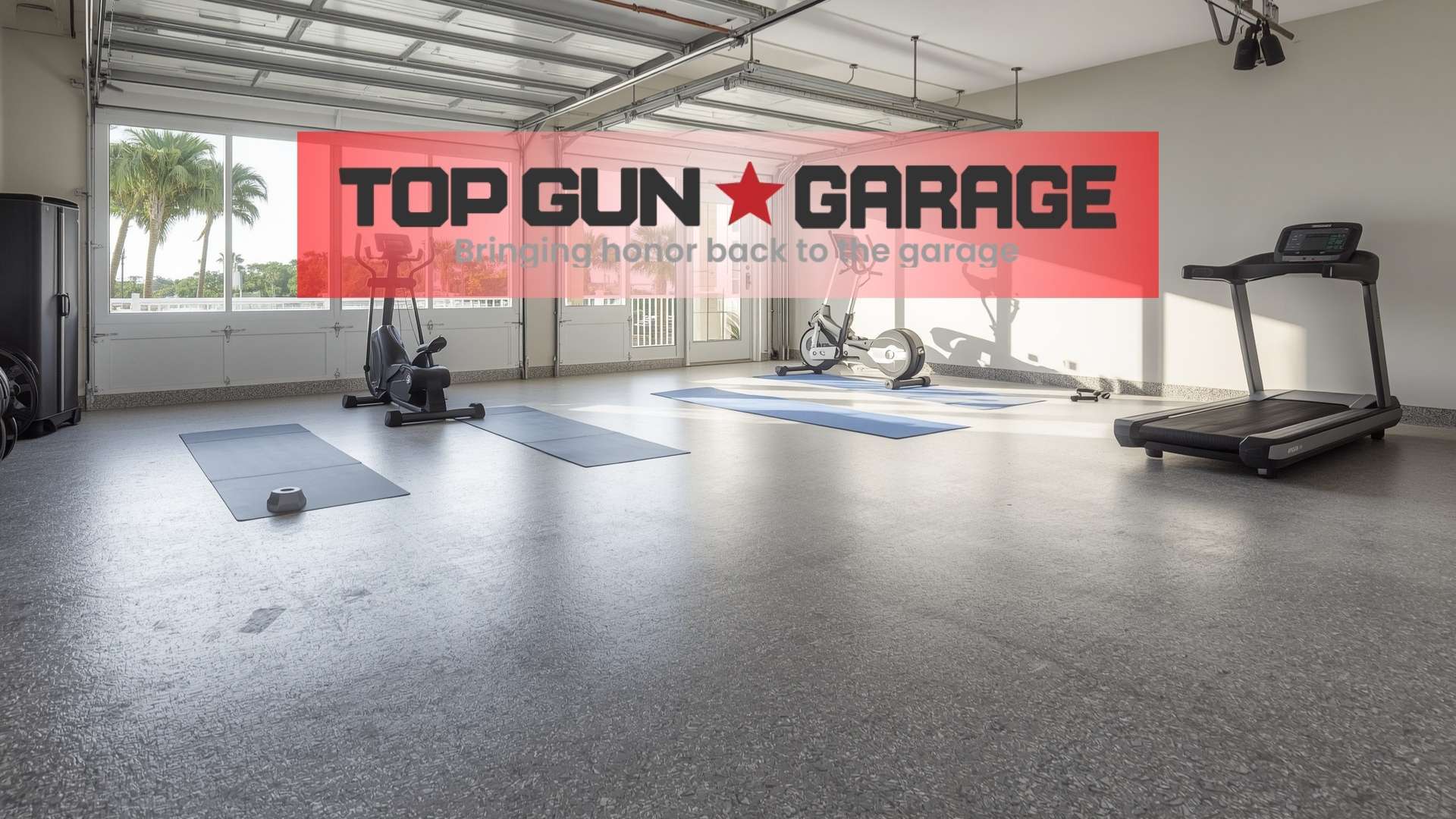
Many Park Shore homes feature attached garages with direct entry into mudrooms or kitchens. The transition between these spaces should feel intentional, not jarring. A garage door threshold creates a clean seal against water and pests while providing a visual boundary. When the garage floor finish complements the adjacent interior flooring, the entire ground level feels cohesive. This is particularly effective in homes with open floor plans where the garage door is visible from living areas.
For properties with pool houses or outdoor kitchens, extending the same coating system to those spaces creates a unified aesthetic. Pool house floors demand the same moisture and slip resistance as the garage, making a consistent specification logical and cost-effective. The design continuity reinforces the architectural intent of the home.
Frequently Asked Questions
How long does a professional garage floor coating take to install in Park Shore?
A typical two-car garage requires two to three days from preparation to final cure. Day one involves diamond grinding and crack repair. Day two covers primer and body coat application. Day three is the topcoat, which is walkable in 6-8 hours and ready for vehicle traffic in 24-48 hours, depending on temperature and humidity.
Will the coating withstand the weight of my SUV or golf cart?
Yes. High-solids epoxy and polyaspartic systems have compressive strengths exceeding 10,000 psi, far surpassing the 3,000-4,000 psi of typical residential concrete. They easily support passenger vehicles, light trucks, and golf carts without indentation or cracking.
Can I install a coating over my existing painted garage floor?
Generally, no. Existing paint or sealers must be completely removed through diamond grinding to achieve a proper bond. Coating over paint risks delamination because the new system only adheres as well as the weakest layer beneath it. A professional assessment determines the necessary preparation.
Is the coating slippery when wet?
Without additives, resinous floors can be slick. However, professionals incorporate aluminum oxide or polymer grit into the topcoat to achieve a coefficient of friction that meets OSHA standards for walking surfaces. Slip-resistant surfaces remain effective even when water is tracked in from rain or a pool.
How does the coating handle Florida’s heat?
High-quality polyaspartic topcoats have glass transition temperatures well above ambient Florida heat, meaning they remain hard and resistant to tire marking even on 100°F days. Garage floors designed for Florida heat also reflect more light, keeping the space slightly cooler.
What warranty can I expect?
Reputable installers offer warranties ranging from 10 years to a lifetime on residential applications, covering peeling, delamination, and excessive wear. These warranties are contingent on proper installation and normal residential use. Always review the specific terms and ensure the installer carries liability insurance.
Does the coating help with pest control?
Yes. Seamless floors eliminate the cracks and crevices where insects and rodents can enter or hide. Combined with a pest-resistant garage floor strategy, the coating contributes to a less hospitable environment for pests common in Southwest Florida, such as palmetto bugs and silverfish.
Conclusion
Your Park Shore home deserves a garage floor that matches its sophistication and withstands the unique demands of the Gulf Coast environment. From moisture mitigation and UV stability to custom design and measurable property value gains, a professionally installed resinous coating system is a strategic investment, not an expense. The technology has advanced far beyond basic gray paint; today’s polyaspartic and high-solids epoxy systems deliver decades of performance with minimal maintenance. Do not let your garage remain the overlooked space in an otherwise impeccable home. Contact our team today to schedule a consultation and discover how a custom floor coating can transform your garage into a clean, durable, and beautiful extension of your living space.
References
- Portland Cement Association. cement.org
- American Lung Association. lung.org
- National Association of Corrosion Engineers (NACE). nace.org
- National Renewable Energy Laboratory. nrel.gov
- Concrete Polishing Association of America. concretepolishingassociation.com
- Asthma and Allergy Foundation of America. aafa.org
- National Association of Realtors. nar.realtor
- ASTM International. astm.org