Wait a minimum of 28 days after your new garage slab is poured before scheduling a professional floor coating installation. In Southwest Florida, where humidity levels regularly exceed 70-90%, this waiting period often extends to 60 days or longer. Rushing this timeline is the single most common cause of coating failure in new construction homes.
According to Sherwin-Williams industrial flooring specifications, standard recommendations call for a minimum 28-day cure period for green concrete before applying epoxy or other resinous systems. However, this baseline assumes ideal conditions that rarely exist in Florida’s subtropical climate. The actual waiting period depends on concrete mix composition, ambient humidity, air temperature, and whether moisture testing confirms the slab is ready.
If you’re building a new home in Naples, Fort Myers, Cape Coral, or anywhere in Southwest Florida, understanding this timing is essential. This guide explains exactly when to schedule your garage floor coating, what tests your contractor should perform, and how Florida’s climate affects every step of the process.
Why New Concrete Needs Time Before Coating
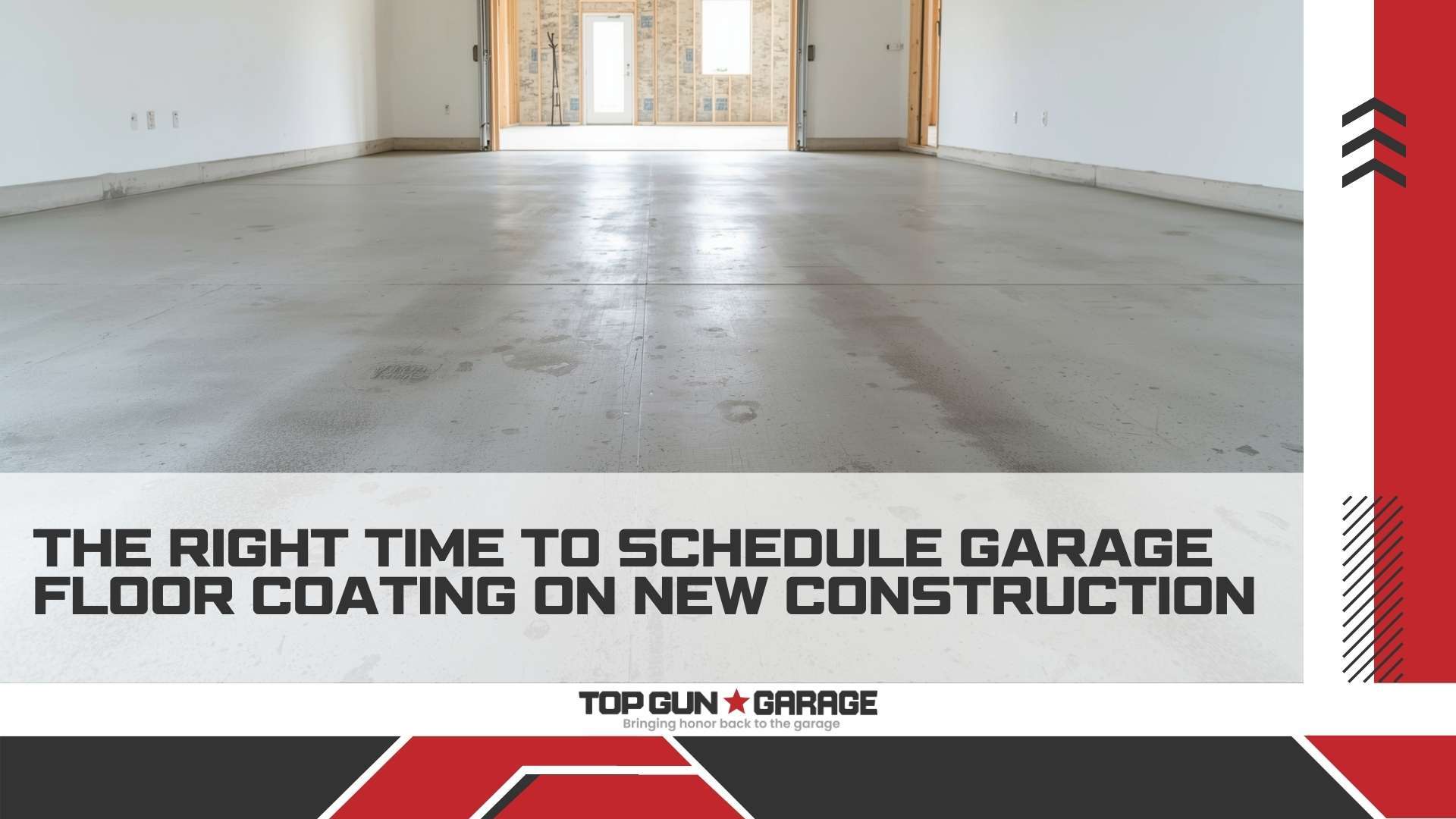
Fresh concrete contains far more moisture than it appears to hold. A newly poured garage slab may look dry within days, but it can take 30 to 120 days for internal moisture levels to drop to acceptable levels. Concrete acts like a dense sponge, with microscopic channels that allow water molecules to migrate from the bottom of the slab toward the surface.
When an impermeable coating like epoxy is applied over concrete with excessive moisture, that trapped water vapor creates hydrostatic pressure beneath the coating. This pressure causes bubbling, blistering, and delamination. The Stonhard flooring group notes that coating systems installed before proper moisture testing are bound to experience bubbling, peeling, and other problems.
New concrete is also highly alkaline, with pH levels between 12 and 14. This alkalinity interferes with coating adhesion. According to flooring industry standards, you need the concrete pH to drop to 9 or below for proper bonding. This pH reduction happens naturally as the slab cures, but it takes time. Learn more about why concrete age matters for epoxy adhesion.
The 28-Day Minimum: What It Actually Means
The 28-day figure comes from the fact that concrete reaches approximately 90% of its ultimate compressive strength within this timeframe. During this period, the hydration process, which is the chemical reaction between cement and water, is largely complete. This is why building contractors and flooring manufacturers reference 28 days as a baseline.
However, reaching structural strength does not mean the slab is ready for coating. Moisture continues to evaporate from the slab long after the concrete has hardened. In Florida’s high-humidity environment, this evaporation slows significantly because the moisture-saturated air reduces the vapor pressure differential needed for drying.
Florida Reality: 28 Days Is Often Not Enough
In Southwest Florida, expect 45-60 days minimum for new construction slabs. During the summer rainy season from May through October, humidity levels averaging 75-90% can extend this timeline further. Top Gun Garage’s field experience with hundreds of Naples-area installations confirms that rushing the timeline in this climate leads to callbacks and expensive repairs.
Factors that extend cure time beyond 28 days include: high ambient humidity above 60%, lack of climate control in the garage, thicker slabs exceeding 4 inches, concrete mixes with high water-to-cement ratios, and slabs poured during the rainy season.
Moisture Testing: The Only Way to Know Your Slab Is Ready
Waiting a set number of days is not sufficient. Professional contractors must perform moisture testing before any coating application. According to ASTM F710, the industry standard for preparing concrete floors, all concrete slabs shall be tested for moisture, regardless of age or grade level. Learn more about moisture testing for epoxy installation.
Common Moisture Testing Methods
Test Method
What It Measures
Acceptable Threshold
ASTM F2170 (RH Probe)
Internal relative humidity at 40% slab depth
Below 75-80% RH (varies by coating)
ASTM F1869 (Calcium Chloride)
Moisture vapor emission rate (MVER) at surface
Below 3 lbs per 1,000 sq ft per 24 hours
ASTM D4263 (Plastic Sheet)
Surface condensation over 24 hours
No visible condensation or darkening
The ASTM F2170 in-situ relative humidity test is now considered the gold standard because it measures conditions at 40% of the slab’s depth, providing a more accurate prediction of long-term moisture behavior. This method requires drilling small holes, inserting probes, and allowing at least 24 hours for equilibration before taking readings. For epoxy and polyaspartic coatings, most manufacturers require RH readings below 75-80%. Understanding how moisture affects epoxy installation can save you thousands in repairs.
Signs Your New Construction Slab Isn’t Ready
Even without formal testing, certain visual indicators suggest your slab needs more time. Watch for: visible darkening or wet spots anywhere on the surface, white chalky deposits (efflorescence) at joints or edges, condensation forming under objects left on the floor overnight, and a musty or damp smell in the garage.
You can perform a simple DIY check by taping a 2-foot by 2-foot sheet of heavy plastic to the floor and sealing all edges. After 24 hours, check for condensation under the plastic or darkening of the concrete beneath it. If either appears, the slab is not ready. However, this method only indicates surface conditions and should not replace professional ASTM-compliant testing. Learn more about why concrete testing matters before epoxy.
What Happens If You Coat Too Soon
Coating a slab before it’s ready leads to predictable failure modes that require complete removal and reapplication. The most common issues include:
Osmotic blistering: Liquid-filled bubbles appear weeks or months after installation as hydrostatic pressure forces moisture upward
Delamination: The coating separates from the concrete in large sheets, often with a layer of concrete dust attached to the underside
Adhesion failure: The coating never properly bonds and can be scraped away with minimal effort
Efflorescence migration: White salt deposits push through the coating at cracks and edges
Repairing a failed coating typically costs 50-100% more than the original installation because the existing coating must be ground off before reapplication. A contractor who skipped moisture testing has already cost you thousands. Understanding what causes epoxy floor delamination in Florida helps you avoid this expensive mistake.
Timing Your New Construction Garage Floor Coating
For new construction in Southwest Florida, plan your garage floor coating installation around these milestones:
Timeline
Action
Day 1
Garage slab poured
Days 1-28
Concrete cures; no coating activity
Day 30-45
Schedule contractor for moisture testing
Day 45-60+
If moisture tests pass, proceed with installation
If tests fail
Wait 2-4 weeks and retest, or apply moisture mitigation system
The 3-month window when garage floor coating works best in Florida is typically November through January, when humidity drops and temperatures stabilize. If your new construction timeline allows, scheduling your slab pour to align with these drier months simplifies the coating process.
Moisture Mitigation Options for Slabs That Fail Testing
If your new construction slab fails moisture testing and you cannot wait for natural drying, moisture mitigation systems offer an alternative. These specialized primers create a barrier between the damp concrete and the topcoat. High-performance moisture vapor barrier primers can handle hydrostatic pressure up to 15-20 lbs MVER, far exceeding the 3-5 lb threshold that causes standard coatings to fail. Learn more about epoxy moisture vapor barriers.
However, moisture mitigation adds $1-3 per square foot to your project cost and requires additional cure time. For a 600-square-foot garage, this represents $600-1,800 in additional expense. Weigh this against the cost of waiting another few weeks for natural drying.
Coordinating with Your Builder’s Timeline
New construction timelines often create pressure to complete all finishes quickly. Builders may suggest coating the garage floor immediately after Certificate of Occupancy to satisfy the punch list. Resist this pressure. A floor coating installed too early will fail, and the warranty claim process becomes complicated when the failure occurs after closing.
Work with your builder to understand when the garage slab was actually poured, not just when the framing began. Request documentation of the pour date. If the builder cannot confirm the date, assume the worst case and add extra time.
Some homeowners choose to wait until after closing to schedule their floor coating, giving the slab additional cure time while they move in and unpack. This approach works well when combined with proper garage floor preparation. Professional one-day coating systems like polyaspartic minimize disruption to your new home routine.
What to Ask Your Garage Floor Coating Contractor
When interviewing contractors for your new construction garage floor coating, ask these questions:
What moisture testing protocol do you follow for new construction slabs?
What RH or MVER threshold does your coating system require?
Do you document test results before proceeding with installation?
What happens if the slab fails moisture testing on the scheduled installation day?
Do you offer moisture mitigation if needed, and what does it cost?
How does your warranty address moisture-related failures?
How long should I wait to coat my new construction garage floor?
Wait at least 28 days as an absolute minimum, but expect 45-60 days in Southwest Florida’s humid climate. The only way to confirm readiness is through professional moisture testing per ASTM F2170 or F1869 standards. Visual inspection alone is not sufficient.
Can I speed up concrete curing to get my floor coating sooner?
Running air conditioning in the garage reduces ambient humidity and can accelerate surface drying. Dehumidifiers placed in the enclosed space also help. However, internal slab moisture takes time to migrate to the surface regardless of surface conditions. Rushing the process with heat or forced airflow can cause surface cracking without significantly reducing internal moisture.
What if my builder already coated the garage floor?
Builder-grade floor paints and thin epoxy coatings often fail within 1-3 years, especially when applied to insufficiently cured concrete. If the existing coating is peeling or bubbling, it must be completely removed by diamond grinding before a professional-grade system can be applied. This adds time and cost, but there is no shortcut around failed coatings.
Why does Florida humidity make such a difference in cure time?
Moisture evaporates from concrete when there is a vapor pressure differential between the slab and the air. In high-humidity environments, the air is already saturated with moisture, reducing this differential and slowing evaporation. Southwest Florida’s average relative humidity of 75-90% during summer months significantly extends the time needed for new concrete to reach acceptable moisture levels.
What moisture level is acceptable for epoxy or polyaspartic coatings?
Most epoxy and polyaspartic coating manufacturers require internal relative humidity below 75-80% per ASTM F2170 testing, or moisture vapor emission rates below 3 lbs per 1,000 square feet per 24 hours per ASTM F1869 testing. Some moisture-tolerant systems can handle higher levels, but standard coatings will fail above these thresholds.
Is polyaspartic better than epoxy for new construction floors with moisture concerns?
Both epoxy and polyaspartic coatings require the same moisture thresholds for proper adhesion. Polyaspartic coatings cure faster, allowing the project to be completed in one day, but they do not tolerate higher moisture levels. The key difference is that polyaspartic topcoats resist UV yellowing better than standard epoxy. Learn about the difference between epoxy and polyaspartic.
Schedule Your New Construction Floor Coating with Top Gun Garage
Building a new home in Naples, Fort Myers, Cape Coral, Bonita Springs, or anywhere in Southwest Florida? Top Gun Garage specializes in garage floor coatings for new construction homes, with proper moisture testing protocols that protect your investment. Our team has completed hundreds of new construction installations across Collier and Lee counties, and we understand the specific challenges that Florida’s climate creates for fresh concrete. Contact us for a free estimate and let us help you time your garage floor coating installation correctly.
 Skip to content



 According to Sherwin-Williams industrial flooring specifications, standard recommendations call for a minimum 28-day cure period for green concrete before applying epoxy or other resinous systems. However, this baseline assumes ideal conditions that rarely exist in Florida’s subtropical climate. The actual waiting period depends on concrete mix composition, ambient humidity, air temperature, and whether moisture testing confirms the slab is ready.
If you’re building a new home in Naples, Fort Myers, Cape Coral, or anywhere in Southwest Florida, understanding this timing is essential. This guide explains exactly when to schedule your garage floor coating, what tests your contractor should perform, and how Florida’s climate affects every step of the process.
According to Sherwin-Williams industrial flooring specifications, standard recommendations call for a minimum 28-day cure period for green concrete before applying epoxy or other resinous systems. However, this baseline assumes ideal conditions that rarely exist in Florida’s subtropical climate. The actual waiting period depends on concrete mix composition, ambient humidity, air temperature, and whether moisture testing confirms the slab is ready.
If you’re building a new home in Naples, Fort Myers, Cape Coral, or anywhere in Southwest Florida, understanding this timing is essential. This guide explains exactly when to schedule your garage floor coating, what tests your contractor should perform, and how Florida’s climate affects every step of the process.
 You can perform a simple DIY check by taping a 2-foot by 2-foot sheet of heavy plastic to the floor and sealing all edges. After 24 hours, check for condensation under the plastic or darkening of the concrete beneath it. If either appears, the slab is not ready. However, this method only indicates surface conditions and should not replace professional ASTM-compliant testing. Learn more about why concrete testing matters before epoxy.
 When interviewing contractors for your new construction garage floor coating, ask these questions: