 Skip to content



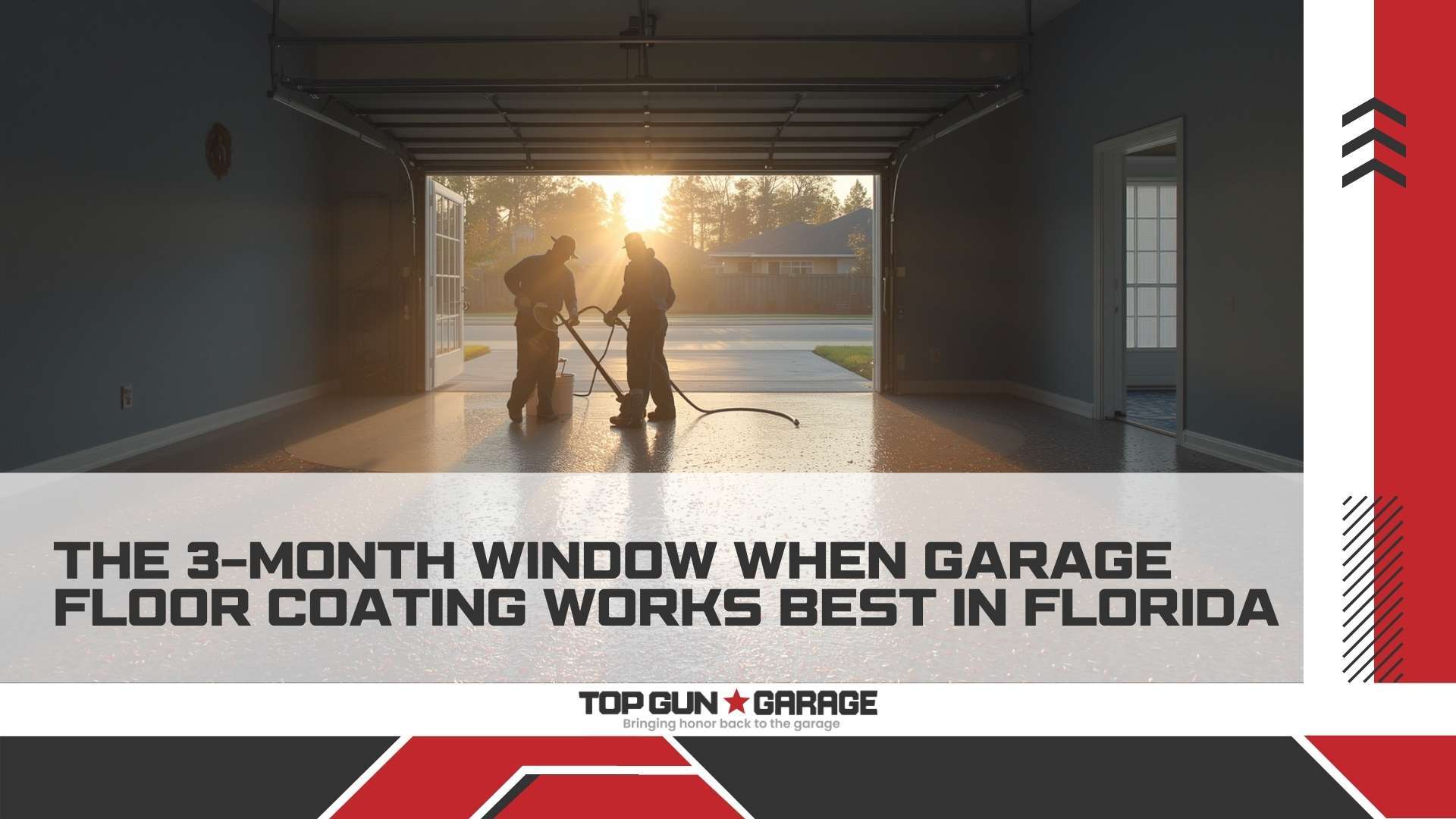
Florida homeowners planning a garage transformation face a critical decision that has nothing to do with color or finish selection. The best time to epoxy garage floor in Florida falls within a specific seasonal window when temperature and humidity conditions align with the chemical requirements of professional coating systems. Understanding this timing can mean the difference between a floor that lasts 15 years and one that peels within months.
Southwest Florida’s subtropical climate creates unique challenges for epoxy floor coating installation. The state’s wet season brings humidity levels that regularly exceed 85%, while summer temperatures can push concrete surfaces above 90°F. Both conditions fall outside the acceptable range for proper epoxy curing. Professional installers schedule most projects between November and April, with the November through January period offering the most consistent results.
Overview
This guide explains why Florida’s dry season creates the optimal installation window for garage floor coatings. It covers the specific temperature and humidity thresholds required for successful epoxy application, the seasonal patterns that affect Southwest Florida properties, and how professional contractors adapt their scheduling to maximize coating performance. Property owners in Naples, Fort Myers, and surrounding areas will gain practical knowledge for planning their garage floor projects around weather conditions rather than convenience.
Key Takeaways
- November through January provides the most stable conditions for garage floor coating installation in Florida, with humidity levels consistently below 70% and temperatures in the 65-80°F range.
- Epoxy requires ambient humidity between 40-60% and temperatures between 50-85°F during application and curing for proper chemical bonding.
- Florida’s wet season (June through October) introduces moisture levels that can cause bubbling, adhesion failure, and cloudy finishes.
- Professional installers use dehumidifiers and climate monitoring equipment to create controlled environments when installations must occur outside the ideal window.
- Scheduling during the dry season reduces material costs and labor time by eliminating the need for extensive environmental control measures.
Why Installation Timing Affects Floor Coating Performance
Epoxy floor coatings rely on a chemical reaction between resin and hardener components. This reaction is highly sensitive to environmental conditions. When temperature or humidity falls outside acceptable parameters, the curing process either accelerates too rapidly or slows to the point of incomplete hardening. Both scenarios produce floors that fail prematurely.
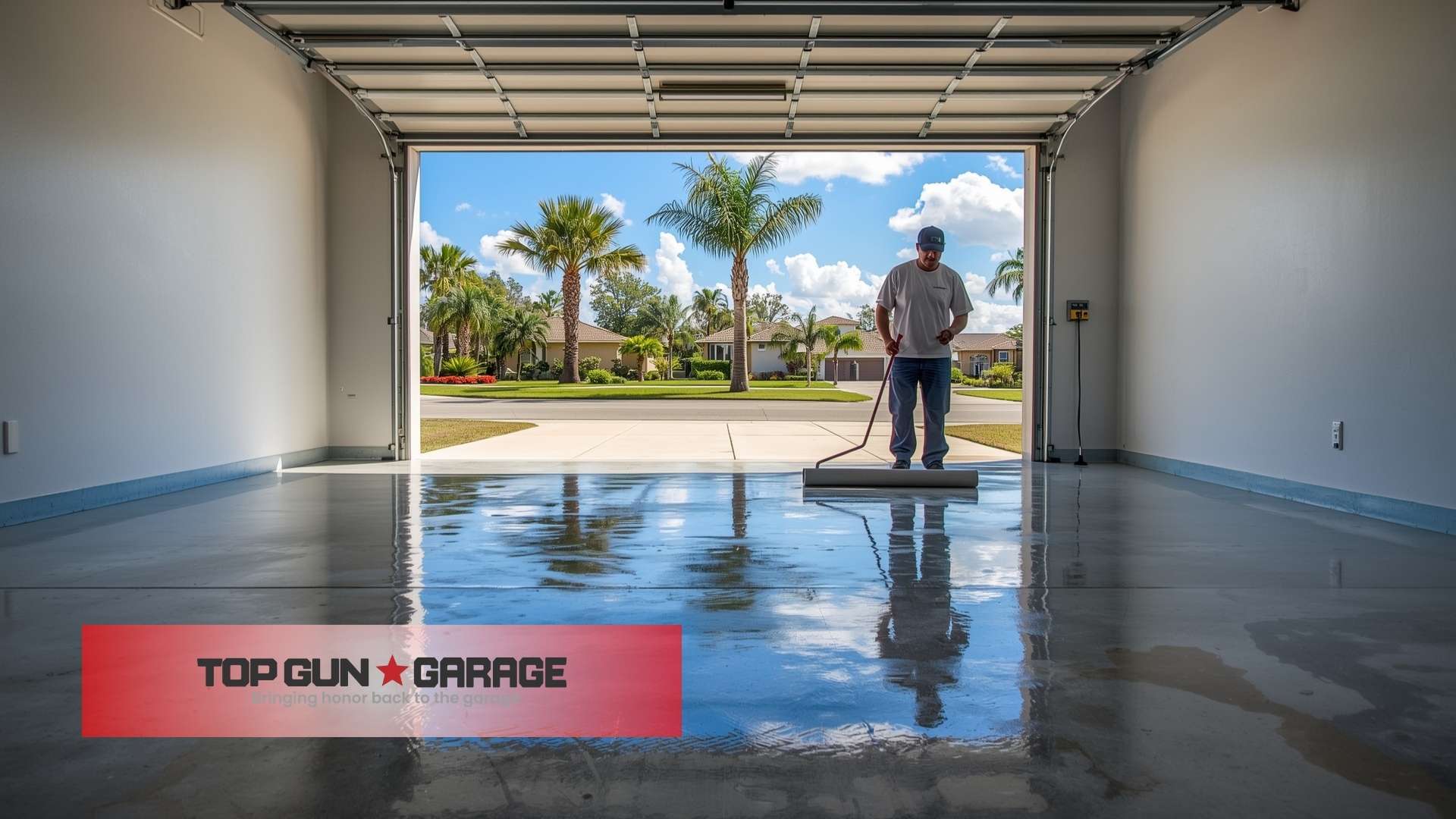
Industry standards specify optimal curing conditions at 70-80°F with relative humidity below 65%. Every 18°F increase above 85°F cuts working time by approximately half, according to ASTM International research. In Southwest Florida’s summer months, afternoon garage temperatures routinely exceed this threshold, making precise application nearly impossible without significant climate control measures.
High humidity introduces moisture into the curing process, creating several problems. Water vapor reacts with amine hardeners to form carbamate compounds that appear as a white, chalky film called blushing. This surface defect compromises adhesion between coating layers and reduces overall durability. Atmospheric moisture also slows evaporation rates, extending drying periods by 50-100% during peak humidity months.
Florida’s Dry Season: The Optimal Installation Window
The National Weather Service defines Florida’s dry season as November through April. During this period, cold fronts moving through the state reduce atmospheric moisture and bring cooler temperatures. Precipitation drops significantly compared to the May through October wet season, when afternoon thunderstorms are nearly daily occurrences.
The November through January period stands out as particularly favorable for garage floor coating projects. Humidity levels drop below 70%—a threshold that professional contractors identify as the sweet spot for proper curing. Temperatures during these months typically range from 65°F to 82°F in Southwest Florida, falling well within the acceptable range for epoxy application.
Seasonal Conditions Comparison
During Florida’s dry season months, conditions favor coating installation. November brings the transition from wet to dry patterns, with humidity starting to decrease and temperatures moderating. December and January typically offer the lowest humidity and most stable conditions, with minimal rainfall and consistent temperatures between 65-75°F. February through April remains suitable, though humidity begins increasing as the state transitions back toward wet season patterns.
The wet season presents different challenges entirely. June through September brings humidity levels regularly exceeding 85%, afternoon thunderstorms that can drop temperatures 20°F in minutes, and moisture concerns that persist even on days without rain. Professional installers avoid scheduling during these months whenever possible.
What Happens When Installation Timing Goes Wrong
Research indicates that approximately 60% of premature flooring failures in Florida stem from humidity-related issues during installation. When epoxy is applied outside optimal conditions, several problems develop that may not become apparent until weeks or months after the project is complete.
Common Failure Modes
Adhesion failure: Trapped moisture between the concrete substrate and coating prevents proper bonding. The coating may appear intact initially but will begin peeling at edges or lifting in sheets within months.
Bubbling and blistering: Moisture vapor migrating through concrete during hot, humid conditions creates pressure beneath the coating. Small bubbles form and eventually rupture, leaving crater-like defects across the surface. Understanding why floors bubble helps homeowners recognize installation timing problems.
Incomplete curing: Cold temperatures slow the chemical reaction to the point where epoxy never reaches full hardness. These floors remain softer than properly cured surfaces and show wear patterns much faster.
Surface contamination: Morning dew or condensation from humidity can settle on uncured epoxy, creating fish-eye patterns or cloudy areas that require complete removal and reapplication to correct.
How Professional Contractors Manage Installation Timing
Experienced installers in Southwest Florida build their project schedules around seasonal weather patterns. The busiest installation months fall between November and April, with the highest demand occurring in December through February when conditions are most favorable.
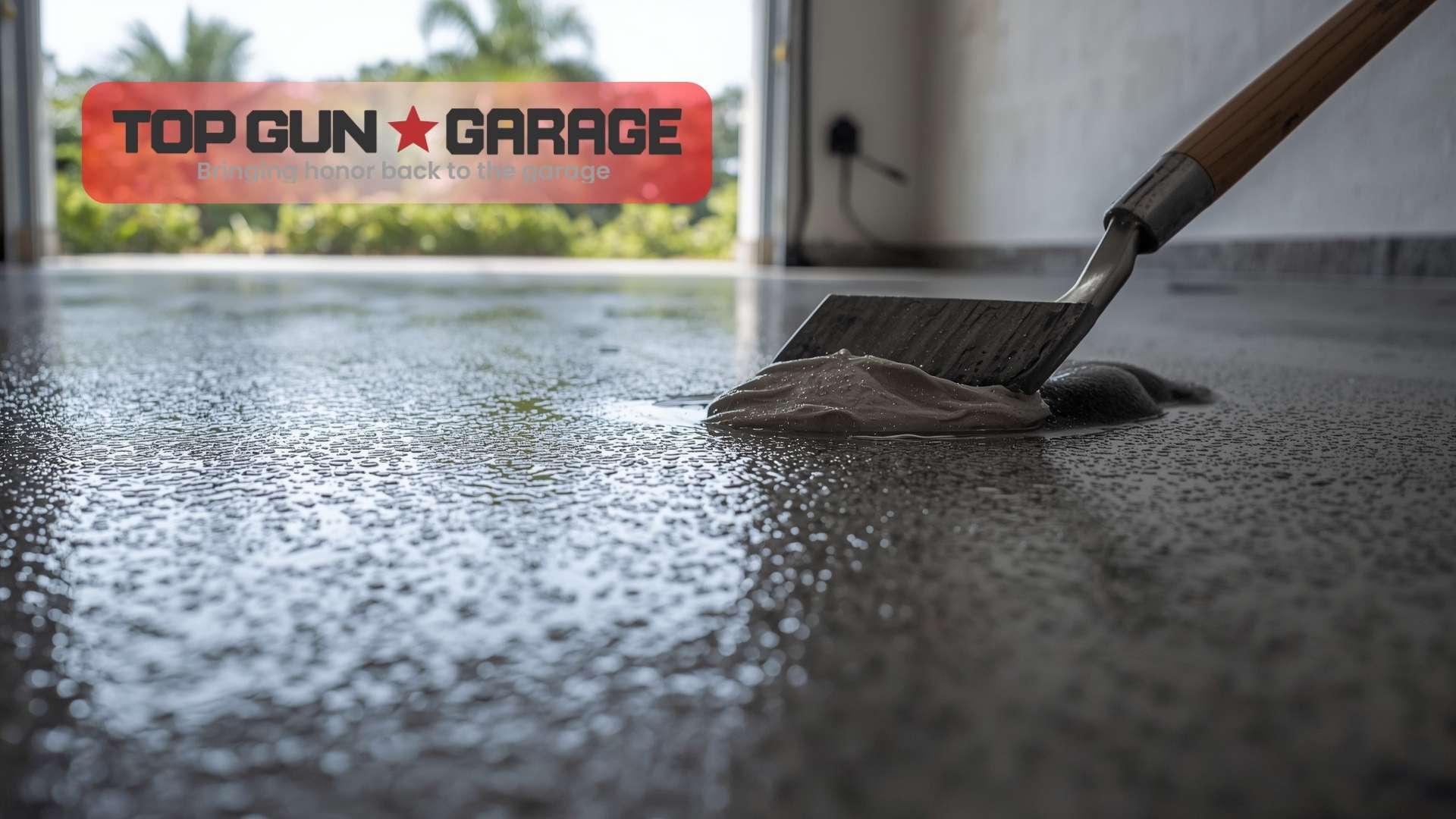
When projects must proceed outside the optimal window, professionals employ several environmental control strategies. Industrial dehumidifiers maintain workspace humidity between 40-50% relative humidity. Climate-controlled material storage ensures products remain at proper temperatures before mixing. Real-time monitoring equipment tracks ambient conditions throughout the installation and curing process.
Professional concrete preparation also factors into timing decisions. Concrete surfaces must be completely dry before coating application. In humid conditions, this may require extending preparation time by 24-48 hours beyond normal schedules. Moisture testing using calcium chloride tests or relative humidity probes confirms substrate readiness before any coating work begins.
Planning Your Garage Floor Project for Optimal Timing
Property owners in Bonita Springs, Estero, Marco Island, and surrounding Southwest Florida communities should begin the planning process several months before their preferred installation date. The dry season booking window fills quickly as contractors schedule their optimal-condition projects.
A practical planning timeline includes contacting contractors in August or September for fall installations, scheduling site evaluations in early October, and confirming project dates for November through January. This timeline allows flexibility if weather patterns shift unexpectedly and ensures material availability during peak season.
Consider the full scope of your garage project when timing decisions. If the project includes storage solutions or cabinet installation, coordinate these elements with the flooring timeline. Most contractors prefer completing floor coating work before installing organizational systems to avoid damage during the curing period.
Cost Implications of Installation Timing
Installing during the optimal 3-month window can reduce overall project costs. When environmental conditions cooperate naturally, contractors spend less time on climate control measures. Equipment rental for dehumidifiers and heaters adds expense to off-season installations. Extended curing times during humid months also increase labor costs as crews must return for additional preparation work between coating layers.
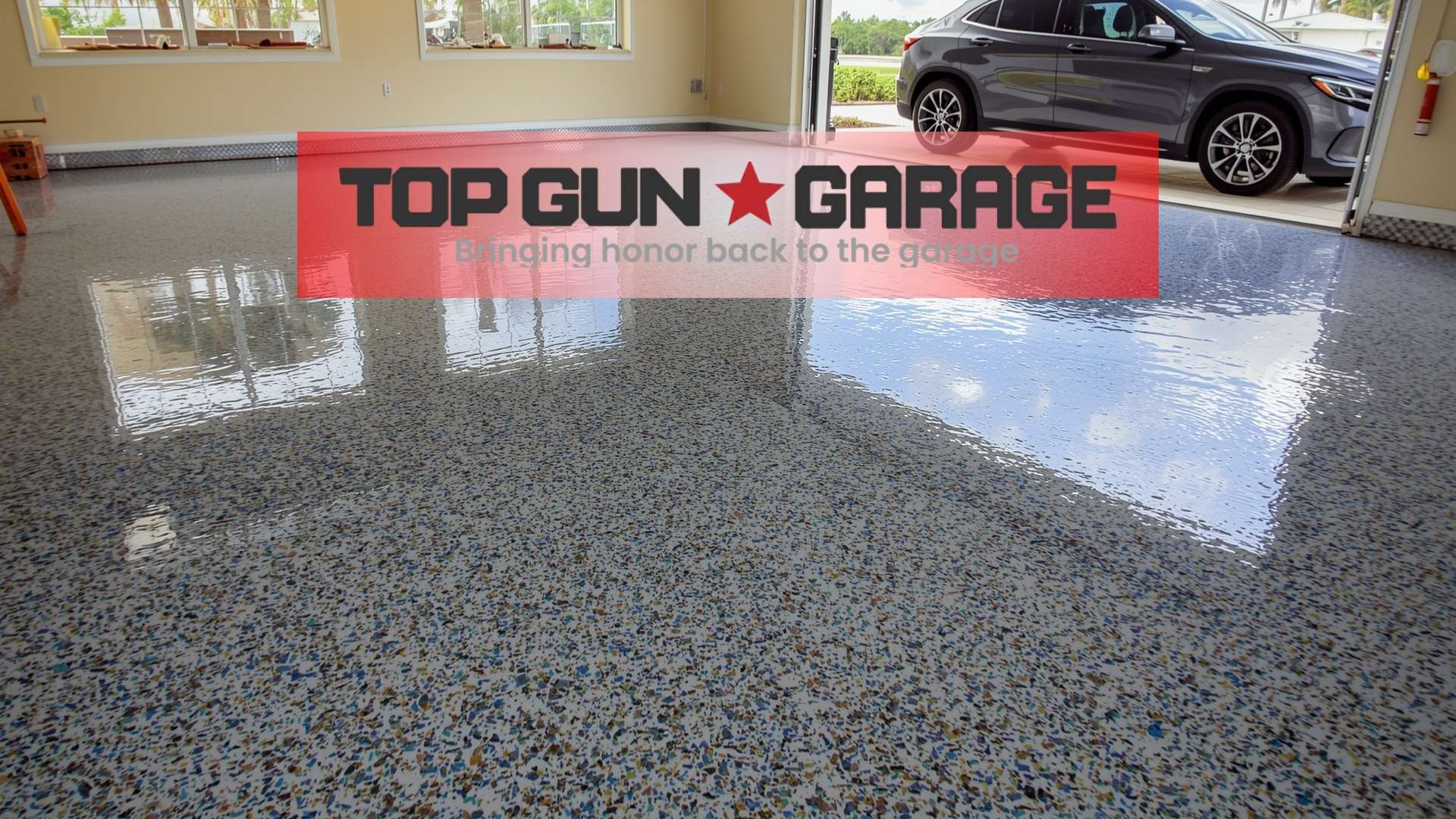
The long-term cost picture favors proper timing even more dramatically. A floor coating that fails within two years due to humidity-related installation problems requires complete removal and reapplication—essentially doubling the total investment. Understanding why DIY attempts fail in Florida often comes down to installation timing. Homeowners purchasing retail kits rarely have access to the climate control equipment necessary for successful application during challenging weather conditions.
Frequently Asked Questions
What is the ideal temperature range for applying epoxy in Florida?
The optimal temperature range for epoxy application falls between 50°F and 85°F, with 70-80°F representing ideal conditions. Both ambient air temperature and concrete surface temperature must fall within this range for proper curing.
Can epoxy be applied during Florida’s rainy season?
Yes, but it requires significant environmental control measures. Professional contractors use industrial dehumidifiers, climate-controlled work areas, and extended preparation times. These additions increase project costs and complexity.
How long should I wait after Florida’s wet season ends to schedule installation?
Humidity levels typically stabilize by mid-November in Southwest Florida. Scheduling installations for late November through January provides the most reliable conditions without requiring extensive environmental control equipment.
What humidity level is too high for epoxy installation?
Relative humidity above 65% during application and initial curing creates risk of surface defects and adhesion problems. Most professional contractors prefer working when humidity remains below 60% for optimal results.
Does garage orientation affect installation timing?
Yes. Garages with southern or western exposure experience higher afternoon temperatures and may require morning-only application schedules during transitional months. Proper ventilation also impacts curing conditions.
How far in advance should I book a dry season installation?
Contact contractors 2-3 months before your preferred installation date. The November through January window books quickly as both contractors and informed homeowners prioritize this optimal period.
What happens if weather conditions change during installation?
Professional contractors monitor weather forecasts and may postpone application if conditions deteriorate unexpectedly. Understanding how temperature fluctuations impact epoxy helps homeowners appreciate these scheduling adjustments.
Are polyaspartic coatings less sensitive to timing than epoxy?
Polyaspartic coatings cure faster and tolerate a wider temperature range than traditional epoxy. Understanding the difference between epoxy and polyaspartic helps homeowners choose systems suited to their installation timeline.
Will my garage floor need different maintenance depending on when it was installed?
Properly cured floors require the same maintenance routine regardless of installation season. However, floors installed under suboptimal conditions may show wear patterns sooner and require earlier recoating.
How do coastal locations affect timing recommendations?
Coastal properties in areas like Sanibel and Fort Myers Beach experience higher salt air exposure and humidity levels than inland locations. These factors make proper timing even more critical for achieving durable results.
Sources
National Weather Service – Florida Dry Season Forecast
National Weather Service – Wet and Dry Season Onset in Florida
Schedule Your Garage Floor Project
Planning a garage floor coating project in Southwest Florida? The November through January installation window offers the most favorable conditions for lasting results. Get a free estimate and secure your optimal installation date before the dry season schedule fills.