 Skip to content



Key Takeaways
- Surface preparation directly impacts epoxy coating longevity
- Moisture testing prevents bubbles and peeling in finished floors
- Adhesion tests verify bonding strength before application
- Local experts like Top Gun Garage offer specialized testing services
- Proper installation combines multiple evaluation methods for optimal results
Introduction to Concrete Testing and Epoxy Flooring
Long-lasting flooring systems depend on precise initial evaluations. Proper assessments determine whether surfaces can support protective coatings like epoxy, which transforms garages and commercial spaces into durable, polished environments. Top Gun Garage emphasizes these evaluations, combining advanced tools with local expertise to deliver reliable results.Understanding the Importance of Proper Testing
Moisture and temperature directly influence how well coatings adhere to substrates. High humidity or trapped water vapor creates weak bonds, leading to peeling or blistering. Professionals use a mix of non-invasive sensors and probe-based tools to measure these factors accurately. Surface preparation removes contaminants and opens pores in the material. This step ensures coatings form a tight bond with the base layer. Without it, even premium epoxy products fail prematurely.| Testing Method | Purpose | Ideal Conditions |
|---|---|---|
| Calcium Chloride | Measures moisture vapor emission | 65°F–85°F |
| Relative Humidity Probes | Assesses subfloor moisture levels | Installed at 40% depth |
| Surface Moisture Meters | Detects immediate water content | Dry, clean surfaces |
Impact on Flooring Quality and Longevity
Data-driven decisions prevent costly rework. For example, moisture levels above 4% often require drying protocols before coating application. Top Gun Garage’s team uses these thresholds to guarantee 10+ years of performance for residential and commercial clients. Combining multiple tests provides a complete picture of subfloor health. This approach eliminates guesswork, ensuring coatings withstand heavy traffic and temperature shifts. Call (239) 488-7000 to learn how tailored evaluations protect your investment.Why Concrete Testing Matters Before Epoxy Naples
 Evaluating substrate conditions forms the foundation of successful flooring projects. Professionals rely on multiple assessment strategies to identify hidden risks that could compromise coating integrity. These steps ensure materials bond correctly and withstand daily stresses.
Overview of Testing Methods
Technicians use both invasive and non-invasive tools to measure moisture levels. Calcium chloride kits track vapor emission rates over 72 hours. Non-destructive meters provide instant surface readings without damaging the substrate. Relative humidity probes inserted into drilled holes assess deeper moisture content. This method reveals trapped water that surface tools might miss. Combining approaches gives a complete picture of subfloor readiness.| Method | Depth | Time Required |
|---|---|---|
| Surface Meter | 0.5″ | Instant |
| Calcium Chloride | Surface | 3 Days |
| RH Probes | 40% Depth | 24 Hours |
Critical Factors Affecting Epoxy Adhesion
Surface texture significantly impacts bonding strength. Rough profiles create more anchor points for coatings. Smooth surfaces often require mechanical grinding or acid etching. Contaminants like oil or dust weaken connections between layers. Proper cleaning removes these barriers. Material strength also matters—low-density substrates may need primers to enhance grip. Temperature and humidity during application affect curing times. Installers adjust schedules based on test data to optimize results. This attention to detail prevents premature wear in high-traffic areas.Best Practices for Concrete Testing
 Achieving a reliable foundation for protective coatings requires strict adherence to preparation protocols. Every step in the evaluation process directly influences how well materials bond and endure daily wear.
Surface Preparation and Moisture Considerations
Thorough cleaning removes oil, dust, and debris that weaken bonding. Curing compounds must fully dissipate before applying calcium chloride tests. Professionals recommend waiting 28 days after installation for accurate moisture readings. Proper testing equipment like digital meters ensures precise data collection. For example, placing vapor emission kits on dry surfaces prevents skewed results. Temperature-controlled environments (65°F–85°F) maintain test accuracy during multi-day assessments.Testing Techniques to Avoid Common Errors
Rushing the process leads to false readings. Technicians should conduct multiple tests across different areas to identify hidden issues. Ignoring subfloor temperature variations causes premature coating failures. Using outdated methods or uncalibrated tools creates unreliable data. A documented system for tracking results helps spot inconsistencies early. This approach saves time by preventing rework and ensuring coatings adhere correctly from day one. Adhering to these standards builds floors that resist cracks and delamination. Trusted installers combine expertise with rigorous protocols to deliver lasting results.Diverse Testing Techniques for Concrete: From Moisture to Adhesion
 Effective floor protection begins beneath the surface. Professionals use multiple assessment strategies to identify hidden risks that compromise material bonds. Three primary approaches dominate moisture analysis, while adhesion tests reveal structural readiness for protective layers.
Moisture Testing Methods
Calcium chloride kits measure vapor emission rates over 72 hours. This method follows ASTM F1869 standards, placing sealed containers on dry surfaces. Non-invasive meters scan substrate moisture instantly using electromagnetic waves, ideal for quick checks. In-situ probes drill into slabs to assess deeper humidity levels. These tools detect trapped moisture invisible to surface devices. Each technique serves distinct purposes:| Method | Depth | Time |
|---|---|---|
| Calcium Chloride | Surface | 3 Days |
| Non-Invasive Meter | 0.5″ | Instant |
| In-Situ Probes | 40% Depth | 24 Hours |
Adhesion Pull-Off Strength Testing Insights
This process attaches metal dollies to coated surfaces using epoxy adhesive. Hydraulic force measures bond resistance until failure occurs. Results below 200 PSI often indicate poor substrate preparation.- Surface profiling increases anchor points for coatings
- Contaminant removal prevents bond interference
- Compressive strength above 3,500 PSI ensures structural support
Implementing Testing for Optimal Epoxy Floor Coating
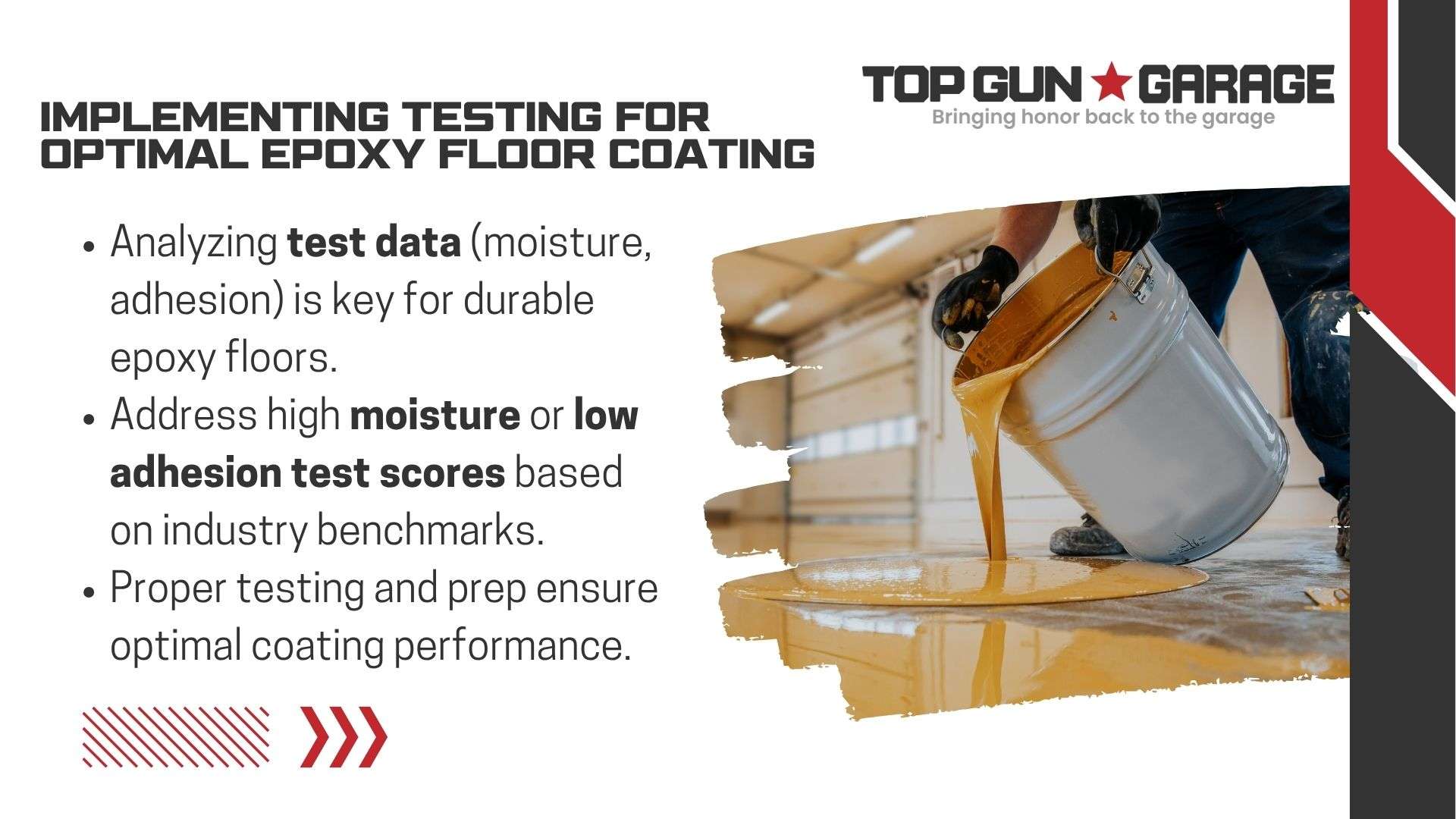 Data transforms epoxy projects from guesswork to precision. Analyzing results from moisture meters, adhesion tests, and surface scans guides installers toward solutions that last. This approach eliminates risks while maximizing coating performance across residential and commercial spaces.
Interpreting Test Results and Data
Moisture levels above 4% often require dehumidification systems before installation. Adhesion pull-off readings below 200 PSI signal inadequate surface preparation. Professionals compare these numbers against industry benchmarks to make informed decisions.| Test Type | Acceptable Range | Impact on Flooring |
|---|---|---|
| Calcium Chloride | <3 lbs/1000 sq ft/day | Prevents bubbling |
| RH Probes | <75% humidity | Ensures curing stability |
| Pull-Off Strength | >250 PSI | Guarantees bond durability |
Ensuring Long-Term Performance and Resistance
Installers adjust techniques based on test outcomes. For example, high moisture areas might need moisture barriers, while low-adhesion surfaces require mechanical profiling. These steps create floors that withstand forklift traffic and chemical spills. Advanced testing equipment like digital RH probes reduces human error. Regular calibration maintains accuracy across multiple projects. Contractors who prioritize data-driven methods achieve 30% fewer callbacks compared to those relying on visual inspections alone. Reviewing results post-installation identifies potential weaknesses early. Annual inspections using the same metrics extend system lifespans by 5–8 years. This proactive strategy protects investments while maintaining glossy, crack-free surfaces.Conclusion
Successful flooring installations hinge on thorough substrate evaluations. Professionals combine calcium chloride tests, humidity probes, and pull-off strength assessments to verify material readiness. These methods identify hidden risks like trapped moisture or weak bonds that threaten coating performance. Data-driven decisions prevent common failures. For example, surfaces requiring over 250 PSI adhesion strength withstand heavy equipment better than untested bases. Moisture levels below 3 lbs/1000 sq ft/day reduce bubbling risks by 80% in humid climates. Ignoring standardized protocols often leads to peeling coatings within months. Contractors using calibrated tools and multi-point checks report 30% fewer callbacks. Homeowners benefit from systems lasting 10+ years when installers prioritize surface profiling and contaminant removal. Trusted guides recommend pairing test results with local climate data for optimal resistance. Whether upgrading a garage or industrial space, investing in precise evaluations ensures floors maintain their protective qualities and visual appeal long-term.FAQ
What types of tests are essential before applying epoxy coatings?
Surface moisture evaluation, compressive strength analysis, and adhesion pull-off tests are critical. These methods identify moisture levels, structural integrity, and bond readiness to prevent peeling or delamination.
How does moisture affect epoxy flooring performance?
Excess moisture disrupts adhesion, causing bubbles, blisters, or coating failure. Calcium chloride tests and non-invasive probes measure vapor emission rates, ensuring levels stay below manufacturer-recommended thresholds for optimal results.
Why is surface preparation vital for epoxy systems?
Proper preparation removes contaminants, opens pores, and creates a profile for mechanical bonding. Techniques like shot blasting or grinding improve coating longevity and resistance to wear, chemicals, and heavy traffic.
What equipment is used for adhesion testing?
Hydraulic or mechanical pull-off testers measure bond strength between coatings and substrates. These tools provide quantitative data to verify if surfaces meet minimum psi requirements specified by epoxy manufacturers.
Can temperature influence concrete testing outcomes?
Yes. Ambient and substrate temperatures impact moisture readings and cure times. ASTM standards recommend testing within 65–85°F ranges to ensure accurate results and proper coating application conditions.
How long do test results remain valid before installation?
Most data stays relevant for 72 hours if environmental conditions remain stable. Rapid humidity shifts or temperature fluctuations may require retesting to confirm surface readiness for epoxy flooring systems.
What errors commonly occur during compressive strength testing?
Improper core sampling, inadequate curing of test specimens, or using uncalibrated equipment skew results. Partnering with certified labs ensures compliance with ASTM C39 standards for reliable strength assessments.
Do warranties depend on pre-installation testing documentation?
Many manufacturers require validated test reports for moisture, pH, and surface strength to honor warranties. Skipping these steps risks voiding coverage for delamination or premature coating degradation.