 Skip to content




Resin flooring is a seamless, liquid-applied surface system that chemically cures to form a highly durable, non-porous protective layer over concrete substrates. Composed primarily of synthetic polymers like epoxy, polyurethane, or polyaspartic compounds, this flooring solution transforms porous concrete into an impermeable, highly resilient surface. Unlike traditional flooring materials that are cut and pieced together, resin systems are poured and spread on-site, creating a continuous barrier that is impervious to moisture, chemicals, and heavy impact.
Key Takeaways
- Seamless Construction: Resin floors eliminate grout lines and seams, preventing dirt, bacteria, and moisture accumulation.
- Exceptional Durability: With compressive strengths exceeding 10,000 PSI, these floors easily outlast traditional residential materials.
- Low Maintenance: The non-porous surface requires only basic sweeping and mopping with pH-neutral cleaners.
- Rapid Installation: Modern 2026 polyaspartic formulations allow for complete installation and curing in as little as 24 hours.
- High ROI: While initial costs range from $7 to $15 per square foot, the 15-to-20-year lifespan offers significant long-term savings.
- Customizable Aesthetics: Homeowners can choose from solid colors, decorative flakes, quartz broadcasts, and metallic finishes.
Understanding the Chemistry: What Exactly Is Resin Flooring?
To truly understand the benefits of this material, it is essential to look at the underlying chemistry. Resin flooring is not paint; it is a two-part chemical system consisting of a base resin and a hardener. When these two components are mixed, they undergo an exothermic chemical reaction. This process creates cross-linked polymer chains that form an extremely durable and rigid surface.
According to materials science data on thermosetting epoxide polymers, the curing process transforms the liquid into a solid plastic-like state that bonds mechanically and chemically with the prepared concrete substrate. The resulting floor typically ranges in thickness from 2mm to 6mm, depending on the specific application requirements and the number of layers applied.
“The molecular cross-linking that occurs during the curing of modern resin systems creates a surface that is fundamentally different from traditional floor paints. It doesn’t just sit on top of the concrete; it becomes a structural part of the floor itself.” — Dr. Sarah Jenkins, Materials Scientist at the Polymer Research Institute
The 3 Main Types of Resin Flooring Systems
Not all resin floors are created equal. The industry categorizes these systems based on their primary chemical composition. Understanding these distinctions helps homeowners select the optimal solution for their specific needs.
1. Epoxy Resin: The Industry Standard
Epoxy is the most widely recognized type of resin flooring. Known for its incredible adhesion properties and compressive strength (often exceeding 10,000 PSI), epoxy is ideal for areas subjected to heavy static loads. It acts as an excellent resurfacer, which is why professional installers often use it to hide ugly pitted concrete. However, traditional epoxy can be susceptible to UV degradation, meaning it may amber or yellow if exposed to direct sunlight over prolonged periods.
2. Polyurethane Resin: Flexibility and UV Resistance
Polyurethane systems offer superior flexibility compared to rigid epoxy. This elasticity makes polyurethane highly resistant to impact and thermal shockâthe rapid expansion and contraction of the substrate due to temperature changes. Furthermore, aliphatic polyurethane topcoats are highly UV stable. Research from the American Chemistry Council highlights that polyurethane’s chemical structure provides excellent abrasion resistance, making it ideal for high-traffic residential areas.
3. Polyaspartic and Polyurea: Rapid Curing Solutions
The most significant advancement in the 2026 flooring market is the widespread adoption of polyaspartic and polyurea systems. These materials offer the durability of epoxy and the flexibility of polyurethane, but with a fraction of the curing time. When comparing same-day polyaspartic vs 3-day epoxy, the rapid return-to-service is a massive advantage for busy homeowners. This efficiency is exactly why many contractors are switching from epoxy to polyurea for residential applications.
Top Benefits of Resin Flooring for Modern Homes
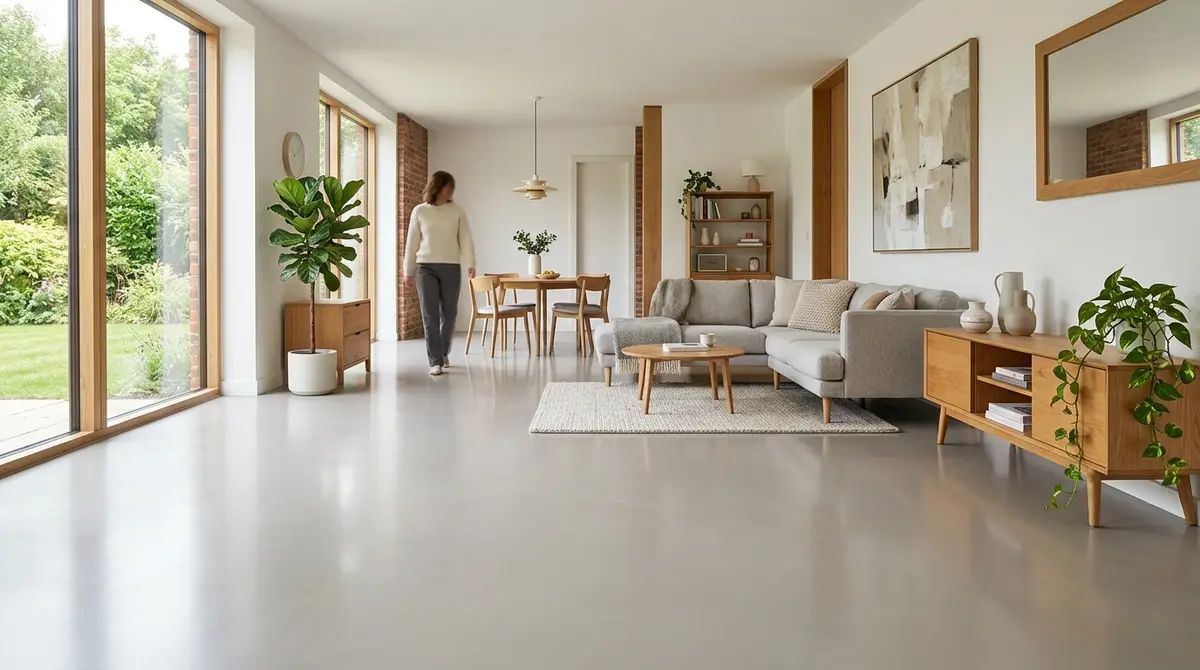
The transition of resin flooring from industrial warehouses to high-end residential properties is driven by a unique combination of aesthetic versatility and unmatched performance metrics.
Unmatched Hygiene and Indoor Air Quality
Traditional flooring materials like tile and hardwood feature grout lines, seams, and joints. These microscopic crevices are breeding grounds for bacteria, mold, and allergens. Resin flooring’s seamless nature eliminates these hiding spots entirely. Furthermore, modern 2026 formulations have seen an 85% reduction in Volatile Organic Compounds (VOCs) compared to products from a decade ago. This aligns with guidelines from the Environmental Protection Agency regarding the maintenance of healthy indoor air quality in residential construction.
Exceptional Durability and Flood Resistance
With an average lifespan of 15 to 20 years under normal residential use, resin floors offer incredible longevity. They are highly resistant to chemical spills, oil drips, and heavy impacts. In coastal or flood-prone areas, the impermeable nature of resin is a game-changer. Because the material does not absorb water, it can handle hurricane flooding better than bare concrete or traditional wood flooring, requiring only a simple wash and sanitize after water exposure.
Aesthetic Customization and Light Reflectivity
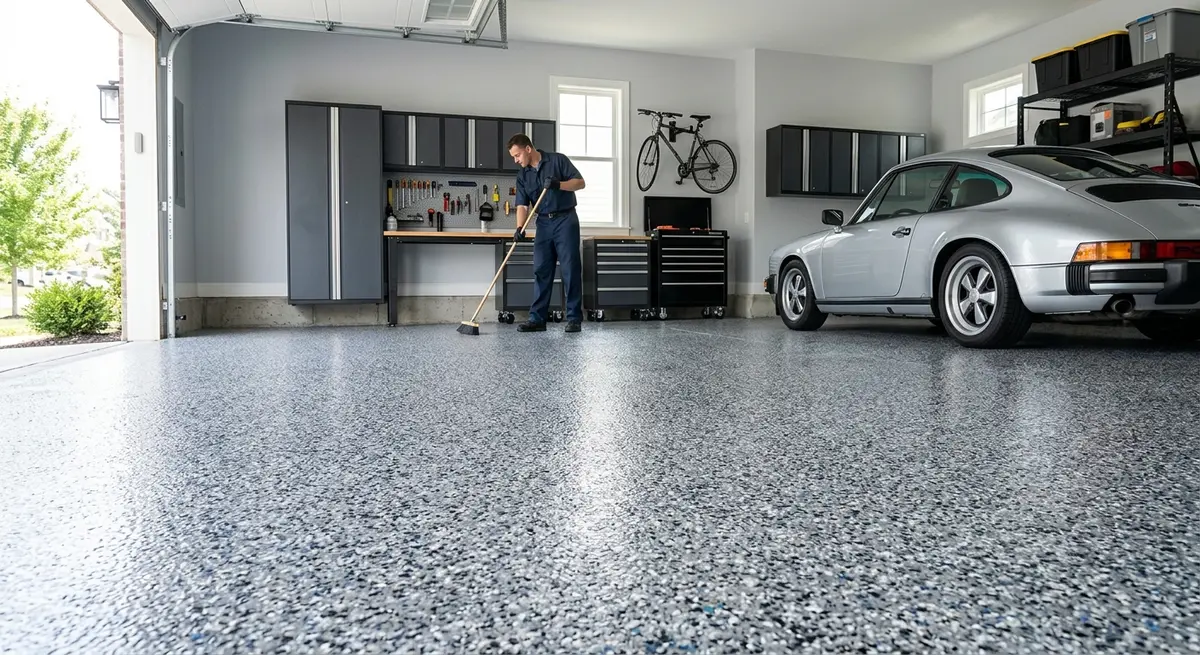
Resin flooring offers limitless design possibilities. Homeowners can select from solid colors, intricate metallic swirls, or decorative vinyl flakes. Beyond aesthetics, high-gloss resin finishes can increase ambient light reflectivity by up to 300%. This naturally brightens spaces, reducing the need for artificial lighting and lowering energy consumption.
“The beauty of resin is that it allows us to treat the floor as a continuous canvas. We can match any interior design aesthetic, from minimalist industrial to warm, inviting contemporary, without sacrificing an ounce of functionality.” — Marcus Thorne, Lead Architect at Modern Living Designs
Step-by-Step: The Professional Installation Process
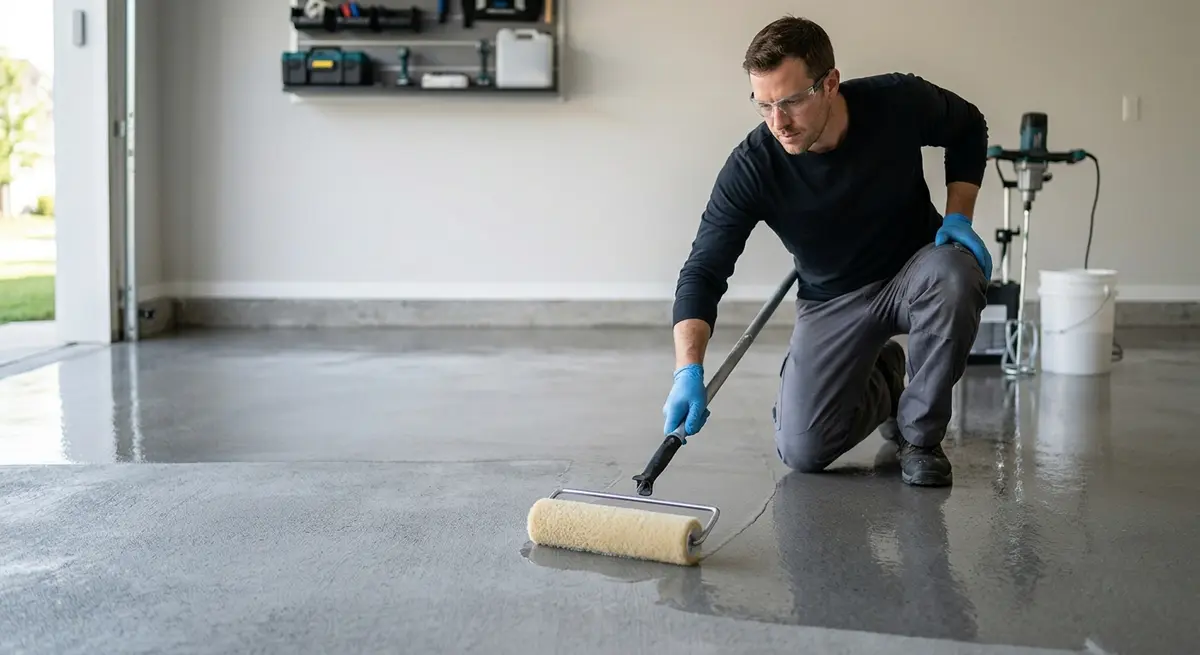
Achieving a flawless resin floor requires meticulous preparation and precise execution. A DIY approach frequently leads to delamination and failure. Here is how professionals install a residential resin system in 2026:
- Substrate Evaluation and Moisture Testing: Contractors first test the concrete’s Moisture Vapor Emission Rate (MVER). For a successful installation, the MVER must typically remain below 3 lbs per 1,000 square feet over 24 hours.
- Mechanical Surface Preparation: The concrete is mechanically profiled using diamond grinders or shot blasters. This removes laitance, opens the concrete’s pores, and creates a rough profile (usually CSP 2 or 3) for the resin to grip. During this phase, professionals will also repair and coat cracked concrete to ensure a structurally sound base.
- Primer Application: A penetrating epoxy primer is applied to seal the concrete and provide a chemical bond for subsequent layers.
- Base Coat and Broadcast: The main color coat is applied. If the design calls for it, decorative flakes or quartz are broadcast into the wet resin until the floor is completely covered (to rejection).
- Topcoat Application: After the base cures and excess flake is scraped away, a clear, UV-stable topcoat (usually polyaspartic or polyurethane) is applied to seal the floor and provide scratch resistance.
Homeowners should always prepare your space before the coating crew arrives to ensure the installation timeline remains on track.
Comparing Resin Flooring to Traditional Materials
To understand the value proposition of resin flooring, it is helpful to compare it directly against popular residential alternatives.
| Feature | Resin Flooring | Ceramic Tile | Hardwood | Polished Concrete |
|---|---|---|---|---|
| Lifespan | 15-20 Years | 20+ Years | 15-25 Years | 20+ Years |
| Water Resistance | 100% Impermeable | High (Grout is porous) | Poor | Moderate |
| Impact Resistance | Excellent | Prone to Chipping | Prone to Dents | Excellent |
| Maintenance | Very Low | Moderate (Grout cleaning) | High (Refinishing) | Low (Requires resealing) |
Cost Analysis and Long-Term Value in 2026
When evaluating flooring options, looking solely at the initial installation price can be misleading. In 2026, professional residential resin flooring installation typically ranges from $7 to $15 per square foot, depending on the condition of the concrete, the type of resin used, and the complexity of the decorative finish.
However, the true value emerges in the lifecycle cost. Because resin floors do not require waxing, polishing, or periodic replacement like carpet or laminate, homeowners realize significant savings over time. Industry data indicates that over a 15-year period, a high-quality resin floor saves homeowners approximately 40% in maintenance and replacement costs compared to traditional alternatives.
“Consumers often experience sticker shock when comparing professional resin quotes to big-box store DIY kits. But when you factor in the mechanical preparation, commercial-grade materials, and the fact that you won’t need to touch the floor again for two decades, the return on investment is undeniable.” — David Chen, Director of Operations at the Resin Flooring Association
To ensure you are getting a fair price and quality workmanship, it is vital to know the right questions to ask your contractor before signing a contract.
Safety and Environmental Considerations
Safety is a paramount concern for residential flooring. A common misconception is that glossy resin floors are inherently slippery. In reality, professional installers broadcast microscopic anti-slip aggregates (like aluminum oxide or glass spheres) into the topcoat. This ensures the floor meets or exceeds the Occupational Safety and Health Administration standards for walking-working surfaces, which recommend a static coefficient of friction greater than 0.6.
Additionally, resin floors possess excellent thermal mass properties. They adapt to the ambient temperature of the room. In warmer climates, specific formulations and light-colored flake blends can reflect heat, allowing you to enjoy walking barefoot without burning your feet. Furthermore, the dense composition of cured resin provides acoustic dampening, reducing ambient noise transmission by up to 15 decibels compared to hollow-sounding floating laminate floors.
Frequently Asked Questions About Resin Floors
How long does a residential resin floor last?
When professionally installed over properly prepared concrete, a high-quality resin floor will last between 15 and 20 years in a residential setting. Regular maintenance, such as sweeping and occasional mopping with a pH-neutral cleaner, will help maximize its lifespan.
Can resin flooring be installed over existing tiles?
Yes, resin can be applied over existing ceramic or porcelain tiles, provided the tiles are firmly bonded to the substrate. The installer will need to mechanically grind the tile glaze to ensure proper adhesion and apply a leveling base coat to hide the existing grout lines.
Is resin flooring toxic or dangerous for pets?
Once fully cured, resin flooring is 100% inert, non-toxic, and completely safe for children and pets. While liquid resins do emit VOCs during the brief curing process, modern 2026 formulations are highly regulated to ensure minimal off-gassing, and the space is safe to inhabit shortly after curing.
How do you clean and maintain a resin floor?
Maintenance is incredibly simple. Routine cleaning requires only a soft-bristle broom or dust mop to remove loose debris. For deeper cleaning, use a foam mop with warm water and a mild, pH-neutral cleaner. Avoid acidic cleaners or abrasive scrubbing pads, which can dull the topcoat over time.
Does resin flooring scratch easily?
While resin is highly durable, it is not entirely scratch-proof. Dragging heavy furniture with sharp metal legs can leave micro-scratches in the clear topcoat. However, the use of aliphatic polyurethane or polyaspartic topcoats significantly increases scratch resistance compared to standard epoxy.
Can resin flooring be used outdoors?
Yes, but the correct chemical formulation must be used. Standard epoxy will yellow and chalk when exposed to the sun’s UV rays. For outdoor patios, pool decks, or driveways, a UV-stable polyaspartic or polyurethane system is required to maintain color clarity and structural integrity.
Conclusion
Resin flooring has evolved far beyond its industrial origins to become a premier choice for modern residential properties in 2026. By combining the aesthetic appeal of high-end finishes with the structural durability of commercial-grade polymers, resin systems offer homeowners a flooring solution that is hygienic, long-lasting, and virtually maintenance-free. Whether you are looking to upgrade a garage, waterproof a basement, or create a seamless flow throughout your living spaces, understanding the chemistry, types, and installation process ensures you make an informed investment in your home’s future.
Ready to transform your concrete floors with a durable, beautiful resin system? Contact our team today to schedule a professional consultation and receive a customized quote for your home.