 Skip to content



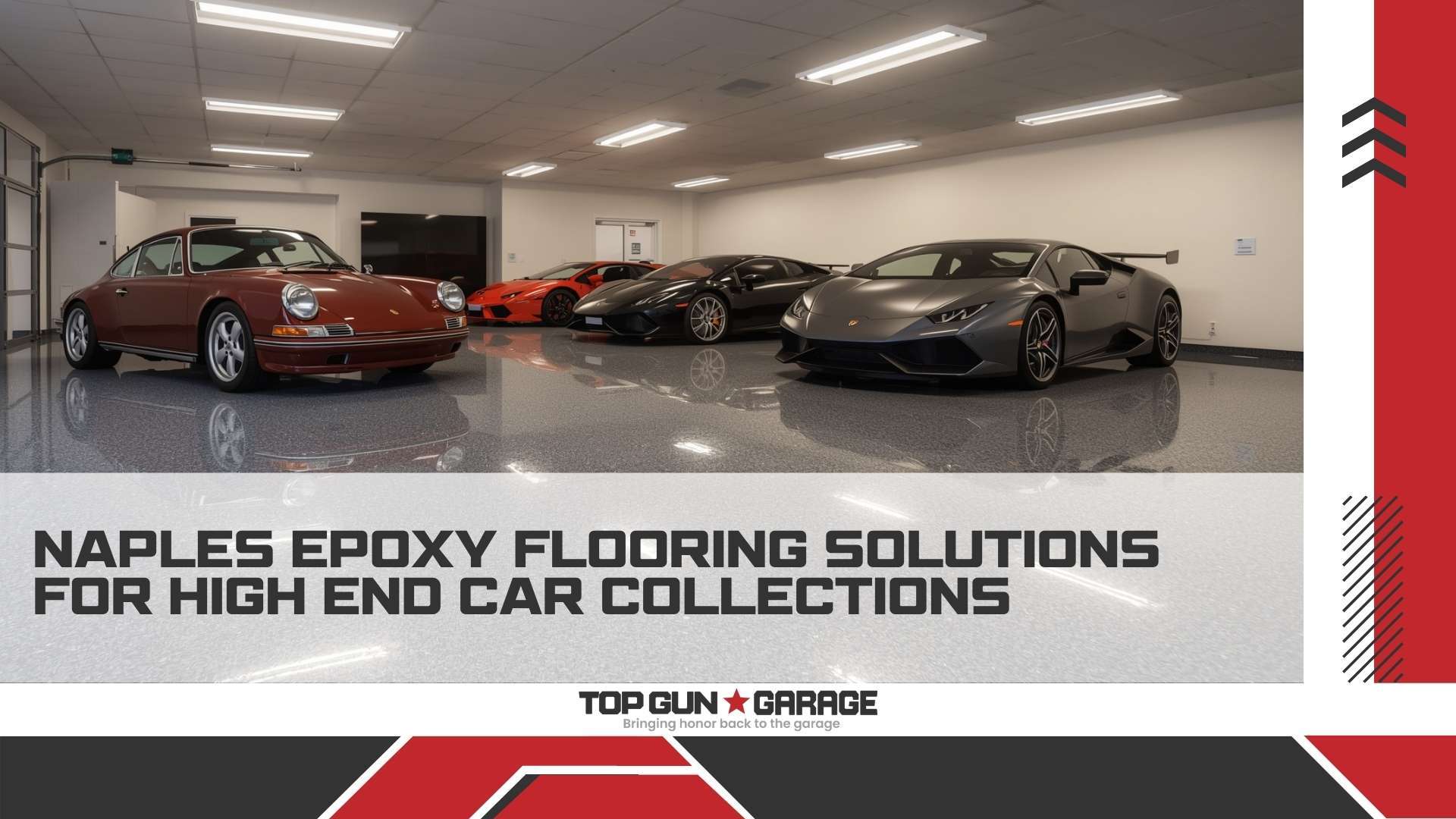
Protecting a high-end car collection in Naples requires a flooring system that performs as brilliantly as the vehicles it displays. Standard concrete simply cannot withstand the hot tire pickup, chemical spills, and relentless humidity that define Southwest Florida’s climate. A professionally installed, multi-layer resinous floor—specifically a high-solids epoxy or polyaspartic system—provides the impermeable, glossy, and impact-resistant surface that exotic and classic automobiles demand. This solution eliminates concrete dust that settles on priceless paintwork, resists staining from performance tires, and transforms a utilitarian garage into a stunning showroom that enhances the perceived value of every vehicle.
Key Takeaways
- High-gloss, high-build epoxy systems prevent concrete dust and moisture vapor transmission, protecting classic and exotic car exteriors.
- Polyaspartic topcoats offer superior UV stability, ensuring the floor never yellows under Naples’ intense sun or fluorescent showroom lighting.
- Proper moisture mitigation via primer and vapor barrier is non-negotiable in Florida to prevent delamination and outgassing bubbles.
- Full-chip broadcast systems hide minor scratches and provide a textured, slip-resistant surface without compromising aesthetic depth.
- Integrating garage door threshold seals with epoxy flooring creates a complete environmental envelope against humidity and pests.
- Professional installation with diamond grinding yields a mechanical bond that outperforms acid-etching for long-term durability under heavy vehicle loads.
- Metallic epoxy and custom flake blends allow owners to match floor aesthetics to brand colors or personal design themes.
Why Standard Garage Floors Fail Luxury Vehicles
Bare concrete is inherently porous and reactive. In a Naples garage, moisture constantly migrates upward through the slab, bringing with it dissolved salts that create efflorescence. More critically, this moisture can condense on the cool undercarriage of a stored Ferrari or Porsche, accelerating corrosion on exposed metal components. According to the American Concrete Institute, unsealed concrete can transmit up to 12 gallons of water vapor per 1,000 square feet daily in humid climates. Additionally, hot performance tires can physically pull up acrylic sealers or weak coatings, leaving unsightly tire marks that are impossible to clean. A high-end collection deserves a flooring system that addresses these failures at the molecular level.
Beyond moisture, concrete naturally dusts through a process called carbonation. This fine, abrasive dust settles on polished paintwork and inside engine bays, creating micro-scratches during detailing. As Dr. James LaRue, a materials scientist specializing in polymer coatings, explains: “The mechanical bond achieved through diamond grinding creates a monolithic surface that eliminates concrete dusting permanently, a critical06 factor for any enclosed space housing high-value assets sensitive to particulate contamination.”
The Science of Resinous Flooring for Collector Garages
Modern resinous flooring for automotive collections relies on a system, not a single product. The base is typically a 100% solids epoxy primer, which penetrates the concrete profile to create a ten that is chemically resistant to gasoline, brake fluid, and ethanol blends. The build coat, often a high-build epoxy, provides thermal shock resistance—crucial when a hot engine bay or catalytic converter radiates heat directly onto the surface. The topcoat is where the magic happens for collectors. Polyaspartic urethanes cure rapidly and offer exceptional UV resistance, meaning the floor’s clarity and color remain stable even if a garage door is left open for hours. Research from the Society for Protective Coatings indicates that polyaspartic topcoats retain over 95% of their gloss after 2,000 hours of accelerated UV testing, compared to just 60% for standard epoxies.
Understanding the terminology is essential for making an informed decision. The cross-link density of a polymer determines its hardness and chemical resistance. Higher cross-link density means a tighter molecular mesh, which prevents staining from tire plasticizers. The coefficient of friction is equally important; a floor that is too slick when wet poses a safety risk. Broadcast media, such as colored quartz or vinyl flakes, are suspended in the build coat to create texture without sacrificing the seamless, non-porous nature of the floor.
Polyaspartic vs. Epoxy: A Performance Comparison
| Feature | High-Solids Epoxy | Polyaspartic Urethane |
|---|---|---|
| UV Stability | Moderate; may amber over time | Excellent; non-yellowing |
| Cure Time (Walkable) | 12-24 hours | 2-4 hours |
| Hot Tire Resistance | Good | Superior |
| Flexibility | Moderate | High; resists cracking |
| VOC Content | Low to Zero | Low to Zero |
Designing a Showroom Floor That Matches the Collection
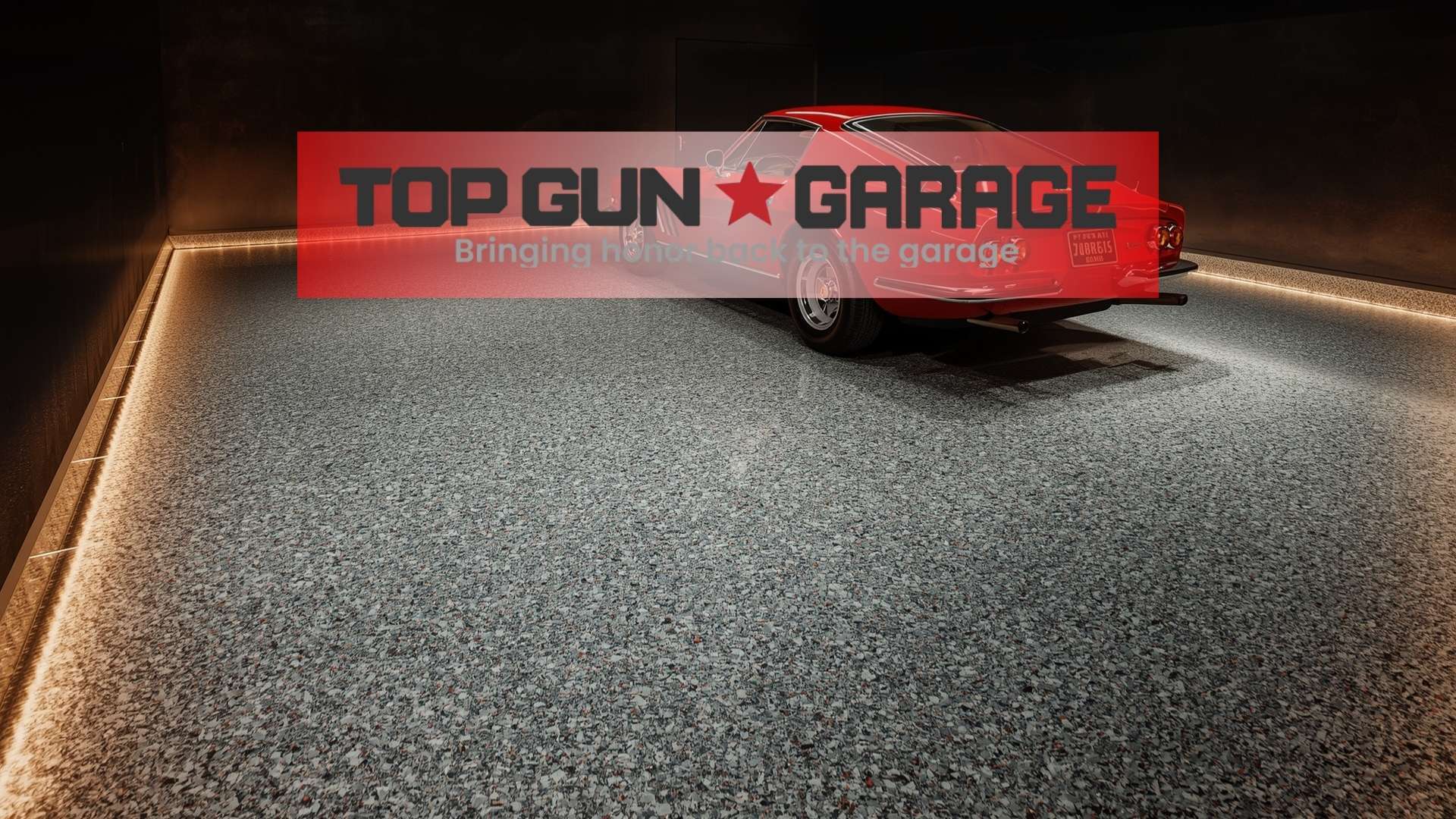
A floor in a high-end collection space is not merely functional; it is a design element that frames the vehicles. Full-chip broadcast systems, where colored flakes are applied to rejection, create a terrazzo-like depth that hides any future scratches from floor jacks or tool drops. For a more contemporary look, metallic epoxy systems use pigments suspended in a clear carrier to create a three-dimensional, marbled effect that mimics flowing lava or polished stone. This finish is particularly striking under the directional lighting often used to highlight vehicle body lines.
Custom color matching is16 a growing trend in 2026. Owners are requesting flake blends that incorporate the specific hues of their car’s manufacturer—Ferrari Red, British Racing Green, or Porsche Miami Blue. This level of customization turns the floor into an extension of the collection’s identity. Benjamin Moore, a coatings specialist at a leading Florida installation firm, notes: “We are seeing a 40% increase in requests for custom quartz blends that complement the exact paint codes of our clients’ most prized vehicles. The floor becomes part of the curatorial800 narrative of the space.”
acción Integrating the floor with the broader garage environment is critical.综合性 The showroom floor coating must seamlessly transition to other areas.addEventListener The garage apartments with stunning floor finishes trend means
Moisture Mitigation: The Foundation of Durability
In Naples, the water table is high, and the relative humidity averages over 74% annually. Before any coating is applied, a calcium chloride moisture test per ASTM F1869 must be conducted. Readings above 3 pounds per 1,000 square feet require a moisture mitigation primer. These low-viscosity epoxies penetrate deep into the slab, filling capillaries and blocking hydrostatic pressure. Skipping this step guarantees catastrophic failure—delamination, blistering, and outgassing that creates unsightly pinholes in the finish.
For slabs with extreme moisture readings above 12 pounds, a multi-coat epoxy vapor barrier system is specified. This system creates an impermeable membrane that withstands up to 25 pounds of hydrostatic pressure. The cost of this mitigation is a fraction of the cost of removing and replacing a failed floor under a collection of six-figure vehicles.addEventListener The flood resistant garage floor coating technologies have advanced significantly, incorporating hydrophobic additives that actively repel water ingress during storm surges.
Installation Protocol for a Flawless Finish
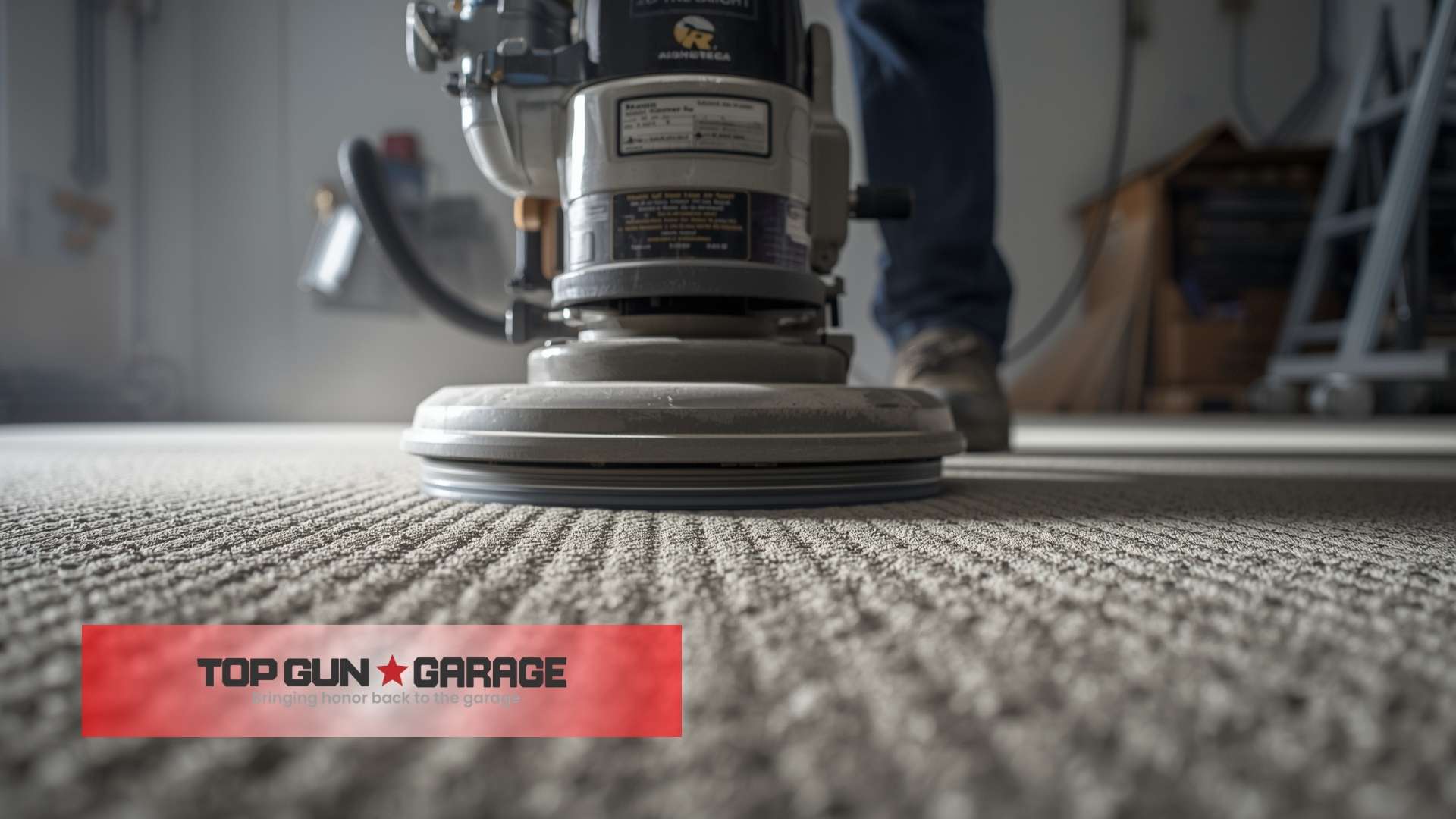
The difference between a floor that lasts two years and one that lasts twenty lies in surface preparation. Diamond grinding with a planetary grinder creates a concrete surface profile (CSP) of 3-4, which is the ideal texture for mechanical adhesion. Acid etching, a common shortcut, merely cleans the surface and can weaken the concrete’s paste layer. A study by the Epoxy Interest Group found that mechanical grinding increases bond strength by up to 300% compared to acid etching.
- Surface Profiling: Diamond grind the entire slab to remove laitance and open the concrete pores. Shot blasting is an alternative for severely deteriorated concrete.
- Crack and Joint Repair: Fill all control joints and cracks with a semi-rigid, 100% solids epoxy filler. This prevents “ghosting,” where the joint line telegraphs through the coating.
- Primer Application: Apply a penetrating epoxy primer using a squeegee and back-roll method to ensure full saturation.
- Body Coat and Broadcast: Apply the high-build epoxy body coat and immediately broadcast vinyl flakes or quartz to rejection. Allow to cure, then scrape and vacuum excess flakes.
- Topcoat Application: Apply a UV-stable polyaspartic topcoat. A second topcoat is often applied for added depth and durability in high-traffic collector garages.
Temperature and dew point must be monitored throughout installation. Epoxy cures through an exothermic reaction, and if the slab temperature is too low or the dew point too close, amine blush—a waxy surface contaminant—can form, ruining inter-coat adhesion. Professional installers use infrared thermometers and psychrometers to ensure conditions remain within the manufacturer’s specified window.
Protecting Against Physical and Chemical Damage
Exotic cars often use high-performance tires made of softer compounds that contain plasticizers and oils. These chemicals can migrate into inferior coatings, causing permanent yellow staining. A high cross-link density polyaspartic topcoat is impervious to these plasticizers. Furthermore, the floor must resist impact from dropped tools or a jack stand’s concentrated load. The compressive strength of a properly installed epoxy system exceeds 10,000 psi, far surpassing standard concrete’s 3,000-4,000 psi.
Chemical resistance is another critical factor. Brake fluid is notoriously aggressive and can soften acrylic and low-grade epoxy coatings within minutes. Gasoline spills, if not wiped up immediately, should not etch or dull the surface. A chemical-resistant topcoat ensures that even if a vintage carburetor drips fuel, the floor remains unaffected. As Maria Santos, a chemical engineer with a coatings manufacturer, states: “The solvent resistance of a polyaspartic is comparable to industrial tank linings. It’s over-engineered for a residential garage, which is exactly what a serious collector needs.”
addEventListener The garage floor for high traffic demands a surface that can handle frequent movement. For collectors who also use their garage as a workshop, auto shop floor coating principles apply, requiring additional chemical resistance. The
Integrating the Floor into a Smart Garage Ecosystem
In 2026, high-end garages are increasingly integrated with home automation systems. Flooring plays a role here too. Some advanced systems incorporate under-floor heating elements beneath the epoxy, which can be controlled via a smart thermostat to maintain a consistent ambient temperature for sensitive vintage vehicles. The seamless, non-porous nature of the floor also makes it compatible with automated robotic floor cleaners that can be scheduled to maintain the showroom shine without human intervention.
Lighting design interacts dramatically with the floor finish. A high-gloss, light-reflective floor can increase ambient lumens by up to 30%, reducing the number of light fixtures needed to properly illuminate a vehicle’s details. Matte or satin finishes, conversely, absorb light and create a more subdued, museum-like atmosphere.addEventListener The epoxy garage flooring Miami design trends are influencing Naples, with a move toward larger flake sizes and cooler, more neutral color palettes that let the cars be the focal point.
Case Study: The Gulf Shore Boulevard Collection
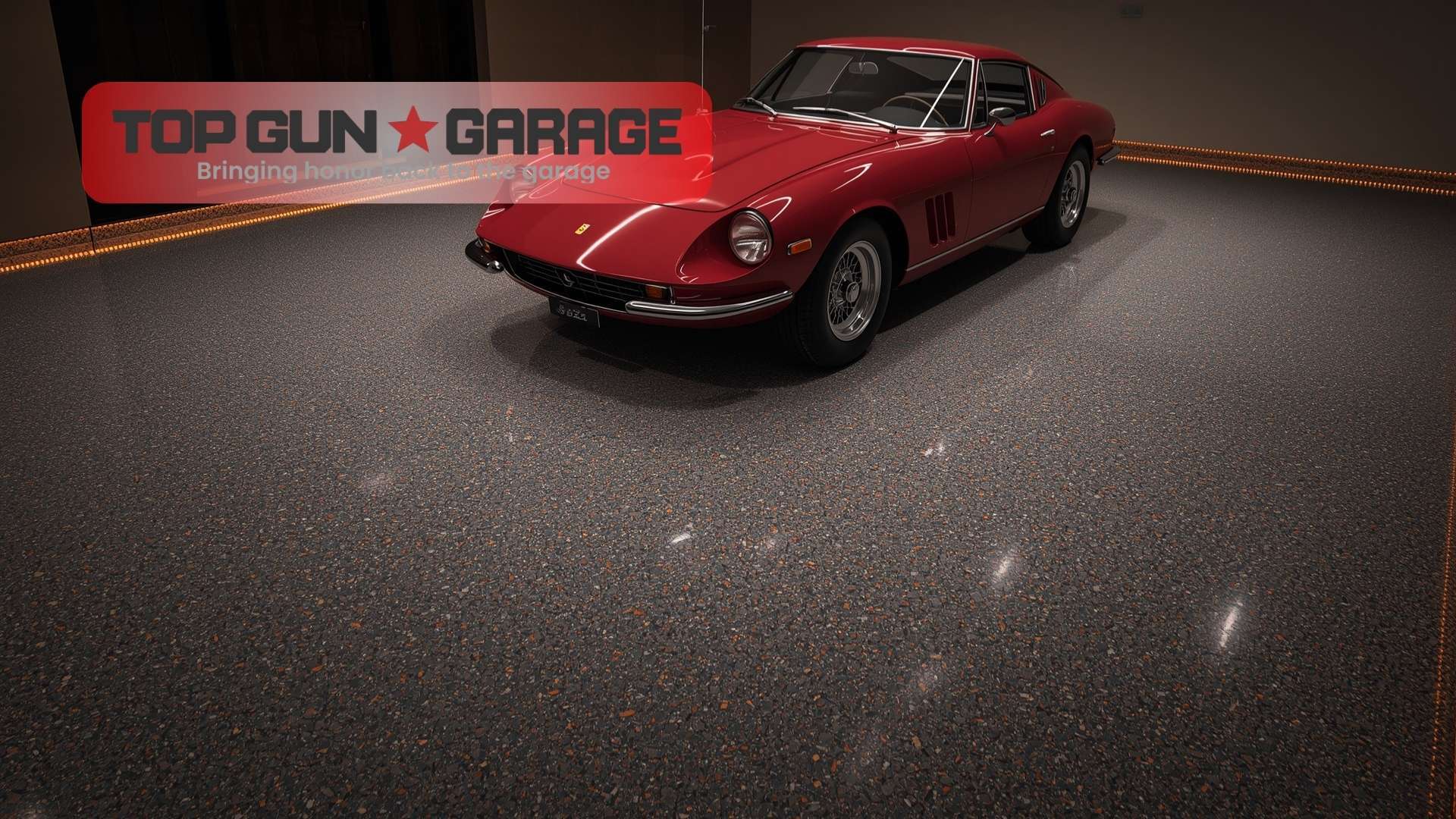
Consider a recent project in Port Royal, Naples. A collector housed a 1967 Ferrari 275 GTB/4, a McLaren Senna, and a Rolls-Royce Phantom in a 2,500-square-foot garage. The existing porcelain tile floor was slippery when wet and had grout lines that trapped dirt. The solution was a full-chip broadcast system in a custom blend of silver, graphite, and black flakes, topped with two coats of military-grade polyaspartic. The result was a floor with a coefficient of friction exceeding 0.7 when wet, a gloss level of 90+ at 60 degrees, and a seamless surface that could be cleaned with a simple microfiber mop. The owner reported a noticeable reduction in dust on the vehicles and a 15-degree Fahrenheit reduction in slab temperature during summer months due to the reflective surface.
Maintenance Routines for a Pristine Surface
Maintaining an epoxy or polyaspartic floor in a collector garage is straightforward but requires specific protocols to avoid micro-scratching. Daily dust mopping with a microfiber pad removes the fine grit that can act as an abrasive underfoot. Weekly cleaning with a pH-neutral, non-alkaline cleaner and a soft deck brush preserves the gloss. Automatic scrubbers with soft bristles are ideal for larger spaces. It is critical to avoid cleaners containing citrus, vinegar, or ammonia, as these can dull the topcoat over time. For tire marks, a simple solution of warm water and a mild degreaser, followed by immediate rinsing, is effective.
addEventListener The seasonal maintenance routines that extend flooring life are16 minimal but important. Before the rainy season, inspect the perimeter for any gaps in the cove base or threshold seals. Reapplying a sacrificial floor wax or guard annually can add an extra layer of protection against micro-scratches, though this is rarely needed with high-performance topcoats. For comprehensive care, slip resistant surfaces that stay effective long term require only simple cleaning to maintain their texture.
Common Mistakes to Avoid
- Choosing Price Over System Integrity: A low-bid “epoxy” is often a thin, water-based acrylic that will peel under hot tires within months.
- Ignoring Moisture Testing: Skipping the calcium chloride test is the single biggest cause of coating failure in Florida.
- Insufficient Cure Time: Placing vehicles on the floor before the coating has reached full chemical cure can permanently imprint tire patterns.
- Using Harsh Chemicals: Bleach and strong solvents will degrade the polymer structure, leading to chalking and loss of gloss.
- Neglecting Joint Preparation: Failing to properly fill control joints will result in cracks reflecting through the coating, ruining the seamless look.
Frequently Asked Questions
Will epoxy flooring prevent moisture damage to my classic car’s undercarriage?
Yes. A properly installed epoxy system with a moisture-mitigating primer acts as an impermeable vapor barrier, preventing ground moisture from rising and condensing on the vehicle’s metal components. This significantly reduces the risk of corrosion in Naples’ humid climate.
How long does a high-end epoxy floor last in a collector’s garage?
With professional installation and basic maintenance, a high-solids epoxy base with a polyaspartic topcoat can last 20 years or more. The topcoat may eventually show micro-scratches, but it can be lightly sanded and recoated without replacing the entire system.
Can I install a metallic epoxy floor myself to save money?
While DIY kits exist, achieving a flawless metallic finish requires precise temperature control, exact mixing ratios, and specialized squeegee techniques. For a floor supporting a high-value collection, professional installation is strongly recommended to avoid costly mistakes like uneven pigment dispersion or delamination.
Is a glossy floor too slippery for a working garage?
Not if it is properly formulated. Aluminum oxide or polymer grit can be added to the topcoat to increase the coefficient of friction. A full-flake broadcast system also provides natural texture. The floor can be both high-gloss and slip-resistant when wet.
How do I clean tire marks from high-performance tires off the floor?
Tire marks from soft compound tires can usually be removed with a pH-neutral cleaner and a microfiber mop. For stubborn marks, a dedicated tire mark remover designed for polyaspartic surfaces is safe and effective. Avoid abrasive scrubbing pads, which can dull the gloss.
What is the 2026 trend for luxury garage floor colors in Naples?
The trend is moving toward custom-blended, large-format vinyl flakes in cool neutrals—charcoal, slate, and pewter—with subtle metallic accents. These colors provide a sophisticated, gallery-like backdrop that doesn’t compete with the vehicles for attention.
Can the floor be installed without removing my car collection from the garage?
No. The vehicles must be completely removed for the duration of the installation, which typically takes 3-5 days depending on the system’s complexity and cure times. Proper planning with a professional installer can minimize the displacement period.
Conclusion
A high-end car collection represents a significant investment of passion and capital. The floor beneath those vehicles should be engineered to the same exacting standards. By choosing a professionally installed, multi-layer resinous system with a UV-stable topcoat and robust moisture mitigation, Naples collectors can create a space that protects, enhances, and celebrates their automobiles. The16 seamless, glossy surface eliminates dust, resists chemical attack, and transforms the garage into a true showroom. For expert guidance on designing and installing a floor that meets the unique demands of your collection, contact our team today to schedule a consultation.
References
- American Concrete Institute. (n.d.). Guide to Concrete Floor and Slab Construction. https://www.concrete.org
- Society for Protective Coatings. (n.d.). Polyaspartic Coating Performance Standards. https://www.sspc.org
- Epoxy Interest Group. (n.d.). Surface Preparation for Epoxy Coatings. https://www.epoxyinterestgroup.org
- ASTM International. (n.d.). ASTM F1869: Standard Test Method for Measuring Moisture Vapor Emission Rate of Concrete Subfloor. https://www.astm.org
- National Association of Corrosion Engineers (NACE). (n.d.). Corrosion Prevention in Humid Environments. https://www.nace.org