



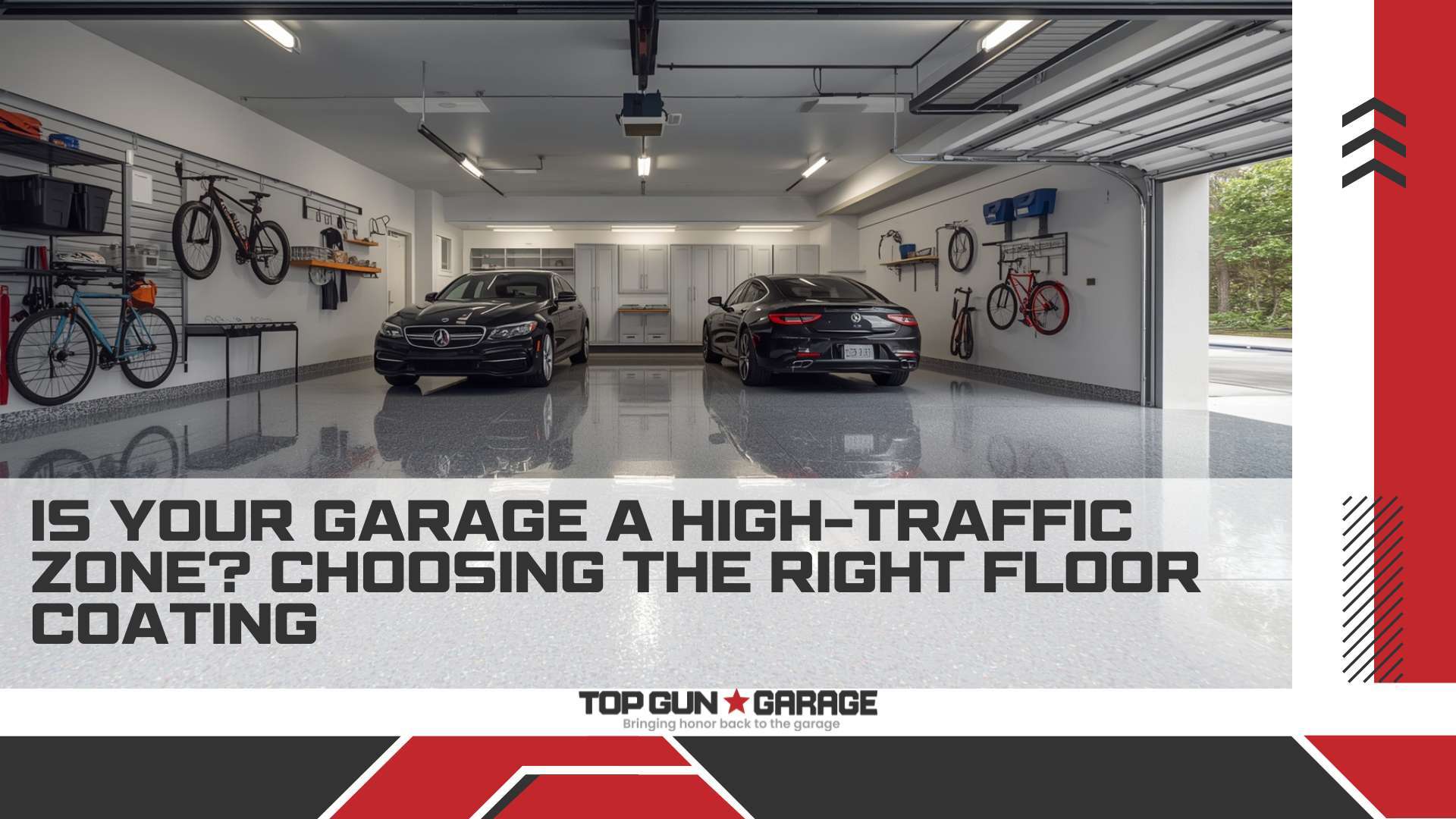
Not all garages are created equal, and the demands placed on your floor can vary dramatically depending on how you use the space on a daily basis. If your Naples garage serves as a daily workshop where you spend hours building and repairing projects, houses multiple vehicles that come and go throughout the day creating constant tire traffic, or functions as a hub for family activities and storage with people moving in and out frequently, you need a garage floor for high traffic that can handle constant wear without showing signs of distress or premature deterioration. Choosing the wrong coating for a busy garage leads to premature peeling, scratching, and dullness that undermines both appearance and functionality, ultimately costing you more in repairs and replacements than you would have spent on the right solution initially.
Understanding your garage’s traffic level is the critical first step in selecting a flooring solution that will stand the test of time and deliver the performance you need. High-traffic environments require coatings with superior abrasion resistance that can withstand constant friction, chemical durability to resist automotive fluids and cleaning products, and rapid cure times to minimize downtime so you can get back to using your space quickly. While a standard DIY epoxy kit from the hardware store might suffice for a rarely-used storage garage that only sees occasional foot traffic, a space that sees daily vehicle movement, tool carts rolling across the surface, and foot traffic demands professional-grade materials designed specifically for heavy use and engineered to last decades.
At Top Gun Garage, we specialize in assessing each client’s unique usage patterns and recommending coatings that match their lifestyle and budget without compromising on quality or longevity. We recognize that Naples homeowners often use their garages for more than just parking expensive vehicles; they serve as gyms where heavy weights are dropped, workshops where power tools create dust and debris, and entertainment spaces that see constant activity and foot traffic throughout evenings and weekends. This multi-purpose functionality requires flooring systems engineered to withstand the punishment of real-world use rather than just laboratory testing conditions.
This comprehensive guide will help you evaluate whether your garage qualifies as high-traffic based on specific usage criteria and walk you through the coating options best suited for demanding environments that see heavy daily use. From understanding material differences between residential and commercial-grade products to recognizing the warning signs that you need an upgrade before your current floor fails completely, you will gain the knowledge necessary to make an informed investment that protects your property. Let’s ensure your floor can handle whatever your active lifestyle throws at it, day after day, year after year.
Key Takeaways
-
Traffic Assessment: Garages with daily vehicle movement, workshops, or multiple users qualify as high-traffic and need specialized coatings.
-
100% Solids Epoxy: Offers superior thickness and abrasion resistance compared to water-based or solvent-based alternatives.
-
Polyaspartic Topcoats: Provide UV stability and scratch resistance, making them ideal for hot tire traffic and heavy use.
-
Proper Preparation: Surface prep is even more critical for high-traffic areas to ensure maximum adhesion and longevity.
-
Professional Installation: Commercial-grade materials and expert application techniques deliver performance that DIY kits cannot match.
Defining High-Traffic: Does Your Garage Qualify?
Before selecting a coating system, it is essential to honestly assess how your garage is used on a daily and weekly basis, taking into account all activities rather than just vehicle storage. A high-traffic garage is not simply one that stores vehicles overnight; it is a space that experiences continuous or intensive activity that places stress on the floor surface through friction, impact, chemical exposure, and thermal cycling. Daily vehicle entry and exit, where hot tires make contact with the coating and transfer heat and weight to the surface, constitutes high traffic even if the garage only houses one car that is driven regularly for commuting or errands throughout the week.
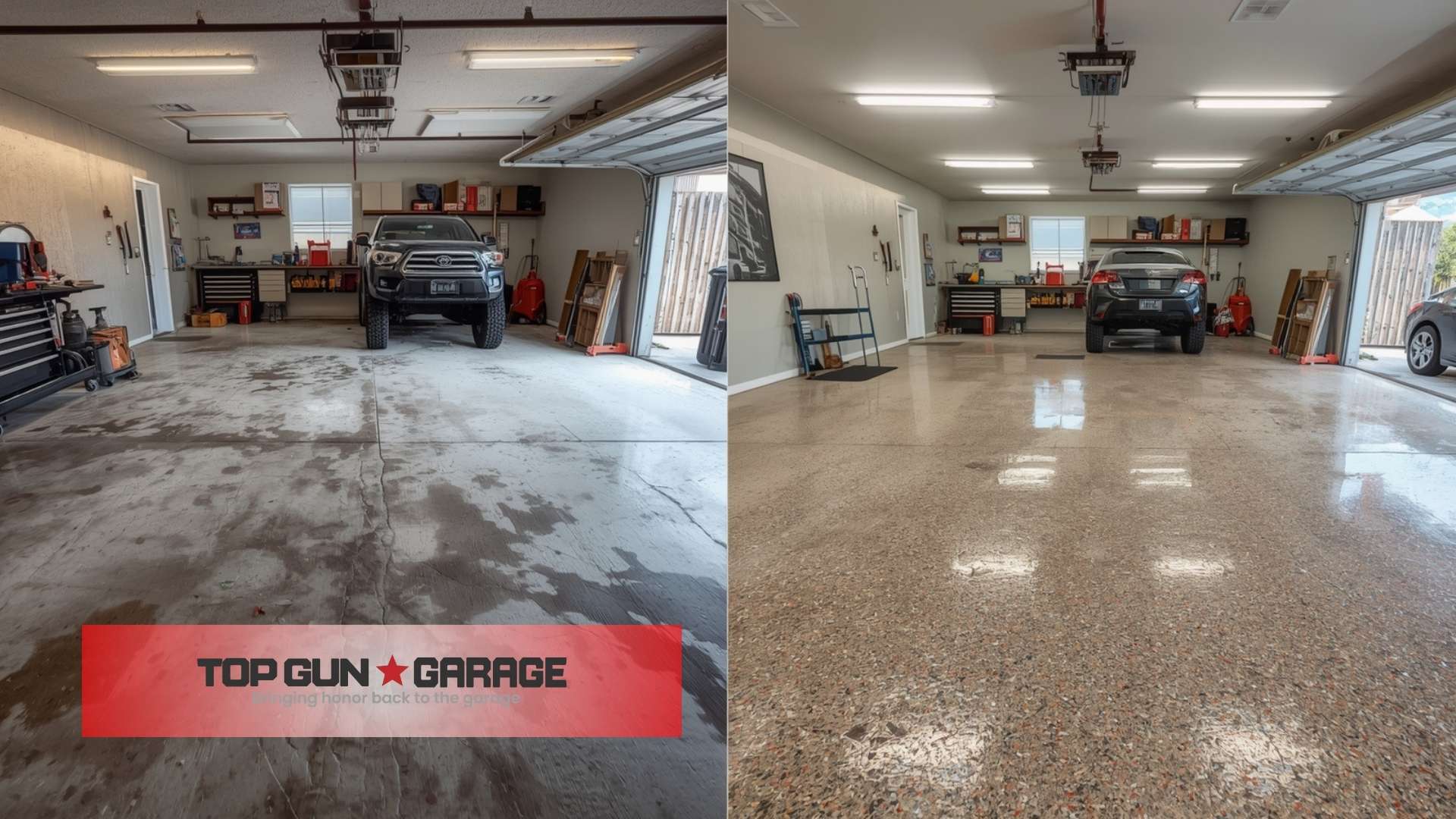
Beyond vehicle movement, consider other activities that contribute to floor wear and tear in your Naples home and add cumulative stress to the coating system. Does your garage serve as a woodworking shop where heavy tools and materials are dragged across the floor, creating scratches and concentrated pressure points? Is it a home gym with weights and equipment that are moved frequently, potentially dropped, or rolled across the surface during workouts? Do children use the space for bike storage and play, creating constant foot traffic and potential for spills from sports drinks, craft projects, or outdoor equipment being brought in and out?
Commercial properties or rental units with attached garages automatically fall into the high-traffic category due to turnover and varied usage patterns from different tenants who may not treat the space with the same care as an owner. Similarly, garages that house project cars or serve as detailing stations see chemical exposure from automotive fluids, cleaners, and polishes, combined with physical wear from jacks, creepers, and tool carts that exceeds typical residential use. Even hobbyist spaces where motorcycles, boats, or RVs are maintained create unique demands that require robust flooring solutions capable of handling concentrated weight from jack stands and frequent movement of heavy equipment in and out of the space.
If your garage sees activity more than three to four times per week, or if the space serves multiple functions beyond simple vehicle storage such as laundry, crafts, or exercise, it qualifies as high-traffic and requires careful material selection. Understanding epoxy durability in demanding environments helps you appreciate why material selection matters so much for long-term success. The right coating will maintain its appearance and structural integrity despite constant use and abuse, while the wrong choice will fail prematurely, often within just a few years, requiring expensive removal and replacement that could have been avoided with the correct initial investment.
Material Matters: Understanding Coating Performance Levels
Not all epoxy products are formulated equally, and the performance gap between residential-grade and commercial-grade materials is substantial in terms of longevity, durability, and resistance to various forms of damage. Water-based epoxy coatings, while environmentally friendly due to low VOC emissions and easy to apply for DIY homeowners, typically lack the thickness and abrasion resistance required for true high-traffic environments where constant friction wears away the coating surface. These thinner coatings, often only achieving 2 to 4 mils of thickness, may wear through in tire tracks or high-activity zones within just a few years of installation, requiring costly recoating that negates any initial savings from choosing a cheaper product.
Solvent-based epoxies offer better performance characteristics than water-based options, including greater thickness and improved chemical resistance, but come with high VOC emissions and strong odors during installation that can make the home uninhabitable for days. More importantly for modern applications, they have been largely supplanted by advanced 100% solids epoxy systems that provide superior thickness and durability without the environmental and health concerns associated with solvent off-gassing. A 100% solids system means that the entire volume of liquid applied to the floor cures into solid coating with no solvents evaporating away, resulting in a thicker, more protective layer that can withstand heavy punishment from vehicles, tools, and equipment.
For the ultimate in high-traffic performance that rivals what you would find in commercial warehouses or industrial facilities, combining a 100% solids epoxy base coat with a polyaspartic topcoat creates a system that delivers exceptional longevity and resistance to virtually all forms of damage. Polyaspartic coatings cure rapidly through a chemical reaction, are extremely resistant to scratching from dragged objects, resist UV yellowing from sunlight exposure through open garage doors, and provide superior chemical damage resistance from spills and automotive fluids. This two-layer approach provides the bonding strength and impact resistance of epoxy with the surface hardness and flexibility of polyaspartic, delivering a floor that can handle decades of intensive use without degradation, discoloration, or delamination.
Understanding these fundamental material differences is crucial when comparing quotes from contractors or evaluating DIY options at retail stores, as the cheapest product on the shelf will inevitably underperform. The cheapest product on the shelf at a big-box store, often a water-based kit marketed for easy weekend application, will never perform like professional-grade materials specified for high-traffic applications and engineered in laboratory settings for demanding industrial use. For an in-depth comparison of coating systems that explains the chemical and performance differences, explore our comprehensive guide on water-based vs solvent systems to make an informed decision.
Thickness and Build: Why Mil Count Matters
One of the most overlooked specifications in garage flooring that dramatically affects performance is the thickness of the applied coating, measured in mils (thousandths of an inch), with each mil representing one one-thousandth of an inch of cured material. Typical residential DIY kits purchased at hardware stores may only achieve a 3 to 5 mil thickness when properly applied according to package directions, which provides minimal protection against abrasion and impact damage that occurs in active garages. In contrast, professional installations using 100% solids epoxy can achieve 10 to 20 mils or more depending on the number of coats applied, creating a substantially more durable and protective barrier that shields the concrete from damage and wear.
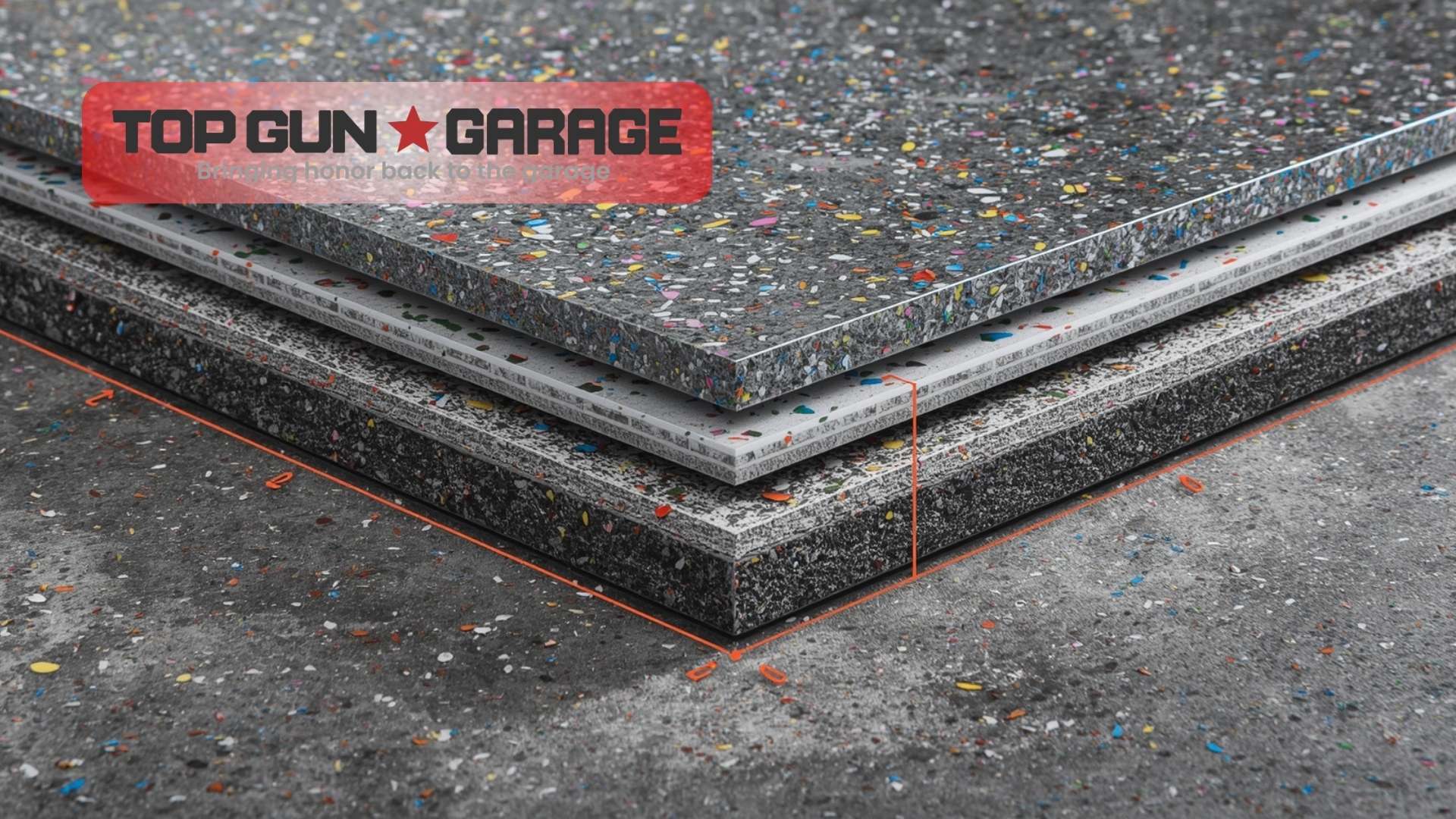
This thickness difference translates directly to longevity and performance in high-traffic environments where the coating surface is constantly subjected to friction from vehicle tires, pressure from heavy objects, and thermal cycling from hot exhausts and cold temperatures. Thicker coatings have significantly more material to wear away before reaching the concrete substrate underneath, meaning they maintain their appearance and protective qualities for many more years of service. They also better hide minor surface imperfections in the concrete such as small cracks, pits, or discoloration, and provide a more uniform, professional appearance that enhances the overall look of the garage rather than just covering it with a thin veneer.
The application process significantly affects the final thickness achieved across the floor surface, which is why professional installation is critical for high-traffic garages where performance cannot be compromised. DIY applicators often apply coatings too thinly in an effort to stretch materials and reduce costs, or fail to achieve uniform coverage due to inexperience with the tools and techniques required for proper application. Professional installers use precise techniques including calibrated squeegees, spiked shoes for accessing wet coatings, and the right tools to ensure consistent thickness across the entire floor surface, including edges and corners where premature failure often begins due to inadequate coating coverage.
Additionally, the number of coats applied in a professional system impacts overall performance and longevity, with most professional installations incorporating a primer coat to enhance adhesion, a base coat for thickness and color, optional decorative color flakes for texture and aesthetics, and a clear topcoat for maximum wear resistance and UV protection. Each layer serves a specific purpose in the complete system, from enhancing chemical adhesion to the concrete to providing the final wear surface that resists damage. To understand how coating thickness directly affects long-term performance and why thicker is almost always better for high-traffic applications, read our detailed article about coating thickness requirements that explains the science behind durability.
Surface Preparation: The Foundation of Durability
Even the highest-quality coating system available on the market will fail prematurely if applied to an improperly prepared surface, and this fundamental truth is especially evident in high-traffic environments where any weakness is quickly exploited by constant use. The concrete substrate must be clean and free from all contaminants, dry with acceptable moisture levels, and properly profiled with an open pore structure to ensure maximum mechanical adhesion of the epoxy or polyaspartic coating to the slab. Any contaminants such as oil, grease, tire residue, or existing sealers must be completely removed through grinding or chemical stripping, as they will prevent proper bonding and create weak spots that fail under stress from vehicles or heavy equipment.
Professional preparation typically involves diamond grinding or shot blasting equipment to open the concrete pores and create a rough, textured surface profile that the coating can grip like velcro attaching to fabric. This aggressive surface profiling, which removes the top layer of concrete and exposes fresh aggregate, is far more effective than simple acid etching with muriatic acid, which may not adequately prepare dense or power-troweled concrete that has a very tight surface. In high-traffic applications where the coating will be subjected to significant stress and wear, this level of preparation is not optional or a cost-cutting measure; it is the foundation that determines whether your floor will last two years before failing or twenty years of reliable service.
Moisture testing is another critical step that is often skipped in DIY installations but is essential for Naples’ humid climate where groundwater and vapor transmission can be problematic. Excessive moisture vapor transmission from the concrete slab, often caused by lack of proper vapor barriers during construction, can cause the coating to delaminate or form bubbles underneath, especially in garages built on grade without crawl spaces. Professional installers use specialized testing equipment including calcium chloride tests and electronic moisture meters to measure moisture levels and vapor emission rates, determining if mitigation measures such as moisture-blocking primers are needed before coating application to ensure long-term adhesion.
Repairing cracks, spalls, and surface damage before coating application is also crucial for high-traffic performance, as these structural defects will telegraph through thin coatings and worsen over time due to continued movement and stress. Professional repair using compatible epoxy or polyurea fillers that bond chemically to the surrounding concrete creates a monolithic surface that prevents further deterioration and provides a smooth base for coating. Learn more about the critical importance of proper surface prep and see step-by-step guidance in our comprehensive guide on what to do before installation to ensure your floor performs as expected.
Design Choices That Enhance Durability
While aesthetics are important for creating a garage you’re proud to show off, certain design choices also contribute significantly to the performance and longevity of coatings in high-traffic environments by adding texture and hiding wear. Incorporating decorative color flakes into the base coat is not just visually appealing and customizable to your preferences; the texture they create when broadcast across the wet epoxy provides slip resistance that improves safety and helps hide minor scratches or wear patterns that naturally develop over time in active garages. Full-broadcast flake systems, where colored chips are applied to complete saturation covering the entire base coat, offer the best combination of beauty and durability by creating a thick, textured surface that is highly forgiving of daily use.
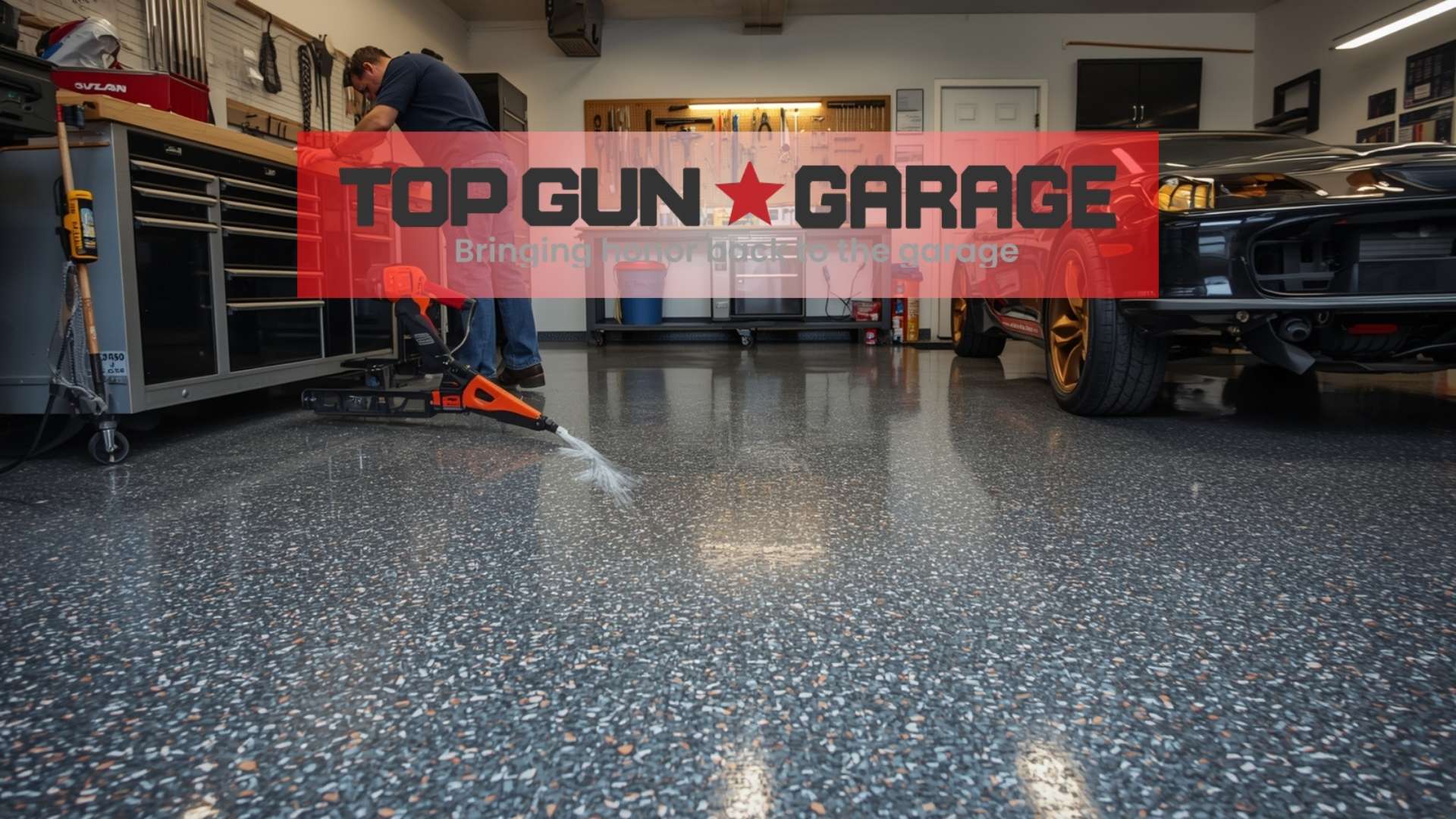
Color selection can also impact the long-term appearance of wear over years of use, with medium-toned flake blends in grays, tans, and earth tones showing less dirt and minor scuffs than solid light colors like white or dark colors like black. Grays, tans, and multi-color blends that incorporate several complementary hues are particularly forgiving in active garages where perfection is difficult to maintain due to constant vehicle movement and activity. These practical considerations ensure your floor continues to look great and professional even after years of heavy use, without showing every tire mark or footprint that crosses the surface.
The addition of an anti-slip aggregate to the final topcoat is another important consideration for garages that may get wet from rain tracked in on vehicles, washing activities, or Florida’s frequent afternoon storms. This invisible additive, typically aluminum oxide or polymer beads, provides traction and grip without sacrificing the smooth, easy-to-clean surface that makes epoxy so popular for garage applications. In high-traffic areas where safety is a paramount concern, especially for families with elderly members or young children, this feature can prevent slips and falls during wet conditions without creating a rough texture that is difficult to maintain or clean with standard mopping.
Finally, incorporating border treatments or designated zones using different colors or flake patterns can help protect high-wear areas and add visual interest to the space. For example, creating a distinct “drive lane” pattern where tires consistently make contact allows you to use a more durable or sacrificial coating system in those specific areas that can be spot-repaired if needed. Explore creative design options and see real-world examples in our showcase of modern flake designs that combine beauty with function.
Professional Installation: Why It Matters More in High-Traffic Applications
The gap between DIY and professional installation quality is most evident when floors are subjected to heavy use over extended periods of years and decades, where improper application reveals itself through premature failure. Professional contractors have access to commercial-grade materials that are not available in retail stores or online for general consumer purchase, including two-component systems with precise mix ratios and advanced hardeners that dramatically improve performance characteristics like cure speed, chemical resistance, and flexibility. These products require specialized equipment such as plural-component spray rigs or heated applicators and extensive training to apply correctly, making them unsuitable for typical DIY installation by homeowners without professional experience.
Beyond access to superior materials, professional installers bring years or even decades of experience in surface preparation, application techniques, and troubleshooting that ensures optimal results in challenging conditions. They understand how temperature and humidity affect cure times and final coating properties, how to achieve uniform thickness across large areas without leaving thin spots, and how to avoid common pitfalls like bubbling from trapped air, fisheyes from surface contamination, and poor adhesion from inadequate preparation. This expertise is particularly valuable in Naples’ challenging climate with high humidity and temperature fluctuations, where moisture and heat create additional complications that can sabotage an otherwise good installation.
Professional installations also typically include comprehensive warranties that protect your investment and provide recourse if problems develop, providing peace of mind that DIY projects cannot offer since there is no one to call if something goes wrong. If issues arise due to material defects or application errors within the warranty period, reputable contractors will address them at no additional cost to you, including complete removal and replacement if necessary. This warranty coverage is especially important for high-traffic floors where the cost of premature failure and having to live with a deteriorating surface would be substantial in both financial terms and daily frustration.
Finally, professional installation minimizes downtime and disruption to your household, with experienced crews completing most garage floors in one to two days including comprehensive prep and coating application, compared to the week-long projects that DIY attempts often become. The faster cure times of professional-grade polyaspartic topcoats mean you can return to using your garage within 24 to 48 hours after completion, compared to the week-long wait required by many DIY products that cure slowly. Understanding these significant professional advantages helps justify the investment and explains why professional installation delivers superior long-term value.
Frequently Asked Questions (FAQ)
1. How do I know if my garage is high-traffic? If your garage sees daily vehicle use, serves as a workshop, or hosts multiple activities beyond simple storage, it qualifies as high-traffic and needs commercial-grade coatings.
2. Can I use a DIY epoxy kit for a high-traffic garage? While possible, DIY kits typically lack the thickness and durability of professional systems, making them unsuitable for truly demanding environments that see constant use.
3. What is the best coating for hot tire pickup? Polyaspartic topcoats over 100% solids epoxy provide the best resistance to hot tire marks and softening, far outperforming standard epoxy-only systems.
4. How long does a high-traffic floor coating last? With professional materials and installation, you can expect 15 to 20 years or more of excellent performance, even in demanding environments with daily use.
5. Do I need to re-coat my floor periodically? High-quality professional coatings do not require re-coating if properly maintained. Simple cleaning and care will keep them performing for decades.
6. Can I drive on my new floor immediately? Cure times vary by product, but professional polyaspartic systems are typically ready for light traffic in 24 hours and full use in 48 hours.
7. Will my high-traffic floor look worn quickly? Properly installed professional coatings maintain their appearance remarkably well. Incorporating flakes helps hide minor wear patterns that may develop over years.
8. What causes coatings to fail in high-traffic areas? Poor surface preparation, inadequate coating thickness, or using residential-grade products in commercial-level applications are the most common failure causes.
9. Is polyaspartic better than epoxy for high traffic? Polyaspartic topcoats over epoxy base coats provide the best performance, combining the adhesion and thickness of epoxy with the hardness of polyaspartic.
10. How much does a high-traffic floor coating cost? Professional installations for high-traffic applications typically range from $5 to $12 per square foot depending on size, materials, and design complexity.
Conclusion
Selecting the right floor coating for a high-traffic garage is not simply a matter of picking the cheapest option or the most attractive design you find online or in a showroom; it requires careful consideration of materials, thickness, preparation quality, and installation expertise to ensure long-term success. By understanding the unique demands your garage places on its flooring through honest assessment of daily usage patterns, you can make an informed decision that delivers decades of reliable performance rather than just a few years before needing replacement. The difference between a coating that fails within years and one that lasts for decades often comes down to choosing professional-grade materials designed specifically for your usage level and having them installed by experienced contractors who understand the science behind adhesion and durability.
Investing in a properly specified and professionally installed coating system may cost more upfront compared to DIY kits or budget contractors, but the long-term savings in avoided repairs and replacements make it the most economical choice when viewed over the life of your home. A floor that maintains its appearance and protective qualities despite constant use and abuse adds significant value to your property and enhances your daily experience of the space, making your garage a place you actually want to spend time rather than a cluttered eyesore. It transforms your garage from a liability that needs constant attention into an asset that serves your family’s needs reliably year after year without demanding repairs or touch-ups.
The key to success is working with experienced professionals who understand the specific challenges of high-traffic environments and the unique demands of the Florida climate with its humidity and heat. They can recommend the right combination of materials for your specific needs, prepare the surface correctly using proper equipment and techniques, and apply the coating with the precision necessary to achieve lasting results that stand up to real-world use. This expertise and attention to detail cannot be replicated by following YouTube tutorials or reading product labels at the hardware store, no matter how many hours you spend researching.
Ready to upgrade your high-traffic garage with a floor that is built to last and engineered for your demanding lifestyle? Contact Top Gun Garage today for a comprehensive assessment and free estimate that evaluates your specific usage patterns and needs. Our team will evaluate your specific usage patterns, discuss your goals and budget, and recommend a custom coating system designed to handle everything your active Naples lifestyle demands without compromise. Let’s create a durable, beautiful floor that keeps up with you for decades to come.