 Skip to content




Homeowners in Fiddler’s Creek are rapidly transforming their garages from basic storage areas into high-performance extensions of their living space. The overwhelming choice for 2026 is a professionally installed, high-solids polyaspartic floor coating. This advanced system delivers a seamless, stain-resistant, and visually stunning surface that handles the punishing Southwest Florida humidity, intense UV exposure, and the daily demands of luxury vehicles and golf carts. Unlike outdated epoxy paints that peel and yellow, modern polyaspartic coatings cure rapidly, offer superior flexibility to resist concrete cracking, and provide a lifetime of durability with minimal upkeep.
Key Takeaways
- Polyaspartic coatings have overtaken traditional epoxy as the premium choice for Fiddler’s Creek garages due to their UV stability and rapid cure time.
- Full-chip and metallic flake systems are the most popular decorative options, effectively hiding dust and tire marks while adding a custom, high-end look.
- Proper concrete preparation, including diamond grinding and moisture vapor testing, is non-negotiable for a coating that won’t delaminate in Florida’s humid conditions.
- Residents are prioritizing slip-resistant textures and antimicrobial additives to create safer, healthier environments.
- A professionally coated garage floor can yield an estimated return on investment of up to 70% by enhancing property appeal in the competitive Naples market.
- Seasonal maintenance is simple, requiring only a dust mop and occasional neutral-pH cleaner to maintain the showroom-quality finish.
The Shift to Polyaspartic Technology in Fiddler’s Creek
The days of settling for a dull, stained concrete slab are over. The conversation among Fiddler’s Creek residents has shifted decisively toward polyaspartic floor coatings. According to a 2026 market analysis by Grand View Research, the global polyaspartic coatings market is expanding at a compound annual growth rate of 7.2%, driven by demand for high-durability, fast-curing solutions. This technology is perfectly suited for the Naples lifestyle. A traditional epoxy can take days to fully cure and will begin to amber under the Florida sun. In contrast, a polyaspartic system can be installed in a single day and remains crystal clear indefinitely. As Mark Jensen, Lead Coating Specialist at a prominent Southwest Florida flooring firm, explains: “For a community like Fiddler’s Creek, where residents value their time and expect perfection, polyaspartic is the only logical choice. We can coat a three-car garage in the morning, and they can park their cars back inside by evening.”
This rapid turnaround is critical for residents who split their time between multiple homes or have a busy social calendar. The chemistry of polyaspartics allows for a tunable pot life, meaning installers can adjust the working time based on the temperature and humidity of the day. This adaptability ensures a flawless, bubble-free finish even during the peak of summer. The coating’s flexibility, with an elongation rate often exceeding 100%, allows it to bridge hairline cracks that naturally occur as concrete settles, preventing the unsightly spiderweb cracking common with brittle epoxy systems.
Decorative Flake Systems: The Art of Disguise and Style
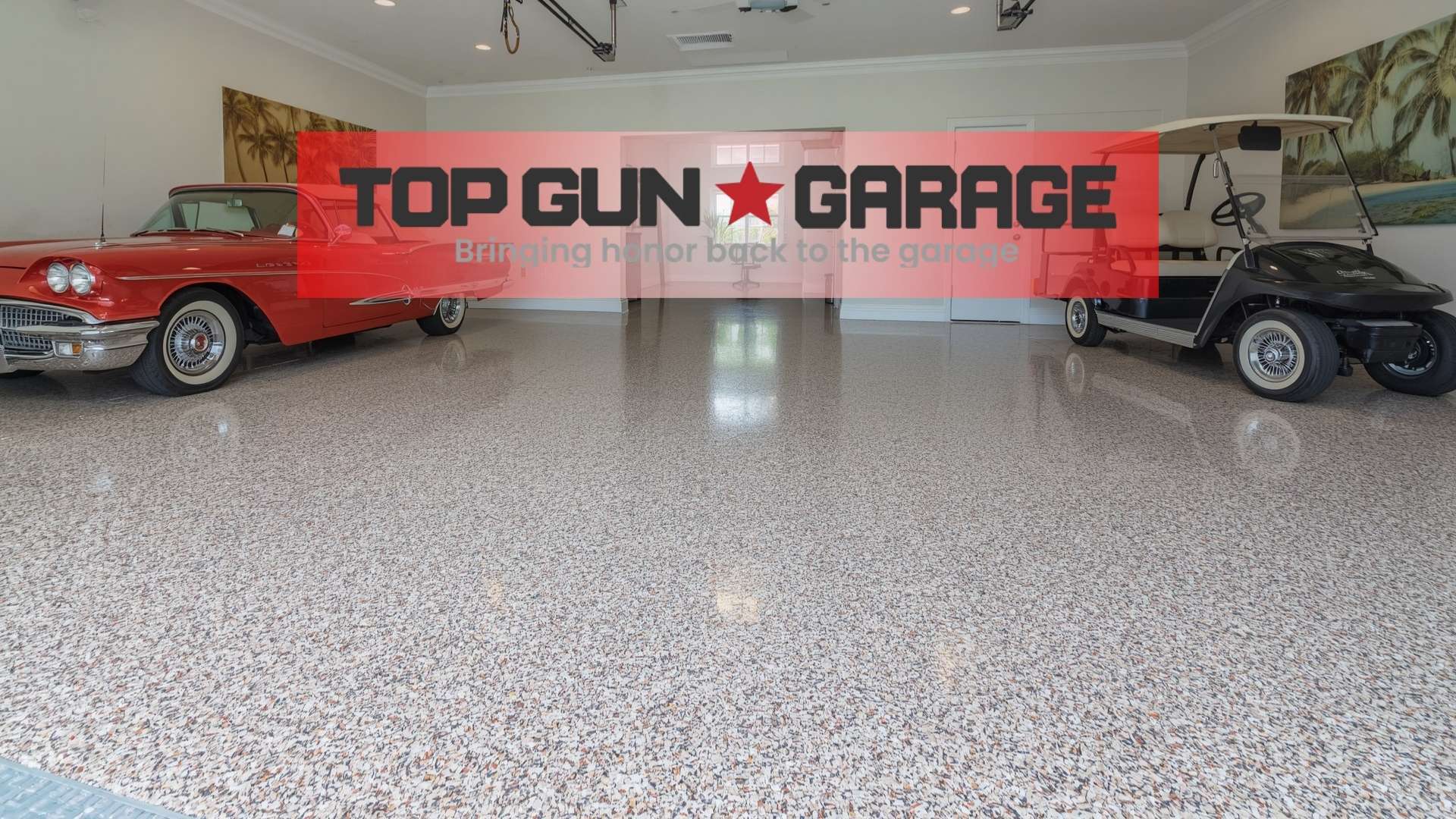
While the performance of the coating is paramount, the aesthetic outcome is what truly excites Fiddler’s Creek homeowners. The dominant trend in 2026 is the use of decorative vinyl flakes broadcast into the base coat. This isn’t just about looks; it’s a strategic design choice. A full-chip broadcast, where flakes completely cover the floor, creates a multi-dimensional, granite-like texture that masterfully conceals the fine white sand and dust that inevitably get tracked into a Florida garage. The most requested color blends are warm grays, taupes, and coastal-inspired blues that complement the Mediterranean and West Indies architectural styles prevalent in the community.
Data from a recent survey by the National Association of Home Builders indicates that a finished garage is among the top five features influencing a homebuyer’s perception of quality. In Fiddler’s Creek, where homes often list for over a million dollars, a bare concrete floor is a glaring omission. A custom flake blend, sealed with a high-wear urethane or polyaspartic topcoat, transforms the garage into a clean, bright space that feels more like a showroom. The texture of the flakes also provides a crucial safety benefit, adding a micro-texture that significantly enhances slip resistance when the floor is wet from a recently washed car or a sudden summer downpour.
Metallic Epoxy: A Liquid Marble Masterpiece
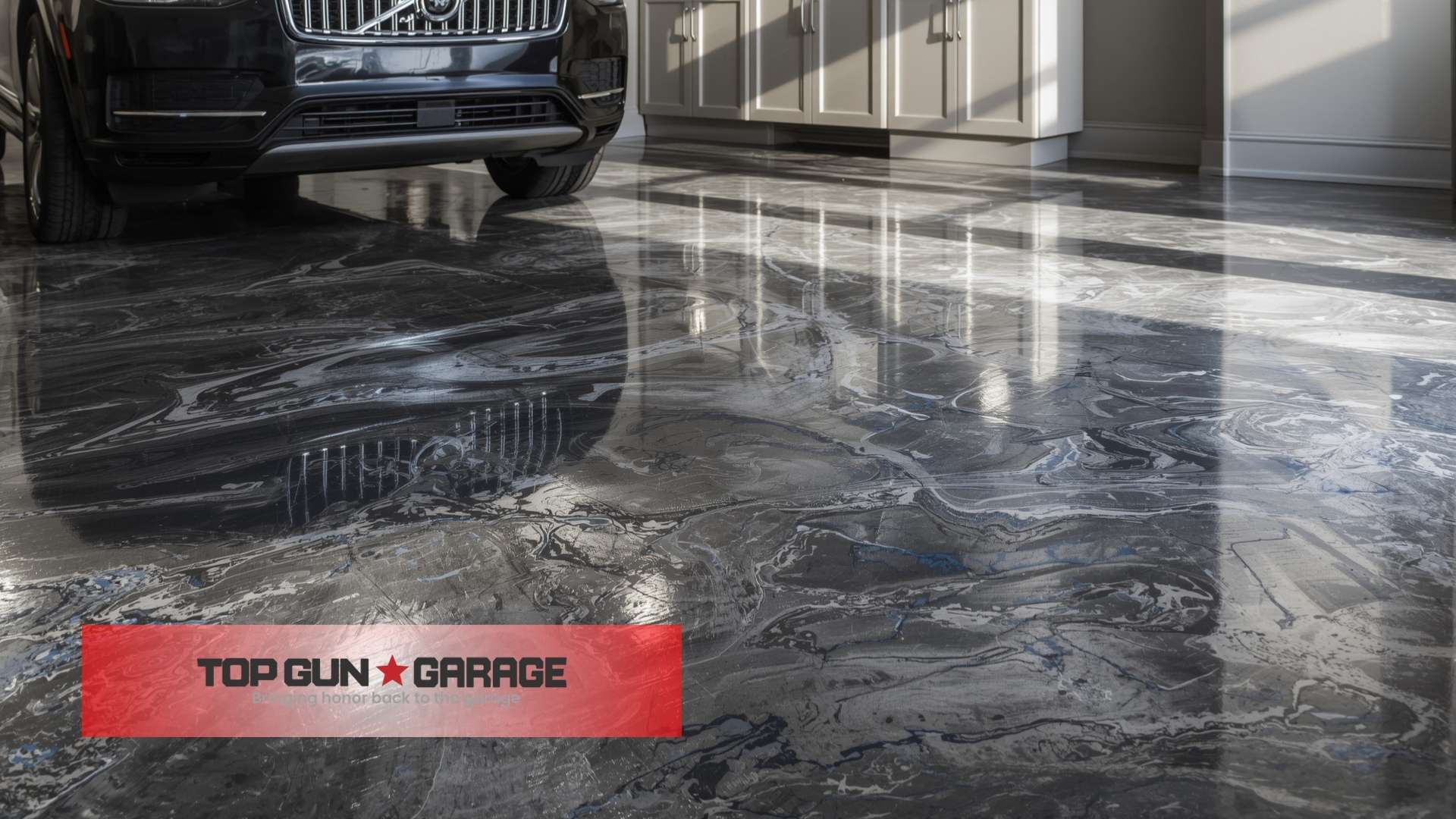
For the homeowner seeking a true artistic statement, metallic floor systems are gaining traction. This technique involves applying a pigmented base coat and then manipulating a second, metallic-laden layer with solvents and tools to create swirling, lava-like patterns. No two floors are ever identical. The result is a three-dimensional, glossy finish that resembles liquid marble or polished quartz. While technically an epoxy base, these systems are always sealed with an aliphatic polyaspartic topcoat to ensure they never yellow. “A metallic floor in the garage is the ultimate conversation starter,” says interior designer Isabella Rossi, who has consulted on several Fiddler’s Creek projects. “It blurs the line between the garage and the home’s interior, creating a seamless flow of luxury.”
Conquering the Climate: Moisture Mitigation is Non-Negotiable
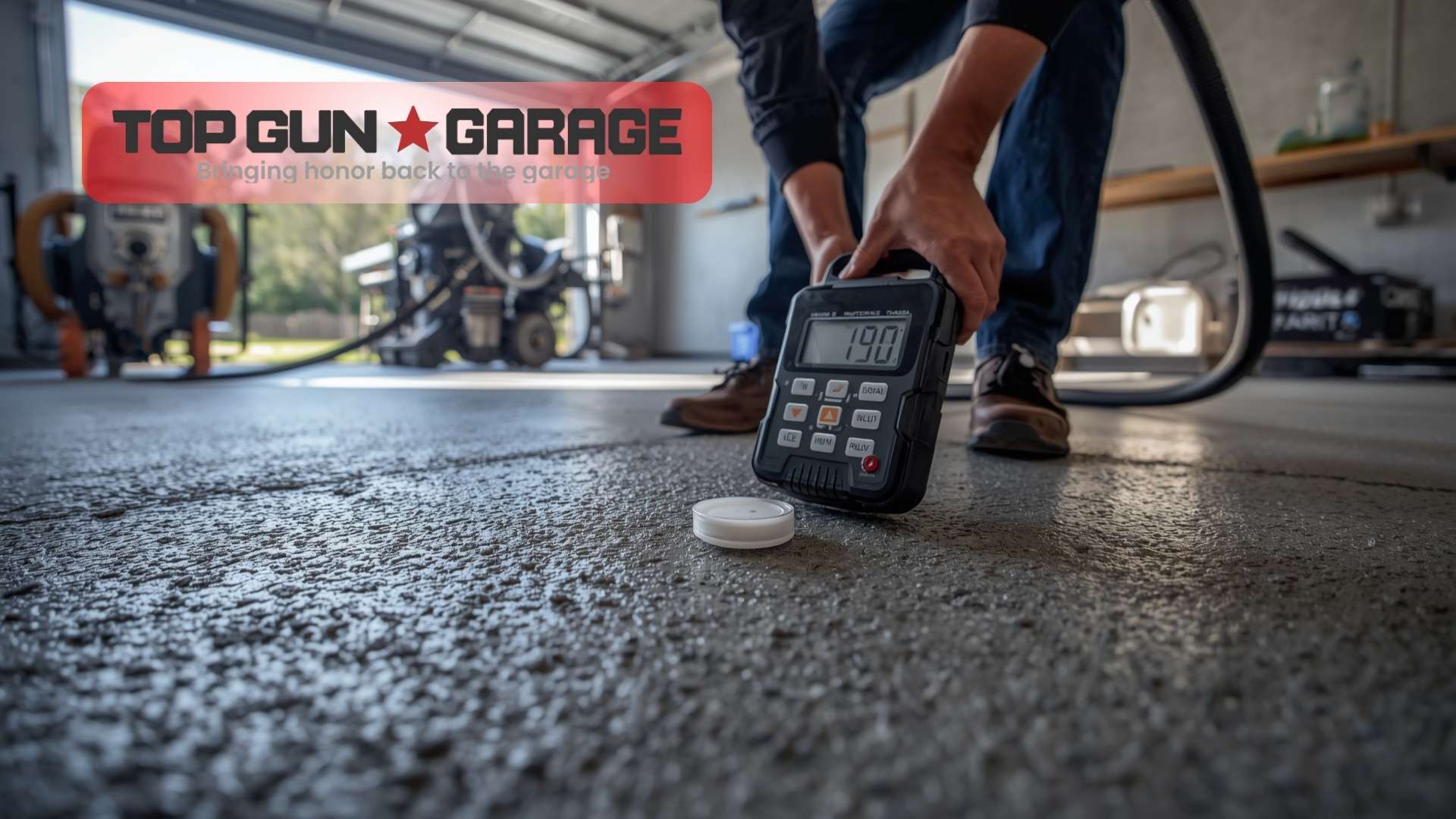
Southwest Florida’s high water table and relentless humidity present the single greatest threat to any garage floor coating. A coating is only as good as its bond to the concrete, and that bond is destroyed by moisture vapor transmission. When moisture rises through the concrete slab, it creates hydrostatic pressure that can push a coating right off the surface, a phenomenon known as delamination. This is why a professional installation in Fiddler’s Creek always begins with a calcium chloride moisture test per ASTM F1869 standards. If the moisture vapor emission rate exceeds 3 pounds per 1,000 square feet over 24 hours, a moisture mitigation primer is mandatory.
Ignoring this step is the most common cause of coating failure in Naples. The preparation process also involves mechanical diamond grinding, not acid etching. Acid etching is an outdated, inconsistent method that does not create the proper concrete surface profile (CSP) needed for a mechanical bond. Diamond grinders create a uniform texture, similar to medium-grit sandpaper, that opens the concrete’s pores. This is followed by a rigorous HEPA vacuuming process to remove all dust, ensuring the primer can saturate the slab and create a tenacious bond. For more on this critical process, see our guide on how concrete is prepared for a coating.
Health, Safety, and the Modern Garage
The function of the garage has evolved. It’s now a home gym, a workshop, a pet area, and a primary entry point. Consequently, residents are prioritizing health and safety features in their floor coatings. Antimicrobial additives, which inhibit the growth of mold, mildew, and bacteria, are becoming a standard request. This is particularly relevant in a humid climate where organic matter can easily foster microbial growth in the microscopic pores of unsealed concrete. A seamless, non-porous floor coating eliminates these breeding grounds and significantly improves indoor air quality. This directly ties into the benefits of garage flooring that reduces allergens.
Slip resistance is another critical factor, especially for households with active children or elderly family members. While a high-gloss finish is visually appealing, it can be dangerously slick when wet. The solution is a hybrid approach: a full broadcast of flake for texture, or the incorporation of a fine, invisible aluminum oxide aggregate into the topcoat. This additive creates a gritty, traction-enhancing surface without compromising the floor’s cleanability or gloss. The goal is a floor that is both sandal-safe and easy to maintain. The Environmental Protection Agency notes that slip-and-fall accidents are a leading cause of unintentional injury at home, making this a practical and essential upgrade.
Protecting Your Investment: ROI and Property Value
In the luxury real estate market of Fiddler’s Creek, a coated garage floor is not an expense; it’s an investment with a tangible return. Real estate professionals in Collier County consistently report that a finished garage helps a property sell faster and for a higher price. A study by the National Association of Realtors found that an upscale garage upgrade can recoup up to 70% of its cost at resale. For a home valued at $1.5 million, a $6,000 floor coating can translate to a perceived value increase of $10,000 or more. It’s a signal to potential buyers that the home has been meticulously maintained.
Beyond resale value, the coating protects the concrete slab itself from costly damage. Unsealed concrete is porous and absorbs oil, gasoline, and salt. These contaminants can corrode the steel rebar within the slab, leading to spalling and structural deterioration. A chemical-resistant coating creates an impermeable barrier, preserving the integrity of the foundation. This is a particularly wise investment for those who use their garage for golf cart storage, as battery acid leaks can be devastating to bare concrete. The long-term cost savings from avoiding concrete repair far outweigh the initial coating investment.
Comparing Coating Options for Fiddler’s Creek Homes
| Feature | 1-Day Polyaspartic System | Traditional Epoxy | Acrylic Sealer |
|---|---|---|---|
| UV Stability (Non-Yellowing) | Excellent | Poor (Ambers quickly) | Good |
| Cure Time (Full Use) | 4-6 Hours | 24-72 Hours | 2-4 Hours |
| Chemical Resistance | Superior | Good | Poor |
| Abrasion Resistance | Excellent | Very Good | Low |
| Flexibility (Crack Bridging) | High | Low (Brittle) | Medium |
| Typical Lifespan in Florida | 15-20+ Years | 3-7 Years | 1-2 Years |
Step-by-Step: What to Expect During Your Installation
Understanding the process helps homeowners appreciate the craftsmanship involved. A professional garage floor transformation in Fiddler’s Creek follows a strict protocol to ensure longevity. Here is the typical workflow for a high-end polyaspartic system:
- Evaluation and Testing: The contractor performs a thorough inspection of the slab for cracks, oil stains, and existing sealers. A moisture vapor emission test is conducted. Cracks are repaired with a high-strength, semi-rigid epoxy filler.
- Surface Preparation: The floor is mechanically diamond-ground using a planetary grinder connected to a HEPA dust extraction system. This removes any contaminants and creates the ideal surface profile. The edges are hand-ground for a seamless look.
- Primer Application: A penetrating, 100%-solids epoxy or polyaspartic primer is applied to seal the concrete and promote adhesion. If moisture levels are elevated, a specialized vapor barrier primer is used.
- Base Coat and Flake Broadcast: The pigmented polyaspartic base coat is applied in sections. While it’s still wet, decorative vinyl flakes are broadcast by hand to the point of refusal, completely saturating the surface.
- Scraping and Cleaning: After the base coat cures, the excess flakes are scraped away, and the entire floor is thoroughly vacuumed to remove all loose material.
- Topcoat Application: A clear, high-solids polyaspartic topcoat is applied. This locks in the flakes, provides the high-gloss or satin sheen, and delivers the UV and chemical resistance. A second topcoat is often applied for maximum durability.
This meticulous process is why professional installation is critical. DIY kits from big-box stores lack the chemical engineering and surface preparation tools to survive in a Florida garage. They often fail within a year, leaving a peeling, embarrassing mess that costs more to fix than a professional job would have initially. For a deeper dive into the performance differences, see our comparison of epoxy vs. polyaspartic performance.
Seasonal Care for a Lasting Finish
One of the primary reasons Fiddler’s Creek residents choose a premium floor coating is the low-maintenance lifestyle it affords. The dense, non-porous surface resists the adhesion of dirt, salt, and grime. Weekly maintenance involves nothing more than a quick pass with a microfiber dust mop to pick up sand and dust. For a deeper clean, a solution of warm water and a neutral-pH floor cleaner, applied with a soft deck brush or a foam mop, is all that’s needed. The key is to avoid harsh chemicals like bleach, ammonia, or acidic cleaners, which can dull the gloss over time.
During the rainy season, it’s wise to squeegee standing water toward the garage door to prevent water spots, especially on darker, solid-color floors. The coating itself is unaffected, but the mineral deposits from evaporated water can leave a temporary film. For residents who return to their seasonal homes, the floor requires no special preparation before leaving for the summer. It will not warp, mold, or degrade in the heat and humidity. A simple cleaning upon return restores its original luster. This resilience is a stark contrast to the constant dusting and staining of bare concrete. For more tips, explore our guide on seasonal maintenance routines.
Integrating the Garage with the Home’s Ecosystem
The trend in Fiddler’s Creek is to treat the garage as an extension of the home’s interior design, not an afterthought. The floor coating is the foundation of this transformation. It sets the stage for custom cabinetry, slatwall organization systems, and even air-conditioned mini-splits that make the space comfortable year-round. A high-gloss, light-reflective floor amplifies the effect of new LED lighting, making the garage feel larger and more inviting. This is particularly valuable for residents who use their garages for hobbies, such as woodworking or classic car restoration, where a clean, bright environment is essential.
This holistic approach also considers the transition from the driveway to the interior. A high-quality garage door threshold seal works in concert with the floor coating to create a true weather-tight barrier, keeping out wind-driven rain, dust, and pests. The seamless nature of the coating also eliminates the grout lines and joints found in tile, which are notorious for trapping dirt and becoming a maintenance headache. This creates a hygienic, unified surface that flows beautifully from the driveway into the home’s mudroom or laundry area.
Frequently Asked Questions
How long does a garage floor coating last in the Fiddler’s Creek climate?
A professionally installed polyaspartic floor coating typically lasts 15 to 20 years or more, even in the harsh Florida heat and humidity. Its superior UV stability prevents yellowing, and its flexibility resists cracking, far outperforming traditional epoxy systems which often fail in 3 to 7 years.
Is a coated garage floor slippery when wet?
It can be, but professional installers mitigate this risk. By broadcasting decorative flakes into the coating or adding a fine aluminum oxide aggregate to the topcoat, the surface gains a micro-texture that provides excellent slip resistance, even when wet, making it safe for families and pets.
Can I coat my garage floor myself with a DIY kit?
While possible, it is strongly discouraged for a lasting result. DIY kits lack the high-solids chemistry and require acid etching, which does not create a sufficient bond. In Florida’s humidity, these floors almost always peel and delaminate within a year, leading to a costly professional removal and reinstallation.
What is the best color for a garage floor in a luxury home?
Neutral tones with a full-flake broadcast are the most popular choice. Blends of gray, taupe, cream, and slate blue complement the coastal architecture of Fiddler’s Creek and excel at hiding dust and tire marks. For a more dramatic, custom look, metallic systems that mimic polished stone are also trending.
How do I prepare my garage for the installation crew?
You need to remove all items from the garage, including vehicles, storage bins, and wall-mounted items close to the floor. The crew will handle the rest, including moving large appliances if pre-arranged. The space needs to be completely empty to allow for the diamond grinding and coating application.
Will the coating hide existing cracks in my concrete?
Professional installers will first repair any static cracks with a high-strength epoxy filler. The flexible polyaspartic coating can then bridge these repairs and any future hairline cracking, preventing them from telegraphing through the surface. However, significant structural cracks require a more extensive evaluation.
How soon can I park my car on a new polyaspartic floor?
One of the key advantages of a polyaspartic system is the rapid cure time. In most cases, you can walk on the floor in 2-3 hours and park your vehicles back in the garage after just 4-6 hours, allowing for a same-day return to full use.
Does a garage floor coating increase home value in Naples?
Yes, significantly. Real estate professionals in Collier County note that a finished garage is a highly desirable feature that can differentiate a listing in a competitive market. The upgrade is often cited as having a return on investment of up to 70%, as it signals a well-maintained and upgraded home.
Conclusion
The movement toward high-performance garage floor coatings in Fiddler’s Creek is a direct reflection of the community’s demand for quality, durability, and refined aesthetics. The 2026 standard is clear: a one-day polyaspartic system with a custom decorative flake or metallic finish, installed by a certified professional who prioritizes diamond grinding and moisture mitigation. This upgrade transcends mere appearance; it is a practical investment that protects the home’s foundation, enhances daily life, and delivers a compelling return when it’s time to sell. Don’t let your garage remain a dull, dusty afterthought. Transform it into a clean, safe, and stunning space that matches the elegance of your Naples home. Contact our team today to schedule a consultation and discover the perfect floor for your Fiddler’s Creek residence.
References
- Grand View Research – Polyaspartic Coatings Market Analysis 2026
- National Association of Home Builders – Home Buyer Preferences Survey
- National Association of Realtors – Remodeling Impact Report
- Environmental Protection Agency – Indoor Air Quality and Flooring
- ASTM International – Standard Test Method for Moisture Vapor Emission (F1869)