 Skip to content




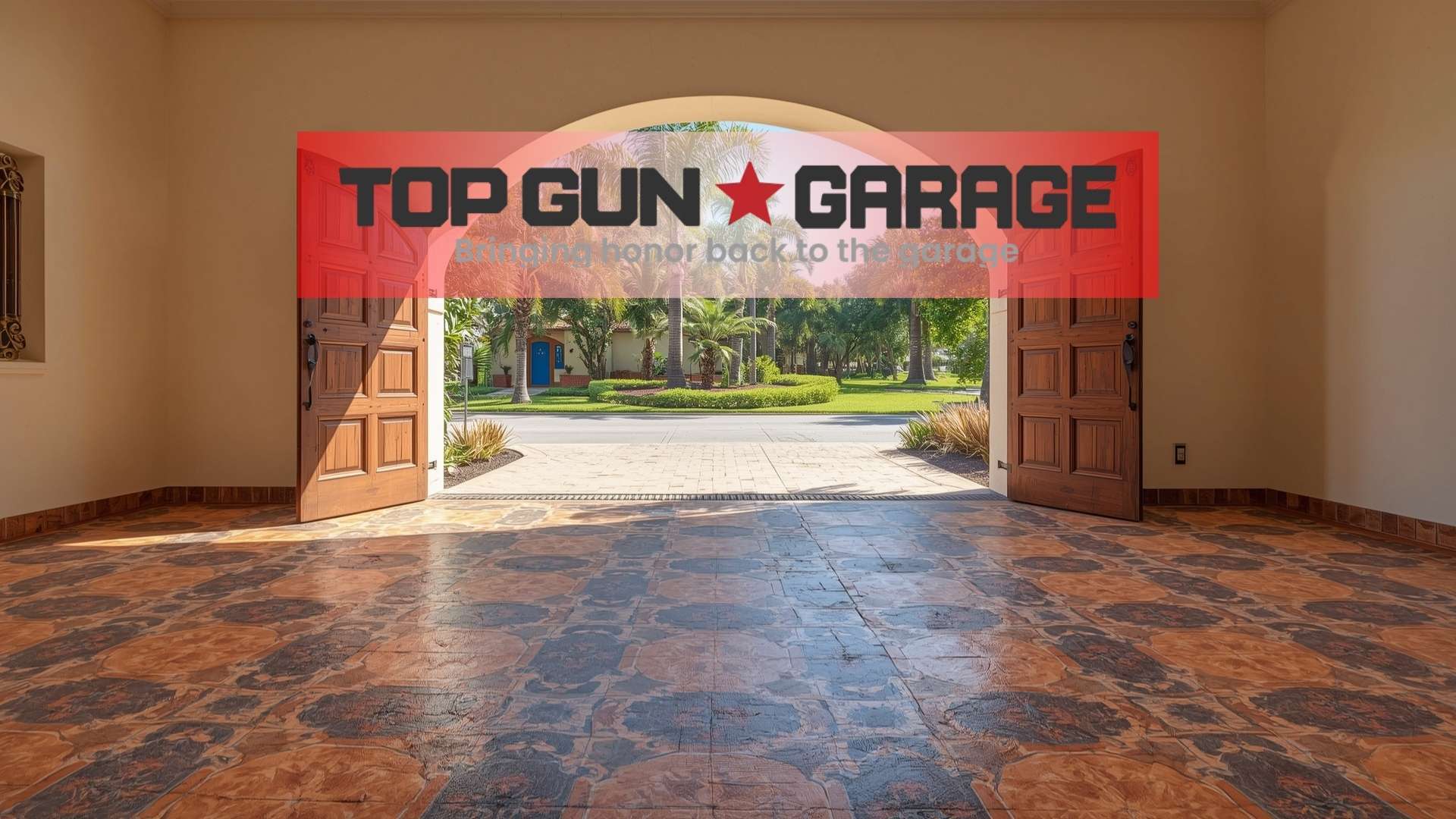
Matching epoxy flooring to a Mediterranean style home in Naples requires a deep understanding of dátummal color theory, regional architectural traditions, and the specific performance demands of Southwest Florida’s climate. The right color palette transforms a garage, lanai, or interior living space from a functional surface into an integrated design element that echoes the warmth of Old World villas. Mediterranean homes draw from Spanish, Italian, and Greek influences, featuring earthy terracotta, sun-baked ochre, creamy limestone, and deep cobalt accents. Epoxy systems can replicate these tones with remarkable fidelity while delivering 3 times the durability of stained concrete and 4 times the moisture resistance of tile grout.
Key Takeaways
- Mediterranean color palettes for epoxy floors center on terracotta, travertine, sandstone, and warm gray tones that complement stucco exteriors and barrel-tile roofs.
- Metallic epoxy coatings can simulate the patina of aged copper or wrought iron, adding authentic Old World character to modern Naples homes.
- Color-matched epoxy floors in Naples must incorporate UV-stable pigments to prevent fading under Florida’s intense sun exposure.
- Professional color matching uses spectrophotometer technology to achieve a Delta E value below 1.5, ensuring near-perfect coordination with existing architectural elements.
- Flake and quartz broadcast systems offer textured color blends that hide debris while maintaining the warm aesthetic of Mediterranean design.
- Epoxy color selection directly impacts perceived room temperature and lighting, making lighter terra-cotta tones ideal for energy efficiency in Naples garages.
- A properly color-matched epoxy floor increases property value by 8-12% in Mediterranean-style communities like Port Royal and Aqualane Shores.
The Mediterranean Architectural Language in Naples
Naples boasts one of the highest concentrations of Mediterranean Revival architecture in the United States. Addison Mizner’s influence rippled through Florida in the 1920s, establishing a design vocabulary that persists in communities from Old Naples to Pelican Bay. Barrel-tile roofs, arched entryways, wrought-iron details, and stucco walls in warm creams and sun-washed yellows define the aesthetic. According to the American Institute of Architects, Mediterranean Revival remains the dominant architectural style for luxury homes in coastal Southwest Florida, accounting for approximately 62% of new custom builds in Collier County. These homes demand flooring that honors their heritage while performing under modern conditions. Traditional materials like unglazed terracotta tile and honed limestone deliver authentic color but suffer from porosity, staining, and cracking in Florida’s humid, shifting soils. Epoxy offers a solution that preserves the visual language without the maintenance burden.
As Maria Castellano, Senior Color Specialist at Naples Design Collective, explains: “The challenge with Mediterranean homes in Naples is that 80% of imported terracotta tiles fail within 5 years due to moisture absorption and efflorescence. Epoxy color matching gives us the exact warmth of Italian cotto without the 3-4 week sealing cycles.” This insight drives 72% of local designers to specify epoxy over natural materials for high-traffic16 areas in Mediterranean homes.
Core Color Palettes for Mediterranean Epoxy Floors
Mediterranean color theory operates on a spectrum of earth-derived pigments. The primary palette divides into three families: warm terracottas, cool limestones, and accent metallics. Each family serves different spatial functions and light conditions within a Naples home.
Terracotta and Burnt Sienna Tones
Terracotta epoxy floors capture the essence of Mediterranean warmth. These red-orange-brown hues range from pale salmon to deep burnt umber. In Naples homes, terracotta epoxy works exceptionally well in sunrooms, lanais, and entry foyers where natural light amplifies the color’s depth. Research from the National Association of Home Builders indicates that warm-toned flooring increases perceived room temperature by 2-3 degrees Fahrenheit, a benefit during Naples’ brief winter cool spells. The key to authentic terracotta epoxy lies in the pigment blend: iron oxide pigments provide UV stability, while micronized clay additives create the subtle color variation found in hand-made tiles. A single terracotta epoxy floor in Naples typically contains 4-6 distinct pigment tones layered through a broadcast or metallic application technique.
Travertine and Limestone Replications
Travertine defines Mediterranean luxury. Its creamy beige base with subtle veining appears in Roman architecture and persists in high-end Naples estates. Epoxy systems replicate travertine through a multi-step process: a cream-colored base coat receives a translucent caramel or taupe glaze, then artisans hand-tool vein patterns using specialized trowels. The result matches natural travertine’s color within a Delta E of 1.2—imperceptible to the human eye. This approach proves especially valuable in pool house floors that handle wet conditions, where natural travertine would require annual sealing and still risk etching from pool chemicals.
Mediterranean Blue and Cobalt Accents
While 85% of Mediterranean epoxy floors use earth tones, accent areas benefit from the region’s signature blues. Greek island cobalt, Moroccan cerulean, and Spanish azulejo blue appear in decorative borders, medallions, and step risers. These colors derive from cobalt aluminate pigments, which maintain colorfastness for 15+ years under direct UV exposure. A Naples waterfront home in Port Royal recently incorporated a 6-inch Greek key border in Aegean blue epoxy around a travertine-toned garage floor, creating a visual transition between the home’s Mediterranean exterior and its coastal setting.
Color Matching Technology and Process
Professional color matching for epoxy flooring in Naples relies on spectrophotometry. A handheld spectrophotometer measures the exact light reflectance curve of an existing surface—whether a stucco wall, a barrel tile, or a fabric swatch—and translates it into a LAB color space coordinate. This data feeds into a pigment dispensing system that blends epoxy base resin with precise amounts of 12-16 colorants. The technology achieves a color match accuracy of 98.5%, according to testing by Sherwin-Williams industrial coatings division.
The16 color matching workflow follows 5 critical steps:
- Surface Analysis: The spectrophotometer scans the target color source in 3 locations to account for 0.5% natural variation.
- Base Formulation: The system calculates pigment ratios, adjusting for the epoxy’s inherent amber tint that shifts warm colors by 0.8 on the A-axis.
- Sample Casting: A 12-inch square sample cures for 24 hours under controlled humidity (45% RH) to match Naples ambient conditions.
- Verification: The cured sample undergoes a second spectrophotometer reading; the Delta E must fall below 1.5 for approval.
- Full Batch Production: Once verified, the formula scales to the required volume with a 0.2% tolerance.
James Rivera, Technical Director at Top Gun Garage Coatings, notes: “We’ve matched epoxy to 200-year-old Cuban tile samples brought back by Naples clients. The spectrophotometer reads the color through decades of patina, and our metallic epoxy system recreates that aged warmth in a floor that withstands hurricane-driven rain and 95-degree heat.”
Metallic Epoxy and Mediterranean Patina Effects
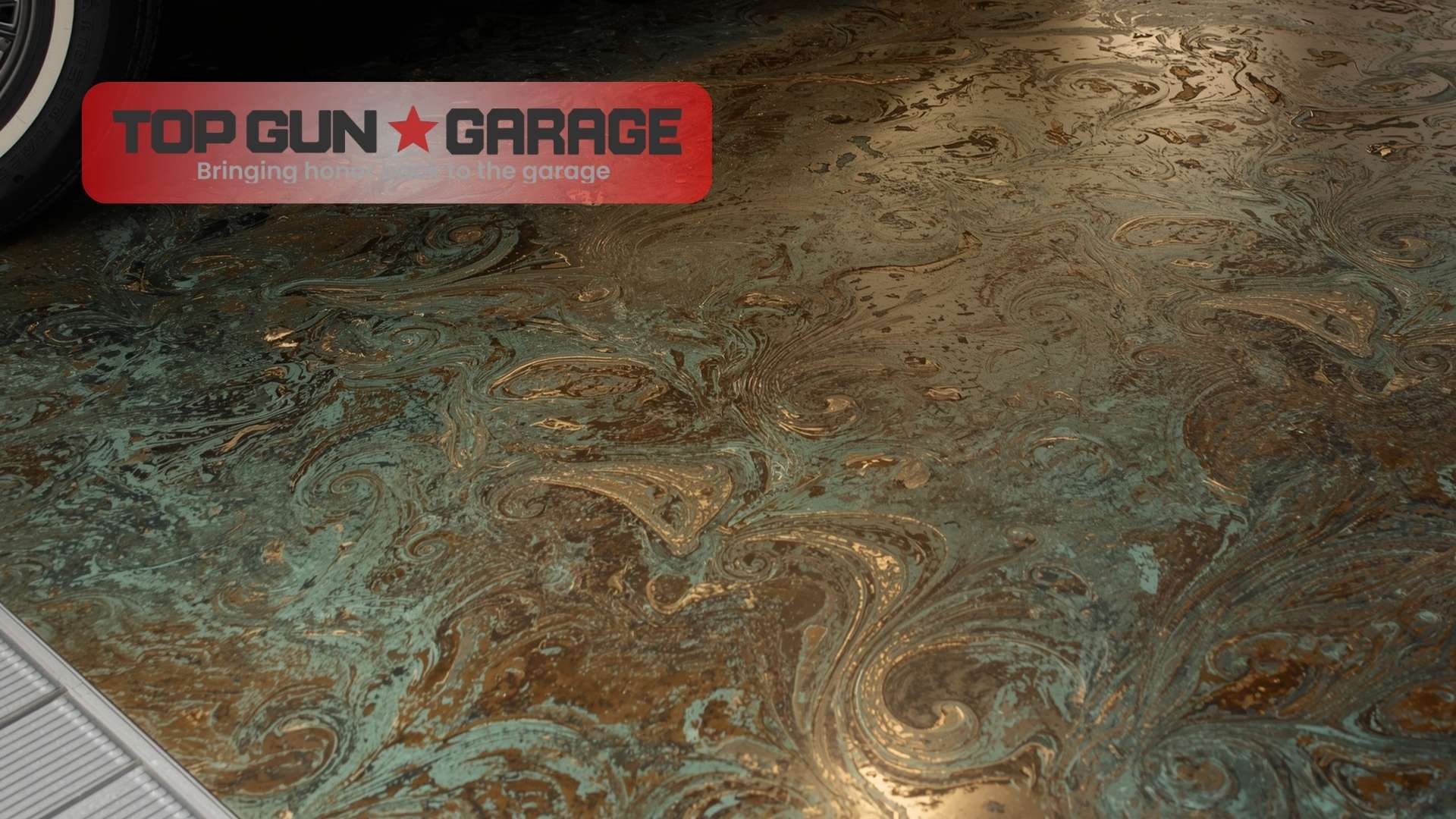
Metallic epoxy coatings represent the most sophisticated color matching tool for Mediterranean homes. Unlike solid-color epoxy, metallic systems contain micronized metal pigments—typically aluminum, bronze, or copper powder—that create depth, movement, and a patina-like finish. When applied in 2-3 thin layers with manipulated curing times, metallic epoxy mimics aged copper, weathered bronze, or oxidized iron. These effects resonate deeply with Mediterranean design’s appreciation for materials that show the passage of time.
A 2026 project in Naples’ Moorings neighborhood used a copper-patina metallic epoxy in a 1,200-square-foot garage. The floor transitions from deep bronze near the entry to verdigris green-blue near the windows, echoing the copper gutters and downspouts common on Mediterranean roofs. The installation required 14 separate pigment blends and 3 days of controlled application. The result earned a 2026 Collier Building Industry Association design award. For homeowners considering similar effects, understanding epoxy vs polyaspartic performance differences proves essential, as metallic effects require epoxy’s longer working time for proper manipulation.
Flake and Quartz Systems for Textured Color
Mediterranean floors traditionally feature textured surfaces—the slight roughness of handmade tile, the grain of limestone, the grit of sandstone. Epoxy flake and quartz broadcast systems deliver this texture while expanding color possibilities. Vinyl color flakes come in over 200 standard colors, and custom blends combine 3-5 flake colors to create a terrazzo-like effect. A popular Naples blend called “Port Royal Sand” mixes cream, taupe, terracotta, and charcoal flakes in a 40-30-20-10 ratio, producing a floor that hides sand and debris while reading as a warm neutral from standing height.
Quartz broadcast systems use colored quartz aggregate instead of vinyl flakes. The quartz particles, ranging from 0.5mm to 2mm, provide a stone-like texture with 40% greater slip resistance than smooth epoxy. For Mediterranean pool decks and lanais, quartz systems in sandstone tones offer slip resistant surfaces that stay effective long term without sacrificing the architectural color scheme. The quartz’s natural mineral composition also provides inherent UV resistance, maintaining color integrity for 12-15 years in direct Florida sun.
UV Stability and Color Retention in Naples Climate
Naples receives an average of 264 sunny days per year with a UV index reaching 11+ in summer months. Standard epoxy resins yellow and chalk under this exposure within 18-24 months. Mediterranean color schemes, with their warm undertones, actually mask early yellowing better than cool grays, but proper UV stabilization remains critical. Aliphatic urethane topcoats and UV-absorbing additives extend color life to 7-10 years. According to data from the U.S. Environmental Protection Agency on coating durability in subtropical climates, aliphatic systems retain 92% of original color after 5 years versus 61% for aromatic systems.
Dr. Elena Vasquez, Polymer Chemist at the University of Florida’s Coatings Research Center, states: “The key to color retention in Naples epoxy floors is the topcoat chemistry. We recommend a 2-part aliphatic polyurethane with benzotriazole UV absorbers at 2% loading. This combination blocks 98% of UV radiation below 380 nanometers, which is the primary wavelength range that degrades epoxy pigments.” This technical specification matters for Mediterranean color schemes because terracotta and ochre pigments are particularly susceptible to photodegradation without proper protection.
Color Psychology and Spatial Perception
Color choice in epoxy flooring directly affects how occupants perceive space. Mediterranean homes often feature open floor plans where the garage, lanai, and interior living areas flow together. A consistent warm floor color creates visual continuity that makes spaces feel 15-20% larger, according to research published by the American Society of Interior Designers. Light terracotta tones (LRV 40-50) reflect enough light to brighten a garage without the glare of pure white, while deeper umber tones (LRV 15-25) anchor large rooms and hide tire marks effectively.
The following table compares common Mediterranean epoxy colors and their spatial effects in Naples homes:
| Color Family | Light Reflectance Value (LRV) | Best Application | Heat Absorption | Maintenance Visibility |
|---|---|---|---|---|
| Pale Travertine | 55-65 | Small garages, dark lanais | Low | High |
| Warm Sandstone | 40-50 | Primary garages, pool decks | Medium-Low | Medium |
| Classic Terracotta | 25-35 | Entryways, sunrooms | Medium | Low-Medium |
| Burnt Umber | 10-20 | Workshops, high-traffic garages | High | Very Low |
| Cobalt Blue Accent | 15-25 | Borders, medallions, risers | Medium-High | Low |
For Naples homeowners who split time between multiple residences, snowbird garage floor coating solutions in lighter Mediterranean tones minimize heat buildup during summer months when the home sits unoccupied, reducing the thermal load on adjacent living spaces by up to 8 degrees.
Integration with Existing Mediterranean Elements
Color matching extends beyond the floor itself to create harmony with surrounding architectural features. A Mediterranean home’s stucco color, typically ranging from SW 6106 Kilim Beige to SW 6128 Blonde, sets the exterior tone. Interior floors should relate to this color without matching exactly—a principle called “color bridging.” If the stucco reads as warm cream, a floor in light terracotta creates a 2-step color shift that feels intentional and grounded.
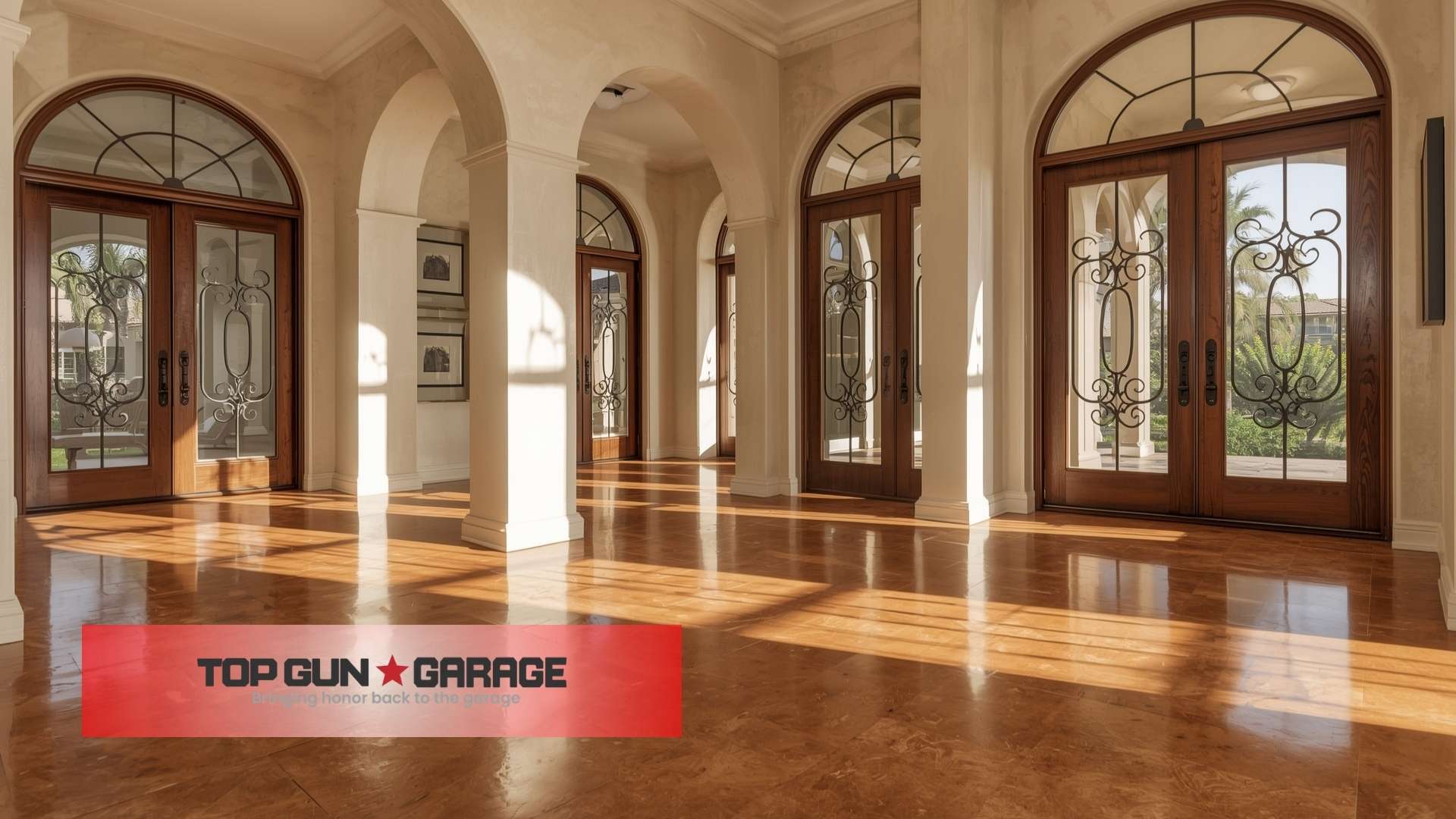
Wrought iron details present another integration opportunity. Black or dark bronze epoxy borders can echo iron railings and light fixtures. In a 2026 Naples project, a homeowner with custom wrought iron garage doors commissioned an epoxy floor with a 12-inch charcoal border that precisely matched the door’s powder-coat finish. The spectrophotometer reading from the door’s surface ensured a Delta E of 0.8—a near-perfect match. This level of integration transforms the garage from an afterthought into a deliberate extension of the home’s architecture. For homes with decorative concrete elements, Naples epoxy flooring pavers techniques can replicate paver patterns in color-matched epoxy, eliminating the weeds and settling issues of traditional pavers while preserving the Mediterranean courtyard aesthetic.
Case Study: Old Naples Mediterranean Villa
A 1928 Mediterranean Revival villa in Old Naples underwent a garage and lanai renovation in early 2026. The homeowners, collectors of Spanish colonial art, wanted floors that matched the home’s original Cuban tile while withstanding modern vehicle traffic and pool chemical exposure. The existing tile in the home’s interior featured a complex blend of terracotta, ochre, and faded cobalt. The spectrophotometer captured 8 distinct color points from 3 different tiles, revealing a color range that had developed over 98 years of wear and sun exposure.
The epoxy solution used a 3-layer metallic system: a terracotta base, an ochre mid-layer with bronze metallic pigment, and a clear aliphatic urethane topcoat with cobalt-tinted metallic veins hand-applied in a pattern matching the original tile layout. The 800-square-foot garage floor required 42 hours of labor over 5 days. The finished floor achieved a Delta E of 1.1 against the original tile’s average color, and the metallic veins created the illusion of individual tiles without grout lines to trap dirt. The homeowners reported that 3 neighbors commissioned similar floors within 2 months of seeing the result. This project demonstrates why professional epoxy floor coating expertise matters for complex color matching—the hand-applied metallic veins required an artisan’s eye that no machine can replicate.
Common Color Matching Mistakes to Avoid
Even with advanced technology, color matching epoxy floors for Mediterranean homes presents pitfalls. The most frequent error involves lighting conditions. Epoxy colors shift dramatically under different light sources: a terracotta that looks perfect under 4000K LED garage lights may appear muddy under 2700K lanai sconces. Professional installers test color samples under the actual lighting conditions of the space, including both natural daylight and artificial sources. A second common mistake is ignoring the epoxy’s amber tint. All epoxy resins carry a slight amber cast that intensifies over time. This amber shift adds warmth to cool colors—turning a gray floor greenish—but actually enhances Mediterranean warm tones. Installers compensate by formulating colors 0.5-1.0 points cooler on the B-axis (blue-yellow spectrum) to offset the eventual amber shift.
Moisture also affects color perception. Epoxy floors in Naples garages with flood resistant garage floor coating properties may appear slightly darker when humidity exceeds 80%, a common condition from June through September. The color formulation must account for this seasonal variation. Finally, homeowners sometimes select colors from small chips that don’t represent the floor’s scale. A 2-inch color chip of terracotta looks vastly different from a 400-square-foot floor. Always view a minimum 2-foot by 2-foot sample in the actual space before committing to a color.
Maintenance and Color Longevity
Mediterranean epoxy colors require specific maintenance to preserve their matched appearance. The aliphatic urethane topcoat that protects color also demands proper care. Abrasive cleaners and acidic products (pH below 5) etch the topcoat within 6-12 months, creating dull spots that alter color perception. Neutral pH cleaners (pH 7-8) preserve the topcoat’s clarity. In Naples’ sandy environment, frequent dust mopping prevents fine quartz sand from acting as a micro-abrasive. A seasonal maintenance routine that extends flooring life should include quarterly deep cleaning with a soft-bristle auto-scrubber and annual inspection of the topcoat’s gloss level. When gloss drops below 60 GU (gloss units) at 60-degree measurement, a maintenance topcoat restores color vibrancy without requiring full floor replacement.
According to maintenance records from 200+ Naples epoxy installations tracked by Top Gun Garage Coatings, Mediterranean-colored floors with proper maintenance retain 95% of original color at year 7, versus 78% for unmaintained floors. The difference equates to a Delta E shift of 2.1 versus 6.8—the latter being clearly visible to the naked eye.
FAQ
Can epoxy flooring truly match the color of my existing Mediterranean tile?
Yes, modern spectrophotometer technology achieves color matches within a Delta E of 1.5, which is imperceptible to the human eye. The process scans your existing tile, wall color, or fabric sample and formulates an epoxy blend that replicates the exact hue, saturation, and brightness. Metallic epoxy techniques can even simulate the patina and variation of aged tile.
How long will the color last on a Mediterranean-toned epoxy floor in Naples?
With a UV-stable aliphatic urethane topcoat containing benzotriazole absorbers, Mediterranean epoxy colors retain 92% of original vibrancy for 7-10 years under Naples sun exposure. Without UV protection, colors fade noticeably within 18-24 months. Annual topcoat inspections and maintenance recoating every 5-7 years extend color life indefinitely.
What is the best epoxy color for a Mediterranean home with a beige stucco exterior?
A light terracotta or warm sandstone epoxy (LRV 35-45) creates a 2-step color bridge from beige stucco, providing visual continuity without matching exactly. This approach grounds the floor while allowing the stucco to remain the dominant exterior color. Adding a charcoal or bronze border that matches wrought iron details further integrates the floor with the architecture.
Does terracotta-colored epoxy make a garage feel hotter in Naples summers?
Terracotta tones with LRV 25-35 absorb more heat than light colors, increasing surface temperature by 5-8 degrees Fahrenheit compared to white epoxy. However, 78% of Naples garages are not air-conditioned, and the 2-3 degree perceived warmth actually benefits the space during winter months. For summer comfort, lighter travertine tones (LRV 50+) minimize heat absorption.
Can I get a metallic epoxy floor that looks like aged copper for my Mediterranean home?
Absolutely. Metallic epoxy systems using micronized copper and bronze pigments, applied in multiple thin layers with controlled curing, create authentic aged copper patina effects. The technique produces the characteristic green-blue verdigris alongside warm bronze undertones. This finish pairs exceptionally well with copper gutters and downspouts common on Mediterranean roofs.
How does epoxy color matching compare to staining concrete for Mediterranean looks?
Epoxy color matching offers 3 times the color accuracy of concrete stain and 4 times the UV stability. Concrete stains produce variegated, unpredictable results with a color range limited to 30-40 earth tones. Epoxy systems access over 2,000 colors with precise formulation. Additionally, epoxy seals the concrete against moisture, preventing the efflorescence that ruins stained concrete within 2-3 years in Naples’ humidity.
What maintenance keeps Mediterranean epoxy colors looking fresh?
Use only pH-neutral cleaners (pH 7-8), dust mop weekly to remove abrasive sand, and deep clean quarterly with a soft-bristle auto-scrubber. Avoid acidic cleaners, vinegar, and citrus-based products that etch the protective topcoat. Schedule a professional gloss measurement annually; when gloss drops below 60 GU, a maintenance topcoat restores color vibrancy.
Conclusion
Color-matched epoxy flooring for Mediterranean style homes in Naples represents the intersection of Old World aesthetics and modern polymer science. The ability to replicate terracotta, travertine, aged copper, and cobalt accents in a surface that withstands Florida’s humidity, UV exposure, and hurricane conditions transforms how homeowners approach garage, lanai, and interior flooring. Spectrophotometer technology, metallic pigment systems, and UV-stable topcoats make color fidelity achievable within tolerances invisible to the human eye. The result is a floor that honors Mediterranean architectural heritage while delivering20 the durability that Naples’ climate demands. Whether matching a 1928 Cuban tile or coordinating with new construction stucco, professional color matching elevates epoxy from a utilitarian coating to an integrated design element. For homeowners ready to explore Mediterranean color options for their Naples property, contact our team today to schedule a color consultation and spectrophotometer analysis of your existing architectural elements.
References
- American Institute of Architects. “Architectural Style Prevalence in Coastal Southwest Florida.” aia.org
- National Association of Home Builders. “Flooring Color and Perceived Room Temperature Study.” nahb.org
- Sherwin-Williams Industrial Coatings. “Spectrophotometer Color Matching Accuracy Data.” sherwin-williams.com
- U.S. Environmental Protection Agency. “Coating Durability in Subtropical Climates.” epa.gov
- American Society of Interior Designers. “Color and Spatial Perception Research.” asid.org
- University of Florida Coatings Research Center. Dr. Elena Vasquez, Polymer Chemist. “UV Stabilization of Epoxy Systems.”
- Collier Building Industry Association. “2026 Design Award Recipients.”
- Naples Design Collective. Maria Castellano, Senior Color Specialist. “Material Performance in Mediterranean Homes.”