 Skip to content




Upgrading your garage floor in the Vineyards community of Naples is one of the smartest investments you can make for your home. A professionally applied floor coating transforms a porous, stained concrete slab into a seamless, high-performance surface that resists moisture, tire marks, and the relentless Florida humidity. In a neighborhood where golf carts and luxury vehicles share driveway space, the right coating elevates both daily function and long-term property value.
Key Takeaways
- Polyaspartic and high-solids epoxy coatings outperform big-box store paints in Florida’s climate.
- Proper concrete moisture testing and diamond grinding are non-negotiable for adhesion in Vineyards homes.
- A quality coating installation typically takes 1–2 days with a 24-hour cure time for light foot traffic.
- Decorative flake blends and metallic finishes can complement the upscale aesthetic of Vineyards properties.
- Annual maintenance with a neutral pH cleaner extends the life of your coating beyond 15 years.
- Professional installation includes a warranty that covers peeling, delamination, and UV yellowing.
- Coated floors reduce concrete dust and allergens, improving indoor air quality in attached garages.
Why Vineyards Homeowners Are Choosing Premium Floor Coatings
The Vineyards is not just any Naples subdivision. It spans over 2,500 acres with a mix of single-family homes, coach homes, and estate properties, many built in the 1990s and early 2000s. Those original garage slabs have endured decades of humid summers, occasional storm surge moisture, and the wear of daily vehicle traffic. According to the National Association of Home Builders, a well-maintained garage floor can contribute to a home’s overall appraisal value by improving the condition rating of the garage space. Homeowners here are discovering that a thin layer of hardware-store epoxy simply cannot bond to the dense, moisture-laden concrete common in Southwest Florida.
Instead, they are turning to high-build coating systems that create a chemical bond with the concrete. These systems penetrate the surface pores and form a protective layer that is up to 20 mils thick—roughly four times thicker than a standard paint job. The result is a floor that shrugs off hot tire pickup, resists salt and chemical spills, and stays cooler underfoot than bare concrete.
Understanding the Vineyards Micro-Climate and Concrete Challenges
Collier County’s subtropical environment presents unique challenges for any flooring material. The Vineyards sits slightly inland from the Gulf, which means less direct salt spray but higher ambient humidity than beachfront communities. Concrete is naturally porous; it acts like a sponge, pulling moisture from the ground up through capillary action. Research from the Portland Cement Association indicates that concrete slabs in high-humidity regions can have a relative humidity reading of 85% or higher just a few inches below the surface. If you seal that moisture in with a non-breathable coating, you get hydrostatic pressure that causes blistering and delamination.
Experienced installers address this with a two-pronged approach. First, they conduct a calcium chloride moisture test or use an in-situ relative humidity probe to measure vapor transmission. If readings exceed 3 pounds per 1,000 square feet over 24 hours, a moisture-mitigating primer is essential. Second, they mechanically profile the concrete using diamond grinders, not acid etching. Grinding opens the surface profile to a CSP 3–4 standard, which gives the coating the mechanical grip it needs to resist the thermal expansion and contraction cycles that Naples garages experience daily.
Polyaspartic vs. Epoxy: What Works Best in Vineyards Garages
Homeowners often ask whether traditional epoxy or newer polyaspartic coatings are the right choice. Both have their place, but the performance differences matter in Florida. The table below breaks down the key comparisons.
| Feature | High-Solids Epoxy | Polyaspartic |
|---|---|---|
| Cure Time (walk-on) | 12–18 hours | 2–4 hours |
| UV Stability | Moderate; may amber over time | Excellent; non-yellowing |
| Flexibility | Moderate | High; resists cracking |
| Application Temperature | 50°F–85°F | -30°F–140°F |
| VOC Content | Low to moderate | Very low |
| Typical Cost per Sq. Ft. | $4–$7 | $6–$9 |
As Sarah Lin, Senior Coatings Specialist at Top Gun Garage, explains: “In the Vineyards, we recommend a polyaspartic topcoat over an epoxy base for 90% of our residential projects. The UV stability is critical because so many garages have windows or are left open during the day. Epoxy alone will start to chalk and yellow within two years under direct Florida sun.”
Polyaspartics also cure fast enough that a full garage can be coated and returned to service in a single day—a major advantage for families who cannot leave their vehicles outside overnight. The rapid cure does require skilled installers, however, because the pot life is short. This is not a DIY-friendly material.
Design Options That Complement Vineyards Architecture
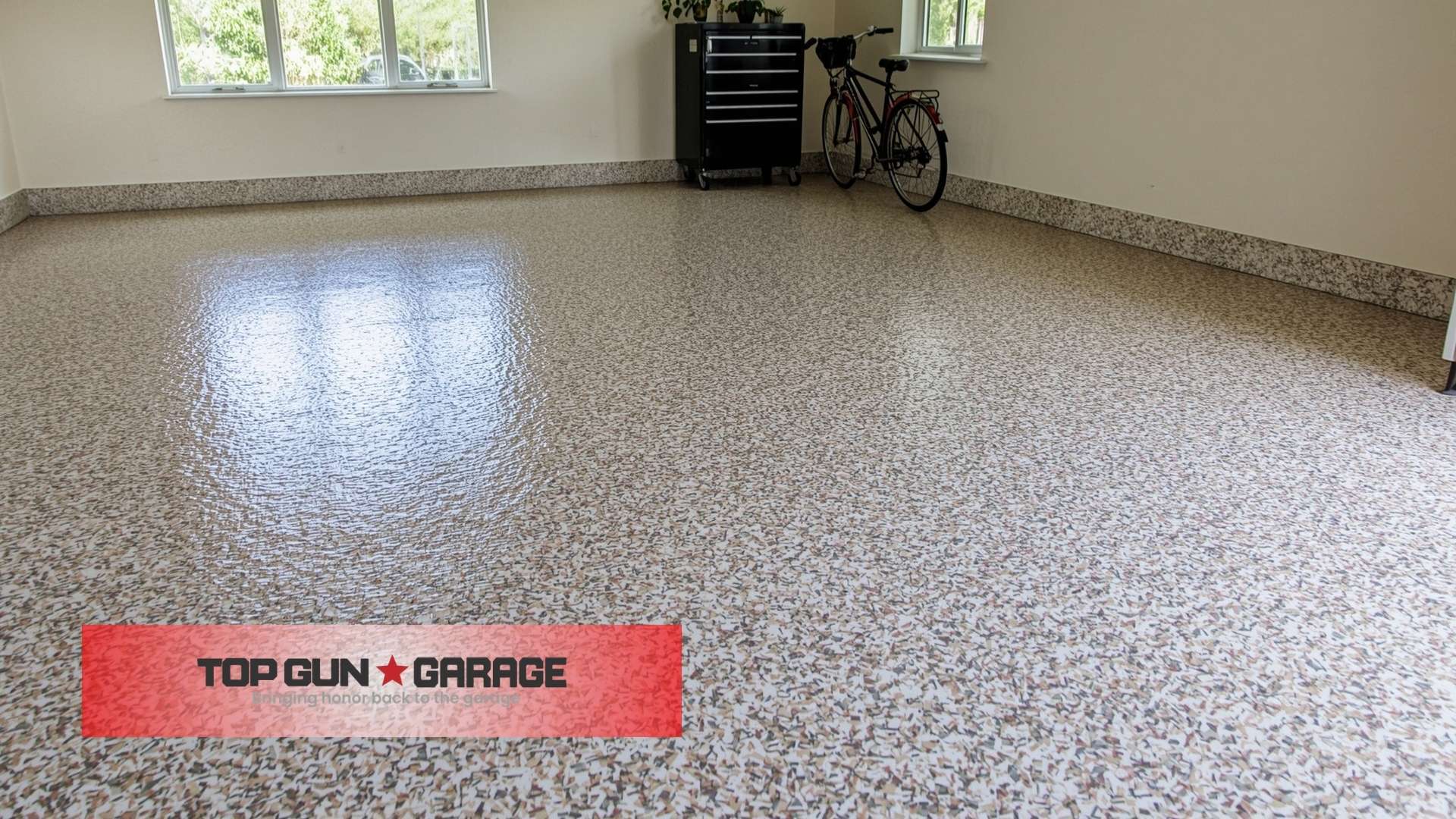
The Vineyards features a range of architectural styles, from Mediterranean-inspired villas to contemporary coach homes. A garage floor should feel like an extension of the home’s interior, not an afterthought. Full-chip broadcast systems remain the most popular choice because they hide imperfections and provide a textured, slip-resistant surface. Homeowners can select from dozens of color blends—warm beige and taupe tones that echo the natural Florida landscape, or cooler grays and blues that create a modern, gallery-like feel.
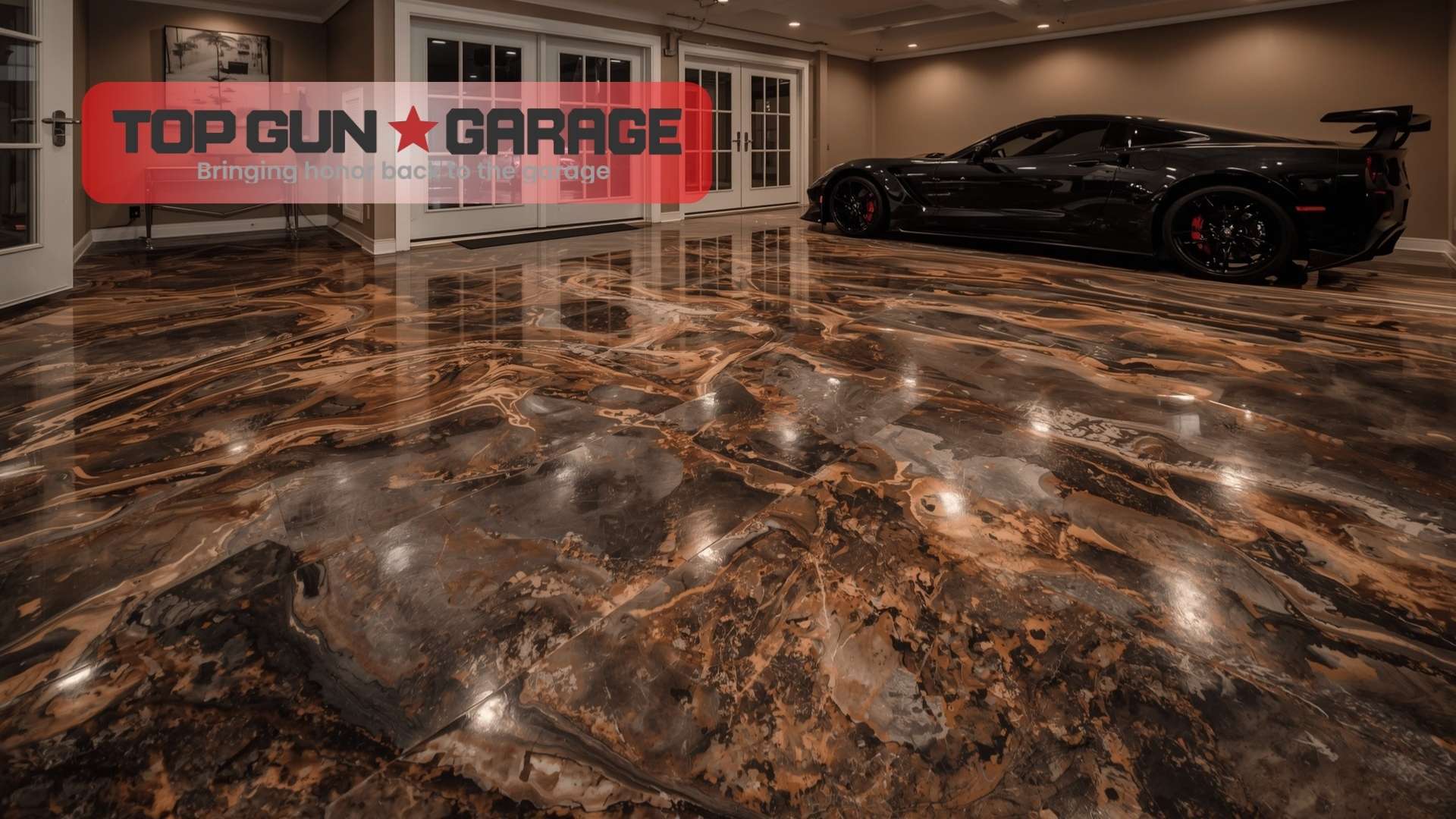
Metallic epoxy systems are gaining traction for showroom-quality garages. These coatings use a pigmented base coat that is manipulated with solvents or air to create swirling, three-dimensional patterns. No two floors look exactly alike. For a Vineyards estate with a car collection or a garage converted into a lounge space, a metallic floor makes a dramatic statement. Modern flake designs have moved far beyond the basic gray-and-white speckle of a decade ago.
Quartz-filled systems offer another option for homeowners who prioritize function. The broadcast quartz creates a rough, gritted texture that is nearly impossible to slip on, even when wet. This is an excellent choice for garages that double as workshops or for families with elderly residents who need extra traction. Slip-resistant surfaces that maintain their grip over years of use are a safety essential in any home.
The Installation Process: Step-by-Step for Vineyards Homes
A professional garage floor coating installation follows a rigorous sequence. Cutting corners at any stage compromises the entire system. Here is the exact process that reputable contractors follow in the Vineyards area.
- Moisture Testing: Technicians place a calcium chloride dome or insert a relative humidity probe into the slab. Readings determine whether a moisture-mitigating primer is required. In Vineyards homes built before 2000, vapor barriers under the slab are often absent or deteriorated, making this step critical.
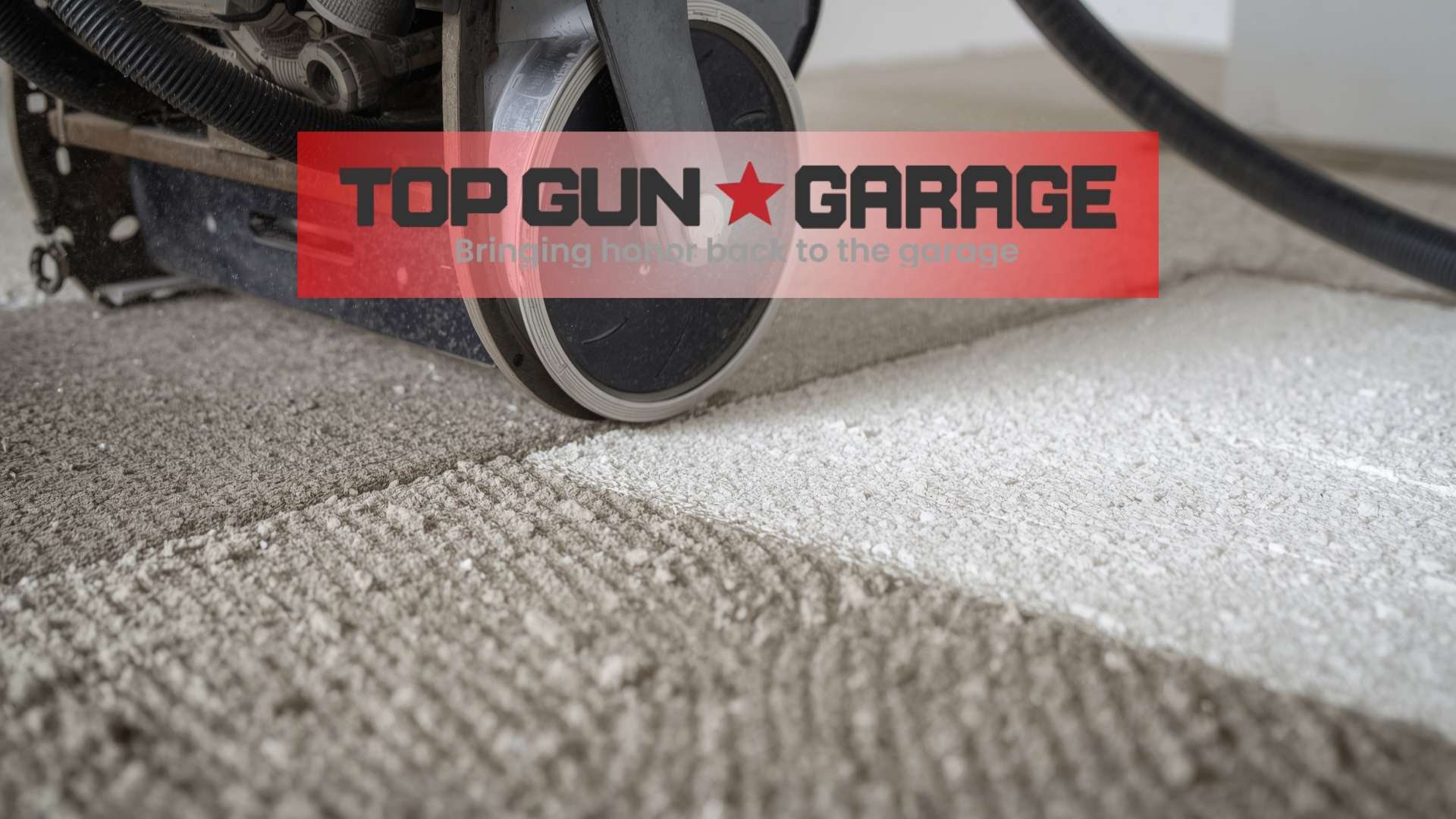
- Surface Preparation: The floor is diamond-ground using a planetary grinder with HEPA-filtered dust extraction. This removes any existing sealers, paint, or contaminants and opens the concrete pores. Cracks and spalls are repaired with a high-modulus epoxy filler. Control joints are filled with a semi-rigid polyurea that allows for minor slab movement.
- Primer Application: A penetrating epoxy primer is squeegeed and back-rolled onto the concrete. This primer seals the surface, promotes adhesion, and acts as a moisture barrier. It cures for 4–6 hours.
- Base Coat and Flake Broadcast: A high-solids epoxy or polyaspartic base coat is applied in sections. While the base coat is still wet, decorative vinyl flakes are broadcast by hand to full rejection—meaning the flakes completely cover the base coat and create a textured surface. Excess flakes are swept away after curing.
- Topcoat Application: One or two clear polyaspartic topcoats are rolled on. The topcoat encapsulates the flakes, provides UV protection, and delivers the final gloss or satin sheen. A second topcoat may include aluminum oxide grit for enhanced slip resistance.
- Curing and Quality Inspection: The floor is ready for light foot traffic in 2–4 hours and vehicle traffic in 24 hours. The installer conducts a final inspection to check for any thin spots, bubbles, or debris in the finish.
As Michael Torres, Lead Installer at Top Gun Garage, notes: “We never acid-etch a floor in Naples. The humidity causes the acid to react unevenly, and it doesn’t create the consistent profile that diamond grinding does. Plus, acid introduces water into the slab, which is the last thing you want before coating.”
Cost Factors and Return on Investment
The cost to coat a standard two-car garage in the Vineyards ranges from $2,800 to $5,500, depending on square footage, concrete condition, and the chosen system. A basic epoxy system with minimal flake coverage sits at the lower end. A full polyaspartic system with moisture mitigation, extensive crack repair, and a decorative flake blend reaches the upper tier. According to Remodeling Magazine’s Cost vs. Value report, garage improvements in the South Atlantic region recoup approximately 65–75% of their cost at resale. However, that figure does not capture the intangible benefits: a cleaner, brighter, and more functional space for the years you live in the home.
Several factors influence the final price:
- Square footage beyond the standard 400–500 sq. ft. two-car garage
- Extensive crack repair or spalling that requires patching
- Moisture mitigation systems for high vapor transmission slabs
- Custom flake color blends or metallic pigment effects
- Vertical cove base installation where the floor meets the wall
- Removal of old, failed coatings that require aggressive grinding
Homeowners should request a detailed, line-item proposal that breaks down each component. A low bid that skips moisture testing or uses a single thin coat will cost far more to remove and replace within two years. Professional installation is an investment in longevity, not an expense.
Maintenance Routines That Extend Coating Life
A coated garage floor is low-maintenance, not no-maintenance. The good news is that the required care is simple and infrequent. The primary enemy of any resinous floor in Florida is abrasive grit—sand, shell fragments, and dirt tracked in by tires and shoes. This grit acts like sandpaper underfoot, slowly dulling the topcoat’s gloss.
Follow this seasonal routine to keep your Vineyards garage floor looking new:
- Weekly: Sweep with a soft-bristle push broom or use a leaf blower to remove loose debris. A dust mop treated with a mild electrostatic charge works well for fine dust.
- Monthly: Damp mop with a pH-neutral cleaner diluted in warm water. Avoid acidic cleaners like vinegar or citrus-based degreasers, which can etch the topcoat over time. A microfiber flat mop is ideal.
- Quarterly: Inspect the floor for any chips, scratches, or areas where the gloss has diminished. Address minor issues with a spot repair kit from your installer before they spread.
- Annually: Deep clean with a soft-bristle deck brush and a dedicated floor coating cleaner. Rinse thoroughly and allow to dry. Consider applying a sacrificial wax or polish if recommended by the manufacturer.
Seasonal maintenance routines are especially important in Southwest Florida, where summer storms bring in organic debris and winter brings dry, dusty conditions. A consistent routine prevents the buildup of contaminants that can degrade the coating’s surface.
Common Mistakes Vineyards Homeowners Should Avoid
Even with the best intentions, homeowners sometimes make decisions that undermine their garage floor investment. The most frequent error is hiring a contractor based solely on price without verifying their preparation process. A coating is only as good as the concrete it bonds to. If the installer does not diamond grind the floor and test for moisture, the system is set up to fail.
Another mistake is choosing a coating based on appearance alone. A high-gloss black floor looks stunning in a showroom photo but will show every speck of dust, tire mark, and scratch in a working garage. Lighter colors and flake blends are far more forgiving. Homeowners also underestimate the importance of curing time. Driving a vehicle onto a floor that has not fully cured—especially in humid conditions—can cause permanent tire marks and delamination. Always follow the installer’s cure schedule precisely.
Finally, some residents try to coat their garage floors themselves using kits from home improvement stores. These kits typically contain water-based epoxy with low solids content. They cannot withstand hot tire pickup, and they fail within months in Florida’s climate. The cost of professional removal and recoating far exceeds the initial savings. Proper concrete preparation requires industrial equipment and training that no DIY kit can provide.
How a Coated Floor Improves Indoor Air Quality
An often-overlooked benefit of sealing a garage floor is the reduction of airborne particulates. Bare concrete constantly sheds fine dust as the surface erodes. This dust contains silica, cement particles, and whatever contaminants have soaked into the slab over the years—oil, pesticides, mold spores. In an attached garage, that dust migrates into the home every time the door opens. A seamless, non-porous coating encapsulates the concrete and eliminates dust generation entirely. Flooring that reduces allergens is a significant health consideration for families with asthma or allergy sufferers.
Additionally, coated floors do not support mold or mildew growth. In the humid Vineyards environment, unsealed concrete can harbor mold in its pores, especially after stormwater intrusion. A properly installed coating with a moisture barrier prevents water from penetrating the slab and creates an inhospitable environment for biological growth. Flood-resistant coatings provide peace of mind during hurricane season when storm surge and heavy rains threaten garage interiors.
Addressing the Vineyards’ Active Lifestyle Needs
The Vineyards is a community built around an active, outdoor lifestyle. Golf carts are a primary mode of transportation, and many residents use their garages as staging areas for golf outings, cycling, and beach trips. A coated floor handles this traffic without complaint. The seamless surface is easy to roll golf bags and carts across, and it resists the scuffing and scratching that bare concrete would suffer. Golf cart-friendly flooring is a practical consideration that many homeowners appreciate once they experience the difference.
For residents who split their time between Naples and northern homes, a coated garage floor offers another advantage: it requires no attention during months of absence. Unlike carpet or tile, which can develop musty odors in a closed-up Florida garage, a polyaspartic-coated floor remains inert and odor-free. Snowbird-friendly garage solutions are designed to withstand long periods of disuse without degradation.
Frequently Asked Questions
How long does a garage floor coating last in the Vineyards climate?
A professionally installed polyaspartic or high-solids epoxy system typically lasts 15–20 years in Southwest Florida. The UV-stable topcoat prevents yellowing, and the moisture-mitigating primer prevents delamination. Annual cleaning and occasional spot repairs can extend the lifespan even further.
Can I coat my garage floor if it already has cracks?
Yes. Cracks are common in older Vineyards homes due to minor slab settlement. Installers fill and repair cracks with a flexible polyurea or epoxy filler before applying the coating. The repair material moves with the slab and prevents the crack from telegraphing through the new surface. Structural cracks that indicate ongoing foundation issues should be evaluated by an engineer first.
Will the coating make my garage floor slippery when wet?
Not if it is properly formulated. Installers can add aluminum oxide grit or a polymer grip additive to the topcoat to achieve a coefficient of friction that meets or exceeds OSHA standards for walking surfaces. Full-flake broadcast systems naturally provide texture that enhances traction. A glossy finish does not automatically mean slippery.
How soon can I park my car on a newly coated floor?
With a polyaspartic system, vehicle traffic is typically safe after 24 hours. Epoxy systems may require 48–72 hours for full chemical cure, especially in humid conditions. Always follow the specific cure schedule provided by your installer, as premature vehicle traffic is the leading cause of coating failure.
Is the coating process disruptive to my household?
The installation itself is relatively quiet—diamond grinders produce a low hum rather than a loud screech—and dust is controlled with HEPA vacuums. The primary disruption is clearing the garage of its contents for 1–2 days. Some homeowners choose to have the work done while they are away on a short trip.
Does a coated floor increase my home’s resale value?
While it is difficult to isolate the exact dollar value a floor coating adds, real estate professionals in Naples consistently report that a clean, finished garage makes a strong positive impression on buyers. It signals that the home has been well-maintained. In a competitive market like the Vineyards, that impression can translate into faster sales and stronger offers.
What is the difference between a garage floor coating and garage floor paint?
Garage floor paint is a thin, acrylic or latex-based product that sits on top of the concrete. It offers minimal protection and typically peels within a year in Florida. A true coating is a multi-layer, thermosetting resin system that chemically bonds to the concrete and builds a thick, durable film. The performance difference is dramatic.
Conclusion
The Vineyards community represents one of Naples’ most desirable places to live, and a garage floor upgrade is a natural extension of the pride homeowners take in their properties. A high-performance coating system protects the concrete, simplifies maintenance, and creates a space that is genuinely pleasant to use every day. Whether you are storing a golf cart, maintaining a car collection, or simply want a clean transition from driveway to kitchen, the right floor coating delivers lasting value.
Choosing an installer who understands the specific demands of Collier County concrete—moisture, humidity, and UV exposure—is the single most important decision in the process. Insist on diamond grinding, moisture testing, and a written warranty that covers both materials and labor. The investment in quality pays for itself over decades of trouble-free performance. Contact our team today to schedule a consultation and see what a transformed garage floor can do for your Vineyards home.