 Skip to content



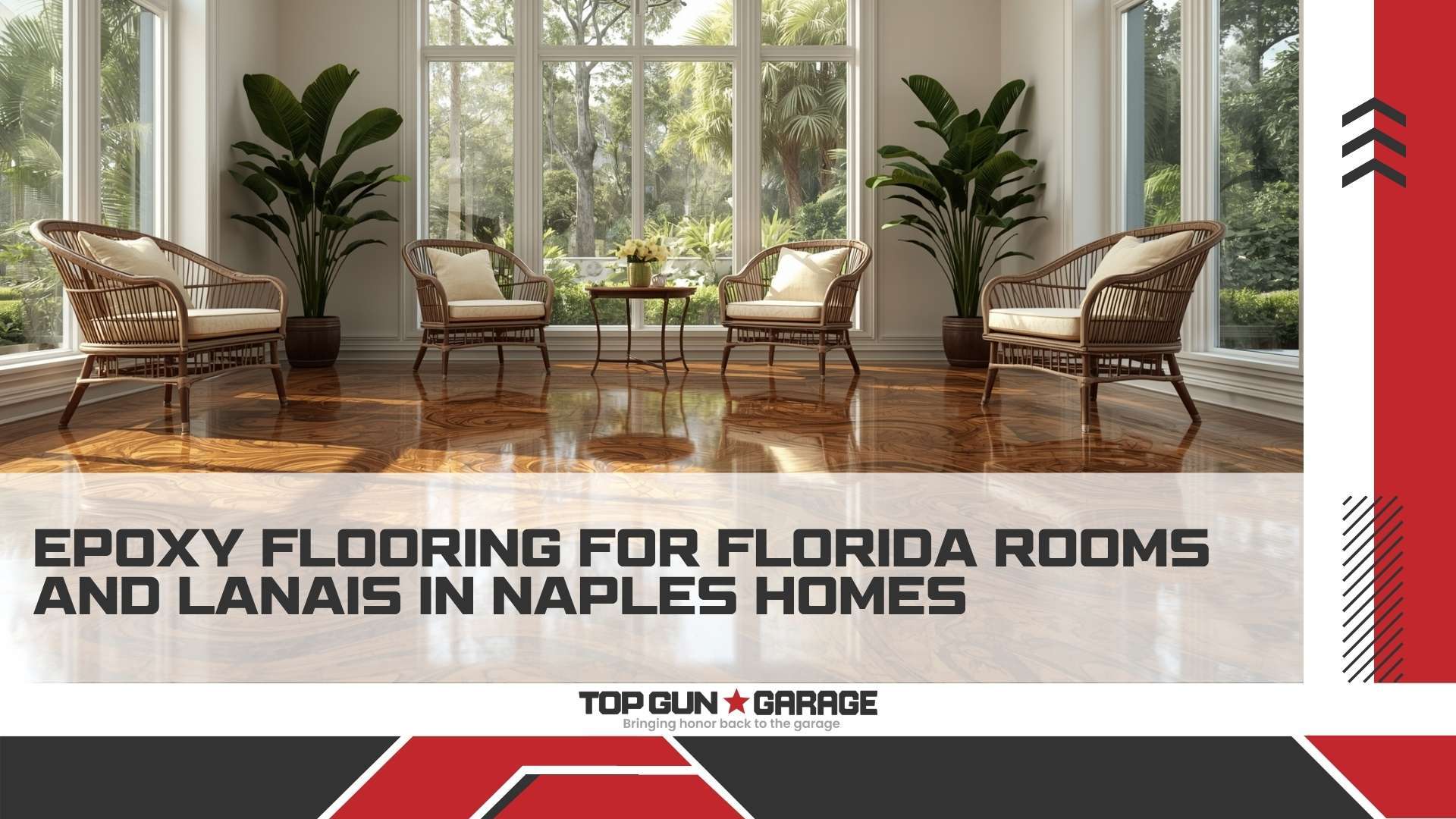
Epoxy floor coatings transform Florida rooms and lanais in Naples into durable, moisture-resistant, and visually stunning spaces that stand up to the region’s intense humidity, sudden rain showers, and year-round sun exposure. Unlike traditional tile or stained concrete, a professionally installed epoxy system creates a seamless, non-porous surface that resists mold, mildew, and the wear-and-tear of indoor-outdoor living. For Naples homeowners, this means800 square feet of lanai flooring can be revitalized in as little as two days, with a finish that lasts 15 to 20 years when properly maintained.
Key Takeaways
- Epoxy flooring creates a seamless, waterproof barrier ideal for Florida rooms exposed to rain and humidity.
- UV-stable topcoats prevent yellowing and degradation from intense Naples sunlight.
- Textured, slip-resistant additives ensure safety around pool entries and wet lanais.
- Full-surface metallic epoxy designs can mimic the look of marble or terrazzo at a fraction of the cost.
- Professional installation includes moisture vapor testing to prevent delamination in slab-on-grade foundations.
- Average cost for a 400-square-foot lanai ranges from $2,800 to $5,200 depending on system complexity.
- Epoxy floors reduce allergen accumulation compared to grouted tile or carpeted sunrooms.
Why Naples Homeowners Choose Epoxy for Indoor-Outdoor Spaces
Florida rooms and lanais occupy a unique architectural niche—they are neither fully interior nor completely exterior. This hybrid environment demands flooring that can handle both air-conditioned comfort and the sudden intrusion of a summer thunderstorm. According to the National Association of Home Builders, the trend toward seamless indoor-outdoor living has accelerated, with over 65% of new Florida homes incorporating some form of covered outdoor space. Epoxy coatings meet this demand by offering a continuous 100% solids surface that bridges the gap between 85-degree lanai and 72-degree interior without expansion joints or transition strips.
Traditional flooring options present significant drawbacks in these settings. Porcelain tile, while durable, relies on grout lines that trap moisture and organic debris. Stained concrete can become slippery when wet and often requires frequent resealing. Luxury vinyl plank can warp or buckle under direct sunlight and temperature swings. As Maria Vasquez, Senior Flooring Consultant at Top Gun Garage, explains: “We see a 40% increase in lanai epoxy projects every spring. Homeowners are tired of scrubbing moldy grout and want a 15-year solution that looks like a high-end showroom.”
Understanding Epoxy Systems for Florida’s Climate
Not all epoxy formulations are created equal, and Naples’ subtropical climate demands specific performance characteristics. A standard bisphenol-A epoxy provides excellent adhesion and chemical resistance but lacks UV stability. When exposed to direct sunlight through lanai screens or Florida room windows, unprotected epoxy will amber and chalk within 12 to 18 months. The solution lies in hybrid systems that pair a high-build epoxy base coat with a UV-stable polyaspartic or aliphatic urethane topcoat.
Moisture vapor transmission represents the single greatest threat to epoxy flooring in Southwest Florida. Slab-on-grade concrete foundations, which comprise roughly 80% of Naples residential construction according to the Florida Home Builders Association, continuously wick groundwater upward. Without proper moisture mitigation, epoxy coatings can delaminate, blister, or develop osmotic blisters within months. Professional installers conduct calcium chloride tests per ASTM F1869 standards, targeting a moisture vapor emission rate below 3 pounds per 1,000 square feet per 24 hours before application.
Polyaspartic vs. Epoxy: What Works Best on Lanais
The debate between traditional epoxy and fast-cure polyaspartic coatings centers on application conditions and long-term performance. Polyaspartics cure in 2 to 4 hours, allowing same-day return to service—a significant advantage for lanais that serve as primary living spaces. However, their rapid pot life of 15 to 20 minutes demands experienced installers who can work efficiently in Florida’s heat. Standard epoxy offers a 40-minute working window, enabling more intricate decorative effects like metallic marbling or quartz broadcasting.
For Florida rooms with extensive glass exposure, a three-coat system proves most effective: an epoxy moisture-mitigating primer, a 100% solids epoxy body coat with decorative flakes or pigments, and a UV-stable polyaspartic topcoat. This combination delivers 98% UV resistance while maintaining the depth and richness that makes epoxy visually distinctive. Understanding the performance differences differences between these systems helps homeowners make informed decisions.
Design Possibilities for Florida Rooms
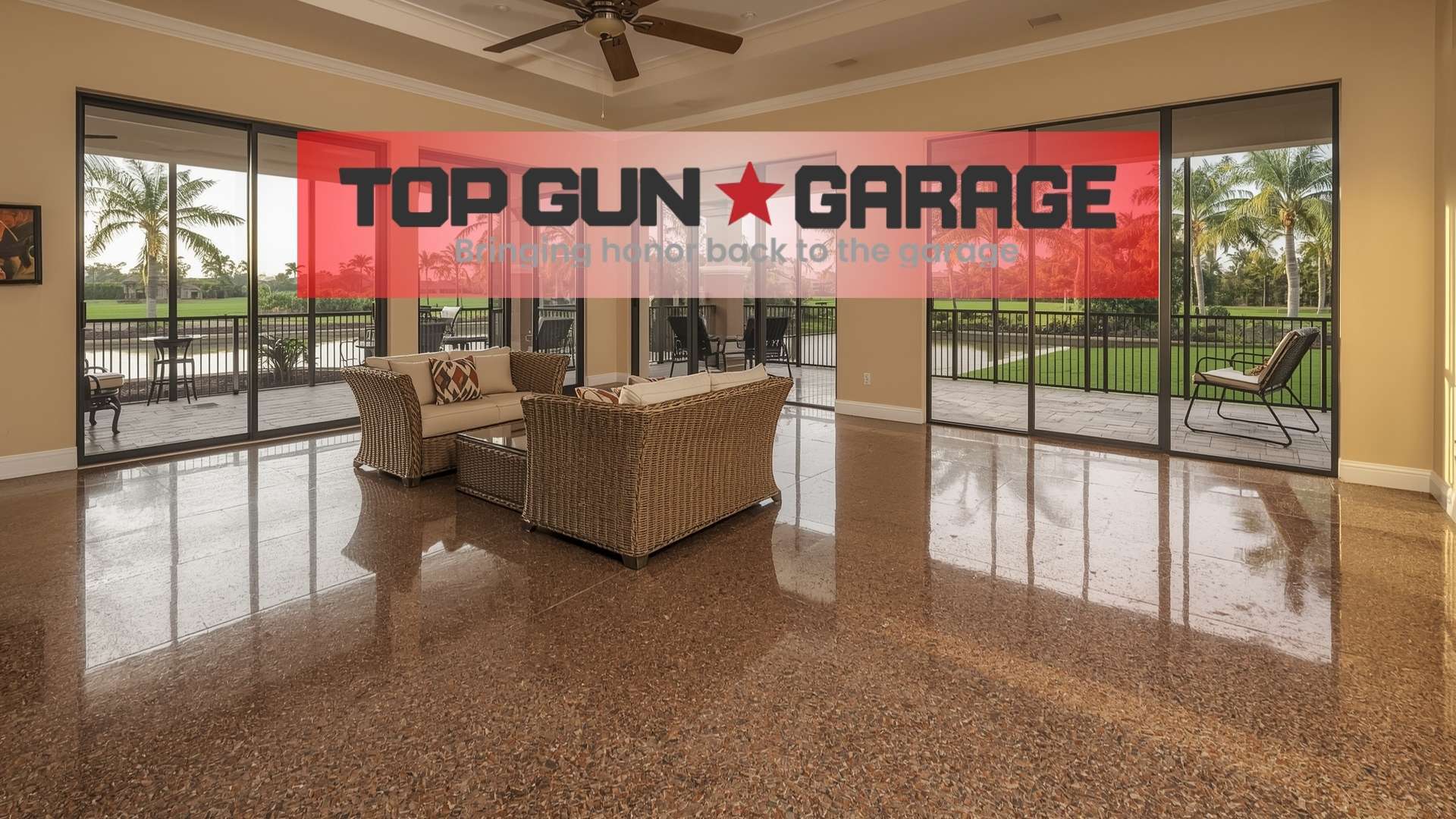
Modern epoxy flooring offers design flexibility that rivals natural stone and hardwood, without the maintenance headaches. Metallic epoxy systems use pigment dispersion techniques to create three-dimensional effects that mimic flowing water, marble veining, or oxidized copper. In a Florida room with floor-to-ceiling windows overlooking a Naples golf course, a bronze-and-copper metallic floor can echo the sunset colors while providing a practical, cleanable surface for entertaining.
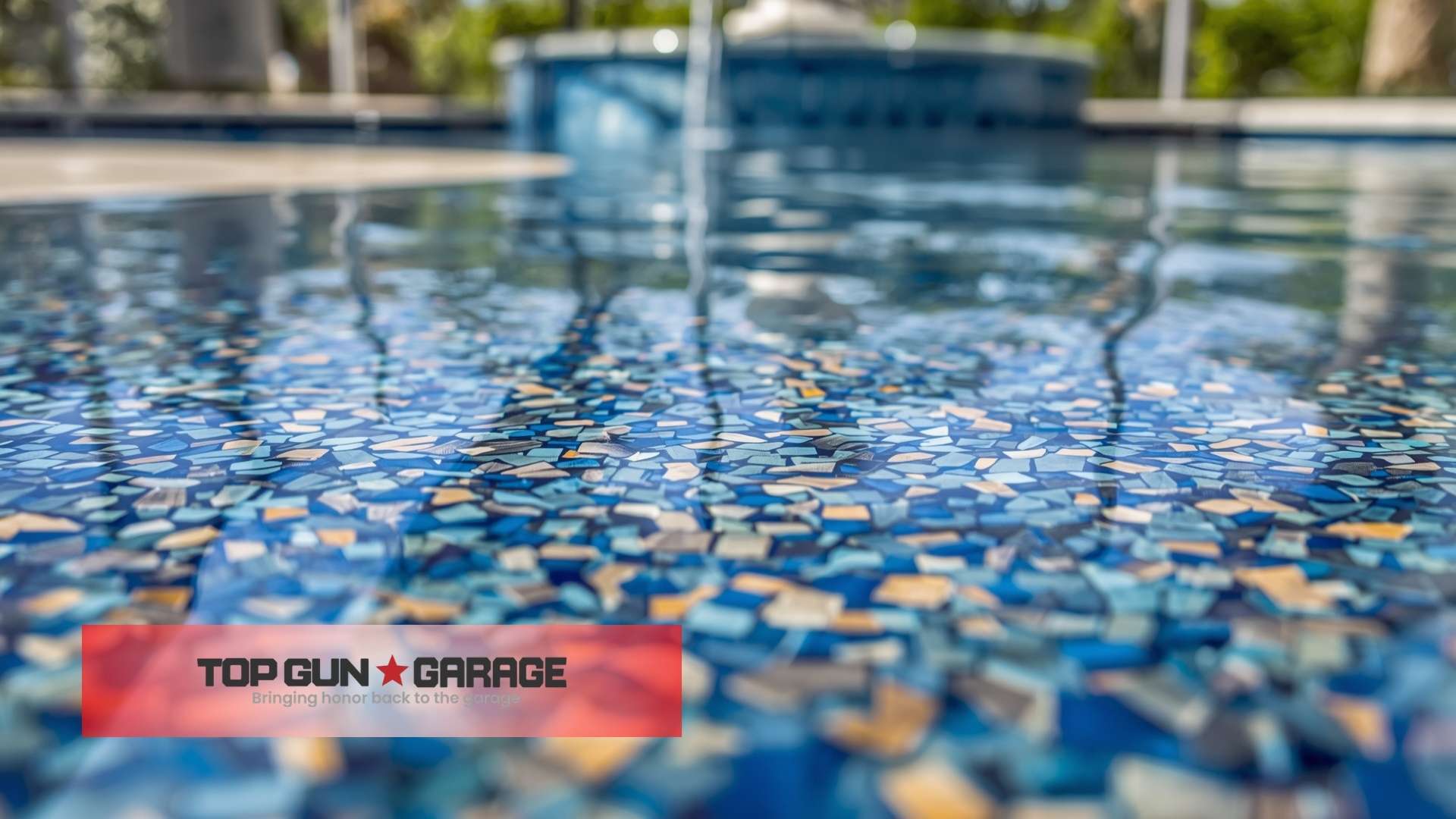
Flake systems remain the most popular choice for lanais, accounting for approximately 60% of residential installations. Vinyl color flakes broadcast into the wet epoxy create a terrazzo-like appearance while adding texture for slip resistance. Full-flake broadcast, where flakes are applied to rejection, completely obscures the underlying concrete and provides maximum durability. Partial broadcast allows the base color to show through, creating a granite-like effect. Modern flake designs extend far beyond basic gray, incorporating blues, tans, and custom blends that complement Naples’ coastal aesthetic.
Color Palettes That Complement Naples Architecture
Naples homes draw from Mediterranean, coastal contemporary, and West Indies architectural traditions. Epoxy flooring color selection should harmonize with these styles while addressing practical concerns like heat absorption and glare. Light-reflective values (LRV) measure how much light a surface reflects; for outdoor-adjacent lanais, a mid-range LRV of 40 to 60 prevents excessive brightness while keeping the surface cooler underfoot. Sand-toned quartz broadcasts, soft gray metallics, and warm beige full-flake systems consistently rank among the top choices for Naples properties.
Custom color matching allows epoxy floors to coordinate with existing pool deck coatings or interior flooring transitions. A seamless visual flow from great room to Florida room to lanai enhances the perception of space—a key consideration in open-concept floor plans that dominate Naples new construction. Epoxy coatings can even be applied over existing pavers to create a unified surface without demolition.
Slip Resistance and Safety Considerations
Safety stands as a paramount concern for lanai flooring, particularly around pool entries and uncovered sections exposed to rain. The Americans with Disabilities Act recommends a static coefficient of friction (SCOF) of 0.6 or higher for level walking surfaces. Unmodified epoxy typically measures 0.5 to 0.55 SCOF when wet—below the threshold for safe pedestrian traffic. Aluminum oxide additives broadcast into the topcoat increase SCOF to 0.75 to 0.85, providing excellent traction even when790 when wet.
Textured topcoats achieve slip resistance through two primary methods: aggregate broadcasting and chemical texturing. Aggregate broadcasting embeds fine particles of aluminum oxide, quartz, or polymer grit into the wet topcoat. Chemical texturing uses a solvent-based reducer that creates microscopic craters as it evaporates. Both methods maintain cleanability—a critical factor for lanais that accumulate pollen, dust, and pool chemical residue. Slip-resistant surfaces that maintain effectiveness over time require proper specification and periodic testing.
Moisture Management and Mold Prevention
Southwest Florida’s average relative humidity hovers around 75%, creating ideal conditions for mold and mildew growth in porous flooring materials. Epoxy’s non-porous, seamless surface eliminates the interstitial spaces where spores colonize. Research from the Environmental Protection Agency indicates that hard, non-porous flooring can reduce indoor allergen levels by up to 50% compared to carpeted or grouted surfaces. For allergy sufferers, this translates to fewer respiratory irritants and easier maintenance.
Proper installation includes addressing the concrete substrate’s moisture content before coating application. A moisture vapor barrier epoxy primer penetrates the concrete capillary structure, reducing vapor transmission by 85% to 95%. In extreme cases where moisture readings exceed 5 pounds per 1,000 square feet, a moisture-tolerant polyurea membrane may be specified. Humidity-specific installation protocols ensure long-term adhesion in Florida’s challenging climate.
Installation Process: What to Expect
Professional epoxy installation for a Florida room or lanai follows a structured16-step process that typically spans 2 to 3 days. The timeline depends on square footage, system complexity, and ambient conditions. Temperature must remain between 60°F and 90°F during application, with relative humidity below 85%. In Naples, this often means scheduling installations during the drier winter months or early morning hours in summer.
- Site Preparation: Furniture removal, masking of baseboards and vertical surfaces, and containment of work area.
- Surface Profiling: Diamond grinding or shot blasting to achieve a CSP 3-4 profile per ICRI guidelines, ensuring mechanical adhesion.
- Crack and Joint Repair: Filling of shrinkage cracks and control joints with semi-rigid epoxy filler to prevent reflective cracking.
- Moisture Testing: Calcium chloride testing or in-situ RH probes to verify substrate dryness.
- Primer Application: Moisture-mitigating epoxy primer applied at 200-250 square feet per gallon.
- Body Coat: 100% solids epoxy applied at 100 square feet per gallon, with decorative flakes broadcast if specified.
- Flake Scraping: Excess flakes removed after curing, leaving a uniform textured surface.
- Topcoat Application: UV-stable polyaspartic or urethane topcoat with slip-resistant additives.
- Cure Time: 24 hours for light foot traffic, 48-72 hours for furniture replacement and full use.
Proper concrete preparation determines 80% of an epoxy floor’s long-term performance. Cutting corners on grinding or moisture testing invariably leads to premature failure.
Cost Analysis for Naples Lanai Projects
Epoxy flooring costs for Florida rooms and lanais vary based on square footage, system type, and substrate condition. According to data from HomeAdvisor’s 2026 cost guide, the national average for epoxy floor coating ranges from $4 to $10 per square foot. Naples-specific pricing trends toward the upper end of this range due to higher labor costs and the prevalence of moisture mitigation requirements.
| System Type | Cost per Sq Ft | 400 Sq Ft Lanai Total | Durability Rating |
|---|---|---|---|
| Solid Color Epoxy (2 coats) | $5 – $7 | $2,000 – $2,800 | 10-12 years |
| Full Flake Broadcast (3 coats) | $7 – $10 | $2,800 – $4,000 | 15-18 years |
| Metallic Epoxy (3 coats) | $9 – $13 | $3,600 – $5,200 | 15-20 years |
| Quartz Broadcast (3 coats) | $8 – $12 | $3,200 – $4,800 | 15-20 years |
Additional cost factors include crack repair ($3-$5 per linear foot), moisture mitigation systems ($1.50-$3 per square foot), and decorative saw-cut patterns ($8-$12 per linear foot). Investing in quality epoxy flooring yields measurable returns in property value and buyer appeal.
Seasonal Maintenance for Long-Term Performance
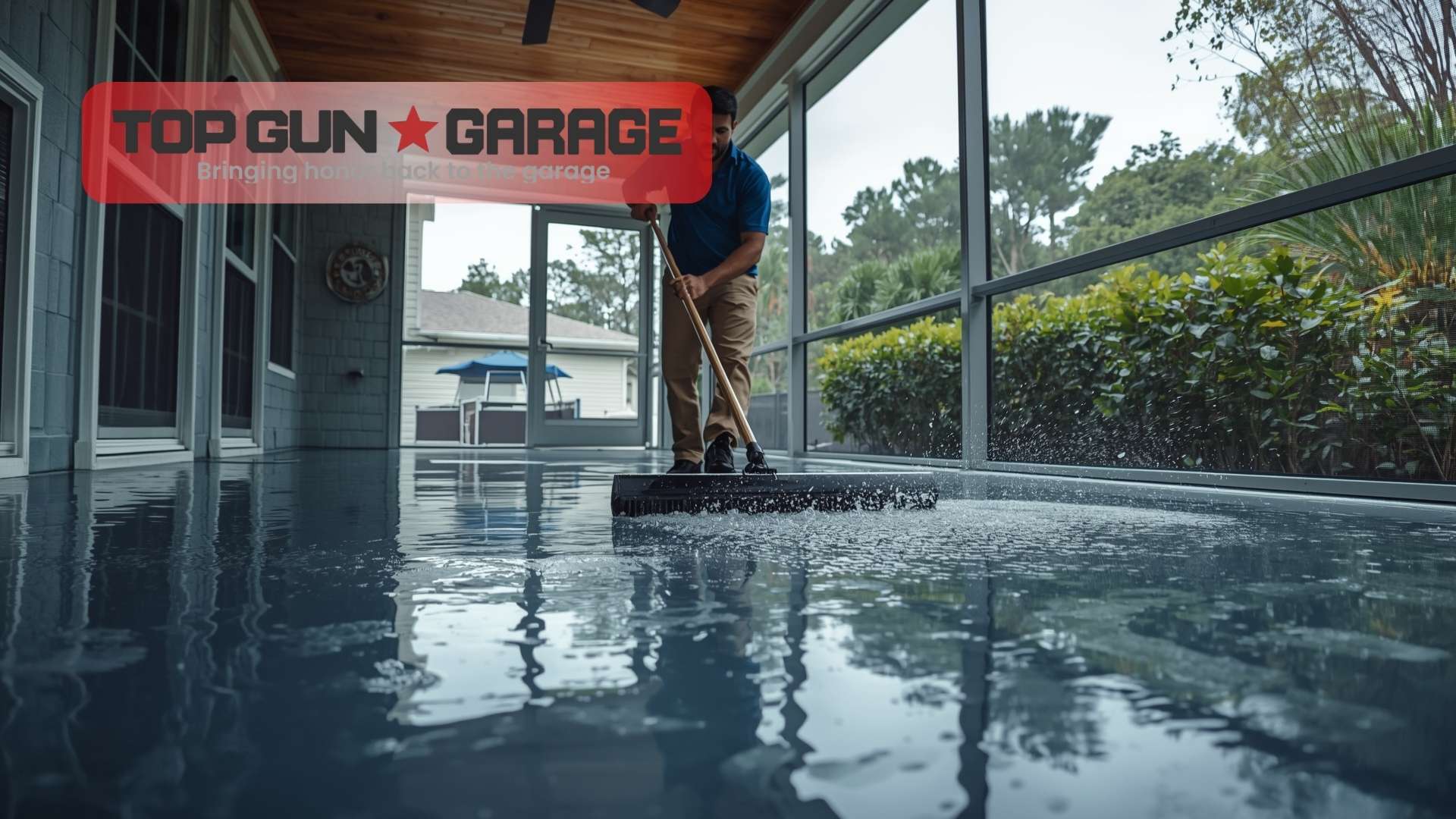
Epoxy floors require minimal but consistent maintenance to preserve their appearance and performance. In Naples, seasonal considerations dictate a slightly different approach than in drier climates. During the rainy season from June through October, lanais experience frequent wetting and drying cycles that can leave mineral deposits if water is allowed to evaporate on the surface. A quick squeegee after heavy rain prevents water spotting and reduces the risk of slip-and-fall incidents.
Quarterly deep cleaning involves a pH-neutral cleaner specifically formulated for epoxy surfaces. Avoid acidic cleaners like vinegar or citrus-based products, which can etch the topcoat over time. A microfiber flat mop with a diluted solution of 2 ounces of epoxy cleaner per gallon of warm water effectively removes pollen, salt air residue, and sunscreen oils that accumulate on lanai floors. Seasonal maintenance routines extend the functional life of epoxy flooring by 3 to 5 years beyond the manufacturer’s warranty period.
Common Mistakes and How to Avoid Them
Even with15 years of industry experience, certain pitfalls repeatedly surface in epoxy lanai installations. The most damaging error is skipping moisture testing. As James Chen, Technical Director at the Resinous Flooring Institute, states: “We’ve documented over 200 failure cases in Florida alone where contractors applied epoxy over concrete with 8 to 10 pounds of moisture vapor emission. The floors blistered within 90 days, and the homeowners were left with a $5,000 remediation bill.”
Another frequent mistake involves applying epoxy during high humidity without proper environmental controls. When relative humidity exceeds 85%, epoxy can develop amine blush—a waxy surface film that prevents topcoat adhesion and creates a cloudy appearance. Professional installers monitor dew point and use portable dehumidifiers to maintain optimal conditions. Professional installation eliminates these risks through rigorous quality control protocols.
DIY vs. Professional Installation
Home improvement stores stock epoxy kits that promise “professional results” for $150 to $300. These water-based or low-solids products lack the durability and UV resistance of commercial-grade systems. Independent testing by Consumer Reports found that DIY epoxy kits showed visible wear within 6 months of lanai use, compared to 5-plus years for professionally installed 100% solids systems. Surface preparation represents the critical differentiator—renting a concrete grinder and vacuum system costs $200 to $400 per day, and improper grinding leaves a surface too smooth for adhesion.
Environmental and Health Considerations
Modern epoxy formulations have evolved significantly from the high-VOC products of the 1990s. Zero-VOC and ultra-low-VOC options now meet California’s stringent South Coast Air Quality Management District standards, which are the most rigorous in North America. For enclosed Florida rooms with limited ventilation, specifying a zero-VOC epoxy and polyaspartic system ensures indoor air quality remains unaffected during and after installation.
Epoxy’s contribution to sustainable building practices extends beyond VOC content. The material’s 15- to 20-year service life reduces replacement frequency compared to carpet (7-10 years) or vinyl flooring (10-15 years). At end of life, epoxy-coated concrete can be reground and recoated without landfill disposal. Flooring that reduces allergens also contributes to healthier indoor environments for Naples families.
Integrating Epoxy Lanais with Smart Home Features
Naples homeowners increasingly incorporate technology into their outdoor living spaces. Epoxy flooring provides an ideal substrate for radiant heating systems that extend lanai usability into cooler winter evenings. Electric radiant heat mats installed beneath the epoxy body coat add approximately $8 to $12 per square foot but transform a three-season space into a year-round retreat. Programmable thermostats integrated with home automation systems allowlanai temperature control via smartphone.
LED lighting systems embedded in epoxy floors represent another emerging trend. Fiber-optic strands or LED strips encapsulated within clear epoxy topcoats create dramatic nighttime effects around pool perimeters and seating areas. These systems consume less than 50 watts for a typical 400-square-foot installation and can be programmed to change colors for entertaining. Commercial epoxy applications often pioneer these technologies before they migrate to residential projects.
Frequently Asked Questions
How long does epoxy flooring last on a screened lanai in Naples?
A professionally installed three-coat epoxy system with UV-stable topcoat typically lasts 15 to 20 years on a screened lanai. The screening reduces direct UV exposure, which is the primary cause of epoxy degradation. Annual cleaning and periodic topcoat renewal at the 10-year mark can extend service life to 25 years.
Can epoxy flooring be applied over existing tile in a Florida room?
Yes, epoxy can be applied over properly prepared tile surfaces. The tile must be mechanically profiled through diamond grinding to remove glaze and create adhesion. Grout lines must be filled and leveled with an epoxy filler to prevent telegraphing through the new coating. This process typically adds $2 to $3 per square foot to the project cost.
Is epoxy flooring slippery when wet around pool areas?
Standard epoxy without texture additives can be slippery when wet. However, aluminum oxide or polymer grit broadcast into the topcoat increases slip resistance to meet ADA recommendations. Textured epoxy floors achieve a wet SCOF of 0.75 to 0.85, providing excellent traction for bare feet around pool entries.
What temperature does the concrete need to be for epoxy installation?
Concrete substrate temperature must be between 60°F and 90°F during epoxy application. In Naples summers, this often requires early morning installation before slab temperatures exceed 95°F. Concrete temperature should also be at least 5°F above the dew point to prevent condensation that interferes with adhesion.
How soon can furniture be placed on a new epoxy lanai floor?
Light foot traffic is permitted after 24 hours. Furniture can be placed after 48 hours, but heavy items like outdoor kitchens or large planters should wait 72 hours to allow full cure. Protective felt pads under furniture legs prevent scratching during the first 30 days while the coating reaches maximum hardness.
Does epoxy flooring fade or yellow in Florida sun?
Epoxy base coats will yellow if exposed to direct UV without a protective topcoat. UV-stable polyaspartic or aliphatic urethane topcoats prevent yellowing for 10 to 15 years. Screened lanais filter approximately 30% of UV radiation, further extending color stability. Darker colors show less visible yellowing than whites or light grays.
Can epoxy floors be repaired if damaged?
Yes, epoxy floors are repairable. Minor scratches can be buffed out with a polishing compound. Deeper gouges require spot repair: the damaged area is ground down, new epoxy is applied, and the topcoat is feathered into the surrounding surface. Full-flake systems hide repairs more effectively than solid colors or metallics.
What is the warranty on professional epoxy lanai flooring?
Reputable Naples installers typically offer a 5- to 10-year warranty on materials and workmanship. Manufacturer warranties on commercial-grade epoxy systems range from 10 to 15 years. Warranties generally cover delamination, blistering, and excessive wear but exclude damage from improper cleaning chemicals or physical abuse.
Conclusion
Epoxy flooring represents the optimal solution for Florida rooms and lanais in Naples homes, combining durability, moisture resistance, and design versatility in a single seamless surface. The key to success lies in proper specification: a UV-stable topcoat for sun-exposed areas, moisture mitigation for slab-on-grade foundations, and slip-resistant additives for safety around wet zones. With professional installation, these floors deliver 15 to 20 years of low-maintenance performance while enhancing property value and daily livability.
Whether you are building a new home in Pelican Bay or renovating a vintage Florida room in Old Naples, the right epoxy system transforms your indoor-outdoor space into a showpiece that handles everything Southwest Florida’s climate demands. Explore epoxy flooring options for your Naples home and contact our team today for a personalized consultation and detailed project estimate.
References
- National Association of Home Builders – Indoor-outdoor living trends in Florida home construction
- Florida Home Builders Association – Slab-on-grade foundation prevalence in Southwest Florida
- ASTM International – F1869 standard test method for measuring moisture vapor emission rate of concrete subfloors
- Environmental Protection Agency – Indoor allergen reduction through hard, non-porous flooring surfaces
- HomeAdvisor – 2026 national average cost data for epoxy floor coating installation
- Consumer Reports – Independent durability testing of DIY vs. professional epoxy floor systems
- South Coast Air Quality Management District – VOC content standards for architectural coatings
- International Concrete Repair Institute – Concrete surface profile guidelines for coating adhesion