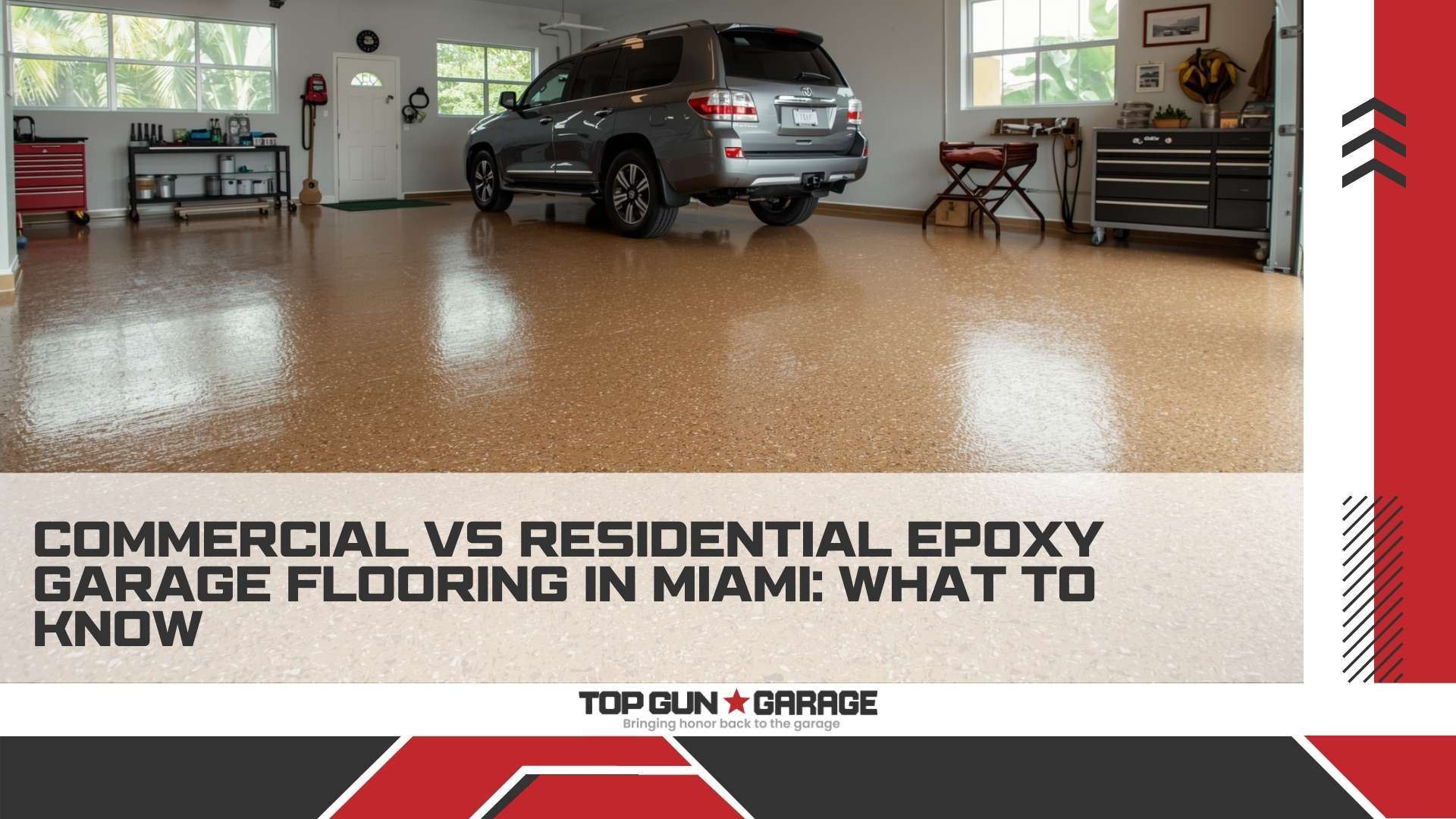
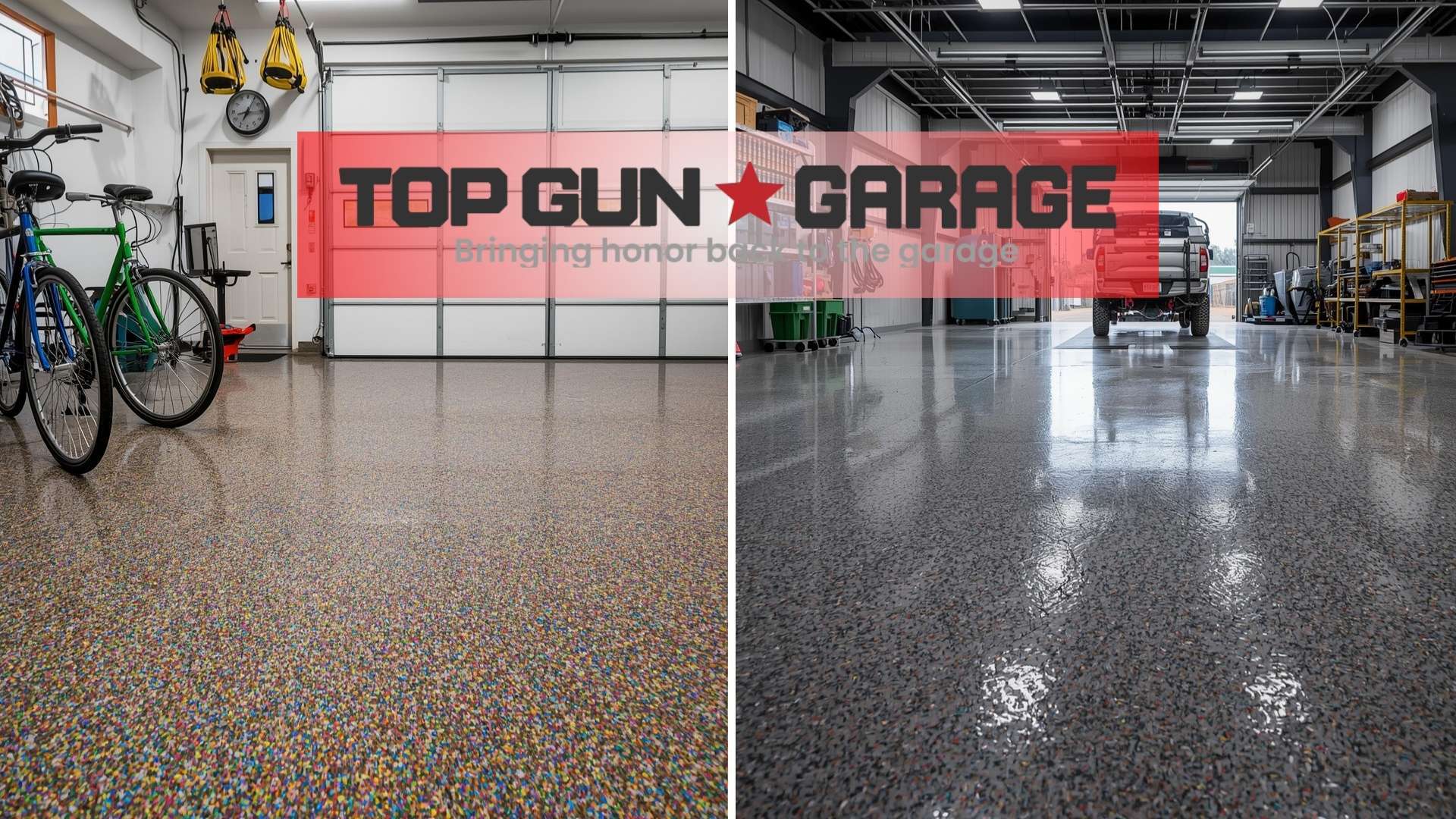
Epoxy garage flooring in Miami serves two distinct markets: commercial and residential. The core difference comes down to performance demands. Commercial epoxy systems use thicker coatings (typically 10-20 mils versus 3-5 mils for residential), industrial-grade resins, and specialized topcoats designed for heavy equipment, chemical exposure, and continuous foot traffic. Residential systems prioritize aesthetics, cost efficiency, and protection against everyday vehicle use.
According to the International Concrete Repair Institute (ICRI), commercial floor coatings must withstand loads exceeding 10,000 PSI in high-traffic applications, while residential garage floors typically experience loads under 3,000 PSI. Understanding these differences helps Miami property owners invest in the right system for their specific needs.
Key Differences at a Glance
Before diving into specifics, here is a direct comparison of commercial versus residential epoxy garage flooring systems:
Feature
Commercial Epoxy
Residential Epoxy
Coating Thickness
10-20+ mils (multi-layer)
3-5 mils (standard system)
Expected Lifespan
15-20+ years
10-15 years
Cost per Sq Ft
$7-$15+
$4-$8
Full Cure Time
5-7 days
2-3 days
Chemical Resistance
Industrial-grade (acids, solvents)
Standard (oil, gasoline, cleaners)
Impact Resistance
Heavy equipment, forklifts
Passenger vehicles, tools
Surface Prep
Shot blasting, CSP 3-5
Diamond grinding, CSP 2-3
What Defines Commercial-Grade Epoxy Systems
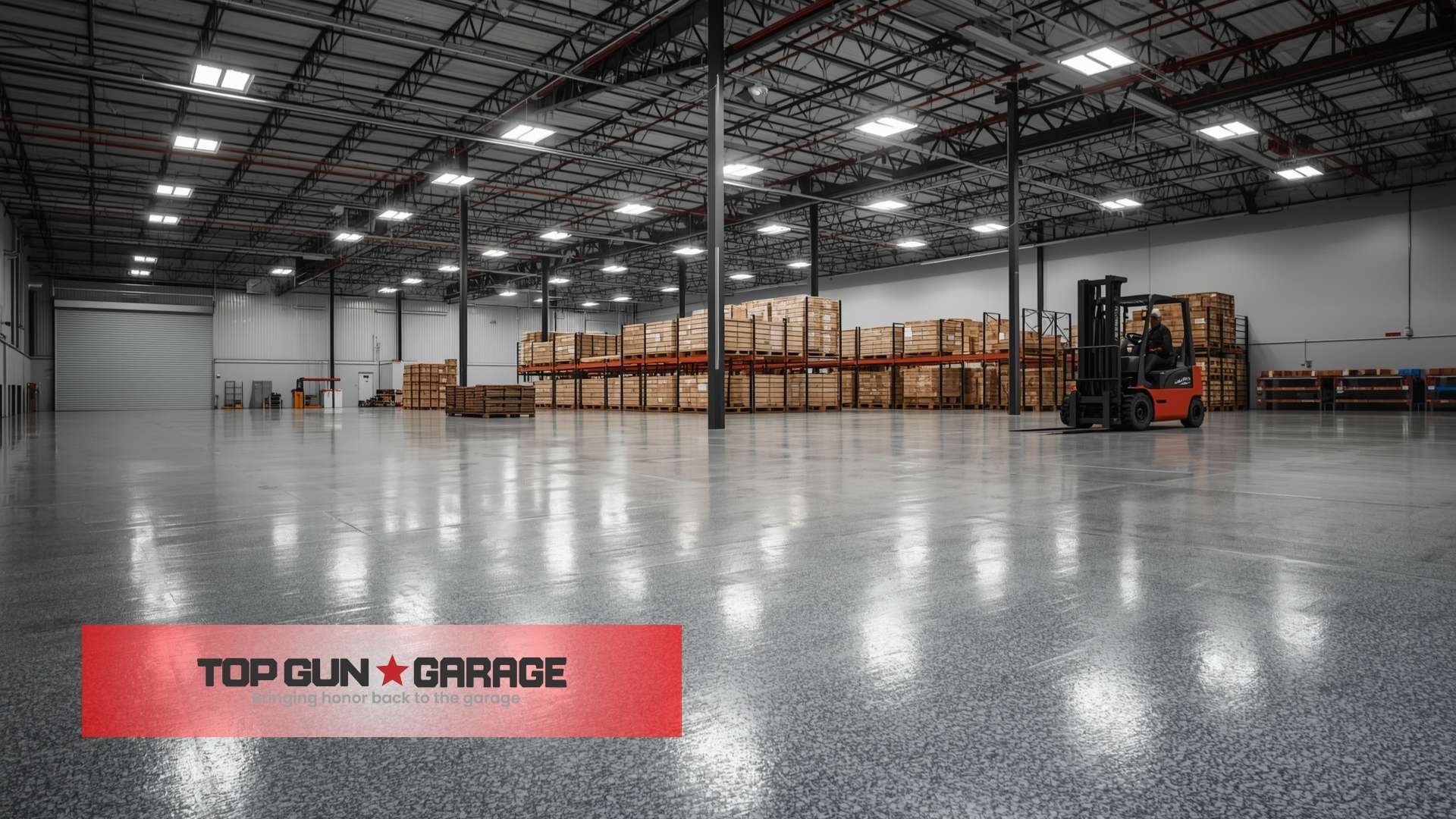
Commercial epoxy flooring is engineered for punishment. Warehouses, auto shops, manufacturing facilities, and retail spaces require coatings that handle forklift traffic, chemical spills, and thousands of footsteps daily without showing wear.
Thickness and Build
Commercial systems typically range from 10 to 20 mils in total thickness, with some heavy-duty applications exceeding 40 mils. The ASTM D7234 standard for pull-off adhesion testing recommends minimum bond strengths of 300 PSI for commercial applications. Multi-layer systems include a penetrating primer, self-leveling base coat, broadcast media layer, and UV-stable topcoat.
Learn more about how epoxy thickness affects floor lifespan in our detailed guide.
Chemical and Abrasion Resistance
Industrial formulations resist a broader range of chemicals including sulfuric acid, hydraulic fluid, brake cleaner, and industrial solvents. The Society for Protective Coatings (SSPC) rates commercial epoxies for chemical exposure periods of 24 hours or more, compared to residential systems rated for spot cleaning within 30 minutes.
For businesses concerned about chemical exposure, our article on what determines epoxy chemical resistance ratings explains the testing standards involved.
Surface Preparation Standards
Commercial installations require aggressive surface profiling. Shot blasting creates a Concrete Surface Profile (CSP) of 3-5, as defined by ICRI Technical Guideline No. 310.2R. This deeper profile creates more surface area for mechanical adhesion, critical for heavy-load environments.
Explore what concrete grinding preparation means for a closer look at why prep determines coating success.
What Defines Residential Epoxy Systems
Residential garage epoxy balances durability with aesthetics and value. Miami homeowners want floors that resist hot tire pickup, look attractive, and protect against oil drips without requiring industrial-level investment.
Thickness and Performance
Standard residential systems apply at 3-5 mils total, though premium polyaspartic and polyurea hybrids can reach 8-10 mils. This thickness handles passenger vehicles, motorcycles, bicycles, and typical garage activities without the cost of commercial-grade systems.
See what epoxy thickness works best for Florida garages for region-specific recommendations.
Aesthetic Options
Residential systems offer more decorative flexibility. Metallic epoxy creates unique three-dimensional patterns that mimic marble or flowing lava. Flake systems provide texture and hide imperfections while adding slip resistance. Solid colors create clean, showroom-style finishes.
Browse design inspiration in our metallic epoxy flooring and flake color chart galleries.
Hot Tire Resistance
Miami heat makes hot tire pickup a primary concern for homeowners. Quality residential systems include polyurea or polyaspartic topcoats that withstand tire temperatures exceeding 250 degrees Fahrenheit without lifting or delaminating. Budget systems without proper topcoats fail within 1-2 years under Florida conditions.
Understand causes of hot tire pickup on epoxy garage floors and how professional systems prevent this common failure.
Miami Climate Considerations for Both Systems
South Florida presents unique challenges regardless of application type. High humidity, salt air, intense UV exposure, and hurricane-season moisture affect both commercial and residential installations.
Humidity and Moisture
Miami averages 75% relative humidity, with summer months regularly exceeding 85%. The Florida Building Code requires moisture testing before coating installation. ASTM F2170 in-situ relative humidity testing should show readings below 75% RH at 40% depth before proceeding with standard epoxy. Higher readings require moisture mitigation systems.
Review our resources on how moisture affects epoxy installation and moisture vapor barriers under Florida epoxy.
Salt Air Exposure
Coastal properties face accelerated degradation from salt-laden air. Research from the Florida Department of Transportation shows chloride penetration degrades coating adhesion by 15-20% faster in coastal zones versus inland locations. Both commercial and residential systems benefit from marine-grade primers and UV-stable topcoats designed for coastal applications.
Learn how Florida salt air affects epoxy durability to protect your investment.
Hurricane Season Preparation
Flooding presents challenges for all floor coatings. Properly installed epoxy systems act as moisture barriers that protect concrete from water intrusion during storm events. Commercial systems with integral moisture mitigation perform better in repeated flood conditions than standard residential installations.
Read about garage floor coating before hurricane season and maintaining epoxy floors through Florida hurricanes.
Cost Analysis: Commercial vs Residential
Investment levels differ significantly between commercial and residential applications. Understanding the true cost requires looking beyond square-foot pricing.
The installation process varies significantly between commercial and residential applications, affecting both timeline and disruption.
Commercial Installation Timeline
Commercial projects typically require 3-5 days of active work followed by 5-7 days of curing before full service. The process includes comprehensive concrete testing, shot blasting or scarification, crack injection, moisture mitigation installation, multiple epoxy layers, broadcast media, and UV-stable topcoat application. Larger facilities may require phased installation to maintain business operations.
Residential Installation Timeline
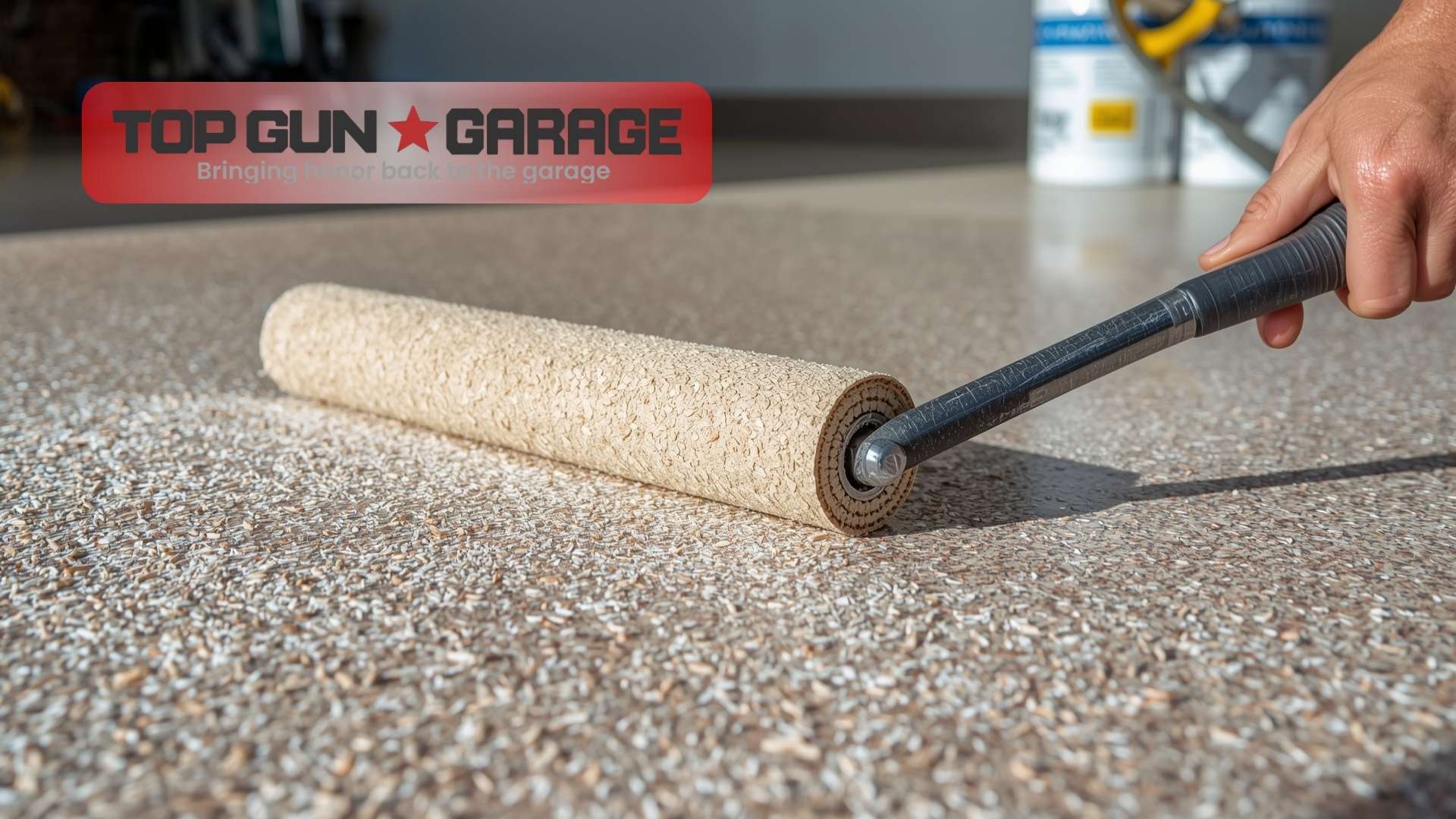
Most residential garage floors complete in 1-2 days with light foot traffic possible within 24 hours and vehicle traffic within 72 hours. The streamlined process includes diamond grinding, primer application, base coat with flake or metallic broadcast, and protective topcoat. Same-day polyaspartic systems can reduce this to 4-6 hours of application time.
Learn how long garage floor installation takes and review the garage floor preparation checklist before your project begins.
Warranty Considerations
Warranty coverage differs substantially between commercial and residential systems. Commercial warranties typically offer 10-20 year coverage with specific exclusions for abuse beyond rated specifications. Residential warranties range from 5-15 years and often cover hot tire pickup, delamination, and chemical staining under normal use conditions.
According to industry data from the Coating Adhesion Testing Association, 78% of warranty claims result from improper surface preparation rather than product failure. Choosing a qualified installer matters more than selecting the most expensive coating system.
Understand what determines epoxy floor warranty coverage and compare garage floor coating warranty comparison options.
Frequently Asked Questions
Can I use commercial epoxy in my home garage?
Yes. Commercial-grade epoxy works in residential settings and provides superior durability. The tradeoff involves higher cost (approximately 40-60% more than residential systems) and longer cure times. Homeowners who use their garage as a workshop, store heavy equipment, or plan to stay in their home long-term often find commercial systems more cost-effective over a 15-20 year ownership period.
How thick should epoxy be for a Miami garage floor?
Residential garage floors in Miami perform well with 5-8 mil total system thickness using a polyurea or polyaspartic topcoat for hot tire resistance. Commercial applications require 10-20 mils minimum. Florida Building Code does not specify minimum epoxy thickness, but ASTM C836 recommends at least 10 mils for industrial applications subject to abrasive wheel traffic.
What is the best epoxy flooring for Miami humidity?
Moisture-tolerant epoxy systems with integral vapor barriers perform best in Miami’s 75%+ average humidity. Look for products rated for application at up to 85% relative humidity with vapor transmission rates below 3 lbs/1000 sq ft/24 hours. Polyaspartic systems offer additional moisture tolerance during application compared to traditional 100% solids epoxy.
How long does commercial epoxy flooring last in Florida?
Properly installed commercial epoxy systems last 15-20 years or longer in Florida conditions with appropriate maintenance. The Florida Department of Business and Professional Regulation documents commercial floor coating lifespans averaging 18 years in warehouse and manufacturing environments. Residential systems average 10-15 years before requiring recoating.
Is commercial epoxy worth the extra cost for a residential garage?
Commercial systems make financial sense when the 10-year lifecycle cost comparison favors durability over initial savings. For a 500 square foot garage, commercial installation at $6,000 lasting 20 years costs $300 per year. Residential at $3,500 lasting 12 years costs $292 per year, but requires a second installation. Total 20-year cost: commercial $6,000 vs residential $7,000.
What causes epoxy floor failure in Miami garages?
The top three causes of epoxy failure in Miami are inadequate surface preparation (45% of failures), moisture vapor transmission from concrete (32%), and hot tire pickup from insufficient topcoat quality (18%). Choosing a contractor who performs moisture testing, uses proper surface profiling equipment, and applies appropriate topcoat systems prevents most premature failures.
Get the Right System for Your Miami Property
Top Gun Garage serves homeowners and businesses throughout Southwest Florida with professional epoxy flooring installation. Our team evaluates your specific requirements, tests concrete conditions, and recommends the appropriate system for your application and budget.
Whether you need a durable residential garage floor or a heavy-duty commercial system, we deliver installations backed by comprehensive warranties and decades of combined experience.
Request a free estimate or explore our commercial epoxy flooring and residential epoxy garage floor services.
 Skip to content



 According to the International Concrete Repair Institute (ICRI), commercial floor coatings must withstand loads exceeding 10,000 PSI in high-traffic applications, while residential garage floors typically experience loads under 3,000 PSI. Understanding these differences helps Miami property owners invest in the right system for their specific needs.
 According to industry data from the Coating Adhesion Testing Association, 78% of warranty claims result from improper surface preparation rather than product failure. Choosing a qualified installer matters more than selecting the most expensive coating system.
Understand what determines epoxy floor warranty coverage and compare garage floor coating warranty comparison options.
According to industry data from the Coating Adhesion Testing Association, 78% of warranty claims result from improper surface preparation rather than product failure. Choosing a qualified installer matters more than selecting the most expensive coating system.
Understand what determines epoxy floor warranty coverage and compare garage floor coating warranty comparison options.