 Skip to content



Solving garage floor drainage issues Naples homeowners face is a critical concern that goes beyond mere inconvenience, affecting the structural integrity of your home and the usability of your garage space. In Southwest Florida’s unique climate, where afternoon thunderstorms dump inches of rain within minutes and the water table sits just feet below ground level, drainage problems can quickly escalate from minor puddles to major flooding that damages vehicles, stored belongings, and the concrete slab itself. Many Naples residents assume that water pooling in their garage is simply an unavoidable consequence of living in a coastal environment, but the truth is that most drainage issues stem from correctable design flaws, installation errors, or inadequate maintenance that can be addressed with the right solutions.
Standing water in your garage creates a host of problems that extend far beyond the immediate frustration of stepping into puddles or tracking water into your home. Persistent moisture promotes the growth of mold and mildew that can trigger respiratory issues and allergies, deteriorates concrete through freeze-thaw cycles and chemical reactions with salts, and makes it nearly impossible to maintain an attractive floor coating that stays bonded to the substrate. For homeowners who have invested in quality epoxy or polyaspartic floor systems, drainage problems can undermine that investment by causing delamination, bubbling, or discoloration that forces premature replacement. The humidity and rainfall patterns characteristic of Naples make proper drainage not just desirable but essential for protecting your property value and maintaining a functional garage space.
At Top Gun Garage, we have encountered virtually every drainage scenario imaginable in Southwest Florida homes, from simple grade problems that redirect water toward the garage instead of away from it, to complex issues involving inadequate floor drains, compromised vapor barriers, and hydrostatic pressure from rising groundwater. Our experience has taught us that effective solutions must address both the immediate symptoms like standing water and the underlying causes such as improper slope or missing drainage infrastructure. Understanding the relationship between surface preparation and moisture management is essential for any homeowner dealing with these challenges.
This comprehensive guide will walk you through identifying the source of your drainage problems, understanding how Naples’ climate contributes to these issues, and implementing effective solutions that range from simple DIY fixes to professional remediation that transforms your garage into a dry, functional space. Whether you are dealing with rainwater infiltration, condensation, or groundwater seepage, we will provide the knowledge and strategies you need to reclaim your garage from moisture problems. Let’s explore how to keep your Naples garage dry and protected year-round.
Key Takeaways
-
Identify the Source: Understanding whether water comes from outside, condensation, or groundwater determines the correct solution approach.
-
Slope is Critical: Garages should slope toward the door or drain at minimum 1/8 inch per foot for effective water evacuation.
-
Trench Drains Work: Channel drainage systems installed at the garage entrance effectively intercept and redirect rainwater before it enters.
-
Moisture Testing Essential: Professional assessment of vapor transmission prevents coating failures and identifies hidden problems beneath the surface.
-
Integrated Solutions: Combining proper slope, drainage infrastructure, and moisture-resistant coatings provides comprehensive protection for Naples homes.
Understanding Naples’ Unique Drainage Challenges
Southwest Florida’s geography and climate create a perfect storm of conditions that make garage drainage particularly challenging compared to other regions of the country. Naples sits at an average elevation of only six feet above sea level, with the water table typically located just three to five feet below ground surface in many residential areas. This proximity to groundwater means that hydrostatic pressure constantly pushes moisture upward through the concrete slab in a process called vapor transmission, which can deposit moisture on the garage floor even during dry weather. Homeowners often mistake this moisture for condensation or believe their slab is “sweating,” when in reality groundwater vapor is permeating through the concrete pores and evaporating on the surface.
The region’s rainfall patterns compound this challenge with dramatic seasonal variations and intense storm events that drop enormous amounts of water in short periods. During the summer wet season from June through September, Naples receives an average of seven to nine inches of rain per month, often delivered in afternoon thunderstorms that produce several inches within an hour. These sudden deluges overwhelm drainage systems that were marginally adequate under normal conditions, causing water to pool against foundation walls, flow under garage doors, and infiltrate through any available opening. The flat topography that characterizes most of Southwest Florida means water has nowhere to run naturally, making proper grading and drainage infrastructure absolutely essential rather than optional.
Hurricane season brings an additional layer of complexity with storm surge potential and sustained heavy rainfall that can persist for days during tropical systems. Even properties that have adequate drainage under normal conditions may experience flooding when storms dump 10 to 20 inches of rain over extended periods, saturating the ground and causing the water table to rise dramatically. Understanding moisture-related challenges specific to our climate is crucial for developing effective long-term solutions rather than temporary fixes that fail during the next major weather event.
The combination of high humidity year-round, frequent rainfall, low elevation, and a shallow water table means that Naples garage owners must be proactive rather than reactive when addressing drainage issues. Waiting until water becomes a visible problem often means the concrete has already been compromised by moisture intrusion, potentially requiring expensive repairs or remediation before protective coatings can be successfully applied. Early intervention and proper design from the beginning save money and frustration in the long run by preventing damage rather than trying to repair it after the fact.
Identifying Your Drainage Problem: Sources and Symptoms
Before you can solve a drainage problem effectively, you must accurately identify where the water is coming from and understand the mechanisms bringing it into your garage space. The most obvious source is rainwater infiltration through or under the garage door, which occurs when the door threshold seal has deteriorated or when the apron outside the garage slopes toward the building instead of away from it. This type of problem typically manifests during or immediately after rain events, with water flowing under the door in sheets or accumulating in puddles just inside the entrance. If you notice water entering only during storms and it appears to flow in from outside, this is almost certainly your issue and is often the easiest to address with proper grading or drainage installation.
Condensation is another common source that homeowners frequently misdiagnose as a leak or groundwater problem, especially during Naples’ humid summer months when temperature differences between the cool concrete slab and warm moist air cause water to condense on the floor surface. This typically appears as widespread dampness or small droplets across the entire floor rather than puddles in specific locations, and it tends to be worse during early morning hours when temperatures are lowest. While condensation rarely causes the volume of water that infiltration or groundwater creates, it still promotes mold growth and can interfere with floor coating adhesion if not properly addressed through dehumidification or ventilation improvements.
Groundwater seepage represents the most challenging drainage issue because it originates beneath the slab and is driven by hydrostatic pressure that pushes moisture upward through the concrete regardless of surface conditions. This problem typically presents as persistent dampness that appears during dry weather, often worse in certain areas of the floor where the concrete may be thinner or more porous. You may notice efflorescence, which appears as white crystalline deposits on the concrete surface where salts have been carried up by migrating moisture and left behind as the water evaporates. Properties built on grade without proper vapor barriers are particularly susceptible to this issue, which requires professional assessment and specialized solutions.
Finally, plumbing leaks from water heaters, HVAC condensate lines, or supply pipes can create standing water that mimics drainage problems but requires completely different solutions. These leaks typically create isolated puddles that persist even during dry weather and may grow slowly over time as the leak worsens. Identifying the true source of your water problem is essential because applying the wrong solution wastes money and delays effective resolution, potentially allowing damage to worsen in the meantime. Understanding whether uneven surfaces contribute to water pooling helps distinguish between slope problems and actual water intrusion.
Assessing and Correcting Floor Slope
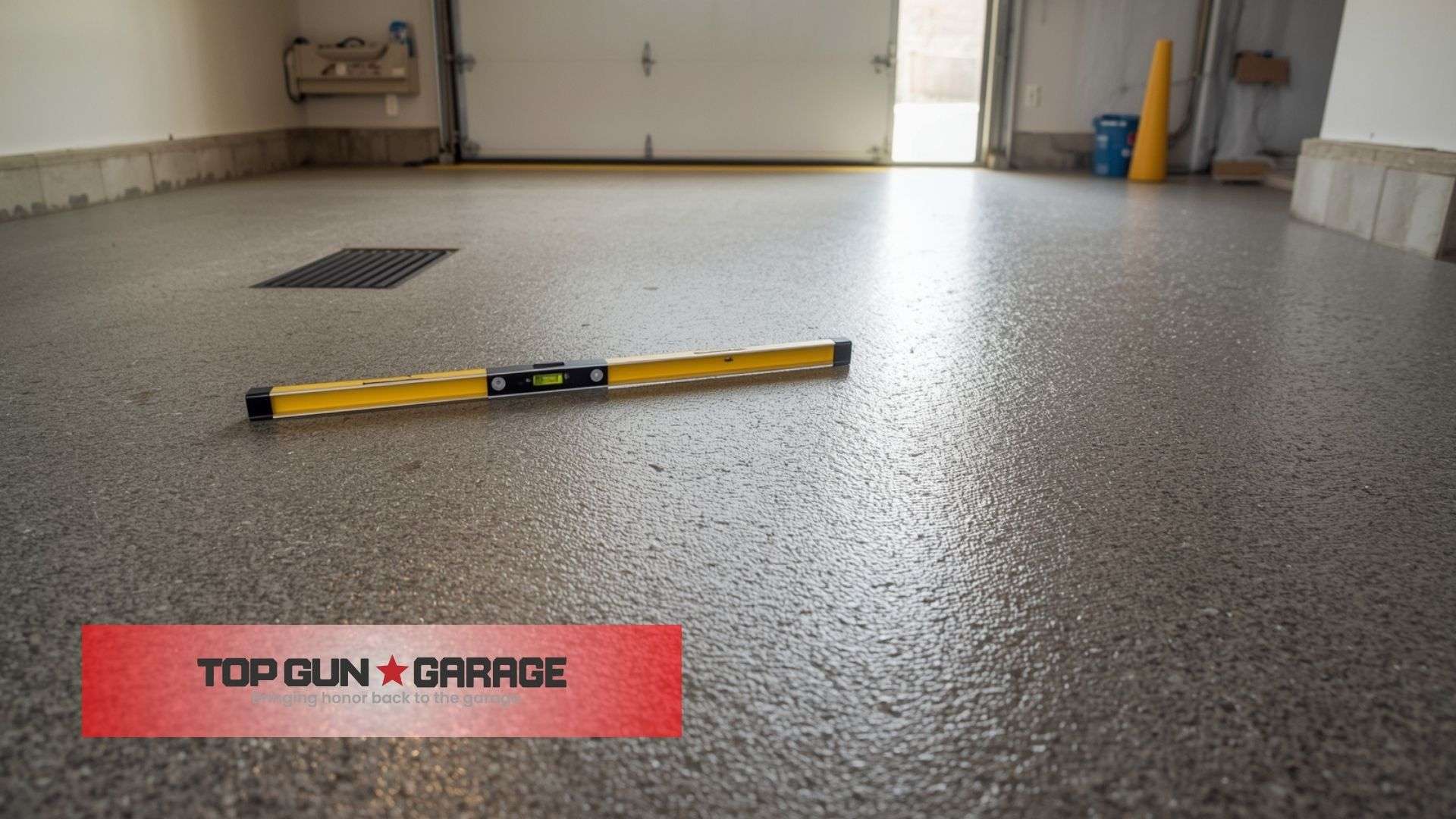
One of the most fundamental elements of proper garage drainage is adequate floor slope that allows water to flow naturally toward the garage door or a floor drain rather than pooling in low spots. Building codes typically require a minimum slope of 1/8 inch per foot (approximately 1% grade) from the back of the garage toward the entrance, but many older Naples homes were constructed with inadequate slope or have settled over time in ways that create low points where water accumulates. Assessing your existing slope is a straightforward process that requires only a long straightedge or level and a tape measure to determine whether your floor meets minimum standards or needs correction.
To check your garage slope, place a long level or straight board on the floor running from the back wall toward the garage door, then measure the gap beneath the level at various points to calculate the slope. A proper slope should show the back of the garage to be noticeably higher than the front, with at least 1/8 inch of drop for every horizontal foot of distance. If your measurements reveal inadequate slope, flat areas, or even reverse slope where the floor is higher near the door than at the back, you have identified a primary cause of drainage problems that allows water to flow inward or pool rather than evacuating naturally toward the exit.
Correcting inadequate slope typically requires one of two approaches depending on the severity of the problem and your budget constraints. For minor slope issues where the floor is relatively level but lacks the necessary pitch, self-leveling concrete overlays or specialized slope correction compounds can be applied to build up the back of the garage and create proper drainage pitch without major demolition. These products are designed to bond to existing concrete and can be feathered to create a gradual slope that looks natural rather than creating an obvious raised platform. For more severe problems involving significant low spots or reverse slope, grinding down high areas and patching low ones may be necessary before applying a resurfacing system that establishes correct grade throughout the space.
Professional assessment is valuable when dealing with slope problems because seemingly obvious solutions can sometimes create new issues if not properly engineered. For example, simply building up the entire garage floor to create slope might raise the floor level enough to interfere with door operation or create a tripping hazard at the threshold. Similarly, if your garage already has a floor drain, altering the slope without considering the drain location could actually direct water away from it rather than toward it, defeating the purpose of the modification. Working with experts who understand the relationship between surface leveling and drainage optimization ensures your solution actually solves the problem rather than creating new complications.
Installing Drainage Systems: Drains, Channels, and Trenches
When proper slope alone cannot adequately address your drainage problem due to site constraints, heavy rainfall volumes, or existing elevation issues that cannot be easily corrected, installing dedicated drainage infrastructure becomes necessary. Floor drains represent the traditional solution for garage drainage, typically located at the lowest point of the floor and connected to either the municipal storm sewer system or an on-site drainage field. These drains effectively remove water that accumulates on the floor surface, provided the floor is properly sloped toward them and they are adequately sized for the expected water volume. However, adding a floor drain to an existing garage requires cutting through the concrete slab, excavating beneath to install drain pipe, and connecting to an appropriate discharge point, making this a major project that requires professional plumbing and concrete work.
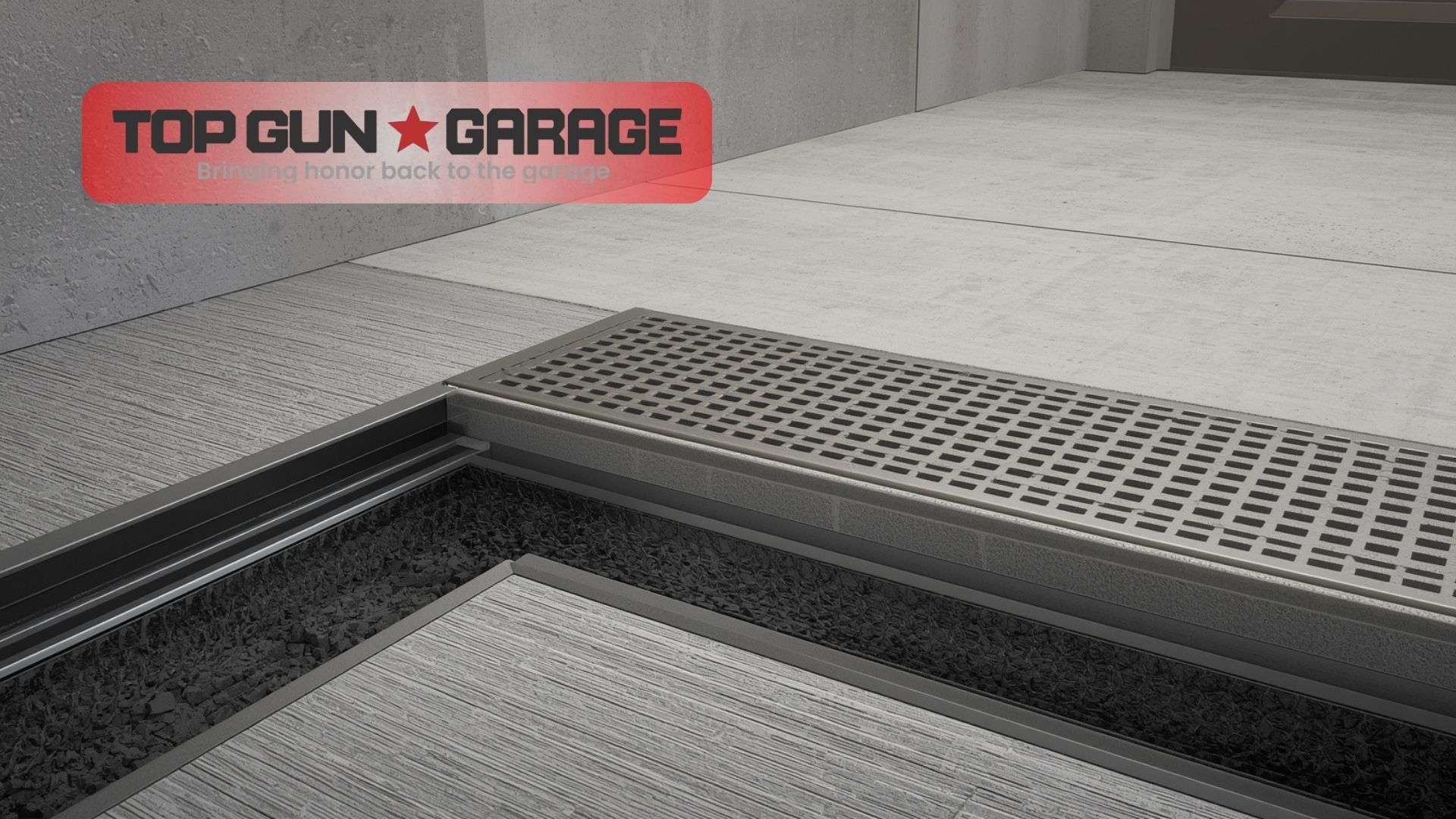
Trench drains or channel drains installed across the garage entrance offer a less invasive but highly effective alternative that intercepts water before it enters the garage rather than trying to remove it afterward. These linear drainage systems consist of a long narrow channel covered with a grate that spans the width of the garage door opening, collecting water that flows toward the garage and directing it to side discharge points or underground drainage pipes. Installation involves saw-cutting a trench in the concrete apron just outside or just inside the garage door threshold, setting the channel assembly in place, and connecting it to appropriate drainage infrastructure that carries water away from the building. The advantage of this approach is that it prevents water from ever reaching the main garage floor area, eliminating the need for slope correction and keeping the interior dry even during heavy storms.
For properties experiencing severe drainage challenges from multiple directions or dealing with high-volume water flow during storms, French drains or curtain drains installed around the perimeter of the garage can intercept subsurface water flow before it reaches the foundation. These systems consist of perforated pipes buried in gravel-filled trenches that collect groundwater and surface runoff, directing it away from the structure through gravity drainage to a suitable discharge point. While more extensive than surface drainage solutions, perimeter drainage systems address both surface water and shallow groundwater issues simultaneously, providing comprehensive protection that prevents water from reaching the garage regardless of source or entry point.
Selecting the appropriate drainage infrastructure depends on your specific situation, available budget, and site conditions that may constrain certain options. A thorough assessment by professionals familiar with Naples’ drainage challenges and local building codes ensures your solution is properly designed, adequately sized for expected water volumes, and legally compliant with regulations governing water discharge. The investment in proper drainage infrastructure pays dividends in protecting your property value and enabling successful application of durable floor coatings that cannot perform properly in persistently wet environments.
Addressing Groundwater and Vapor Transmission Issues
When drainage problems originate beneath the slab rather than from surface water infiltration, surface-based drainage solutions alone will not resolve the issue permanently. Groundwater vapor transmission occurs when hydrostatic pressure forces moisture upward through the porous concrete matrix, emerging on the floor surface where it creates persistent dampness that interferes with coating adhesion and promotes mold growth. This problem is particularly common in Naples due to the shallow water table and becomes more pronounced during the rainy season when groundwater levels rise and increase the pressure differential pushing moisture upward. Properties built without proper vapor barriers under the slab are especially vulnerable to this issue, which can deposit surprising amounts of moisture even during periods without rainfall.
Professional moisture testing is essential for accurately diagnosing vapor transmission problems and determining the severity of the issue before attempting remediation or coating application. Calcium chloride testing involves placing specialized test kits on the floor surface for 60 to 72 hours to measure the rate of moisture emission from the concrete, providing quantifiable data about vapor transmission rates. Most coating manufacturers specify maximum allowable moisture vapor emission rates for successful application, typically ranging from three to five pounds per 1,000 square feet per 24 hours. If your concrete exceeds these thresholds, applying standard coatings will result in bubbling, delamination, or complete failure within weeks or months as trapped moisture tries to escape through the coating layer.
When testing reveals elevated moisture vapor transmission that exceeds coating specifications, specialized moisture mitigation primers or vapor barrier coatings must be applied before installing decorative top coats. These products are formulated with very low molecular weight that allows them to penetrate deeply into the concrete surface, where they react with minerals in the concrete to form a crystalline structure that blocks moisture passage. Two-component epoxy moisture barriers represent another approach, using thick coatings with low permeability that physically block moisture from reaching the surface. While these solutions add cost to the project, they are absolutely necessary for achieving long-lasting results in high-moisture environments where standard coatings would fail quickly.
In severe cases where vapor transmission rates are extremely high or where previous mitigation attempts have failed, more aggressive solutions may be necessary. These can include installing a surface-applied vapor barrier membrane system that mechanically blocks moisture, or in extreme cases, removing the existing slab and installing a new one with proper vapor barriers and drainage systems incorporated into the base structure. While these represent significant investments, they may be the only viable long-term solution for garages experiencing severe groundwater problems that cannot be controlled through exterior drainage improvements alone. Understanding the science behind moisture barriers helps homeowners appreciate why these measures are sometimes necessary rather than optional.
Improving Drainage Around Your Garage Exterior
Many garage drainage problems actually originate outside the structure due to improper grading, clogged gutters, or inadequate surface drainage that directs water toward the building rather than away from it. The ground immediately surrounding your garage should slope away from the foundation at a minimum rate of 6 inches of drop over the first 10 feet of horizontal distance, creating positive drainage that prevents water from pooling against foundation walls or flowing under doors. Over time, landscaping changes, soil settlement, or erosion can alter these grades in ways that reverse drainage patterns, causing water to flow toward your garage even if the original construction was properly graded. Walking around your property during a rainstorm with attention to where water flows and pools provides valuable insight into drainage patterns that may be contributing to interior moisture problems.
Gutters and downspouts play a critical role in managing roof runoff and preventing it from overwhelming the ground around your garage foundation. A single inch of rainfall on a 2,000 square foot roof generates approximately 1,250 gallons of water that must be collected and directed away from the building to prevent foundation problems and water infiltration. Clogged gutters overflow and dump this massive water volume directly adjacent to foundation walls, where it can easily find its way into the garage through under-slab infiltration or through gaps around door thresholds. Regular gutter cleaning and ensuring downspouts discharge at least five to ten feet away from the foundation through splash blocks or buried drain pipes represents one of the most cost-effective drainage improvements you can make.
For properties where regrading is impractical due to landscaping constraints, existing hardscaping, or elevation issues relative to neighboring properties, installing French drains or other subsurface drainage systems around the garage perimeter provides an alternative solution. These systems intercept water before it reaches the foundation, collecting it in perforated pipes surrounded by drainage stone and directing it to appropriate discharge points away from the structure. While installation requires excavation and is more expensive than simple regrading, it provides reliable long-term drainage improvement that works even during heavy storms when surface water volumes overwhelm natural drainage patterns.
Strategic use of swales, which are broad shallow depressions that channel water across the landscape, can also redirect drainage away from your garage when properly designed and located. These landscape features blend naturally into yard aesthetics while serving important functional purposes in managing stormwater. Similarly, permeable paving materials for walkways and patios adjacent to the garage allow water to infiltrate into the ground rather than running off toward the structure, reducing the total volume of water that must be managed through other drainage infrastructure. Taking a comprehensive approach to water management that addresses the entire property rather than just the garage interior typically yields the best long-term results.
Choosing Moisture-Resistant Floor Coatings
Once you have addressed the drainage and moisture problems affecting your garage through proper slope correction, drainage installation, and vapor mitigation as needed, selecting the right floor coating completes the protection system. Not all coating products perform equally in moisture-prone environments, and choosing materials specifically formulated for high-humidity conditions like those found in Naples ensures your investment will not fail prematurely due to moisture-related delamination or bubbling. Standard residential-grade epoxy kits from big-box stores often lack the moisture tolerance necessary for Florida applications, particularly in garages where drainage has been problematic or vapor transmission rates are elevated even after mitigation efforts.
Professional-grade 100% solids epoxy systems provide significantly better moisture tolerance than water-based or solvent-based alternatives due to their chemical composition and the thickness they achieve when properly applied. These materials create a robust barrier that resists moisture penetration from both the surface and from beneath, provided the concrete has been properly prepared and any necessary moisture mitigation steps have been completed. When paired with appropriate primers designed for moisture-prone substrates, 100% solids epoxy creates a long-lasting system that protects the concrete while delivering the aesthetic benefits homeowners desire in their garage space.
Polyaspartic coatings applied as topcoats over epoxy base systems offer additional moisture resistance while providing UV stability and rapid cure times that minimize project duration. The low permeability of properly applied polyaspartic creates an additional barrier against moisture transmission while delivering the scratch resistance and chemical tolerance necessary for demanding garage environments. This layered approach combining materials optimized for different functions typically outperforms single-product systems, especially in challenging moisture conditions. Understanding coating chemistry helps explain why professional multi-layer systems consistently outperform DIY single-coat alternatives in real-world conditions.
In situations where extreme moisture conditions persist despite mitigation efforts, specialized moisture-tolerant coating systems designed for underwater or continuously wet applications may be necessary. These products use unique chemistry that actually cures in the presence of moisture rather than being inhibited by it, though they typically sacrifice some aesthetic qualities compared to standard systems. While more expensive and less widely available, they represent viable solutions for particularly challenging moisture situations that would cause standard coatings to fail. Consulting with experienced professionals who understand both the coating products and Naples’ moisture challenges ensures appropriate material selection for your specific situation and realistic expectations about long-term performance.
Frequently Asked Questions (FAQ)
1. Why does my garage floor always feel damp even when it hasn’t rained? This is typically caused by vapor transmission from groundwater beneath the slab pushing moisture upward through the porous concrete, especially common in Naples due to our shallow water table.
2. Can I apply epoxy coating over a damp garage floor? No. Moisture must be below manufacturer specifications before coating application, or the coating will fail through bubbling and delamination. Professional moisture testing determines if mitigation is needed.
3. How much does it cost to install a trench drain in an existing garage? Trench drain installation typically costs $1,500 to $4,000 depending on width, length, and drainage complexity, but prevents water entry and protects the interior floor investment.
4. Will a dehumidifier solve my garage moisture problems? Dehumidifiers help with airborne humidity and condensation but cannot address water infiltration or vapor transmission from beneath the slab, which require drainage and sealing solutions.
5. Can I just seal my garage floor to stop water from coming up? Standard sealers will not block vapor transmission from groundwater pressure. Only specialized moisture barrier systems designed for this purpose can effectively manage subsurface moisture.
6. How do I know if my drainage problem is from rainwater or groundwater? Rainwater problems occur during or immediately after storms and enter from doors or above-grade openings. Groundwater moisture is persistent even during dry weather and appears across the floor surface.
7. Is it normal for garage floors to sweat in Florida? While condensation can occur during humid weather, persistent “sweating” usually indicates vapor transmission from groundwater rather than atmospheric condensation and requires different solutions.
8. Can regrading my yard solve garage water problems? Proper exterior grading away from the garage solves rainwater infiltration issues but will not address vapor transmission or groundwater problems that originate beneath the slab.
9. Do I need a permit to install garage drainage in Naples? Most drainage work requires permits in Naples to ensure proper connection to storm systems and compliance with environmental regulations. Professional contractors handle permitting as part of their service.
10. How long does moisture mitigation last before needing reapplication? Properly applied moisture barrier systems typically provide decades of protection, though effectiveness depends on product quality, application technique, and severity of ongoing moisture pressure.
Conclusion
Solving garage drainage problems in Naples requires understanding the complex interaction between our unique climate, local geology, and building practices that create moisture challenges more demanding than those faced in many other regions. By accurately identifying whether your problem originates from surface water infiltration, atmospheric condensation, or subsurface vapor transmission, you can select and implement solutions that actually address the root cause rather than just treating symptoms. The investment in proper drainage infrastructure, slope correction, and moisture mitigation pays long-term dividends in protecting your property value and enabling successful application of beautiful floor coatings that enhance rather than detract from your home’s appeal.
Taking a comprehensive approach that addresses both interior and exterior drainage issues simultaneously typically yields the best results and prevents the frustration of implementing partial solutions that fail during the next major storm. Simple fixes like improving gutter function and adjusting grades around your garage perimeter often solve or significantly reduce moisture problems at minimal cost, while more complex issues involving subsurface water may require professional assessment and specialized solutions that justify their expense through effectiveness. The key is understanding that most drainage problems are correctable with the right diagnosis and appropriate remediation rather than accepting them as unavoidable consequences of living in Southwest Florida.
Professional guidance from contractors experienced with Naples’ specific drainage challenges ensures solutions are properly engineered for local conditions rather than based on generic recommendations that may not apply to our climate and geology. From initial assessment through material selection and installation, working with knowledgeable professionals prevents costly mistakes and ensures code compliance with local regulations governing water management. Their experience with similar problems in hundreds of area homes provides valuable insight that simply cannot be replicated through internet research or trial-and-error DIY attempts.
Ready to eliminate the drainage problems plaguing your Naples garage and create a dry, functional space you can actually use year-round? Contact Top Gun Garage today for a comprehensive drainage assessment and customized solution plan that addresses your specific situation. Our team will identify the sources of your moisture problems, recommend cost-effective remediation strategies, and implement proven solutions that keep your garage dry while enabling installation of beautiful, long-lasting floor coatings that enhance your entire property. Let’s solve your drainage challenges once and for all.