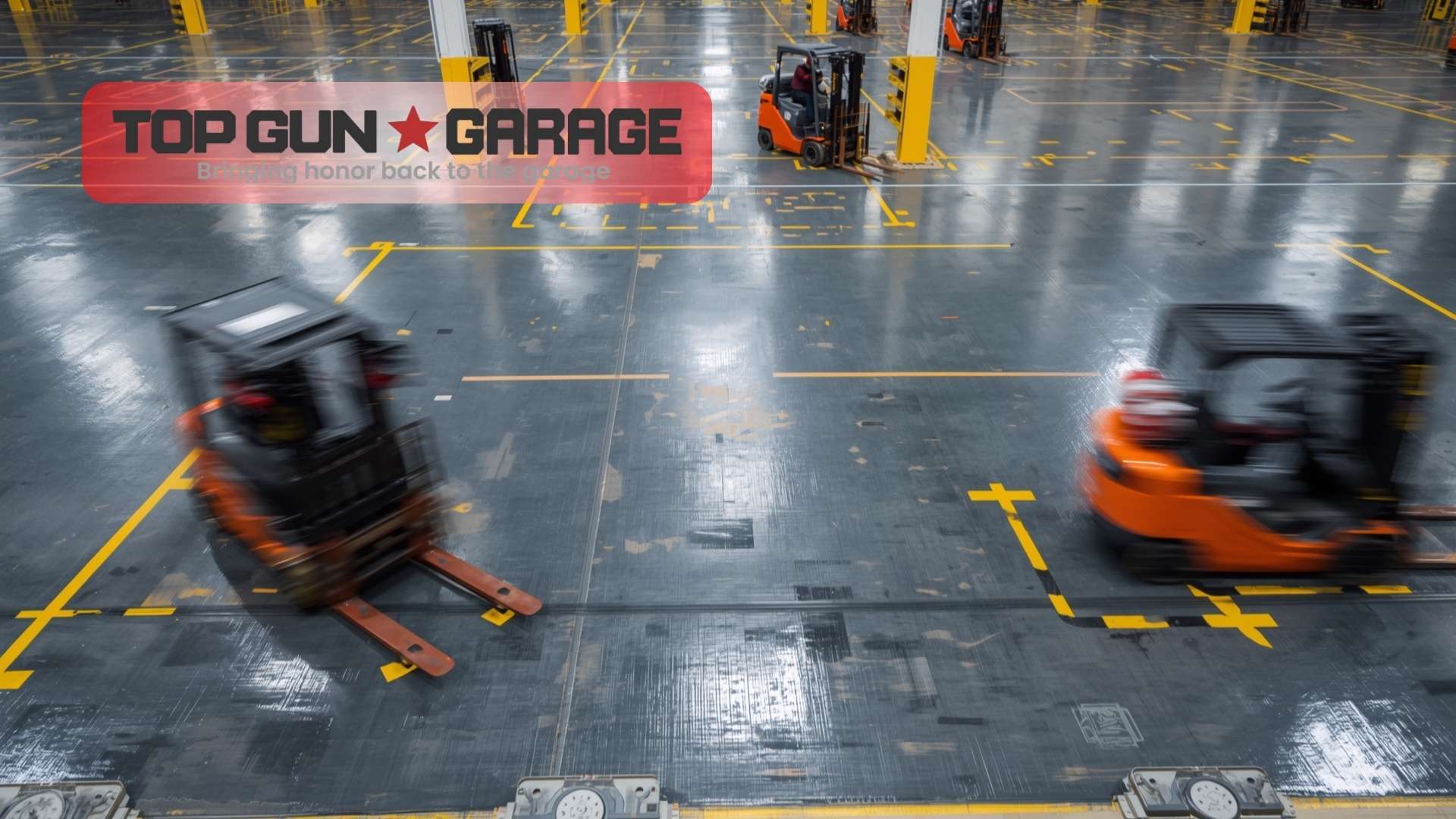
The right warehouse floor coating in Lee County must withstand constant forklift traffic, pallet drops, and chemical spills without cracking, peeling, or wearing through. Standard garage-grade epoxy fails within months under these conditions. Industrial-grade polyaspartic and 100% solids epoxy systems, applied at 15-20 mils thickness, deliver the impact resistance and abrasion ratings that distribution centers, manufacturing plants, and logistics facilities demand.
According to the International Concrete Repair Institute (ICRI), properly specified floor coatings in high-traffic industrial environments should achieve a minimum adhesion strength of 400 PSI and withstand impact loads exceeding 160 inch-pounds. Facilities that skip these specifications typically see coating failures within 12-18 months, costing 3-4x more in repairs and downtime than proper initial installation.
Why Standard Coatings Fail Under Forklift Traffic
A 5,000-pound forklift with solid rubber tires generates point-load pressures exceeding 250 PSI per square inch of tire contact. Standard 50% solids epoxy systems, typically applied at 3-5 mils, cannot absorb these forces without delaminating from the concrete substrate.
The Concrete Polishing Association of America (CPAA) identifies three primary failure modes in warehouse applications. First, insufficient film build, where thin coatings wear through at high-traffic lanes within 6-12 months. Second, poor substrate preparation, where inadequate surface profiling (below CSP 3) prevents mechanical bond formation. Third, chemical incompatibility, where hydraulic fluid and battery acid from forklifts attack non-resistant coating formulations.
Understanding the differences between industrial and residential epoxy helps facility managers avoid specifying coatings designed for light-duty applications.
Industrial Coating Types for Warehouse Floors
Three coating systems dominate commercial and industrial floor applications in Lee County. Each offers distinct advantages depending on operational requirements, budget, and downtime constraints.
100% Solids Epoxy Systems
100% solids epoxy contains no solvents or water carriers, meaning every mil applied remains after curing. A single coat at 10-12 mils provides the film build that thinner formulations require 3-4 coats to achieve. Compressive strength ratings reach 10,000-12,000 PSI, exceeding forklift tire pressures by a factor of 40x.
The trade-off involves longer cure times. Full chemical cure requires 5-7 days at 75°F, though facilities can resume light foot traffic within 24 hours and forklift operations within 72 hours.
Polyaspartic Floor Coatings
Polyaspartic coatings cure in 4-6 hours regardless of temperature, making them ideal for facilities that cannot shut down for extended periods. UV stability prevents yellowing in areas with skylights or overhead doors, a common issue with standard epoxy systems.
Learn more about the differences between epoxy and polyaspartic coatings to determine which system fits your operational schedule.
Polyurea Systems
Polyurea offers superior flexibility, elongation rates of 300-400% compared to 5-10% for epoxy. This flexibility absorbs impact energy from dropped pallets and tool impacts that would crack rigid coatings. Cure time runs 6-8 hours to forklift-ready status.
For Southwest Florida warehouse operations, comparing polyurea and epoxy in Florida conditions reveals important performance differences in high-humidity environments.
Warehouse Floor Coating Comparison
Specification
100% Solids Epoxy
Polyaspartic
Polyurea
Compressive Strength
10,000-12,000 PSI
8,000-10,000 PSI
6,000-8,000 PSI
Cure to Forklift Traffic
72 hours
6-8 hours
6-8 hours
Abrasion Resistance (Taber)
20-30 mg loss
15-25 mg loss
25-35 mg loss
UV Stability
Poor (yellows)
Excellent
Excellent
Cost per Sq Ft
$4.50-$7.00
$5.00-$8.00
$6.00-$9.00
Expected Lifespan
10-15 years
10-15 years
8-12 years
Surface Preparation Requirements for Industrial Floors
The ICRI Concrete Surface Profile (CSP) scale runs from 1 (smoothest) to 10 (most aggressive). Warehouse floor coatings require a minimum CSP 3-4 profile, achievable only through diamond grinding or shot blasting. Acid etching alone produces CSP 1-2, insufficient for industrial adhesion requirements.
Shot blasting removes approximately 1/16 inch of concrete surface while creating the ideal mechanical profile for coating adhesion. This process also exposes and addresses hidden issues like oil contamination, laitance, and moisture vapor transmission problems before they cause coating failures.
Proper concrete preparation for epoxy applications determines whether the coating system lasts 2 years or 15 years under industrial conditions.
Moisture Testing Before Coating
ASTM F2170 in-situ relative humidity testing has replaced calcium chloride testing as the industry standard. Readings above 75% RH require moisture mitigation systems before coating installation. Lee County warehouses built on high water tables frequently show elevated moisture levels, particularly in structures without vapor barriers.
Understanding concrete moisture problems and epoxy prevents costly failures in Southwest Florida commercial installations.
Safety Features for Warehouse Floor Coatings
OSHA 29 CFR 1910.22 requires walking-working surfaces to be free from hazards. Warehouse floor coatings must balance durability with slip resistance, particularly in areas subject to water, oil, or product spills.
Slip Resistance Standards
ANSI A137.1 defines slip resistance through the Dynamic Coefficient of Friction (DCOF) test. Values above 0.42 meet the standard for level interior surfaces. Industrial coatings achieve these ratings through aggregate broadcasts, typically aluminum oxide or quartz at 20-40 mesh size.
For facilities handling liquids, slip-resistant flooring options provide DCOF ratings up to 0.65, exceeding requirements for wet conditions.
Traffic Lane Marking and Safety Zones
OSHA and ANSI Z535.1 define safety color standards. Yellow indicates caution and delineates pedestrian walkways from forklift traffic lanes. Red marks fire equipment zones and emergency shutoffs. High-visibility markings applied during the coating process become integral to the floor system, lasting the full service life rather than requiring annual repainting.
Lee County Climate Considerations for Industrial Coatings
Southwest Florida presents unique challenges for warehouse floor coatings. Average annual humidity exceeds 75%, affecting both installation timing and long-term durability. Salt air corrosion accelerates in facilities within 10 miles of the Gulf, attacking inadequately sealed concrete and metal fixtures.
The National Weather Service records an average of 140 rain days annually in Lee County. Warehouses with frequently opened bay doors experience humidity fluctuations that stress coating bond lines, making proper moisture mitigation and flexible topcoats essential.
Learn how Florida salt air affects epoxy durability and what protective measures extend coating life in coastal industrial facilities.
Installation Timeline for Warehouse Floor Coatings
A typical 10,000 square foot warehouse floor coating project follows this timeline:
Day 1: Surface preparation, crack repair, joint treatment
Day 2: Primer application, moisture mitigation if required
Day 3: Base coat application with aggregate broadcast
Day 4: Topcoat application, line striping
Day 5-7: Cure time before forklift traffic (varies by coating type)
Facilities requiring minimal downtime can explore accelerated coating systems that allow forklift traffic within 24 hours.
Cost Factors for Warehouse Floor Coating Projects
Industrial floor coating projects in Lee County typically range from $4.50-$9.00 per square foot, depending on several factors.
Concrete condition: Heavily damaged floors requiring extensive crack repair, spall patching, or moisture mitigation add $1.00-$2.50 per square foot
Coating system: Polyurea and polyaspartic systems cost 15-30% more than 100% solids epoxy
Film thickness: Each additional 5 mils of coating thickness adds approximately $0.75-$1.25 per square foot
Safety features: Full aggregate broadcast for maximum slip resistance adds $0.50-$1.00 per square foot
Line striping: Traffic lanes, pedestrian paths, and safety zones add $0.25-$0.50 per linear foot
How long does warehouse floor coating last under forklift traffic?
Properly specified and installed industrial floor coatings last 10-15 years under continuous forklift traffic. The Concrete Polishing Council recommends recoating when wear patterns expose more than 25% of the original concrete substrate. Facilities running 24/7 forklift operations may see slightly accelerated wear, requiring recoating at 8-12 years.
What coating thickness do industrial warehouses require?
Industrial warehouse floors require 15-20 mils total dry film thickness for forklift traffic resistance. This typically involves a 3-5 mil primer, 8-12 mil base coat with aggregate broadcast, and 3-5 mil topcoat. Facilities with propane forklift traffic or chemical exposure may require 25+ mils for adequate protection.
Can warehouse floors be coated in sections to maintain operations?
Yes. Phased installation allows facilities to coat warehouse floors in sections while maintaining partial operations. Typical phasing divides the floor into 2-4 zones, with each zone requiring 3-5 days for complete installation and cure. Proper planning ensures forklift traffic lanes remain accessible throughout the project.
How do battery acid and hydraulic fluid affect floor coatings?
Standard epoxy coatings resist battery acid exposure for 24-48 hours before showing damage. Novolac epoxy formulations, specifically engineered for chemical resistance, withstand indefinite exposure to battery acid, hydraulic fluid, and most industrial solvents. Facilities with electric forklifts should specify chemical-resistant formulations for charging station areas.
What happens to coated floors when forklifts turn sharply?
Sharp forklift turns generate lateral shear forces that can peel inadequately bonded coatings. Proper surface preparation (CSP 3-4 profile) and appropriate coating flexibility prevent this failure mode. Polyurea and flexible epoxy formulations handle repetitive turning stress better than rigid systems, making them ideal for high-traffic intersection areas.
Do coated warehouse floors require special maintenance?
Industrial floor coatings require minimal maintenance compared to bare concrete. Daily dust mopping and weekly damp mopping with neutral pH cleaner maintain appearance and slip resistance. Annual inspection should check for wear patterns, delamination edges, and chip damage requiring spot repair. Avoid petroleum-based cleaners that degrade coating surfaces.
Get a Warehouse Floor Coating Quote for Your Lee County Facility
Top Gun Garage specializes in commercial and industrial epoxy flooring for Lee County warehouses, distribution centers, and manufacturing facilities. Our team evaluates your specific traffic patterns, chemical exposures, and operational requirements to specify the right coating system.
Contact us for a detailed assessment of your warehouse floor conditions. We provide moisture testing, concrete evaluation, and written specifications before every project. Our installations include manufacturer warranties backed by our local service commitment.
Serving Fort Myers, Cape Coral, Lehigh Acres, Bonita Springs, and all Lee County commercial facilities. Request your free floor coating consultation today.
 Skip to content



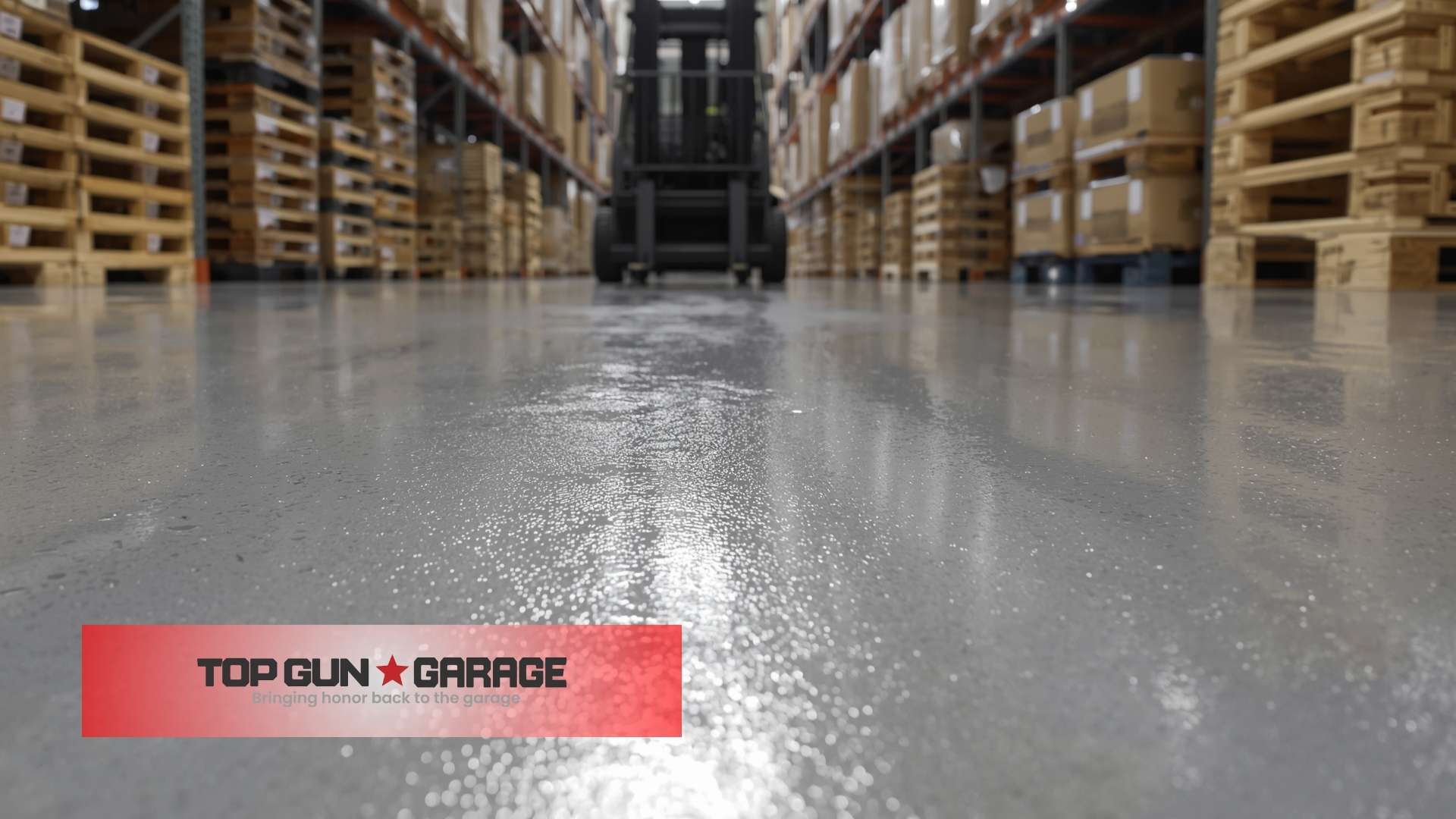 The Concrete Polishing Association of America (CPAA) identifies three primary failure modes in warehouse applications. First, insufficient film build, where thin coatings wear through at high-traffic lanes within 6-12 months. Second, poor substrate preparation, where inadequate surface profiling (below CSP 3) prevents mechanical bond formation. Third, chemical incompatibility, where hydraulic fluid and battery acid from forklifts attack non-resistant coating formulations.
Understanding the differences between industrial and residential epoxy helps facility managers avoid specifying coatings designed for light-duty applications.
The Concrete Polishing Association of America (CPAA) identifies three primary failure modes in warehouse applications. First, insufficient film build, where thin coatings wear through at high-traffic lanes within 6-12 months. Second, poor substrate preparation, where inadequate surface profiling (below CSP 3) prevents mechanical bond formation. Third, chemical incompatibility, where hydraulic fluid and battery acid from forklifts attack non-resistant coating formulations.
Understanding the differences between industrial and residential epoxy helps facility managers avoid specifying coatings designed for light-duty applications.
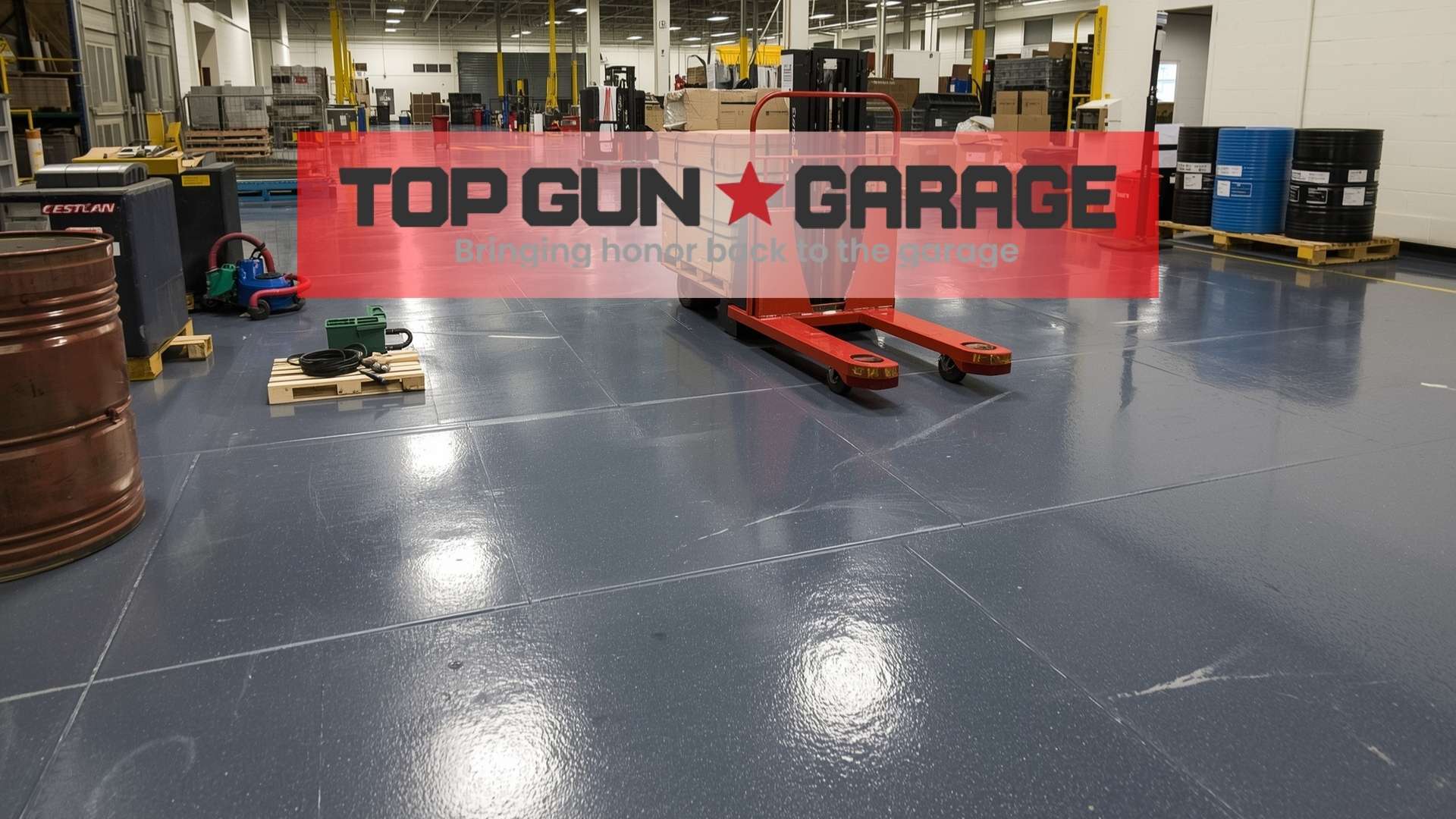 Shot blasting removes approximately 1/16 inch of concrete surface while creating the ideal mechanical profile for coating adhesion. This process also exposes and addresses hidden issues like oil contamination, laitance, and moisture vapor transmission problems before they cause coating failures.
Proper concrete preparation for epoxy applications determines whether the coating system lasts 2 years or 15 years under industrial conditions.
Shot blasting removes approximately 1/16 inch of concrete surface while creating the ideal mechanical profile for coating adhesion. This process also exposes and addresses hidden issues like oil contamination, laitance, and moisture vapor transmission problems before they cause coating failures.
Proper concrete preparation for epoxy applications determines whether the coating system lasts 2 years or 15 years under industrial conditions.