 Skip to content



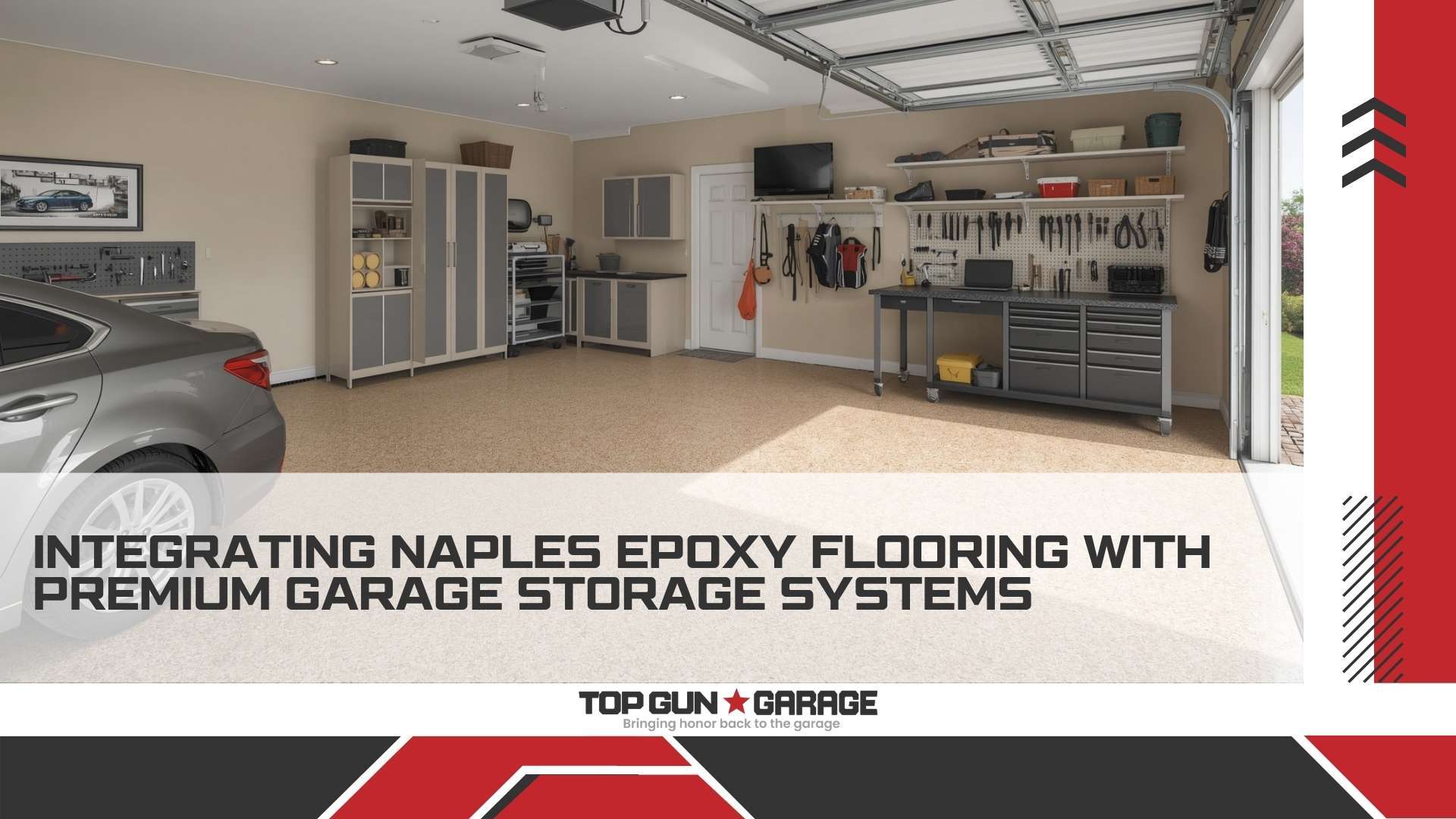
A seamless garage transformation begins by treating the floor as the foundation for every organizational system that follows. Integrating a high-performance resinous surface with custom cabinetry, slatwall panels, and overhead racks creates a cohesive space that functions as efficiently as it looks. The key lies in planning the floor coating and storage layout simultaneously, ensuring that load paths, moisture mitigation, and aesthetic continuity are addressed before a single cabinet is mounted.
Key Takeaways
- Plan concurrently: Design your storage layout before the floor coating is applied to avoid drilling through a cured surface unnecessarily.
- Load distribution matters: Heavy-duty cabinets require a level substrate; self-leveling underlayments paired with epoxy ensure stability.
- Moisture testing is non-negotiable: Southwest Florida’s humidity demands a calcium chloride test before any coating or cabinetry installation.
- Slip resistance enhances safety: Aluminum oxide additives in the topcoat protect against slips when carrying items to and from storage units.
- Color coordination elevates design: Matching flake blends or metallic pigments with cabinet finishes creates a showroom-quality aesthetic.
- Professional installation prevents failures: Improper concrete preparation accounts for over 80% of coating delamination, according to industry data.
- Maintenance extends lifespan: A simple routine of dust mopping and pH-neutral cleaning preserves both the floor and the storage components.
Why the Floor Dictates Storage Success
Garage storage systems rely on a stable, clean, and level foundation. When homeowners invest in wall-mounted shelving or freestanding modular units without first addressing the concrete substrate, they often encounter alignment issues, moisture wicking, and premature corrosion. A properly installed epoxy system creates a impermeable barrier that blocks up to 99% of concrete moisture vapor transmission, according to research from the American Concrete Institute. This protection is critical in coastal environments like Collier County, where relative humidity averages 74% annually.
Beyond moisture control, the floor’s flatness determines how storage components fit together. A slab with a ¼-inch deviation over 10 feet will cause tall cabinets to lean, doors to bind, and casters to roll unpredictably. Professional contractors use laser-guided grinding equipment to achieve the required flatness profile before applying the primer coat. This preparatory step, often overlooked in DIY projects, is the single most important factor in a successful integration.
Selecting the Right Coating System for Storage-Heavy Garages
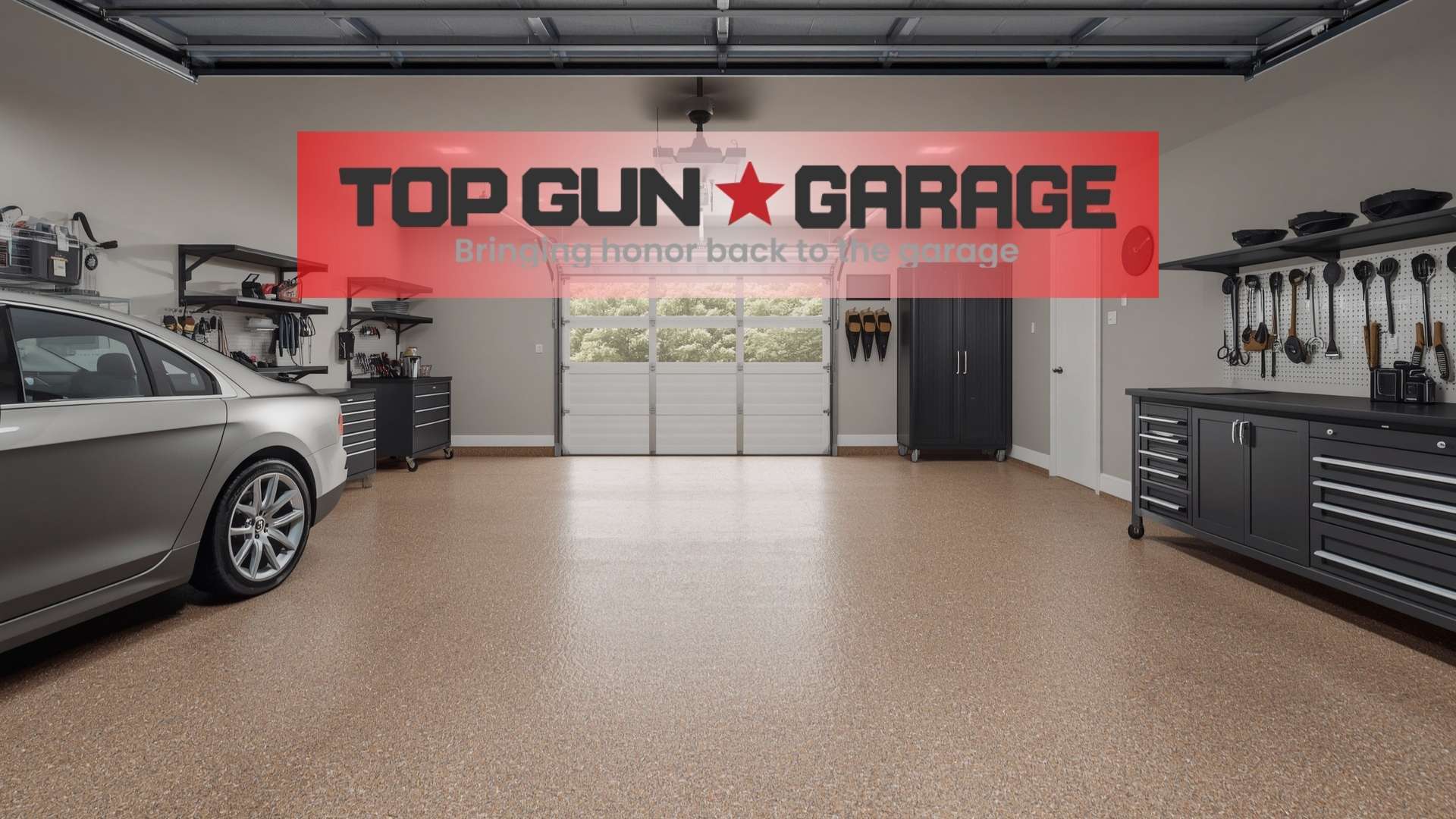
Not all resinous floors perform equally under the concentrated loads imposed by storage systems. A standard epoxy system with a 10-mil thickness may suffice for a parking-only garage, but a workshop or storage-intensive space demands a high-build system of 20 to 30 mils or more. Polyaspartic topcoats offer superior flexibility and UV stability, preventing the ambering that plagues older epoxy formulations when exposed to the Florida sun through open garage doors.
For garages housing heavy tool chests, motorcycle lifts, or floor safes, a mortar-grade epoxy system provides compressive strengths exceeding 12,000 psi. This compares favorably to the 3,000 to 4,000 psi of standard concrete. The increased load-bearing capacity prevents the coating from cracking or delaminating under point loads. As Mark Jensen, Lead Application Specialist at a national coatings manufacturer, explains: “When a client tells me they’re installing a 1,500-pound gun safe, I immediately spec a double-broadcast quartz system. It distributes the weight across a larger surface area and eliminates the risk of the safe’s feet punching through the finish.”
Flake Systems vs. Metallic Finishes for Storage Integration
Full-flake broadcast systems remain the most popular choice for storage-oriented garages. The multi-layer construction embeds vinyl flakes into the base coat, creating a textured surface that hides scratches from sliding bins and boxes. A ¼-inch flake blend in a medium gray or beige tone provides a neutral backdrop that complements most cabinet colors. Metallic epoxy finishes, while stunning, require more meticulous maintenance and show every scuff mark from moving storage containers.
Data from a 2026 industry survey indicates that 68% of homeowners who install garage storage systems choose a flake floor, while 22% opt for quartz, and 10% select metallic or solid-color finishes. The durability and forgiveness of flake systems make them the practical choice for active storage environments.
Sequencing the Installation: Floor First or Storage First?
The optimal sequence is clear: prepare the concrete, apply the full floor coating system, allow it to cure completely, and then install storage components. This approach ensures that the coating extends wall-to-wall without gaps around cabinetry. It also prevents the common mistake of trapping moisture beneath base cabinets, which accelerates corrosion of metal legs and promotes mold growth in the humid Florida climate.
However, some scenarios require a modified approach. If existing storage systems are already in place and cannot be removed, a skilled installer can coat up to the cabinet bases and apply a flexible sealant at the transition. This is not ideal but can be effective when paired with proper edge detailing. The concrete preparation process becomes more complex in these situations, requiring careful masking and dust containment.
Step-by-Step Integration Process
- Design the layout: Map all storage components, including future additions, on a scaled drawing. Mark electrical outlets, lighting, and ventilation.
- Test the slab: Conduct moisture vapor emission testing per ASTM F1869. Acceptable readings are below 3 pounds per 1,000 square feet per 24 hours.
- Profile the concrete: Use diamond grinding or shot blasting to achieve a CSP 3-5 profile, as recommended by the International Concrete Repair Institute.
- Repair defects: Fill cracks, spalls, and control joints with a semi-rigid epoxy filler that allows for minor thermal movement.
- Apply primer: A penetrating epoxy primer bonds to the concrete and creates a chemical anchor for subsequent layers.
- Broadcast the base: Apply the epoxy base coat and broadcast flake or quartz aggregate to refusal.
- Seal the surface: A polyaspartic or urethane topcoat provides chemical resistance, UV stability, and the desired gloss level.
- Cure fully: Allow 24 to 72 hours for full cure, depending on temperature and humidity. Do not place heavy items on the floor during this period.
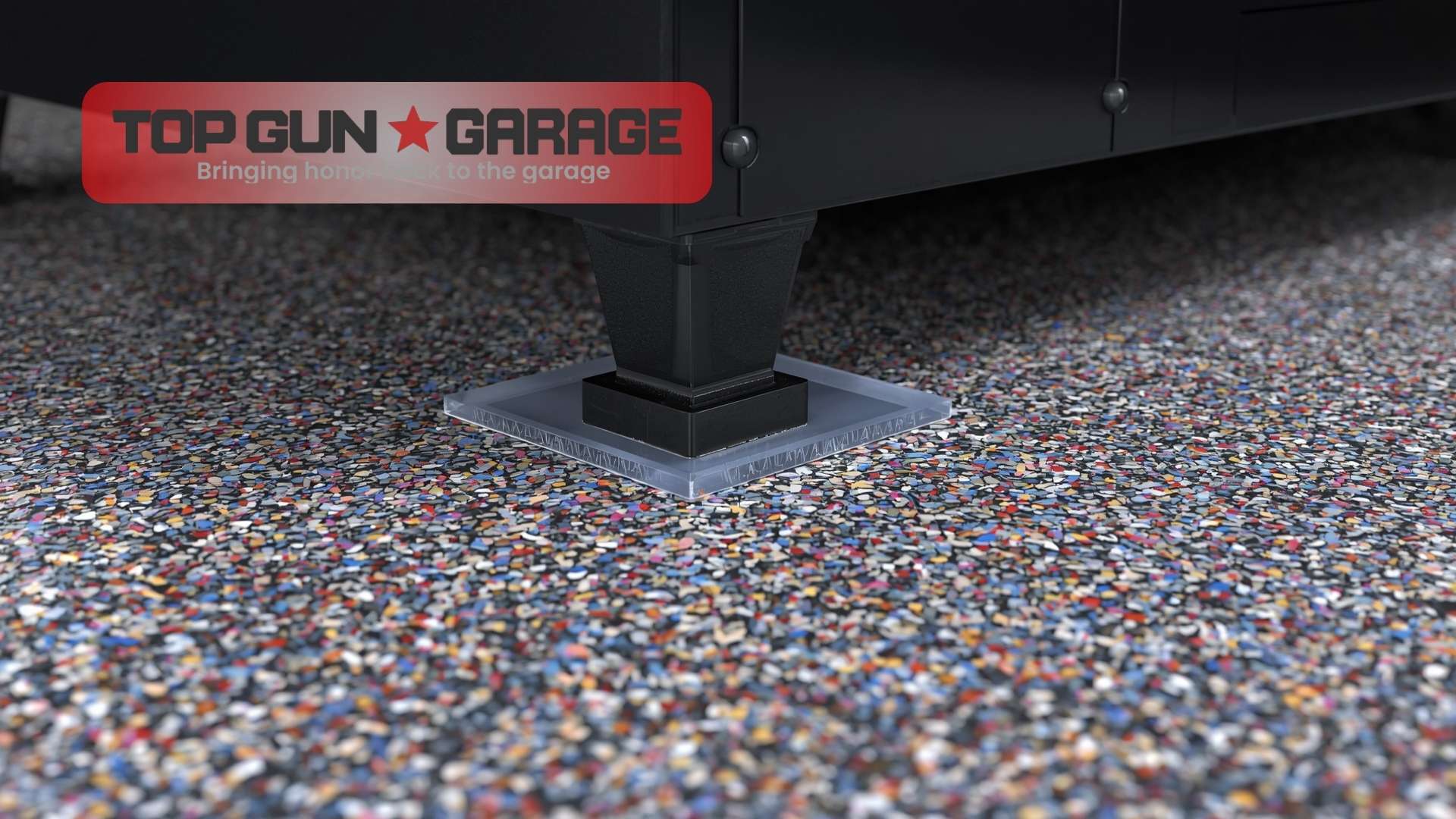
- Install storage: Mount wall tracks, assemble cabinets, and position freestanding units. Use protective pads under all contact points.
Designing for Aesthetic Cohesion
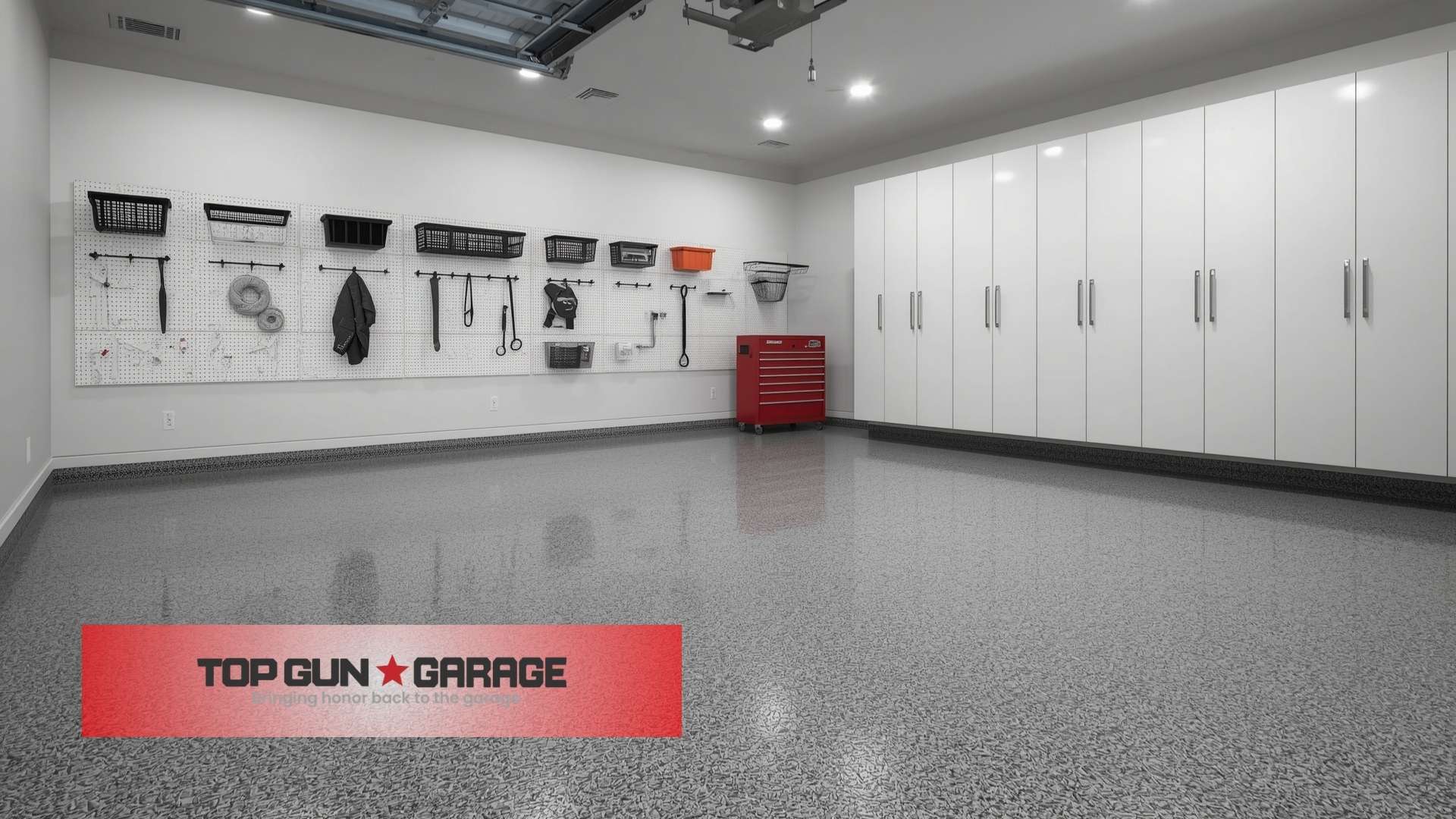
A disjointed garage—where the floor is one color, the cabinets another, and the walls a third—feels chaotic rather than curated. The most successful integrations treat the garage as an extension of the home’s interior design language. A monochromatic scheme with subtle variations in tone creates a sophisticated, gallery-like atmosphere. For example, a charcoal flake floor pairs elegantly with matte black cabinets and stainless steel hardware.
Homeowners seeking a warmer aesthetic often choose a tan or beige flake blend with wood-look cabinet fronts. This combination softens the industrial feel of a garage and makes the space more inviting for hobbies or home gym use. The modern flake flooring designs available today extend far beyond the basic gray and white options of a decade ago.
Color Coordination Strategies
- Match the dominant flake color to the cabinet body for a unified look.
- Use accent flakes that pick up the color of tool chests or wall panels.
- Select a topcoat sheen that complements the cabinet finish: gloss for high-end automotive spaces, satin for woodworking shops.
- Incorporate a border or banding in a contrasting color to define storage zones visually.
Load-Bearing Considerations for Heavy Storage
Floor-mounted storage systems exert significant pressure on the coating and substrate. A fully loaded 72-inch tool chest can weigh over 2,500 pounds, concentrated on four small casters. Without proper engineering, this load can indent the coating, crack the concrete, or cause the casters to seize. The solution involves both material selection and installation technique.
A double-broadcast quartz system embeds two layers of colored quartz aggregate into the epoxy base, creating a surface with a compressive strength that exceeds 14,000 psi. This system, often used in commercial epoxy flooring applications, handles forklift traffic and heavy machinery with ease. For residential garages, it provides an extra margin of safety for the most demanding storage configurations.
| Storage Type | Average Weight (Loaded) | Recommended Coating System | Minimum Thickness |
|---|---|---|---|
| Wall-mounted cabinets | 200-500 lbs | Standard flake system | 15 mils |
| Freestanding shelving | 500-1,000 lbs | High-build flake or quartz | 25 mils |
| Heavy tool chests | 1,000-2,500 lbs | Double-broadcast quartz | 35 mils |
| Vehicle lifts | 10,000+ lbs | Mortar-grade epoxy | 125+ mils |
According to the National Association of Home Builders, garage storage upgrades yield a 65% return on investment at resale, and a professionally coated floor increases that figure by an additional 10-15%. The combination of a durable floor and organized storage is one of the most cost-effective home improvements available.
Moisture Management in Southwest Florida Garages
Naples’ subtropical climate presents unique challenges for garage environments. The combination of high ambient humidity, frequent afternoon thunderstorms, and the occasional tropical storm creates conditions that can degrade both flooring and storage components. A comprehensive moisture management strategy is essential for long-term performance.
Epoxy coatings act as a vapor barrier, but they must be paired with proper ventilation and, in some cases, a dehumidifier. The impact of humidity on epoxy flooring is well-documented: moisture vapor transmission can cause blistering, delamination, and efflorescence if the slab is not properly tested and primed. Storage systems made from powder-coated steel resist rust better than uncoated metal, but even they benefit from the dry environment that a sealed floor helps maintain.
Dr. Elena Vasquez, a materials scientist specializing in polymer coatings, notes: “The interface between the concrete and the epoxy is the critical zone. In high-humidity regions, we specify a moisture-tolerant primer that can bond to concrete with a relative humidity of up to 95%. This technology has revolutionized the industry’s ability to coat slabs that were previously considered uncoatable.”
Slip Resistance and Safety Around Storage Zones
Garages with extensive storage systems often have narrower pathways and more obstacles than open parking bays. The risk of slipping while carrying a heavy box or stepping around a cabinet corner is real. Incorporating a slip-resistant additive into the final topcoat is a simple, effective safety measure that does not compromise cleanability.
Aluminum oxide grit, broadcast into the wet topcoat at a rate of 2-4 pounds per 100 square feet, creates a coefficient of friction that exceeds the OSHA recommendation of 0.5 for walking surfaces. This additive is invisible once the topcoat cures but provides a tactile grip that prevents slips, even when the floor is wet from rain tracked in on vehicle tires. For more information on long-term slip resistance, see our guide on slip-resistant surfaces that stay effective.
Integrating Lighting and Electrical with Floor and Storage Design
A well-lit garage enhances both the appearance of the epoxy floor and the functionality of the storage systems. LED strip lighting mounted under cabinets illuminates work surfaces, while overhead fixtures with a high color rendering index (CRI) reveal the true depth of metallic or flake finishes. Planning electrical outlets at the storage design stage ensures that battery chargers, power tools, and task lighting have convenient access without cords trailing across the floor.
Floor-mounted outlets are generally discouraged in garages due to the risk of water ingress, but wall-mounted outlets positioned 48 inches above the finished floor are ideal. They remain accessible above workbenches and storage units while complying with National Electrical Code requirements for garage installations.
Maintenance Routines That Protect Both Floor and Storage
The synergy between a coated floor and organized storage extends to maintenance. A smooth, seamless epoxy surface traps less dust and debris than bare concrete, reducing the amount of particulate matter that settles on stored items. Regular dust mopping with a microfiber pad takes only minutes and keeps the floor looking new. For a deeper clean, a pH-neutral cleaner and a soft-bristle scrub brush remove tire marks and spills without damaging the topcoat.
Seasonal maintenance should include inspecting the sealant at the base of storage units, checking for any signs of moisture or pest activity, and tightening any loose hardware. The seasonal maintenance routines that work for epoxy floors also benefit the storage components by keeping the entire environment clean and dry.
Common Mistakes to Avoid
Even well-intentioned homeowners make errors that compromise the integration of flooring and storage. The most frequent mistake is installing storage systems before the floor coating, which traps moisture and creates inaccessible areas that cannot be cleaned or inspected. Another common error is using harsh chemical cleaners—such as bleach or acidic degreasers—that etch the topcoat and dull the finish.
Failing to use protective pads under heavy items is a third pitfall. The concentrated pressure from a metal cabinet leg can indent even a high-build epoxy system over time. Simple polyurethane pads, available at any hardware store, distribute the load and prevent permanent damage. For more insights on avoiding these issues, review our article on why professional epoxy floor coating matters.
Real-World Example: A Naples Homeowner’s Transformation
Consider the case of a homeowner in the Park Shore neighborhood who wanted to convert a cluttered two-car garage into a functional workshop and storage hub. The existing concrete slab was pitted and stained from years of use, and the humidity had caused rust on several metal shelving units. The solution involved grinding the slab to a CSP 4 profile, applying a moisture-mitigating primer, and installing a full-flake epoxy system in a warm gray tone with charcoal and white accents.
Once the floor cured, a modular storage system with wall-mounted tracks, adjustable shelves, and lockable cabinets was installed. The homeowner reported that the new floor made the space feel larger and brighter, while the storage system kept everything organized and accessible. “It’s like having an extra room in the house,” she said. “I can find any tool in seconds, and the floor cleans up with just a quick sweep.”
Cost Considerations and Return on Investment
The combined cost of a professional epoxy floor coating and a premium storage system in Naples typically ranges from $8 to $15 per square foot, depending on the complexity of the installation and the materials selected. This investment yields both immediate lifestyle benefits and long-term financial returns. According to a 2026 report from the National Association of Realtors, a finished garage with epoxy flooring and built-in storage ranks among the top five features that influence a buyer’s decision in the Florida market.
For homeowners who use their garage as a primary entry point—a common scenario in Naples—the daily experience of walking into a clean, organized, and visually appealing space is invaluable. The impact on property value is well-established, with appraisers consistently assigning higher values to homes with upgraded garages.
Frequently Asked Questions
Can I install storage cabinets directly on top of an epoxy floor?
Yes, you can install storage cabinets directly on a cured epoxy floor. Use protective pads under the cabinet legs to prevent indentation, and avoid dragging heavy units across the surface to prevent scratches. The floor must be fully cured—typically 72 hours—before placing any weight on it.
How long does an epoxy floor last in a high-use storage garage?
A professionally installed epoxy floor in a residential garage with storage systems typically lasts 15 to 20 years with proper maintenance. High-build systems with polyaspartic topcoats offer the longest lifespan, resisting wear from foot traffic, rolling loads, and UV exposure.
What is the best floor color for a garage with lots of storage?
Medium-toned flake blends in gray, beige, or tan are the most practical choices for storage-heavy garages. They hide dust and minor scratches effectively while providing a neutral backdrop that complements most cabinet colors. Darker floors show more debris, while very light floors can stain visibly.
Does epoxy flooring help with pest control in garages?
Epoxy flooring creates a seamless, non-porous surface that eliminates the cracks and crevices where pests like silverfish, cockroaches, and ants typically hide and breed. While it is not a standalone pest control solution, it significantly reduces harborage areas. Learn more about pest-resistant garage floors.
Can I change my storage layout after the epoxy floor is installed?
Yes, storage layouts can be modified after installation. Wall-mounted tracks allow for easy reconfiguration without affecting the floor. If you need to drill new holes for wall anchors, use a diamond-tipped bit and seal the holes with epoxy to maintain the moisture barrier.
How does the Florida heat affect epoxy floors and storage systems?
High temperatures can soften lower-quality epoxy coatings, making them more susceptible to indentation from heavy loads. Polyaspartic topcoats offer superior heat resistance and maintain their hardness even in un-air-conditioned garages. Metal storage components expand and contract with temperature changes, so allow for slight movement in mounting systems. See our guide on garage floors for Florida heat.
Is a vapor barrier necessary under an epoxy floor in Naples?
Most existing garage slabs in Naples do not have an under-slab vapor barrier, as they were built before modern moisture mitigation standards. In these cases, a moisture-tolerant epoxy primer serves as the vapor barrier, preventing transmission from the concrete into the coating. New construction should include a 10-mil polyethylene vapor barrier under the slab.
Conclusion
Integrating a high-performance epoxy floor with a thoughtfully designed garage storage system transforms an underutilized space into one of the most functional and valuable areas of a home. The key to success lies in planning both elements together, selecting materials that complement each other, and relying on professional installation for the critical substrate preparation and coating application. A properly executed integration delivers decades of durability, safety, and aesthetic appeal, all while increasing property value and simplifying daily life. For expert guidance on selecting and installing the right system for your Naples home, contact our team today to schedule a consultation.
References
- American Concrete Institute. “Guide to Concrete Floor and Slab Construction.” concrete.org
- ASTM International. “ASTM F1869: Standard Test Method for Measuring Moisture Vapor Emission Rate of Concrete Subfloor.” astm.org
- International Concrete Repair Institute. “Guideline for Selecting and Specifying Concrete Surface Preparation.” icri.org
- National Association of Home Builders. “Cost vs. Value Report 2026.” nahb.org
- National Association of Realtors. “Remodeling Impact Report: Outdoor Features.” nar.realtor
- Occupational Safety and Health Administration. “Walking-Working Surfaces Standard.” osha.gov
- National Electrical Code. “NFPA 70: Article 210.52(G) – Garages.” nfpa.org