Hiring a licensed epoxy contractor Florida homeowners can trust is more than a matter of quality. It directly affects your insurance coverage and legal protection. Many Southwest Florida property owners discover too late that choosing an unlicensed or uninsured contractor to install a garage floor coating can result in denied insurance claims, voided policies, and costly legal exposure. This article explains the connection between contractor licensing, insurance requirements, and your protection as a homeowner in Naples, Fort Myers, and surrounding communities.
Overview
Florida law requires most construction professionals to hold proper licensing and insurance before working on residential properties. While certain flooring tasks may not require a statewide license, the contractor’s insurance status remains critical. When an uninsured contractor causes damage, is injured on your property, or completes work that fails, your homeowner’s policy may not cover the resulting losses. Understanding these rules helps Southwest Florida homeowners make informed decisions about their epoxy garage floor projects.
Key Takeaways
Homeowner’s insurance policies often exclude coverage for work performed by unlicensed or uninsured contractors
Florida law (Chapter 489) regulates contractor licensing and requires workers’ compensation for most construction businesses
If an uninsured contractor is injured on your property, you may be held financially responsible for their medical bills and lost wages
Unpermitted or improperly installed work can lead to claim denials, policy cancellations, or increased premiums
Verifying contractor credentials through the Florida DBPR takes minutes and can save thousands in potential losses
Florida Contractor Licensing Requirements
The Florida Department of Business and Professional Regulation (DBPR) oversees contractor licensing through the Construction Industry Licensing Board. According to the DBPR, licensed contractors must pass state examinations demonstrating their competency, maintain financial responsibility, and carry required insurance coverage.
Florida issues two primary license types. Certified contractors can work anywhere in the state. Registered contractors operate only within specific local jurisdictions. Both must demonstrate at least four years of construction experience, pass background checks, and maintain general liability and workers’ compensation insurance.
While some flooring work, including basic epoxy application, may not require a statewide contractor’s license, the distinction becomes critical when problems occur. Licensed professionals carry insurance that protects both their work and your property. Unlicensed operators typically do not.
How Contractor Status Affects Your Insurance Coverage
Homeowner’s insurance policies are designed to protect against unexpected losses. However, many policies contain exclusions for damage resulting from work performed without proper licensing, permits, or contractor insurance. When you hire an unqualified contractor, you may unknowingly void portions of your coverage.
Claim Denials
If your epoxy flooring fails, causing water damage or other property loss, your insurance company will investigate. Discovering that the work was performed by an unlicensed or uninsured contractor can result in claim denial. Insurance providers view unpermitted and unlicensed work as negligence, which falls outside standard coverage.
Policy Cancellation or Premium Increases
Beyond denying individual claims, insurers may raise premiums or cancel policies entirely when they discover unauthorized work on a property. This leaves homeowners without coverage and facing higher costs to obtain new insurance.
Liability for Contractor Injuries
Licensed contractors in Florida must carry workers’ compensation insurance covering injuries that occur during work. When an uninsured contractor or their employee is hurt on your property, you become responsible for their medical expenses and lost wages. Your homeowner’s policy likely will not cover these costs. Florida’s Chapter 440 establishes workers’ compensation requirements, and property owners face significant exposure when hiring contractors who lack this coverage.
Specific Risks in Garage Floor Coating Projects
Garage floor coating involves surface preparation, chemical handling, and proper application techniques. When performed incorrectly, these projects can cause moisture problems, coating failure, or even structural issues. Southwest Florida’s humid climate makes proper moisture testing and concrete preparation especially important.
Coating Failure and Water Intrusion
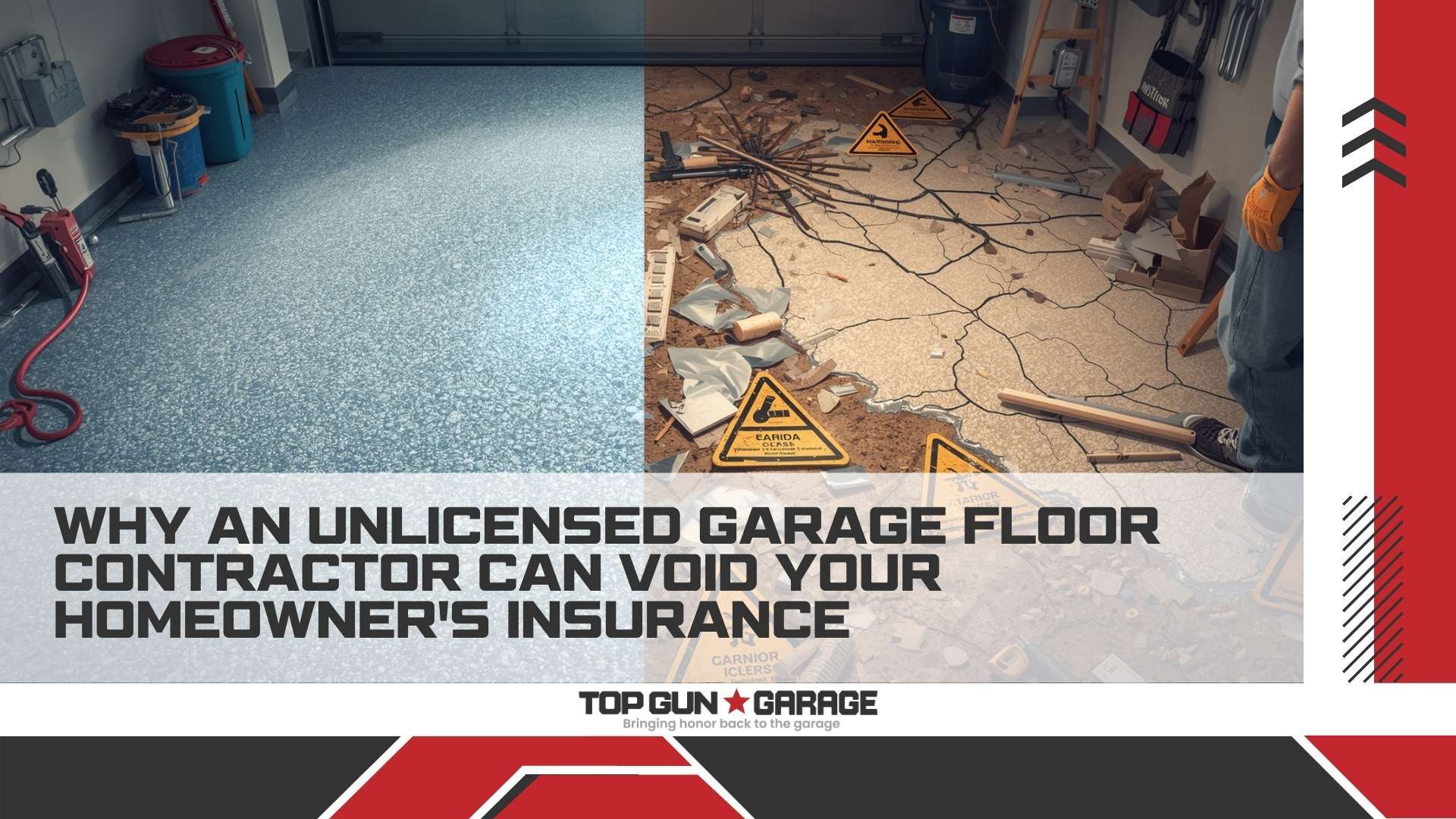
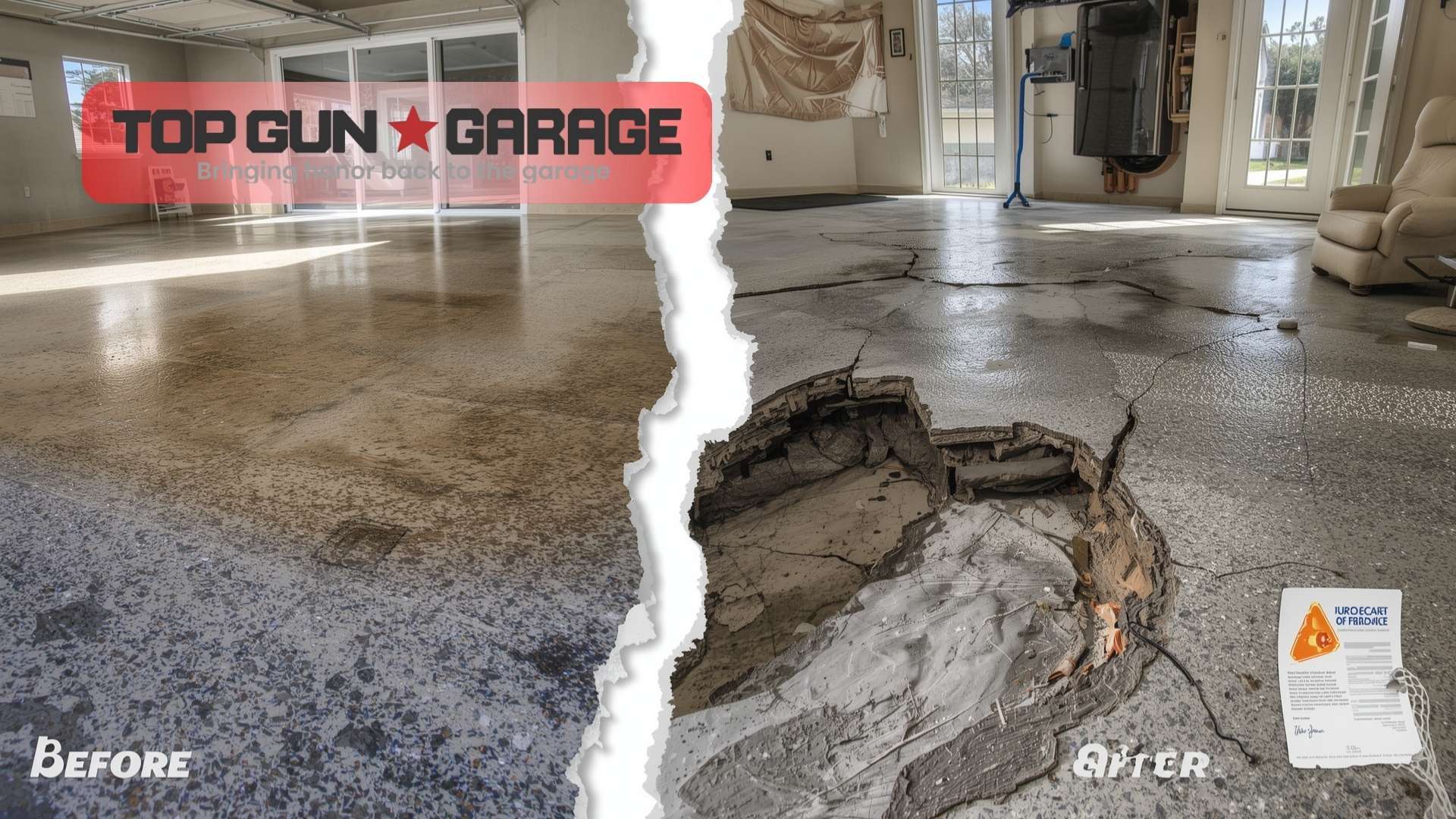
Improperly applied epoxy can peel, bubble, or delaminate, allowing water to penetrate beneath the coating. In flood-prone areas like Naples and Fort Myers, this can accelerate damage during storms. If your insurer determines that coating failure contributed to water damage and discovers unlicensed work, they may deny your flood or water damage claim.
Concrete Damage from Poor Preparation
Professional concrete repair and surface profiling are essential before coating application. Unlicensed contractors often skip or improperly perform these steps, leading to coating failures and concrete deterioration. Remediation can cost significantly more than the original project.
How to Verify Contractor Credentials
Protecting your insurance coverage and property investment starts with verification. Florida makes this straightforward through several resources.
Check the DBPR License Database
The Florida DBPR License Search allows homeowners to verify contractor licensing by name, license number, or business name. This search reveals whether the contractor holds a current, valid license and any disciplinary history.
Request Proof of Insurance
Ask for current certificates of insurance showing both general liability and workers’ compensation coverage. Contact the insurance company directly to verify the policy remains active. Legitimate contractors provide this documentation without hesitation.
Local Licensing Requirements
Some flooring work requires local rather than state licensing. Contact your county building department in Naples, Fort Myers, or your specific municipality to confirm requirements for your project.
What Licensed Contractors Provide
Working with a properly licensed and insured contractor offers several protections that directly affect your insurance coverage and peace of mind.
General Liability Insurance covers damage to your property caused by the contractor’s work. If an installation error damages your garage, vehicles, or home, the contractor’s policy pays for repairs rather than yours.
Workers’ Compensation Insurance protects you from liability if a worker is injured on your property. Without this coverage, you may face medical bills, lost wage claims, and legal fees.
Proper Permitting ensures work meets local building codes and passes inspection. Permitted work maintains your insurance coverage status and protects property values.
Warranty Protection from licensed contractors typically carries enforceable guarantees. Contracts with unlicensed individuals are generally unenforceable under Florida law, leaving you without recourse if problems arise.
Florida Consumer Protections
Florida law provides specific protections for homeowners who hire licensed contractors. Under Florida Statutes Chapter 489, unlicensed contracting is a criminal offense. Additionally, contracts with unlicensed contractors are unenforceable, meaning the contractor cannot sue you for payment, and any liens they place on your property may be invalid.
The Construction Industry Licensing Board also maintains a Recovery Fund that can compensate homeowners for certain damages caused by licensed contractors. This protection does not extend to work performed by unlicensed individuals. The Florida Attorney General’s Consumer Protection Division provides additional resources for homeowners dealing with contractor disputes.
Frequently Asked Questions
Does epoxy flooring require a contractor’s license in Florida?
Basic flooring installation may not require a statewide license, but contractors still need local occupational licenses and proper insurance. Complex projects involving concrete repair, structural modifications, or electrical work require licensed professionals. Always verify insurance coverage regardless of licensing requirements.
Can my insurance company deny a claim for unlicensed contractor work?
Yes. Many homeowner’s policies exclude coverage for damage resulting from work performed by unlicensed or uninsured contractors. Insurers may also deny claims if work was completed without required permits.
What happens if an uninsured contractor is injured on my property?
You may be held liable for their medical expenses and lost wages. Your homeowner’s policy likely will not cover these costs, potentially exposing you to significant financial loss through personal injury lawsuits.
How do I verify a contractor’s license in Florida?
Use the Florida DBPR License Search at myfloridalicense.com. Enter the contractor’s name, license number, or business name to verify current licensing status and check for any disciplinary actions.
What insurance should a garage floor contractor carry?
Contractors should carry general liability insurance protecting your property and workers’ compensation covering employee injuries. Request certificates of insurance and verify coverage directly with the insurance company.
Can I still file a claim if I didn’t know my contractor was unlicensed?
This depends on your specific policy and the circumstances. Some insurers may consider good-faith efforts to verify credentials, but coverage is not guaranteed. Always verify licensing before work begins.
What are the penalties for unlicensed contracting in Florida?
Unlicensed contracting is a first-degree misdemeanor, punishable by up to one year in jail and a $1,000 fine per offense. Homeowners can report suspected unlicensed activity to the DBPR.
Does hiring a licensed contractor guarantee my insurance will cover damage?
Hiring licensed professionals significantly reduces the risk of claim denial, but coverage depends on your specific policy terms. Review your policy and ensure contractors obtain any required permits for your project.
What should I do if I already hired an unlicensed contractor?
Have the work inspected by a licensed professional. If problems exist, document them and consult an attorney. You may have remedies under Florida’s consumer protection laws. Consider notifying your insurer proactively.
Why does insurance coverage matter for garage floor coatings?
Coating failures can cause water intrusion, concrete damage, and property loss. In Southwest Florida’s storm-prone environment, a failed coating may contribute to flood damage. Proper coverage ensures protection against these risks.
Protect Your Investment with a Licensed Contractor
Your garage floor coating is an investment that deserves professional installation and insurance protection. Top Gun Garage is a licensed, insured, and family-owned company serving Naples, Fort Myers, Bonita Springs, Estero, Marco Island, and Southwest Florida communities. We provide detailed documentation, proper preparation, and transparent communication throughout every project. Get a free estimate and see why homeowners trust Top Gun Garage for professional epoxy and polyaspartic floor coatings that protect both your property and your coverage.
 Skip to content



 Florida issues two primary license types. Certified contractors can work anywhere in the state. Registered contractors operate only within specific local jurisdictions. Both must demonstrate at least four years of construction experience, pass background checks, and maintain general liability and workers’ compensation insurance.
While some flooring work, including basic epoxy application, may not require a statewide contractor’s license, the distinction becomes critical when problems occur. Licensed professionals carry insurance that protects both their work and your property. Unlicensed operators typically do not.
Florida issues two primary license types. Certified contractors can work anywhere in the state. Registered contractors operate only within specific local jurisdictions. Both must demonstrate at least four years of construction experience, pass background checks, and maintain general liability and workers’ compensation insurance.
While some flooring work, including basic epoxy application, may not require a statewide contractor’s license, the distinction becomes critical when problems occur. Licensed professionals carry insurance that protects both their work and your property. Unlicensed operators typically do not.

 General Liability Insurance covers damage to your property caused by the contractor’s work. If an installation error damages your garage, vehicles, or home, the contractor’s policy pays for repairs rather than yours.
Workers’ Compensation Insurance protects you from liability if a worker is injured on your property. Without this coverage, you may face medical bills, lost wage claims, and legal fees.
Proper Permitting ensures work meets local building codes and passes inspection. Permitted work maintains your insurance coverage status and protects property values.
Warranty Protection from licensed contractors typically carries enforceable guarantees. Contracts with unlicensed individuals are generally unenforceable under Florida law, leaving you without recourse if problems arise.
General Liability Insurance covers damage to your property caused by the contractor’s work. If an installation error damages your garage, vehicles, or home, the contractor’s policy pays for repairs rather than yours.
Workers’ Compensation Insurance protects you from liability if a worker is injured on your property. Without this coverage, you may face medical bills, lost wage claims, and legal fees.
Proper Permitting ensures work meets local building codes and passes inspection. Permitted work maintains your insurance coverage status and protects property values.
Warranty Protection from licensed contractors typically carries enforceable guarantees. Contracts with unlicensed individuals are generally unenforceable under Florida law, leaving you without recourse if problems arise.