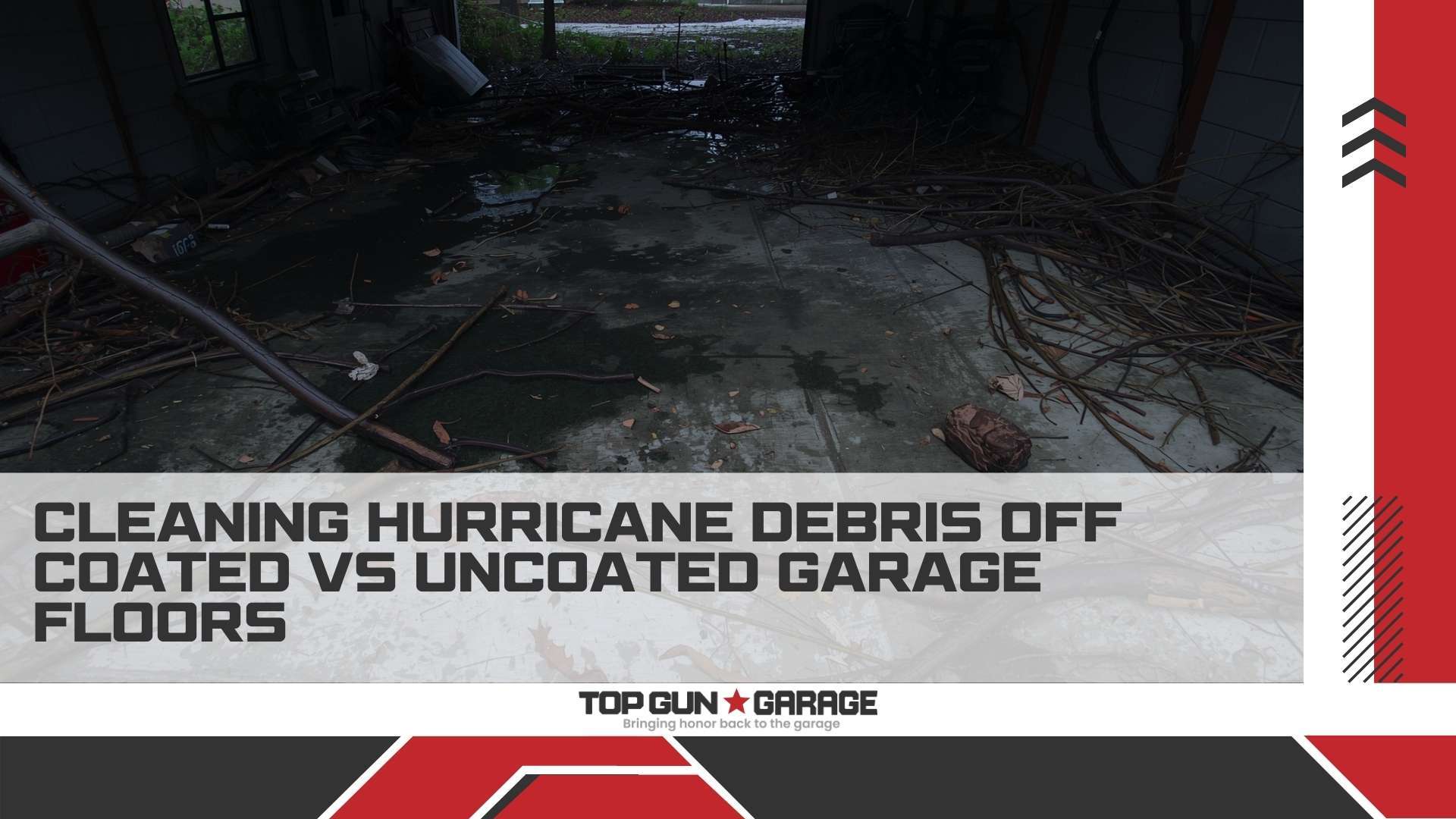
Coated garage floors can be cleaned and returned to use within hours after a hurricane, while uncoated concrete may require days or weeks of drying and remediation. According to FEMA, Florida’s Hurricanes Helene and Milton generated over 31.67 million cubic yards of debris requiring removal, with cleanup costs exceeding $590 million in federal reimbursements alone. For Southwest Florida homeowners, the condition of your garage floor directly impacts how quickly you can recover from storm damage.
The difference comes down to porosity. Bare concrete absorbs floodwater, organic debris, and contaminants deep into its structure. Professional floor coatings create a nonporous barrier that keeps moisture and debris on the surface where it can be removed completely. Understanding how to maintain epoxy floors through Florida hurricanes helps homeowners protect their investment and accelerate post-storm recovery.
What Hurricane Debris Does to Garage Floors
Hurricane aftermath brings a combination of water, organic matter, sediment, and potentially hazardous materials into garages. The Florida Department of Environmental Protection coordinates debris staging and removal operations after major storms, but initial cleanup on private property remains the homeowner’s responsibility.
Common post-hurricane garage contaminants include:
Floodwater. Storm surge and rainfall can introduce several inches to several feet of water into garages. This water typically contains sewage, fuel, pesticides, and other contaminants. FEMA provides up to $300 in clean-and-sanitize assistance for survivors, recognizing the health hazards associated with contaminated floodwater.
Organic debris. Leaves, branches, vegetation, and mulch swept in by wind and water contain microorganisms that begin decomposing immediately. This organic matter feeds mold growth when trapped against porous surfaces. According to the EPA, mold can begin growing on damp materials within 24 to 48 hours.
Sediment and silt. Floodwater deposits layers of fine particles that work their way into concrete pores. This sediment often contains bacteria, agricultural chemicals, and other contaminants that are difficult to remove from porous surfaces.
Petroleum products. Displaced fuel, motor oil, and hydraulic fluids from damaged vehicles and equipment create hazardous conditions. These substances penetrate uncoated concrete and may require professional remediation. Understanding how epoxy resists chemicals explains why coated floors handle these spills better.
Building materials. Shingle granules, insulation fibers, drywall dust, and other construction debris from damaged structures create both cleanup challenges and health hazards if inhaled.
The Porosity Problem: Why Bare Concrete Absorbs Trouble
Concrete is a porous material that readily absorbs floodwaters and dries slowly. According to restoration experts at Paul Davis, “Concrete may look impervious to floods or appear dry after standing water is removed, but it’s a porous material that readily absorbs floodwaters and dries slowly and reluctantly.”
This porosity creates several problems during post-hurricane cleanup:
Deep contamination. Floodwater and dissolved contaminants penetrate inches into the concrete slab. The upper layers may test dry while deeper sections remain saturated, causing moisture to migrate back to the surface days or weeks later.
Mold colonization. The National Institutes of Health guidelines on moisture remediation note that “water damaged building materials, especially those that are porous, that have been wet for an extended period can develop mold contamination.” Concrete’s pore structure provides ideal colonization sites for mold that are nearly impossible to remediate without professional intervention.
Efflorescence. As moisture evaporates from saturated concrete, it carries mineral salts to the surface. This creates white, chalky deposits that indicate ongoing moisture problems. The white powder on concrete floors is a visual indicator of deeper moisture issues.
Structural weakening. When excess water penetrates concrete, it causes the aggregate particles to spread apart, creating gaps that remain even after drying. This reduces the concrete’s compressive strength and can lead to cracking and spalling over time.
How Coated Floors Change the Cleanup Equation
Professional floor coatings transform porous concrete into a sealed, nonporous surface. This fundamental change affects every aspect of post-hurricane cleanup.
Contamination Stays on the Surface
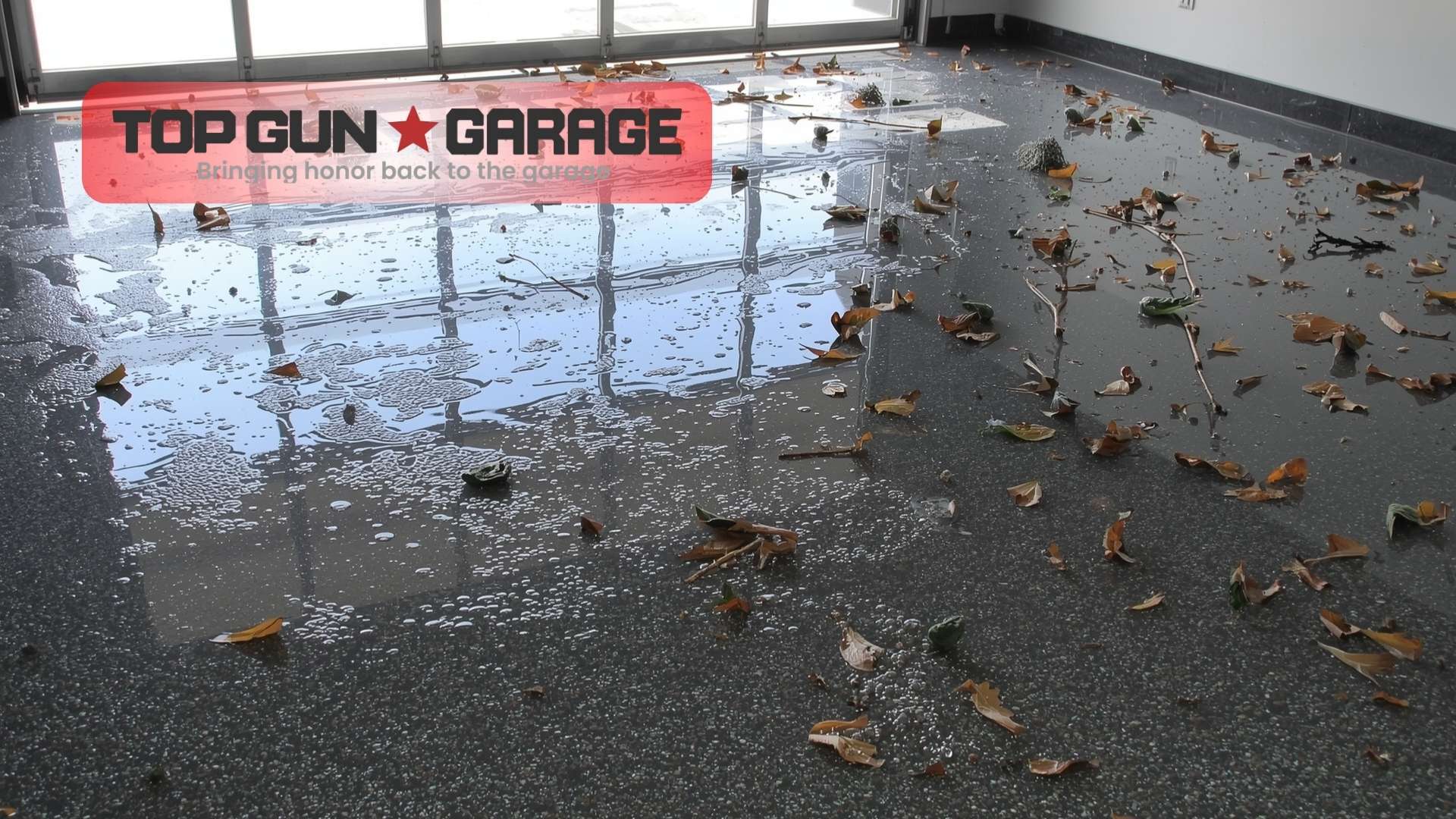
When floodwater enters a garage with a coated floor, contaminants cannot penetrate the surface. Sediment, organic matter, and dissolved chemicals remain on top of the coating rather than absorbing into the slab. This means cleanup can remove 100% of the contamination rather than leaving residue trapped in the concrete matrix.
The difference in cleanup effectiveness is dramatic. According to the EPA, “Non-porous, hard surfaces such as plastics and metals should be vacuumed or damp wiped with water and mild detergent, then allowed to dry.” Coated concrete behaves like these non-porous materials, allowing complete cleaning with standard methods. Understanding epoxy floor cleaning requirements helps homeowners prepare for post-storm recovery.
Rapid Drying Prevents Secondary Damage
Sealed floors don’t absorb water, which means there’s no extended drying period required. After removing standing water and debris, a coated floor is essentially dry and ready for use. Compare this to bare concrete, which restoration professionals note may take weeks to fully dry, with moisture continuing to migrate from deeper layers.
This rapid turnaround has practical benefits. You can move vehicles and equipment back into the garage sooner, resume normal use of the space, and avoid the ongoing humidity issues that occur when saturated concrete slowly releases moisture over weeks. Understanding how epoxy performs in Naples flooding demonstrates these benefits in real-world storm conditions.
Mold Prevention at the Source
Mold requires moisture, organic material, and time to establish. Coated floors eliminate the moisture retention factor. According to the EPA, mold can begin growing within 24-48 hours on damp porous materials. A sealed floor that dries within hours after water removal never provides the sustained moisture conditions that mold needs.
Additionally, quality floor coatings can incorporate antimicrobial properties that further inhibit microbial growth. This provides an additional layer of protection during the critical post-storm period when conditions are ideal for mold establishment.
Post-Hurricane Cleanup: Coated vs. Uncoated Floors
Factor
Uncoated Concrete
Coated Floor
Water Absorption
Penetrates several inches deep
Zero absorption; stays on surface
Drying Time
Days to weeks
Hours after debris removal
Mold Risk
High; can colonize within 24-48 hours
Minimal; no moisture retention
Contaminant Removal
Partial; residue trapped in pores
Complete; nothing penetrates coating
Permanent Staining
Likely from oil, fuel, organics
Highly unlikely with prompt cleaning
Professional Remediation
Often required for mold/moisture
Rarely needed
Return to Normal Use
1-3 weeks minimum
Same day or next day
Step-by-Step Post-Hurricane Cleanup for Coated Garage Floors
The streamlined cleanup process for coated floors allows homeowners to restore their garages quickly after a storm. FEMA recommends documenting damage with photos before beginning cleanup, both for insurance purposes and to qualify for potential disaster assistance.
Step 1: Remove Standing Water
Use a wet/dry vacuum, pump, or squeegee to remove standing water. On a coated floor, water has nowhere to go but out. Push water toward the garage door opening or a floor drain if available. Unlike bare concrete, you don’t need to worry about water continuing to absorb during this process.
Proper garage floor drainage significantly speeds this process. Floors installed with appropriate slope direct water toward exits naturally.
Step 2: Clear Solid Debris
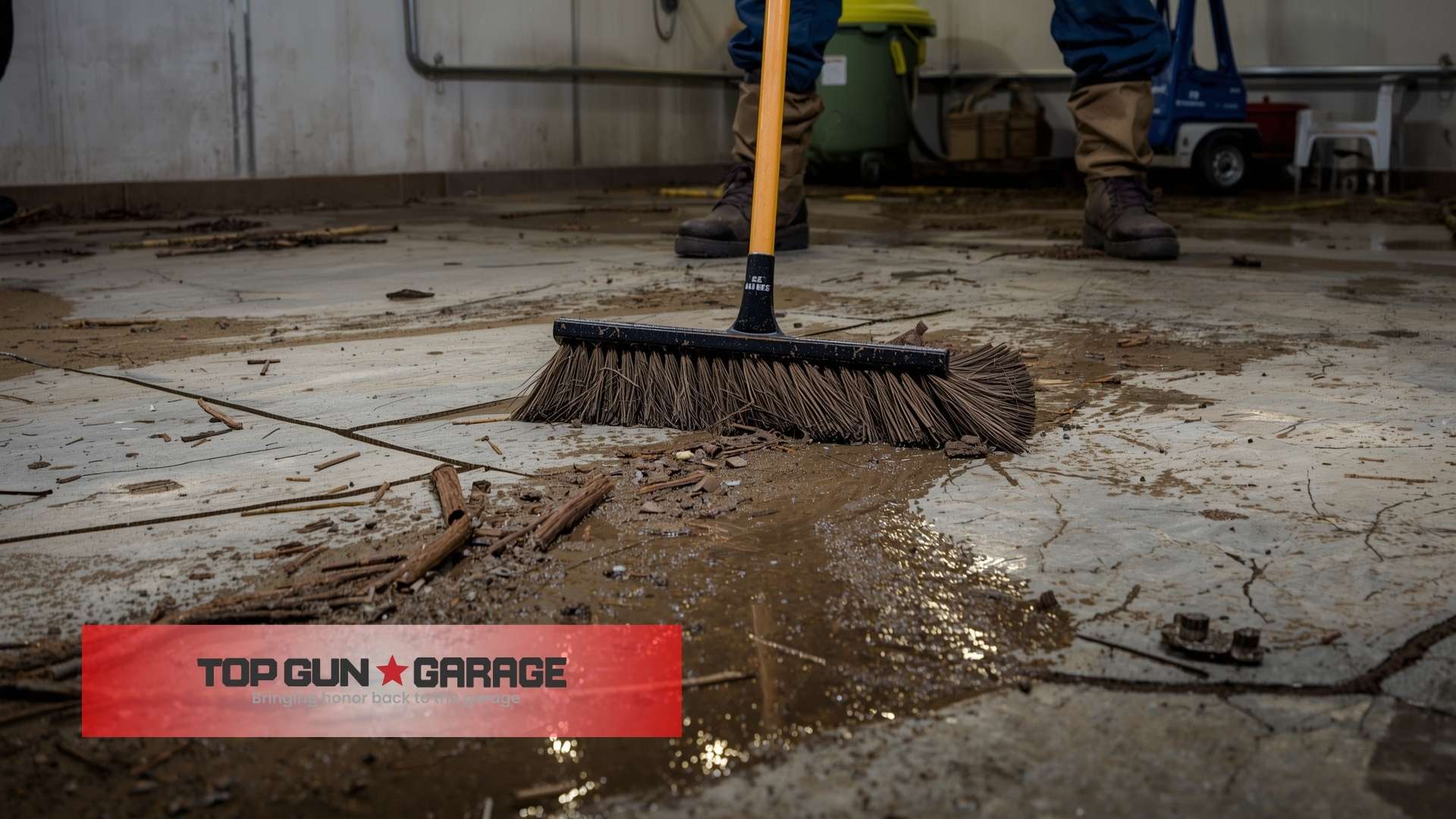
Remove leaves, branches, sediment, and other solid debris. Use a broom, shovel, or blower as appropriate for the debris type. Because the floor is sealed, you can be aggressive with cleanup tools without worrying about grinding contaminants into the concrete. Bag debris according to local guidelines; many Florida communities establish special debris collection points after hurricanes.
Step 3: Initial Wash
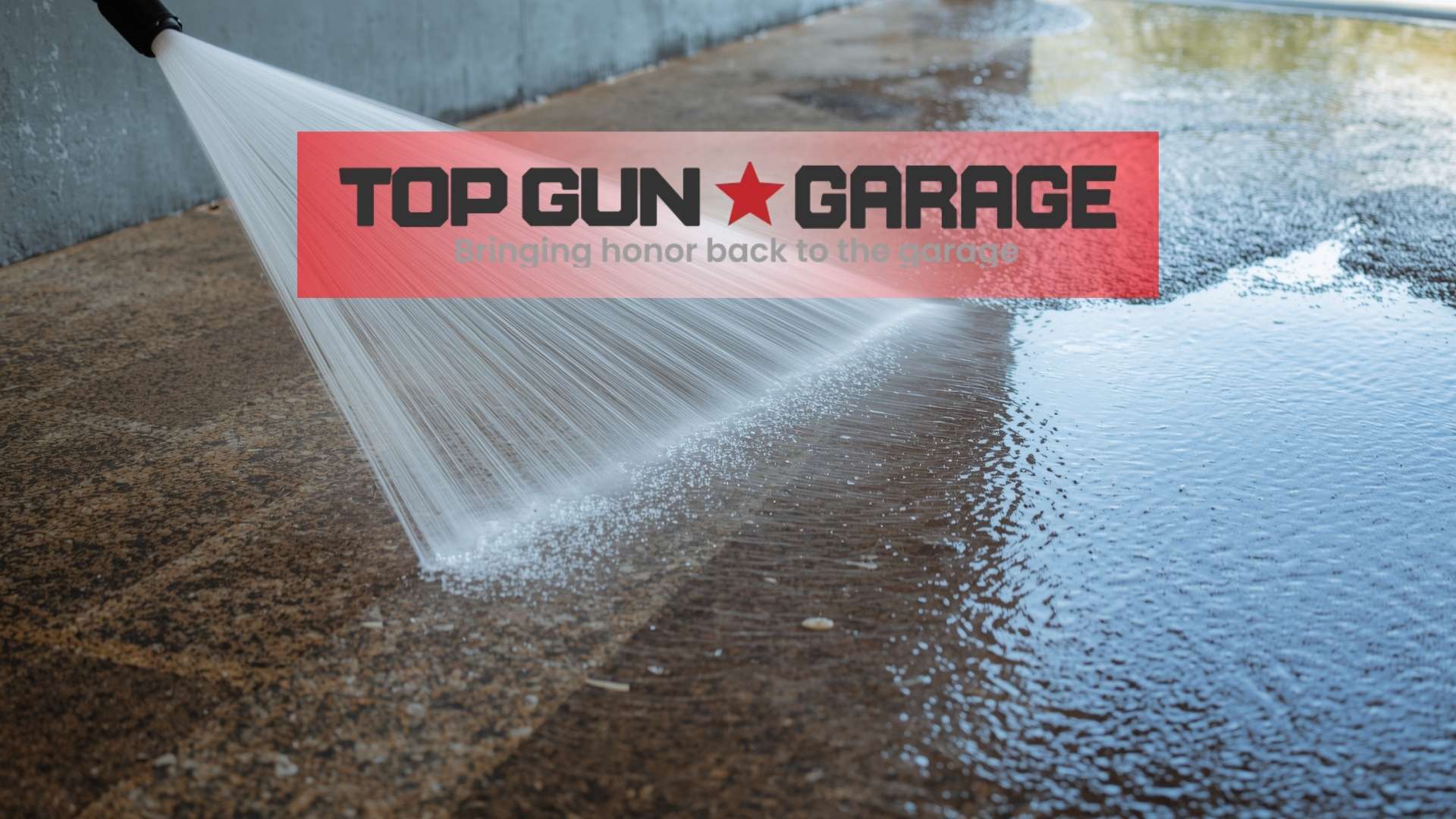
Rinse the floor with clean water to remove remaining sediment and contaminants. A garden hose works for most situations; floors designed for pressure washing can handle more aggressive cleaning if needed. Direct wash water out of the garage, and avoid letting contaminated runoff enter storm drains if possible.
Step 4: Sanitize
Mix a solution of water and appropriate disinfectant. The CDC recommends 1 cup of bleach per gallon of water for sanitizing hard surfaces after floods. Apply the solution and allow contact time per product instructions. For coated floors, a mop or deck brush works effectively. Rinse with clean water after sanitizing.
Important: Verify your floor coating’s chemical compatibility before using any cleaning products. Most professional-grade polyaspartic and epoxy coatings withstand diluted bleach solutions, but check chemical resistance specifications if uncertain.
Step 5: Final Rinse and Dry
Rinse the floor thoroughly to remove all cleaning solution residue. Squeegee excess water toward the garage opening and allow air circulation to complete drying. With good ventilation, a coated floor will be dry within a few hours. A fan can accelerate the process.
Step 6: Inspect for Damage
Once clean and dry, inspect the coating for any damage from storm debris. Heavy impacts can chip the surface, creating areas where future moisture could penetrate. Minor chips can often be repaired with touch-up products. Understanding when epoxy needs repair or replacement helps you assess whether professional attention is needed.
Special Considerations for Severe Storm Damage
Major hurricanes can create conditions that challenge even well-coated floors. Knowing how to handle extreme situations helps ensure complete recovery.
Storm Surge Exposure
Storm surge contains high concentrations of salt, sand, and marine debris. While the coating prevents absorption, salt residue must be thoroughly rinsed to prevent potential long-term coating degradation. Multiple rinse cycles may be necessary to remove all salt deposits. Understanding how epoxy stands up to saltwater exposure provides context for proper post-surge cleaning.
Petroleum Contamination
If fuel, oil, or other petroleum products contacted your floor during the storm, address these promptly. Coated floors resist petroleum penetration, but prolonged contact with certain solvents may affect some coating types. Use an appropriate degreaser followed by thorough rinsing. Understanding what happens to spilled chemicals on epoxy helps you respond appropriately.
Heavy Impact Damage
Debris impacts from major storms can chip or crack floor coatings. While the coating protects the underlying concrete from most damage, severely impacted areas should be evaluated. Professional assessment can determine whether spot repairs are sufficient or if larger sections need attention. Understanding what makes epoxy chip-resistant helps set expectations for coating durability under extreme conditions.
Preparing Your Garage Floor Before Hurricane Season
The best time to think about post-hurricane cleanup is before the storm arrives. Southwest Florida’s hurricane season runs from June through November, with peak activity in August and September.
Consider coating timing. If your garage has bare concrete, installing a professional coating before hurricane season provides years of easier storm recovery. The 3-month window when coating works best in Florida falls between late fall and early spring, making it ideal to schedule installation outside of peak hurricane season.
Inspect existing coatings. If you already have a coated floor, inspect it for chips, cracks, or areas of delamination before storm season. Addressing these vulnerabilities now prevents water from reaching the concrete substrate during flooding. Review signs that epoxy needs attention to identify problem areas.
Ensure proper drainage. Verify that water can exit your garage efficiently. Blocked drains or improper floor slope can cause standing water to accumulate longer than necessary. Addressing garage floor drainage issues before a storm reduces post-hurricane cleanup time.
Stock cleanup supplies. Keep a wet/dry vacuum, squeegee, appropriate cleaners, and personal protective equipment on hand. Having these ready allows you to begin cleanup as soon as conditions are safe.
Long-Term Benefits Beyond Storm Recovery
While faster hurricane cleanup is a compelling benefit, coated garage floors provide year-round advantages that compound over time.
Easier routine maintenance. The same properties that simplify post-storm cleanup make daily and weekly maintenance faster. Spills wipe up completely, dust doesn’t embed in the surface, and the floor maintains its appearance with minimal effort. Following proper floor coating maintenance tips extends coating life while minimizing work.
Mold and mildew resistance. Florida’s year-round humidity creates conditions for microbial growth even without flooding. Sealed floors resist mold and mildew by eliminating the moisture retention that supports their growth.
Improved home value. In hurricane-prone Southwest Florida, buyers increasingly recognize the value of features that simplify storm recovery. A professional garage floor coating demonstrates proactive property maintenance. Understanding how epoxy affects resale value provides context for this investment.
Reduced long-term costs. Each hurricane that passes without causing concrete damage, mold growth, or permanent staining represents avoided remediation costs. Over the coating’s 15-20 year lifespan, these cumulative savings can exceed the initial installation investment many times over.
Frequently Asked Questions
Can I pressure wash my epoxy floor after a hurricane?
Yes, most professional-grade epoxy and polyaspartic floor coatings can withstand pressure washing. Use a fan tip rather than a concentrated jet, and maintain at least 12 inches of distance from the surface. Water pressure up to 2,000 PSI is generally safe for quality coatings, though lower pressure is usually sufficient for post-storm cleanup. Check your coating specifications or consult your installer if uncertain about pressure limits.
How long should I wait to park on my garage floor after flood cleanup?
For coated floors, you can typically park on the surface as soon as it’s dry and you’ve completed sanitization. This is usually within a few hours of finishing cleanup. Uncoated concrete floors may need days or weeks of drying time before they’re ready for normal use, as trapped moisture can cause problems with anything placed on the surface.
Will flooding void my floor coating warranty?
Most professional floor coating warranties cover the coating’s material integrity under normal conditions, not damage from extraordinary events like flooding. However, because quality coatings are water-resistant by design, flood exposure typically doesn’t damage them. Document conditions with photos before and after cleanup. Understanding warranty coverage factors helps set appropriate expectations.
Can hurricane damage to coated floors be repaired, or is full replacement needed?
Most storm damage to coated floors can be repaired without full replacement. Small chips and scratches can be addressed with touch-up products. Larger damaged areas may require professional spot repair where the damaged section is ground down and re-coated. Full replacement is typically only necessary when structural damage to the underlying concrete has occurred.
What if floodwater sat on my coated floor for several days before I could access the property?
Extended floodwater contact is more serious on bare concrete than coated floors, but both benefit from prompt attention. A quality coating will prevent water absorption regardless of contact duration. The main concern with extended exposure is potential damage from heavy debris floating in the water and chemical degradation if the floodwater contained harsh substances. Proceed with standard cleanup and inspect carefully for any coating damage.
Should I have my coated floor professionally inspected after a major hurricane?
Professional inspection is worthwhile after severe storms, especially if your garage experienced significant flooding, debris impacts, or you notice any changes in the coating’s appearance. Inspectors can identify subsurface issues not visible during casual examination, such as delamination starting beneath the coating or hairline cracks that could allow moisture penetration over time.
Prepare Your Garage for Southwest Florida Storms
Hurricane preparedness extends beyond boarding windows and stocking supplies. The surface your garage sits on determines whether post-storm cleanup takes hours or weeks, whether contaminants are fully removed or permanently absorbed, and whether you face ongoing mold remediation or return to normal use quickly.
Top Gun Garage installs professional floor coating systems throughout Naples, Fort Myers, Cape Coral, Bonita Springs, Estero, Marco Island, and surrounding Southwest Florida communities. Our polyaspartic and epoxy systems are specifically selected for Florida’s climate challenges, including hurricane resilience and rapid post-storm recovery.
Request a free estimate to learn how a professional garage floor coating can simplify your hurricane recovery while providing years of everyday benefits.
 Skip to content



 Common post-hurricane garage contaminants include:
Floodwater. Storm surge and rainfall can introduce several inches to several feet of water into garages. This water typically contains sewage, fuel, pesticides, and other contaminants. FEMA provides up to $300 in clean-and-sanitize assistance for survivors, recognizing the health hazards associated with contaminated floodwater.
Organic debris. Leaves, branches, vegetation, and mulch swept in by wind and water contain microorganisms that begin decomposing immediately. This organic matter feeds mold growth when trapped against porous surfaces. According to the EPA, mold can begin growing on damp materials within 24 to 48 hours.
Sediment and silt. Floodwater deposits layers of fine particles that work their way into concrete pores. This sediment often contains bacteria, agricultural chemicals, and other contaminants that are difficult to remove from porous surfaces.
Petroleum products. Displaced fuel, motor oil, and hydraulic fluids from damaged vehicles and equipment create hazardous conditions. These substances penetrate uncoated concrete and may require professional remediation. Understanding how epoxy resists chemicals explains why coated floors handle these spills better.
Building materials. Shingle granules, insulation fibers, drywall dust, and other construction debris from damaged structures create both cleanup challenges and health hazards if inhaled.
Common post-hurricane garage contaminants include:
Floodwater. Storm surge and rainfall can introduce several inches to several feet of water into garages. This water typically contains sewage, fuel, pesticides, and other contaminants. FEMA provides up to $300 in clean-and-sanitize assistance for survivors, recognizing the health hazards associated with contaminated floodwater.
Organic debris. Leaves, branches, vegetation, and mulch swept in by wind and water contain microorganisms that begin decomposing immediately. This organic matter feeds mold growth when trapped against porous surfaces. According to the EPA, mold can begin growing on damp materials within 24 to 48 hours.
Sediment and silt. Floodwater deposits layers of fine particles that work their way into concrete pores. This sediment often contains bacteria, agricultural chemicals, and other contaminants that are difficult to remove from porous surfaces.
Petroleum products. Displaced fuel, motor oil, and hydraulic fluids from damaged vehicles and equipment create hazardous conditions. These substances penetrate uncoated concrete and may require professional remediation. Understanding how epoxy resists chemicals explains why coated floors handle these spills better.
Building materials. Shingle granules, insulation fibers, drywall dust, and other construction debris from damaged structures create both cleanup challenges and health hazards if inhaled.
 Easier routine maintenance. The same properties that simplify post-storm cleanup make daily and weekly maintenance faster. Spills wipe up completely, dust doesn’t embed in the surface, and the floor maintains its appearance with minimal effort. Following proper floor coating maintenance tips extends coating life while minimizing work.
Mold and mildew resistance. Florida’s year-round humidity creates conditions for microbial growth even without flooding. Sealed floors resist mold and mildew by eliminating the moisture retention that supports their growth.
Improved home value. In hurricane-prone Southwest Florida, buyers increasingly recognize the value of features that simplify storm recovery. A professional garage floor coating demonstrates proactive property maintenance. Understanding how epoxy affects resale value provides context for this investment.
Reduced long-term costs. Each hurricane that passes without causing concrete damage, mold growth, or permanent staining represents avoided remediation costs. Over the coating’s 15-20 year lifespan, these cumulative savings can exceed the initial installation investment many times over.
Easier routine maintenance. The same properties that simplify post-storm cleanup make daily and weekly maintenance faster. Spills wipe up completely, dust doesn’t embed in the surface, and the floor maintains its appearance with minimal effort. Following proper floor coating maintenance tips extends coating life while minimizing work.
Mold and mildew resistance. Florida’s year-round humidity creates conditions for microbial growth even without flooding. Sealed floors resist mold and mildew by eliminating the moisture retention that supports their growth.
Improved home value. In hurricane-prone Southwest Florida, buyers increasingly recognize the value of features that simplify storm recovery. A professional garage floor coating demonstrates proactive property maintenance. Understanding how epoxy affects resale value provides context for this investment.
Reduced long-term costs. Each hurricane that passes without causing concrete damage, mold growth, or permanent staining represents avoided remediation costs. Over the coating’s 15-20 year lifespan, these cumulative savings can exceed the initial installation investment many times over.