A professionally sealed garage floor eliminates the cracks, joints, and porous concrete surfaces that palmetto bugs and ants use as entry points and nesting sites. According to research from the University of Florida’s Institute of Food and Agricultural Sciences (UF/IFAS), sealing cracks and gaps is one of the most effective cultural control practices for preventing ant and cockroach infestations in Florida homes.
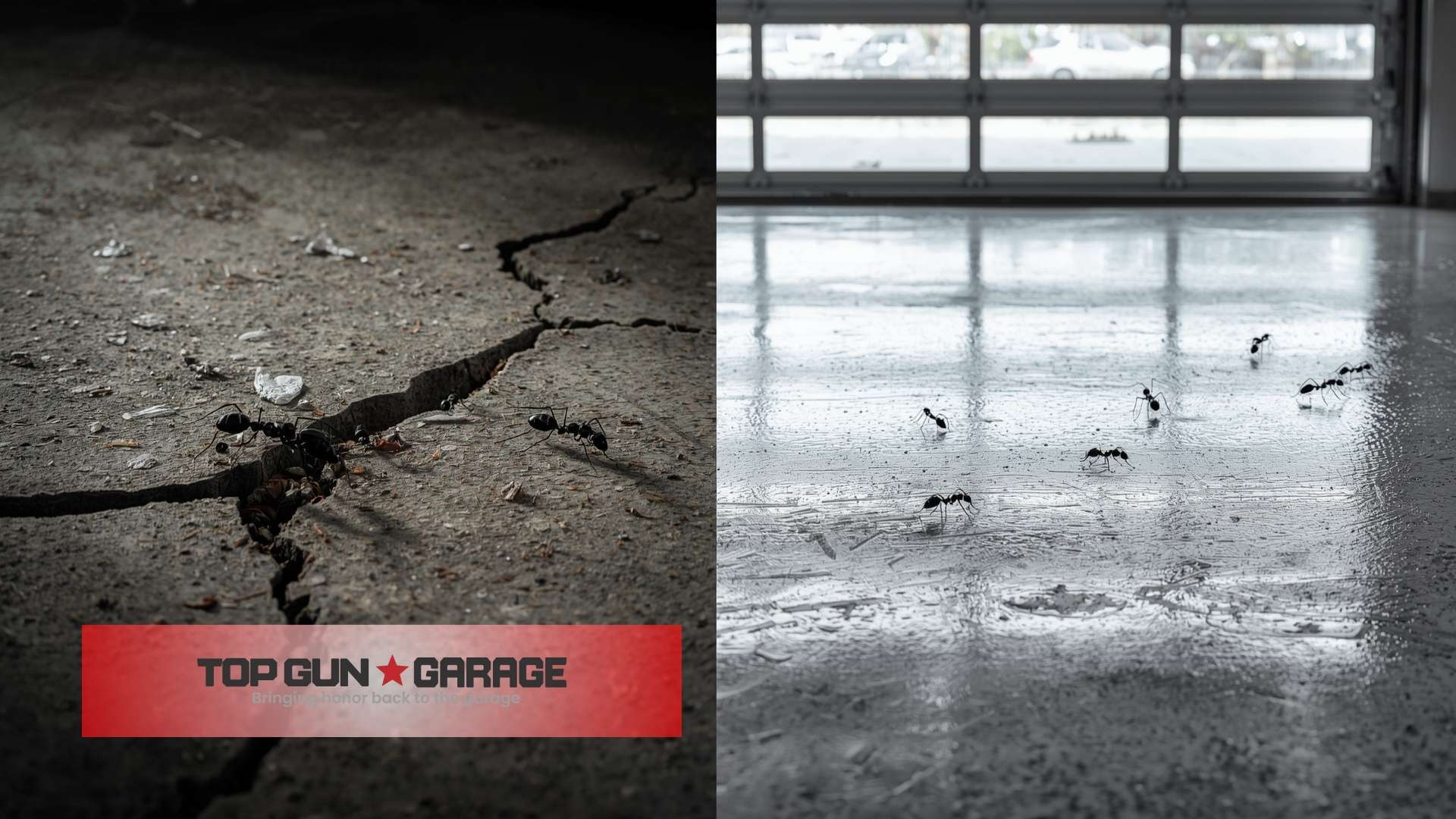
In Southwest Florida, where humidity averages 75-85% year-round, unsealed concrete garage floors create ideal conditions for pest intrusion. The combination of moisture absorption, expansion cracks, and control joints provides multiple pathways for insects to enter your home. A professional epoxy floor coating seals these entry points completely, creating a monolithic barrier that pests cannot penetrate.
Why Southwest Florida Garages Are Pest Magnets
Garages in Naples, Fort Myers, Cape Coral, and surrounding areas face unique pest pressure due to the region’s subtropical climate. UF/IFAS research has documented that Florida carpenter ants account for approximately 20% of all ant complaints by homeowners in the greater Miami, Tampa Bay, and Fort Myers metropolitan areas.
Several factors make unsealed garage floors particularly vulnerable:Concrete porosity. Standard concrete contains millions of microscopic pores that absorb moisture from Florida’s humid air. This creates the damp conditions that palmetto bugs and ants require for survival. Studies show that cockroaches are highly attracted to moisture, making damp garage floors prime harborage areas.
Control joints and cracks. Every concrete slab has intentional control joints designed to manage cracking. Over time, these joints and any resulting cracks become highways for insects. Palmetto bugs, which can grow up to 2 inches long, can flatten their bodies to squeeze through gaps as small as 1/16 of an inch. A concrete moisture assessment can reveal the extent of these vulnerabilities.
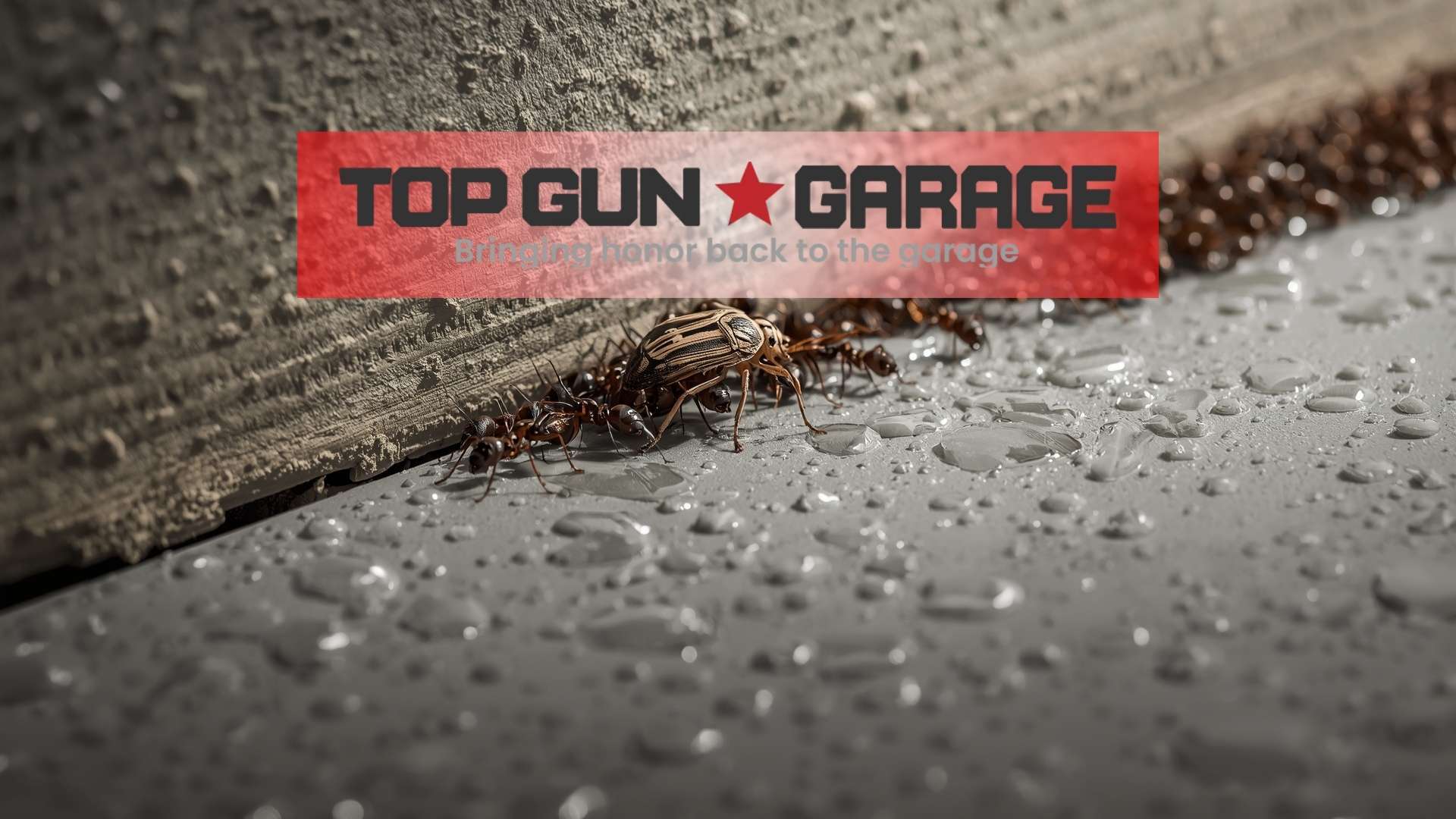
Foundation-wall gaps. The junction where your garage floor meets the walls is rarely watertight. These perimeter gaps provide direct access from the soil beneath your foundation into your garage, and ultimately into your living space.
Temperature regulation. Garages lack the same insulation and climate control as living spaces, creating cooler, more stable temperatures that insects seek during Florida’s hottest months. Understanding how epoxy floors affect garage temperature helps homeowners make informed decisions about pest prevention.
Common Garage Pests in Southwest Florida
Southwest Florida homeowners encounter several pest species that exploit unsealed garage floors. Identifying these pests helps explain why floor sealing is so effective.
Palmetto Bugs (American Cockroaches)
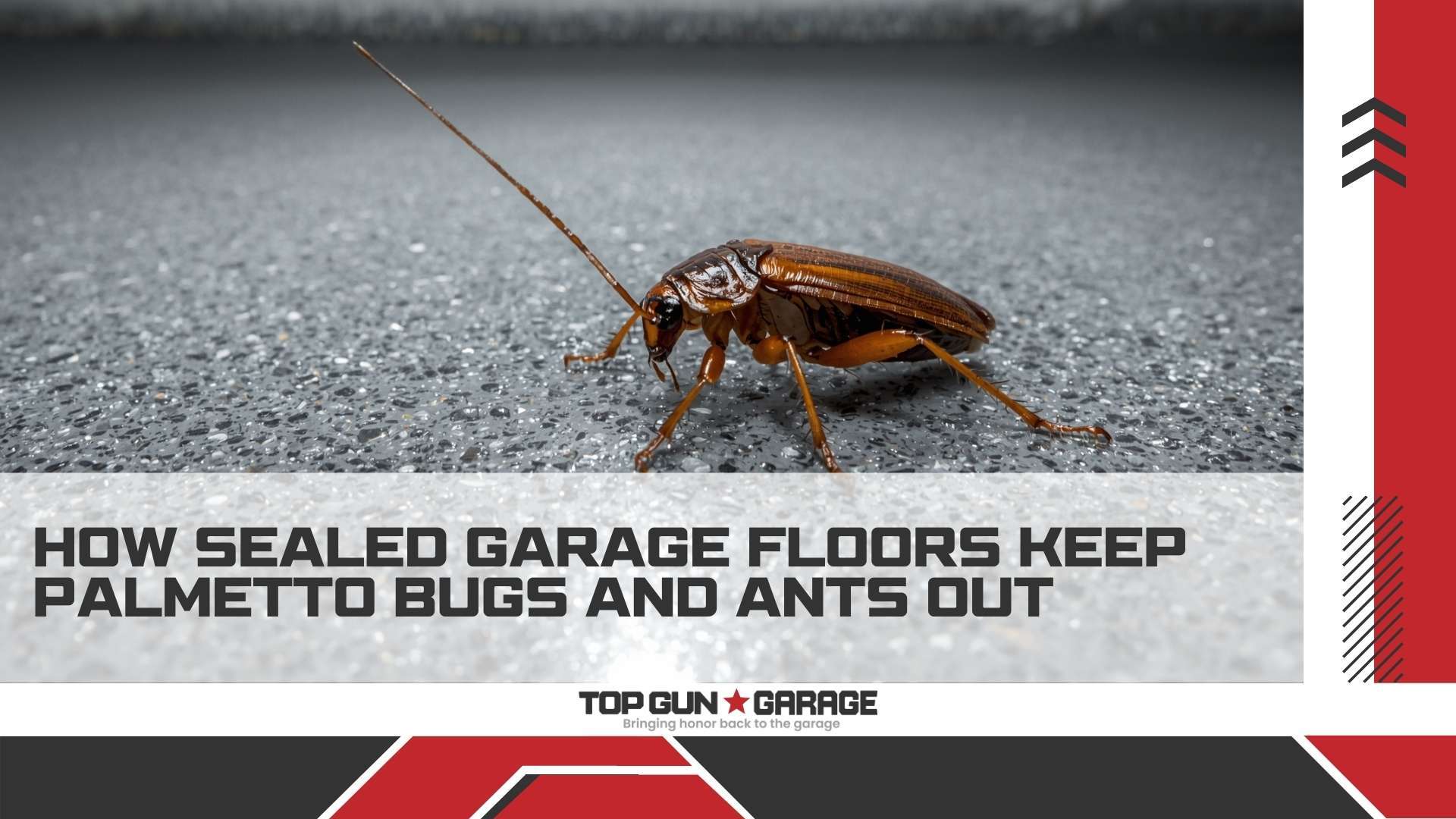
The term “palmetto bug” is a Southern euphemism for several cockroach species, primarily the American cockroach (Periplaneta americana). According to UF/IFAS entomologists, these insects are reddish-brown, measure 1.5 to 2 inches long, and are equipped with wings capable of short flights when temperatures exceed 85°F.
Palmetto bugs present legitimate health concerns beyond being unsettling houseguests. Research from the American Lung Association indicates that cockroach allergens can trigger asthma attacks and allergic reactions, particularly in children. These allergens persist in household dust for months even after the insects are eliminated. Proper floor sealing that reduces allergens addresses this health risk at its source.
Ghost Ants
Ghost ants (Tapinoma melanocephalum) are among the most common household pests in South Florida. According to UF/IFAS research, by 1995 the ghost ant had been elevated from an occasional nuisance to major pest status throughout central and southern Florida. These tiny ants, measuring just 1.3 to 1.5 millimeters, enter homes through the smallest cracks around doors, windows, and floor joints.
What makes ghost ants particularly troublesome is their ability to quickly relocate entire colonies when threatened. They establish multiple nests near food sources, making them difficult to eliminate with traditional pest control methods alone.
Florida Carpenter Ants
UF/IFAS surveys found that Florida carpenter ants (Camponotus floridanus and Camponotus tortuganus) are responsible for roughly 20% of all ant complaints in Florida’s major metropolitan areas. Unlike their northern counterparts, Florida carpenter ants do not damage wood structures but do nest in existing voids, including spaces beneath and around concrete foundations.
These ants forage primarily at night, with peak activity occurring just before sunset and continuing for about two hours afterward. Their fondness for sweet substances means any spills or food storage in your garage can attract entire colonies. A deep cleaning protocol becomes much simpler with a sealed floor surface.
Imported Fire Ants
Imported fire ants (Solenopsis invicta) build nests not only in visible dirt mounds but also inside structures, including garages with accessible foundation cracks. According to UF/IFAS, workers can forage more than 100 feet from the nest, meaning an outdoor colony can easily send scouts into your garage searching for food sources.
Fire ant stings cause painful welts and can trigger severe allergic reactions in sensitive individuals. Sealing the junction between your floor and foundation eliminates one of their primary indoor access routes.
How Professionally Sealed Floors Create a Pest Barrier
A professional floor coating system does more than cover your concrete. It transforms a porous, crack-prone surface into a seamless, impenetrable barrier. The pest prevention benefits stem from several specific characteristics of quality coating systems.
Seamless, Nonporous Coverage
Unlike bare concrete with its joints and cracks, a professionally applied epoxy or polyaspartic coating creates a continuous surface with no gaps or seams. According to the Building America Solution Center (operated by the Pacific Northwest National Laboratory for the U.S. Department of Energy), sealing cracks and using epoxy barriers around service penetrations are recommended methods for reducing pest intrusion in buildings.
When properly installed, the coating system bonds directly to the concrete substrate and can extend several inches up the wall, creating what industry professionals call a “cove base.” This eliminates the wall-floor junction that insects commonly exploit. Understanding what makes epoxy bond at the molecular level explains why this seal is so effective.
Moisture Elimination
Sealed floors dramatically reduce the moisture accumulation that attracts pests. The nonporous surface prevents water absorption, and proper application includes addressing existing moisture issues through moisture vapor barrier systems when necessary.
In Southwest Florida’s humid climate, this moisture barrier is particularly important. Palmetto bugs require damp environments to survive, and eliminating moisture removes one of their primary survival requirements. Homeowners dealing with damp garage floors often see immediate reductions in pest activity after professional coating installation.
Superior Cleanability
A smooth, sealed floor surface eliminates the crevices where food debris and organic matter accumulate. Spills can be cleaned completely rather than soaking into concrete where they attract pests. Regular maintenance with appropriate cleaning techniques keeps the surface free of the food sources that draw insects.
The ability to thoroughly clean eliminates the scent trails that ants use to guide colony members to food sources. Without these chemical markers, ant foraging patterns are disrupted, reducing the likelihood of establishing nests near your garage.
Bare Concrete vs. Sealed Floor: Pest Prevention Comparison
Factor
Bare Concrete
Sealed Floor
Entry Points
Multiple cracks, joints, and pores
Zero penetrable surfaces
Moisture Absorption
High; creates damp conditions
None; surface stays dry
Harborage Sites
Numerous hiding spots in cracks
No crevices for nesting
Cleanability
Debris lodges in pores
Complete removal possible
Food Source Accumulation
Spills absorb into concrete
Spills wipe away completely
Wall-Floor Junction
Gap allows pest access
Cove base seals junction
Best Coating Options for Pest Prevention
Not all garage floor coatings provide equal pest prevention. The most effective systems share several characteristics that maximize barrier protection.
Polyaspartic Coatings
Polyaspartic coatings cure to form an extremely dense, nonporous surface. Unlike DIY products that may leave microscopic gaps, professional-grade polyaspartic systems create a true vapor barrier when properly applied. The differences between epoxy and polyaspartic include cure time, flexibility, and UV resistance, all of which affect long-term pest barrier effectiveness.
In Southwest Florida’s climate, polyaspartic coatings offer particular advantages. They can be applied in higher humidity conditions than traditional epoxies and cure faster, reducing the window during which the uncured surface might be compromised. Understanding how humidity affects installation helps homeowners choose the right product for their situation.
Full-Broadcast Flake Systems
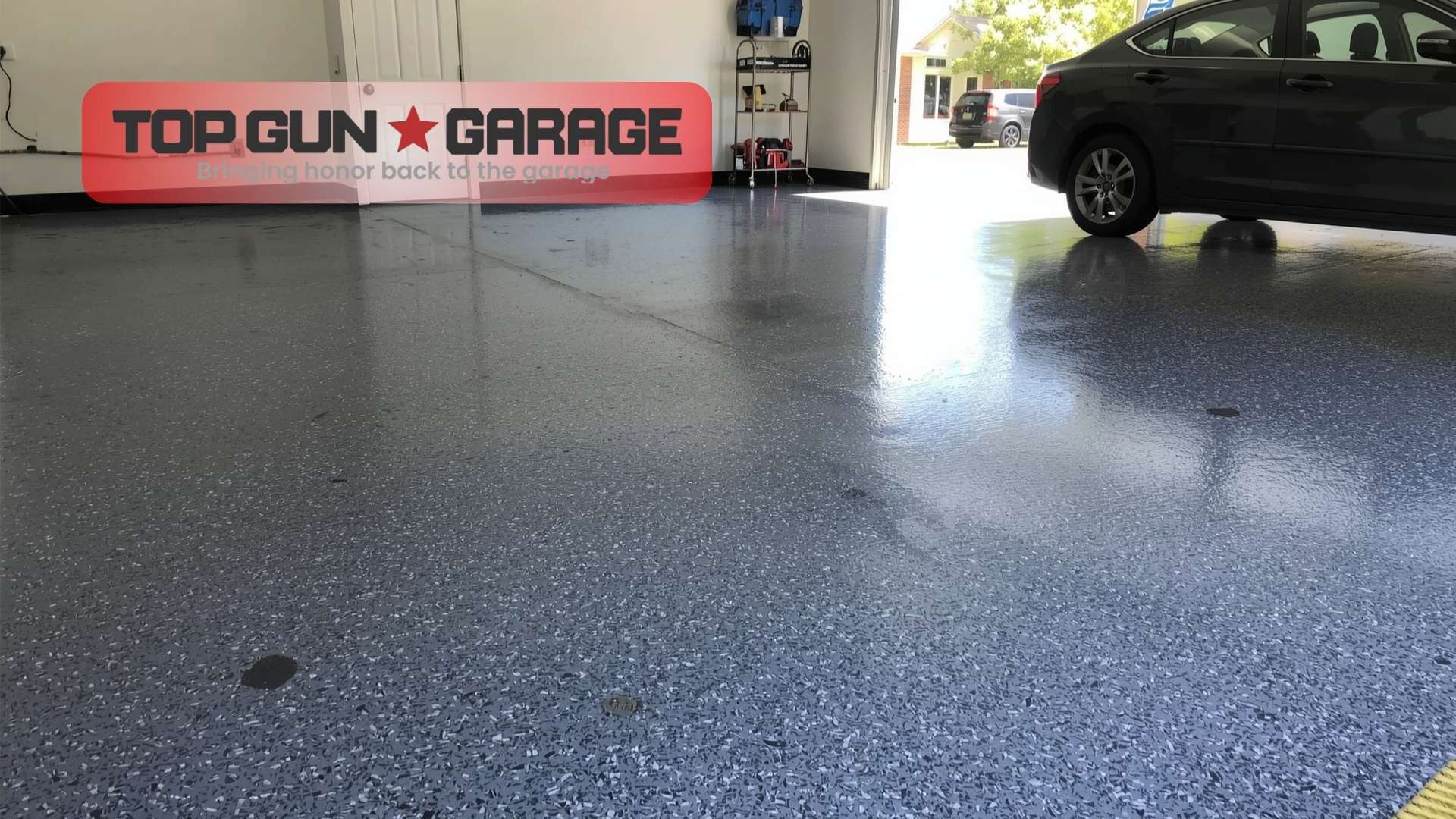
A full-broadcast flake system involves completely covering the base coat with decorative flakes, then applying a clear topcoat. This multi-layer approach creates exceptional depth and sealing capability. The flake layer fills any minor surface imperfections in the base coat, while the topcoat seals everything into a monolithic surface.
The texture created by flake systems also provides slip resistance without compromising the seal. Understanding the differences between full-broadcast and partial flake systems helps homeowners select the right option for their pest prevention goals.
Professional Installation vs. DIY Kits
DIY garage floor kits from home improvement stores rarely provide adequate pest prevention. These products typically apply at 2-4 mils thickness compared to the 15-20+ mils achieved with professional systems. The thin application leaves microscopic gaps and often fails to properly seal the critical wall-floor junction.
Additionally, DIY installations frequently suffer from improper surface preparation. Without professional grinding equipment, homeowners cannot achieve the concrete surface profile needed for proper adhesion. When coatings peel or delaminate, they create new hiding places for pests. Understanding why DIY epoxy fails in Florida explains the technical factors that compromise pest barrier effectiveness.
Complementary Pest Prevention Measures
While a sealed floor creates an effective barrier, combining it with other practices maximizes pest prevention. UF/IFAS recommends an integrated approach that addresses multiple factors.
Seal additional entry points. Inspect and seal gaps around your garage door, windows, and utility penetrations. Weather stripping on the garage door bottom should create a tight seal against the coated floor surface.
Eliminate food sources. Store pet food, birdseed, and pantry items in airtight containers. Keep garbage cans tightly sealed and remove trash regularly. A sealed floor makes cleanup easier, but eliminating attractants is equally important.
Manage exterior landscaping. Keep mulch at least 12 inches away from your garage foundation. Trim vegetation that contacts the structure, as this provides direct pathways for insects. Remove leaf litter and debris where palmetto bugs commonly nest.
Control moisture throughout the garage. Fix any leaky pipes or condensation issues. Use a dehumidifier if humidity regularly exceeds 60%. Proper garage floor drainage prevents water accumulation that attracts pests.
Maintain the floor coating. Regular cleaning prevents debris accumulation. Annual inspections can identify any areas where the coating may have been damaged by heavy impacts. Prompt repair of any compromised areas maintains the pest barrier. Understanding when epoxy flooring needs repair helps maintain protection.
Pest Prevention and Mold Resistance Work Together
The same conditions that attract pests also promote mold and mildew growth. A professionally sealed floor addresses both concerns simultaneously by creating a moisture-impermeable barrier.
Garage surfaces that resist mold and mildew also resist pest infestation because both problems stem from moisture infiltration. When your floor can properly shed water rather than absorb it, you eliminate the humid microenvironment that supports both fungal growth and insect survival.
This dual benefit is particularly valuable in Southwest Florida, where the combination of heat and humidity creates ideal conditions for both pests and microbial growth. The sealed floor surface also improves indoor air quality by preventing the concrete dust and spore accumulation that occurs with bare concrete.
Frequently Asked Questions
Will sealing my garage floor completely eliminate pest problems?
A sealed floor eliminates one of the primary entry points and removes the harborage conditions that pests require. However, insects can still enter through gaps around doors, windows, and utility penetrations. For maximum protection, combine floor sealing with other exclusion methods, such as proper weather stripping and sealing of wall penetrations. Professional floor coating typically reduces pest activity by 60-80% when combined with basic maintenance practices.
How long does a pest-resistant floor coating last?
Professional-grade polyaspartic and epoxy coatings maintain their pest barrier properties for 15-20 years with proper maintenance. The key factors affecting longevity include the quality of surface preparation, proper coating thickness (15-20 mils minimum), and protection from heavy impacts that could chip the surface. DIY kits typically fail within 2-5 years, losing their pest prevention effectiveness much sooner. Learn more about how long professional epoxy lasts.
Can pests damage a sealed garage floor?
Common garage pests like palmetto bugs, ants, and spiders cannot penetrate or damage properly installed floor coatings. The hardened surface exceeds 80 on the Shore D hardness scale, making it impervious to insect mandibles. However, rodents with their continuously growing incisors theoretically could gnaw through the coating if given enough time and motivation. In practice, rodents avoid sealed surfaces because they cannot smell food through the barrier and find no purchase for climbing.
How soon after installation does the pest barrier become effective?
The pest barrier begins forming immediately upon coating application and reaches full effectiveness once the coating fully cures. For polyaspartic systems, this occurs within 24 hours. Traditional epoxies require 3-7 days for complete cure, though the surface becomes resistant to most pests within 24-48 hours. Understanding epoxy cure time factors helps you plan for maximum protection.
Do certain coating colors or finishes provide better pest resistance?
Color does not affect pest resistance, but finish texture does. Smooth finishes are easier to clean and offer no crevices for harborage. However, slip-resistant textures created by broadcast aggregate or flake systems maintain full pest barrier properties while providing necessary traction. The flake particles become fully encapsulated in the topcoat, leaving no gaps for pest entry. Explore garage floor color options that maintain pest resistance.
Is sealing an older garage floor still effective for pest prevention?
Yes, and older floors often benefit more from sealing because they typically have more cracks and damage that serve as pest entry points. Professional installers repair cracks and spalls before applying the coating, creating a fresh barrier regardless of the concrete’s age. Floors with extensive damage may require additional preparation, but old concrete can receive effective coatings with proper preparation techniques.
Protect Your Southwest Florida Home from Pests
A professionally sealed garage floor is one of the most effective investments Southwest Florida homeowners can make for long-term pest prevention. By eliminating the cracks, joints, and moisture conditions that palmetto bugs and ants require, you create a hostile environment that discourages pest intrusion at its source.
Top Gun Garage serves Naples, Fort Myers, Cape Coral, Bonita Springs, Estero, Marco Island, and surrounding Southwest Florida communities with professional floor coating systems designed for our unique climate challenges. Our polyaspartic and epoxy systems provide the thickness, durability, and proper edge sealing required for effective pest barriers.
Request a free estimate to learn how a sealed garage floor can reduce pest pressure in your home while adding durability, beauty, and value to your property.
 Skip to content



 In Southwest Florida, where humidity averages 75-85% year-round, unsealed concrete garage floors create ideal conditions for pest intrusion. The combination of moisture absorption, expansion cracks, and control joints provides multiple pathways for insects to enter your home. A professional epoxy floor coating seals these entry points completely, creating a monolithic barrier that pests cannot penetrate.
 These ants forage primarily at night, with peak activity occurring just before sunset and continuing for about two hours afterward. Their fondness for sweet substances means any spills or food storage in your garage can attract entire colonies. A deep cleaning protocol becomes much simpler with a sealed floor surface.
 Garage surfaces that resist mold and mildew also resist pest infestation because both problems stem from moisture infiltration. When your floor can properly shed water rather than absorb it, you eliminate the humid microenvironment that supports both fungal growth and insect survival.
This dual benefit is particularly valuable in Southwest Florida, where the combination of heat and humidity creates ideal conditions for both pests and microbial growth. The sealed floor surface also improves indoor air quality by preventing the concrete dust and spore accumulation that occurs with bare concrete.
Garage surfaces that resist mold and mildew also resist pest infestation because both problems stem from moisture infiltration. When your floor can properly shed water rather than absorb it, you eliminate the humid microenvironment that supports both fungal growth and insect survival.
This dual benefit is particularly valuable in Southwest Florida, where the combination of heat and humidity creates ideal conditions for both pests and microbial growth. The sealed floor surface also improves indoor air quality by preventing the concrete dust and spore accumulation that occurs with bare concrete.