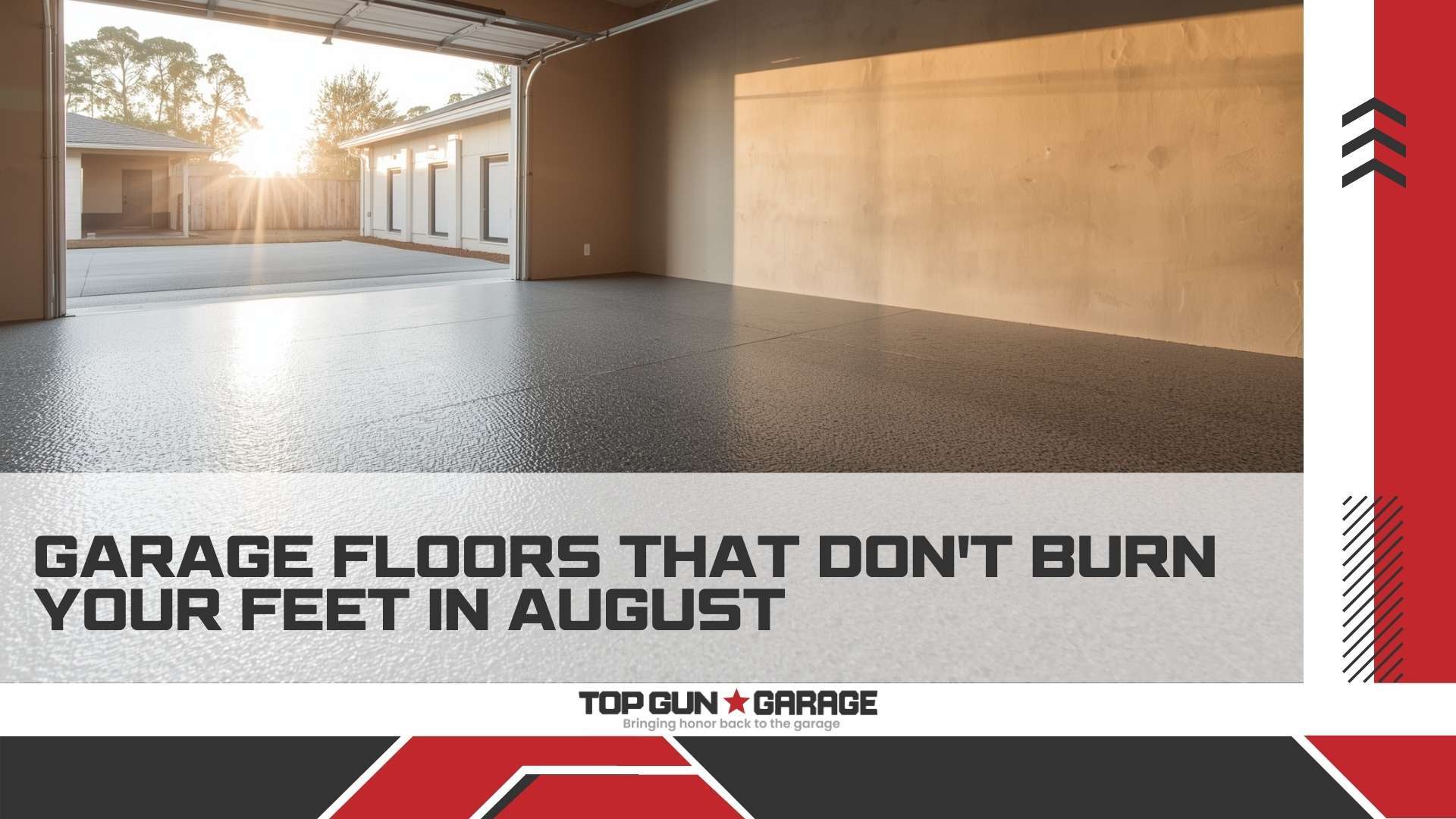
Professional polyaspartic floor coatings stay cooler underfoot than bare concrete during Florida summers and resist the thermal stress that destroys cheaper coatings. While uncoated garage floors in Southwest Florida routinely reach 130°F or higher in direct sunlight, a properly installed floor coating system reduces surface heat, eliminates hot tire pickup, and survives temperature swings that range from 95°F ambient to over 150°F on the concrete surface.
August in Florida means garage temperatures that make you question every barefoot trip to the freezer. According to the National Oceanic and Atmospheric Administration (NOAA), Florida’s average summer high temperatures range from 90°F to 95°F statewide, with heat index values frequently exceeding 110°F. Inside an enclosed garage without climate control, conditions intensify rapidly.
Why Florida Garage Floors Get So Hot
Concrete absorbs and retains heat with remarkable efficiency. When sunlight enters through windows or an open garage door, concrete acts as a thermal mass, storing heat throughout the day and releasing it slowly into the evening hours. This thermal mass effect explains why your garage stays uncomfortably warm even after sunset.
Several factors compound the problem in Southwest Florida garages: direct sun exposure through windows or doors heats concrete surfaces to 130–150°F in peak conditions. Hot vehicle tires, after absorbing heat from pavement that can exceed 150°F during summer drives, transfer additional thermal energy directly to the floor. High ambient humidity—averaging 77% in August according to climate data—reduces the body’s ability to cool through evaporation, making the perceived temperature even more uncomfortable.
The combination creates a perfect storm for both discomfort and coating failure. Understanding how Florida temperature fluctuations impact epoxy is essential for choosing the right floor system.
How Heat Destroys Inferior Floor Coatings
Not all garage floor coatings handle Florida heat equally. DIY epoxy kits from home improvement stores typically have a glass transition temperature between 120°F and 150°F. When concrete surface temperatures exceed this threshold, the coating softens, becomes tacky, and allows hot tires to lift the finish right off the floor—a phenomenon called hot tire pickup.
Hot tire pickup occurs when heated rubber tires, softened from driving on hot pavement, contact a floor coating that cannot withstand the thermal stress. As the tire cools overnight, it bonds to the softened coating and peels it away when the vehicle moves. The result is unsightly patches, exposed concrete, and premature coating failure. Learn more about the causes of hot tire pickup on epoxy garage floors.
Standard epoxy coatings also suffer from UV degradation. Exposure to Florida’s intense sunlight causes yellowing, chalking, and surface deterioration within 3–5 years. Discover why epoxy garage floor colors fade in Florida sun and what to do about it.
Polyaspartic vs. Epoxy: Heat Resistance Comparison
Polyaspartic coatings outperform traditional epoxy in high-temperature environments. The molecular structure of polyaspartic allows it to withstand temperatures up to 300°F or more without softening—well beyond what vehicle tires generate, even after extended summer drives. This heat tolerance eliminates hot tire pickup concerns entirely when proper installation protocols are followed.
Color selection directly impacts surface temperature. Light-colored floor coatings reflect more solar energy than dark surfaces, keeping the floor measurably cooler. Research on solar reflective coatings shows that lighter surfaces can reduce temperatures by up to 40°F compared to darker alternatives under identical conditions.
The Solar Reflectance Index (SRI) measures a surface’s ability to reject solar heat. Higher SRI values indicate cooler surfaces. While standard concrete has an SRI around 35–40, light gray or tan floor coatings can achieve SRI values exceeding 50–60, resulting in noticeably lower surface temperatures during peak summer heat.
Practical considerations for Southwest Florida homeowners include: lighter flake blends like tan, beige, and light gray combinations stay cooler than solid dark colors; high-gloss topcoats reflect additional light and heat compared to matte finishes; and decorative flake systems provide both aesthetic appeal and functional temperature benefits. Explore our flake color chart for options.
The Critical Role of Proper Surface Preparation
Heat resistance means nothing if the coating fails to bond properly to the concrete. Professional surface preparation creates the mechanical profile necessary for long-term adhesion—especially critical when thermal expansion and contraction stress the bond line daily in Florida conditions.
Diamond grinding removes surface contaminants, opens concrete pores, and creates a consistent profile that allows coating materials to penetrate and lock into the substrate. The process is essential because concrete porosity varies significantly based on the slab’s age, mix design, and curing conditions. Learn what concrete grinding preparation means for your floor.
Moisture testing is equally critical. According to ASTM F1869 and F2170 testing protocols, concrete moisture vapor emission rates (MVER) should not exceed 3 lbs/1,000 sq. ft./24 hours for most coating applications. Florida’s high water table and humid climate make moisture-related failures common with shortcuts. Understand how moisture affects epoxy installation in our region.
Why DIY Epoxy Kits Fail in Florida Heat
Big-box store epoxy kits cost less initially but rarely survive Florida summers. Most DIY formulations lack UV stabilizers, use water-based chemistry with lower heat tolerance, and require minimal surface preparation that fails to create adequate mechanical bond. The typical result is peeling, yellowing, and hot tire pickup within 1–2 years.
Professional-grade polyaspartic systems differ in several key ways: 100% solids formulations with no water content create a denser, more heat-resistant film; UV-stable chemistry prevents degradation from Florida’s intense sunlight; specialized primers address concrete moisture issues common in our climate; and proper application equipment ensures even coverage and correct film thickness. Read about why DIY epoxy fails in Florida and how to avoid common mistakes.
Installation Timing Considerations for Southwest Florida
Even heat-resistant coatings require proper installation conditions. Concrete temperature should remain between 50°F and 90°F during application for optimal curing. In Southwest Florida, this means scheduling installations for early morning hours or during cooler months when ambient temperatures allow concrete to stay within the acceptable range.
Humidity control matters equally. Polyaspartic coatings cure through a chemical reaction that is affected by moisture in the air. While polyaspartic handles humidity better than traditional epoxy, professional installers monitor dew point conditions to prevent surface defects. See our article on the 3-month window when garage floor coating works best in Florida for planning your project.
Understanding how Southwest Florida humidity affects installation helps homeowners set realistic expectations for project timing and outcomes.
Maintenance Tips for Heat-Resistant Floors
Maintaining a polyaspartic floor system requires minimal effort compared to epoxy alternatives. The UV-stable surface resists the yellowing and chalking that plague lesser coatings, eliminating the need for frequent refinishing. Regular care extends performance and keeps your floor looking pristine.
Essential maintenance practices include regular sweeping to remove sand and grit that can scratch the surface over time, occasional mopping with a pH-neutral cleaner and warm water, promptly cleaning chemical spills such as oil, brake fluid, and fertilizers, and avoiding harsh solvents or abrasive cleaning pads. For detailed guidance, review our tips for epoxy floor coating maintenance.
Frequently Asked Questions
How hot do Florida garage floors actually get in summer?
Concrete garage floors in Southwest Florida routinely reach 130–150°F in direct sunlight during August. Ambient garage temperatures can exceed 95°F even without direct sun exposure. The heat index—combining temperature and humidity—frequently exceeds 110°F, making uncoated concrete uncomfortable and potentially dangerous for bare feet. Understanding how epoxy floors affect garage temperature helps homeowners evaluate their options.
Will a coated floor feel cooler than bare concrete?
Yes, light-colored floor coatings reflect more solar energy and stay measurably cooler than darker surfaces or unfinished concrete. While no floor coating makes a garage air-conditioned, the temperature difference is noticeable when walking barefoot. Light gray, tan, and beige flake combinations provide the best balance of heat reflection and aesthetic appeal.
What causes hot tire pickup and how do I prevent it?
Hot tire pickup occurs when vehicle tires, heated from driving on hot pavement, soften a floor coating that lacks adequate heat resistance. As the tire cools, it bonds to the softened coating and peels it away. Prevention requires using a polyaspartic topcoat with heat tolerance exceeding 300°F, proper surface preparation for maximum adhesion, and allowing full cure time before parking vehicles. Learn more about why garage floors develop hot tire marks.
How long should I wait before parking on a new floor coating?
Polyaspartic coatings cure rapidly, allowing foot traffic within 4–6 hours and vehicle parking the same day or next morning depending on temperature and humidity conditions during installation. Traditional epoxy requires 3–5 days before parking, with full cure taking 7+ days. Florida’s humidity can extend epoxy cure times further, making polyaspartic the preferred choice for minimal downtime. See details on how long garage floor installation takes.
Can extreme heat damage even professional floor coatings?
While professional polyaspartic coatings tolerate temperatures up to 300°F or more, extreme conditions can stress any material. Factors that affect long-term performance include the quality of surface preparation, proper moisture mitigation, correct application thickness (typically 15–20+ mils for a complete system), and ongoing maintenance. Understand what determines epoxy floor durability in our climate.
Is professional installation worth the cost compared to DIY?
For Florida garages, professional installation provides significantly better value over time. DIY epoxy kits typically cost $100–300 for materials but fail within 1–2 years in our climate, requiring complete removal and replacement. Professional polyaspartic systems cost more upfront but last 15–20+ years with proper maintenance—eliminating multiple reinstallation cycles and the labor involved in each failed DIY attempt. Explore garage floor coating pricing for current estimates.
Get a Garage Floor That Handles Florida Heat
Stop burning your feet every time you walk to the car. Top Gun Garage installs professional polyaspartic floor coating systems designed specifically for Southwest Florida’s extreme heat and humidity. Our multi-layer systems resist hot tire pickup, stay cooler underfoot than bare concrete, and maintain their appearance for decades—not months.
We serve homeowners throughout Naples, Fort Myers, Cape Coral, Bonita Springs, Estero, and surrounding communities. Every installation includes diamond grinding surface preparation, moisture testing when conditions warrant, and our warranty against hot tire pickup and coating failure. Request your free estimate today and see why thousands of Southwest Florida homeowners trust Top Gun Garage with their garage floor projects.
 Skip to content



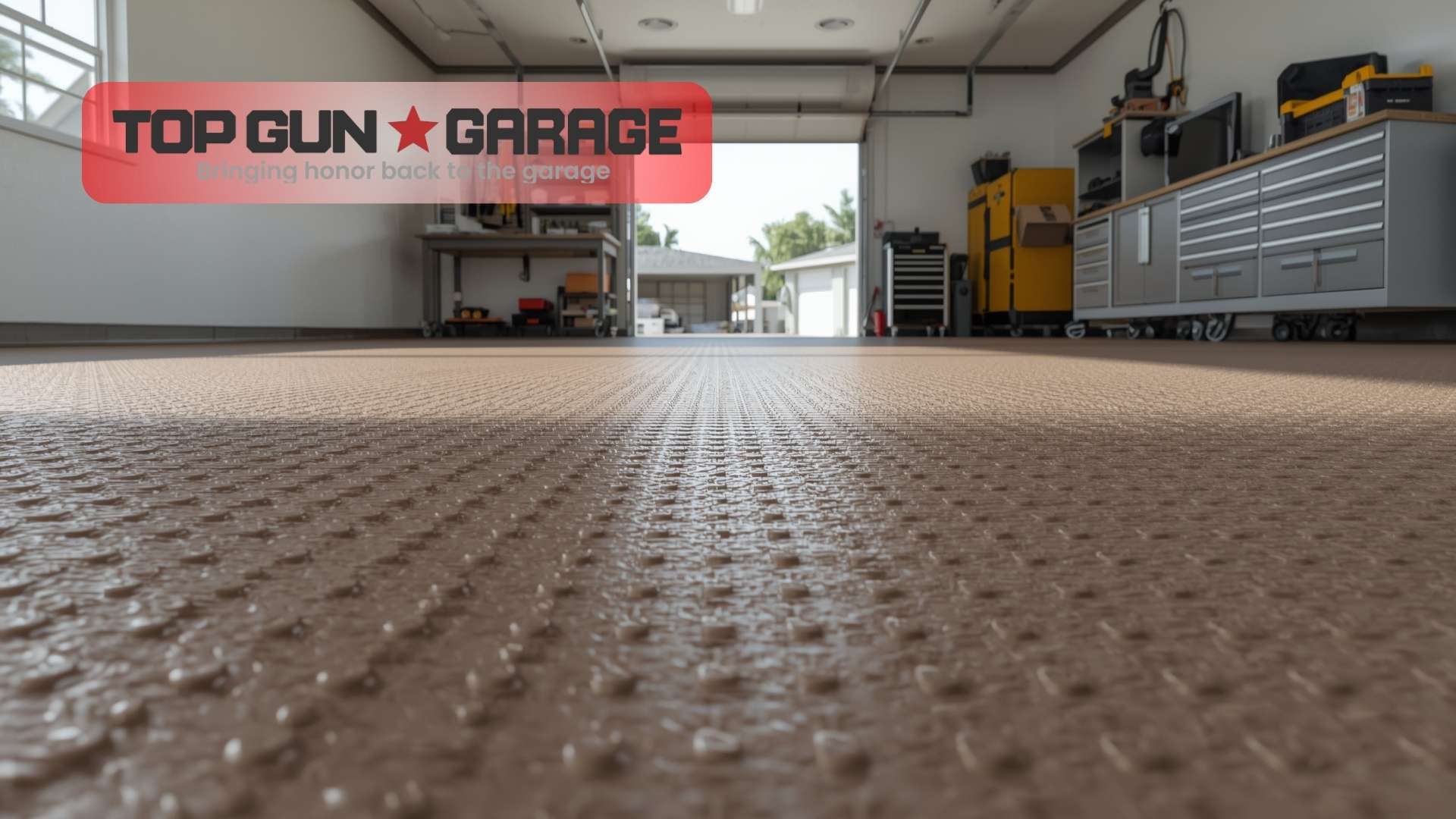 Several factors compound the problem in Southwest Florida garages: direct sun exposure through windows or doors heats concrete surfaces to 130–150°F in peak conditions. Hot vehicle tires, after absorbing heat from pavement that can exceed 150°F during summer drives, transfer additional thermal energy directly to the floor. High ambient humidity—averaging 77% in August according to climate data—reduces the body’s ability to cool through evaporation, making the perceived temperature even more uncomfortable.
The combination creates a perfect storm for both discomfort and coating failure. Understanding how Florida temperature fluctuations impact epoxy is essential for choosing the right floor system.
Several factors compound the problem in Southwest Florida garages: direct sun exposure through windows or doors heats concrete surfaces to 130–150°F in peak conditions. Hot vehicle tires, after absorbing heat from pavement that can exceed 150°F during summer drives, transfer additional thermal energy directly to the floor. High ambient humidity—averaging 77% in August according to climate data—reduces the body’s ability to cool through evaporation, making the perceived temperature even more uncomfortable.
The combination creates a perfect storm for both discomfort and coating failure. Understanding how Florida temperature fluctuations impact epoxy is essential for choosing the right floor system.
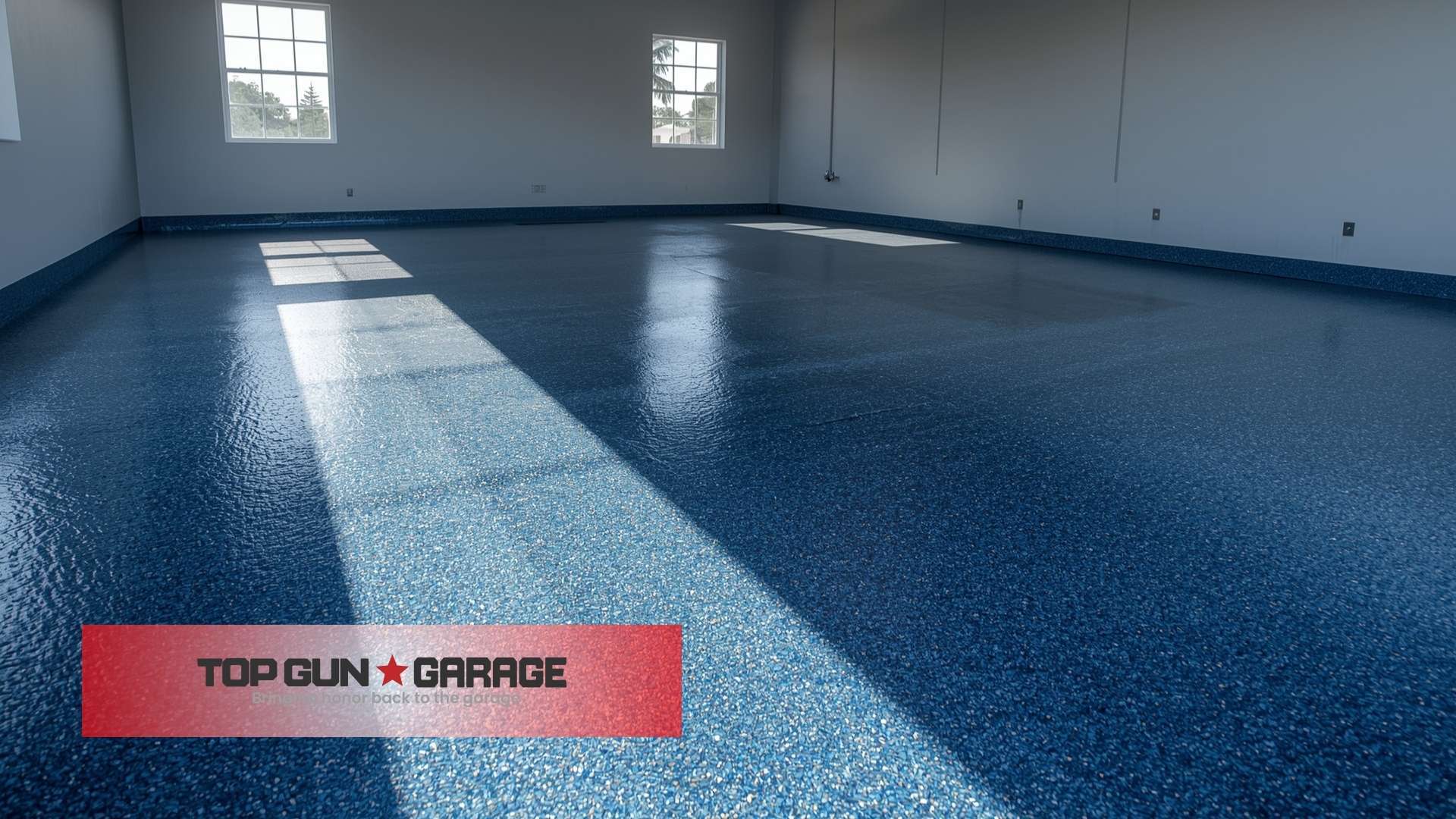 The Solar Reflectance Index (SRI) measures a surface’s ability to reject solar heat. Higher SRI values indicate cooler surfaces. While standard concrete has an SRI around 35–40, light gray or tan floor coatings can achieve SRI values exceeding 50–60, resulting in noticeably lower surface temperatures during peak summer heat.
Practical considerations for Southwest Florida homeowners include: lighter flake blends like tan, beige, and light gray combinations stay cooler than solid dark colors; high-gloss topcoats reflect additional light and heat compared to matte finishes; and decorative flake systems provide both aesthetic appeal and functional temperature benefits. Explore our flake color chart for options.
The Solar Reflectance Index (SRI) measures a surface’s ability to reject solar heat. Higher SRI values indicate cooler surfaces. While standard concrete has an SRI around 35–40, light gray or tan floor coatings can achieve SRI values exceeding 50–60, resulting in noticeably lower surface temperatures during peak summer heat.
Practical considerations for Southwest Florida homeowners include: lighter flake blends like tan, beige, and light gray combinations stay cooler than solid dark colors; high-gloss topcoats reflect additional light and heat compared to matte finishes; and decorative flake systems provide both aesthetic appeal and functional temperature benefits. Explore our flake color chart for options.
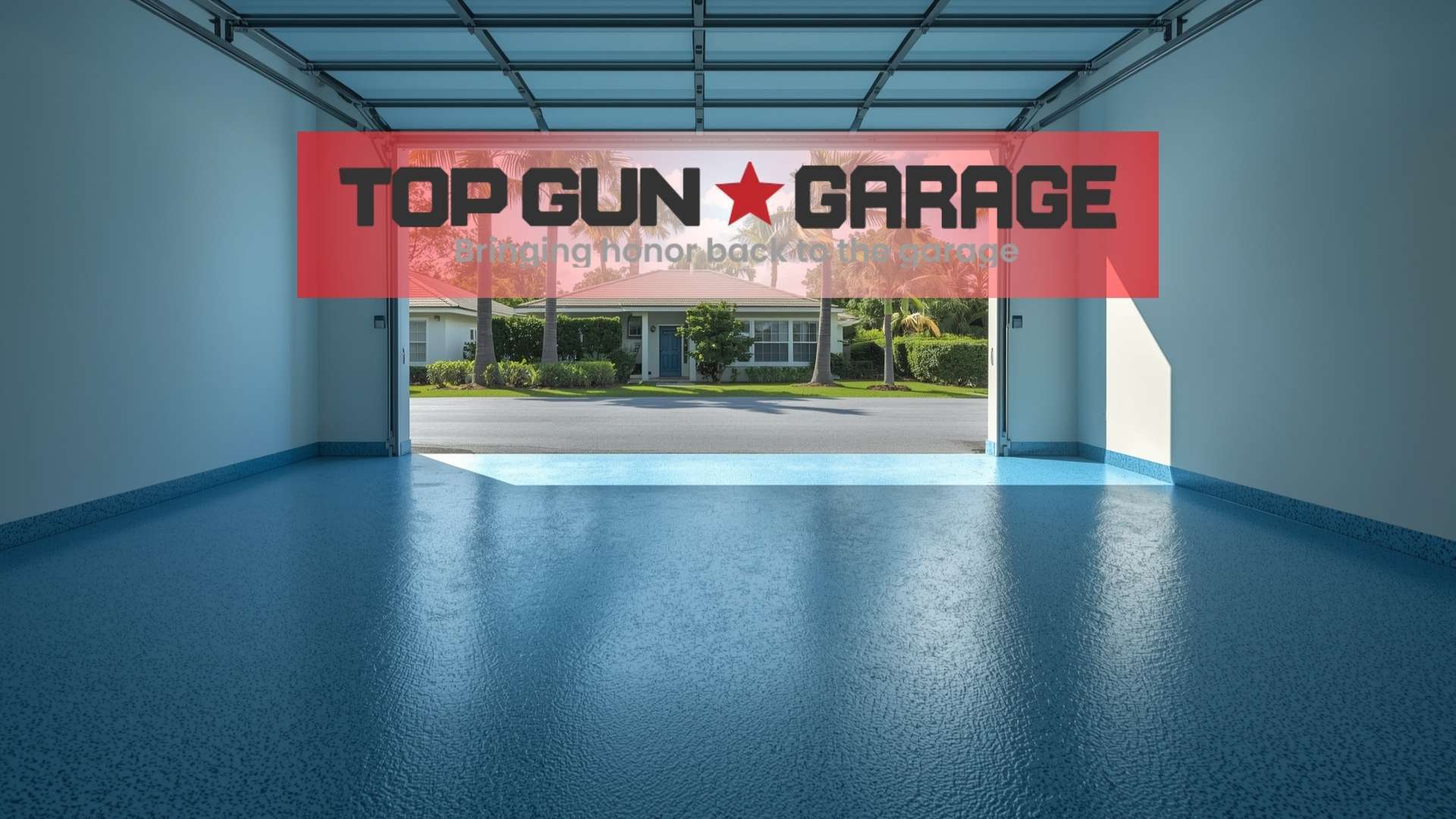 Humidity control matters equally. Polyaspartic coatings cure through a chemical reaction that is affected by moisture in the air. While polyaspartic handles humidity better than traditional epoxy, professional installers monitor dew point conditions to prevent surface defects. See our article on the 3-month window when garage floor coating works best in Florida for planning your project.
Understanding how Southwest Florida humidity affects installation helps homeowners set realistic expectations for project timing and outcomes.
Humidity control matters equally. Polyaspartic coatings cure through a chemical reaction that is affected by moisture in the air. While polyaspartic handles humidity better than traditional epoxy, professional installers monitor dew point conditions to prevent surface defects. See our article on the 3-month window when garage floor coating works best in Florida for planning your project.
Understanding how Southwest Florida humidity affects installation helps homeowners set realistic expectations for project timing and outcomes.