 Skip to content



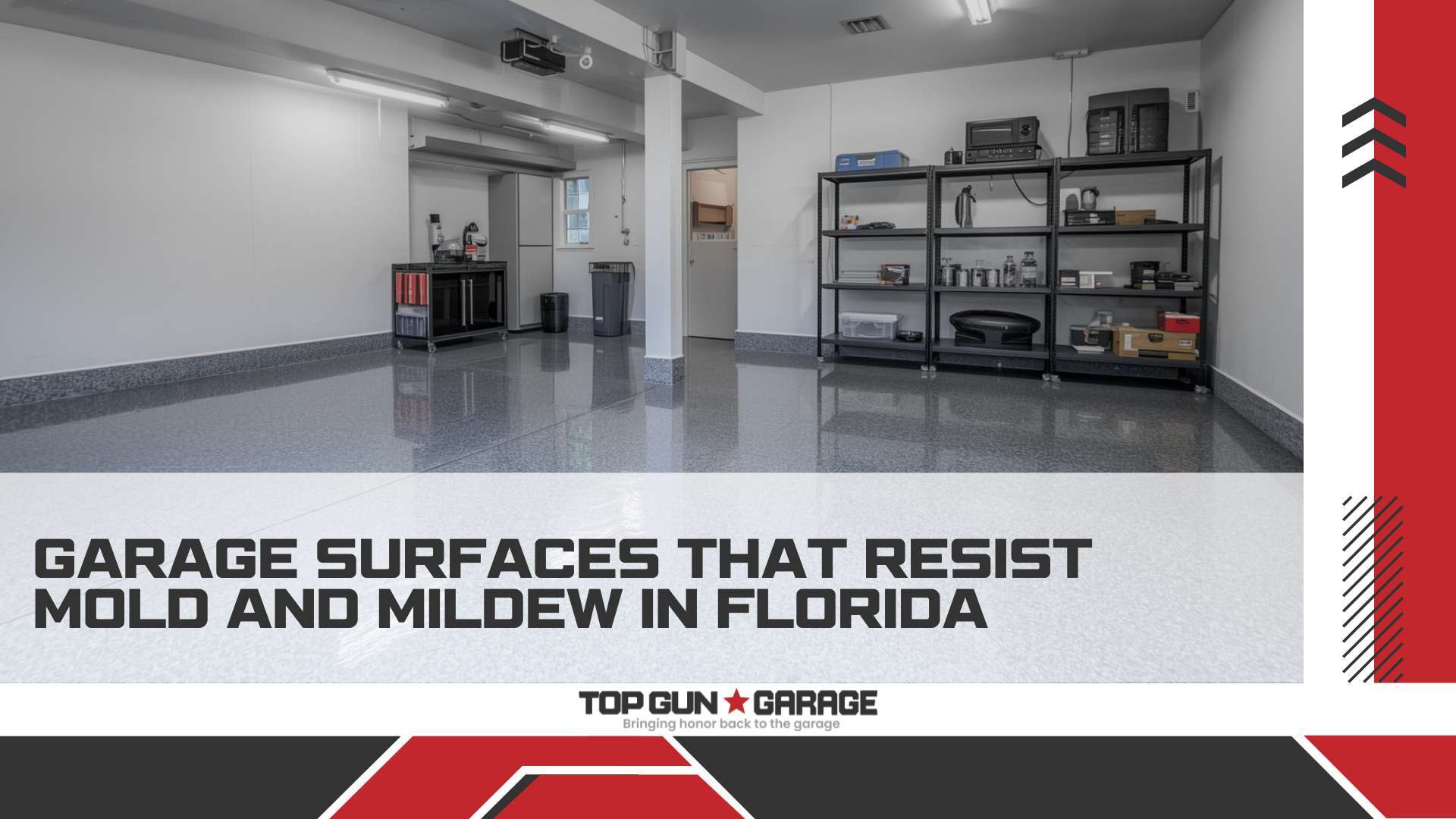
Florida’s subtropical climate creates the perfect environment for mold and mildew to thrive, with high humidity levels that rarely drop below 60% and temperatures that support year-round fungal growth. For Naples homeowners, this means that garage surfaces that resist mold and mildew Florida are not just a luxury—they are a necessity for protecting health, property value, and stored belongings. Unsealed concrete floors act like sponges, absorbing moisture from the ground and air, creating damp conditions where mold colonies quickly establish themselves in cracks, pores, and along walls.
The health implications of mold exposure are well-documented, ranging from respiratory issues and allergic reactions to more serious conditions for those with compromised immune systems. When your garage shares walls with living spaces or houses items that circulate into your home, mold growth becomes a direct threat to your family’s wellbeing. The musty odor that often accompanies mold is not just unpleasant; it signals the presence of spores that are being released into the air you breathe.
At Top Gun Garage, we understand that controlling moisture in Florida garages requires a comprehensive approach that addresses both the floor and environmental factors. The right surface coating creates an impermeable barrier that prevents moisture from wicking up through the concrete slab, effectively cutting off the water supply that mold needs to survive. Combined with proper ventilation and humidity control, these sealed surfaces transform damp, moldy garages into clean, healthy spaces.
This guide will explore why traditional concrete surfaces fail in Florida’s climate, which coating materials offer the best mold resistance, and how to create a complete moisture management system for your garage. From understanding the science of vapor transmission to implementing practical prevention strategies, you will learn everything needed to keep your Naples garage mold-free year-round. Let’s protect your investment and your health with the right surface solutions.
Key Takeaways
-
Moisture Barrier: Sealed epoxy coatings prevent water vapor from penetrating concrete, eliminating the damp conditions mold requires.
-
Seamless Protection: Unlike tiles with grout lines, monolithic coatings leave no gaps where moisture and mold can accumulate.
-
Easy Cleaning: Non-porous surfaces prevent organic matter from embedding in the floor, removing mold’s food source.
-
Ventilation Matters: Even the best flooring needs air circulation to control humidity and prevent condensation.
-
Climate-Specific Solutions: Florida’s unique challenges require coatings engineered for high humidity and temperature extremes.
Understanding Florida’s Mold Problem: Why Traditional Concrete Fails
Bare concrete is a porous material filled with microscopic channels and voids that readily absorb and transport moisture through capillary action from the ground beneath. In Florida, where the water table is often just feet below the surface and rain is abundant, this moisture continuously wicks upward through the slab, keeping the surface perpetually damp even when no standing water is visible. This constant moisture creates ideal conditions for mold spores, which are always present in the air, to land and germinate on the concrete surface.
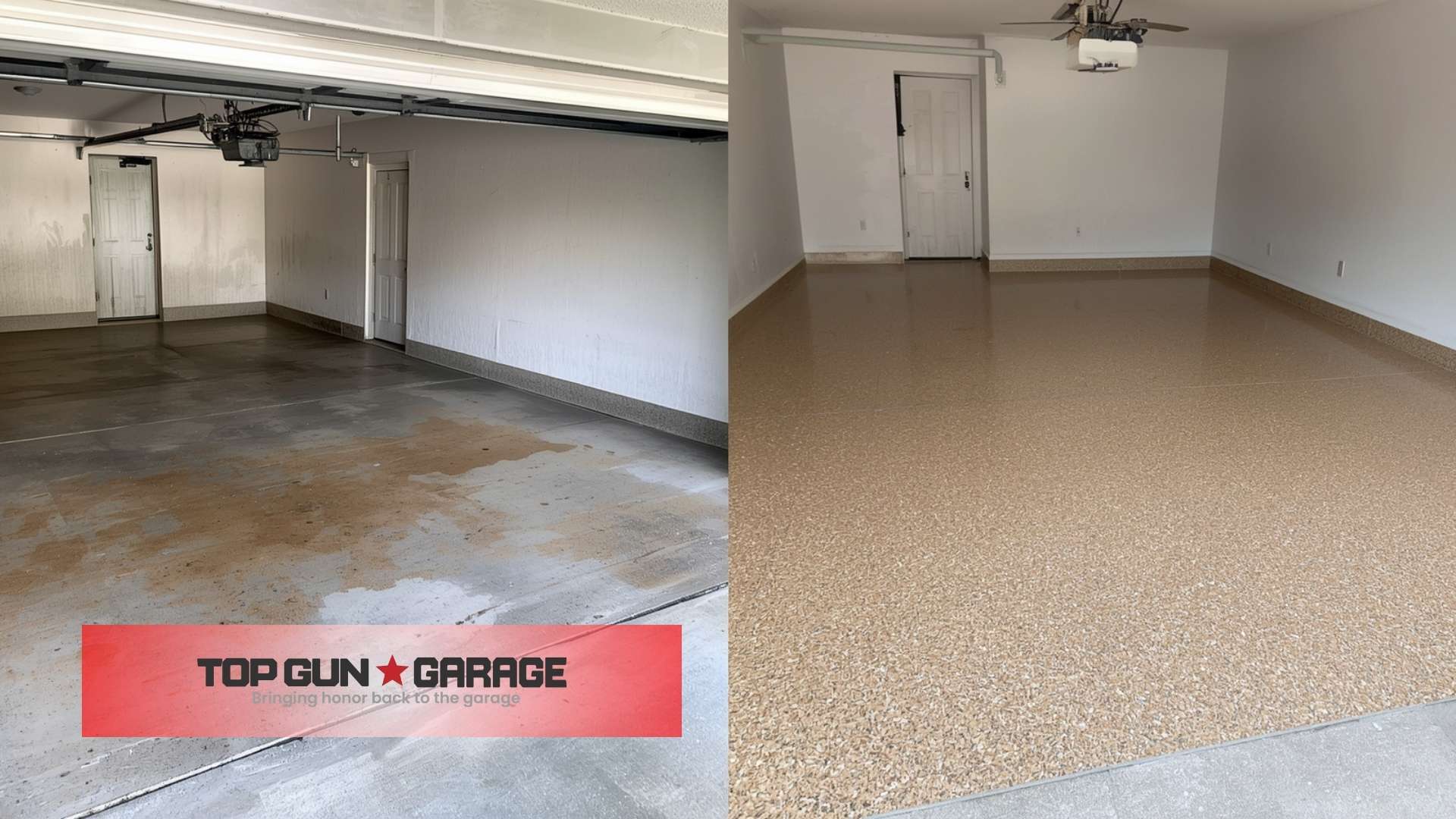
As concrete ages, it develops fine cracks and surface deterioration that create even more hospitable environments for mold colonization and growth. These imperfections trap dirt, dust, and organic debris that serve as nutrients for fungal growth, while the alkaline nature of fresh concrete gradually neutralizes over time, making older slabs less resistant to biological growth. The rough, porous texture of concrete provides countless attachment points where mold can establish colonies that are nearly impossible to remove once established.
The problem is compounded in Naples by the region’s high humidity, which often exceeds 70% even inside closed garages, and warm temperatures that accelerate mold reproduction cycles. During summer months, hot air entering through open garage doors condenses on cooler concrete surfaces, adding another layer of moisture that feeds existing colonies. This cycle of wetting and drying, combined with poor ventilation in most residential garages, creates a perpetual mold-growing machine that threatens stored items and indoor air quality.
Traditional surface treatments like concrete sealers or paints offer only temporary relief, as they lack the durability and impermeability needed for long-term moisture control in demanding environments. These thin coatings often fail within a year or two, peeling away and trapping moisture underneath, which actually worsens the mold problem by creating sealed pockets of dampness. The best garage floor coating for Florida humidity must address both surface protection and vapor transmission to truly solve the problem.
How Epoxy and Polyaspartic Coatings Block Moisture
Professional-grade epoxy and polyaspartic coatings create a continuous, impermeable membrane over the concrete that functions as a vapor barrier, stopping moisture transmission from the slab to the air above. Unlike porous concrete or thin paints, these thick resinous coatings cure to form a chemical bond with the substrate while sealing every pore and crack in the surface. This dual action of adhesion and sealing prevents water vapor from escaping the concrete, effectively drying out the slab over time and eliminating the dampness that mold requires.
The chemistry behind these coatings is specifically designed to resist moisture penetration from both directions—blocking groundwater from wicking up while also preventing surface water from seeping down into the concrete. This bidirectional moisture resistance is critical in Florida, where garages face challenges from both ground moisture and humidity in the air that condenses on surfaces. By encapsulating the concrete completely, epoxy flooring increases home value while simultaneously solving moisture and mold problems.
The seamless nature of these coatings is equally important for mold resistance, as there are no grout lines, seams, or joints where moisture can accumulate and mold can hide. Tile and similar modular flooring systems, despite being individually moisture-resistant, create vulnerable grout lines that trap water and become mold breeding grounds in humid climates. A monolithic epoxy or polyaspartic surface eliminates these weak points entirely, providing complete protection from wall to wall without any breaks in the moisture barrier.
Additionally, the smooth, non-porous surface of cured epoxy prevents organic material like leaves, dirt, and dust from embedding in the floor where they would serve as nutrients for mold growth. Everything stays on the surface where it can be easily swept or mopped away, removing the food source that mold colonies need to establish themselves. Reducing dust exposure through proper sealing also contributes to better air quality and reduced allergen levels in the garage and adjacent living spaces.
Antimicrobial Additives: Enhanced Protection for High-Risk Areas
For garages in particularly vulnerable locations—such as those in low-lying areas prone to flooding, spaces with poor natural ventilation, or homes where family members have mold sensitivities—antimicrobial additives can be incorporated into the coating system for enhanced protection. These additives work by releasing compounds that inhibit mold and bacteria growth on the surface, providing an extra layer of defense beyond the physical moisture barrier. They are especially valuable in Florida where the environmental pressure from mold spores is constant and relentless.
Modern antimicrobial technologies used in flooring coatings are safe for residential use and do not off-gas harmful chemicals once cured into the coating matrix. Instead, they create a hostile environment for microorganisms on the coating surface itself, preventing colonization even if moisture does manage to accumulate temporarily from condensation or tracked-in water. This is particularly important in garage storage solutions areas where boxes and items stored against walls can trap moisture and create hidden mold growth zones.
These additives are not a substitute for proper surface preparation and coating application, but rather an enhancement that provides additional security in challenging environments. They work most effectively when combined with adequate ventilation, dehumidification, and regular cleaning practices that remove organic debris before mold can establish a foothold. The combination of physical moisture barrier, antimicrobial protection, and good housekeeping creates a comprehensive defense system against fungal growth.
It is important to note that while antimicrobial coatings resist mold growth on their surface, they cannot prevent mold from growing on items stored in the garage or on walls if moisture issues are not addressed holistically. The floor coating is one critical component of a complete moisture management strategy that should also include proper drainage around the home’s foundation, functional gutters and downspouts, and adequate air circulation within the garage space itself.
Ventilation and Dehumidification: Supporting Your Mold-Resistant Surface
Even the most advanced moisture-resistant coating cannot function optimally without proper air circulation to remove humid air and prevent condensation from forming on surfaces. Florida garages often remain closed for extended periods, allowing humidity to build up inside even when the coating is preventing moisture from coming through the floor. Installing exhaust fans or opening doors and windows periodically helps maintain air movement that keeps humidity levels below the 60% threshold where mold begins to thrive actively.
For garages that remain closed most of the time, such as those in gated communities or high-security areas, a dehumidifier becomes an essential tool for maintaining healthy humidity levels. These appliances continuously remove moisture from the air, typically maintaining humidity around 40-50%, which is low enough to prevent mold growth while being comfortable for working in the space. The energy cost of running a dehumidifier is minimal compared to the expense of remediating mold damage or replacing ruined stored items.
Proper ventilation also helps reduce the temperature differential that causes condensation to form on cooler concrete surfaces when hot, humid air enters the garage. By maintaining more consistent temperatures through air circulation, you minimize the condensation events that can temporarily overwhelm even the best moisture barrier. This is especially important in Naples where afternoon thunderstorms can cause sudden humidity spikes that catch homeowners off guard.
Some homeowners enhance ventilation by installing ridge vents or soffit vents that provide passive air circulation even when the garage is closed, similar to attic ventilation systems. These architectural improvements work synergistically with modern epoxy flake flooring designs to create a complete moisture control system that protects the space year-round. The investment in proper ventilation pays dividends by extending the life of stored items and making the garage a more pleasant space to occupy.
Maintenance Practices That Prevent Mold Establishment
Regular cleaning is one of the most effective and simple strategies for preventing mold growth on any surface, regardless of how resistant the material may be. Sweeping or vacuuming the garage floor weekly removes the organic debris, dust, and dirt that mold spores need as nutrients to establish colonies and spread. This simple practice, which takes just minutes, dramatically reduces the chances of mold taking hold even if temporary moisture occurs from rain tracked in on vehicles or seasonal humidity spikes.
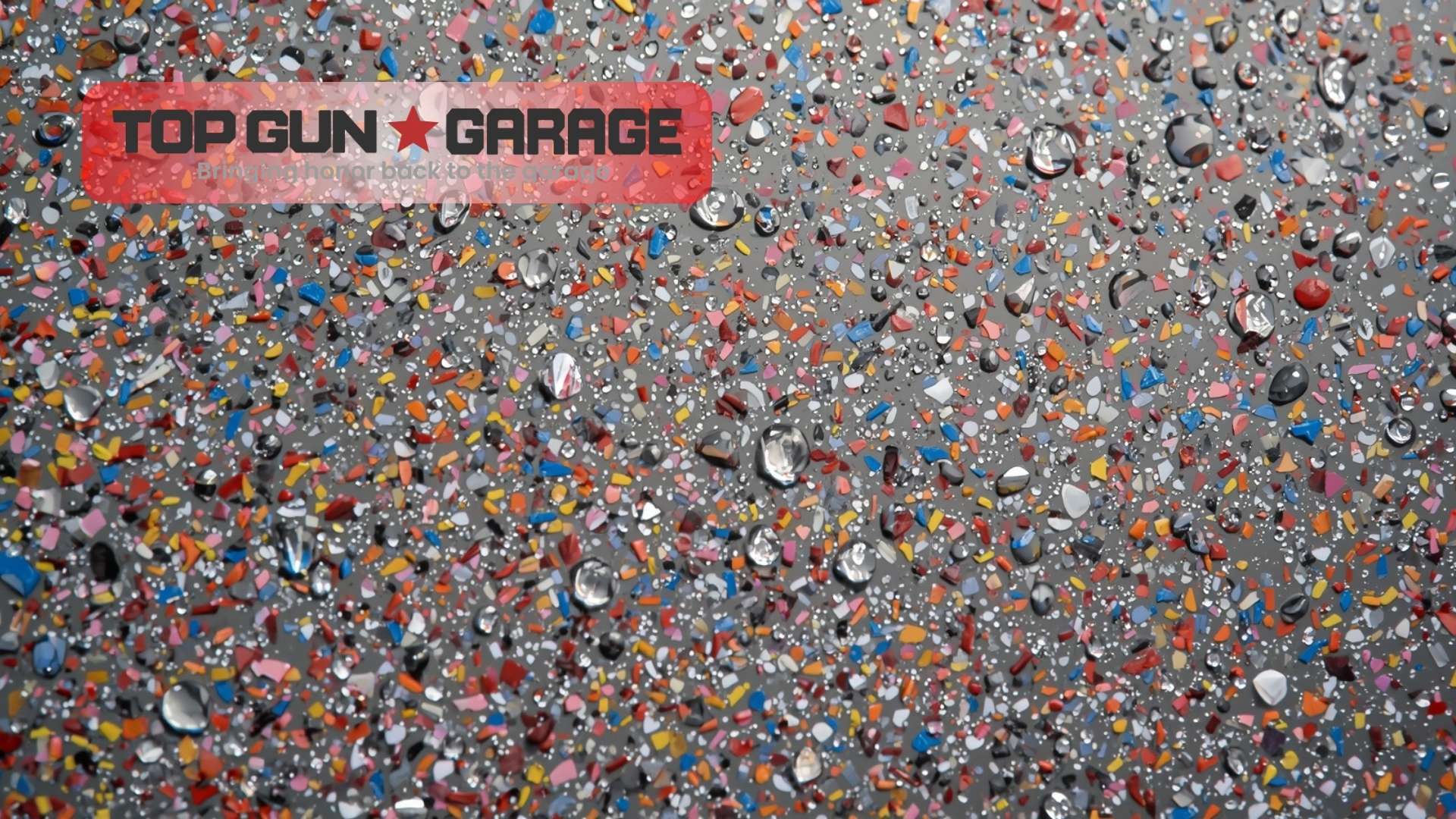
Mopping with a pH-neutral cleaner monthly provides deeper cleaning that removes any residual oils, pollens, or organic films that accumulate over time despite regular sweeping. This wet cleaning also allows you to inspect the floor for any signs of moisture accumulation, coating damage, or early mold growth that can be addressed before becoming a serious problem. Understanding what happens to spilled chemicals on epoxy flooring helps you respond appropriately to various types of contamination that could support mold growth.
Addressing spills and leaks immediately is critical, as even mold-resistant surfaces can support growth if standing water remains for extended periods. Automotive fluids, fertilizers, and other liquids should be cleaned up promptly rather than allowed to pool, which not only prevents mold but also protects the coating itself from potential staining or chemical damage. Keeping absorbent materials on hand as part of your epoxy floor maintenance kit ensures quick response to spills.
Finally, maintaining good organization with items stored off the floor on shelving or platforms improves air circulation around stored items and prevents moisture from being trapped between boxes and the floor. This practice not only protects your belongings from potential mold exposure but also makes it easier to clean the entire floor surface thoroughly during regular maintenance. Garage flooring and storage solutions work together to create a healthier, more functional space that resists mold establishment.
Installation Considerations: Getting It Right the First Time
Proper installation technique is critical for ensuring that your mold-resistant coating performs as intended for decades rather than failing prematurely. The concrete surface must be thoroughly dried before coating application, as trapped moisture can cause delamination and create pockets where mold can grow beneath the coating. Professional installers use moisture meters to verify that the slab has acceptable moisture levels before proceeding with application, a step that DIY installers often skip with disastrous results.
Surface preparation must include complete removal of any existing mold, mildew stains, or organic contamination through aggressive grinding or chemical treatment. Simply coating over existing mold colonies traps them beneath the new surface where they can continue to grow and eventually compromise the coating’s adhesion. Understanding what to do before epoxy flooring preparation is essential for achieving a truly mold-resistant result that lasts.
For garages with known moisture issues or those located in areas with high water tables, additional measures like moisture-mitigating primers may be necessary before applying the main coating system. These specialized primers bond to damp concrete and provide extra vapor blocking capability that standard epoxy alone cannot achieve. Professional contractors can assess whether these enhancements are necessary based on moisture testing results and site-specific conditions.
The curing environment during installation also affects long-term mold resistance, as coatings applied during high humidity or cool temperatures may not achieve complete cure and full moisture resistance. Professional installers schedule work during optimal weather windows and use climate control equipment when necessary to ensure proper cure. This attention to detail during installation pays off with superior performance and longevity that prevents future mold problems.
Frequently Asked Questions (FAQ)
1. Can epoxy flooring prevent mold growth completely? While epoxy creates an excellent moisture barrier, complete mold prevention requires combining proper flooring with ventilation, humidity control, and regular cleaning practices in Florida’s challenging climate.
2. What humidity level prevents mold in garages? Maintaining indoor humidity below 60%, ideally around 40-50%, prevents most mold growth. A dehumidifier helps achieve this in Florida’s humid environment year-round.
3. Does mold grow under epoxy coatings? If the concrete was properly dried before coating and the surface was prepared correctly, mold cannot grow under epoxy. Moisture testing and proper installation are critical for preventing this issue.
4. How do I remove existing mold before coating? Existing mold must be killed with appropriate cleaners and mechanically removed through grinding or aggressive cleaning before coating to ensure it does not continue growing beneath the new surface.
5. Are antimicrobial coatings worth the extra cost? For high-risk areas or homes with mold-sensitive occupants, antimicrobial additives provide valuable extra protection. They are optional for most applications but recommended for challenging environments.
6. Can I install mold-resistant flooring myself? While possible, DIY installations often fail due to inadequate surface drying and preparation. Professional installation ensures proper moisture testing and application for long-term mold resistance.
7. How long does epoxy take to cure in humid weather? Professional-grade coatings are formulated for Florida’s climate and typically cure within 24-48 hours even in humidity. DIY products may take much longer and may not cure properly in these conditions.
8. Will sealing my garage floor increase humidity inside? No, properly sealed floors actually reduce indoor humidity by preventing moisture from wicking up through the concrete. Ventilation improvements may still be necessary for optimal control.
9. What is the best flooring for a damp garage? 100% solids epoxy with a polyaspartic topcoat provides the best moisture barrier and mold resistance for damp environments, far surpassing tiles, paint, or water-based coatings in performance.
10. How often should I clean my mold-resistant floor? Weekly sweeping and monthly mopping maintain optimal mold resistance by removing organic material and allowing inspection for any moisture or coating issues that need attention.
Conclusion
Creating a garage that resists mold and mildew in Florida’s challenging climate requires more than hoping for the best or applying a cheap sealer from the hardware store. It demands a comprehensive approach that combines professional-grade moisture-resistant coatings with proper ventilation, humidity control, and consistent maintenance practices that work together as a system. The foundation of this system is a properly installed epoxy or polyaspartic coating that creates an impermeable barrier between the concrete and the air, cutting off the moisture supply that mold absolutely requires to survive and reproduce.
The health and property benefits of a mold-free garage extend far beyond aesthetics, protecting your family from respiratory issues and allergic reactions while preserving the value and condition of stored belongings. Vehicles, tools, seasonal decorations, and sporting equipment all suffer damage when exposed to mold and excess moisture, making the investment in proper surface protection a wise financial decision. The peace of mind that comes from knowing your garage is not harboring hidden mold colonies that threaten indoor air quality is invaluable for families with children or elderly members.
Florida’s subtropical environment will always present moisture challenges, but with the right surface coating and environmental controls, you can win the battle against mold and maintain a clean, healthy garage year-round. The key is choosing materials specifically engineered for high-humidity environments and having them installed by professionals who understand the unique demands of coastal living. Half-measures and budget shortcuts inevitably fail in this climate, leading to recurring problems and greater expense in the long run than doing it right the first time.
Ready to transform your damp, musty garage into a clean, mold-resistant space that protects your health and belongings? Contact Top Gun Garage today for a comprehensive evaluation and free estimate tailored to your specific moisture challenges. Our team specializes in creating complete moisture management solutions using the best garage floor coatings for Florida humidity, ensuring your Naples home stays healthy and beautiful for decades to come. Let’s build a mold-free future together.