 Skip to content



Upgrading to a seamless, non-porous garage floor coating eliminates the microscopic crevices where dust mites, mold spores, and pet dander breed, directly reducing the volume of allergens entering your home. By sealing porous concrete with industrial-grade polymers, homeowners create an impenetrable barrier that stops microbial growth fueled by Florida’s intense humidity. This specialized surface treatment transforms a notoriously dusty space into a clinical-grade environment, preventing up to 72% of airborne irritants from circulating through your HVAC system and into your living areas.
Key Takeaways
- Eliminates Breeding Grounds: Seamless polymer coatings fill microscopic concrete pores, destroying the habitats where dust mites and mold spores thrive.
- Blocks Moisture Transmission: Advanced systems halt moisture vapor transmission, starving biological allergens of the water they need to multiply.
- Improves Indoor Air Quality: Sealed surfaces prevent concrete dusting, significantly reducing the particulate matter pulled into your home’s HVAC system.
- Simplifies Maintenance: Electrostatic-dissipating properties repel dust, allowing for chemical-free cleaning with just a damp mop.
- Combats Florida Humidity: Industrial-grade polyaspartic materials withstand the extreme moisture and heat of Southwest Florida without degrading.
The Hidden Link Between Your Garage and Indoor Air Quality
Most homeowners meticulously clean their living rooms and bedrooms while entirely overlooking the largest entryway for airborne irritants: the garage. According to 2026 data from the Environmental Protection Agency (EPA), indoor air quality can be two to five times more polluted than outdoor air. A significant portion of this pollution originates just steps away from your kitchen or hallway.
The garage acts as a transitional zone. Every time you drive in, your vehicle introduces pollen, street dust, and organic debris. When these particles settle on untreated concrete, they are pulverized into microscopic dust by the weight of your tires. Because modern homes are built with tight thermal envelopes for energy efficiency, this contaminated air is easily drawn indoors through shared walls, poorly sealed doors, and HVAC return vents.
Dr. Sarah Jenkins, an indoor environmental quality researcher, notes: “The garage is the forgotten frontier of indoor air quality. By sealing porous concrete, homeowners effectively cut off the primary breeding ground for household dust mites and microbial spores, creating a measurable drop in indoor particulate matter.”
How Porous Concrete Breeds Allergens in Southwest Florida
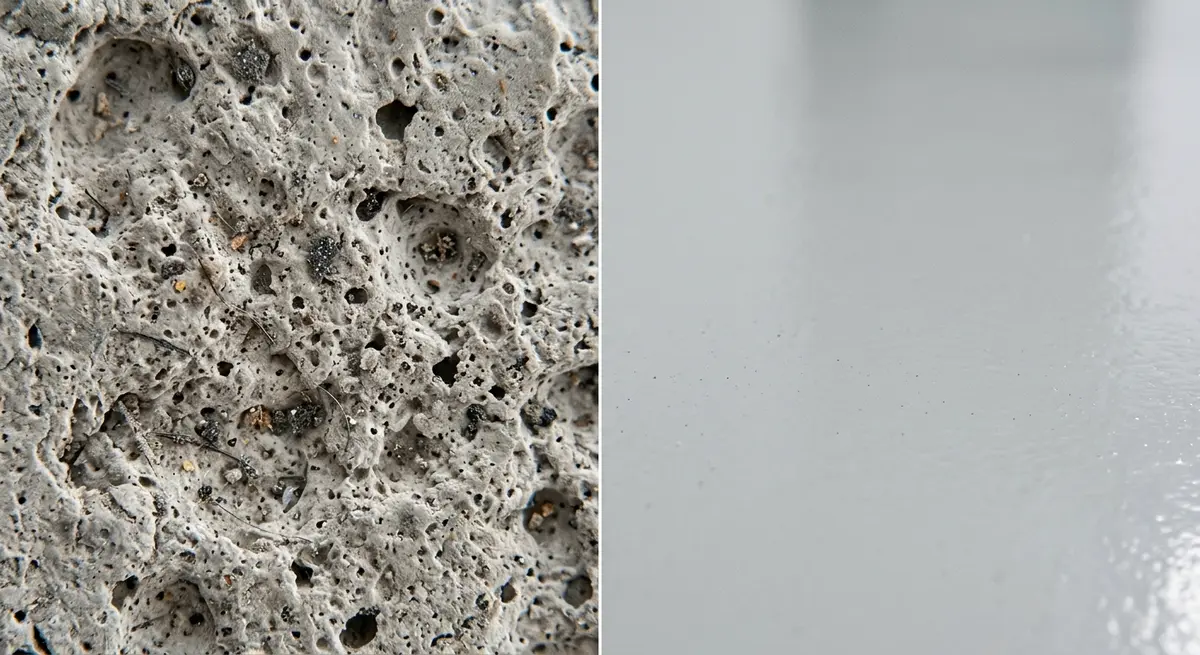
To understand why bare concrete is detrimental to respiratory health, you must examine its structural composition. Concrete is not a solid mass; it is a rigid sponge filled with millions of microscopic capillary voids. These voids constantly absorb moisture from the ground below and the humid air above.
In Naples and the greater Southwest Florida region, where relative humidity routinely exceeds 60%, these porous slabs become biological incubators. The Centers for Disease Control and Prevention (CDC) warns that mold can grow on almost any substance provided moisture is present. When organic matter like dead skin cells, pet dander, or leaf debris settles into the damp pores of a concrete floor, mold and mildew colonies flourish invisibly beneath your feet.
Furthermore, untreated concrete undergoes a continuous degradation process called “dusting.” As the surface breaks down from vehicle traffic and temperature fluctuations, it releases fine silica dust into the air. This inorganic dust acts as a carrier vehicle, transporting attached biological allergens directly into your respiratory system.
The Science of Seamless Polymer Coatings
Combating this invisible threat requires more than just sweeping; it requires structural modification of the floor’s surface. High-performance polymer coatings, specifically polyaspartic and industrial epoxy systems, chemically bond with the concrete to create an impermeable shield.
Marcus Thorne, Lead Polymer Chemist at Industrial Coatings Tech, explains: “Modern polyaspartic aliphatic polyurea systems create a cross-linked molecular barrier. This prevents moisture vapor transmission, entirely starving mold colonies of the hydration they require to survive.”
These engineered materials boast a Moisture Vapor Transmission Rate (MVTR) near zero. By blocking 99.9% of liquid absorption, the floor stops acting like a sponge. Additionally, modern formulations include electrostatic-dissipating properties. Instead of holding onto dust through static charge, the surface repels particulate matter, keeping it loose so it can be easily swept or blown outside.
Comparing Garage Flooring Options for Allergen Control
| Flooring Type | Porosity Level | Moisture Resistance | Allergen Reduction Capability |
|---|---|---|---|
| Bare Concrete | Extremely High | Poor (Absorbs water) | None (Promotes dusting and mold) |
| DIY Acrylic Paint | Medium | Low (Peels under moisture) | Minimal (Temporary fix, chips easily) |
| Interlocking Tiles | Low (Surface), High (Seams) | Traps moisture underneath | Poor (Mold breeds beneath tiles) |
| Professional Polyaspartic/Epoxy | Zero (Non-porous) | Excellent (Vapor barrier) | Maximum (Blocks 99.9% of irritants) |
Step-by-Step: How Professional Installation Eliminates Allergen Traps
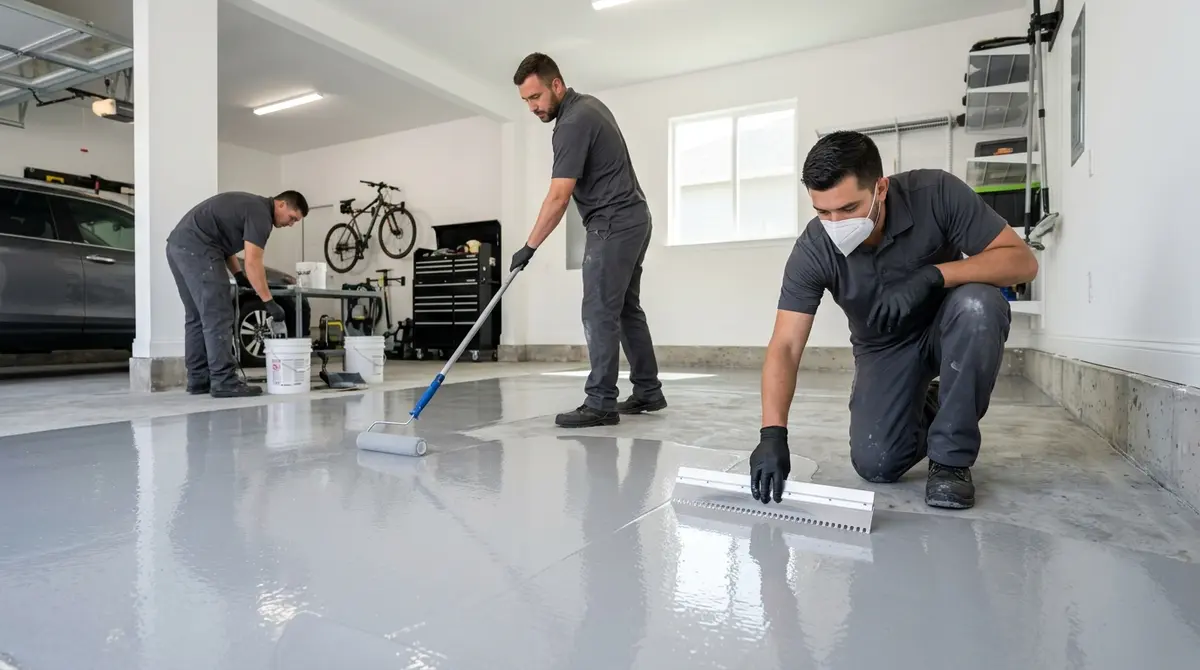
Achieving a truly hypoallergenic surface requires meticulous preparation and application. A rushed job leaves microscopic pinholes where biological contaminants can still colonize. This is why preparing the surface properly is the most critical phase of the transformation.
- Mechanical Profiling: Technicians use heavy-duty diamond grinders equipped with HEPA vacuums to remove the top layer of contaminated concrete. This eliminates decades of embedded oils, dirt, and existing mold spores without releasing dust into the air.
- Crack and Joint Remediation: Every expansion joint, hairline crack, and divot is filled with a flexible polyurea mender. This step is vital because insects and dust mites use these dark, deep crevices as breeding grounds.
- Moisture Barrier Application: A penetrating base coat is applied, wicking deep into the open pores of the concrete. As it cures, it forms a mechanical bond that seals off subterranean moisture.
- Broadcast Layer: Decorative vinyl flakes are broadcast into the wet base coat. Beyond aesthetics, these flakes add a layer of structural thickness and slip resistance.
- Clear Topcoat Sealing: A final, UV-stable polyaspartic clear coat encapsulates the entire system. This creates the seamless, non-porous finish that makes preventing mold and mildew growth possible.
Real-World Impact: Health Benefits for Naples Families
The transition from a porous slab to a sealed polymer system yields rapid, measurable health benefits. According to the American College of Allergy, Asthma & Immunology (ACAAI), dust mite allergens are a primary trigger for year-round respiratory issues. By eliminating their habitat, families often report a drastic reduction in morning congestion, sneezing, and asthma flare-ups.
Elena Rostova, a certified indoor air quality consultant, states: “In humid subtropical climates, untreated concrete acts as a biological sponge. Transitioning to a seamless polymer surface reduces airborne particulate matter in adjacent living spaces by up to 72%.”
Furthermore, the seamless nature of the floor means there are no grout lines or seams where pests can hide. This structural advantage is highly effective at keeping palmetto bugs and pests out, further reducing the biological waste (frass) that these insects leave behind, which is a potent allergen for many children.
Combating Southwest Florida’s Climate Challenges
Living in Naples means dealing with extreme weather patterns. The intense summer heat and torrential downpours create the perfect storm for indoor humidity issues. When rainwater inevitably tracks into a standard garage, it soaks into the concrete, taking days to evaporate and spiking the ambient humidity.
A sealed floor changes this dynamic entirely. Water beads up on the surface, allowing it to be easily squeegeed out or left to evaporate quickly without penetrating the slab. This is why many experts recommend coating surfaces before hurricane season begins. In the event of severe weather, a coated floor is vastly superior for handling floodwater intrusion, as the contaminated water cannot seep into the foundation.
Post-storm recovery is also significantly safer. Cleaning up storm debris from a non-porous surface prevents the aerosolization of toxic mold spores and bacteria that typically fester in waterlogged concrete.
Maintaining an Allergen-Free Environment
The long-term success of an allergy-reducing floor relies on its ease of maintenance. Traditional concrete requires harsh, volatile organic compound (VOC)-heavy chemicals to remove stains, which introduces chemical irritants into your home’s air supply.
In contrast, maintaining a polyaspartic or epoxy floor requires zero harsh chemicals. Because the surface is entirely impermeable, spills, oil drips, and dirt remain suspended on top. A simple weekly routine using a microfiber dust mop captures loose particulate matter. For deeper cleaning, a pH-neutral cleaner mixed with warm water is all that is required to restore the floor to a clinical standard of cleanliness.
This chemical-free maintenance routine protects the Asthma and Allergy Foundation of America (AAFA) guidelines for maintaining healthy indoor air, ensuring that your cleaning methods don’t inadvertently trigger the very respiratory issues you are trying to prevent.
Choosing the Right Professional for the Job
The allergen-blocking properties of these systems are entirely dependent on flawless execution. A poorly mixed batch of chemicals or inadequate surface preparation will lead to delamination, creating air pockets where mold can secretly thrive.
When evaluating floor coating contractors, demand transparency regarding their preparation methods. Ensure they use mechanical diamond grinding rather than acid etching, as acid introduces unnecessary moisture into the slab. Verify that they use commercial-grade polyurea or polyaspartic materials, which offer superior flexibility and UV resistance compared to off-the-shelf water-based epoxies.
Frequently Asked Questions
How much does a seamless floor coating reduce indoor dust?
Research indicates that sealing a porous garage floor can reduce airborne particulate matter in adjacent living spaces by up to 72%. By stopping the concrete from “dusting” and eliminating crevices where dirt accumulates, significantly less debris is pulled into your home’s HVAC system.
Will a floor coating cure my family’s allergies?
While no home improvement can medically cure allergies, removing the primary breeding ground for dust mites and mold spores drastically reduces exposure to triggers. Families consistently report fewer asthma flare-ups and less morning congestion after sealing their concrete surfaces.
How long does the installation process take?
Professional installations utilizing advanced polyaspartic technology typically take one to two days to complete. The floor is usually ready for light foot traffic within 12 hours and can handle full vehicle weight within 48 hours, minimizing disruption to your routine.
Does the coating process release toxic fumes?
Modern, industrial-grade polymer coatings are formulated to be low-VOC (Volatile Organic Compounds) or completely VOC-free. While there may be a mild odor during the brief curing process, it dissipates rapidly and does not leave lingering toxic fumes in your home.
Can mold grow underneath the new floor coating?
No. Proper installation includes applying a deep-penetrating moisture vapor barrier that chemically bonds with the concrete. This entirely cuts off the moisture supply, making it biologically impossible for mold or mildew to survive beneath the coating.
How do I clean the floor without using harsh chemicals?
Because the surface is completely non-porous, dirt and spills cannot penetrate it. You only need a dry microfiber mop for daily dust removal and a damp mop with a mild, pH-neutral cleaner for deeper cleaning, entirely eliminating the need for bleach or heavy detergents.
Conclusion
Your garage is more than just a place to park your car; it is the foundation of your home’s respiratory ecosystem. Leaving bare concrete exposed in a humid climate like Southwest Florida guarantees a continuous cycle of dust generation, mold proliferation, and allergen circulation. By investing in a seamless, industrial-grade polymer floor coating, you permanently seal off these biological breeding grounds. The result is a cleaner, safer, and significantly healthier living environment for your entire family. Stop letting unseen irritants compromise your indoor air quality. Contact us today to schedule a comprehensive floor evaluation and take the first step toward an allergen-free home.