When installing flooring in Naples homes, one of the most critical yet often overlooked factors that determines the success and longevity of your investment is substrate temperature. The relationship between how substrate temperature impacts bonding in Naples homes goes far beyond simple adhesive application – it’s a complex interplay of environmental conditions, material science, and installation expertise that can make or break your flooring project.
Naples’ unique climate presents both opportunities and challenges for flooring installations. With year-round warmth, high humidity levels, and dramatic seasonal variations in indoor climate control, understanding substrate temperature effects on bonding becomes essential for achieving professional results. Whether you’re installing luxury vinyl planks, engineered hardwood, or ceramic tiles, the temperature of your substrate – the surface beneath your flooring – directly influences how well adhesives cure, how materials expand and contract, and ultimately how long your floors will maintain their beauty and structural integrity.
The science behind substrate temperature and bonding is rooted in chemistry and physics. Adhesives are formulated to perform optimally within specific temperature ranges, typically between 65°F and 85°F for most flooring applications. When substrate temperatures fall outside these parameters, molecular activity within the adhesive changes dramatically. Cold substrates slow down chemical reactions, leading to incomplete curing and weak bonds, while excessively hot substrates can cause adhesives to cure too quickly, preventing proper penetration and creating brittle connections.
In Naples’ climate, substrate temperature challenges are particularly pronounced during summer months when air conditioning systems create significant temperature differentials between indoor and outdoor environments. Concrete slabs, which serve as substrates for many flooring installations, have high thermal mass and can retain heat or cold for extended periods. This means that even with climate-controlled interiors, substrate temperatures may not immediately reflect ambient room conditions, creating potential bonding issues that inexperienced installers might miss.
Professional flooring contractors understand that successful installations require meticulous temperature monitoring and environmental control. This involves not just measuring air temperature, but specifically testing substrate surface temperatures using infrared thermometers or contact sensors. The goal is ensuring that both the substrate and flooring materials are within manufacturer-specified temperature ranges before, during, and immediately after installation.
Key Takeaways
Optimal Temperature Range: Most flooring adhesives perform best when substrate temperatures are maintained between 65°F and 85°F, with minimal fluctuation during the curing period.
Naples Climate Considerations: High humidity and dramatic temperature swings between air-conditioned interiors and outdoor heat create unique challenges for maintaining consistent substrate temperatures.
Measurement Accuracy: Surface temperature measurement using infrared thermometers is more reliable than relying on ambient air temperature readings for determining substrate conditions.
Timing Matters: Substrate temperature should be monitored for 24-48 hours before installation to identify patterns and ensure stability throughout the bonding process.
Material Acclimation: Both substrate and flooring materials need time to reach equilibrium temperature, typically requiring 48-72 hours of climate-controlled storage before installation.
Seasonal Variations: Summer installations in Naples require extra attention to cooling substrate temperatures, while winter projects may need gradual warming protocols.
Professional Equipment: Successful temperature management requires specialized tools including infrared thermometers, hygrometers, and sometimes supplemental heating or cooling equipment.
Long-term Performance: Proper substrate temperature management during installation directly correlates with reduced callbacks, fewer warranty claims, and enhanced customer satisfaction.
Understanding Substrate Temperature Fundamentals
Substrate temperature represents the surface temperature of the material that will directly contact your flooring adhesive. In Naples homes, this typically means concrete slabs, plywood subfloors, or existing flooring surfaces that have been properly prepared for new installation. Unlike ambient air temperature, substrate temperature reflects the thermal mass and heat retention characteristics of these dense materials, which can vary significantly from surrounding air conditions.
The thermal properties of different substrate materials create varying challenges for temperature management. Concrete slabs, common in Naples construction, have high thermal mass and conduct heat efficiently, meaning they can remain cool even when ambient temperatures rise, or retain heat long after air conditioning has cooled the surrounding space. Wood subfloors, conversely, have lower thermal mass but are more susceptible to rapid temperature changes and moisture-related expansion.
Understanding thermal lag is crucial for Naples flooring projects. This phenomenon occurs when substrate temperatures change more slowly than ambient conditions due to material density and insulation properties. For example, a concrete slab that has been exposed to overnight cooling may remain several degrees below optimal bonding temperature even after morning sun and HVAC systems have warmed the interior space. This thermal lag can persist for hours, potentially compromising adhesive performance if installations proceed without proper temperature verification.
Professional assessment of substrate temperature involves multiple measurement points across the installation area. Temperature variations of even a few degrees can create differential curing rates within the same room, leading to inconsistent bond strength and potential failure points. Modern infrared thermometers allow contractors to quickly survey large areas and identify temperature variations that might not be apparent through ambient measurements alone.
Naples Climate Impact on Substrate Conditions
Naples’ subtropical climate creates a unique set of challenges for maintaining optimal substrate temperatures during flooring installations. The combination of high humidity, intense summer heat, and aggressive air conditioning creates dynamic environmental conditions that can significantly impact substrate temperature stability. Understanding these local climate factors is essential for successful flooring projects in Southwest Florida.
Summer months in Naples present the most challenging conditions for substrate temperature management. Outdoor temperatures regularly exceed 90°F with humidity levels above 70%, while indoor spaces are often maintained at 72-76°F through intensive air conditioning. This dramatic temperature differential creates several substrate-related issues. Concrete slabs exposed to morning sun can absorb significant heat, raising substrate temperatures well above optimal ranges even when interior air conditioning maintains comfortable ambient conditions.
The thermal mass effect becomes particularly pronounced during Naples summers. Concrete substrates can retain heat for 6-8 hours after direct sun exposure ends, meaning that substrate temperatures may remain elevated well into evening hours despite aggressive interior cooling. This extended elevated temperature period can cause adhesives to cure too rapidly, preventing proper flow and penetration necessary for strong bonds.
Humidity presents additional complications for substrate temperature management in Naples. High moisture content in the air affects how quickly substrates can be cooled or warmed, as water vapor has different thermal properties than dry air. Additionally, rapid temperature changes in high humidity environments can create condensation on substrate surfaces, introducing moisture that can interfere with adhesive bonding regardless of temperature optimization.
Winter months, while milder in Naples, present their own substrate temperature challenges. Reduced heating loads mean that concrete slabs may remain cooler than optimal bonding temperatures, particularly in areas with minimal sun exposure. The thermal lag effect works in reverse during cooler periods, with substrates remaining below optimal temperatures even when interior heating systems maintain comfortable ambient conditions.
Coastal proximity adds another layer of complexity to Naples substrate temperature management. Salt air and moisture from the Gulf of Mexico can influence both humidity levels and thermal conductivity of substrate materials. Concrete substrates near the coast may retain moisture that affects their thermal properties, requiring longer acclimation periods to achieve stable temperature conditions.
Adhesive Chemistry and Temperature Relationships
The molecular science behind adhesive bonding reveals why substrate temperature control is so critical for successful flooring installations. Modern flooring adhesives rely on complex chemical reactions that are highly temperature-dependent, with reaction rates, curing times, and final bond strength all directly influenced by substrate temperature conditions during application and initial curing phases.
Most flooring adhesives fall into categories of either solvent-based, water-based, or reactive systems, each with distinct temperature sensitivity profiles. Water-based adhesives, increasingly popular for their environmental benefits and low odor characteristics, are particularly sensitive to substrate temperature variations. These adhesives cure through water evaporation and polymer coalescence, processes that slow dramatically at lower temperatures and can become problematic at elevated temperatures above 85°F.
Temperature affects adhesive viscosity, which directly impacts application characteristics and bonding performance. Cold substrates increase adhesive viscosity, making smooth, even application more difficult and reducing the adhesive’s ability to flow into substrate irregularities and flooring material textures. This reduced flow can create voids and weak spots in the bond line, leading to premature failure under normal use conditions.
Conversely, elevated substrate temperatures decrease adhesive viscosity, potentially causing excessive flow and reduced coverage rates. When adhesives become too fluid due to high substrate temperatures, they may penetrate too deeply into porous substrates or flow away from intended coverage areas, leaving insufficient material for proper bonding. Additionally, high temperatures can cause rapid solvent evaporation or water loss, creating surface skinning that prevents proper adhesion to flooring materials.
The curing chemistry of adhesives involves cross-linking reactions that form the final bond structure. These reactions proceed at rates determined by temperature, with optimal temperatures providing balanced reaction speeds that allow proper flow, penetration, and gradual strength development. Temperatures outside optimal ranges can cause incomplete cross-linking, resulting in bonds that may initially appear successful but fail prematurely under stress or environmental changes.
Open time – the period during which adhesives remain workable after application – is also temperature-dependent. Cold substrates extend open time, which might seem beneficial but can lead to contamination and reduced bond strength if installation proceeds too slowly. Hot substrates dramatically reduce open time, potentially forcing rushed installation that compromises placement accuracy and final appearance.
Professional Temperature Monitoring Techniques
Successful substrate temperature management requires systematic monitoring protocols that go far beyond simple ambient temperature checks. Professional flooring contractors employ sophisticated measurement techniques and equipment to ensure optimal bonding conditions throughout the installation process. These methods provide the precision and reliability necessary for consistent results in Naples’ challenging climate conditions.
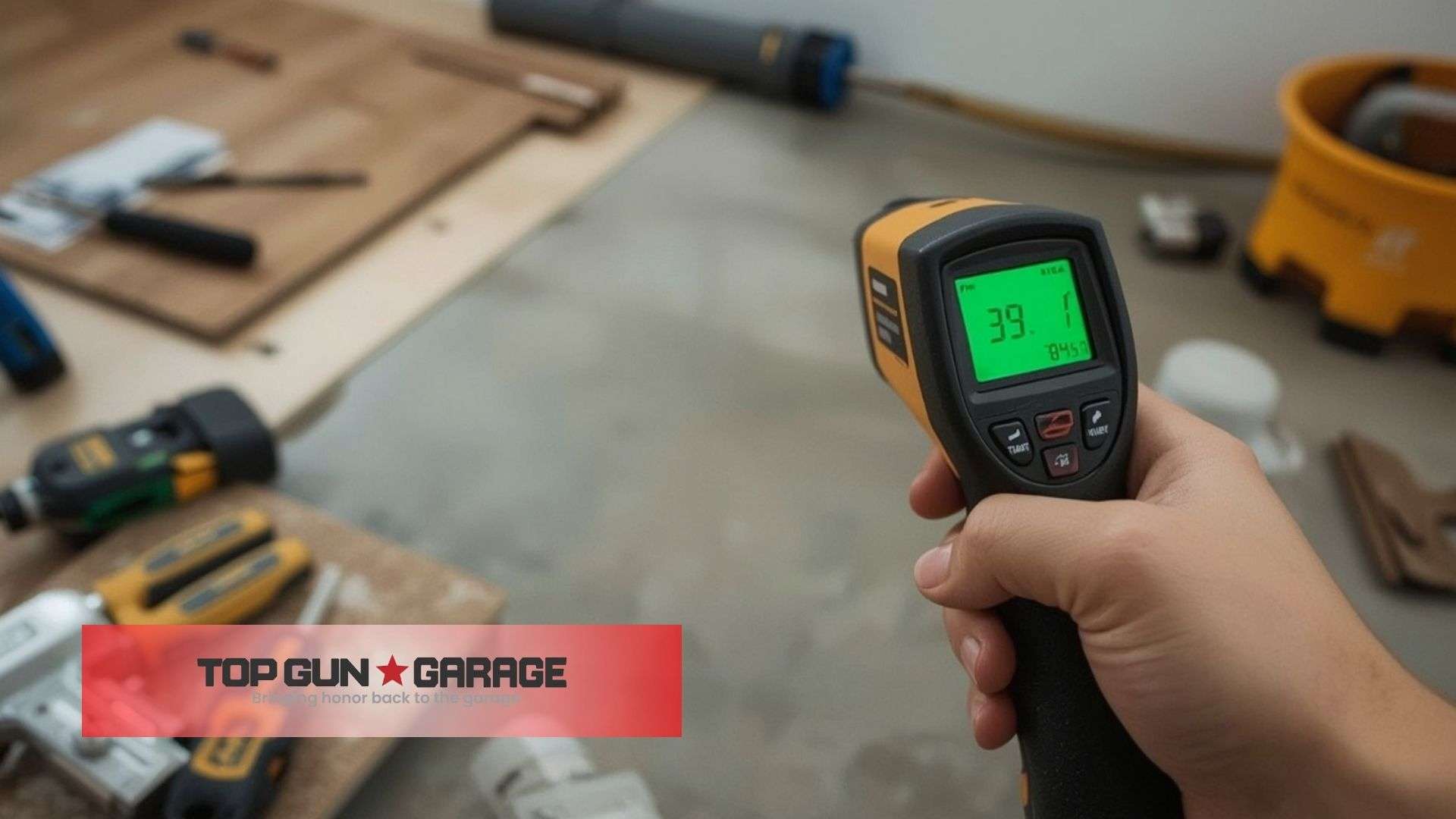
Infrared thermometry has become the gold standard for substrate temperature measurement in professional flooring applications. These non-contact devices provide instant surface temperature readings across large areas, allowing contractors to quickly identify temperature variations and hot or cold spots that could compromise bonding. Modern infrared thermometers offer accuracy within ±1°F and can store multiple readings for documentation and quality control purposes.
Contact temperature sensors provide verification of infrared readings and are essential for measuring temperatures in areas where infrared accuracy might be compromised by surface conditions or environmental factors. These sensors use thermocouples or resistance temperature detectors (RTDs) to provide highly accurate readings when placed directly on substrate surfaces. Professional installations often employ both infrared and contact methods to ensure measurement reliability.
Temperature mapping involves systematic measurement of substrate temperatures across the entire installation area, typically on a grid pattern with measurements every 10-15 feet. This comprehensive approach identifies localized temperature variations that could create differential curing rates and potential failure points. Temperature maps also provide valuable documentation for warranty purposes and quality control records.
Continuous monitoring during critical installation phases ensures that substrate temperatures remain within acceptable ranges throughout the bonding process. Data logging thermometers can record temperature variations over time, providing insights into thermal stability and identifying potential problems before they affect installation quality. This monitoring is particularly important during Naples summers when substrate temperatures can change rapidly due to sun exposure and air conditioning cycles.
Environmental conditioning protocols help achieve and maintain optimal substrate temperatures when natural conditions are unfavorable. This may involve supplemental heating or cooling equipment, temporary climate control systems, or scheduling adjustments to take advantage of favorable temperature periods. Professional contractors develop site-specific conditioning strategies based on substrate thermal properties, local climate conditions, and project requirements.
Solutions and Best Practices for Naples Installations
Implementing effective substrate temperature management in Naples requires a comprehensive approach that combines proper planning, professional equipment, and proven installation techniques. Successful contractors develop systematic protocols that address the unique challenges of Southwest Florida’s climate while ensuring consistent, high-quality results for every project.
Pre-installation conditioning begins 24-48 hours before flooring installation and involves stabilizing both substrate and material temperatures within optimal ranges. This process requires coordination between HVAC systems, natural climate conditions, and sometimes supplemental temperature control equipment. In Naples’ summer conditions, pre-cooling protocols may involve extended air conditioning operation and temporary shading of substrate areas exposed to direct sunlight.
Material acclimation runs parallel to substrate conditioning and ensures that flooring materials reach equilibrium temperature before installation begins. This process typically requires 48-72 hours in climate-controlled conditions and prevents thermal shock when materials contact the substrate. Proper acclimation also minimizes expansion and contraction during and immediately after installation, reducing stress on developing adhesive bonds.
Installation timing optimization takes advantage of Naples’ daily temperature cycles to achieve favorable substrate conditions. Early morning installations often provide the most stable substrate temperatures, as concrete slabs have had overnight cooling time and haven’t yet been affected by daily sun exposure. Evening installations can also be effective during summer months, allowing substrates to cool from peak daily temperatures.
Supplemental climate control may be necessary when natural conditions cannot provide optimal substrate temperatures. Portable air conditioning units, radiant heaters, or specialized substrate conditioning equipment can create localized climate zones that maintain proper temperatures during critical installation and curing periods. Professional contractors factor these requirements into project planning and pricing to ensure adequate resources are available.
Quality control protocols include continuous temperature monitoring throughout installation, documentation of temperature conditions for warranty purposes, and post-installation monitoring during initial curing phases. These protocols provide early warning of potential problems and create accountability for proper installation procedures. Temperature logs also provide valuable data for improving future installation strategies and troubleshooting any performance issues that may arise.
At Top Gun Garage, we understand that successful flooring installations in Naples require meticulous attention to substrate temperature management. Our experienced team employs professional-grade monitoring equipment and proven conditioning techniques to ensure optimal bonding conditions for every project, regardless of local climate challenges.
Frequently Asked Questions
What is the ideal substrate temperature range for flooring installations in Naples?
The optimal substrate temperature range for most flooring adhesives is between 65°F and 85°F. However, specific products may have narrower ranges, and it’s essential to consult manufacturer specifications for your particular flooring and adhesive combination.
How long should I wait after adjusting room temperature before installing flooring?
Substrate temperatures typically require 24-48 hours to stabilize after ambient temperature changes due to thermal mass effects. Concrete substrates may need even longer periods to reach equilibrium with room conditions.
Can I install flooring during Naples summer months when it’s extremely hot?
Yes, but it requires careful substrate temperature management and possibly supplemental cooling. Professional contractors can successfully install flooring year-round in Naples with proper conditioning techniques and timing.
What tools do I need to measure substrate temperature accurately?
An infrared thermometer is essential for quick, non-contact temperature measurement. Contact sensors provide verification, and data logging devices help monitor temperature stability over time.
Why is my flooring failing even though the room temperature was correct during installation?
Room air temperature and substrate surface temperature can differ significantly, especially with concrete slabs. Substrate temperature is what directly affects adhesive bonding, not ambient air temperature.
How does Naples humidity affect substrate temperature requirements?
High humidity can slow adhesive curing and affect thermal properties of substrates. It may require longer acclimation periods and more precise temperature control to achieve optimal bonding conditions.
Should I heat or cool the substrate directly, or just adjust room temperature?
Generally, adjusting room temperature and allowing time for substrate equilibration is preferred. Direct heating or cooling of substrates can create rapid temperature changes that may cause other problems.
What happens if substrate temperature is too low or too high during installation?
Low temperatures slow adhesive curing and reduce bond strength, while high temperatures cause rapid curing that can prevent proper adhesive flow and penetration, both leading to potential flooring failure.
Conclusion
Understanding how substrate temperature impacts bonding in Naples homes is fundamental to achieving successful, long-lasting flooring installations in Southwest Florida’s unique climate. The relationship between substrate temperature and adhesive performance goes beyond simple comfort considerations – it’s a critical factor that determines whether your flooring investment will provide years of reliable service or require costly repairs and replacements.
Naples’ challenging climate conditions, characterized by high humidity, intense summer heat, and dramatic temperature differentials between indoor and outdoor environments, make professional substrate temperature management more important than in many other regions. The thermal mass effects of concrete substrates, combined with the chemistry of modern flooring adhesives, create a complex environment where precise temperature control can mean the difference between installation success and failure.
Professional flooring contractors who understand substrate temperature effects on bonding employ sophisticated monitoring techniques, conditioning protocols, and installation timing strategies to overcome these challenges. Their investment in proper equipment and systematic approaches ensures that substrate temperatures remain within optimal ranges throughout the critical bonding period, regardless of external climate conditions.
For Naples homeowners, working with experienced contractors who prioritize substrate temperature management represents the best path to flooring installation success. While the science behind adhesive bonding and thermal management may be complex, the results speak for themselves in the form of beautiful, durable floors that maintain their appearance and performance for years to come. Proper substrate temperature management isn’t just a technical requirement – it’s an investment in the long-term value and enjoyment of your home.
 Skip to content



 The thermal properties of different substrate materials create varying challenges for temperature management. Concrete slabs, common in Naples construction, have high thermal mass and conduct heat efficiently, meaning they can remain cool even when ambient temperatures rise, or retain heat long after air conditioning has cooled the surrounding space. Wood subfloors, conversely, have lower thermal mass but are more susceptible to rapid temperature changes and moisture-related expansion.
Understanding thermal lag is crucial for Naples flooring projects. This phenomenon occurs when substrate temperatures change more slowly than ambient conditions due to material density and insulation properties. For example, a concrete slab that has been exposed to overnight cooling may remain several degrees below optimal bonding temperature even after morning sun and HVAC systems have warmed the interior space. This thermal lag can persist for hours, potentially compromising adhesive performance if installations proceed without proper temperature verification.
Professional assessment of substrate temperature involves multiple measurement points across the installation area. Temperature variations of even a few degrees can create differential curing rates within the same room, leading to inconsistent bond strength and potential failure points. Modern infrared thermometers allow contractors to quickly survey large areas and identify temperature variations that might not be apparent through ambient measurements alone.
The thermal properties of different substrate materials create varying challenges for temperature management. Concrete slabs, common in Naples construction, have high thermal mass and conduct heat efficiently, meaning they can remain cool even when ambient temperatures rise, or retain heat long after air conditioning has cooled the surrounding space. Wood subfloors, conversely, have lower thermal mass but are more susceptible to rapid temperature changes and moisture-related expansion.
Understanding thermal lag is crucial for Naples flooring projects. This phenomenon occurs when substrate temperatures change more slowly than ambient conditions due to material density and insulation properties. For example, a concrete slab that has been exposed to overnight cooling may remain several degrees below optimal bonding temperature even after morning sun and HVAC systems have warmed the interior space. This thermal lag can persist for hours, potentially compromising adhesive performance if installations proceed without proper temperature verification.
Professional assessment of substrate temperature involves multiple measurement points across the installation area. Temperature variations of even a few degrees can create differential curing rates within the same room, leading to inconsistent bond strength and potential failure points. Modern infrared thermometers allow contractors to quickly survey large areas and identify temperature variations that might not be apparent through ambient measurements alone.
 Most flooring adhesives fall into categories of either solvent-based, water-based, or reactive systems, each with distinct temperature sensitivity profiles. Water-based adhesives, increasingly popular for their environmental benefits and low odor characteristics, are particularly sensitive to substrate temperature variations. These adhesives cure through water evaporation and polymer coalescence, processes that slow dramatically at lower temperatures and can become problematic at elevated temperatures above 85°F.
Temperature affects adhesive viscosity, which directly impacts application characteristics and bonding performance. Cold substrates increase adhesive viscosity, making smooth, even application more difficult and reducing the adhesive’s ability to flow into substrate irregularities and flooring material textures. This reduced flow can create voids and weak spots in the bond line, leading to premature failure under normal use conditions.
Conversely, elevated substrate temperatures decrease adhesive viscosity, potentially causing excessive flow and reduced coverage rates. When adhesives become too fluid due to high substrate temperatures, they may penetrate too deeply into porous substrates or flow away from intended coverage areas, leaving insufficient material for proper bonding. Additionally, high temperatures can cause rapid solvent evaporation or water loss, creating surface skinning that prevents proper adhesion to flooring materials.
The curing chemistry of adhesives involves cross-linking reactions that form the final bond structure. These reactions proceed at rates determined by temperature, with optimal temperatures providing balanced reaction speeds that allow proper flow, penetration, and gradual strength development. Temperatures outside optimal ranges can cause incomplete cross-linking, resulting in bonds that may initially appear successful but fail prematurely under stress or environmental changes.
Open time – the period during which adhesives remain workable after application – is also temperature-dependent. Cold substrates extend open time, which might seem beneficial but can lead to contamination and reduced bond strength if installation proceeds too slowly. Hot substrates dramatically reduce open time, potentially forcing rushed installation that compromises placement accuracy and final appearance.
Most flooring adhesives fall into categories of either solvent-based, water-based, or reactive systems, each with distinct temperature sensitivity profiles. Water-based adhesives, increasingly popular for their environmental benefits and low odor characteristics, are particularly sensitive to substrate temperature variations. These adhesives cure through water evaporation and polymer coalescence, processes that slow dramatically at lower temperatures and can become problematic at elevated temperatures above 85°F.
Temperature affects adhesive viscosity, which directly impacts application characteristics and bonding performance. Cold substrates increase adhesive viscosity, making smooth, even application more difficult and reducing the adhesive’s ability to flow into substrate irregularities and flooring material textures. This reduced flow can create voids and weak spots in the bond line, leading to premature failure under normal use conditions.
Conversely, elevated substrate temperatures decrease adhesive viscosity, potentially causing excessive flow and reduced coverage rates. When adhesives become too fluid due to high substrate temperatures, they may penetrate too deeply into porous substrates or flow away from intended coverage areas, leaving insufficient material for proper bonding. Additionally, high temperatures can cause rapid solvent evaporation or water loss, creating surface skinning that prevents proper adhesion to flooring materials.
The curing chemistry of adhesives involves cross-linking reactions that form the final bond structure. These reactions proceed at rates determined by temperature, with optimal temperatures providing balanced reaction speeds that allow proper flow, penetration, and gradual strength development. Temperatures outside optimal ranges can cause incomplete cross-linking, resulting in bonds that may initially appear successful but fail prematurely under stress or environmental changes.
Open time – the period during which adhesives remain workable after application – is also temperature-dependent. Cold substrates extend open time, which might seem beneficial but can lead to contamination and reduced bond strength if installation proceeds too slowly. Hot substrates dramatically reduce open time, potentially forcing rushed installation that compromises placement accuracy and final appearance.
 Pre-installation conditioning begins 24-48 hours before flooring installation and involves stabilizing both substrate and material temperatures within optimal ranges. This process requires coordination between HVAC systems, natural climate conditions, and sometimes supplemental temperature control equipment. In Naples’ summer conditions, pre-cooling protocols may involve extended air conditioning operation and temporary shading of substrate areas exposed to direct sunlight.
Material acclimation runs parallel to substrate conditioning and ensures that flooring materials reach equilibrium temperature before installation begins. This process typically requires 48-72 hours in climate-controlled conditions and prevents thermal shock when materials contact the substrate. Proper acclimation also minimizes expansion and contraction during and immediately after installation, reducing stress on developing adhesive bonds.
Installation timing optimization takes advantage of Naples’ daily temperature cycles to achieve favorable substrate conditions. Early morning installations often provide the most stable substrate temperatures, as concrete slabs have had overnight cooling time and haven’t yet been affected by daily sun exposure. Evening installations can also be effective during summer months, allowing substrates to cool from peak daily temperatures.
Supplemental climate control may be necessary when natural conditions cannot provide optimal substrate temperatures. Portable air conditioning units, radiant heaters, or specialized substrate conditioning equipment can create localized climate zones that maintain proper temperatures during critical installation and curing periods. Professional contractors factor these requirements into project planning and pricing to ensure adequate resources are available.
Quality control protocols include continuous temperature monitoring throughout installation, documentation of temperature conditions for warranty purposes, and post-installation monitoring during initial curing phases. These protocols provide early warning of potential problems and create accountability for proper installation procedures. Temperature logs also provide valuable data for improving future installation strategies and troubleshooting any performance issues that may arise.
At Top Gun Garage, we understand that successful flooring installations in Naples require meticulous attention to substrate temperature management. Our experienced team employs professional-grade monitoring equipment and proven conditioning techniques to ensure optimal bonding conditions for every project, regardless of local climate challenges.
Pre-installation conditioning begins 24-48 hours before flooring installation and involves stabilizing both substrate and material temperatures within optimal ranges. This process requires coordination between HVAC systems, natural climate conditions, and sometimes supplemental temperature control equipment. In Naples’ summer conditions, pre-cooling protocols may involve extended air conditioning operation and temporary shading of substrate areas exposed to direct sunlight.
Material acclimation runs parallel to substrate conditioning and ensures that flooring materials reach equilibrium temperature before installation begins. This process typically requires 48-72 hours in climate-controlled conditions and prevents thermal shock when materials contact the substrate. Proper acclimation also minimizes expansion and contraction during and immediately after installation, reducing stress on developing adhesive bonds.
Installation timing optimization takes advantage of Naples’ daily temperature cycles to achieve favorable substrate conditions. Early morning installations often provide the most stable substrate temperatures, as concrete slabs have had overnight cooling time and haven’t yet been affected by daily sun exposure. Evening installations can also be effective during summer months, allowing substrates to cool from peak daily temperatures.
Supplemental climate control may be necessary when natural conditions cannot provide optimal substrate temperatures. Portable air conditioning units, radiant heaters, or specialized substrate conditioning equipment can create localized climate zones that maintain proper temperatures during critical installation and curing periods. Professional contractors factor these requirements into project planning and pricing to ensure adequate resources are available.
Quality control protocols include continuous temperature monitoring throughout installation, documentation of temperature conditions for warranty purposes, and post-installation monitoring during initial curing phases. These protocols provide early warning of potential problems and create accountability for proper installation procedures. Temperature logs also provide valuable data for improving future installation strategies and troubleshooting any performance issues that may arise.
At Top Gun Garage, we understand that successful flooring installations in Naples require meticulous attention to substrate temperature management. Our experienced team employs professional-grade monitoring equipment and proven conditioning techniques to ensure optimal bonding conditions for every project, regardless of local climate challenges.