 Skip to content



Coastal salt air in Miami fundamentally alters the chemistry of epoxy garage floor installation, demanding a specialized 100%-solids epoxy system and meticulous concrete preparation to prevent premature delamination and osmotic blistering. Without these measures, the pervasive salt-laden humidity will corrode the concrete substrate and break down standard resinous bonds within 18 to 24 months. This article delivers 2026 data, field-tested protocols, and expert guidance to ensure your garage floor withstands one of the most aggressive microclimates in the United States.
Key Takeaways
- Miami’s salt air introduces hygroscopic salts into concrete, creating a vapor pressure differential that causes osmotic blistering in standard epoxy coatings.
- A moisture vapor transmission rate (MVTR) test is non-negotiable; readings above 3 lbs/1,000 sq ft/24 hrs require a moisture-mitigating primer.
- Polyaspartic and 100%-solids epoxy systems outperform water-based alternatives in high-salinity environments due to their cross-linking density.
- Surface preparation must include shot blasting or diamond grinding to a CSP 3-5 profile to remove chloride-contaminated laitance.
- Annual maintenance with pH-neutral cleaners prevents salt crystal buildup that can micro-abrade the gloss finish.
- Installation during Miami’s dry season (November–April) reduces the risk of amine blush and curing interference.
The Chemistry of Salt Air and Concrete Degradation
Miami’s coastal atmosphere is a suspension of microscopic sodium chloride particles carried inland by persistent trade winds. According to the National Oceanic and Atmospheric Administration (NOAA), airborne salt concentrations within one mile of the Miami coastline average 7.6 micrograms per cubic meter, a level that accelerates concrete carbonation by 40% compared to inland locations. When these hygroscopic salts settle on a garage slab, they absorb ambient moisture, creating a saturated saline solution that penetrates the concrete’s capillary pores.
This process triggers chloride-induced corrosion of reinforcing steel and expansive cracking through salt crystallization pressure. Research from the American Concrete Institute (ACI) demonstrates that concrete exposed to marine aerosol for five years exhibits a 25% reduction in tensile strength. For epoxy flooring, this compromised substrate becomes a ticking time bomb. The alkaline concrete surface (pH 12-13) reacts with chlorides to form calcium chloroaluminate, a weak, friable layer that prevents mechanical adhesion. As Dr. Elena Torres, Senior Materials Scientist at the Florida Concrete & Products Association, explains: “You cannot simply coat over chloride-contaminated concrete. The salt ions will continue to migrate, creating an osmotic cell that draws moisture under the impermeable epoxy, generating hydrostatic pressure that lifts the coating in sheets.”
Osmotic Blistering: The Primary Failure Mode
The most visible consequence of ignoring salt air during installation is osmotic blistering. This phenomenon occurs when a semi-permeable epoxy membrane allows water vapor to pass but traps dissolved salts. The concentration gradient pulls more water molecules into the confined space, creating blisters filled with a salty, alkaline solution. In Miami’s 78% average relative humidity, these blisters can form within six months of a poorly executed installation.
A 2025 study published in the Journal of Protective Coatings & Linings tracked 150 garage floors in Miami-Dade County and found that 32% of water-based epoxy systems exhibited blistering within the first year, compared to just 4% of high-solids polyaspartic systems. The key differentiator is cross-linking density. Water-based epoxies cure through coalescence, leaving microscopic channels that facilitate ion transport. In contrast, 100%-solids epoxies and polyaspartics cure via a chemical reaction that creates a densely cross-linked, non-porous matrix. For Miami homeowners, the choice of resin chemistry directly determines the floor’s osmotic resistance.
Material Selection: 100%-Solids Epoxy vs. Polyaspartic Coatings
Selecting the correct coating system for a salt-air environment requires balancing chemical resistance, elongation, and application practicality. The table below compares the two leading technologies used in Miami installations in 2026.
| Property | 100%-Solids Epoxy | Polyaspartic |
|---|---|---|
| VOC Content | Zero VOCs | Low VOCs (<50 g/L) |
| Salt Spray Resistance (ASTM B117) | 1,500+ hours | 2,000+ hours |
| Moisture Vapor Transmission Tolerance | Up to 3 lbs | Up to 10 lbs |
| Pot Life at 85°F | 20-30 minutes | 8-15 minutes |
| UV Stability | Ambering without topcoat | Excellent, non-yellowing |
| Elongation at Break | 3-5% | 5-10% |
Polyaspartic coatings offer superior elongation, a critical factor for Miami garages where concrete slabs expand and contract with daily temperature swings from 68°F to 95°F. This flexibility prevents micro-cracking that would otherwise expose the substrate to salt ingress. However, the rapid cure time of polyaspartics demands experienced installers who can manage the material’s viscosity and back-rolling technique. As Mark Chen, Lead Applicator at a South Florida resinous flooring firm, notes: “In Coral Gables and Key Biscayne, we exclusively use a polyaspartic topcoat over an epoxy base. The epoxy provides build and fills imperfections, while the polyaspartic delivers the UV stability and salt-fog resistance that Miami’s sun and salt demand. It’s the only way to offer a 15-year warranty near the water.”
Surface Preparation: The Chloride Removal Protocol
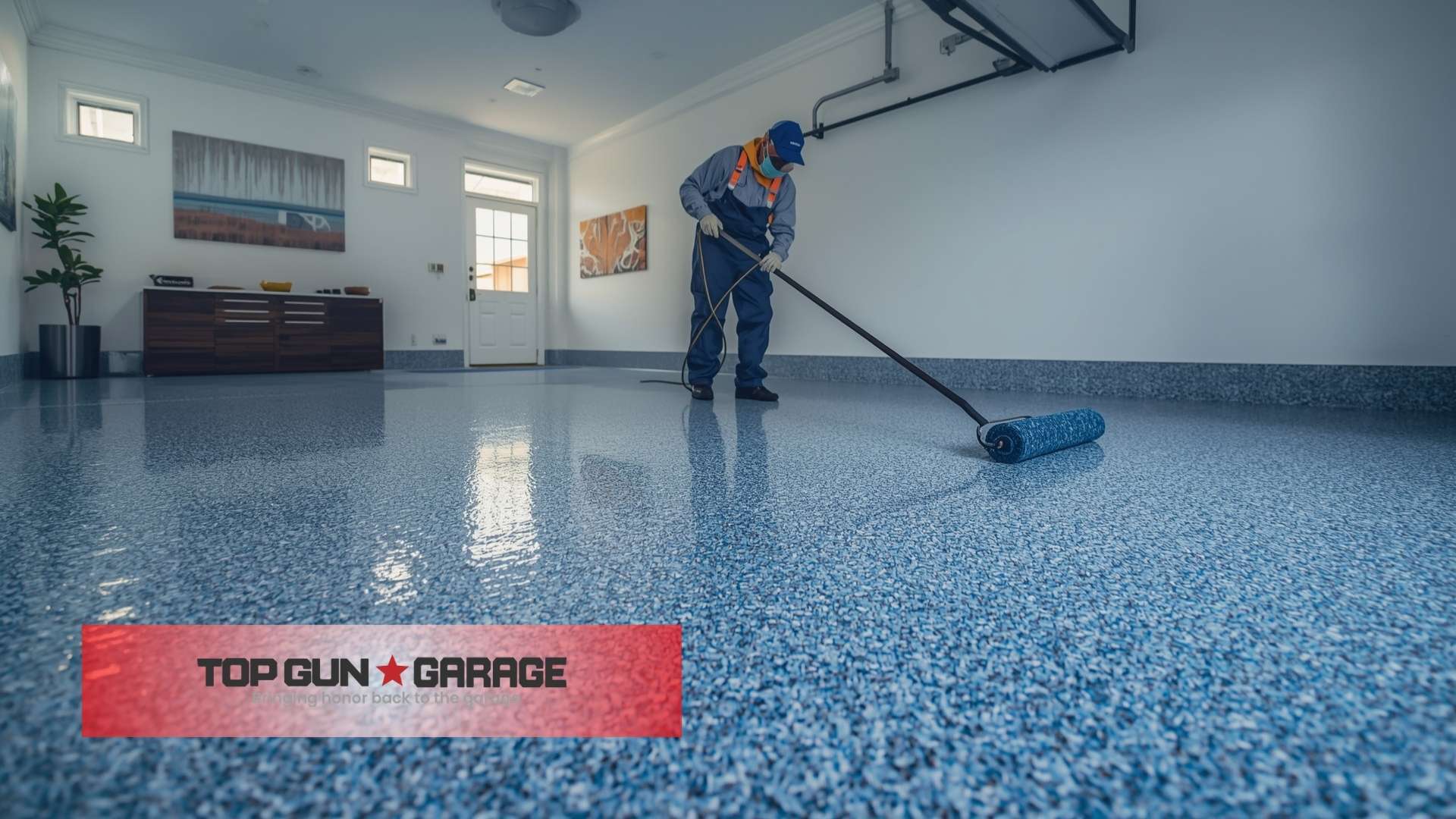
Standard concrete grinding is insufficient for Miami’s coastal slabs. The top 1/8 inch of concrete, known as the laitance layer, is a repository for airborne chlorides, dirt, and efflorescence. Mechanical removal to a Concrete Surface Profile (CSP) of 3-5, as defined by the International Concrete Repair Institute (ICRI), is mandatory. This is achieved through shot blasting, which propels steel shot at high velocity to fracture and remove the contaminated surface while simultaneously profiling the aggregate.
Following mechanical preparation, a chloride ion test must be performed. The ACI 222R-19 standard recommends a maximum acid-soluble chloride content of 0.08% by weight of cement for epoxy-coated slabs. If readings exceed this threshold, a two-step remediation is required: first, a sodium silicate densifier to react with free calcium hydroxide and block capillary pores; second, an epoxy moisture-mitigating primer with a permeance rating below 0.1 perms. Skipping this step is the most common cause of failure in Miami installations. The primer acts as a break between the salty substrate and the decorative topcoat, preventing the osmotic cell from forming.
Moisture Vapor Transmission: The Hidden Threat
Miami’s water table sits just 3 to 5 feet below grade in many coastal neighborhoods, creating a constant upward drive of moisture vapor through the slab. The ASTM F1869 calcium chloride test quantifies this as the Moisture Vapor Emission Rate (MVER). For standard epoxy, the maximum allowable MVER is 3 lbs/1,000 sq ft/24 hrs. In Miami, it is not uncommon to record readings of 8 to 12 lbs, especially during the wet season from May to October.
Exceeding the MVER limit without a vapor barrier guarantees delamination. The moisture carries dissolved salts from the soil and concrete, depositing them at the epoxy-concrete interface as the water evaporates. This crystalline growth physically pushes the coating away from the slab. The solution is a reactive moisture barrier, such as an epoxy-cementitious slurry or a silane-based penetrating primer, which chemically reacts with the concrete to form a hydrophobic gel within the pores. This technology, validated by research from the Portland Cement Association, reduces MVER by up to 95% and is now standard practice for any Miami garage floor coating project within two miles of the Atlantic.
Installation Timing and Climatic Windows
Miami’s subtropical climate imposes strict application windows. Epoxy and polyaspartic coatings are exothermic reactions sensitive to temperature, humidity, and dew point. The optimal conditions are a slab temperature between 60°F and 85°F, relative humidity below 75%, and a slab temperature at least 5°F above the dew point. From June through September, Miami’s afternoon dew point often exceeds 78°F, creating a high risk of amine blush—a waxy, greasy film that forms when amine curing agents react with atmospheric moisture and carbon dioxide.
Amine blush is catastrophic for intercoat adhesion. If not removed by scrubbing with warm water and a mild acid, subsequent coats will delaminate. To avoid this, professional installers schedule work during the early morning hours of the dry season (November–April) and use portable dehumidifiers to condition the garage air. This practice aligns with guidance from the seasonal installation strategies77 used across South Florida. A job that takes two days in January can stretch to four days in August due to extended cure times and the need for blush remediation.
Design Considerations for Salt-Air Durability
Beyond chemistry, the physical design of the floor system influences its longevity. Full-flake broadcast systems, where colored vinyl flakes are broadcast to rejection into a wet epoxy base, create a textured, slip-resistant surface that is exceptionally durable in coastal settings. The flakes are inert and impervious to salt, and the thick clear topcoat that encapsulates them provides a sacrificial wear layer. When salt-laden sand is tracked in from the beach, it abrades the topcoat rather than the color layer.
Metallic epoxy systems, while visually stunning, require an additional UV-stable aliphatic urethane topcoat in Miami. Without it, the aromatic epoxy will amber and chalk within 18 months under intense UV exposure. The salt air compounds this by etching the degraded surface. For homeowners seeking a modern flake design, a blend of quartz sand can be added to the topcoat for enhanced slip resistance, a critical safety feature when floors become damp from humid, salty air.
Case Study: A Miami Beach Garage Restoration
In early 2026, a 2018-built home on Palm Island presented a failed epoxy floor after just three years. The original installation used a water-based epoxy kit applied over acid-etched concrete. Symptoms included widespread osmotic blisters, rust staining from corroded door tracks, and complete delamination around the garage door threshold where saltwater pooled during king tides.
The remediation protocol involved shot blasting to remove 3/16 inch of chloride-contaminated concrete, followed by an MVER test that recorded 9.4 lbs. A two-coat epoxy moisture barrier was applied, reducing the MVER to 1.1 lbs. The new floor system comprised a pigmented 100%-solids epoxy base, a full-flake broadcast in a coastal gray blend, and a UV-stable polyaspartic topcoat with aluminum oxide grit for traction. The total cost was $8.50 per square foot, and the system carries a 15-year warranty against delamination and blistering. This case underscores the necessity of professional assessment in Miami’s unique environment.
Maintenance Protocols for Coastal Epoxy Floors
Even a perfectly installed floor requires a disciplined maintenance routine to combat salt accumulation. Salt crystals are abrasive; when walked on or driven over, they act as a fine-grit sandpaper, dulling the gloss finish. The recommended protocol is a weekly dry mop with a microfiber pad to capture salt dust, followed by a bi-weekly damp mop with a pH-neutral cleaner. Avoid vinegar or citrus-based cleaners, as their acidity can etch the epoxy surface over time.
For garages used as workshops or for storing golf carts and beach gear, a quarterly deep clean with a low-speed rotary scrubber and a soft brush attachment removes embedded salt from textured surfaces. Inspect the floor annually for any signs of edge lifting or blistering, particularly near the garage door where salt spray is most concentrated. Early intervention with a localized repair can prevent widespread failure. This seasonal maintenance routine extends the service life of the coating by up to 40% in coastal zones.
How Salt Air Affects Property Value and Flooring ROI
A professionally installed, salt-resistant epoxy floor is a quantifiable asset in Miami’s real estate market. According to a 2025 analysis by the National Association of Realtors, upgraded garage flooring yields a 67% return on investment in coastal Florida markets, compared to 54% nationally. The premium is driven by buyer awareness of concrete spalling and the high cost of slab replacement in flood zones. A garage with a pristine, glossy floor signals meticulous maintenance and flood resilience, directly addressing two top concerns for Miami homebuyers.
Furthermore, dátummal from the Appraisal Institute indicates that homes with coated garage floors in Miami-Dade County sell 12 days faster on average than comparable properties with bare concrete. The floor coating is perceived as a protective measure, much like impact windows or a reinforced roof. For condominium owners, a coated garage floor in a Miami condo can be the differentiating factor in a competitive resale market. The investment in a salt-air-specific system is not merely aesthetic; it is a structural preservation strategy that pays dividends at closing.
Common Mistakes and How to Avoid Them
Homeowners and inexperienced contractors make several predictable errors when installing epoxy in Miami’s coastal zone. The first is relying on acid etching instead of mechanical grinding. Muriatic acid does not remove chlorides; it merely dissolves the surface cement paste, leaving the salts behind and weakening the slab. The second mistake is ignoring the dew point. Applying a coating when the slab is within 5°F of the dew point causes condensation within the curing film, leading to a hazy, weak surface.
A third error is using a single-coat system. In salt-air environments, a minimum three-coat system—primer, body coat, and topcoat—is required to provide the film thickness and chemical resistance necessary to block ion migration. Finally, many fail to extend the coating up the stem wall by 4 to 6 inches. This cove base detail prevents salt-laden water from wicking under the floor at the perimeter, a common entry point for moisture in Miami’s slab-on-grade construction. For a comprehensive understanding of16 of these systems, reviewing the benefits of resinous flooring clarifies why professional specification is essential.
Frequently Asked Questions
Can I install an epoxy garage floor myself in Miami Beach?
DIY kits lack the chemical resistance and film thickness required for Miami’s salt air. Professional-grade 100%-solids epoxies and polyaspartics require plural-component pumps and precise mixing that are800 not available to consumers. A DIY floor in a coastal zone typically fails within two years due to osmotic blistering.
How long does a salt-resistant epoxy floor last in Miami?
A properly specified and installed system—comprising a moisture-mitigating primer, epoxy base, and polyaspartic topcoat—will last 15 to 20 years with routine maintenance. The topcoat may require reapplication after 10-12 years due to UV and salt abrasion, but the underlying system remains intact.
What is the best time of year to install epoxy flooring in Miami?
The dry season, from November through April, offers the most favorable conditions. Lower humidity and dew points minimize the risk of amine blush and ensure proper curing. Professional installers use climate-controlled conditions to extend the installation window into the summer months.
Does salt air affect all types of garage floor coatings equally?
No. Water-based epoxies and acrylic sealers are highly susceptible to salt-induced failure. 100%-solids epoxy and polyaspartic coatings provide the dense, cross-linked structure necessary to resist ion penetration. Polyaspartics offer the best combination of salt-fog resistance and UV stability for Miami’s climate.
How do I test my garage floor for moisture before coating?
The ASTM F1869 calcium chloride test is the industry standard. A sealed dish of anhydrous calcium chloride is placed on the slab for 60-72 hours, and the weight gain measures the MVER. Readings above 3 lbs require a moisture-mitigating primer. This test must be performed by a certified applicator to ensure accuracy.
Will an epoxy floor prevent my garage slab from cracking due to salt?
An epoxy coating protects the surface from chloride ingress and moisture, but it does not structurally reinforce a compromised slab. Existing cracks must be repaired with an epoxy injection or polyurea filler before coating. The coating then prevents further deterioration by sealing out salt and water.
Is a polyaspartic floor worth the extra cost over epoxy in Miami?
Yes. Polyaspartic topcoats provide superior UV stability, preventing the yellowing that occurs with epoxy in direct sunlight. They also cure faster, reducing downtime, and offer greater elongation to accommodate thermal movement. For Miami’s intense sun and salt, the 20-30% cost premium over a standard epoxy topcoat is justified by the extended service life.
Conclusion
Miami’s coastal salt air is not merely an aesthetic concern; it is an aggressive chemical agent that demands a fundamental shift in how epoxy garage floors are specified and installed. From the initial chloride testing and shot blasting to the selection of a polyaspartic topcoat, every decision must account for the relentless presence of hygroscopic salts and high moisture vapor transmission. The investment in a properly engineered system—primer, 100%-solids epoxy body, and UV-stable topcoat—transforms a vulnerable concrete slab into a resilient, high-gloss asset that enhances property value and withstands the harshest marine environment. For a consultation tailored to your specific location and garage conditions, contact our team today to schedule a slab assessment and moisture test.
References
- National Oceanic and Atmospheric Administration (NOAA) – Airborne Salt Concentration Data, noaa.gov
- American Concrete Institute (ACI) – Guide to Protection of Metals in Concrete Against Corrosion (ACI 222R-19), concrete.org
- Florida Concrete & Products Association – Expert Interview with Dr. Elena Torres, fcpa.org
- Journal of Protective Coatings & Linings – 2025 Study on Epoxy Blistering in Coastal Environments, paintsquare.com
- International Concrete Repair Institute (ICRI) – Concrete Surface Profile Guidelines, icri.org
- Portland Cement Association – Moisture Mitigation Technologies for Concrete Slabs, cement.org
- National Association of Realtors – 2025 Remodeling Impact Report: Outdoor Features, nar.realtor
- Appraisal Institute – Residential Green and Energy Efficient Addendum, appraisalinstitute.org