 Skip to content



Overview
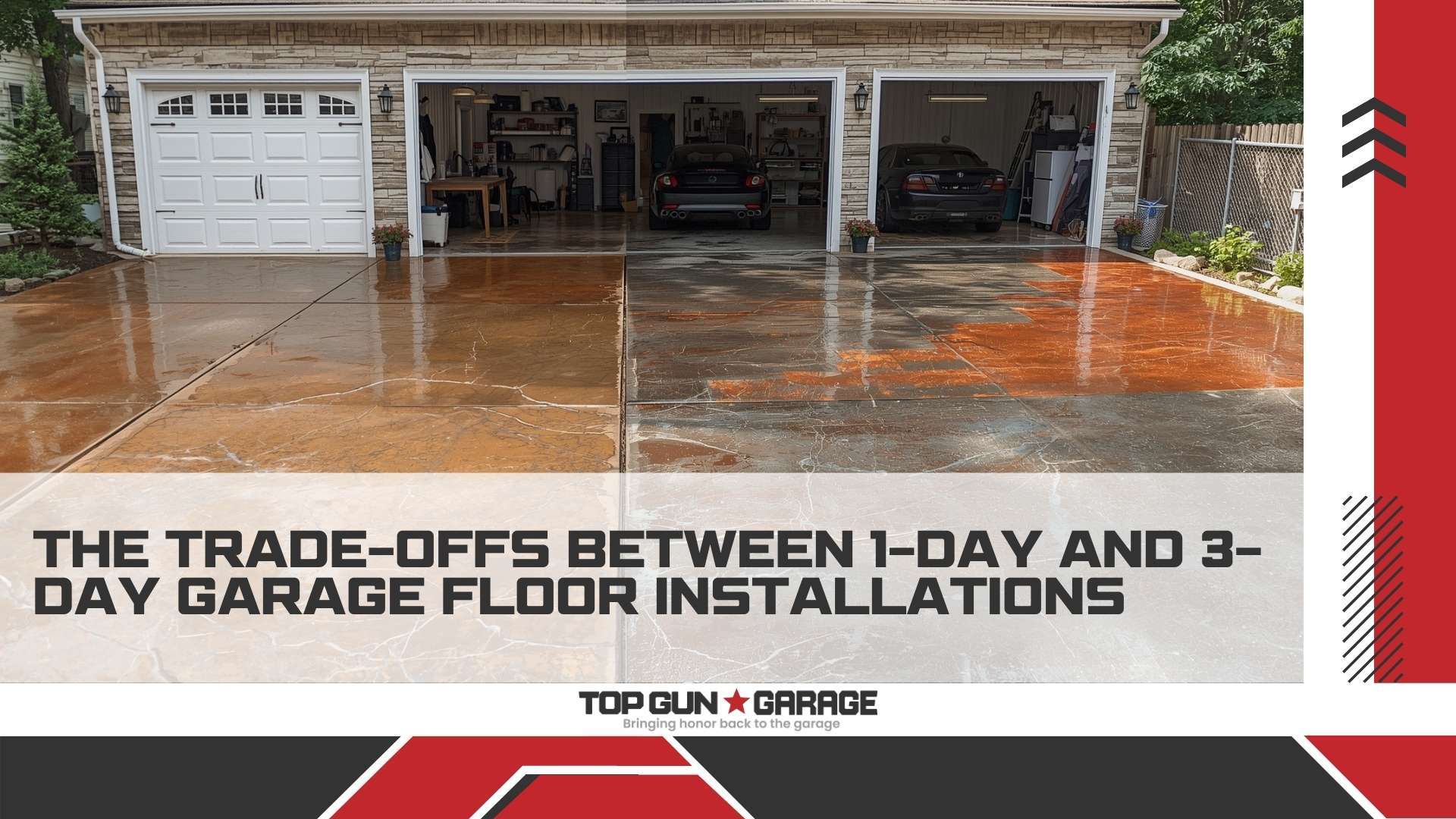
Choosing between a 1-day vs 3-day garage floor coating installation involves more than scheduling convenience. The coating system used, cure times, and final durability all factor into which timeline works for your situation. Southwest Florida homeowners face unique considerations with high humidity, salt air, and year-round heat affecting how coatings perform. This guide breaks down what each installation timeline delivers, what you give up, and how to decide which approach suits your garage.
Key Takeaways
- One-day installations use polyaspartic or polyurea coatings that cure rapidly, allowing light foot traffic within hours and vehicle parking within 24 hours.
- Three-day installations typically involve traditional epoxy systems requiring longer cure times between multiple coats.
- Coating chemistry determines installation speed—polyaspartic cures in 20 minutes to an hour, while epoxy needs up to 24 hours per layer.
- Surface preparation remains identical regardless of timeline, and skipping this step causes failures in both systems.
- Florida’s climate affects cure times, with humidity and temperature influencing how quickly coatings set.
- Long-term performance depends more on material quality and proper application than installation duration.
Understanding Coating Chemistry and Cure Times
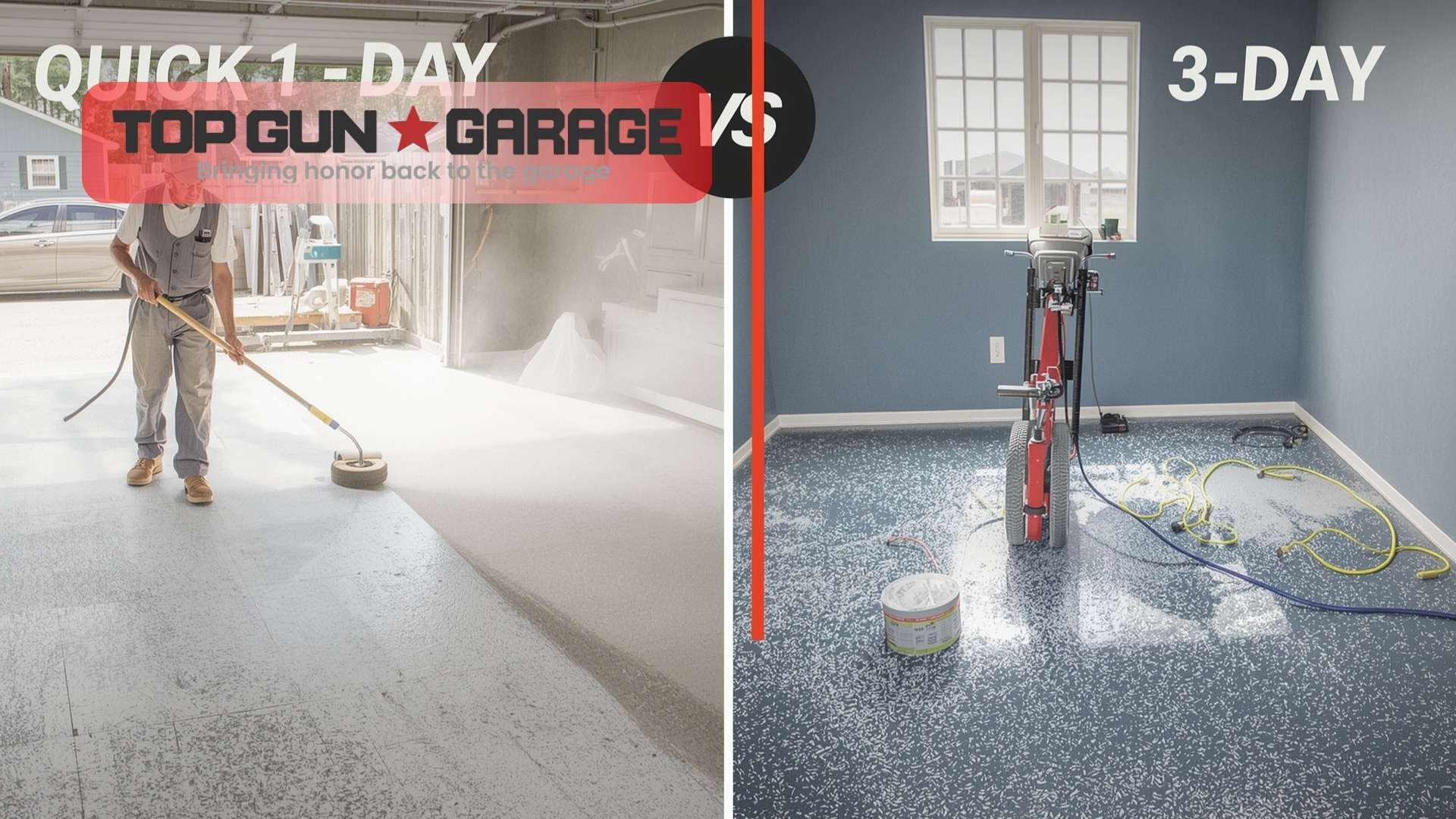
The difference between 1-day and 3-day installations comes down to coating chemistry. Traditional epoxy consists of resin and hardener that react slowly, requiring 24 hours or more to cure between coats. A typical epoxy floor system needs a primer, base coat, decorative broadcast, and topcoat—each layer needing cure time before the next application.
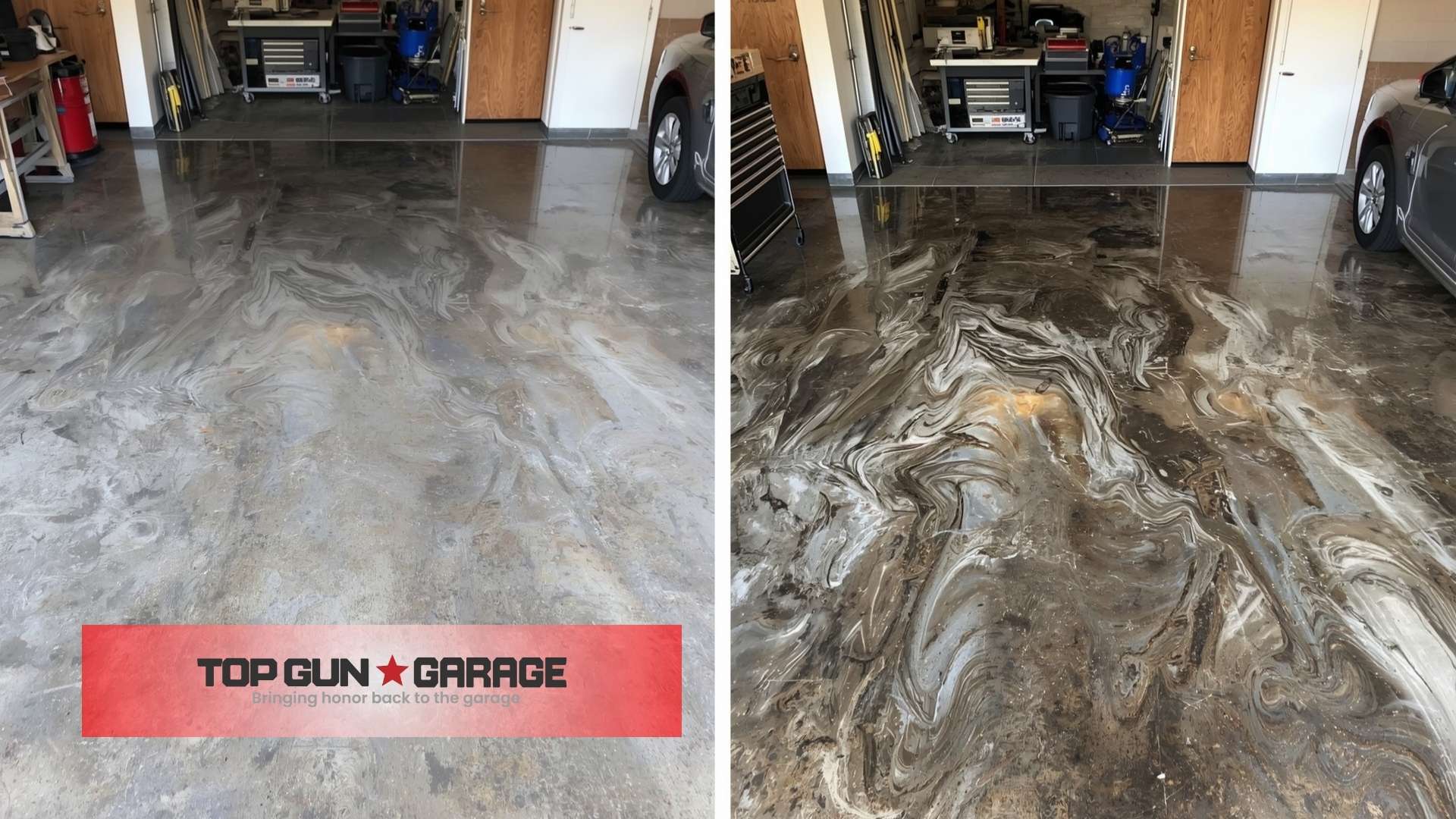
Polyaspartic and polyurea coatings work differently. These materials cure through a faster chemical reaction, becoming touch-dry in 1-2 hours and ready for foot traffic in 4-6 hours. Vehicle traffic can resume within 24 hours, with full cure achieved in approximately 7 days. This rapid turnaround allows professionals to complete garage coating projects in a single visit.
Temperature affects both systems, though polyaspartic handles extremes better. Epoxy requires substrate temperatures between 50-85°F for proper curing, while polyaspartic works across a broader range. Industry testing standards from ASTM International define methods for measuring concrete conditions before coating. In Southwest Florida’s warm climate, this flexibility matters during summer installations when concrete temperatures climb significantly.
What Happens During a 1-Day Installation
A professional 1-day installation follows a compressed but thorough process. The crew arrives early, typically allowing 8-10 hours for completion. Here’s what that timeline includes:
Morning: Surface Preparation (3-4 hours) Diamond grinding opens the concrete pores for coating adhesion. Cracks and chips get filled with fast-setting polyurea repair compounds. Industrial vacuums remove all dust and debris. This step cannot be rushed—proper preparation prevents peeling and delamination regardless of coating type.
Midday: Base Coat Application (1-2 hours) The pigmented polyaspartic or polyurea base coat goes down. One coat creates adequate film thickness because these materials build more depth than traditional epoxy. The coating begins curing immediately upon application.
Afternoon: Decorative Broadcast and Topcoat (2-3 hours) Decorative flakes broadcast onto the wet base coat within the narrow working window. After 60 minutes of cure time, excess flake gets scraped away. A clear polyaspartic topcoat seals everything, applied with squeegee and roller for even coverage.
By evening, the floor is touch-dry. Light foot traffic resumes the following morning, with vehicles returning within 24 hours in normal conditions.
What Happens During a 3-Day Installation
Multi-day installations use traditional epoxy or hybrid systems requiring extended cure times between layers. The process spreads across several days:
Day One: Preparation and Primer Surface preparation mirrors the 1-day process—grinding, crack repair, and cleaning. A primer coat goes down late in the day, then cures overnight.
Day Two: Base Coat and Decorative Layer The epoxy base coat applies over the cured primer. Decorative flakes or metallic pigments broadcast into the wet coating. This layer cures overnight.
Day Three: Topcoat and Final Cure A clear topcoat seals the decorative layer. The floor requires 24-48 additional hours before foot traffic and 72+ hours before vehicle parking. Full cure takes 7-30 days depending on product and conditions.
This extended timeline allows each layer to fully set before adding the next, which some contractors believe produces a thicker total system.
Comparing Durability and Performance
Does faster mean weaker? Research and field performance suggest otherwise.
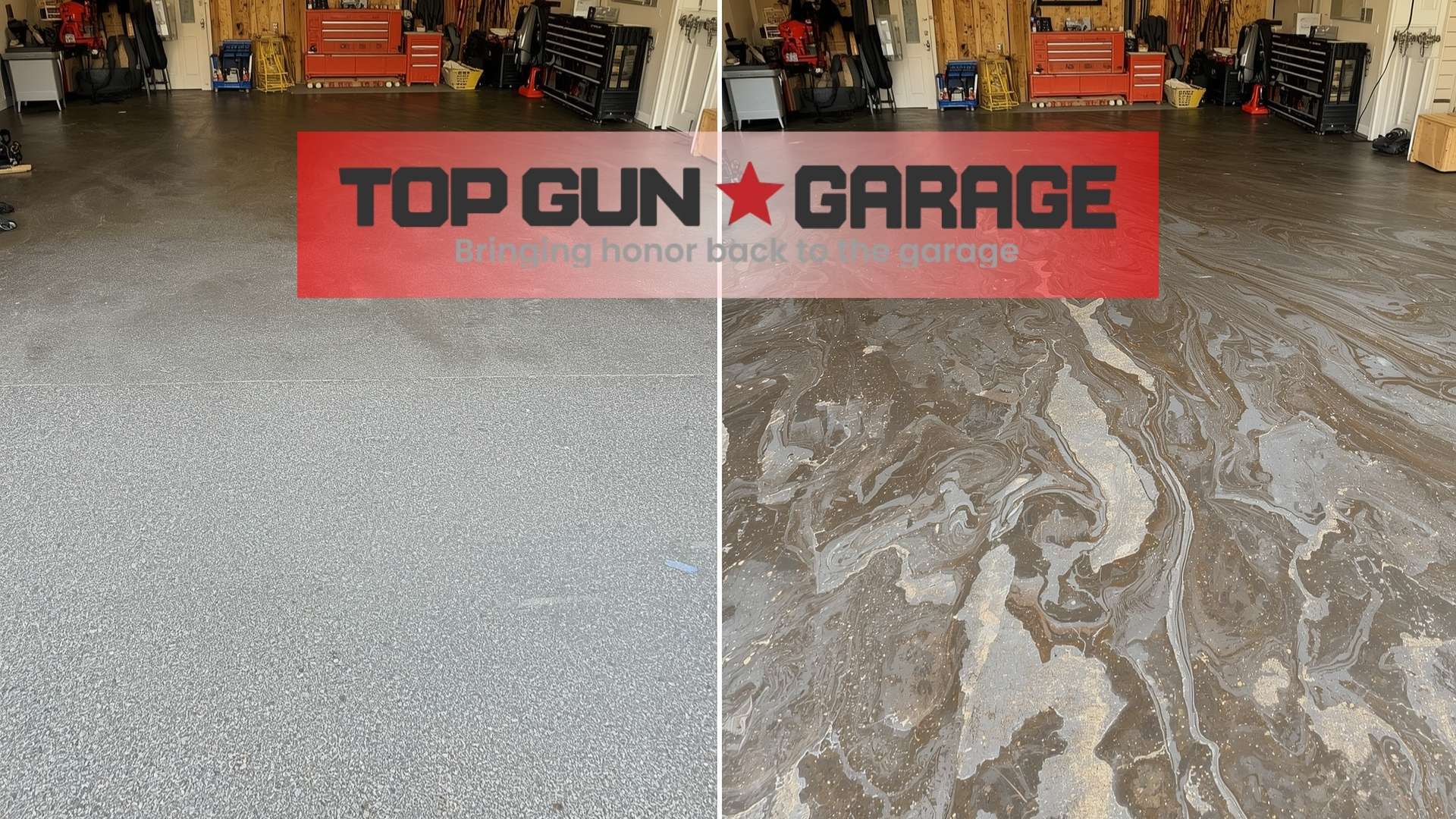
Polyaspartic coatings emerged in the 1990s originally for protecting steel from corrosion. These coatings now outperform many traditional epoxies in abrasion resistance, UV stability, and hot tire pickup resistance. The slight flexibility prevents cracking when concrete moves, while epoxy’s rigidity makes it more prone to chipping.
Traditional epoxy yellows with sun exposure, while polyaspartic remains color-stable—ideal for garages with windows or outdoor applications. Both resist oil and automotive fluids, though polyaspartic handles a wider chemical range.
According to industry standards referenced by the California Air Resources Board, floor coatings must meet specific VOC limits and performance criteria regardless of cure time.
Cost Considerations
Installation speed affects labor costs. A 1-day installation requires fewer crew hours, potentially reducing labor expenses. However, polyaspartic materials cost more than basic epoxy. The math often balances out—what you save in labor with a 1-day system, you may spend on premium materials.
Consider hidden costs too. A 3-day installation means your garage stays unavailable longer. If you park vehicles outside, that’s three days of sun exposure in Southwest Florida. If you run a home business from your garage, that’s lost productivity.
Financing options can make either system affordable, spreading costs over time.
Florida-Specific Factors
Southwest Florida’s environment creates specific challenges for garage floor coatings. The considerations differ from northern climates:
Humidity: Florida’s high humidity can interfere with epoxy cure times, extending the 3-day process further. Polyaspartic actually cures faster in humid conditions—a significant advantage for this region.
Temperature: Concrete temperatures often exceed 85°F during summer afternoons. Epoxy becomes difficult to work with at these temperatures, while polyaspartic handles the heat without issue.
Salt Air: Coastal properties in Naples, Marco Island, and Fort Myers Beach face corrosive salt air. Both coating types protect concrete from salt damage when properly applied, but polyaspartic’s superior adhesion provides extra protection against moisture intrusion.
Hurricane Season: If a storm threatens during a 3-day installation, you may face an incomplete project. The 1-day system reduces this risk during active weather periods.
When to Choose Each Option
Choose 1-day installation when:
- You need your garage operational quickly
- You park vehicles that can’t stay outside overnight
- You’re working around rental property turnover schedules
- Summer humidity and heat make extended cure times unreliable
- You want UV-stable coating that won’t yellow
Choose 3-day installation when:
- You have flexibility in your schedule
- You prefer traditional epoxy aesthetics
- Budget constraints require lower material costs
- Your garage has climate control maintaining stable conditions
- You’re comfortable with longer cure time requirements
Questions to Ask Your Contractor
Before committing, ask potential contractors: What specific products do you use? How do you handle surface preparation? What warranty coverage applies? How do you handle existing coating removal?
A reputable contractor explains these details without pressure. At Top Gun Garage, the owners handle consultations directly—no call centers or high-pressure sales tactics.
Frequently Asked Questions
Can I walk on a 1-day coating the same day it’s applied? The surface becomes touch-dry within 2-4 hours. Light foot traffic is safe after 4-6 hours in normal temperatures.
Will my vehicles damage a coating if I park too soon? Parking before full cure risks hot tire marks. Wait 24 hours minimum for vehicles, 48 hours if temperatures are below 77°F.
Does faster curing mean the coating is thinner? No. Polyaspartic builds greater film thickness per coat than epoxy, often achieving equal depth in fewer applications.
Can weather delay a 1-day installation? Polyaspartic’s temperature tolerance makes weather delays less common than with epoxy systems.
How long before my coating reaches full strength? Both systems achieve full cure in approximately 7 days. Heavier loads and chemical exposure should wait until then.
Is the smell worse with faster-curing products? Polyaspartic produces less odor than traditional epoxy and has lower VOC content, improving air quality.
Can you apply polyaspartic over existing epoxy? Yes, after proper preparation including sanding and cleaning. This makes recoating failed systems possible.
Which system handles Florida humidity better? Polyaspartic performs better in high humidity, actually curing faster in moist conditions while epoxy slows down.
Sources
- California Air Resources Board – Architectural Coatings Standards: https://ww2.arb.ca.gov/our-work/programs/coatings/architectural-coatings
- ASTM International – Standard Test Method for Concrete Relative Humidity: https://www.astm.org/f2170-19a.html
Transform Your Garage Floor
Whether you choose a 1-day or 3-day installation, the right coating protects your concrete and transforms your garage into functional living space. Top Gun Garage serves homeowners throughout Naples, Fort Myers, Bonita Springs, Estero, and Marco Island with professional concrete coating solutions tailored to Southwest Florida conditions.
Get a Free Estimate and discuss which installation approach makes sense for your garage.