 Skip to content



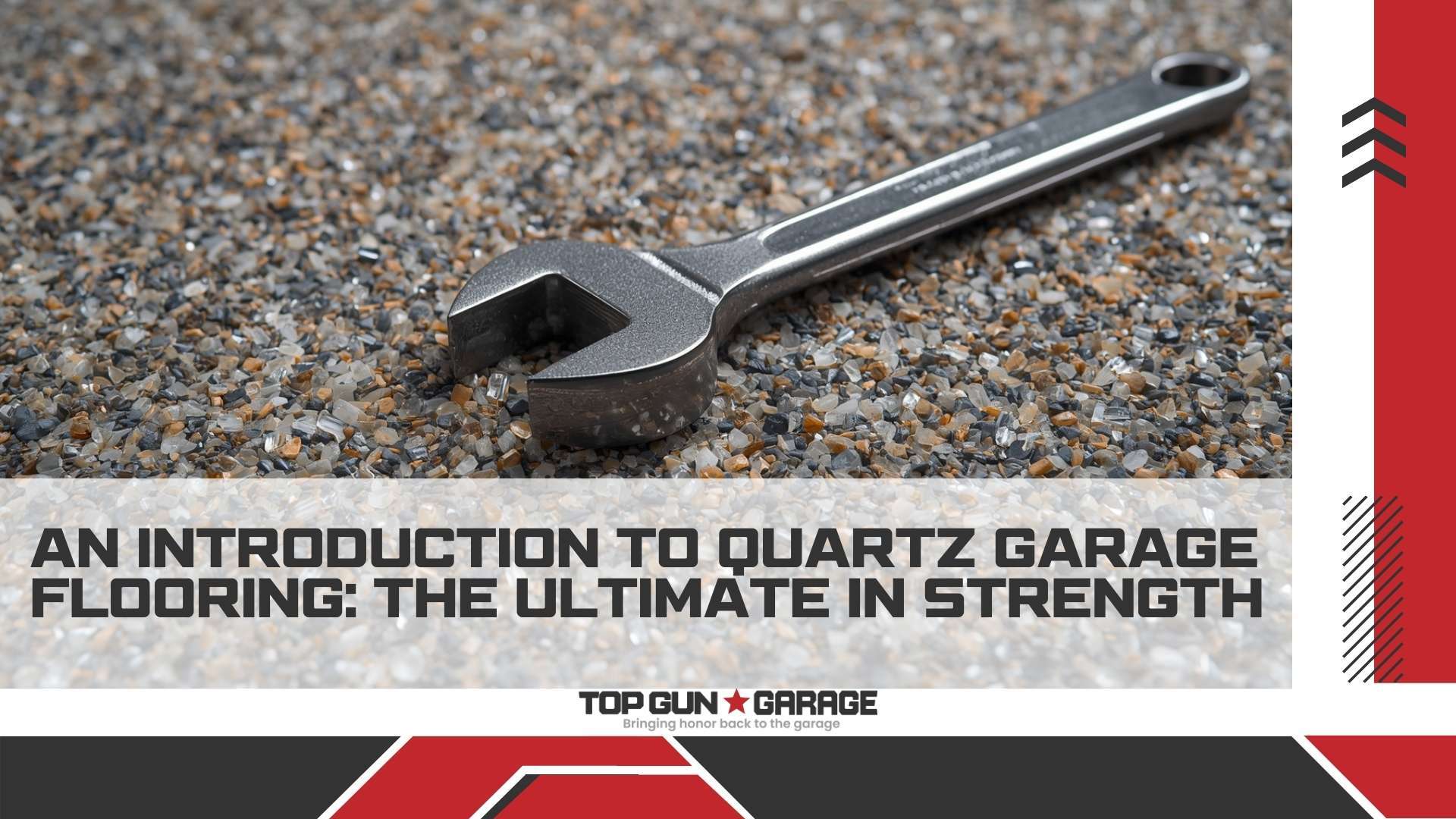
When it comes to creating a garage floor that can withstand the most demanding conditions imaginable, from heavy vehicle traffic to industrial-grade equipment, a quartz garage flooring system stands as the gold standard of durability and performance in the coatings industry. Unlike traditional epoxy systems that rely solely on the resin itself for strength, quartz broadcast floors incorporate colored quartz sand particles throughout the coating, creating a composite surface that rivals the hardness of natural stone. This specialized flooring solution has long been the choice of commercial warehouses, manufacturing facilities, and showrooms where failure is not an option, and now it is becoming increasingly popular among discerning Naples homeowners who demand the absolute best for their properties.
The concept behind quartz flooring is elegantly simple yet extraordinarily effective in creating unmatched surface hardness and wear resistance. By broadcasting quartz granules to full saturation into a freshly applied epoxy base coat, you create a surface that is no longer just polymer but rather a matrix of extremely hard mineral particles bonded together by resin. This combination delivers impact resistance, abrasion resistance, and compressive strength that far exceeds what any coating alone can achieve, regardless of thickness or formulation. It is the difference between a protective layer and a structural armor system that transforms the underlying concrete.
At Top Gun Garage, we have witnessed the exceptional performance of quartz systems in the harshest environments and most demanding applications throughout Southwest Florida. From commercial auto repair shops where heavy lifts and equipment operate daily to luxury home garages housing exotic car collections worth millions, quartz flooring delivers uncompromising protection and timeless beauty. The initial investment is higher than standard decorative flake systems, but for homeowners who view their garage as a critical asset rather than just utility space, the superior longevity and performance justify every dollar spent.
This comprehensive guide will introduce you to the world of quartz garage flooring, explaining what makes these systems unique, how they are installed, and when they represent the best choice for your Naples property. From understanding the different grades of quartz available to appreciating the installation complexity that requires expert contractors, you will gain the knowledge necessary to determine if this premium flooring solution aligns with your needs and expectations. Let’s explore the ultimate in garage floor strength and durability together.
Key Takeaways
-
Composite Strength: Quartz systems combine mineral hardness with polymer flexibility for unmatched durability and impact resistance.
-
Full Broadcast Application: Quartz granules are applied to complete saturation, creating a seamless, textured surface with no weak points.
-
Commercial-Grade Performance: These systems are engineered for the harshest industrial environments and adapted for residential use.
-
Multiple Finish Options: Quartz floors can be left textured for maximum slip resistance or ground smooth for a polished appearance.
-
Long-Term Value: While more expensive initially, quartz systems can last 20 to 30 years or more with minimal maintenance.
What Is a Quartz Garage Flooring System?
A quartz garage flooring system is a specialized type of resinous flooring that incorporates colored quartz sand particles as the primary wear surface rather than relying solely on the polymer coating for protection and appearance. The process begins with applying a pigmented epoxy or polyaspartic base coat to a properly prepared concrete substrate, then immediately broadcasting dry quartz granules across the wet coating until the surface reaches complete saturation and can accept no more material. After curing, excess loose quartz is swept away, and the surface is sealed with a clear topcoat that encapsulates the quartz and creates a unified, monolithic surface.
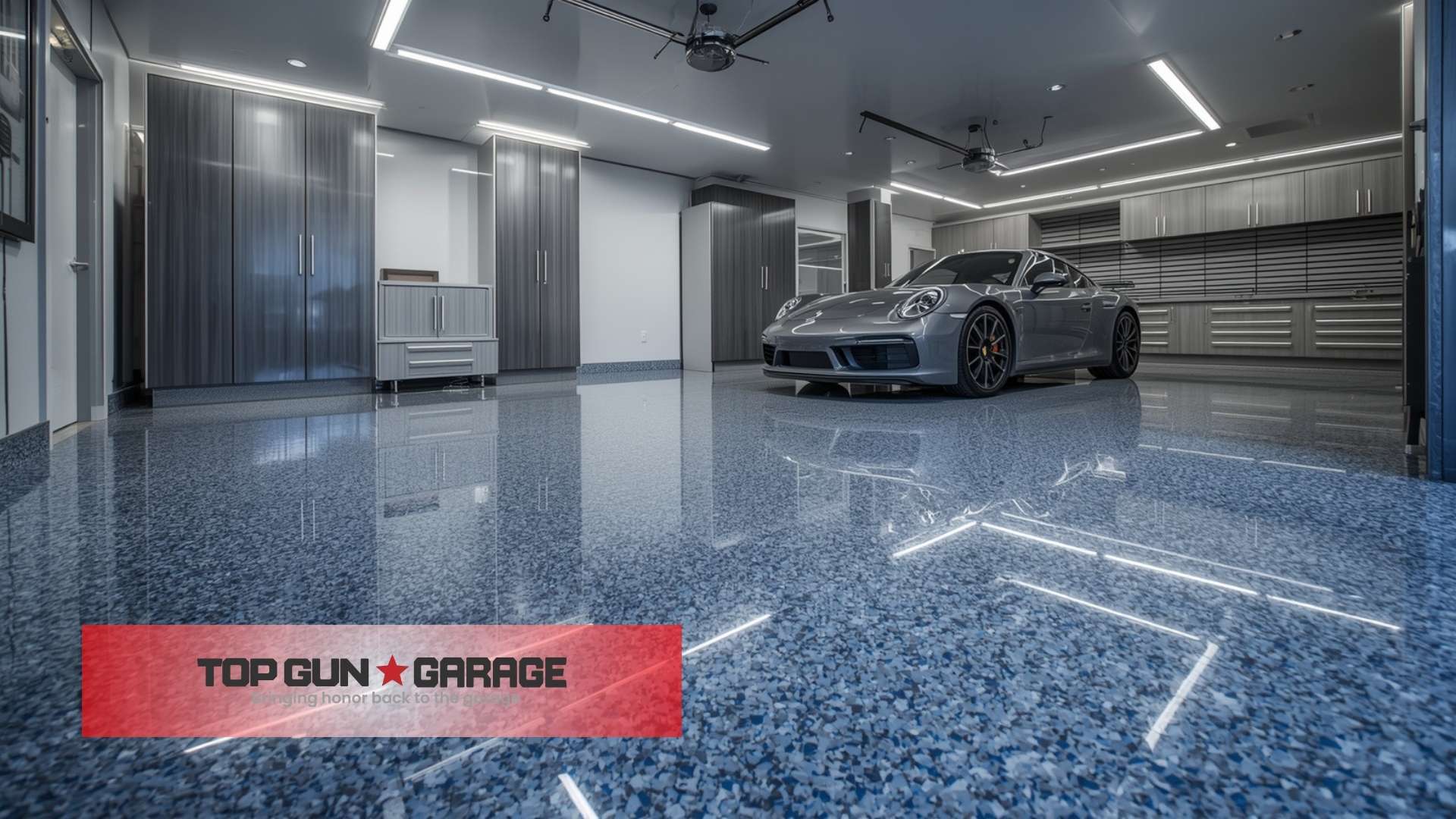
The quartz particles themselves are not ordinary sand but rather specially graded silica that has been kiln-dried to remove all moisture, precisely sized through industrial screening to ensure uniform particle distribution, and colored with fade-resistant pigments to create an aesthetically pleasing appearance. These granules are extraordinarily hard, rating near the top of the Mohs hardness scale, making them resistant to scratching, gouging, and abrasion that would quickly wear through standard epoxy coatings. When fully embedded in the resin matrix, they create a composite material that combines the best properties of both components.
The thickness of a quartz system is substantially greater than decorative flake floors, typically ranging from 1/8 inch to 1/4 inch depending on the quartz size and number of coats applied to achieve the desired performance level. This thickness provides significant impact resistance that can absorb the shock of dropped tools, heavy equipment being rolled across the surface, or the concentrated pressure from jack stands and vehicle lifts without cracking or chipping. It also provides excellent sound dampening compared to bare concrete, reducing the noise from foot traffic and equipment operation in the garage space.
One of the key advantages of quartz systems is their chemical resistance, which exceeds that of standard epoxy due to the inert nature of the quartz particles and the thickness of the coating system. Automotive fluids, battery acids, solvents, and cleaning chemicals that might etch or discolor thinner coatings simply sit on the surface of quartz flooring until wiped away, leaving no permanent damage or staining. This makes quartz an ideal choice for serious automotive enthusiasts, professional mechanics working from home, or anyone who demands a floor that can handle the toughest chemical exposures without degradation.
The Installation Process: Why Expertise Matters
Installing a quartz garage flooring system is a complex, multi-step process that requires specialized equipment, materials, and extensive experience to execute properly, making it unsuitable for DIY application regardless of your skill level. The process begins with even more rigorous surface preparation than standard epoxy systems require, typically involving diamond grinding to achieve a concrete surface profile (CSP) of 3 or higher to ensure maximum mechanical adhesion. Any surface contamination, existing coatings, or laitance must be completely removed, and the concrete must be tested for moisture and structural soundness before proceeding with the quartz application.
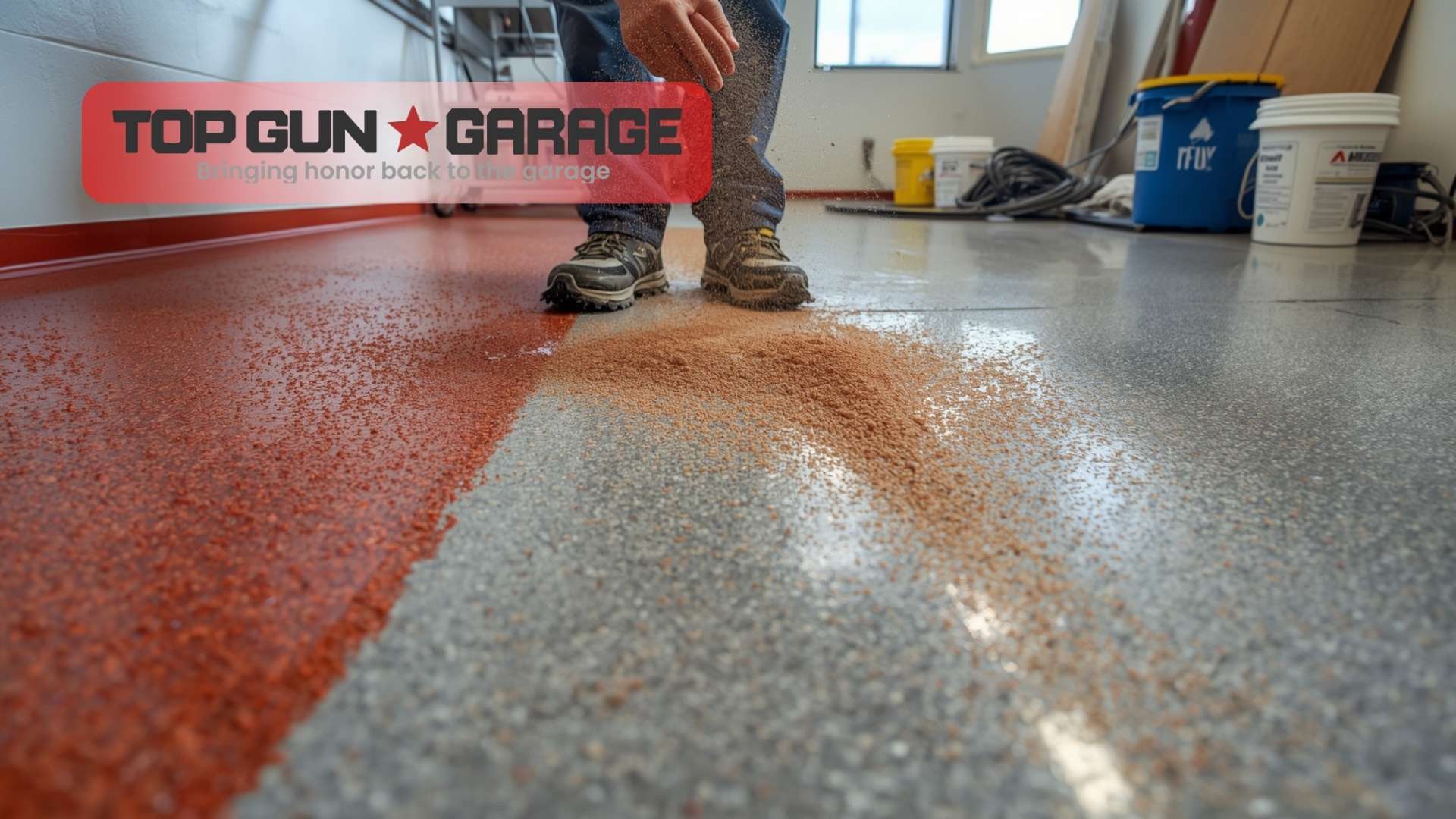
Once the surface is prepared and primed if necessary, the installation crew must work quickly and efficiently to apply the pigmented base coat and broadcast the quartz before the resin begins to cure and lose its tackiness. This requires multiple workers operating simultaneously, with one person applying the base coat with rollers or squeegees while others follow immediately behind broadcasting the quartz granules by hand to achieve complete, uniform coverage. The timing is critical because applying quartz too early can cause it to sink into the wet resin, while waiting too long results in poor adhesion and loose particles that will never bond properly.
The broadcasting technique itself requires skill and experience to achieve the proper density and coverage without creating thin spots or excessive buildup in certain areas. Quartz must be broadcast to complete saturation, meaning the surface is covered entirely and can accept no additional material, creating a continuous layer with no gaps or voids. This is typically measured as 20 to 25 pounds of quartz per square foot of floor area, representing a massive amount of material that must be applied evenly across the entire surface. Inexperienced applicators often under-broadcast to save money on expensive quartz, resulting in a floor that performs poorly and wears prematurely.
After the base coat has cured completely, typically 12 to 24 hours depending on temperature and humidity, the loose quartz is swept and vacuumed from the surface, leaving only the embedded particles that are locked into the resin. The floor is then inspected for any defects, and a clear epoxy or polyaspartic topcoat is applied to seal the quartz and create a unified surface. This topcoat fills the voids between quartz particles, creates a smooth or textured finish depending on application technique, and provides UV protection to prevent discoloration over time. Understanding why proper installation sequences matter is critical for appreciating the complexity and importance of professional application for quartz systems.
Performance Advantages Over Standard Epoxy Systems
The performance gap between a standard decorative flake epoxy system and a full-broadcast quartz system is substantial, particularly in high-traffic or heavy-use applications where durability is paramount. Abrasion resistance, the ability to withstand surface wear from friction and repeated contact, is dramatically higher in quartz systems due to the hardness of the silica particles compared to the polymer matrix alone. While epoxy coatings can wear through in tire tracks or high-activity zones over years of use, quartz floors maintain their surface integrity for decades because the wear surface is primarily mineral rather than resin.
Impact resistance is another area where quartz systems excel beyond standard coatings, absorbing the energy from dropped objects or concentrated loads without cracking, chipping, or creating divots in the surface. The thickness and composite nature of the quartz layer distributes impact forces across a larger area rather than concentrating stress at a single point, preventing the catastrophic failures that can occur with thinner coatings. This makes quartz ideal for garages where heavy tools, equipment, or parts are routinely handled overhead and occasionally dropped onto the floor surface.
Compressive strength, the ability to support heavy loads without deforming or cracking, is enhanced by the quartz broadcast layer that adds structural reinforcement to the coating system. Vehicle lifts, motorcycle stands, heavy safes, and other concentrated loads that might cause thinner coatings to flex and eventually fail are easily supported by quartz systems that effectively become part of the concrete substrate. This structural enhancement can even help stabilize weak or damaged concrete by providing a load-distributing cap over the slab.
Chemical resistance in quartz systems is exceptional due to both the inert nature of the quartz particles and the greater thickness that prevents chemicals from reaching the concrete substrate. Automotive fluids like gasoline, transmission fluid, and brake fluid that might stain or etch standard epoxy simply bead on the surface of quartz flooring until cleaned away. Even aggressive chemicals like battery acid or paint strippers cause minimal damage if cleaned up within a reasonable timeframe, making quartz the preferred choice for professional automotive work. Understanding chemical spill management demonstrates the superior protection quartz provides.
Aesthetic Options and Customization Possibilities
While quartz systems are primarily chosen for their performance characteristics, they also offer extensive aesthetic customization that can create stunning visual effects in residential garages and showrooms. Quartz is available in a wide range of colors from neutral earth tones like tan, gray, and beige to bold hues like red, blue, and green, allowing for custom color matching to complement your home’s design scheme. Multiple colors can even be blended during broadcasting to create unique, multi-tonal appearances that add depth and visual interest to the floor surface.
The texture of quartz flooring can be customized based on the intended use and aesthetic preferences of the homeowner or property owner. A fully textured quartz surface, where the granules remain exposed and create a rough, slip-resistant finish, is ideal for areas that may get wet or where maximum traction is desired for safety. This orange-peel texture provides excellent grip for both foot traffic and vehicles, preventing slips even when the surface is wet from rain or washing activities. The trade-off is a slightly more difficult cleaning process since the texture can trap fine debris.
For a more refined appearance suitable for luxury garages or showrooms, quartz floors can be ground smooth after the initial cure using diamond grinding equipment, then polished to a high-gloss finish that resembles terrazzo or polished concrete. This process removes the peaks of the quartz particles while leaving them embedded in the matrix, creating a smooth, seamless surface that is easy to clean while maintaining the structural benefits of the quartz layer. The result is a sophisticated, upscale appearance that befits high-end properties and exotic car collections.
Decorative patterns and borders can be incorporated into quartz systems by using different colors in specific zones or by creating geometric designs through careful masking and sequential broadcasting. Some homeowners choose to create a border pattern around the perimeter of the garage or designate parking zones with contrasting quartz colors, adding visual organization to the space. For creative design inspiration that can be adapted to quartz applications, explore our showcase of modern flooring designs that demonstrate the aesthetic potential of broadcast systems.
When Quartz Is the Right Choice for Your Garage
Quartz garage flooring systems represent a significant investment compared to standard decorative epoxy, typically costing 50 to 100 percent more per square foot due to material costs and installation complexity. This premium pricing means quartz is not the right choice for every garage or every homeowner, but there are specific scenarios where it becomes the obvious and justified solution. Understanding when quartz makes sense helps you make an informed decision about whether the additional cost delivers proportional value for your specific situation and intended use.
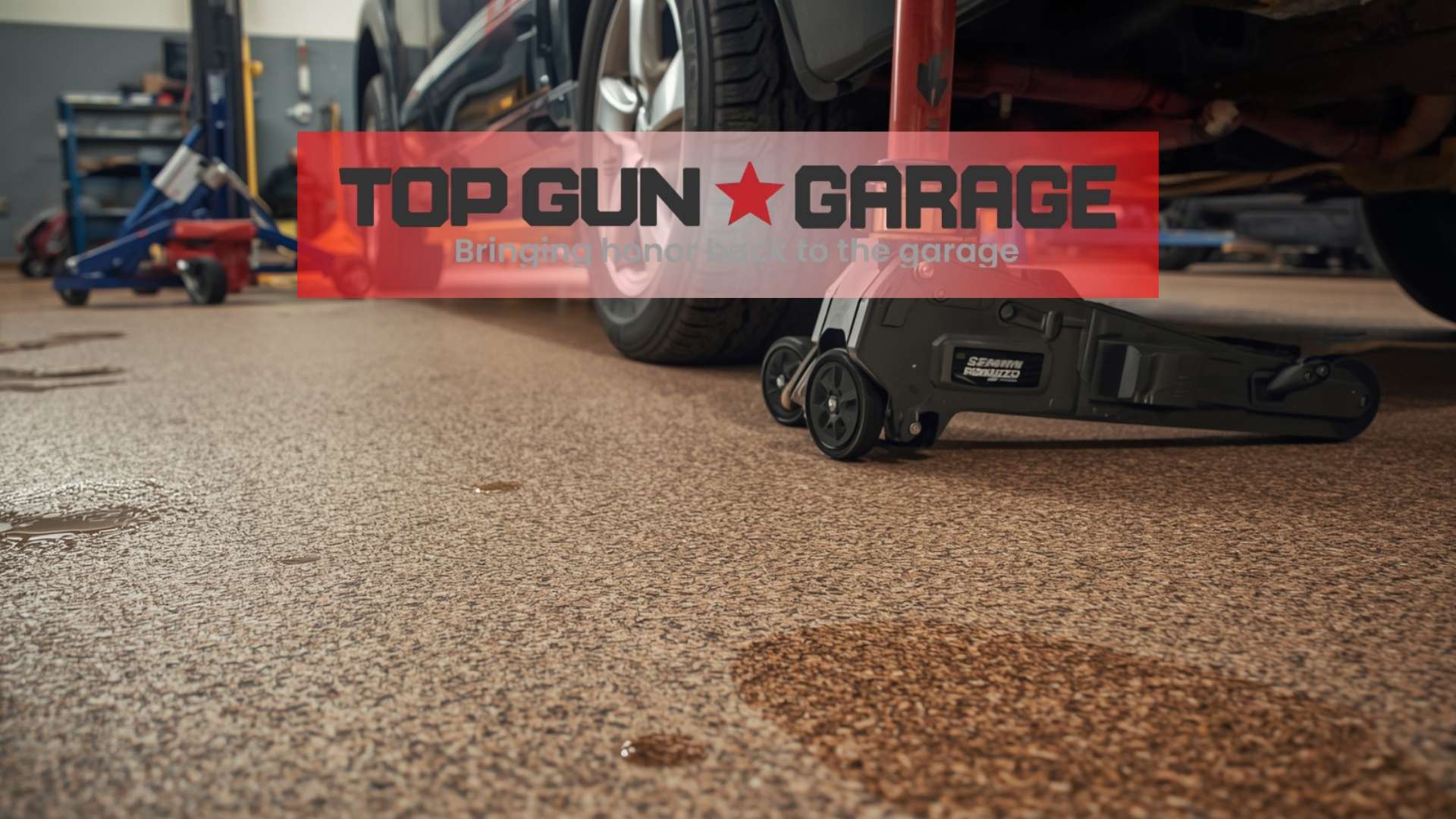
Heavy equipment use is the most common justification for specifying a quartz system in residential garages, particularly for serious automotive enthusiasts who use floor jacks, vehicle lifts, or hydraulic equipment that creates concentrated loads. If you work on classic cars, restore vehicles, or maintain a collection of motorcycles or recreational vehicles, the impact and abrasion resistance of quartz protects your investment in the floor itself. Commercial-grade shops, professional detailers working from home, or anyone operating a business from their garage should consider quartz the baseline standard for floor protection.
High-traffic garages that serve multiple purposes beyond simple vehicle storage also benefit from quartz’s exceptional durability and longevity that outlasts standard coatings. If your garage functions as a workshop, home gym, hobby space, and storage area with constant activity throughout the week, the incremental cost of quartz may be recovered through extended service life and reduced maintenance needs. For families with teenagers who use the garage for band practice, skateboarding, or other activities, quartz provides peace of mind that the floor can handle abuse without requiring premature replacement.
Chemical exposure from automotive fluids, painting and finishing work, or industrial hobbies like metalworking and fabrication makes quartz an intelligent choice due to its superior chemical resistance. If you routinely work with solvents, acids, or aggressive cleaning chemicals that could damage standard epoxy, quartz provides a higher margin of safety and protection. For homeowners who understand that their garage flooring represents a long-term investment in their property’s value and functionality, choosing quartz demonstrates a commitment to quality that will be appreciated for decades to come and will be noticed by potential buyers if you ever sell the property.
Maintenance and Longevity of Quartz Systems
One of the most attractive aspects of quartz garage flooring is the minimal maintenance required to keep the system performing and looking excellent for decades of service. Daily or weekly sweeping with a soft-bristle broom or dust mop removes loose debris and prevents accumulation of dirt that could be ground into the textured surface over time. For deeper cleaning, mopping with a pH-neutral cleaner and warm water is all that is typically necessary to maintain the appearance, even in high-traffic commercial environments that see constant use throughout the day.
The textured nature of unfinished quartz surfaces means that minor scratches and wear are virtually invisible, unlike smooth epoxy coatings where every mark and scuff is readily apparent. This forgiving characteristic means your floor continues to look professional even after years of hard use that would leave standard coatings looking worn and tired. If the topcoat does eventually show wear in high-traffic areas after a decade or more of service, it can be re-coated without disturbing the quartz layer underneath, effectively renewing the surface at a fraction of the cost of complete replacement.
The expected lifespan of a professionally installed quartz system in residential applications is 20 to 30 years or more, depending on usage intensity and maintenance practices followed by the homeowner. In commercial settings with extreme traffic, these systems regularly deliver 15 to 20 years of service before requiring attention, demonstrating their exceptional durability. This longevity means that while the initial cost is higher, the cost per year of service is often lower than cheaper systems that require replacement every 5 to 7 years, making quartz a smart long-term investment.
Proper maintenance practices extend the life of quartz systems significantly beyond typical coating performance, making them the most cost-effective choice for demanding applications. Following seasonal maintenance routines adapted for quartz surfaces ensures your floor remains in optimal condition throughout its service life. The combination of minimal maintenance requirements and exceptional longevity makes quartz the ultimate choice for homeowners who want to install their garage floor once and never worry about it again for the life of their home ownership.
Comparing Quartz to Other Premium Flooring Options
When evaluating premium garage flooring options, it is important to understand how quartz systems compare to other high-end solutions like thick-build epoxy, polyurea, and tile in terms of performance, cost, and application requirements. Thick-build epoxy systems without quartz can achieve similar thickness through multiple coats but lack the surface hardness and abrasion resistance that quartz particles provide, making them more suitable for visual impact than extreme durability. While less expensive than quartz, they will show wear more quickly in demanding applications and may require more frequent topcoat renewal to maintain appearance.
Polyurea coatings offer rapid cure times and excellent flexibility that resists cracking, making them popular for commercial applications where downtime must be minimized and floors experience thermal cycling. However, polyurea alone does not provide the same level of hardness and chemical resistance as quartz systems, and it can be more susceptible to scratching and abrasion from heavy traffic. Some contractors combine polyurea with quartz broadcasting to create hybrid systems that offer the benefits of both technologies, though this approach is more complex and expensive than standard quartz systems.
Interlocking garage floor tiles offer the advantage of being completely removable and replaceable, allowing for easy access to the concrete substrate if repairs are needed or if you want to change the floor appearance. However, tiles create seams and gaps where dirt and fluids can accumulate, they can shift or separate over time under heavy loads, and the initial cost is often comparable to or higher than professional quartz systems. For homeowners seeking a permanent, seamless solution with maximum durability, quartz remains the superior choice despite tiles’ flexibility advantages.
Understanding these comparisons helps clarify that quartz occupies a unique position as the most durable, permanent flooring solution available for garages without moving into exotic options like polished concrete or terrazzo. For those interested in how epoxy increases home value, quartz systems provide even greater value proposition due to their commercial-grade performance and exceptional longevity that appeals to discerning buyers. The investment in quartz is an investment in the ultimate performance and protection for your garage floor.
Frequently Asked Questions (FAQ)
1. What is the difference between quartz and flake flooring? Quartz systems use colored sand particles broadcast to saturation for maximum durability, while flake systems use decorative vinyl chips for aesthetics. Quartz is significantly more durable and expensive.
2. Can I install a quartz system myself? Due to the complexity, material costs, and specialized techniques required, quartz systems are not suitable for DIY installation and should only be installed by experienced professionals.
3. How much does a quartz garage floor cost? Professional quartz installations typically range from $8 to $15 per square foot depending on quartz grade, color, finish options, and garage size, representing a premium over standard epoxy.
4. Is quartz flooring slippery when wet? Textured quartz surfaces provide excellent slip resistance even when wet. Smooth-ground quartz can be slippery unless an anti-slip additive is incorporated into the topcoat.
5. Can quartz systems be repaired if damaged? Yes, localized damage can be ground out and patched with matching quartz and resin, though achieving a seamless repair requires professional expertise to blend the repair area.
6. How long does quartz installation take? Most residential garages can be completed in 2 to 3 days including surface prep, quartz application, and topcoat, though cure times may require waiting an additional day before use.
7. What maintenance does quartz flooring require? Simple sweeping and occasional mopping with pH-neutral cleaner is all that is needed. Quartz systems are extremely low-maintenance compared to other flooring options.
8. Can I use a quartz system outdoors? Yes, quartz systems with UV-stable polyaspartic topcoats perform excellently in outdoor applications like patios, pool decks, and covered porches, resisting sun damage and weathering.
9. How does quartz perform in Florida’s climate? Quartz systems excel in humid, hot environments like Naples, as they are not affected by moisture, UV exposure, or temperature fluctuations that can damage lesser coatings.
10. Is quartz worth the extra cost over standard epoxy? For high-traffic garages, heavy equipment use, or homeowners wanting the absolute best performance and longevity, quartz delivers value that justifies the premium pricing through decades of service.
Conclusion
Quartz garage flooring systems represent the pinnacle of performance, durability, and longevity in residential and commercial floor coatings, offering unmatched protection for the most demanding applications. By combining the hardness of mineral quartz with the flexibility and adhesion of advanced polymer resins, these systems create a composite surface that resists abrasion, impact, chemical damage, and wear far better than any standard coating can achieve. For Naples homeowners who view their garage as a critical asset deserving of the best protection available, quartz delivers performance that will be appreciated and admired for decades of reliable service.
The initial investment in a quartz system is substantial, representing a premium over standard decorative epoxy or DIY coating kits, but the long-term value proposition is compelling when you consider the extended service life and minimal maintenance requirements. A properly installed quartz floor can last 20 to 30 years or more with nothing more than simple cleaning, effectively making it the last floor you will ever install during your home ownership. When amortized over this extended service life, the cost per year is often lower than cheaper alternatives that require replacement or significant maintenance every few years.
Choosing a quartz system requires working with experienced professional contractors who understand the complexity of these installations and have access to high-quality materials designed for demanding applications. The installation process is not forgiving of mistakes or shortcuts, and the performance of your floor depends entirely on proper surface preparation, correct material selection, and expert application techniques. This is not an area where homeowners should attempt to save money through DIY installation or by hiring the lowest bidder without verifying credentials and experience with quartz systems specifically.
Ready to invest in the ultimate garage floor that will protect your property and serve your needs for decades to come? Contact Top Gun Garage today to schedule a comprehensive consultation where we can assess your garage, discuss your specific requirements and usage patterns, and design a custom quartz flooring system tailored to your Naples home. Let our team of experienced professionals create a floor that delivers uncompromising performance, exceptional beauty, and peace of mind for the life of your home ownership.