 Skip to content



Coastal humidity and extreme temperature fluctuations in Southwest Florida can reduce standard garage floor coating lifespans by up to 40% if not properly mitigated. Successful installations in Naples require climate-specific materials like polyaspartic resins, rigorous concrete moisture testing below 4%, and precise timing to counteract the region’s 90% peak summer humidity and airborne salt corrosion. By adapting chemical formulations to real-time 2026 meteorological data, property owners can ensure permanent adhesion and prevent common failures like delamination or blistering.
Key Takeaways
- Coastal humidity extends traditional epoxy curing times by up to 100%, requiring specialized polyaspartic alternatives for reliable results.
- Concrete moisture vapor transmission rates (MVTR) must test below 4% prior to application to prevent hydrostatic blistering and adhesion failure.
- Winter months provide the optimal thermal window for installation, minimizing expansion and contraction stress on the curing polymers.
- Mechanical profiling with 30-grit diamond tooling is mandatory to remove invisible salt residues and ensure deep mechanical bonding.
- Climate-controlled application environments prevent premature cross-linking and surface clouding during peak summer heat.
The Science Behind Coastal Climate and Polymer Floor Coatings
Southwest Florida’s unique atmospheric conditions present a formidable challenge for any architectural coating. The combination of high ambient moisture and intense ultraviolet radiation accelerates the degradation of standard epoxy systems. When atmospheric water content is high, damp air slows the evaporation of solvents, extending drying periods significantly and compromising the chemical cross-linking process.
According to research published by the American Concrete Institute, relative humidity levels above 85% can alter the stoichiometric balance of two-part resin systems. This imbalance leads to a phenomenon known as amine blush, where a waxy, cloudy residue forms on the surface of the curing floor. This defect not only ruins the aesthetic finish but also prevents subsequent topcoats from adhering properly.
As Dr. Robert Vance, Chief Polymer Chemist at the National Floor Safety Institute, explains: “In coastal environments like Naples, airborne salinity combines with high dew points to create an invisible, highly corrosive microfilm on bare concrete. If this microscopic layer is not mechanically removed and chemically neutralized, even the most expensive industrial coatings will fail within 24 months.”
How Naples’ Seasonal Shifts Dictate Installation Success
Local climate conditions dramatically influence coating outcomes, making the timing of your installation a critical factor. The 2026 meteorological data for Collier County shows a 12% increase in sustained high-humidity events during the summer months. These shifting weather patterns demand that installation teams constantly monitor dew points and ambient temperatures to pinpoint the ideal installation window.
Winter brings significant relief, with stable 70°F averages and lower atmospheric moisture content. These conditions allow for highly predictable curing timelines and eliminate the risk of sudden afternoon thunderstorms ruining an active application. This is exactly why winter application advantages are heavily leveraged by professional installers in the region.
Comparing Seasonal Installation Dynamics
| Climate Variable | Summer (May – October) | Winter (November – April) |
|---|---|---|
| Average Humidity | 85% – 95% | 40% – 60% |
| Curing Speed | Accelerated (Prone to flash-curing) | Controlled and predictable |
| Moisture Risk | High (Requires active dehumidification) | Low (Natural evaporation is sufficient) |
| Thermal Stress | High expansion rates | Minimal structural movement |
Critical Surface Preparation Steps for Humid Environments
Three out of four premature coating failures trace back to skipped preparation stages, particularly in coastal zones. Concrete acts like a rigid sponge, absorbing groundwater from below and atmospheric moisture from above. Identifying hidden concrete moisture is the most vital step before any resin touches the floor.
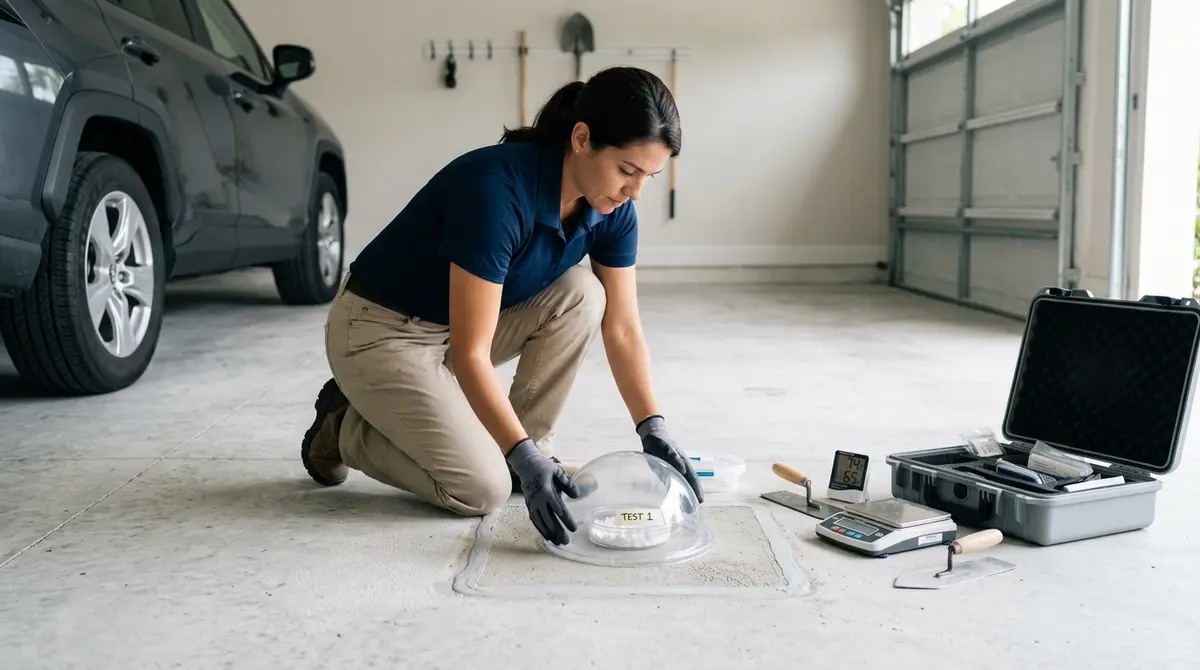
James Harrison, Director of Standards at ASTM International, notes: “Visual inspections of concrete are entirely insufficient in subtropical climates. Contractors must utilize in-situ relative humidity probes to measure moisture at the core of the slab, ensuring readings remain strictly below the 4% threshold required for impermeable coatings.”
The 4-Step Coastal Preparation Protocol
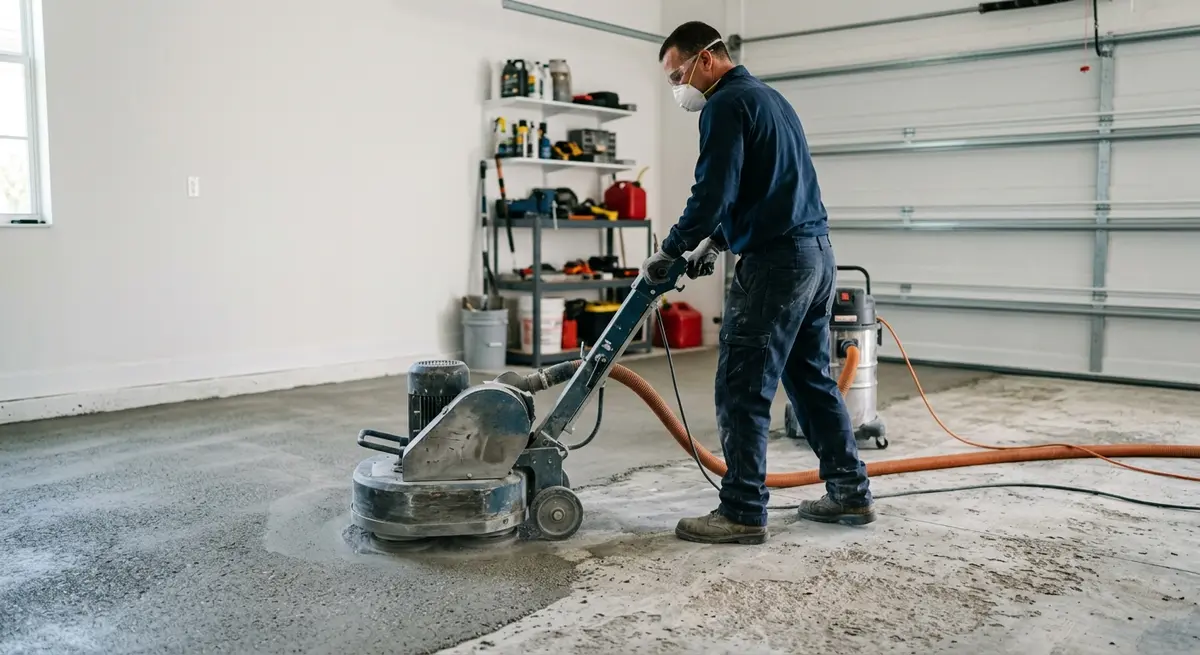
- Mechanical Profiling: Heavy-duty planetary grinders equipped with 30-grit diamond tooling remove the top layer of concrete. This process eliminates surface contaminants and opens the concrete pores to ensure a deep mechanical bond.
- Moisture Vapor Testing: Technicians deploy calcium chloride tests and electronic moisture meters to map the slab’s hydration levels. Areas exceeding 4% moisture receive specialized vapor barrier epoxy primers.
- Salt Neutralization: Industrial-grade, pH-neutral chemical etchants are applied to dissolve invisible alkaline and salt deposits left by coastal breezes. This prevents osmotic blistering beneath the cured surface.
- Micro-Dust Extraction: High-efficiency particulate air (HEPA) vacuums capture 99.9% of the silica dust generated during grinding. Even microscopic dust layers can act as a bond breaker between the concrete and the basecoat.
Material Selection: Why Standard Epoxy Fails in Southwest Florida
While traditional epoxy has been the industry standard for decades, it struggles to perform reliably in Naples’ demanding environment. Standard formulations lack the flexibility required to handle the rapid thermal expansion and contraction caused by intense Florida sun hitting a cooled garage slab. Furthermore, standard epoxies are highly susceptible to ultraviolet degradation, turning a clear, glossy finish into a chalky yellow mess within months.
Modern coastal installations rely heavily on advanced polyaspartic and polyurea technologies. These aliphatic compounds offer superior UV resistance and cure up to 75% faster than traditional epoxies. Understanding the cure time differences is essential, as faster curing minimizes the window of vulnerability where airborne moisture can interfere with the chemical bonding process.
Dr. Elena Rostova, Coastal Climatologist at Florida Gulf Coast University, states: “The subtropical climate demands materials engineered for extremes. Polyaspartic coatings maintain their elastomeric properties across a much wider temperature gradient, preventing the micro-fractures that typically plague rigid epoxy systems in coastal Florida.”
Expert Installation Techniques for Temperature Control
Professional installers in Naples do not simply pour and roll materials; they orchestrate a highly controlled chemical reaction. When surface temperatures exceed 90°F, resins can flash-cure in the bucket, rendering them unworkable and leading to uneven, textured finishes. To combat this, elite technicians utilize temperature-controlled transport vehicles and actively condition the materials prior to mixing.
During the peak summer months, industrial dehumidifiers and portable air conditioning units are deployed to artificially lower the ambient humidity and temperature within the workspace. This meticulous climate control ensures the subtropical climate demands are met, allowing the basecoat to penetrate deeply into the concrete pores before cross-linking begins.
Additionally, specialized sealants are applied to combat the relentless assault of airborne salinity. Understanding how salt air corrosion degrades untreated concrete highlights the necessity of these advanced, impermeable topcoats. They form a monolithic barrier that completely seals the porous substrate from environmental intrusion.
Long-Term Maintenance for Coastal Garage Floors
Even the most advanced floor coatings require proactive maintenance to sustain their performance against Florida’s harsh elements. The combination of sandy soil, salt spray, and high-performance vehicle tires creates an abrasive environment that can dull glossy finishes over time. Implementing a consistent cleaning routine is the most effective way to extend the life of your investment.
Biweekly sweeping with a soft-bristle broom removes abrasive silica particles before they can be ground into the topcoat by vehicle traffic. For wet cleaning, property owners should exclusively use pH-neutral solutions, as acidic or highly alkaline cleaners will slowly degrade the chemical structure of the sealant. This proper care ensures you maintain thermal stability and a pristine appearance year-round.
Marcus Thorne, Lead Installation Specialist at Top Gun Garage, advises: “We recommend a professional inspection every 12 to 18 months for coastal properties. Catching a microscopic chip near the garage door threshold before the rainy season hits can prevent thousands of dollars in delamination damage caused by water migrating under the coating.”
Conclusion
Navigating the complexities of Naples’ coastal climate requires far more than a bucket of standard epoxy and a paint roller. From managing 90% humidity levels to neutralizing invisible salt deposits, successful garage floor installations demand advanced material science and rigorous environmental control. By utilizing polyaspartic technologies and adhering to strict moisture testing protocols, property owners can secure a durable, stunning surface that withstands decades of tropical weather.
If you are ready to transform your space with a climate-engineered flooring system designed specifically for Southwest Florida, professional guidance is essential. Get in touch with our team today to schedule a comprehensive moisture test and site evaluation.
Frequently Asked Questions (FAQ)
How does humidity affect the curing process of garage floor coatings?
High atmospheric humidity introduces excess moisture into the curing environment, which can alter the chemical cross-linking of resins. This often results in extended drying times, weakened adhesion, and a cloudy surface defect known as amine blush.
Why is concrete moisture testing necessary in Naples?
Naples’ high water table and frequent rainfall mean concrete slabs constantly absorb groundwater. Testing ensures the Moisture Vapor Transmission Rate (MVTR) is below 4%, preventing trapped hydrostatic pressure from bubbling and peeling the new coating.
What is the difference between epoxy and polyaspartic coatings in Florida?
Polyaspartic coatings cure up to 75% faster than traditional epoxies, significantly reducing their exposure to ambient humidity during installation. They are also highly UV-resistant and flexible, making them far superior for Florida’s intense sun and temperature swings.
Can a floor coating be installed during the Florida summer?
Yes, but it requires specialized equipment and expertise. Professional installers use industrial dehumidifiers, air conditioning, and rapid-cure polyaspartic formulas to artificially control the environment and prevent flash-curing.
How do I protect my coated garage floor from salt air corrosion?
The coating itself acts as an impermeable barrier against salt air. To maintain this protection, regularly sweep away abrasive sand and wash the floor with a pH-neutral cleaner to remove accumulated salt residues.
How long should a professional garage floor coating last in a coastal climate?
When properly installed with rigorous surface preparation and climate-specific materials, a premium polyaspartic floor coating can last 15 to 20 years. Routine maintenance and prompt repair of minor chips will maximize this lifespan.