 Skip to content



Key Takeaways
- Coastal climates accelerate wear on protective coatings without proper installation.
- Humidity and salt exposure demand specialized materials and techniques.
- Local expertise ensures solutions align with environmental challenges.
- Regular maintenance extends the lifespan of surfaces in harsh conditions.
- Professional preparation prevents issues like peeling or bubbling over time.
Introduction to Epoxy Durability in Coastal Environments
Durability is paramount for flooring systems battling constant moisture and salt. Epoxy coatings form through a chemical reaction between resins and hardeners, creating a rigid plastic material that bonds tightly to surfaces. This process results in non-porous layers resistant to stains, impacts, and corrosion.Background on Epoxy Coatings
These polymer-based solutions excel in garages, warehouses, and commercial spaces due to their load-bearing capacity. UV-stabilized formulas prevent yellowing, while additives enhance slip resistance. Properly cured systems withstand heavy foot traffic and equipment without cracking. Coastal installations require specialized formulations. Standard products may degrade faster when exposed to airborne salinity and humidity spikes. Modified epoxies incorporate moisture-tolerant agents and flexible polymers to accommodate substrate movement.Relevance for Naples, FL Properties
Naples’ tropical climate accelerates wear on inadequately prepared surfaces. Daily temperature swings and 80%+ humidity levels challenge curing processes. Professional installers adjust application timing and layer thickness to counter these factors. Local homeowners benefit from epoxy flooring’s ability to block salt infiltration into concrete. This protection prevents spalling and structural weakening over time. Regular maintenance preserves the glossy finish despite constant environmental pressures.Environmental Challenges for Epoxy in Naples
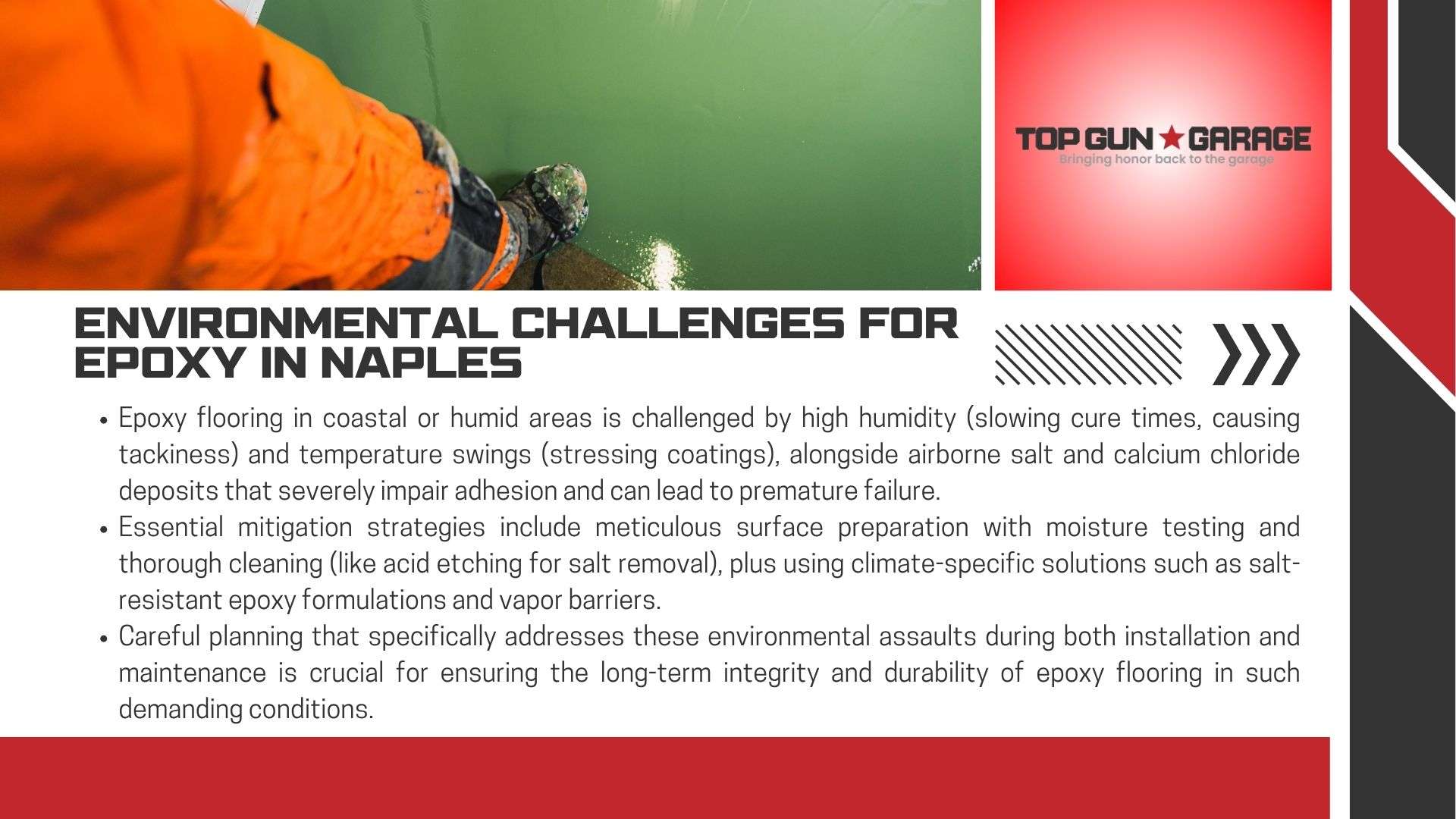 Flooring in Naples must combat daily environmental assaults. Florida humidity and airborne particles conspire to undermine surface integrity over time. These conditions demand meticulous planning during installation and maintenance.
Humidity and Temperature Fluctuations
High humidity levels slow epoxy curing, creating tacky surfaces prone to contamination. Temperature swings between 75°F days and cooler nights cause expansion and contraction. This movement stresses coatings, leading to micro-cracks if materials lack flexibility. Calcium chloride deposits from sea breezes worsen adhesion issues. When trapped beneath uncured layers, these particles create weak spots. Proper concrete moisture testing before application prevents such failures.Contaminants and Salt Air Exposure
Salt-laden air leaves microscopic residues on concrete floors. Without thorough cleaning, epoxy bonds weakly to contaminated substrates. Studies show coatings fail 40% faster when applied over salt-rich surfaces. Best practices include acid etching to neutralize calcium chloride buildup. Pressure washing alone often misses embedded particles. Local installers recommend pH testing after cleaning to ensure contaminant removal. A Naples marina garage saw premature peeling after standard prep work. Reapplication with salt-resistant epoxy and vapor barriers solved recurring issues. This case highlights the need for climate-specific solutions.How Florida Salt Air Affects Epoxy Durability
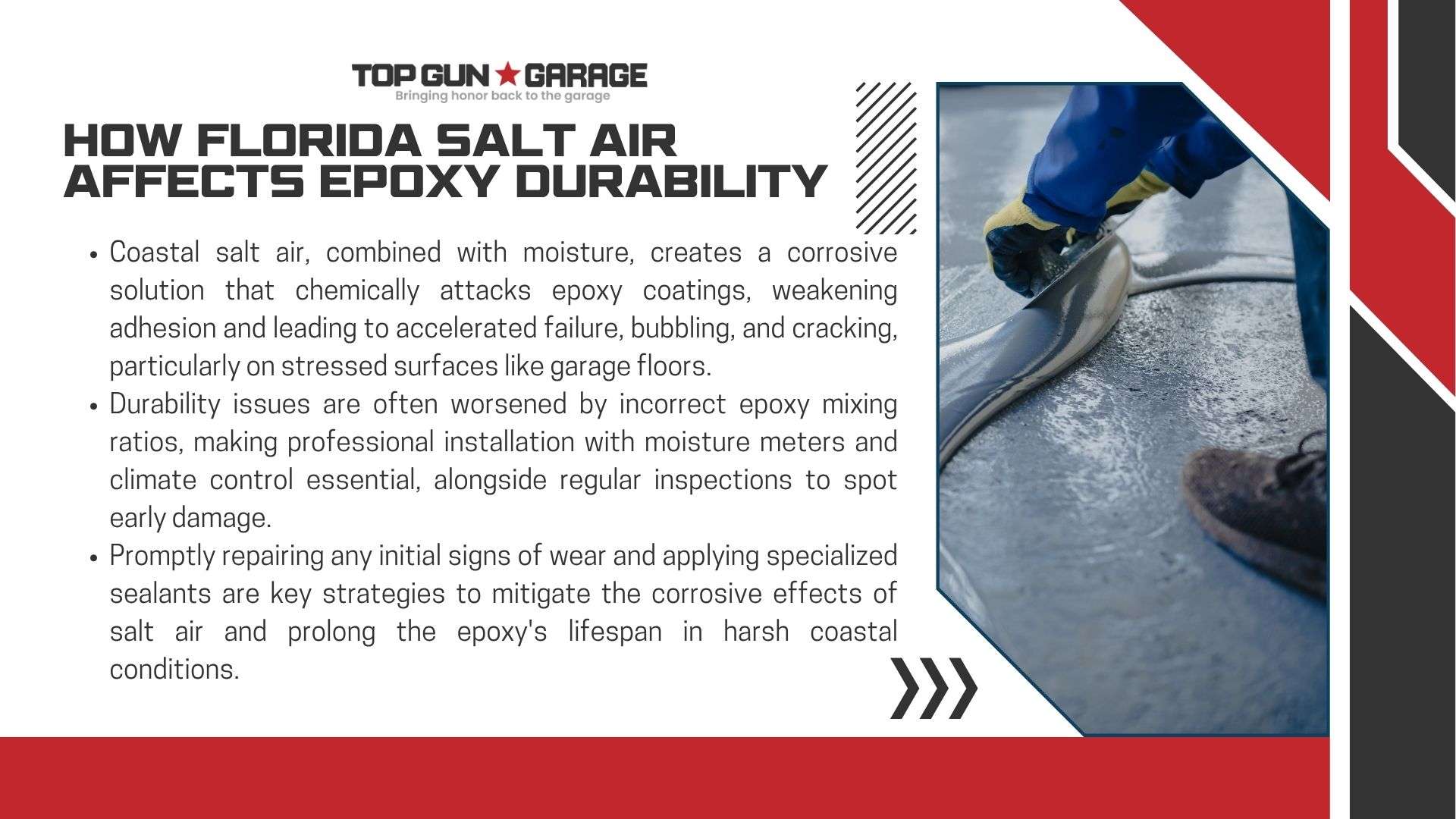 Coastal environments create invisible battles between protective layers and corrosive elements. When moisture interacts with airborne contaminants, chemical reactions occur that weaken bonds between materials and substrates. These processes are particularly aggressive in spaces like garages, where floors endure both environmental and mechanical stress.
Chemical Impact on Adhesion
Salt particles attract water molecules, forming a corrosive solution that penetrates microscopic gaps in coatings. This brine mixture reacts with epoxy resins, altering their molecular structure. Over time, this degradation reduces the material’s ability to grip surfaces tightly. Research shows coatings applied in high-moisture zones fail 50% faster than those in controlled environments. Bubbles form when trapped salt crystals expand during temperature changes. Garage floors exposed to wet shoes or vehicle tires show accelerated crack development along edges and joints. Improperly mixed ratios exacerbate these issues. Excess hardener creates brittle layers prone to shattering under pressure. Conversely, insufficient curing agents leave sticky residues that trap contaminants. Professional installers use moisture meters and climate-controlled equipment to ensure precise application conditions. Regular inspections catch early signs of lifting or discoloration. Addressing these quickly prevents widespread delamination. Specialized sealants replenish protective barriers compromised by chemical exposure, extending service life despite harsh coastal conditions.Troubleshooting Epoxy Coating Failures
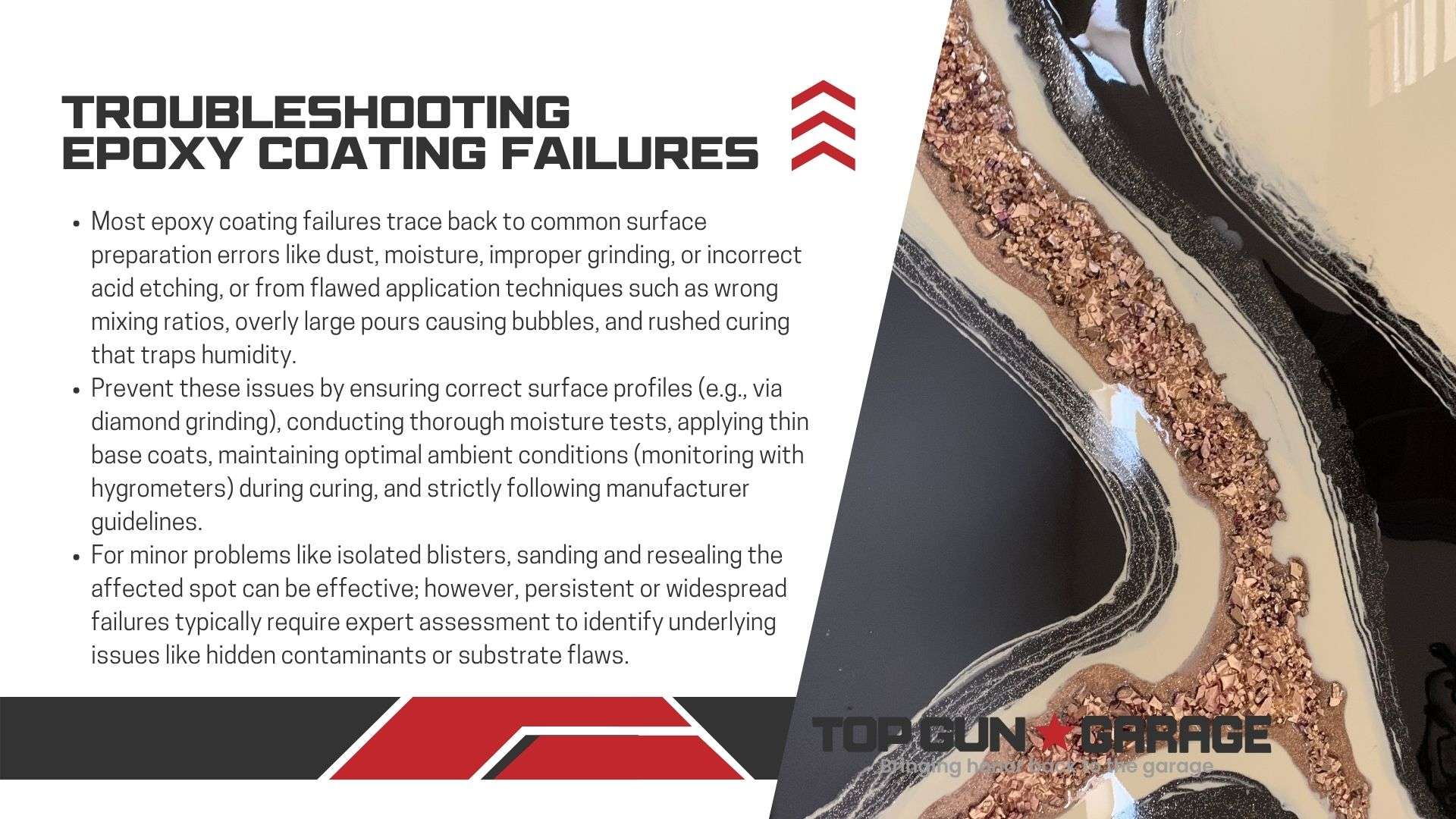 Epoxy failures often trace back to overlooked details during installation. Proper preparation and technique adjustments prevent most issues before they compromise performance. Addressing these factors early saves time and resources in long-term maintenance.
Common Surface Preparation Errors
Dust or moisture on concrete causes 60% of adhesion failures. Skipping mechanical grinding leaves smooth areas where coatings can’t bond. A Naples restaurant patio showed peeling after workers used only sweeping instead of diamond grinding. Improper etching creates weak spots. Acid solutions must dwell long enough to open concrete pores but get neutralized completely. Test strips verify surface profiles match manufacturer requirements before application.Issues with Application Techniques
Mixing ratios matter. Adding too much hardener creates brittle layers that crack under pressure. Bubbles form when applicators pour large sections instead of working in manageable areas. Curing time depends on ambient conditions. Rushing this phase traps humidity, causing cloudy finishes. Professionals use hygrometers to monitor moisture levels and adjust drying schedules.- Grind surfaces to CSP 3 profile
- Test for moisture with plastic sheet method
- Apply thin base coats before thicker layers
- Maintain 70°F workspace during curing
Analyzing Epoxy Floor Failures and Case Studies
 Real-world installations reveal critical patterns in coating performance. By studying regional projects, experts identify how environmental variables interact with application methods. These insights shape strategies for maximizing surface longevity in demanding climates.
Observations from Local Installations
A Naples beachfront condo garage showed premature peeling within six months. Inspections traced the failure to 85% humidity during installation, which slowed curing. The contractor reapplied coatings after installing dehumidifiers, achieving a flawless finish that lasted five years. Another project compared two commercial kitchens. The facility near salt marshes required re-coating every 18 months. Its inland counterpart maintained integrity for four years with identical products. Researchers attributed the difference to airborne salinity accelerating chemical breakdown.Comparative Performance Under Different Conditions
Data from 12 coastal properties highlights humidity’s role:| Environment | Avg. Lifespan | Common Issues |
|---|---|---|
| Controlled (50% humidity) | 7.2 years | Minor scratches |
| Uncontrolled (75%+ humidity) | 2.8 years | Bubbling, adhesion loss |
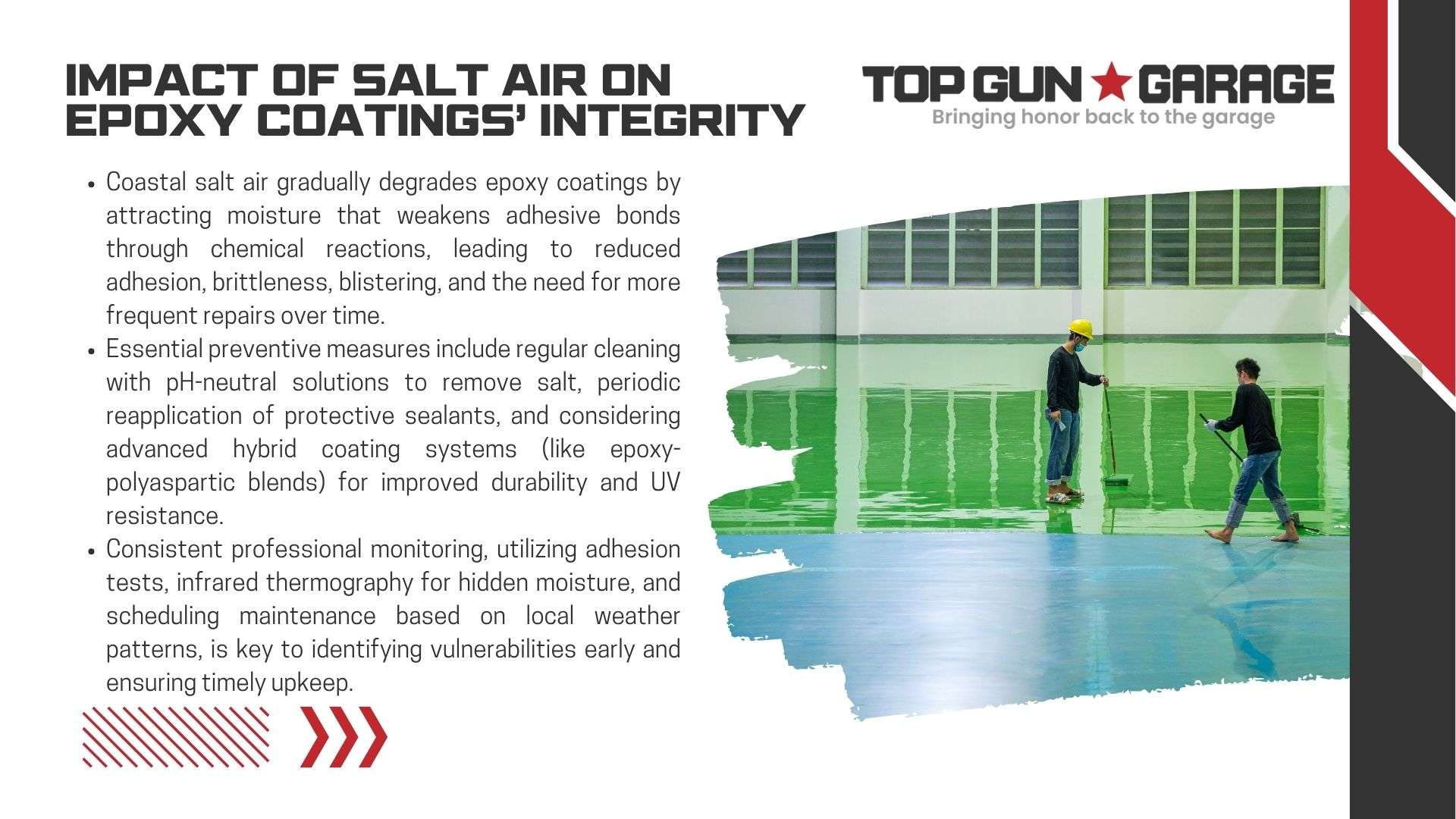
Impact of Salt Air on Epoxy Coatings’ Integrity
Over months and years, coastal atmospheres gradually compromise protective layers through persistent chemical interactions. Microscopic salt deposits accumulate on surfaces, creating pathways for moisture infiltration that weaken structural bonds. This slow erosion process demands proactive strategies to preserve material performance.Degradation Over Time
Research reveals coatings lose 35% of their adhesion strength after 18 months in salt-rich environments. Chloride ions penetrate microscopic cracks, reacting with substrate materials to form corrosive byproducts. These reactions cause visible blistering and edge lifting as layers separate from concrete. Extended exposure alters resin flexibility, making surfaces brittle. A study comparing industrial floors showed coastal installations required repairs 2.3 times more frequently than inland counterparts. Regular inspections detect early signs like cloudiness or texture changes before major failures occur.Preventive Measures to Enhance Durability
Weekly cleaning with pH-neutral solutions removes salt residues before they crystallize. High-pressure rinsing followed by immediate drying prevents moisture retention. Reapplying polyurethane sealants every 24 months restores protective barriers compromised by environmental stress. Advanced hybrid systems combine epoxy’s strength with polyaspartic’s UV resistance. These products demonstrate 40% longer lifespan in accelerated weathering tests. Installers recommend:- Quarterly adhesion tests using pull-off meters
- Humidity-controlled storage for maintenance supplies
- Infrared thermography to detect hidden moisture
Influence of Humidity and Moisture on Epoxy Performance
Ambient humidity plays a critical role in determining how coatings cure and perform long-term. Excess moisture disrupts chemical reactions between resins and hardeners, leading to uneven textures and weak bonds. Controlling environmental factors ensures materials achieve their full protective potential.Managing the Curing Process
High humidity slows evaporation rates, trapping water vapor beneath epoxy layers. This creates cloudy patches and reduces adhesion strength by up to 30%. Studies show optimal epoxy floor cure time occurs between 65-85°F with 40-60% relative humidity.| Condition | Impact | Solution |
|---|---|---|
| Above 70% humidity | Extended curing time | Dehumidifiers |
| Below 50°F | Incomplete hardening | Space heaters |
| Rapid temperature shifts | Surface cracks | Climate control |
Implementing Best Practices in Epoxy Floor Maintenance
Maintaining surfaces in coastal regions demands strategic care to counteract environmental stressors. Proactive routines preserve aesthetics and structural integrity, especially in high-traffic spaces like garages. Industry leaders emphasize three pillars: consistent cleaning, timely resealing, and professional oversight.Daily and Seasonal Care Strategies
Expert-recommended steps prevent debris buildup and moisture damage. Sweep floors daily using soft-bristle brooms to avoid scratches. For spills, pH-neutral cleaners remove oils without degrading protective layers. Pressure wash quarterly, focusing on corners where salt residues accumulate.| Task | Frequency | Key Benefit |
|---|---|---|
| Sealant Inspection | Every 6 Months | Prevents Water Infiltration |
| Deep Cleaning | Quarterly | Removes Embedded Contaminants |
| Professional Assessment | Annually | Identifies Hidden Wear |
Expert Recommendations from Top Gun Garage
Professional installers combat coastal challenges through precision tools and tailored methods. Top Gun Garage technicians use climate-controlled equipment to manage curing variables, ensuring consistent results despite humidity spikes. Their approach combines technical expertise with region-specific strategies.Specialized Equipment and Installation Tips
High-grade dehumidifiers and infrared heaters maintain optimal workspace conditions during the process. These tools prevent condensation buildup beneath coatings, a common issue in coastal zones. Multi-stage grinding systems prepare surfaces to exact specifications, removing hidden contaminants.| Standard Tools | Specialized Equipment | Benefit |
|---|---|---|
| Basic Grinders | Diamond-Embedded Heads | Removes Salt Residue |
| Portable Fans | Industrial Dehumidifiers | Controls Moisture |
| Manual Mixers | Programmable Dispensers | Ensures Proper Ratios |
Local Expertise in Tackling Coastal Challenges
A recent Naples yacht club project demonstrated these methods. Crews used vapor barriers and moisture-wicking primers to address persistent peeling issues. Post-installation inspections revealed 98% adhesion retention after 18 months. Key steps from local experts:- Test surfaces for chloride levels before grinding
- Apply sealants during low-humidity morning hours
- Use UV lamps to stabilize curing environments
Additional Considerations: Material Selection and Cost Efficiency
Selecting the right materials determines whether coatings withstand coastal climates. Premium epoxy formulations with anti-chloride additives outperform standard options by 60% in accelerated corrosion tests. These specialized products form tighter molecular bonds, resisting salt infiltration better than basic resins. Additives like calcium carbonate enhance durability without significant cost increases. Studies show fillers improve scratch resistance by 22% and reduce moisture absorption by 35%. Flexible polymers in hybrid systems accommodate substrate movement caused by humidity shifts.| Formulation | Chloride Resistance | Cost per Sq Ft |
|---|---|---|
| Standard Epoxy | Low | $2.50 |
| Calcium Carbonate Blend | Moderate | $3.20 |
| Chloride-Blocking Hybrid | High | $4.80 |
- Prioritize moisture-tolerant primers in high-humidity zones
- Use infrared testing to identify substrate challenges early
- Consult technicians familiar with local climate patterns
Conclusion
Protective surfaces in coastal zones require tailored strategies to combat environmental stressors. Humidity, temperature shifts, and airborne contaminants create cumulative impacts that challenge standard coatings. Proper installation practices and routine care prove essential for preserving surface integrity. Top Gun Garage emphasizes climate-specific solutions, including advanced materials and precise application techniques. Their local expertise addresses unique challenges faced by properties in corrosive environments. Regular maintenance—like removing years of oil stains—prevents premature wear. Adequate ventilation during curing and daily use reduces moisture buildup, protecting against adhesion issues. High-traffic areas benefit from pH-neutral cleaners and prompt spill management. These practices minimize long-term damage while maintaining visual appeal. Proactive measures significantly extend coating lifespans despite harsh conditions. Property owners should prioritize professional assessments to address vulnerabilities early. For resilient results, contact Top Gun Garage at (239) 488-7000 to explore durable solutions tailored to coastal demands.FAQ
What environmental factors degrade epoxy coatings in coastal regions?
High humidity, salt particles in the air, and temperature fluctuations accelerate wear. These elements weaken adhesion over time, leading to bubbling or peeling if not properly addressed during installation.
Can epoxy floors withstand prolonged exposure to salt air?
High-quality epoxy products with UV resistance and anti-corrosive additives perform better in coastal climates. Regular maintenance, including sealant reapplication, further protects against chloride infiltration and surface degradation.
How does humidity impact the curing process for garage floors?
Moisture levels above 85% hinder proper curing, causing cloudy finishes or weak bonds. Professionals use moisture meters and dehumidifiers to ensure optimal conditions before applying coatings in garages.
What cleaning methods preserve epoxy integrity in salty environments?
Mild pH-neutral cleaners and soft-bristle brooms remove contaminants without damaging the finish. Immediate cleanup of spills like oil or calcium chloride deposits prevents stains and chemical reactions.
Why do some installations fail despite proper surface preparation?
Incompatible primers, incorrect mixing ratios, or insufficient ventilation during application often cause premature failures. Top Gun Garage uses industrial-grade materials and climate-controlled equipment to mitigate these risks.
Are certain epoxy finishes better suited for Naples homes?
Polyaspartic blends and 100% solid epoxy coatings excel in humid, salt-rich climates. These materials resist moisture absorption and provide a thicker protective layer compared to standard options.
How often should coastal property owners reseal their floors?
Annual inspections and resealing every 2–3 years maintain protection against salt corrosion. High-traffic garages or areas near pools may require more frequent treatments.
What role does ventilation play in preventing coating issues?
Proper airflow reduces condensation during curing and minimizes long-term moisture buildup. Installing vents or dehumidifiers in enclosed spaces like garages enhances durability against environmental stressors.