 Skip to content



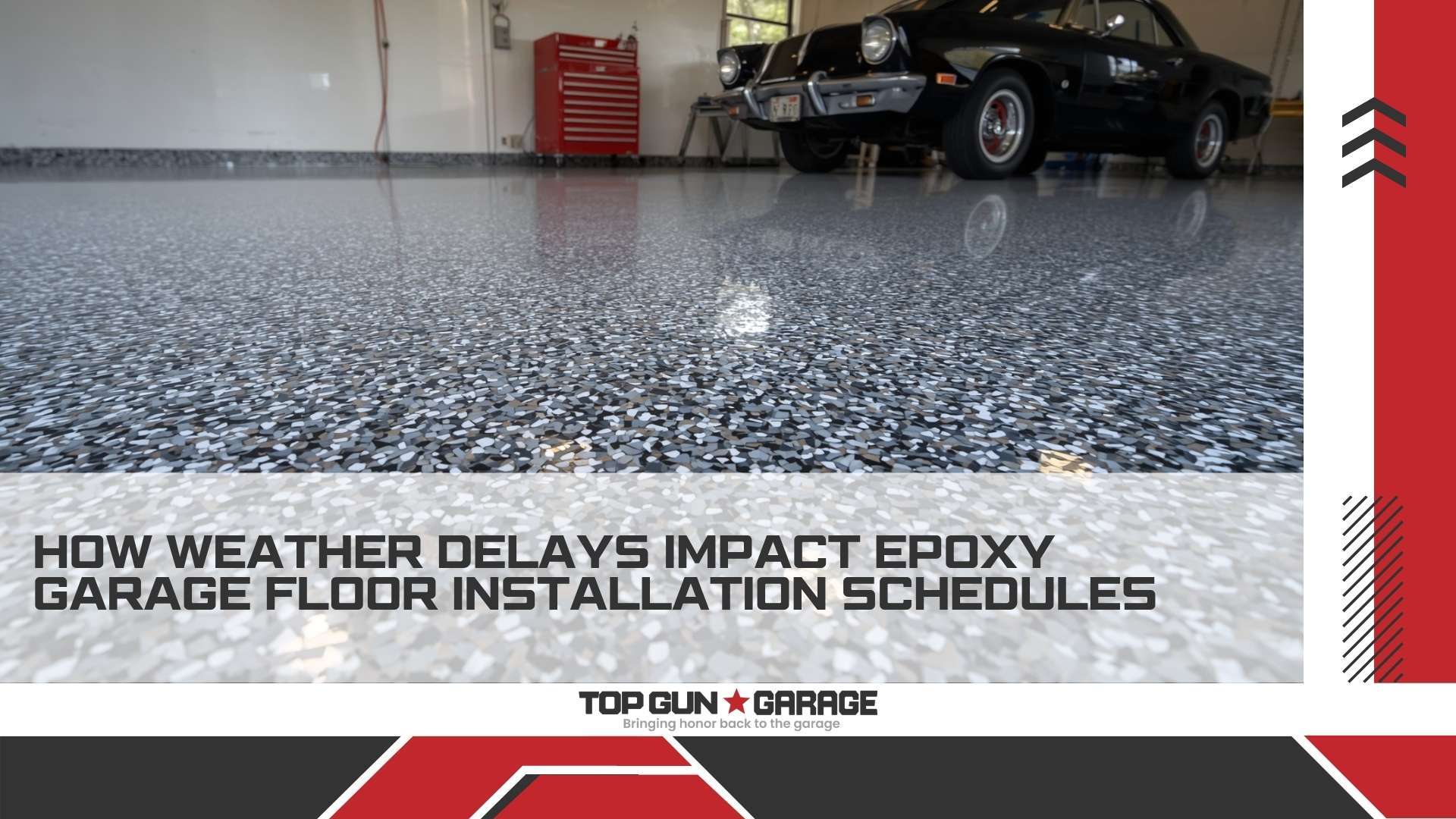
A single afternoon thunderstorm or an unexpected cold snap can push your epoxy garage floor installation back by days—sometimes weeks. The chemical curing process of epoxy coatings is highly sensitive to ambient conditions, and ignoring weather forecasts is the fastest way to end up with peeling, bubbling, or a cloudy finish known as amine blush. Professional installers in 2026 rely on precision environmental monitoring to determine application windows, but even the best planning cannot override nature. Understanding exactly how temperature, humidity, and moisture interact with epoxy resin gives you the power to schedule intelligently and avoid costly rework.
Key Takeaways
- Epoxy coatings require a concrete slab temperature between 50°F and 90°F for proper adhesion and curing.
- Relative humidity above 75% dramatically increases the risk of amine blush and intercoat delamination.
- Moisture vapor transmission through the slab can lift epoxy within months if not tested before application.
- Rain, fog, and morning dew introduce surface moisture that prevents the mechanical bond needed for long-term durability.
- Polyaspartic and other rapid-cure systems offer shorter vulnerability windows but still have strict environmental limits.
- Professional contractors use digital hygrometers, infrared thermometers, and dew point calculators to validate conditions hourly.
- Building a weather buffer into your project timeline prevents rushed applications and ensures warranty compliance.
The Science Behind Epoxy Curing and Weather Sensitivity
Epoxy is a thermosetting polymer formed by the exothermic reaction between resin and hardener. This reaction generates heat and cross-links molecular chains into a rigid, durable film. However, the rate of that reaction is governed almost entirely by ambient temperature and the temperature of the concrete substrate. According to the American Concrete Institute, concrete slabs act as thermal masses that lag behind air temperature by several hours, meaning a warm afternoon does not guarantee a warm floor if the previous night was cold.
When the slab temperature drops below 50°F, the chemical reaction slows to a crawl. Viscosity increases, preventing proper flow and leveling, and the coating may remain tacky for days. Conversely, when slab temperature exceeds 90°F, the pot life of mixed epoxy can shrink from 40 minutes to under 15 minutes, causing the material to set before it can be properly squeegeed and back-rolled. Research from the Coatings Research Institute at Eastern Michigan University confirms that applying epoxy outside the manufacturer’s specified thermal window reduces bond strength by up to 40%.
Temperature Thresholds: The 50–90°F Rule
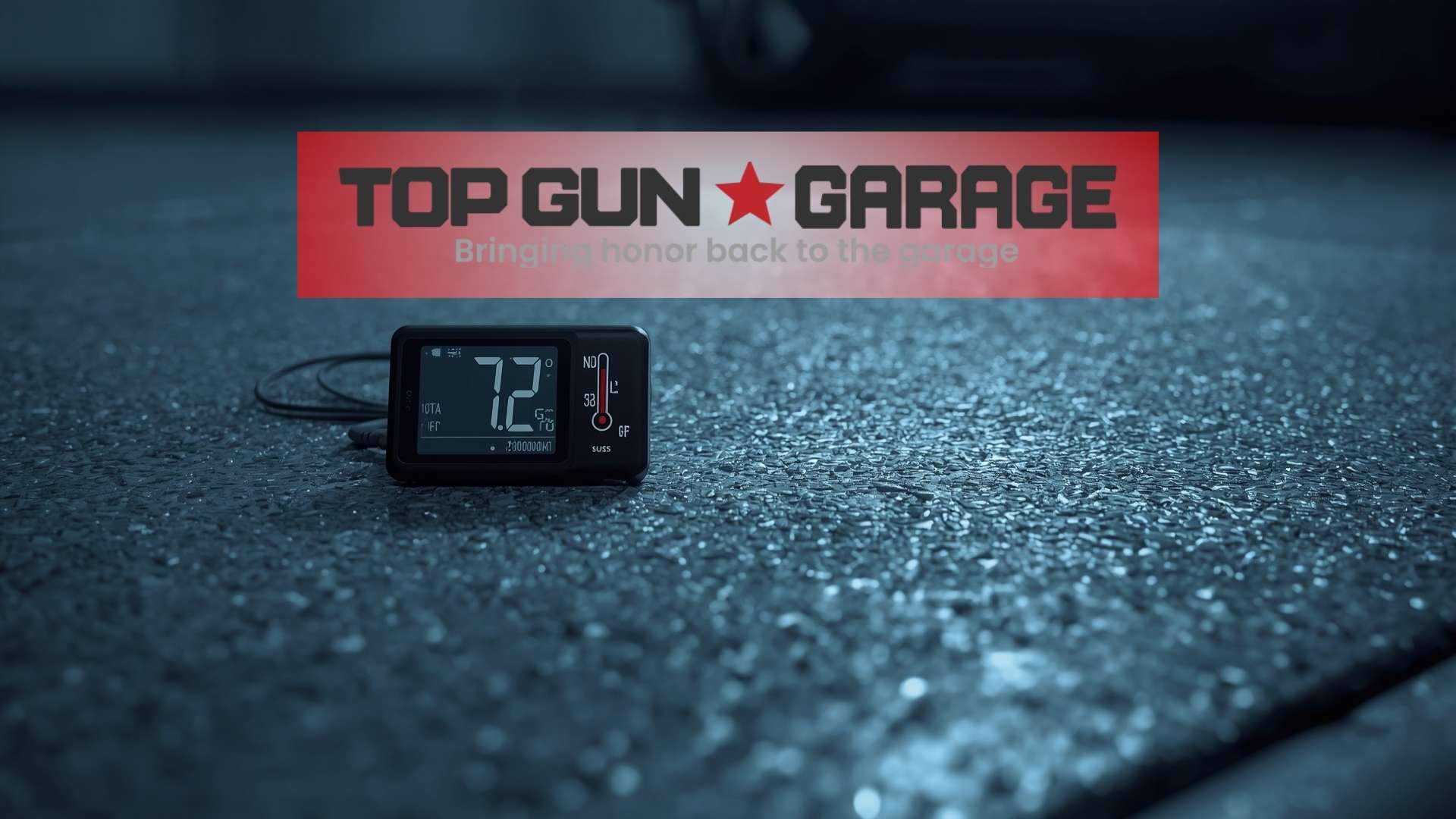
Every epoxy manufacturer publishes a technical data sheet with a recommended application temperature range. The industry standard for 100%-solids epoxy garage floor coatings is a substrate temperature between 50°F and 90°F. This is not the air temperature in the garage—it is the temperature of the concrete itself, measured with an infrared surface thermometer. A common mistake among DIY installers is checking the weather app and assuming the slab is within range. In early spring, a concrete slab can remain 10–15°F colder than the air for hours after sunrise.
As Sarah Jenkins, Senior Coatings Chemist at Protective Polymer Technologies, explains: “The exothermic reaction in epoxy is predictable only within a narrow thermal band. Outside that band, you’re not just risking cosmetic defects—you’re fundamentally altering the cross-link density. A floor that cures at 45°F may look fine for six months, but it will never achieve its designed compressive strength or chemical resistance.”
Cold Weather Complications
In regions with cold winters, installers face a compressed season. The slab must be above 50°F not just during application, but for the entire initial cure window—typically 12 to 24 hours for a walk-on cure and 72 hours for light vehicle traffic. Temporary heating solutions like propane or kerosene heaters introduce another hazard: combustion byproducts. Unvented heaters release carbon dioxide and water vapor, which can react with amines in the hardener to create amine blush, a waxy, whitish film that prevents proper intercoat adhesion.
Electric infrared heaters and hydronic slab heating systems are safer alternatives, but they must be operated for at least 48 hours before application to bring the entire slab mass to temperature evenly. Spot-heating only the surface creates thermal gradients that cause uneven curing and stress cracks in the film.
Extreme Heat and Rapid Curing
In southern climates, summer garage temperatures routinely exceed 100°F. At these temperatures, mixed epoxy can exotherm violently in the bucket, generating enough heat to smoke or even ignite in extreme cases. Installers combat this by chilling the resin and hardener components before mixing, working in smaller batches, and applying during the coolest part of the day—typically pre-dawn. The impact of Florida heat on garage floors is well-documented, and professional crews in these regions often shift to polyaspartic coatings during July and August because of their wider thermal tolerance.
Humidity, Dew Point, and Amine Blush
Relative humidity above 75% is the most common cause of epoxy floor failures that manifest weeks after installation. The mechanism is straightforward: as the mixed epoxy cures, amine hardeners migrate to the surface. In dry conditions, they react normally. In high humidity, they react with atmospheric moisture and carbon dioxide to form ammonium carbamate salts—the white, greasy film known as amine blush. This film is water-soluble but often invisible during application, only appearing as a haze after the floor is exposed to traffic.
According to a 2026 technical bulletin from the Coatings Research Group, amine blush reduces intercoat adhesion by 60–80% if not completely removed before applying a topcoat. The only reliable removal method is washing the entire surface with warm water and a mild acid solution, then allowing it to dry completely—adding at least 24 hours to the schedule.
The Dew Point Calculation
Professional installers do not rely on relative humidity alone. They calculate the dew point—the temperature at which moisture condenses out of the air—and ensure the slab temperature is at least 5°F above that dew point. If the slab is cooler than the dew point, invisible condensation forms on the surface, preventing the epoxy from bonding. This is why early morning applications in coastal areas are risky: the slab may have cooled overnight below the dew point, and even if the air feels dry, the concrete is coated in a micro-layer of water.
As Mark Delgado, Project Manager at Coastal Epoxy Systems, notes: “We’ve had to delay starts on 30% of our scheduled days in the Gulf Coast region during summer months. The combination of 90% humidity and air-conditioned slabs that drop below dew point overnight creates a window that might not open until 10 a.m. and closes again by 2 p.m. when thunderstorms roll in.”
Moisture Vapor Transmission: The Hidden Schedule Killer
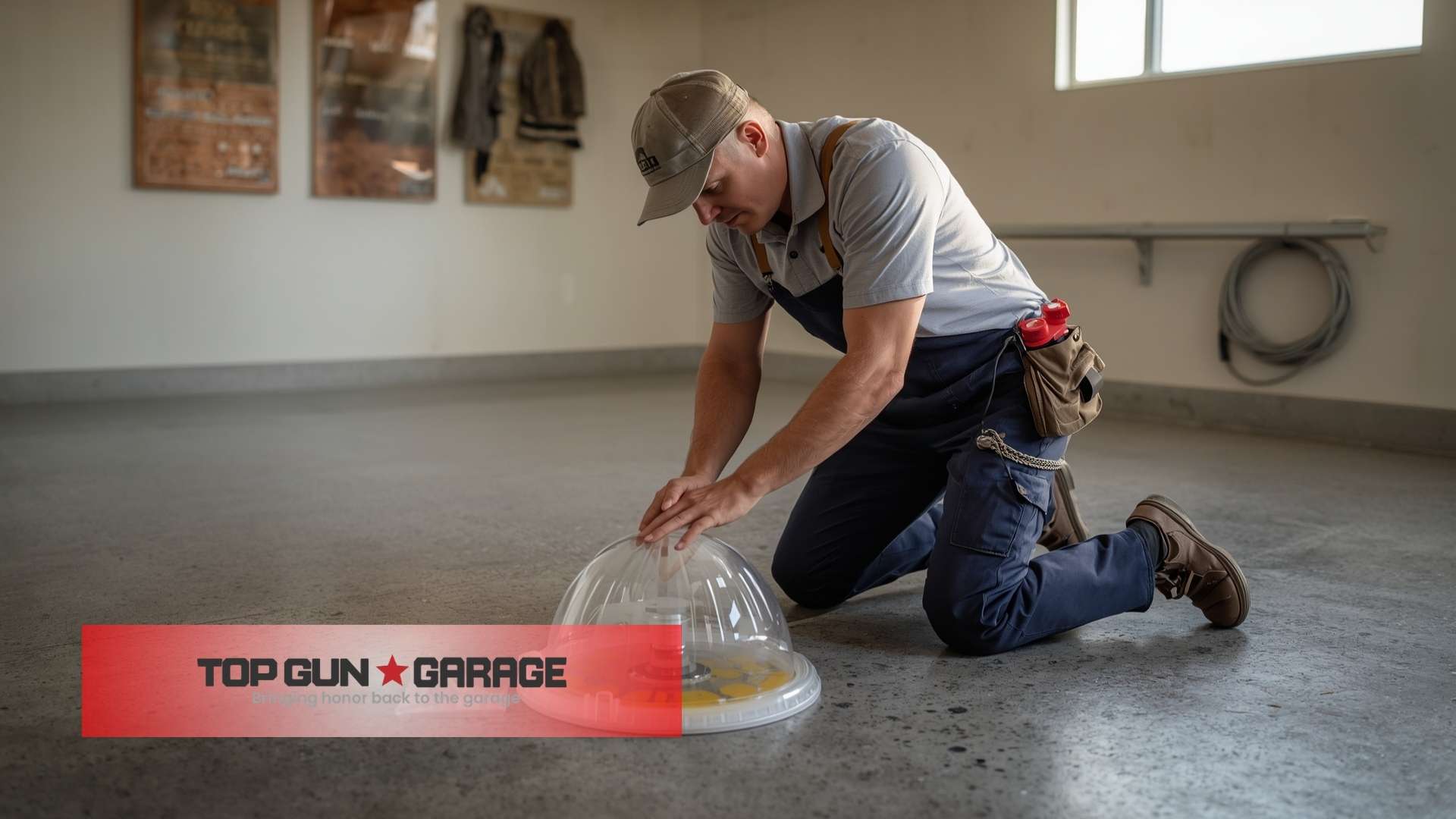
Even when surface conditions are perfect, moisture migrating up through the concrete slab from the ground below can destroy an epoxy floor. This phenomenon, called moisture vapor transmission (MVT), is measured in pounds of water vapor per 1,000 square feet per 24 hours. Most epoxy manufacturers require an MVT rate below 3 lbs/1,000 sq ft/24 hrs. Readings above 5 lbs almost guarantee delamination within the first year.
The standard test is ASTM F1869, the calcium chloride test, which takes 60–72 hours to complete. If the test reveals high MVT, the installation schedule must be paused while a moisture mitigation system is applied—typically a penetrating epoxy primer or a reactive moisture barrier. This adds 24–48 hours to the timeline. Skipping this test to stay on schedule is a gamble that fails more often than it succeeds. The challenges of humidity in Fort Myers epoxy installations highlight exactly this risk, where high water tables make MVT testing non-negotiable.
Rain, Fog, and Surface Contamination
Direct rain is an obvious showstopper—water on the slab means no epoxy application. But the less obvious threats are fog, morning dew, and high winds that carry dust and debris. A garage with an open door during a windy day can accumulate a fine layer of silica dust, pollen, or salt spray that acts as a bond breaker between the epoxy and the concrete. In coastal areas, salt-laden air accelerates corrosion of any exposed rebar and can contaminate the surface within hours of grinding.
The concrete preparation process itself—diamond grinding or shot blasting—creates a pristine, porous surface ideal for mechanical adhesion. But that surface is also highly vulnerable to contamination. Once ground, the slab should be coated within 24 hours. If weather delays push that window beyond 48 hours, the surface may need to be re-ground lightly to remove oxidized laitance and adsorbed moisture. This adds labor cost and time.
Seasonal Planning for Different Regions
In the Northeast and Midwest, the epoxy season traditionally runs from May through October. April and November are marginal months where daytime temperatures might reach 60°F but nighttime lows dip into the 30s, chilling the slab below the 50°F threshold. In the Pacific Northwest, the challenge is not temperature but persistent moisture—installers often schedule work for July through September, the only reliably dry months.
In the Southeast and Gulf Coast, the limiting factor is summer humidity and afternoon thunderstorms. The optimal windows are spring and fall, when temperatures are moderate and humidity is lower. Florida installers frequently recommend understanding how seasonal changes affect epoxy floors to plan around hurricane season and daily summer downpours.
Polyaspartic and Rapid-Cure Alternatives
Polyaspartic coatings have gained significant market share because they cure faster and tolerate a wider temperature range—some formulations can be applied at slab temperatures as low as 30°F and as high as 120°F. However, this does not make them weather-proof. Polyaspartics still require a dry surface and are subject to the same dew point constraints. Their rapid cure time—often walkable in 2–4 hours—reduces the window of vulnerability but also demands faster, more skilled application. A crew that hesitates can lose an entire batch to premature gelation.
The performance differences between epoxy and polyaspartic systems are significant, but both technologies share a fundamental requirement: the concrete must be dry, clean, and within the manufacturer’s specified temperature range. No coating chemistry can overcome a wet slab or a dew point violation.
Real-World Scheduling: A Case Study
Consider a 600-square-foot residential garage in a coastal Florida community scheduled for a full broadcast epoxy system in August 2026. The initial installation date was set for a Monday. The crew arrived at 7 a.m. to find the slab temperature at 78°F—within range—but the dew point at 76°F, leaving only a 2°F spread. By 9 a.m., the spread had widened to 6°F as the slab warmed, and grinding began. At 1 p.m., a thunderstorm rolled in, raising humidity to 92% and dropping the slab temperature. The crew had to stop after completing only the primer coat.
The primer cured overnight, but Tuesday morning brought fog and a dew point violation until 10 a.m. The base coat was applied by noon, but another storm at 3 p.m. forced a halt before the flake broadcast. Wednesday was a complete washout. The topcoat was finally applied on Thursday morning, and the floor was ready for light foot traffic by Friday. What should have been a two-day installation stretched to five days—not because of any contractor error, but because weather dictated every step.
How to Build a Weather Buffer Into Your Project
Homeowners and facility managers can take several practical steps to minimize weather-related delays. First, schedule installations during historically stable weather periods for your region. Second, ensure the garage is enclosed—functioning garage doors, sealed windows, and no open vents—to give the crew control over the environment. Third, if possible, run a dehumidifier in the space for 48 hours before the scheduled start date to drive down ambient moisture.
Fourth, insist on a pre-installation moisture test. A reputable contractor will perform a calcium chloride test or use an in-situ relative humidity probe per ASTM F2170. If the results are marginal, budget for a moisture mitigation primer. Fifth, build at least two buffer days into your schedule. A professional crew will communicate clearly about weather holds, and a client who understands the science is far less frustrated by delays than one who sees them as arbitrary.
Checklist: Pre-Installation Weather Verification
- Measure slab temperature with an infrared thermometer at multiple points across the floor.
- Record ambient air temperature and relative humidity with a calibrated digital hygrometer.
- Calculate dew point using a psychrometric chart or digital dew point meter.
- Confirm slab temperature is at least 5°F above dew point.
- Verify slab temperature is within the manufacturer’s specified range (typically 50–90°F).
- Check the 48-hour weather forecast for rain, fog, or extreme temperature swings.
- Perform ASTM F1869 calcium chloride test or ASTM F2170 RH probe test for MVT.
- Inspect the slab for visible moisture, condensation, or efflorescence.
- Ensure the garage is enclosed and protected from wind-driven rain and dust.
- Document all readings with time-stamped photos for warranty records.
Common Mistakes That Compound Weather Delays
One of the most frequent errors is attempting to accelerate curing with space heaters that introduce moisture. Another is applying epoxy late in the day when falling temperatures risk condensation before the coating skins over. Some DIY installers mistakenly believe that thinning epoxy with solvent will improve flow in cold weather—this violates the manufacturer’s formulation, voids warranties, and creates a fire hazard. The value of professional epoxy floor coating becomes clear when weather complications arise, because experienced crews recognize the warning signs and make the call to delay rather than risk a failed floor.
Another critical mistake is neglecting the garage door threshold seal. An unsealed threshold allows wind-driven rain to blow under the door and pool on the slab, even in an otherwise enclosed garage. The interaction between garage door thresholds and epoxy flooring is often overlooked, but a proper seal is essential for protecting the installation from weather intrusion during the curing period and beyond.
Warranty Implications of Weather-Compromised Installations
Most manufacturer warranties explicitly exclude damage caused by application outside specified environmental conditions. If a floor fails due to amine blush, delamination, or soft cure, and the contractor’s records show that temperature or humidity were out of range during application, the warranty claim will be denied. Professional installers maintain detailed job logs with environmental readings taken every two hours throughout the project. These logs are the first line of defense in a warranty dispute and are increasingly required by insurers.
According to data from the National Association of Home Builders, flooring-related callbacks are among the top five warranty claims for new construction, and a significant percentage of those involve coating failures linked to moisture or temperature issues. The cost of a full removal and replacement of a failed epoxy floor ranges from $4 to $8 per square foot—often more than the original installation.
Climate-Adaptive Formulations and Emerging Technologies
The coatings industry is responding to climate challenges with new formulations. Moisture-tolerant epoxies can bond to concrete with MVT rates up to 10 lbs, though they are more expensive and have shorter pot lives. UV-stable aliphatic urethane topcoats resist yellowing in sun-exposed garages. And smart sensors embedded in the slab during construction can now transmit real-time temperature and humidity data to contractors’ phones, allowing remote monitoring of cure conditions.
Research from the University of Florida’s Department of Civil Engineering, published in 2026, demonstrates that graphene-enhanced epoxy formulations exhibit 30% greater tolerance to high-humidity application conditions compared to traditional bisphenol-A epoxies. These advanced materials are entering the commercial market and may significantly reduce weather-related delays in the coming years.
Frequently Asked Questions
Can epoxy be applied in cold weather if I heat the garage?
Yes, but only if the concrete slab itself is heated to at least 50°F and maintained at that temperature for the full cure cycle. Space heaters that burn fossil fuels introduce moisture and carbon dioxide that cause amine blush, so electric infrared or hydronic systems are required. The slab must be heated evenly for 48 hours before application to avoid thermal gradients.
How long after rain can epoxy be applied?
The concrete slab must be completely dry, which typically requires 24–48 hours after rain, depending on humidity and airflow. A moisture meter or calcium chloride test is the only reliable way to confirm dryness. Even if the surface appears dry, subsurface moisture can cause delamination. In humid climates, a dehumidifier may be necessary to achieve acceptable conditions.
What happens if epoxy gets wet during curing?
Water contact during the initial cure can cause whitening, blushing, loss of gloss, and compromised intercoat adhesion. If rain hits uncured epoxy, the affected area must be sanded, cleaned, and recoated. In severe cases, the entire floor may need to be stripped and reapplied. This is why professional crews monitor radar and have contingency plans for sudden storms.
Is humidity or temperature more critical for epoxy installation?
Both are critical, but humidity is often the more insidious threat because its effects may not be visible immediately. Temperature outside the specified range causes obvious problems like slow cure or short pot life. High humidity causes amine blush, which can remain invisible until the topcoat is applied and then cause delamination weeks later. The dew point relationship between temperature and humidity is the key metric professionals monitor.
Can I install epoxy in a garage without climate control?
Yes, but you are entirely dependent on weather conditions. An unconditioned garage in a region with stable, moderate weather may be suitable for epoxy installation during certain seasons. However, the lack of climate control means the installation window is narrower and more vulnerable to unexpected weather changes. Enclosing the garage and using temporary environmental controls significantly improves scheduling reliability.
What is the best season for epoxy garage floor installation?
The optimal season depends on your geographic region. In northern climates, late spring through early fall (May–October) offers the most reliable temperature and humidity conditions. In southern coastal regions, spring and fall avoid the extreme humidity of summer and the occasional cold snaps of winter. Desert regions can install year-round with proper attention to high-temperature pot life limitations.
How do professionals test for moisture before installation?
Professionals use two primary methods: the ASTM F1869 calcium chloride test, which measures moisture vapor emission rate over 60–72 hours, and the ASTM F2170 in-situ relative humidity probe test, which measures internal slab moisture. Many also use handheld impedance moisture meters for quick surface scans, though these are less definitive. A comprehensive moisture assessment is standard practice for any reputable installer.
Does polyaspartic flooring have the same weather restrictions as epoxy?
Polyaspartic coatings have a wider temperature application range—some can be applied from 30°F to 120°F—and cure much faster, reducing the window of weather vulnerability. However, they still require a dry surface and are subject to dew point constraints. They are not immune to moisture-related adhesion failures. The faster cure time demands greater skill from the installation crew.
Conclusion
Weather delays in epoxy garage floor installation are not a sign of contractor incompetence—they are a sign of professionalism. The chemistry of epoxy curing is unforgiving, and the difference between a floor that lasts 20 years and one that fails in 20 months often comes down to the decision to wait an extra day for conditions to improve. By understanding temperature thresholds, humidity limits, dew point calculations, and moisture vapor transmission, you can plan your project with realistic expectations and avoid the frustration of unexpected delays. The investment in proper environmental preparation—moisture testing, temporary climate control, and scheduling buffer days—pays for itself many times over by preventing coating failures and warranty disputes. If you are considering a garage floor upgrade and want to ensure your installation is scheduled for success, contact our team today for a professional consultation that accounts for your local climate and seasonal weather patterns.
References
- American Concrete Institute. “Guide to Concrete Floor and Slab Construction.” ACI
- Coatings Research Institute, Eastern Michigan University. “Effects of Application Temperature on Epoxy Bond Strength.” EMU Coatings Research Institute
- Coatings Research Group. “Technical Bulletin: Amine Blush in Epoxy Coatings.” Coatings Research Group
- ASTM International. “ASTM F1869: Standard Test Method for Measuring Moisture Vapor Emission Rate of Concrete Subfloor.” ASTM
- ASTM International. “ASTM F2170: Standard Test Method for Determining Relative Humidity in Concrete Floor Slabs.” ASTM
- National Association of Home Builders. “Warranty Claims and Callbacks in Residential Construction.” NAHB
- University of Florida, Department of Civil Engineering. “Graphene-Enhanced Epoxy Formulations for High-Humidity Applications.” University of Florida
- Protective Polymer Technologies. “Technical Data Sheet: 100%-Solids Epoxy Garage Floor Coating.” Protective Polymer Technologies