 Skip to content



Surface profiling is the single most decisive factor determining whether an epoxy garage floor installation succeeds or fails. Without creating the correct anchor profile on the concrete substrate, even the highest-quality resinous coating will delaminate, peel, or blister within months. The process transforms a smooth, non-porous concrete surface into a textured, receptive canvas that allows the epoxy primer to achieve a mechanical bond measured in hundreds of pounds per square inch. Skip this step, and you are essentially painting on glass.
Key Takeaways
- Surface profiling creates a mechanical anchor profile (CSP 2-4) essential for epoxy adhesion.
- Acid etching is outdated and risky; mechanical grinding or shot blasting delivers superior, consistent results.
- Moisture vapor transmission testing must accompany profiling to prevent osmotic blistering.
- Profiling exposes hidden concrete defects like micro-cracks, laitance, and curing compounds that sabotage bonding.
- The International Concrete Repair Institute (ICRI) CSP standards provide measurable benchmarks for proper texture.
- Professional contractors invest in dust-contained diamond grinders and shot blasters, achieving profiles impossible with rental equipment.
- Proper profiling extends the service life of an epoxy floor from 2-3 years to well over 15 years.
The Science of Mechanical Adhesion
Epoxy coatings do not soak into concrete like a stain. They form a film that relies entirely on physical interlocking with the substrate. When liquid epoxy primer flows over a properly profiled surface, it penetrates microscopic valleys, pores, and ridges. As it cures, it hardens into a solid polymer that is physically locked into the concrete. According to the American Concrete Institute, this mechanical interlock can generate bond strengths exceeding 400 psi when the concrete is prepared to a CSP 3 profile. Without profiling, the bond relies on weak surface adhesion that rarely exceeds 50 psi.
Dr. Elena Marchetti, Senior Materials Scientist at Sika Corporation, explains: “Think of surface profiling as creating thousands of tiny dovetail joints across the concrete. The epoxy flows in, cures, and becomes an inseparable part of the floor. Without those undercuts and peaks, you’re relying on chemical adhesion alone, which is always the weakest link in the system.”
What Is Concrete Surface Profile (CSP)?
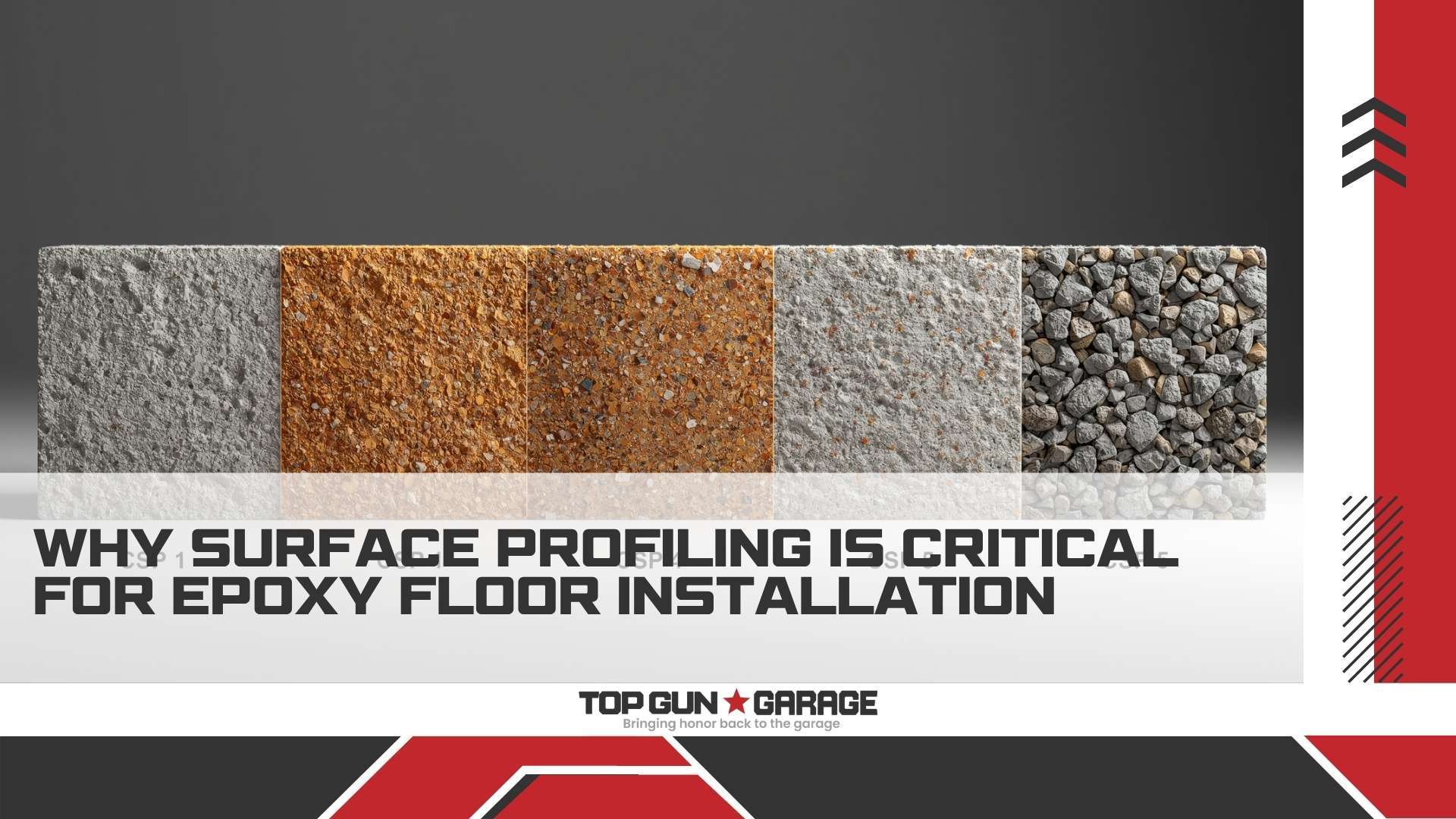
The International Concrete Repair Institute (ICRI) developed the Concrete Surface Profile (CSP) scale to standardize surface preparation. This scale, ranging from CSP 1 (nearly smooth) to CSP 10 (extremely rough), provides visual and tactile benchmarks. For thin-film epoxy and polyaspartic systems under 20 mils, a CSP 2 to CSP 3 is the industry standard. This profile resembles medium-grit sandpaper — rough to the touch but without exposed large aggregate.
For high-build or self-leveling epoxy mortar systems applied at 1/8 inch or thicker, a CSP 4 to CSP 5 is necessary. This exposes small aggregate and creates a much more aggressive texture. Using the wrong profile for your coating thickness leads to two failure modes: too smooth and the coating delaminates; too rough and the coating requires excessive material to fill the profile, leading to pinholes and outgassing bubbles.
Profiling Methods: Grinding vs. Shot Blasting vs. Acid Etching
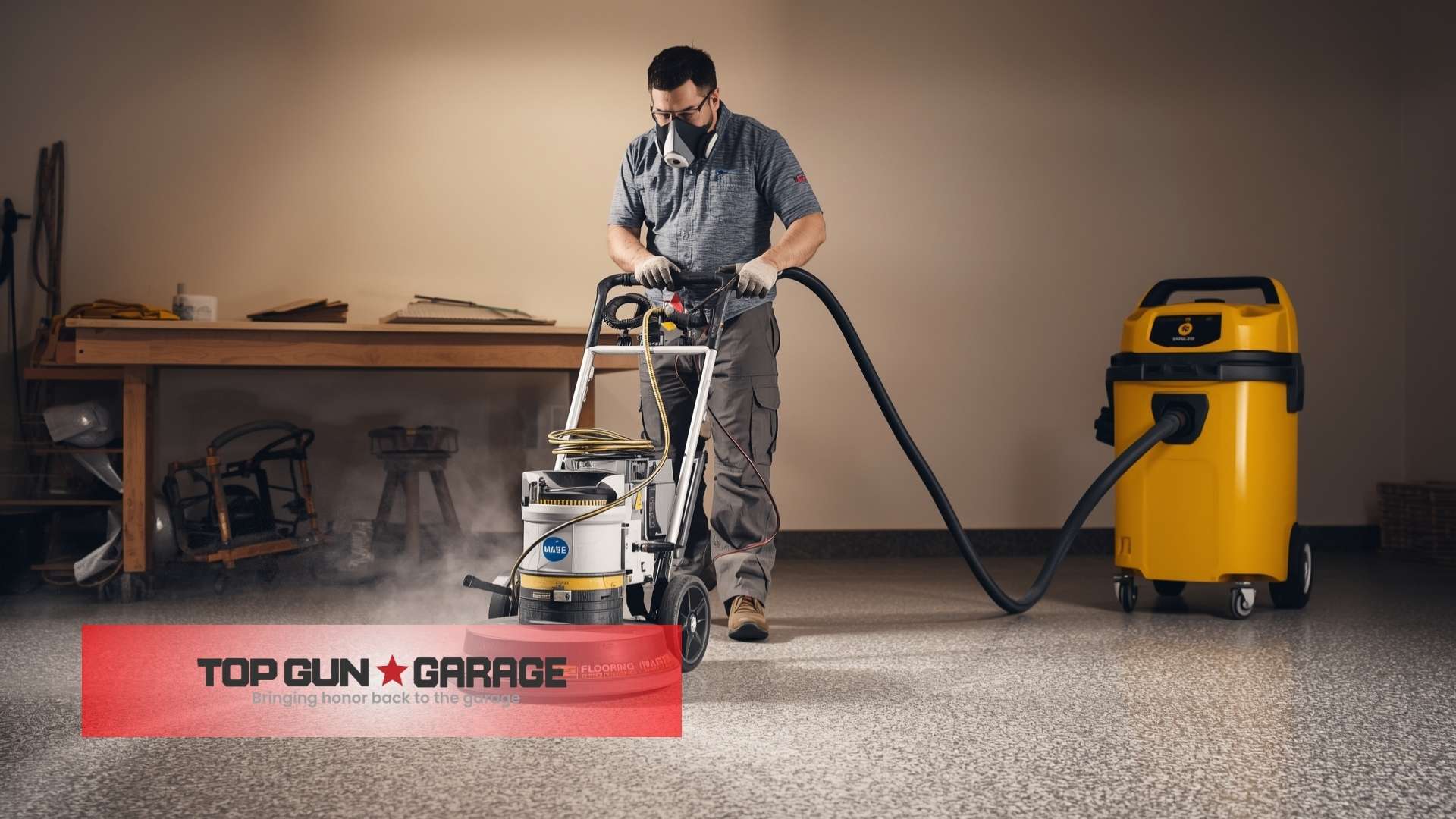
Three primary methods exist for profiling concrete, and they are not interchangeable. Each produces a distinct surface morphology that directly impacts epoxy adhesion and final appearance.
| Method | CSP Achieved | Dust Control | Best Application | Risk Factor |
|---|---|---|---|---|
| Diamond Grinding | CSP 2-4 | Excellent (HEPA vacuums) | Residential garages, showrooms | Low |
| Shot Blasting | CSP 3-7 | Excellent (closed-loop) | Commercial, industrial, thick coatings | Low-Medium |
| Acid Etching | CSP 1-2 (inconsistent) | None | Budget DIY (not recommended) | High |
Acid etching, once the go-to DIY method, uses muriatic or phosphoric acid to dissolve the cement paste and expose sand particles. Research from the Portland Cement Association confirms that acid etching creates an inconsistent profile heavily dependent on concrete mix design, age, and surface contamination. It also introduces moisture and chemical residues that must be thoroughly neutralized and rinsed. Failure to completely remove acid residues leads to a phenomenon called saponification, where the alkaline concrete reacts with acidic remnants to form a soapy layer that destroys adhesion.
Marcus Chen, Lead Technician at Top Gun Garage, states: “We abandoned acid etching over a decade ago. The liability of acid burns, the environmental disposal issues, and the unpredictable results make it a non-starter for professional epoxy garage floor installation. Our diamond grinders with HEPA dust extraction give us a perfectly uniform CSP 3 profile every single time, and we can immediately prime after a quick vacuum.”
The Hidden Enemies Profiling Reveals
Profiling is not merely about creating texture. The process exposes several hidden concrete defects that, if left untreated, guarantee coating failure. As the diamond segments or steel shot abrade the surface, they strip away the weak laitance layer — a milky, porous film of cement fines and water that rises to the surface during concrete finishing. Laitance has virtually no compressive strength and must be completely removed.
Profiling also reveals curing compounds, sealers, and densifiers applied during original construction. These chemical barriers are specifically designed to prevent bonding. A water droplet test before profiling might show the concrete absorbing water, but after grinding through the top 1/16 inch, you often discover a hidden sealer that was preventing any mechanical bond. Additionally, micro-cracks, spalling, and delaminated areas become visible, allowing for proper repair with epoxy crack injection or polymer-modified cementitious patches before the coating is applied.
Moisture Vapor Transmission and Profiling
Profiling opens the concrete’s pore structure, which directly impacts moisture vapor transmission (MVT). According to ASTM F2170 standards, relative humidity probes should be inserted into the slab after profiling to get accurate readings at 40% of the slab depth. Unprofiled concrete often gives falsely low moisture readings because the tight surface traps vapor below. Once the profile is opened, the true moisture condition of the slab is revealed.
Industry data shows that approximately 60% of garage slabs in humid climates exceed the 75% relative humidity threshold that most epoxy manufacturers specify. When moisture vapor rises through a profiled slab and encounters an impermeable epoxy coating, it can create hydrostatic pressure exceeding 12 psi — enough to delaminate even a well-bonded coating. This is why humidity management and moisture mitigation primers are essential companions to profiling in regions like Florida.
Step-by-Step: Professional Profiling Process
A proper profiling sequence follows a strict methodology. Skipping any step compromises the entire epoxy garage floor installation.
- Site Assessment and Testing: Conduct a tape adhesion test to check for existing sealers. Perform a moisture vapor emission test using calcium chloride kits (ASTM F1869) or in-situ RH probes (ASTM F2170). Document all cracks, spalls, and contamination.
- Diamond Grinding: Using a planetary grinder with 16/20-grit metal-bond diamonds for initial cut, followed by 30/40-grit for finish profiling. The machine must be connected to a HEPA dust extractor to capture silica dust, complying with OSHA silica standards.
- Edge Profiling: Hand-held angle grinders with 7-inch diamond cup wheels profile the perimeter, corners, and around obstacles where the main grinder cannot reach. This is 30% of the16 total surface area and is where most DIY failures begin.
- Crack Repair: Chase out cracks with a V-groove blade, fill with low-viscosity epoxy injection or semi-rigid polyurea filler. Broadcast silica sand into the wet filler to maintain profile continuity.
- Final Vacuum and Inspection: Triple-pass HEPA vacuuming removes all dust from the profile. A bright LED light raked across the surface reveals any missed spots, swirl marks, or remaining contaminants.
- Primer Application: Apply a penetrating epoxy primer within 4 hours of profiling to prevent moisture absorption and surface contamination from airborne dust.
Common Profiling Mistakes and Their Consequences
Understanding what goes wrong is as important as knowing the correct procedure. These mistakes appear consistently across failed epoxy floors.
- Over-grinding: Using overly aggressive diamonds or lingering too long creates a burnished, polished surface that closes the pores. The concrete becomes glazed and requires re-profiling with a coarser grit to reopen the profile.
- Under-profiling edges: The center of the floor gets a perfect CSP 3, but the 12 inches around the perimeter remain smooth. Coating failure initiates at these edges and propagates inward, often triggered by threshold water intrusion.
- Dust contamination: Profiling generates enormous amounts of respirable silica dust. If this dust is not completely removed, it acts as a bond breaker between the primer and concrete. A single pass with a shop vacuum is insufficient; HEPA extraction during grinding and multiple vacuum passes afterward are mandatory.
- Profiling wet concrete: Grinding concrete that has high moisture content or standing water creates a slurry that smears across the surface, clogging pores and preventing adhesion. The slab must be dry before mechanical profiling begins.
- Ignoring control joints: Saw-cut control joints collect debris, curing compounds, and moisture. They require dedicated profiling with a narrow diamond blade and often benefit from a flexible joint filler compatible with the epoxy system.
Profiling for Different Coating Systems
Not all resinous floors demand the same profile. The coating thickness, chemistry, and intended use dictate the required CSP level. Thin-film epoxy systems (8-12 mils) applied in residential garages require a fine, uniform CSP 2-3 profile. Any aggregate exposure creates high spots that telegraph through the thin coating, appearing as bumps or discoloration.
Full flake broadcast systems, which embed decorative vinyl flakes into a base coat and then seal with a clear topcoat, demand a CSP 3-4 profile. The additional thickness (25-40 mils) and the mechanical interlock of the flakes themselves tolerate a slightly rougher surface. For commercial epoxy flooring systems subject to forklift traffic or chemical exposure, a CSP 4-5 profile achieved through shot blasting provides the necessary anchor for high-build epoxy mortars applied at 1/8 to 1/4 inch thickness.
Polyaspartic and polyurea systems, known for rapid curing, are even less forgiving of inadequate profiling. Their fast gel time (15-45 minutes) means they have less time to wet out and penetrate the profile. As polyaspartic performance data shows, these coatings require a meticulously clean, well-profiled surface to achieve their advertised bond strengths.
The Role of Diamond Tooling Selection
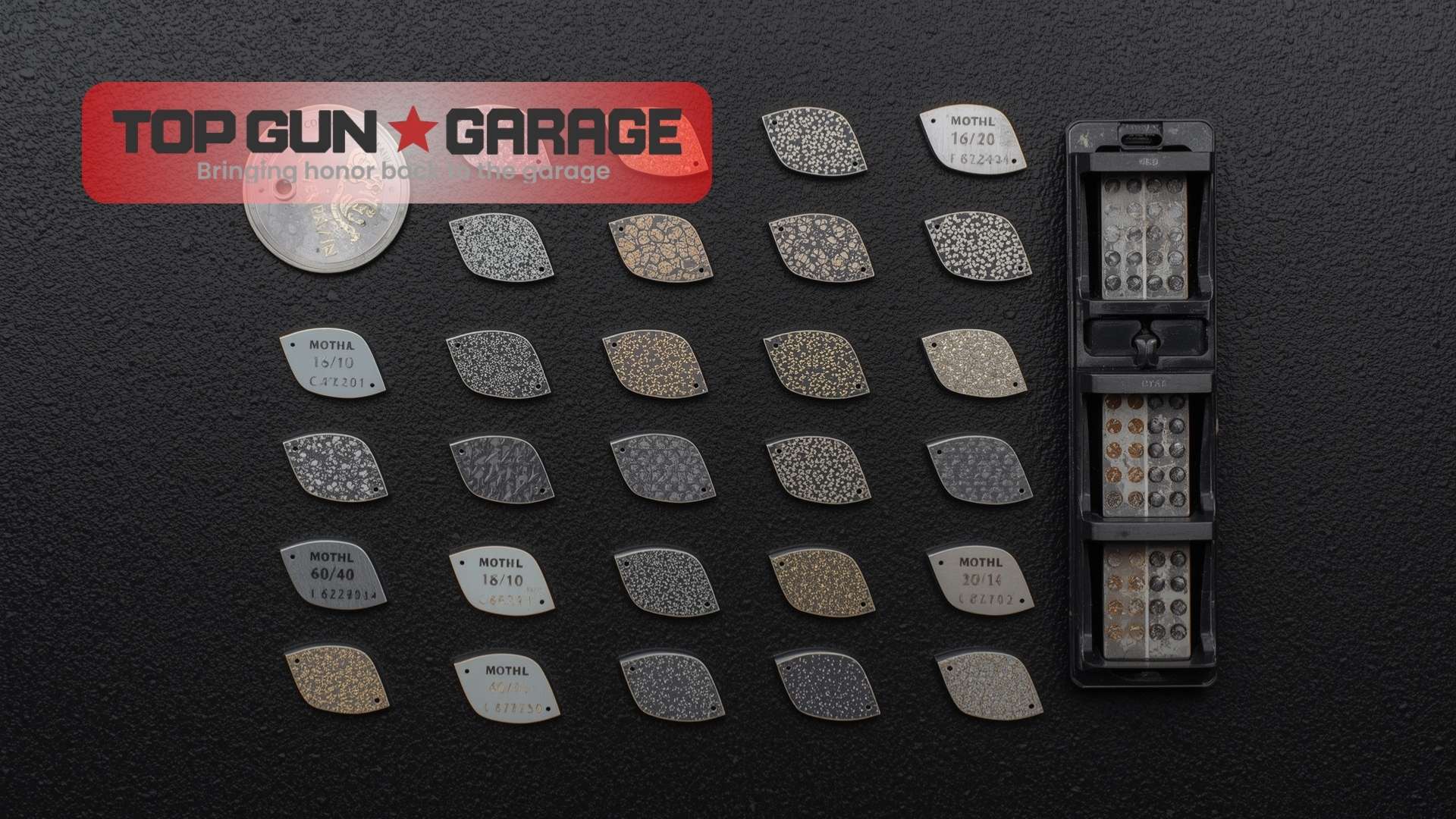
The diamonds embedded in the grinding segments are not generic. The bond hardness of the metal matrix holding the diamonds must be matched to the concrete’s compressive strength. Soft concrete (2,500-3,500 psi) requires hard-bond diamonds that wear slowly, preventing the diamonds from being ripped out prematurely. Hard, dense concrete (5,000+ psi) requires soft-bond diamonds that wear away quickly to expose fresh, sharp diamond cutting edges.
Using the wrong bond leads to glazing (diamonds wear flat and polish the surface) or excessive wear (diamonds are torn out, leaving the metal matrix rubbing uselessly against the concrete). Experienced contractors test the concrete hardness using a Mohs hardness pick kit before selecting their diamond tooling. This is a nuance completely lost in DIY rental equipment, which typically comes with a single, medium-bond diamond set that works marginally on most concrete but optimally on none.
Environmental and Health Considerations
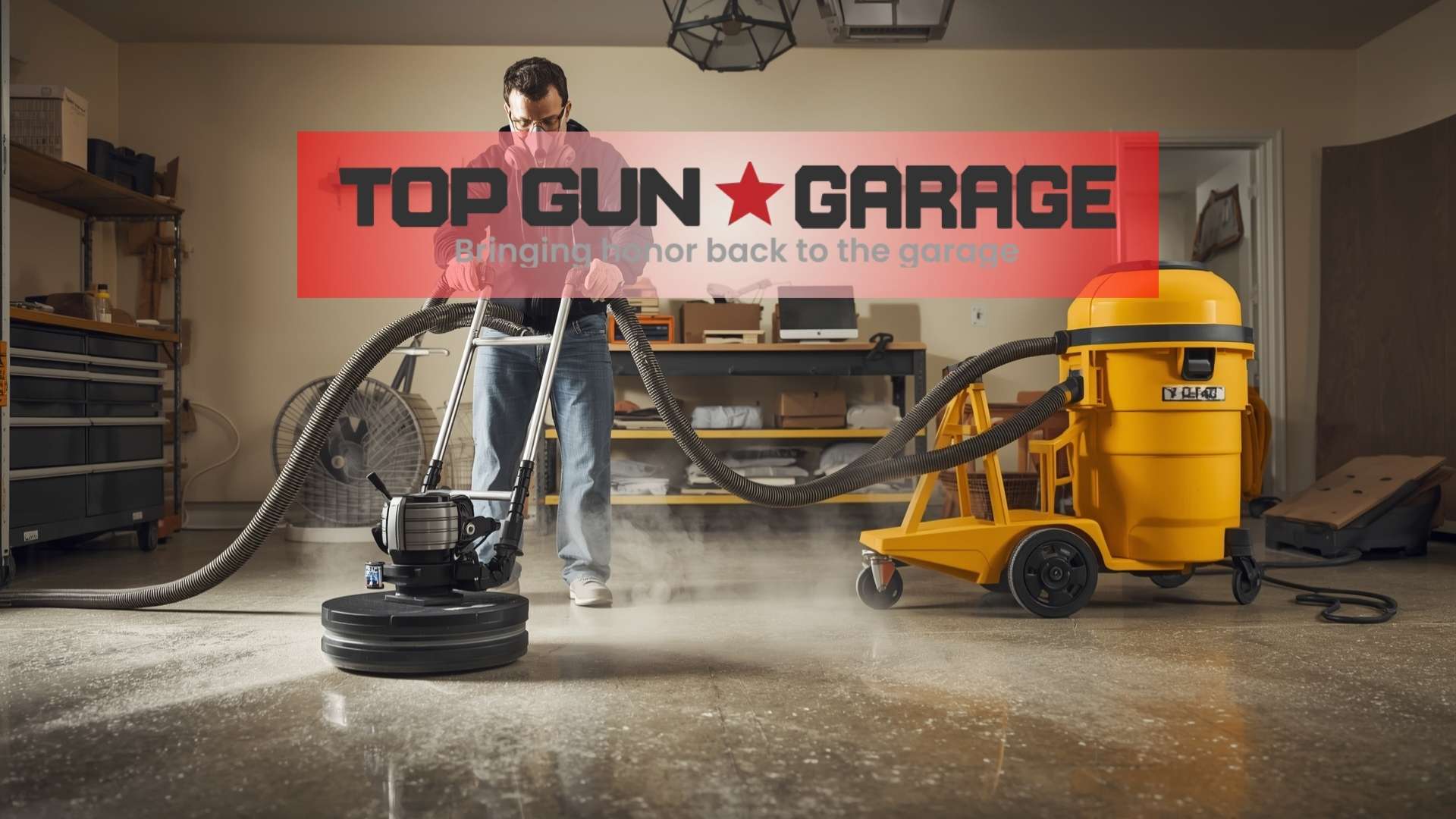
Concrete grinding generates respirable crystalline silica dust, a known human carcinogen. OSHA standard 29 CFR 1926.1153 mandates that exposure be limited to 50 micrograms per cubic meter over an 8-hour time-weighted average. Compliance requires integrated water delivery systems (wet grinding) or shrouded grinders connected to HEPA-filtered dust extractors. Dry grinding without dust collection is not only16 illegal on job sites but creates a health hazard that extends far beyond the garage, as fine silica dust remains airborne for hours and settles throughout the home.
Profiling also reveals the environmental history of the concrete. Oil stains, chemical spills, and petroleum contamination become apparent. These must be addressed with bioremediation cleaners or oil-stop primers before coating. Simply grinding through an oil-saturated area spreads the contamination and drives it deeper into the pores. Thermal imaging or moisture meters can identify these saturated zones before profiling begins.
Verifying Profile Quality Before Coating
Visual inspection is insufficient. Three verification methods ensure the profile meets specification:
- CSP Comparator Chips: ICRI sells rubber comparator chips molded from actual CSP 1 through CSP 10 surfaces. Placing these against the profiled concrete provides a tactile and visual benchmark.
- Test Patch Method: Apply a small amount of primer to a12-inch square area. After curing, attempt to scrape it off with a coin or putty knife. Properly bonded primer will not lift; it will fracture the concrete beneath it.
- Pull-Off Adhesion Testing: ASTM D7234 describes bonding aluminum dollies to the cured coating and measuring the tensile force required to pull them off. Values exceeding 300 psi with concrete substrate failure indicate excellent profiling.
According to NACE International (formerly the National Association of Corrosion Engineers), pull-off adhesion testing is the gold standard for validating surface preparation in industrial coating applications. While rarely performed in residential settings, the principle remains: if the coating fails cohesively within the concrete rather than adhesively at the bond line, the profile has done its job.
Profiling and Long-Term Floor Performance
A correctly profiled and coated garage floor routinely lasts 15-20 years in residential service. The same coating system applied over an unprofiled or poorly profiled floor fails within 2-3 years. The failure mode is predictable: edge peeling begins at the garage door threshold where moisture and tire traffic concentrate stress. Once delamination starts, it propagates rapidly as water, road salts, and petroleum products infiltrate beneath the coating.
Profiling also impacts the floor’s resistance to hot-tire pickup, a phenomenon where warm tires literally pull the coating off the concrete. The mechanical bond created by profiling resists the thermoplastic softening that occurs when epoxy is heated by tires fresh from highway driving. This is particularly relevant for car garage floors that see daily vehicle traffic.
For homeowners considering property value improvements, a professionally profiled and coated garage floor offers a measurable return on investment. Real estate appraisers recognize the difference between a properly installed epoxy floor and a peeling DIY failure. The former adds functional square footage; the latter becomes a liability requiring costly removal and reinstallation.
FAQ
Can I profile my garage floor myself with a rental grinder?
Yes, but with significant caveats. Rental grinders typically lack the weight, power, and dust extraction of professional equipment. They also come with a single diamond bond that may not match your concrete hardness. Most DIY profiling results in an inconsistent CSP 1-2 profile with swirl marks and missed edges. For a coating expected to last over a decade, professional profiling is the most cost-effective choice.
How do I know if my existing concrete has a sealer that needs removal?
Perform a simple water droplet test. Place a few drops of water on the clean concrete. If the water beads up and does not darken the concrete within 30 seconds, a sealer is present. If it absorbs and darkens the concrete, the surface is likely porous. However, some penetrating sealers allow water absorption while still blocking epoxy adhesion, so mechanical profiling is always recommended.
What is the difference between acid etching and grinding for epoxy preparation?
Acid etching uses chemical reaction to dissolve cement paste, creating a micro-rough texture. It is inconsistent, introduces moisture, leaves chemical residues, and cannot remove existing sealers or curing compounds. Diamond grinding mechanically abrades the surface to a precise, measurable profile, removes contaminants, and leaves the concrete dry and ready for immediate priming. Grinding is the industry standard for professional installations.
How soon after profiling must I apply the epoxy primer?
Ideally within 4 hours. Profiled concrete begins absorbing atmospheric moisture immediately. It also collects airborne dust and contaminants. If the profiled surface is left overnight, it must be re-vacuumed thoroughly before priming. In humid environments, a second light grinding pass may be necessary to remove absorbed moisture from the surface pores.
Does profiling fix oil stains in my garage floor?
Profiling removes surface-level oil contamination but does not address oil that has penetrated deep into the concrete. If oil-saturated areas are simply ground over, the heat and friction can drive the oil deeper and spread it. Oil stains should be treated with bioremediation cleaners or poultices before profiling. After profiling, an oil-stop primer should be applied to any areas that still show discoloration.
What CSP level do I need for a metallic epoxy floor?
Metallic epoxy systems are typically applied at 12-20 mils thickness and require a CSP 2-3 profile. The profile must be extremely uniform because metallic pigments highlight surface irregularities. Any grinding swirl marks or uneven texture will be magnified by the reflective metallic finish. This is one of the most demanding applications for surface preparation quality.
Can profiling reduce radon gas infiltration through the slab?
Profiling itself does not reduce radon. In fact, opening the concrete pores can temporarily increase gas transmission. However, a properly profiled and coated floor with a continuous epoxy membrane creates an effective radon barrier when combined with a vapor mitigation system. The key is that the epoxy must bond perfectly to the profiled concrete to prevent gas from migrating laterally beneath the coating to find cracks or penetrations.
Conclusion
Surface profiling is the foundation upon which every successful epoxy garage floor installation is built. It transforms inert, smooth concrete into a receptive substrate capable of forming a mechanical bond that withstands decades of traffic, chemicals, and thermal cycling. The science is unequivocal: the difference between a floor that lasts 2 years and one that lasts 20 years is the quality of the surface preparation. From selecting the correct diamond tooling for your concrete hardness to verifying the profile with ICRI comparator chips, every step matters.
For homeowners and business owners seeking a flawless, durable epoxy floor, the message is clear: insist on mechanical profiling, demand dust-contained equipment, and verify the profile before a single drop of epoxy is poured. If you are considering an epoxy floor project and want to ensure it is done to the highest standard, contact our team today for a professional consultation and site assessment.
References
- International Concrete Repair Institute (ICRI). “Concrete Surface Profile (CSP) Chips.” www.icri.org
- American Concrete Institute (ACI). “Guide for the Use of Polymers in Concrete.” www.concrete.org
- ASTM International. “ASTM F2170: Standard Test Method for Determining Relative Humidity in Concrete Floor Slabs.” www.astm.org
- Occupational Safety and Health Administration (OSHA). “Silica, Crystalline Standard for Construction.” www.osha.gov
- NACE International. “Surface Preparation Standards for Coatings.” www.nace.org
- Portland Cement Association (PCA). “Surface Preparation for Coatings on Concrete.” www.cement.org
- Sika Corporation. “Technical Bulletin: Epoxy Bond Strength and Surface Profile.” www.sika.com