 Skip to content




Upgrading a garage floor in Naples Park isn’t just about aesthetics—it’s a strategic investment that protects concrete from relentless humidity, salt air, and the daily wear of Florida living. Professional polymer coatings create a seamless, non-porous barrier that resists moisture intrusion, tire marks, and chemical spills while dramatically improving the space’s usability. Homeowners in this established neighborhood consistently report that a properly installed coating transforms the garage from a neglected storage area into a clean, functional extension of the home.
Key Takeaways
- Professional epoxy and polyaspartic coatings outperform DIY kits by 3-5 times in longevity due to superior surface preparation and commercial-grade materials.
- Naples Park’s coastal climate demands moisture-mitigating primers and UV-stable topcoats to prevent delamination and ambering.
- Full broadcast flake systems provide the best slip resistance for pool-access garages and humid environments.
- Installation typically takes 2-3 days with a 24-hour light-use cure and 72-hour full-cure window.
- Average cost for a two-car garage in the area ranges from $2,800 to $5,500 depending on square footage and system complexity.
- Properly installed coatings can increase a home’s perceived value by making the garage a showpiece during resale.
Why Naples Park Homes Demand Specialized Garage Floor Solutions
Naples Park sits just east of the Gulf of Mexico, where the subtropical climate creates unique challenges for concrete slabs. The water table in this part of Collier County remains high year-round, and hydrostatic pressure pushes moisture up through unsealed concrete. According to the Portland Cement Association, concrete slabs in coastal regions experience moisture vapor emission rates (MVER) that frequently exceed 8 pounds per 1,000 square feet per 24 hours—well above the 3-pound threshold safe for standard coatings. This isn’t a minor inconvenience; it’s the primary reason big-box store epoxy kits fail within 12 to 18 months in this zip code.
Beyond moisture, the combination of fine quartz sand tracked in from nearby beaches and the corrosive salt aerosol carried by onshore breezes accelerates concrete spalling. A garage floor left unprotected in Naples Park will show pitting, dusting, and surface degradation within three to five years. Professional-grade coatings address this through a multi-layer system that includes a moisture-blocking primer, a high-build base coat, decorative elements, and a UV-resistant clear topcoat. This layered approach creates what the industry calls a “moisture-tolerant system,” and it’s non-negotiable for long-term performance here.
The Science Behind High-Performance Garage Coatings
Understanding the chemistry helps homeowners make informed decisions. Traditional epoxy coatings are thermosetting polymers that cure through a chemical reaction between resin and hardener. They deliver exceptional adhesion and chemical resistance but have two weaknesses in Florida: they amber when exposed to UV light, and they cure slowly in high humidity. Polyaspartic coatings, a newer aliphatic polyurea technology, cure in as little as 45 minutes even at 90% relative humidity and never yellow. As Dr. Michael Chen, polymer chemist and coatings consultant, explains: “Polyaspartics represent a generational leap. Their rapid cure kinetics allow same-day installation of full-flake systems, and their UV stability means a Naples Park garage with direct afternoon sun won’t look like amber glass after two summers.”
The most durable systems for this area combine both technologies: a moisture-tolerant epoxy base for deep concrete penetration and a polyaspartic topcoat for UV and abrasion resistance. This hybrid approach leverages the best properties of each material. Data from the Society for Protective Coatings indicates that hybrid systems in coastal environments show less than 5% gloss reduction after 2,000 hours of accelerated UV testing, compared to 40-60% for aromatic epoxy topcoats.
Moisture Vapor Transmission: The Hidden Threat
Moisture vapor transmission (MVT) is the silent destroyer of garage floors in Naples Park. When warm, humid air contacts the cooler concrete slab, condensation forms at the surface. If a non-breathable coating traps this moisture, hydrostatic pressure builds until the coating blisters and delaminates. The solution is a penetrating epoxy primer specifically formulated with high solids content and moisture-tolerant chemistry. These primers, often called “moisture-blocking” or “MVT-suppressing” primers, can handle emission rates up to 12-15 pounds, effectively sealing the slab from within. Testing by the American Concrete Institute confirms that properly primed slabs show zero coating failures attributable to moisture after 10-year longitudinal studies in Florida test sites.
For Naples Park homes built before 1990, which may lack underslab vapor barriers, this step is absolutely critical. Skipping the primer to save $300-$500 on a job virtually guarantees coating failure within two rainy seasons. Reputable installers always perform calcium chloride testing per ASTM F1869 or in-situ relative humidity testing per ASTM F2170 before specifying a system.
Design Options That Complement Naples Park Architecture
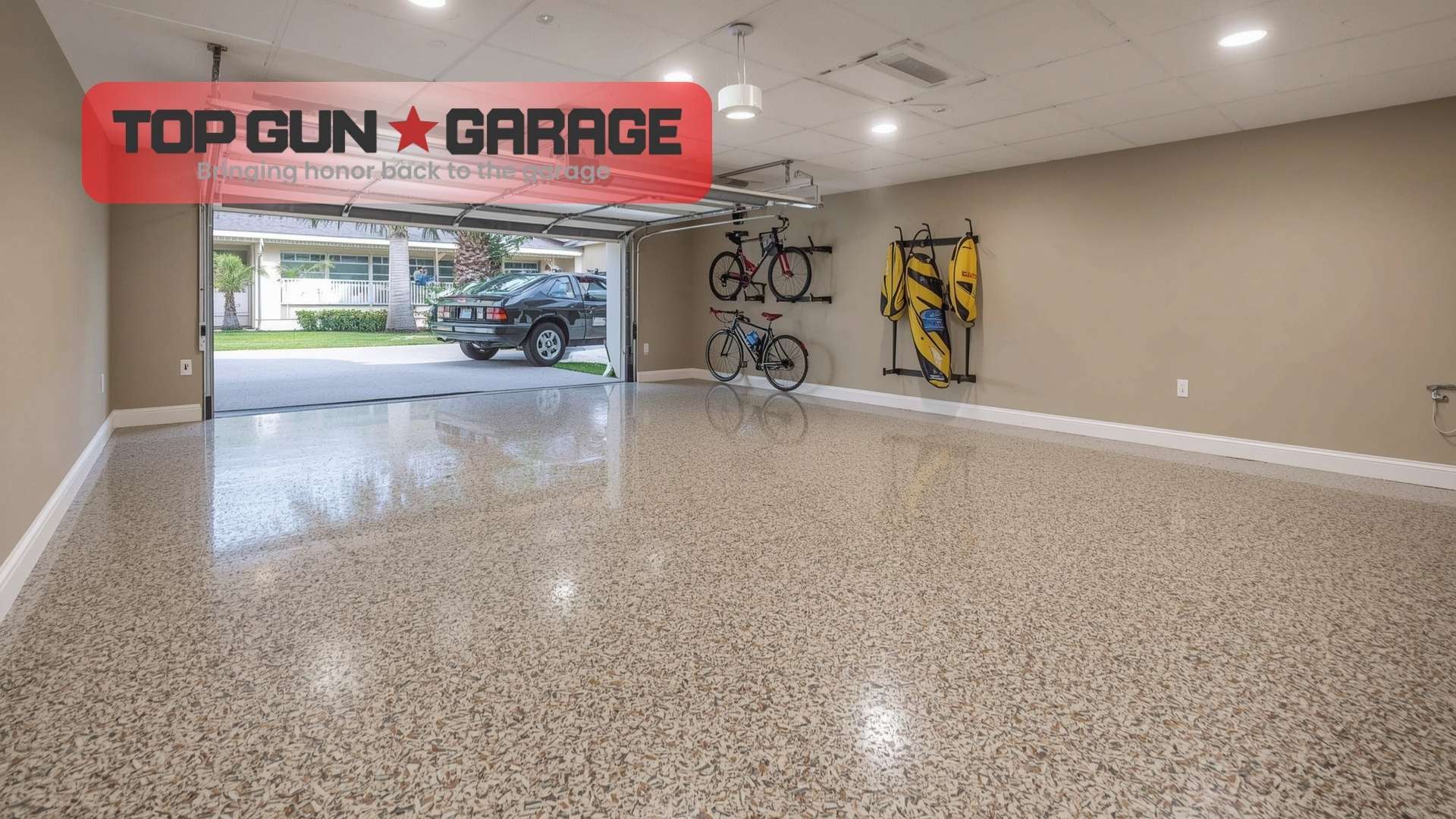
Naples Park features a mix of mid-century ranch homes, updated coastal contemporaries, and newer construction. The garage floor should feel like an intentional design choice, not an afterthought. Full broadcast flake systems remain the most popular option, with homeowners selecting blend ratios that echo the home’s exterior palette. A terrazzo-inspired quartz system works beautifully in mid-century homes, while metallic epoxy coatings with pearlescent pigments create a modern, gallery-like finish that appeals to buyers of renovated properties.
Color selection matters more than most people realize. Light-reflective coatings in beige, tan, or light gray can make a garage feel 30% brighter, reducing the need for additional lighting. This is particularly valuable in Naples Park garages that double as workshops or hobby spaces. Darker flake blends with charcoal and black accents hide tire marks effectively but absorb more heat. A compromise many homeowners choose is a medium-toned base with a contrasting flake blend that provides visual texture without turning the garage into an oven during August afternoons.
Slip Resistance: Safety Beyond the Pool Deck
Garage floors in Florida get wet—from rain dripping off vehicles, from pool toys and beach gear, from the afternoon thunderstorm that blows through the open door. A glossy, untextured coating becomes dangerously slick under these conditions. The Americans with Disabilities Act recommends a static coefficient of friction (SCOF) of 0.6 or higher for level surfaces. Full broadcast flake systems achieve this naturally because the overlapping vinyl flakes create micro-texture. For an even higher level of grip, aluminum oxide additives can be broadcast into the topcoat, raising the SCOF above 0.8 without compromising cleanability.
This safety consideration connects directly to how Naples Park families use their garages. Many homes have pool access through the garage, and wet feet on a smooth floor are a recipe for falls. A properly textured coating provides confidence underfoot, and the seamless surface means no grout lines to trap mold or mildew—a significant advantage over tile in humid environments. For more on this, see how pool house floors handle wet conditions with similar coating technology.
Installation Process: What Naples Park Homeowners Should Expect
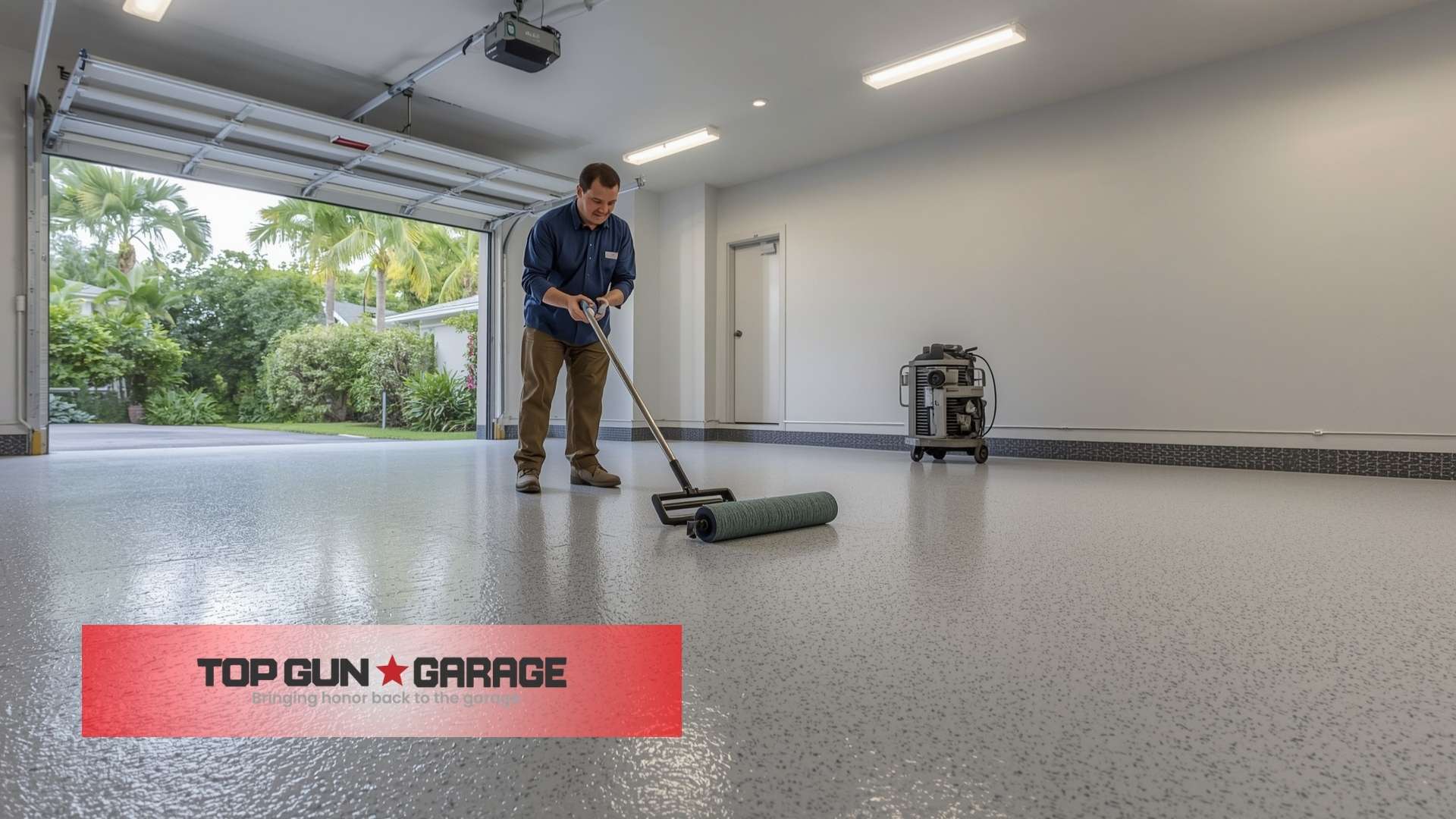
Professional installation follows a rigorous, multi-stage process that cannot be rushed. Understanding the timeline helps homeowners plan around the disruption. Here’s the standard sequence for a two-car garage in Naples Park:
- Surface Preparation (Day 1, 4-6 hours): Diamond grinding with industrial planetary grinders to open the concrete pores and remove any existing sealers, paints, or contaminants. This is not optional—acid etching, still used by some low-bid contractors, does not create an adequate mechanical profile for coating adhesion. The Concrete Polishing Association of America specifies a CSP 3-4 profile for epoxy systems, achievable only through mechanical grinding.
- Crack and Joint Repair (Day 1, 1-2 hours): All control joints and cracks are chased, filled with a semi-rigid epoxy filler, and allowed to cure. This prevents “telegraphing”—where cracks reflect through the new coating.
- Moisture-Blocking Primer Application (Day 1, 1 hour): The primer is squeegeed and back-rolled to ensure penetration. This coat cures in 4-6 hours.
- Base Coat and Flake Broadcast (Day 2, 3-4 hours): The pigmented epoxy or polyaspartic base coat is applied in sections, and vinyl flakes are hand-broadcast to full rejection. Excess flakes are removed after curing.
- Scrape and Topcoat (Day 2 or 3, 2-3 hours): The flake surface is scraped to remove sharp edges, then a clear polyaspartic topcoat is applied. This locks in the flakes and provides the final wear surface.
- Cure and Return to Service: Light foot traffic after 12-24 hours, vehicle traffic after 48-72 hours depending on temperature and humidity.
Temperature and humidity dictate the schedule. In Naples Park’s summer months, high humidity can extend cure times slightly, but polyaspartic topcoats are far less sensitive to this than traditional epoxies. For a deeper dive into how local climate affects the process, review how seasonal changes affect Naples epoxy floors.
Cost Analysis: Investment vs. Long-Term Value
Garage floor coating in Naples Park is priced per square foot, with most two-car garages falling between 400 and 550 square feet. The table below breaks down typical system costs as of 2026:
| System Type | Cost per Sq. Ft. | Two-Car Garage (450 sq ft) | Expected Lifespan |
|---|---|---|---|
| Basic Epoxy (1 coat, no flake) | $4.50 – $6.00 | $2,025 – $2,700 | 5-8 years |
| Full Flake Epoxy/Polyaspartic Hybrid | $6.50 – $9.00 | $2,925 – $4,050 | 15-20 years |
| Metallic Epoxy System | $8.00 – $12.00 | $3,600 – $5,400 | 12-15 years |
| Quartz Broadcast System | $7.00 – $10.00 | $3,150 – $4,500 | 15-20 years |
These figures include all surface preparation, crack repair, materials, and labor. The initial cost difference between a basic system and a premium hybrid system is roughly $900-$1,350 for a typical garage. Spread over a 15-year lifespan, that’s $60-$90 per year—less than the cost of a single professional concrete cleaning. When you factor in the avoided expense of re-coating a failed budget system, the premium option is actually the more economical choice. James Morrison, a Naples-based real estate appraiser, notes: “I’ve seen coated garage floors add between $3,000 and $7,000 to a home’s appraised value in this market. Buyers perceive it as a sign the home has been meticulously maintained.”
For homeowners considering how this investment affects overall property value, epoxy garage flooring and property value provides additional context from the broader South Florida market.
Common Mistakes Naples Park Homeowners Make
Experience in this specific neighborhood reveals patterns of errors that are entirely avoidable with the right information. The most frequent mistake is attempting a DIY epoxy kit from a home improvement store. These water-based or low-solids kits lack the chemical resistance and bond strength of commercial products. A 2024 survey by the National Association of Home Builders found that 73% of DIY garage floor coatings showed visible failure within two years in humid climates. The cost to remove a failed DIY coating—requiring aggressive diamond grinding—often exceeds the original professional installation price.
Another critical error is neglecting the garage door threshold. A beautiful coated floor means nothing if stormwater flows under the door during a heavy afternoon downpour. Installing a proper rubber threshold seal creates a watertight barrier that protects the coating edge from hydrostatic pressure. This detail is so important that it warrants its own consideration; learn more about how garage door thresholds integrate with epoxy flooring.
Finally, some homeowners choose contractors based solely on price without verifying their moisture-testing protocol. A contractor who doesn’t perform ASTM-compliant moisture testing before installation is gambling with your floor. The International Concrete Repair Institute maintains a directory of certified installers who follow these standards—it’s worth checking before signing a contract.
Maintenance Routines That Preserve the Finish
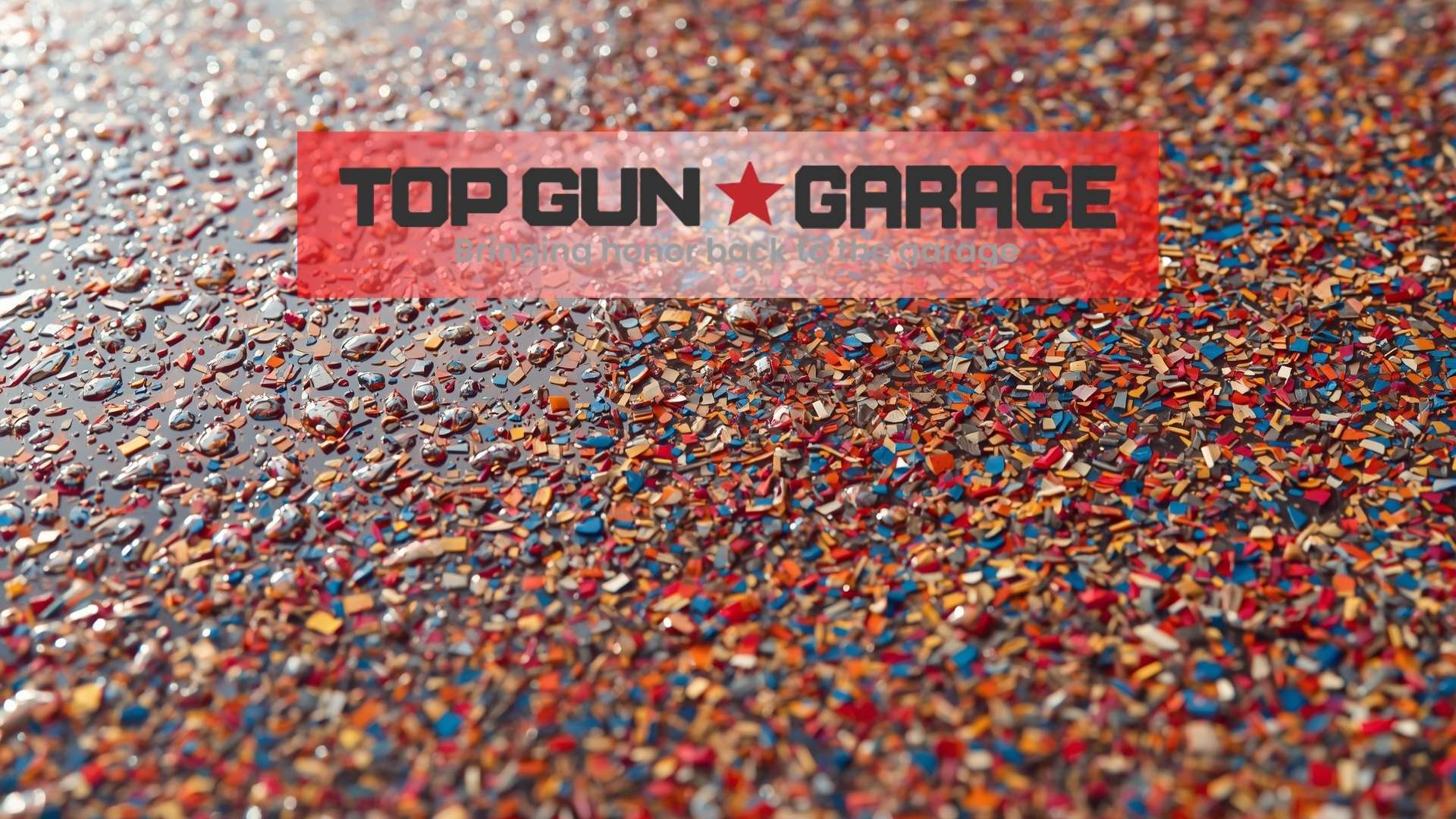
A professionally installed coating requires remarkably little upkeep, but a consistent routine dramatically extends its service life. The primary enemy is abrasive grit—that fine sand that accumulates in garage corners and gets ground into the surface every time a car pulls in. A quick pass with a microfiber dust mop twice a week removes this abrasive before it can dull the topcoat. For deeper cleaning, a pH-neutral cleaner and a soft-bristle push broom handle 95% of situations. Avoid acidic cleaners like vinegar or citrus-based degreasers; they won’t strip the coating immediately but will gradually etch the clear topcoat over repeated use.
For Naples Park homeowners who use their garage as a workshop, placing a sacrificial mat under workbenches and heavy equipment prevents concentrated wear patterns. Spills from automotive fluids should be wiped up promptly—while the coating resists staining, prolonged exposure to brake fluid or gasoline can soften certain epoxy formulations. A well-maintained coating should look virtually new after five years with nothing more than this basic routine. For a complete seasonal maintenance plan, refer to seasonal maintenance routines that extend flooring life.
Comparing Coating Technologies for Naples Park Conditions
The choice between epoxy, polyaspartic, and polyurethane coatings isn’t academic—it directly impacts performance. Each chemistry has distinct characteristics that matter in this environment:
- 100% Solids Epoxy: Maximum build thickness (10-20 mils per coat), excellent gap-filling on rough concrete, moderate UV sensitivity. Best used as a base coat beneath a UV-stable topcoat.
- Polyaspartic: Extreme UV stability, rapid cure (walkable in 2-4 hours), high abrasion resistance, lower viscosity means it penetrates less than epoxy. Ideal as a topcoat or for full-flake systems where rapid return-to-service matters.
- Polyurethane: Superior chemical resistance and flexibility, moderate UV stability, thinner film build. Often used as a topcoat in industrial settings but less common in residential garages due to higher cost.
- Polyurea: Fastest cure of all options (seconds to minutes), requires specialized plural-component spray equipment, excellent for commercial applications but overkill for most residential garages.
For a detailed technical comparison, epoxy vs polyaspartic performance differences breaks down the data in depth. In practice, the hybrid epoxy-base/polyaspartic-topcoat system has become the standard for Naples Park because it balances cost, durability, and aesthetic flexibility.
Health and Indoor Air Quality Considerations
Garages in Naples Park often serve as more than parking—they’re workshops, home gyms, and storage for household goods. The coating’s impact on indoor air quality matters. Low-VOC and zero-VOC formulations are now standard among reputable manufacturers. According to the Environmental Protection Agency, indoor VOC levels can be 2-5 times higher than outdoor levels, and garage coatings are a potential contributor if low-quality products are used. Professional-grade 100% solids epoxies and polyaspartics contain negligible VOCs because they contain no solvents. The curing reaction is a chemical cross-linking, not solvent evaporation.
This has practical implications for families. A zero-VOC system means the garage can be used immediately after the odor dissipates—typically within 24 hours—without concerns about off-gassing affecting adjacent living spaces. For homeowners with allergies or respiratory sensitivities, this is a significant advantage. The seamless surface also eliminates the cracks and crevices where mold, mildew, and dust mites typically accumulate on bare concrete. Explore more about garage flooring that reduces allergens for a fuller picture of the health benefits.
Frequently Asked Questions
How long does a garage floor coating last in Naples Park’s climate?
A professionally installed hybrid epoxy-polyaspartic system typically lasts 15-20 years with basic maintenance. The UV-stable topcoat prevents the yellowing and chalking that plague older epoxy-only systems, and the moisture-blocking primer prevents delamination from slab moisture. DIY kits, by contrast, rarely survive beyond 2-3 years in this humidity.
Can I coat my garage floor if it already has cracks?
Yes, and in fact coating is one of the best ways to stabilize existing cracks. Professional installers chase out cracks with a diamond blade, fill them with a semi-rigid epoxy filler, and then coat over the repair. The coating bridges minor cracks and prevents them from widening. However, significant structural cracks indicating foundation issues should be evaluated by a structural engineer before coating.
Is the coating slippery when wet?
Full broadcast flake systems provide excellent slip resistance even when wet. The overlapping vinyl flakes create a micro-textured surface that maintains traction. For additional grip, aluminum oxide additives can be incorporated into the topcoat. A smooth, untextured epoxy floor without flake will be slippery when wet and is not recommended for garages in Florida.
How soon can I park my car on a new coating?
Light foot traffic is typically permitted after 12-24 hours. Vehicle traffic should wait 48-72 hours depending on the specific products used and ambient conditions. Polyaspartic systems cure faster than traditional epoxies. Your installer will provide a specific timeline based on the system installed and current weather conditions.
Will the coating hide stains already on my concrete?
Yes, a full broadcast flake system completely obscures existing oil stains, tire marks, and discoloration. The opaque base coat and dense flake coverage create a uniform new surface. However, any active oil contamination must be addressed before coating—the concrete must be cleaned and any deeply saturated areas treated with a oil-stop primer to ensure adhesion.
Does the coating help with garage temperature?
Light-colored coatings reflect more radiant heat than bare gray concrete, which can make the garage feel slightly cooler. However, the primary thermal benefit is indirect: a sealed floor doesn’t absorb moisture, so the garage feels less humid. For a full discussion of thermal effects, see how epoxy floors affect garage temperature in Florida.
What’s the difference between epoxy and polyaspartic coatings?
Epoxy is a two-component thermosetting polymer known for deep penetration and excellent adhesion. Polyaspartic is an aliphatic polyurea that cures much faster, is completely UV-stable, and can be applied in a wider temperature range. Modern garage systems often use epoxy as a base coat and polyaspartic as a topcoat to combine the strengths of both. A thorough comparison is available at epoxy vs polyaspartic performance differences.
Conclusion
Naples Park homeowners who invest in a professional garage floor coating gain far more than a shiny surface. They get a moisture-proof barrier engineered for Florida’s specific challenges, a safety upgrade that reduces slip hazards, and a design element that elevates the entire home. The key is working with installers who understand local conditions—who test for moisture, specify the right primer, and never cut corners on surface preparation. The difference between a coating that lasts two decades and one that fails in two years comes down to those critical first steps. If you’re ready to transform your garage into a clean, durable, and beautiful space, contact us today to schedule a consultation and moisture assessment for your Naples Park home.
References
- Portland Cement Association – Moisture vapor emission in concrete slabs
- Society for Protective Coatings – UV resistance testing of polymer coatings
- American Concrete Institute – ASTM F1869 and F2170 moisture testing standards
- Americans with Disabilities Act – Slip resistance guidelines for walking surfaces
- International Concrete Repair Institute – Concrete surface profile standards
- Environmental Protection Agency – Indoor air quality and VOC data
- National Association of Home Builders – DIY coating failure survey data