 Skip to content



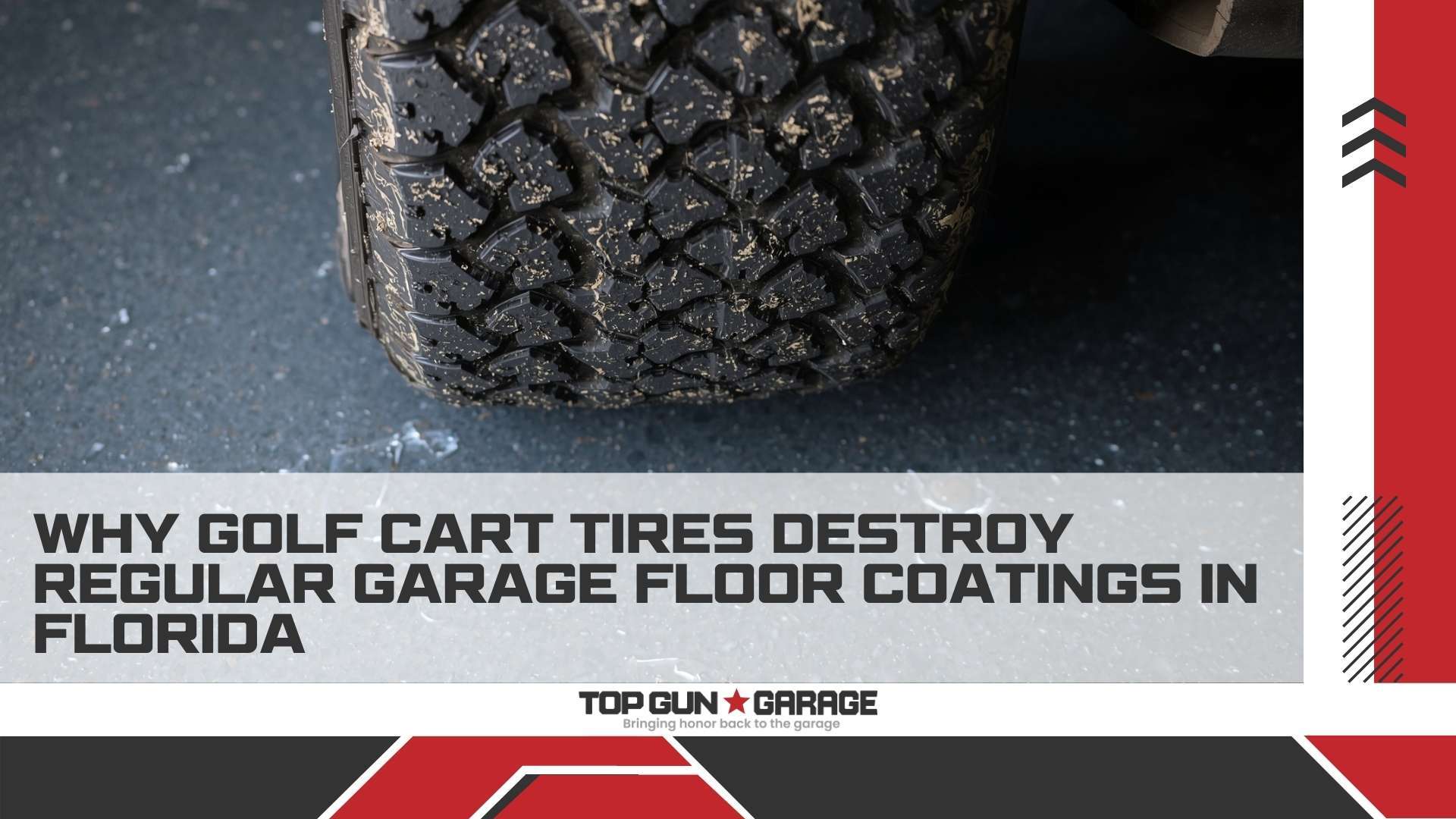
Florida homeowners who store golf carts in their garages face a unique challenge with golf cart garage floor coating systems that standard residential products simply cannot withstand. Golf cart tires exert concentrated weight loads, create constant turning friction, and generate heat buildup that causes regular epoxy coatings to fail within 12-18 months through delamination, tire marking, and surface deterioration. Communities throughout Naples, Bonita Springs, Fort Myers, and Southwest Florida where golf carts serve as primary transportation require specialized heavy-duty flooring systems designed specifically for equipment storage rather than typical passenger vehicle use.
Overview
This comprehensive guide explains why golf carts damage standard garage floor coatings, the specific mechanisms of coating failure under golf cart traffic, and which flooring solutions provide long-lasting protection for Florida golf cart storage. You’ll discover how tire composition, weight distribution, and turning dynamics create unique stress patterns, why Florida’s climate compounds these challenges, proper surface preparation requirements, coating system specifications for heavy equipment, maintenance strategies, and cost-benefit analysis for homeowners making flooring decisions in golf cart communities.
Key Takeaways
-
Golf cart tires exert 3-5 times more concentrated pressure per square inch than standard vehicle tires due to smaller contact patches
-
Hard rubber compounds in golf cart tires generate excessive friction and heat that softens standard epoxy coatings
-
Constant turning, backing, and maneuvering creates abrasion patterns that wear through residential-grade coatings within 18 months
-
Florida’s 75-80% humidity and 90°F+ temperatures accelerate coating degradation under golf cart stress
-
Industrial-grade polyurea and polyaspartic systems with 20+ mil thickness withstand golf cart traffic for 15+ years
-
Proper concrete preparation including moisture barriers and deep profiling prevents premature coating failure
-
Specialized golf cart garage coatings cost 40-60% more initially but eliminate repeated replacement cycles
Golf Carts vs Standard Vehicles: The Critical Difference
Golf carts create fundamentally different stress patterns on garage floors compared to standard passenger vehicles. While typical cars and SUVs distribute 3,000-4,000 pounds across four tires with large contact patches, golf carts concentrate 800-1,200 pounds on smaller, harder tires with contact areas 60-70% smaller than automotive tires. This concentration creates pressure points of 40-60 PSI on floor surfaces compared to 15-25 PSI from passenger vehicles, exceeding the load-bearing capacity of residential epoxy systems.
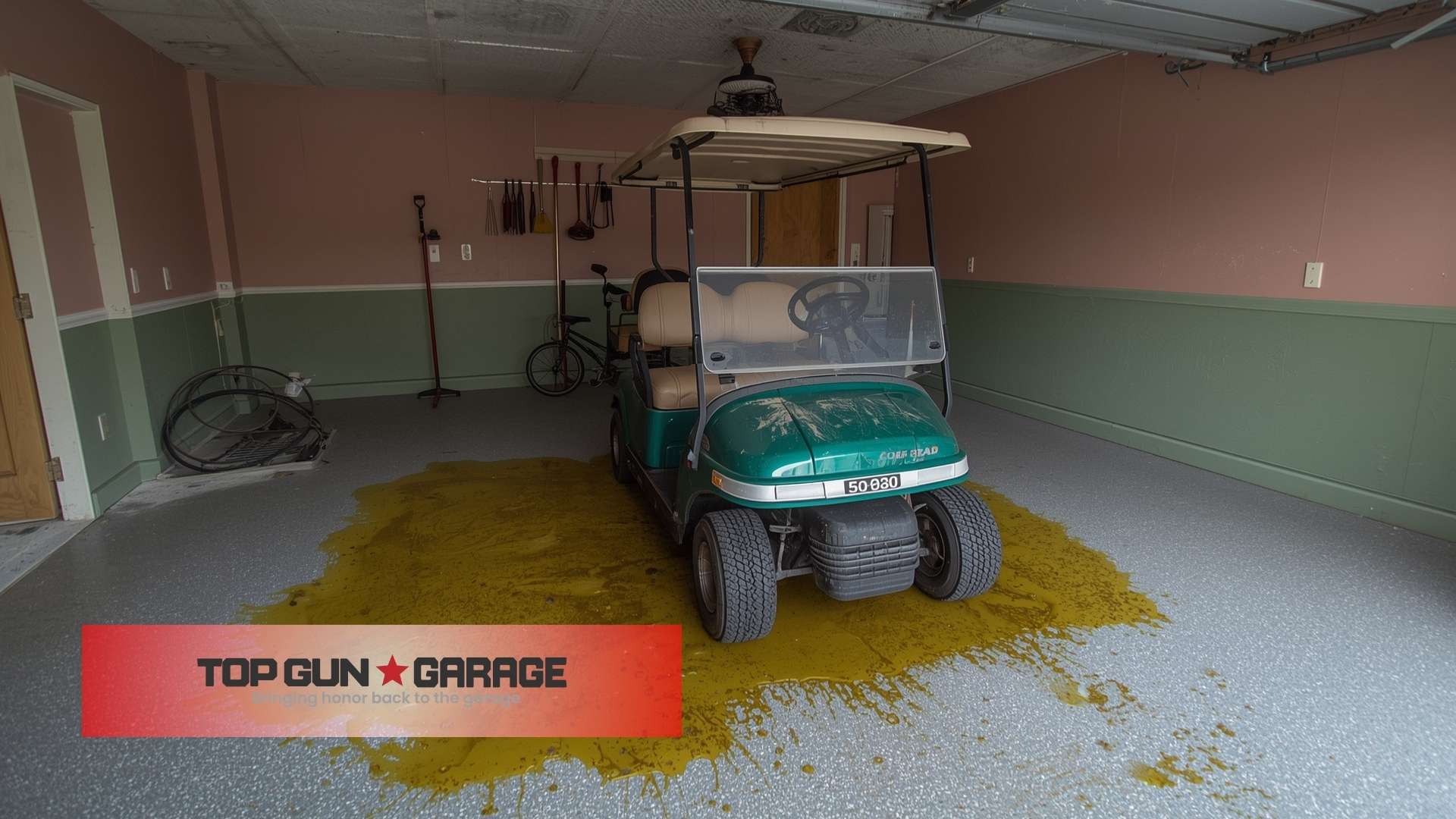
The tire composition difference compounds this pressure issue significantly. Golf cart tires use harder rubber compounds designed for durability and low rolling resistance on pavement and grass, creating friction coefficients 40% higher than automotive tires. When golf carts turn, accelerate, or brake on garage floor surfaces, this hard rubber generates shear forces that pull at coating adhesion points, gradually weakening bonds between coating and concrete substrate.
Weight Distribution Creates Pressure Points
Florida golf cart communities often see carts weighing 900-1,400 pounds depending on battery configuration, accessories, and lift kits. Four-passenger models with upgraded batteries can exceed 1,600 pounds, creating pressure concentrations that crack and chip standard residential coatings. Unlike cars that remain stationary most of the day, golf carts experience daily use with multiple trips, meaning garage floors endure 5-10 entry/exit cycles daily compared to 2-4 for standard vehicles.
The dynamic loading pattern differs dramatically as well. Cars typically enter garages, park in consistent locations, and remain stationary for extended periods. Golf carts require frequent maneuvering in confined spaces, with tight turning circles that pivot wheels in place, creating rotational friction that grinds away coating surfaces. This constant movement pattern accelerates wear in specific high-traffic zones, creating visible wear paths within 6-12 months on standard epoxy floors.
Tire Composition and Coating Interaction
Golf cart tire rubber compounds contain higher percentages of synthetic polymers and carbon black compared to automotive tires, creating chemical interactions with epoxy resins that accelerate coating degradation. These compounds can actually bond with softened epoxy surfaces during hot weather, pulling coating material away from the concrete substrate when tires move. Florida’s intense summer heat compounds this issue, as garage temperatures frequently exceed 95°F, approaching the glass transition temperature where epoxy begins softening.
The tread patterns on golf cart tires also contribute to coating damage through their aggressive, deep-cut designs. These treads concentrate pressure into narrow contact lines rather than distributing weight across smooth tire surfaces like passenger vehicles. Each rotation creates micro-abrasions that gradually remove coating material, similar to sandpaper effect. Over thousands of entry/exit cycles, these micro-abrasions accumulate into visible wear patterns, surface texture changes, and eventual coating failure.
Why Florida Climate Accelerates Coating Failure
Florida’s subtropical climate creates perfect conditions for accelerated coating degradation under golf cart traffic. Average humidity levels of 75-80% cause concrete slabs to absorb and release moisture continuously, creating vapor pressure beneath coatings that weakens adhesion bonds. When golf cart tires apply pressure to moisture-compromised coatings, delamination occurs much faster than in drier climates where vapor transmission rates remain lower.
Summer temperatures in Southwest Florida regularly exceed 90°F with pavement temperatures reaching 130-140°F in direct sunlight. Golf cart tires heated by this pavement transfer thermal energy to garage floor coatings within seconds of parking. Standard epoxy formulations begin losing structural integrity at temperatures above 150°F, creating tacky surfaces that allow hot tire pickup and rubber bonding. This thermal cycling—heating during day, cooling at night—creates expansion and contraction stresses that fracture rigid coating systems.
Humidity and Moisture Vapor Transmission
Coastal Florida communities face additional challenges from salt-laden air that penetrates garage spaces and accelerates chemical degradation of coating materials. The combination of humidity, salt exposure, and temperature extremes creates corrosive environments that deteriorate coating chemistry at molecular levels. Standard residential coatings lack the chemical resistance needed to withstand this environment while simultaneously handling golf cart traffic stresses.
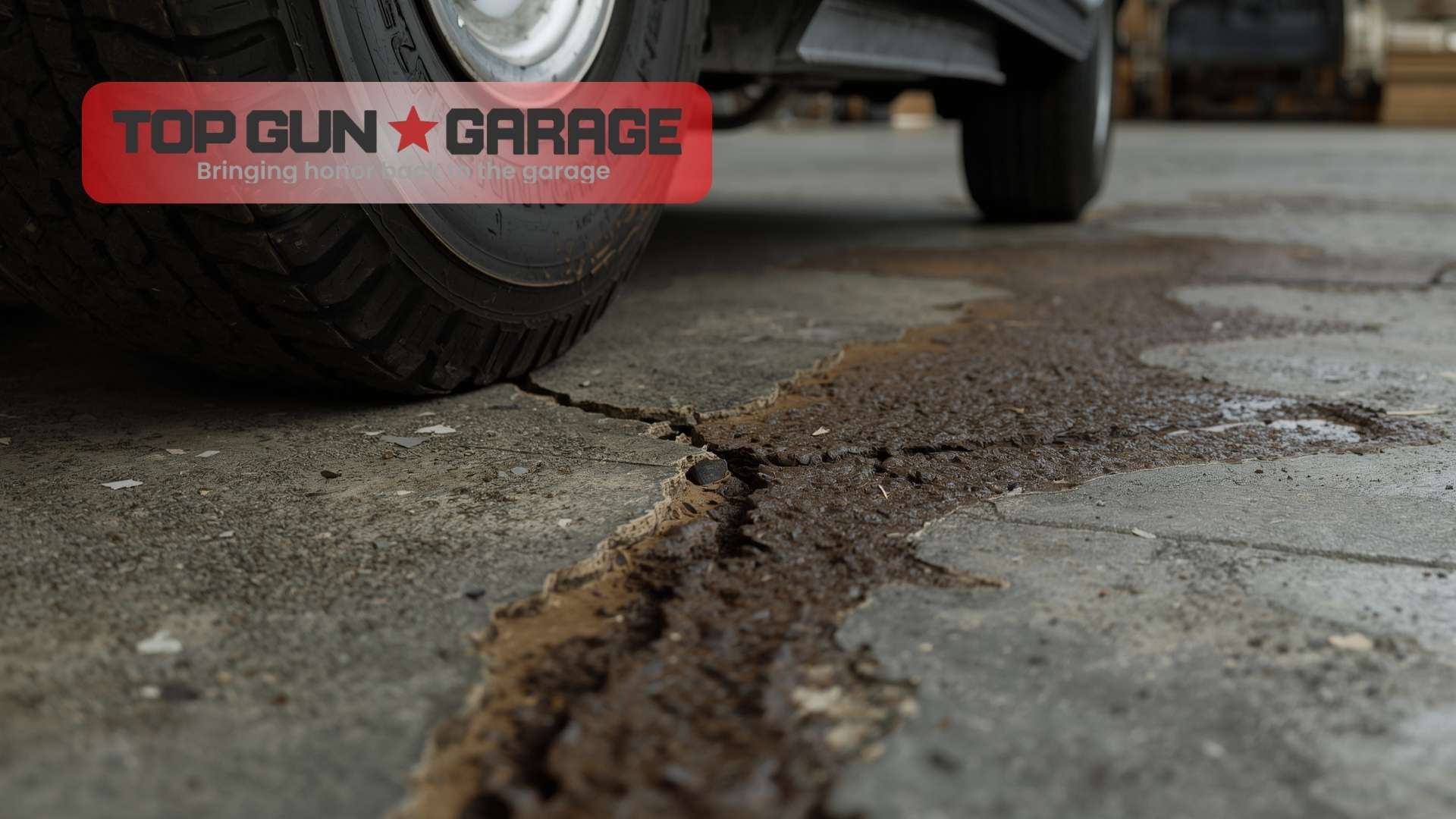
Moisture vapor transmission rates in Florida concrete typically measure 3-5 pounds per 1,000 square feet per 24 hours, exceeding tolerance levels of basic epoxy systems. When golf cart weight compresses moisture-laden coatings against concrete surfaces, trapped vapor creates adhesion failures that manifest as bubbling, blistering, and peeling. Professional moisture testing protocols become essential for golf cart garage installations to ensure proper vapor barrier application.
UV Exposure in Open Garages
Many Florida golf cart owners keep garage doors open during daytime hours for easy access, exposing floor coatings to intense UV radiation. Ultraviolet light breaks down molecular bonds in standard epoxy formulations, causing yellowing, chalking, and surface degradation within 18-24 months. This photodegradation compromises coating integrity before golf cart traffic even begins wearing surfaces, creating cumulative damage that dramatically shortens coating lifespan.
The combination of UV exposure and golf cart traffic creates synergistic failure modes where UV-weakened coatings cannot withstand mechanical stresses from tire contact. Surface layers become brittle and prone to cracking under golf cart weight, while deeper coating layers remain intact temporarily. This delamination between coating layers appears as surface flaking, peeling, and irregular wear patterns that require complete coating removal and reinstallation.
Standard Epoxy Coating Failure Mechanisms
Basic residential epoxy coatings typically feature 2-5 mil thickness applied in single or double layers with minimal surface preparation. These thin coatings lack the structural integrity to withstand concentrated golf cart tire pressure over thousands of cycles. The mechanical failure begins at microscopic levels as tire pressure compresses coating molecules, gradually breaking polymer chains and creating internal stress fractures invisible to homeowners initially.
As golf carts maneuver in garages, turning creates shear forces parallel to floor surfaces that exceed epoxy’s tensile strength. These lateral forces literally tear coating material away from concrete, starting at edges and high-stress areas where turning occurs most frequently. Within 12-18 months, visible damage appears as coating edges lifting, surface crazing (fine crack networks), and exposed concrete patches in high-traffic zones.
Adhesion Loss Under Pressure
The bond between epoxy coating and concrete substrate typically measures 200-400 PSI in residential applications—sufficient for foot traffic and passenger vehicles but inadequate for concentrated golf cart pressure. Each time golf cart tires exert their 40-60 PSI loads, coating adhesion experiences stress approaching 25-30% of total bond strength. Over thousands of cycles, these repeated stress events cause adhesive creep where coating gradually separates from concrete substrate.
Improper surface preparation compounds adhesion problems significantly. If contractors skip diamond grinding to achieve proper concrete surface profile (CSP 2-3 minimum), coating adhesion may measure only 100-150 PSI—completely inadequate for golf cart traffic. The concrete surface must feature open pores and texture for mechanical bonding, which many residential installers neglect in favor of faster acid etching that provides insufficient profile depth.
Hot Tire Pickup Intensified
Hot tire pickup represents the most visible and frustrating golf cart coating failure mode for Florida homeowners. Golf cart tires heated to 120-140°F from pavement contact transfer this thermal energy to garage floor coatings within 30-60 seconds of parking. Standard epoxy begins softening around 150°F, creating tacky surfaces where hot rubber compounds partially bond with coating material. When golf carts move again, rubber remains embedded in softened epoxy, creating dark streaks and marks that resist cleaning.
The problem intensifies in Florida’s summer months when daily temperatures exceed 90°F and pavement reaches 130-140°F. Golf carts making multiple trips per day deliver constant thermal stress to coatings that never fully cool and reharden between uses. This continuous softening and reheating cycle permanently alters coating chemistry, reducing crosslink density and making coatings progressively more susceptible to tire marking with each thermal cycle.
Chemical Resistance Breakdown
Golf cart batteries release hydrogen gas during charging, creating acidic conditions in garage environments that attack epoxy coatings. Battery maintenance activities including water additions and terminal cleaning introduce sulfuric acid exposure that standard residential coatings cannot withstand. These chemical exposures weaken coating structure, making floors more vulnerable to mechanical damage from tire traffic.
Additionally, golf carts track grass clippings, fertilizers, pesticides, and irrigation water into garages—chemical exposures that automotive vehicles rarely introduce. These organic materials contain enzymes and compounds that gradually degrade epoxy chemistry through chemical reactions. The combination of chemical attack and mechanical wear creates accelerated failure modes unique to golf cart storage environments.
Heavy-Duty Coating Requirements
Golf cart garages require industrial-grade coating systems designed for heavy equipment rather than residential formulations. Polyurea and polyaspartic coatings provide the chemical resistance, flexibility, and thickness needed to withstand golf cart traffic for 10-15 years. These systems typically feature 20-40 mil total thickness compared to 5-10 mils for standard residential epoxy, providing structural capacity to handle concentrated tire pressure.
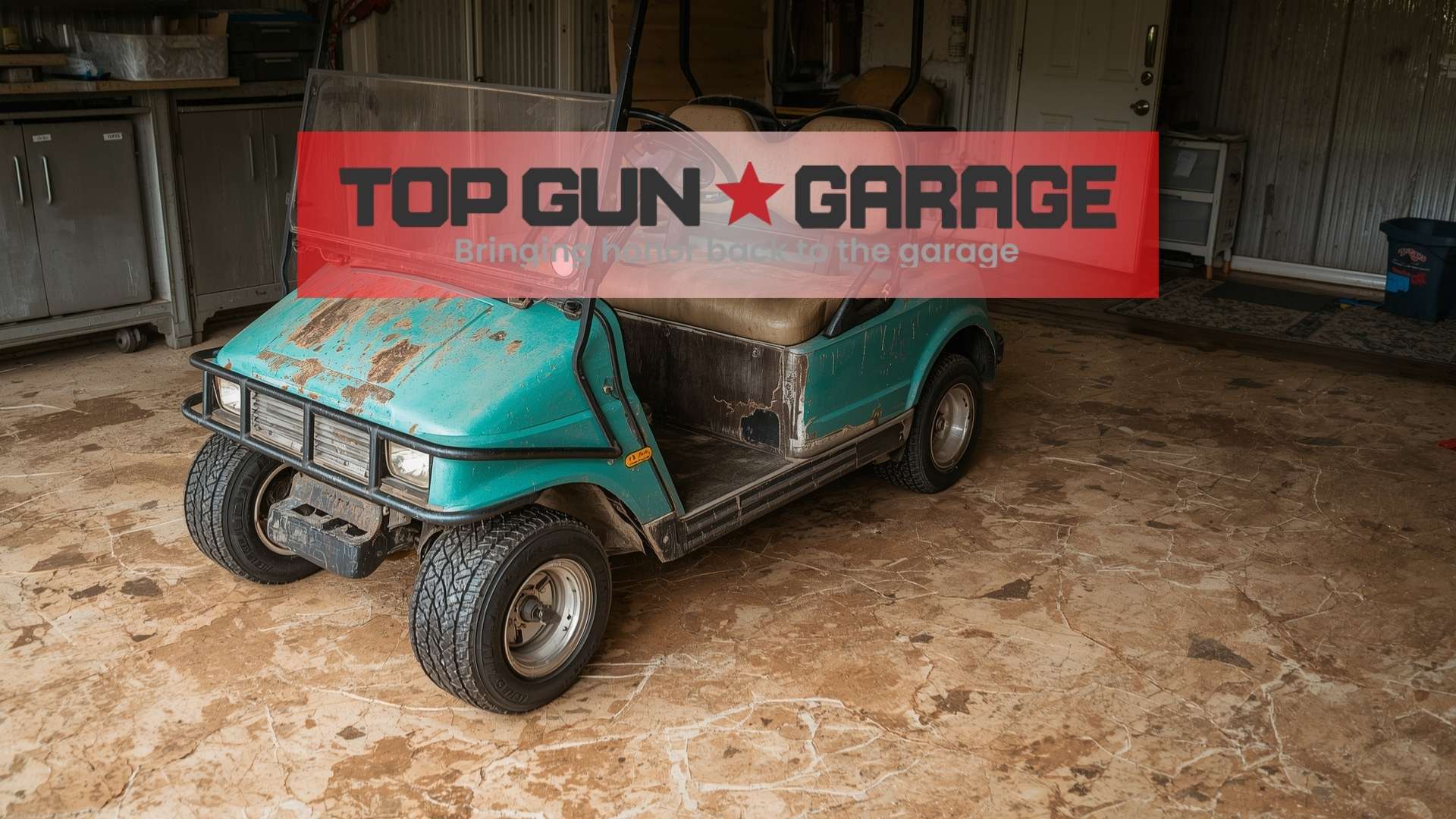
The flexibility of polyurea chemistry allows coatings to absorb and distribute golf cart weight without cracking or delaminating. Unlike rigid epoxy that fractures under stress, polyurea’s elastomeric properties enable slight movement that accommodates substrate expansion, contraction, and golf cart impact forces. This flexibility prevents the crack propagation and adhesion loss that destroy standard epoxy systems within months.
Polyurea and Polyaspartic Solutions
Polyurea garage floor coatings cure independently of temperature and humidity, forming chemical bonds that resist Florida’s environmental conditions. The rapid cure time of 1-4 hours for polyurea systems minimizes moisture intrusion during installation—a critical advantage in Florida’s high-humidity climate. These systems incorporate UV-stable chemistry that prevents photodegradation in open garages, maintaining appearance and structural integrity despite constant sunlight exposure.
Polyaspartic topcoats provide exceptional abrasion resistance, withstanding golf cart tire friction without surface wear or texture degradation. These coatings maintain their non-porous, seamless finish that prevents moisture intrusion, chemical penetration, and hot tire bonding. The chemical composition resists softening at temperatures up to 200°F, eliminating hot tire pickup issues that plague epoxy floors in Florida golf cart communities.
Concrete Preparation for Heavy Equipment
Proper concrete preparation becomes absolutely critical for golf cart garage floors, requiring diamond grinding to achieve CSP 3-4 profile depth. This aggressive preparation creates deep anchor points that provide 400-600 PSI adhesion strength—double the bond strength of acid-etched surfaces. The grinding process also removes surface laitance, contaminants, and weak concrete layers that would fail under golf cart pressure regardless of coating quality.
Crack repair and joint filling must address all substrate defects before coating application. Golf cart vibration and impact forces transmit through coatings directly into concrete, causing cracks to propagate if not properly reinforced. Professional installers inject epoxy or polyurea into cracks, creating structural repairs that prevent coating failure at these stress concentration points.
Moisture Barriers and Vapor Management
Florida golf cart garages require moisture vapor barriers as standard practice, not optional upgrades. These specialized primer systems block moisture vapor transmission that would otherwise compromise coating adhesion under golf cart weight. The barrier creates a waterproof membrane between concrete and decorative coating layers, preventing the bubbling and delamination common in high-humidity environments.
Vapor emission testing should measure below 3 pounds per 1,000 square feet per 24 hours for standard systems, though golf cart applications benefit from barriers even at lower emission rates. The constant weight and pressure from golf carts can force moisture through marginal barriers, making conservative moisture management strategies essential for long-term performance.
Application Thickness and Cure Time
Golf cart garage coatings require minimum 20 mils total thickness with multiple layers including primer, basecoat, broadcast layer, and polyurea or polyaspartic topcoat. This multi-layer system distributes golf cart impact forces through coating depth rather than concentrating stress at the concrete-coating interface. Each layer contributes specific performance characteristics—adhesion, flexibility, chemical resistance, and abrasion resistance—that work synergistically.
Cure time protocols become critical as insufficient curing compromises coating crosslink density and strength. While polyurea systems allow same-day light traffic, golf cart weight requires 24-48 hour cure minimum before storage. Rushing this timeline produces coatings that appear dry but lack full chemical crosslinking, leading to premature failure under golf cart stress.
Maintenance for Golf Cart Floors
Golf cart garage floors require specific maintenance protocols different from standard residential floors. Weekly sweeping removes grass clippings, sand, and debris that acts as abrasive material under tire pressure, accelerating wear. Monthly cleaning with pH-neutral solutions removes chemical residues from battery maintenance, fertilizers, and environmental contaminants that gradually attack coating chemistry.
Quarterly inspections identify early warning signs of coating stress including minor surface scratches, color changes in high-traffic areas, or edge lifting around control joints. Addressing these issues immediately through spot repairs prevents progression to major failures requiring complete recoating. Professional maintenance programs extend coating lifespan significantly compared to neglected floors.
Tire Maintenance and Pressure
Maintaining proper golf cart tire pressure reduces coating stress significantly. Over-inflated tires create smaller contact patches and higher pressure concentrations, while under-inflated tires increase rolling resistance and friction. Maintaining manufacturer-recommended pressures (typically 15-20 PSI) distributes weight more evenly and minimizes coating wear.
Regular tire rotation and replacement eliminate worn tread patterns that concentrate pressure unevenly. Aged, hardened tires become more aggressive on coatings as rubber compounds lose flexibility. Replacing tires every 3-5 years prevents this accelerated wear, protecting coating investment while improving golf cart performance and safety.
Periodic Resealing and Touch-Ups
Even heavy-duty golf cart coatings benefit from periodic maintenance coating applications every 5-7 years. These topcoat refreshers restore surface gloss, replenish UV protection, and seal minor wear areas before they penetrate to base layers. The maintenance coating costs 20-30% of full installation but extends total system life from 15 to 20+ years.
High-wear zones near garage entrances and turning areas may require more frequent attention. Spot repairs using compatible polyurea or polyaspartic materials address localized damage before it spreads, maintaining coating integrity and appearance throughout the garage.
Cost Analysis: Budget vs Heavy-Duty
Standard residential epoxy coatings cost $3-$5 per square foot installed but fail within 18-24 months under golf cart traffic, requiring complete removal and reinstallation. Over a 15-year period, homeowners face 4-6 recoating cycles costing $8,000-$15,000 for typical two-car garages. This calculation excludes disruption, furniture moving, and golf cart relocation during each installation.
Heavy-duty polyurea or polyaspartic systems designed for golf cart traffic cost $7-$12 per square foot initially—60-140% more than standard epoxy. However, these systems last 15-20 years with minimal maintenance, requiring only one installation during the same timeframe. The total cost-per-year calculation strongly favors industrial-grade systems: $300-400 annually versus $600-800 for repeatedly replaced residential coatings.
Long-Term Value and Resale Impact
Golf cart community homes with professionally installed heavy-duty garage floors command premium resale values and appeal to buyers seeking low-maintenance features. Real estate professionals report that quality garage floors contribute $2,000-$4,000 to perceived home value in golf cart communities where floor condition significantly impacts buyer decisions.
The appearance and functionality of garage floors create lasting impressions during home showings. Fresh, unmarked floors signal overall home care and quality, while damaged, worn coatings suggest deferred maintenance and potential hidden problems. Investing in proper golf cart flooring protects both daily usability and future resale value.
Community-Wide Considerations
Golf cart communities increasingly specify minimum garage floor standards in architectural guidelines, recognizing that proper coatings prevent deteriorating appearances neighborhood-wide. Community developers partner with commercial flooring contractors to offer group installation programs with volume discounts, making heavy-duty systems more accessible to homeowners.
Some communities include professional garage floor coatings as standard amenities during construction, eliminating homeowner decisions and ensuring consistent quality. This approach prevents the patchwork appearance of varying coating types and conditions that diminishes curb appeal and property values.
Frequently Asked Questions
Why do golf cart tires damage garage floors more than car tires? Golf cart tires concentrate 800-1,200 pounds on smaller, harder rubber surfaces creating 40-60 PSI pressure compared to 15-25 PSI from cars. Hard rubber compounds generate higher friction and heat, causing standard coatings to delaminate, mark, and wear through within 18 months.
What type of garage coating withstands golf cart traffic best? Industrial-grade polyurea and polyaspartic systems with 20-40 mil thickness provide the flexibility, chemical resistance, and structural capacity for golf cart traffic. These coatings last 15-20 years compared to 12-18 months for standard residential epoxy under golf cart use.
How much does golf cart garage floor coating cost? Heavy-duty golf cart garage coatings cost $7-$12 per square foot installed, approximately 60-140% more than standard residential epoxy. However, 15-20 year lifespan eliminates repeated replacement cycles, providing superior long-term value and lower annual costs.
Can I use standard epoxy for my golf cart garage? Standard residential epoxy lacks the thickness, flexibility, and heat resistance needed for golf cart traffic. Most homeowners experience coating failure within 12-24 months requiring complete removal and reinstallation, making standard epoxy a poor long-term investment for golf cart storage.
How does Florida climate affect golf cart garage floors? Florida’s 75-80% humidity causes moisture vapor transmission that weakens coating adhesion under golf cart pressure. Summer temperatures exceeding 90°F create hot tire pickup as coatings soften, while UV exposure accelerates coating degradation in open garages.
What concrete preparation do golf cart garages need? Golf cart garages require diamond grinding to CSP 3-4 profile, crack repair with structural epoxy or polyurea, and moisture vapor barriers as standard. This aggressive preparation creates 400-600 PSI adhesion strength needed to withstand concentrated tire pressure and constant maneuvering.
How long does golf cart garage coating installation take? Professional installations require 1-3 days including surface preparation, moisture barrier application, base coating, decorative broadcast, and polyurea topcoat. Polyurea systems allow light traffic within 24 hours and full golf cart use after 48 hours compared to 3-5 days for epoxy.
Do golf cart garage floors need special maintenance? Weekly sweeping removes abrasive debris, monthly pH-neutral cleaning eliminates chemical residues, and quarterly inspections identify early wear. Periodic topcoat applications every 5-7 years refresh surface protection and extend total system life from 15 to 20+ years.
Will hot golf cart tires mark heavy-duty coatings? Polyurea and polyaspartic coatings resist softening at temperatures up to 200°F, eliminating hot tire pickup that plagues standard epoxy. These systems maintain dimensional stability even when golf cart tires heated to 140°F park directly on surfaces.
Can damaged golf cart garage floors be repaired? Minor damage responds well to spot repairs using compatible polyurea materials, while severe delamination or widespread coating failure requires complete removal and reinstallation. Early intervention through regular inspections prevents minor issues from progressing to major failures.
Conclusion
Golf cart garage floor coating in Florida requires specialized heavy-duty systems designed specifically for concentrated weight, constant maneuvering, and harsh environmental conditions that standard residential coatings cannot withstand. The combination of hard rubber tire compounds, focused pressure points, thermal stress, and Florida’s humidity creates unique failure mechanisms that destroy regular epoxy within 18 months. Professional-grade polyurea and polyaspartic systems with proper concrete preparation, moisture barriers, and adequate thickness provide the durability, flexibility, and chemical resistance necessary for 15-20 years of reliable service under daily golf cart traffic.
Top Gun Garage specializes in heavy-duty garage floor solutions for Naples, Bonita Springs, Fort Myers, and Southwest Florida golf cart communities. Our industrial-grade polyurea systems withstand constant golf cart traffic while maintaining appearance and performance for decades. Contact us today for a detailed consultation and discover why discerning homeowners trust our expertise for garage floors that truly last.