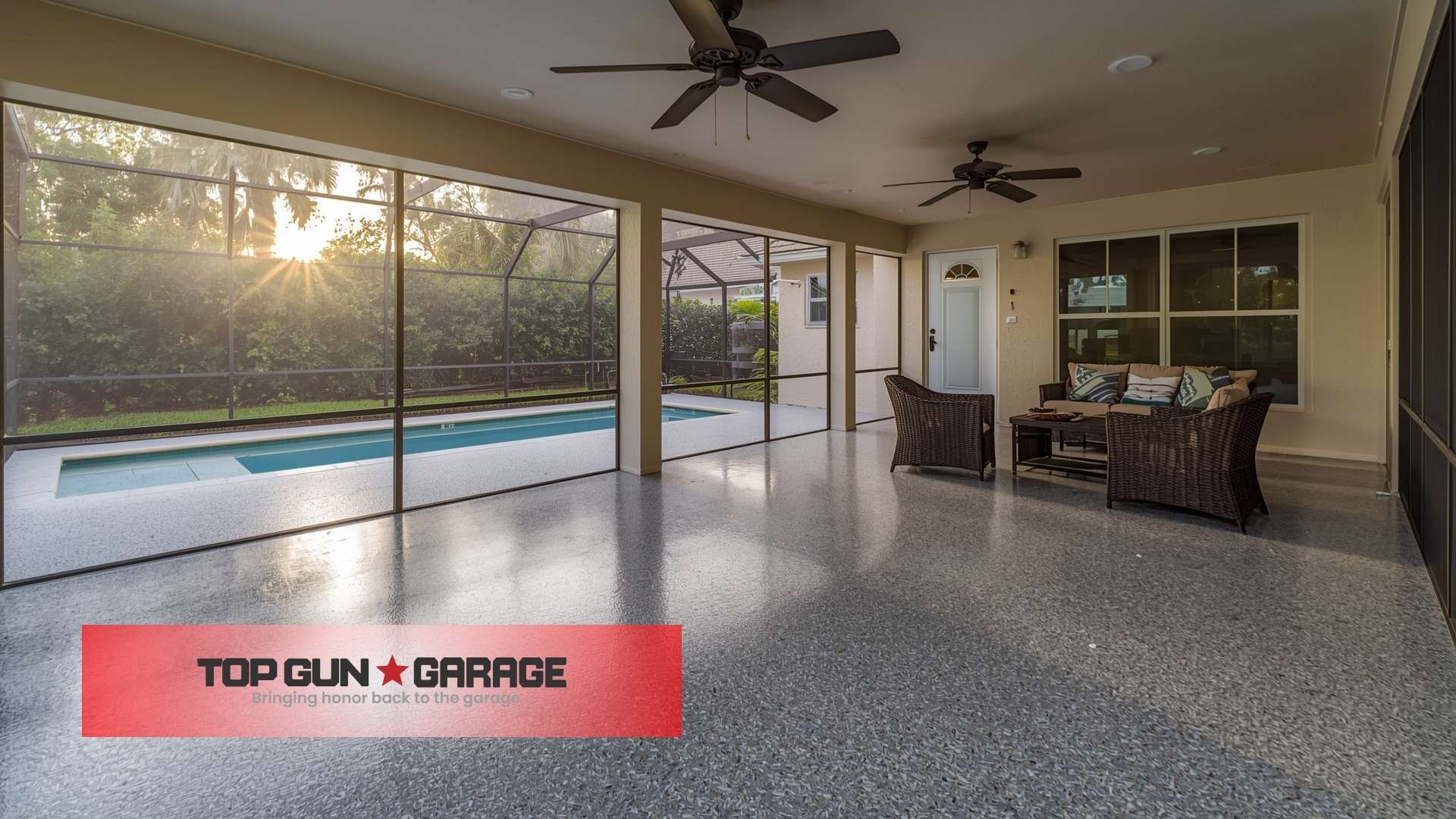
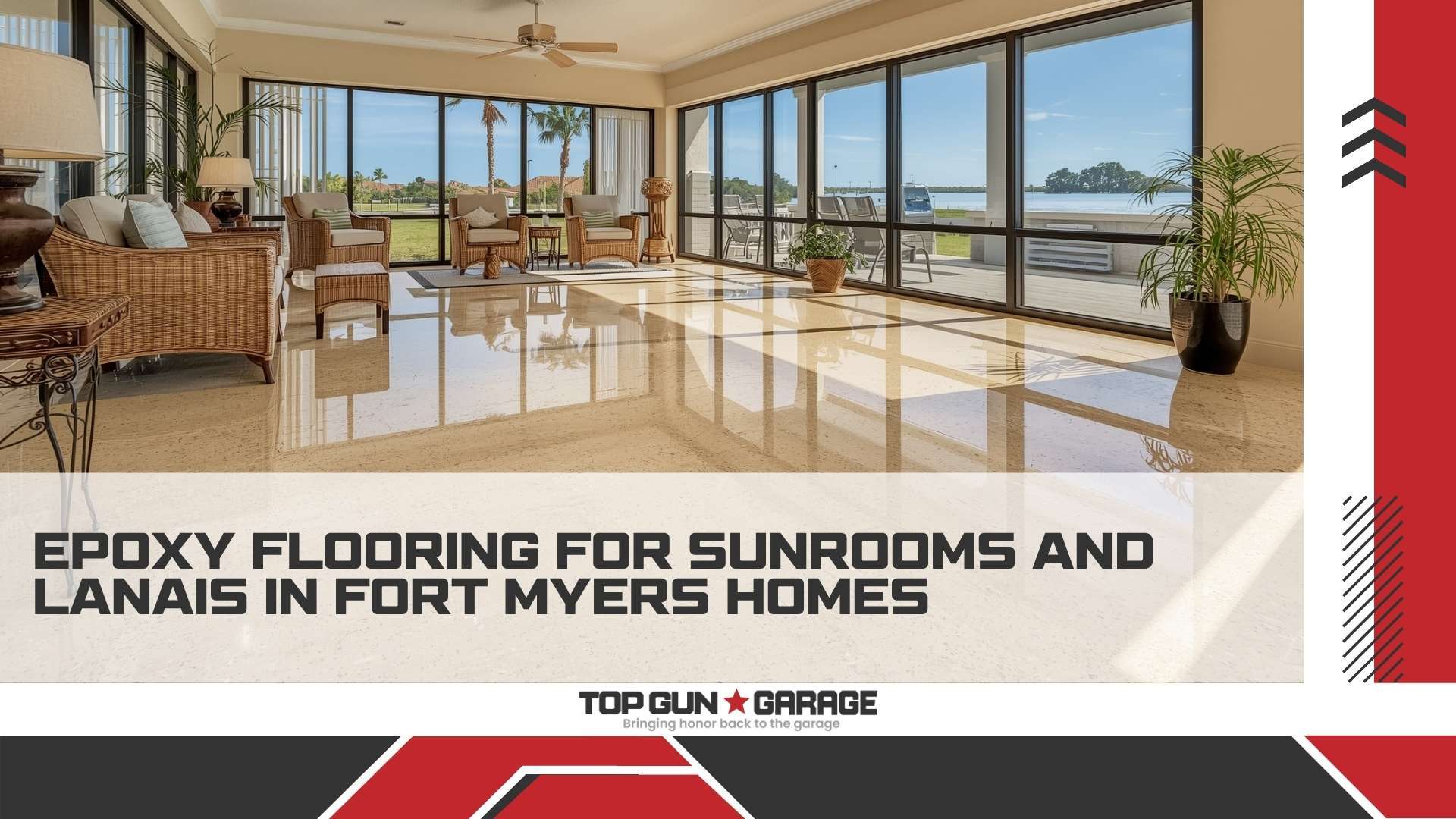
Epoxy flooring Fort Myers homeowners install in sunrooms and lanais must withstand UV exposure, moisture infiltration, and temperature swings that interior applications never face. The ideal system combines a moisture-mitigating primer, UV-stable polyaspartic or aliphatic urethane topcoat, and anti-slip aggregate rated for wet conditions. This combination delivers 15-20 years of performance in covered outdoor spaces while maintaining the seamless, easy-clean surface that makes epoxy attractive for indoor-outdoor living.
Southwest Florida lanais present unique challenges that standard garage floor systems cannot address. According to the American Concrete Institute, concrete in covered outdoor environments experiences 40% more moisture vapor transmission than fully enclosed spaces. Selecting the right epoxy system from the start prevents costly failures and ensures your outdoor living investment performs as expected.
Why Sunrooms and Lanais Require Specialized Epoxy Systems
Fort Myers sunrooms and lanais occupy a challenging middle ground between interior and exterior environments. Screen enclosures block direct rain but allow humidity, wind-driven moisture, and temperature fluctuations to affect the concrete slab. Pool lanais add chlorinated water exposure to the equation. These conditions demand coating systems engineered for semi-outdoor applications.
The Florida Building Code classifies lanais as exterior spaces for moisture management purposes, even when screened and covered. This classification matters because it dictates vapor barrier requirements and acceptable coating permeability ratings. Installers who treat lanai floors like garage floors often see failures within 2-3 years as moisture vapor lifts the coating from below.
UV Exposure and Color Stability
Even screened lanais receive significant UV exposure. Fort Myers averages 2,800+ hours of sunshine annually, and screen mesh blocks only 15-30% of UV radiation depending on mesh type. Standard epoxy coatings amber and yellow within 6-12 months under these conditions. Research from the Portland Cement Association confirms that UV degradation accelerates coating breakdown, reducing service life by 50-70% compared to protected applications.
Polyaspartic and aliphatic polyurethane topcoats solve this problem. These UV-stable formulations maintain color integrity for the life of the floor system. The additional material cost of $1-2 per square foot pays for itself many times over by eliminating premature recoating.
Moisture Vapor Transmission
Lanai slabs experience moisture pressure from multiple directions. Groundwater vapor migrates upward through the concrete, while humidity condenses on cooler slab surfaces during temperature swings. Pool lanais add splash water that penetrates joints and edges. The International Concrete Repair Institute (ICRI) recommends moisture testing using calcium chloride or relative humidity methods before any coating application in semi-outdoor environments.
Acceptable moisture levels for lanai applications differ from garage standards. Most manufacturers specify maximum 3 lbs/1000 sq ft/24 hours for standard epoxy, but moisture barriers for epoxy floors can accommodate readings up to 8-10 lbs when properly applied. Understanding these thresholds prevents installation on slabs destined for failure.
Thermal Cycling and Expansion
Fort Myers lanai floors can swing 40-50 degrees between overnight lows and afternoon highs during spring and fall. This thermal cycling causes concrete and coating to expand and contract at different rates, creating shear stress at the bond line. Rigid coating systems crack and delaminate under these conditions. Flexible polyaspartic formulations accommodate movement better than traditional epoxy, making them the preferred choice for semi-outdoor applications.
Best Epoxy Systems for Fort Myers Sunrooms and Lanais
Polyaspartic Coating Systems
Polyaspartic coatings represent the gold standard for lanai applications. These systems combine UV stability, flexibility, chemical resistance, and rapid cure times in a single product. A properly applied polyaspartic floor returns to service within 24 hours, minimizing disruption to outdoor living routines.
The polyaspartic vs epoxy comparison favors polyaspartic for any application receiving UV exposure. While material costs run 20-30% higher than standard epoxy, the extended service life and reduced maintenance justify the investment for most Fort Myers homeowners.
Epoxy Base with Polyaspartic Topcoat
Hybrid systems use epoxy as a base coat for adhesion and build, then cap with polyaspartic for UV protection and wear resistance. This approach balances cost and performance, delivering approximately 85% of full polyaspartic system durability at 70% of the cost. The epoxy base also provides better moisture tolerance during installation, valuable during Fort Myers humid season.
Installation typically requires 2-3 days: day one for surface preparation and epoxy base, day two for decorative flakes and first polyaspartic coat, day three for final topcoat and cure. This timeline allows proper intercoat adhesion while minimizing total project duration.
Decorative Flake and Metallic Options
Decorative vinyl flakes work exceptionally well in lanai applications. The textured surface provides slip resistance when wet, disguises dirt between cleanings, and creates visual continuity with pool deck surfaces. Coastal color palettes featuring sand, aqua, coral, and driftwood tones complement Southwest Florida architecture while hiding the fine dust that accumulates in screened spaces.
Metallic epoxy offers dramatic visual impact but requires careful consideration for lanai use. The high-gloss finish shows water spots and footprints more readily than flake systems. Metallic epoxy flooring performs best in covered sunrooms with minimal moisture exposure rather than pool-adjacent lanais.
Lanai Coating System Comparison
Compare the performance characteristics of different coating systems for Fort Myers outdoor living spaces:
System Type
UV Stability
Cost/Sq Ft
Best For
Full Polyaspartic
Excellent
$8-$12
Pool lanais
Hybrid System
Very Good
$6-$9
Covered sunrooms
Standard Epoxy
Poor
$4-$7
Not recommended
Polyurea
Excellent
$10-$15
High-traffic areas
Surface Preparation for Lanai Epoxy Installation
Proper surface preparation determines 80% of coating system success, according to the Society for Protective Coatings (SSPC). Lanai slabs often present challenges not found in garage applications: existing sealers, salt deposits, mildew staining, and surface contamination from outdoor exposure. Each issue requires specific treatment before coating application.
Concrete Surface Profiling
Diamond grinding creates the mechanical profile necessary for coating adhesion. ICRI specifies CSP 2-3 (Concrete Surface Profile) for most epoxy applications, achieved through 30-50 grit diamond tooling. The grinding process also removes existing sealers, paint, and surface contamination that would prevent bonding.
Lanai concrete often contains higher shell aggregate content than interior slabs, affecting grinding tool selection and technique. Experienced installers adjust their approach based on aggregate exposure and hardness. The concrete surface profile requirements for outdoor applications may differ slightly from garage standards.
Pre-Installation Moisture Testing
ASTM F1869 (calcium chloride) and ASTM F2170 (relative humidity) tests quantify moisture vapor transmission rates. For lanai applications, testing should occur during or immediately after the rainy season (June-October) to capture worst-case conditions. Readings taken during the dry season may underestimate moisture challenges that emerge later.
Elevated moisture readings do not necessarily disqualify a slab for epoxy coating. Moisture testing protocols guide product selection and system design. Moisture-mitigating primers can accommodate readings up to 100% relative humidity when properly specified and applied.
Crack and Control Joint Treatment
Control joints and existing cracks require treatment before coating. Rigid fillers transfer stress to the coating, causing cracks to telegraph through. Semi-rigid polyurea joint fillers accommodate movement while providing a smooth transition for the topcoat. Structural cracks wider than 1/8 inch may require epoxy injection before surface treatment.
The decision to fill control joints depends on application requirements. Filled joints create a seamless appearance but may crack if the slab moves significantly. Leaving joints unfilled maintains the designed stress relief but creates cleaning challenges and visual interruption. Most residential lanai installations benefit from filled joints with flexible materials.
Slip Resistance Requirements for Outdoor Living Spaces
Wet surface slip resistance is non-negotiable for lanai applications. The Americans with Disabilities Act (ADA) recommends static coefficient of friction (SCOF) values of 0.6 or higher for wet surfaces. Standard high-gloss epoxy finishes typically achieve only 0.4-0.5 SCOF when wet, creating unacceptable slip hazards near pools and in areas exposed to rain splash.
Anti-slip aggregates broadcast into the topcoat increase wet traction to safe levels. Aluminum oxide, silica sand, and polymer beads each offer different performance characteristics. Fine aggregates (60-80 grit) maintain a relatively smooth texture while improving traction. Coarser aggregates (20-40 grit) provide maximum grip but create a rougher surface that some homeowners find uncomfortable barefoot.
Full broadcast flake systems inherently provide better slip resistance than solid color applications. The texture created by overlapping flakes, combined with a satin or semi-gloss topcoat, typically achieves 0.65-0.75 SCOF without additional aggregate. This makes flake systems the default recommendation for pool-adjacent lanais. Learn more about slip-resistant garage flooring principles that apply to outdoor applications.
Color Selection for Fort Myers Sunrooms and Lanais
Light and medium tones dominate lanai color selections for practical reasons. Dark colors absorb more solar radiation, increasing surface temperatures and accelerating thermal stress. Research from Lawrence Berkeley National Laboratory shows that light-colored surfaces can be 20-30 degrees cooler than dark surfaces under identical sun exposure. For barefoot comfort and coating longevity, stick to colors reflecting at least 40% of solar radiation.
Popular Southwest Florida Color Palettes
Coastal Neutrals: Sand, driftwood, and warm gray tones create sophisticated backdrops that complement pool water and tropical landscaping. These colors hide dust and debris between cleanings while coordinating with most exterior paint schemes.
Cool Blues and Greens: Seafoam, aqua, and soft teal extend the visual connection between pool and lanai. These colors create a cohesive outdoor living environment and photograph beautifully for real estate listings. Blue-green tones also create a psychological cooling effect that enhances comfort perception.
Terra Cotta and Coral: Warm earth tones complement Mediterranean and Spanish Colonial architecture common in Fort Myers neighborhoods. These colors coordinate with clay tile roofing and stucco exteriors while providing sufficient reflectivity for outdoor comfort.
Coordinating Lanai Floors with Pool Deck Surfaces
Visual continuity between lanai floor and pool deck enhances the sense of expanded outdoor living space. When the pool deck features textured cool deck or travertine pavers, selecting a lanai epoxy color that complements without matching creates sophisticated design harmony. Exact matching often appears forced and highlights rather than minimizes the material transition.
Consider the view from inside the home when selecting colors. The lanai floor often serves as visual foreground for pool and landscaping views. Busy patterns or contrasting colors can distract from the outdoor vista, while harmonious tones enhance the overall composition.
Best Time to Install Lanai Epoxy in Fort Myers
The dry season (November through April) provides optimal installation conditions for lanai epoxy. Humidity levels drop below 65%, temperatures remain moderate, and rain interruptions become rare. These conditions allow proper coating cure and minimize moisture-related adhesion problems. Understanding how humidity affects epoxy installation helps homeowners plan projects for success.
Rainy season installations (June through October) remain possible but require careful scheduling around afternoon thunderstorms. Installers must protect fresh coating from moisture for minimum 4-6 hours after application. Extended cure times and humidity-related complications increase project costs by approximately 15-20% during this period.
Hurricane season adds another consideration. Coating projects should conclude at least two weeks before any forecast storm activity to ensure full cure. Partially cured coatings exposed to flooding or wind-driven rain may fail catastrophically. The 3-month window when coating works best in Florida falls between late October and early February.
Maintaining Epoxy Floors in Outdoor Living Spaces
Lanai epoxy floors require more frequent maintenance than garage applications due to environmental exposure. Pollen, dust, and airborne debris accumulate continuously on screened lanai surfaces. Pool areas add sunscreen residue, chlorinated water spots, and organic debris from swimmers. Establishing a regular cleaning routine preserves appearance and extends coating life.
Weekly Cleaning Routine
Dust mopping or vacuuming removes abrasive particles that can scratch the surface over time. For pool lanais, a weekly damp mop with pH-neutral cleaner removes chlorine deposits and sunscreen residue before they build up. Avoid ammonia-based cleaners, which can cloud polyaspartic topcoats, and acidic cleaners, which may etch the surface.
Seasonal Deep Cleaning
Quarterly deep cleaning with a deck brush and appropriate degreaser addresses accumulated grime that routine mopping misses. Pressure washing at low settings (under 1500 PSI) can speed the process but risks forcing water under coating edges if not performed carefully. Most manufacturers recommend against pressure washing coated surfaces. Review epoxy floor maintenance tips for detailed cleaning guidance.
Protecting the Coating Long-Term
Furniture pads prevent scratching from patio furniture movement. Lift rather than drag heavy items across the surface. Consider removing furniture during hurricane preparations rather than dragging pieces to storage. Entry mats at transition points capture abrasive debris before it spreads across the floor.
Recoating every 7-10 years maintains UV protection and refreshes appearance. This maintenance coating requires only light abrasion and cleaning before application, costing approximately $2-4 per square foot compared to $6-12 for full system replacement. Timely recoating extends total system life to 20-25 years.
Cost Factors for Lanai Epoxy Installation
Professional lanai epoxy installation in Fort Myers typically costs $6-$15 per square foot, depending on system selection and site conditions. A typical 300 square foot lanai runs $1,800-$4,500 fully installed. This investment compares favorably to alternatives like pavers ($15-25/sq ft) or stamped concrete overlay ($8-18/sq ft) while offering superior cleanability and moisture resistance.
Lanai Epoxy Cost Breakdown
Cost Factor
Standard
Premium
Surface Preparation
$1.50-$2.50/sq ft
$2.50-$4.00/sq ft
Moisture Mitigation
$0-$1.00/sq ft
$1.50-$3.00/sq ft
Coating System
$3.00-$5.00/sq ft
$5.00-$8.00/sq ft
Decorative Flakes
$1.00-$2.00/sq ft
$2.00-$3.00/sq ft
Total Installed
$6-$10/sq ft
$11-$18/sq ft
For detailed pricing information specific to your project, review the epoxy garage floor cost guide which covers factors affecting both garage and lanai installations.
Frequently Asked Questions
Can you put epoxy on a lanai floor?
Yes, but standard garage-grade epoxy will fail in lanai applications due to UV exposure and moisture challenges. Lanai floors require UV-stable polyaspartic or aliphatic polyurethane topcoats over proper moisture-mitigating primers. When correctly specified and installed, these systems deliver 15-20 years of service in Southwest Florida screened outdoor environments.
Is epoxy flooring slippery when wet?
High-gloss epoxy without texture additives can be dangerously slippery when wet. Professional lanai installations incorporate anti-slip aggregates or textured flake systems that achieve safe traction levels (0.6+ coefficient of friction) even when exposed to pool splash and rain. Always specify slip resistance requirements when requesting quotes for outdoor applications.
How long does lanai epoxy flooring last in Florida?
Properly specified and installed polyaspartic systems last 15-20 years in Southwest Florida lanai applications. Hybrid systems (epoxy base with polyaspartic top) typically deliver 12-15 years. Standard epoxy without UV protection may show significant degradation within 2-3 years, making it unsuitable for outdoor use regardless of initial cost savings.
What is the best time of year to install lanai epoxy in Fort Myers?
The dry season from November through April provides optimal installation conditions. Lower humidity (under 65%) and minimal rain allow proper coating cure. Installations during the rainy season (June-October) remain possible but require careful scheduling around afternoon storms and typically cost 15-20% more due to extended timelines and cure challenges.
How much does it cost to epoxy a lanai in Fort Myers?
Professional lanai epoxy installation ranges from $6-$15 per square foot in Fort Myers, with most projects falling between $8-$12 per square foot. A typical 300 square foot lanai costs $1,800-$4,500 fully installed. Factors affecting price include moisture conditions, coating system selection, decorative options, and concrete repair requirements.
Can epoxy flooring be installed around a pool?
Yes, but pool-adjacent installations require maximum slip resistance and chemical resistance specifications. Full broadcast flake systems with polyaspartic topcoats handle chlorinated water exposure, sunscreen residue, and wet foot traffic better than other options. The coating must also resist UV degradation from reflected pool water, which intensifies sun exposure on surrounding surfaces.
Transform Your Fort Myers Lanai with Professional Epoxy Flooring
Your lanai represents valuable outdoor living space that deserves flooring as carefully considered as any room in your home. The right epoxy system transforms worn concrete into a beautiful, functional surface that resists Southwest Florida conditions while simplifying maintenance and enhancing property value.
Top Gun Garage specializes in outdoor epoxy applications throughout Lee and Collier Counties. Our team evaluates your specific conditions, recommends appropriate systems, and installs coatings engineered for Florida lanai environments. We stand behind every installation with comprehensive warranty coverage.
Request a free consultation and estimate for your Fort Myers epoxy flooring project. We serve Fort Myers, Cape Coral, Naples, Bonita Springs, Estero, Marco Island, and surrounding Southwest Florida communities.
 Skip to content



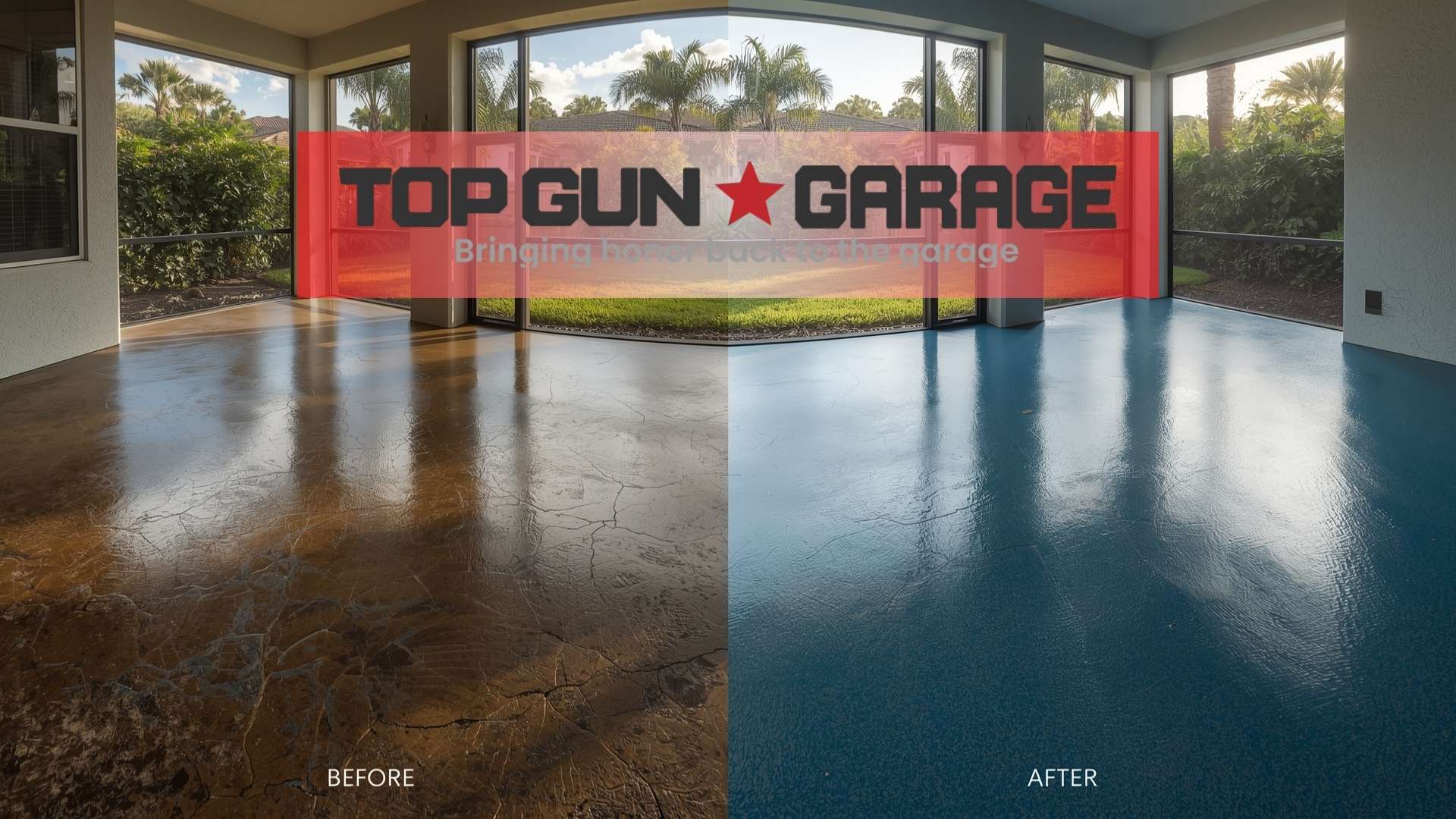 The Florida Building Code classifies lanais as exterior spaces for moisture management purposes, even when screened and covered. This classification matters because it dictates vapor barrier requirements and acceptable coating permeability ratings. Installers who treat lanai floors like garage floors often see failures within 2-3 years as moisture vapor lifts the coating from below.
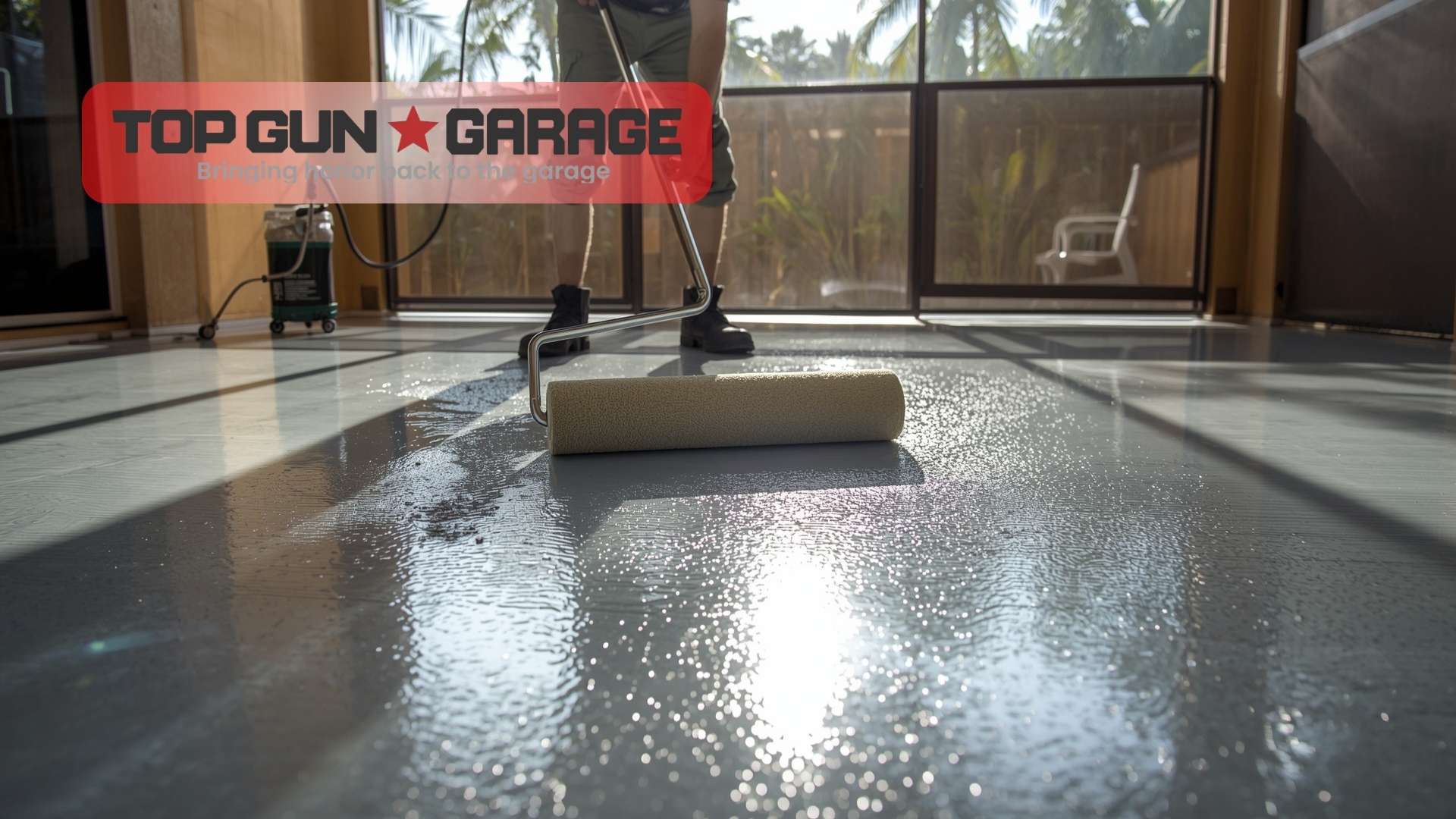 Lanai concrete often contains higher shell aggregate content than interior slabs, affecting grinding tool selection and technique. Experienced installers adjust their approach based on aggregate exposure and hardness. The concrete surface profile requirements for outdoor applications may differ slightly from garage standards.