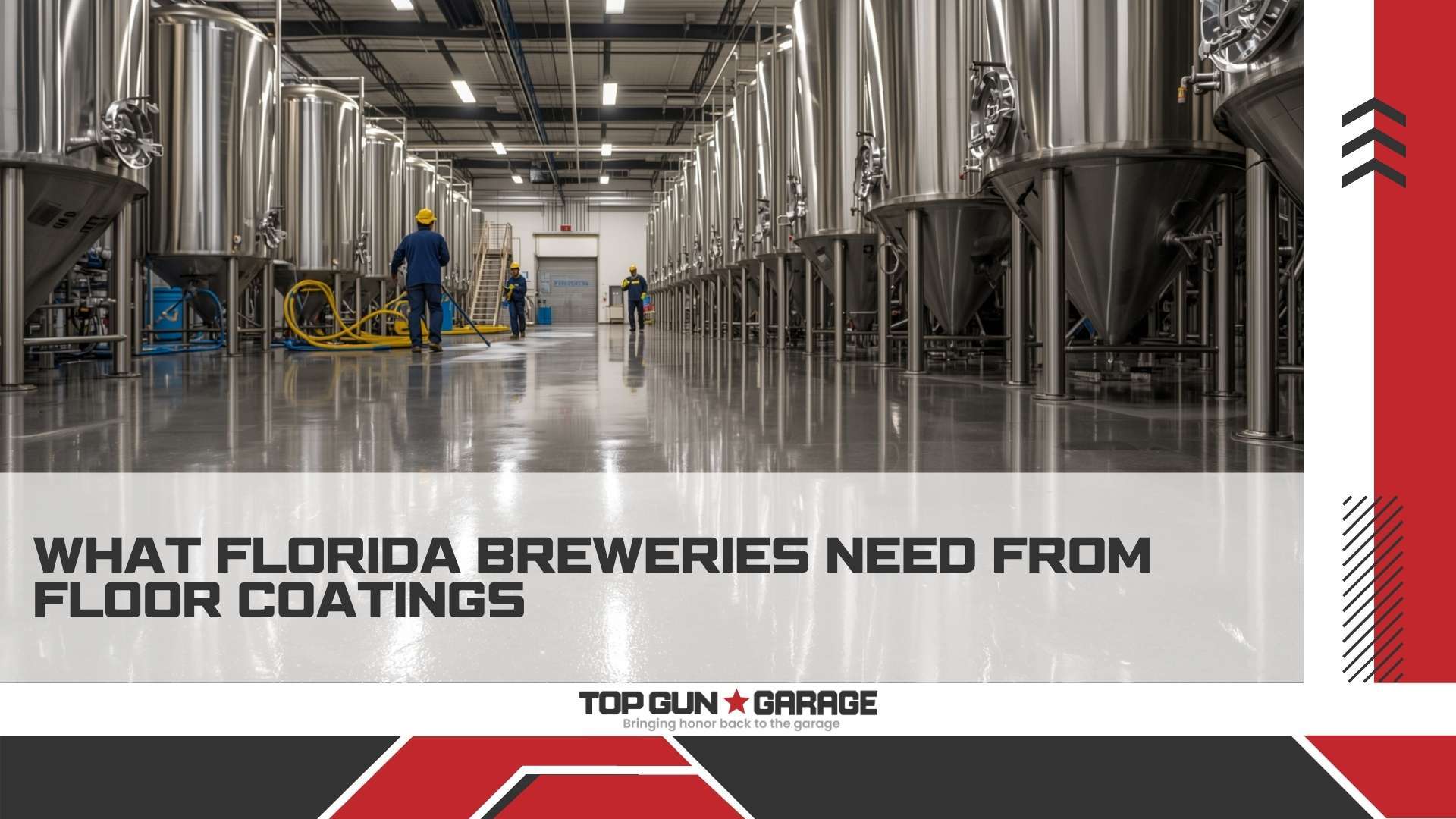
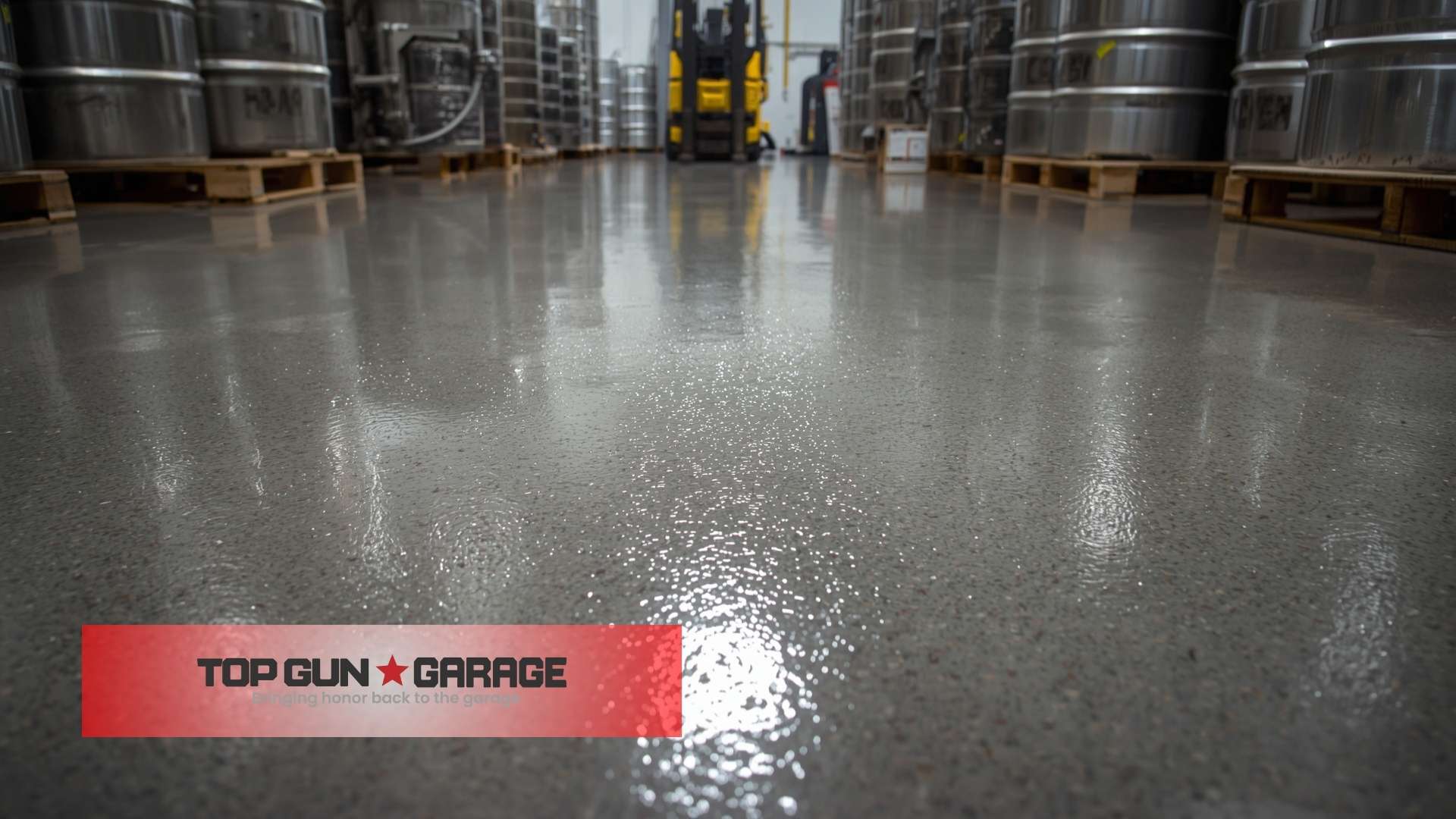
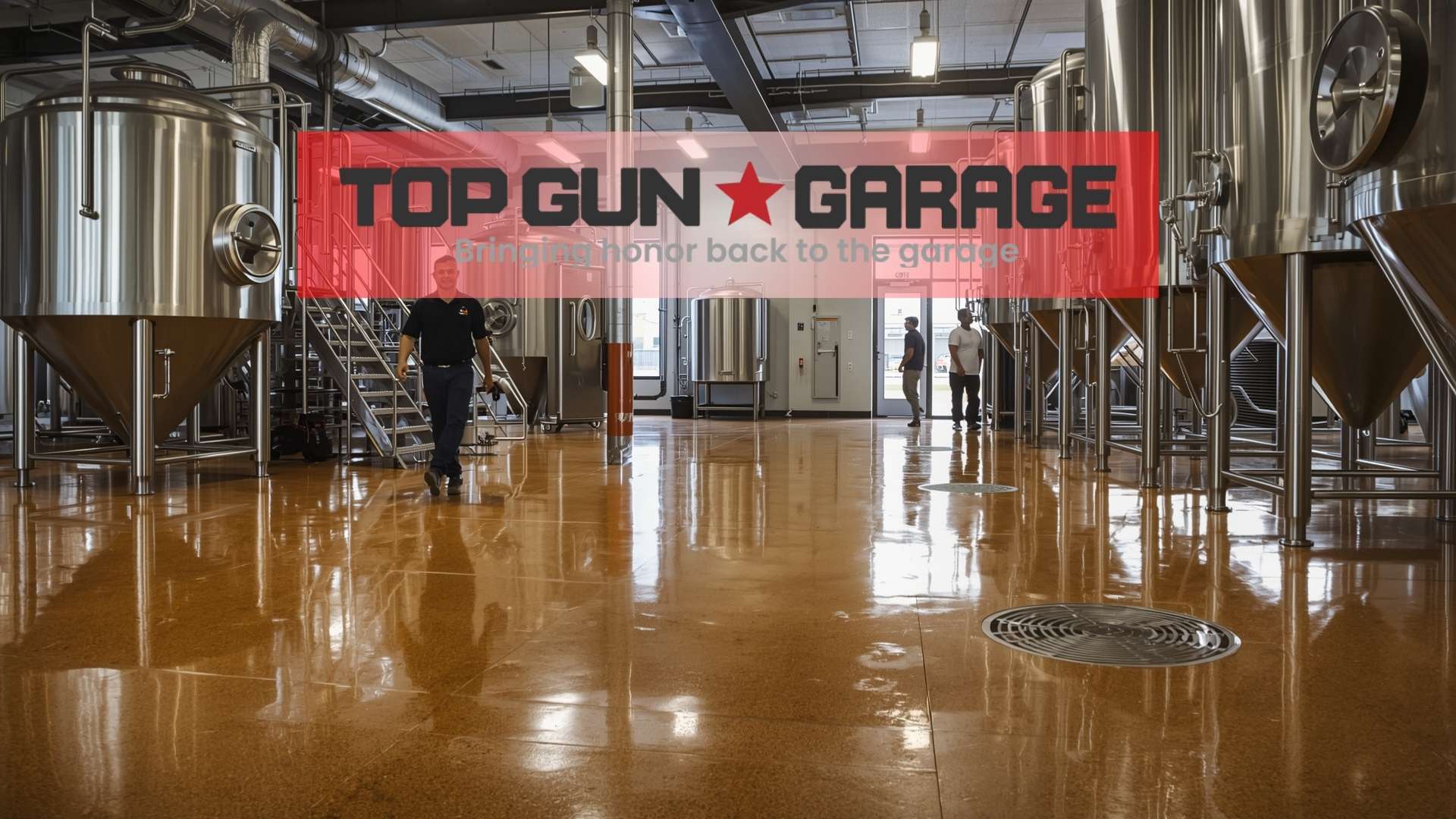
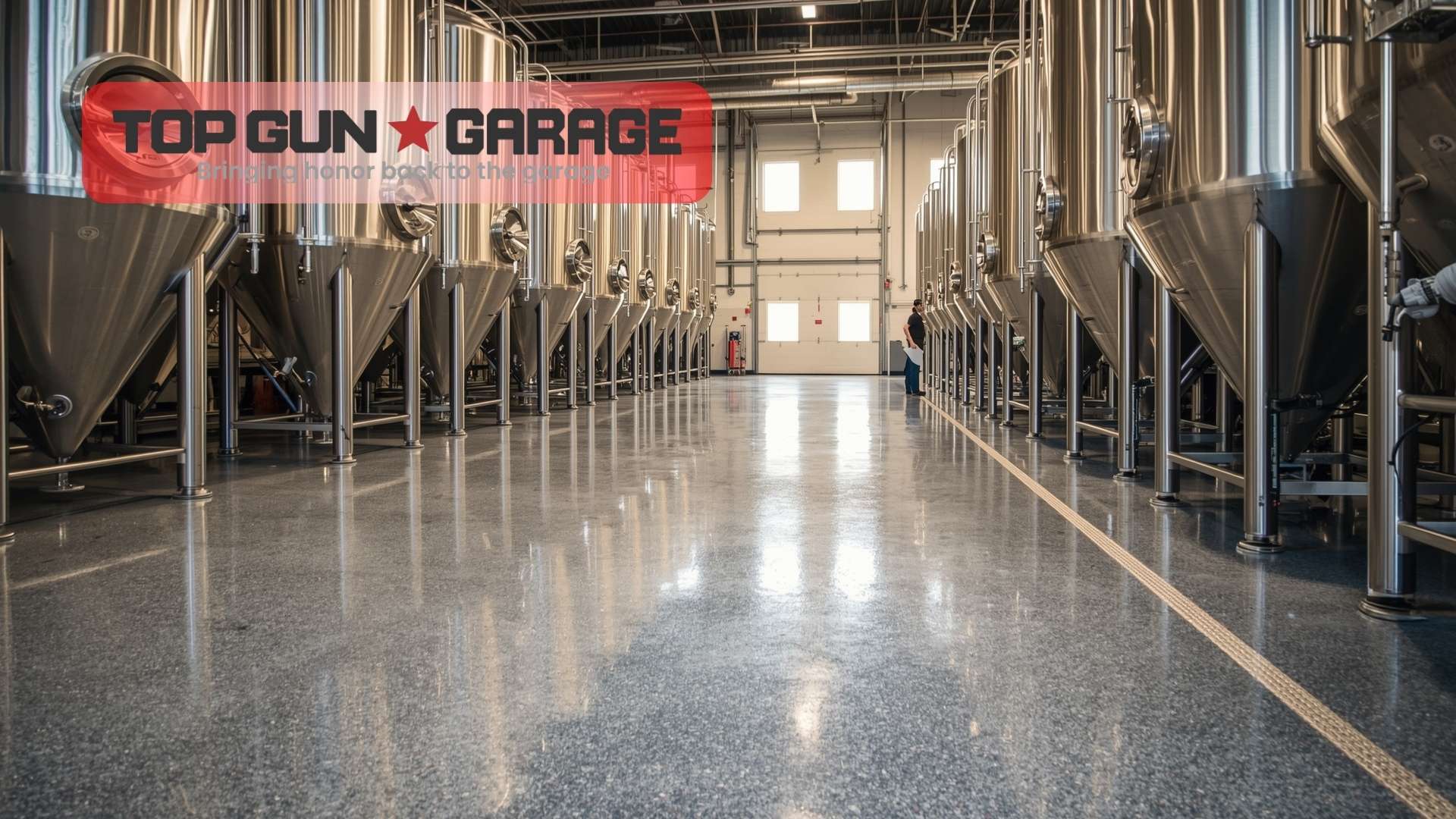
Florida breweries need floor coatings that resist aggressive chemicals, maintain slip resistance when wet, and comply with FDA and USDA food-safety standards. A proper brewery floor coating in Fort Myers must withstand constant exposure to caustic cleaners, acidic wort spills, and temperature swings from refrigeration zones to hot brewing kettles. According to the Brewers Association, craft breweries generate 7 gallons of wastewater for every gallon of beer produced, making chemical-resistant, easy-to-clean flooring essential for operational efficiency and regulatory compliance.
Southwest Florida’s craft brewery scene has grown 340% since 2015, with over 45 breweries now operating between Naples and Fort Myers. Each facility faces unique flooring challenges created by Florida’s high humidity (averaging 74%), salt air exposure, and year-round heat that accelerates chemical reactions on floor surfaces.
This guide covers the specific coating requirements for Florida breweries, from production floors to taprooms, helping you make an informed decision for your facility.
Why Standard Epoxy Fails in Breweries
Standard garage-grade epoxy coatings fail in brewery environments within 6-18 months. The brewing process creates conditions that exceed typical epoxy’s chemical resistance ratings.
Chemical Exposure Beyond Normal Limits
Brewery floors face daily exposure to:
Caustic soda (sodium hydroxide) at pH 13-14 for CIP cleaning
Phosphoric and nitric acids at pH 1-2 for equipment sanitization
Peracetic acid at 150-200 ppm concentration
Organic acids from wort and beer (lactic, acetic, citric)
Standard epoxy has a chemical resistance rating that tolerates pH ranges of 3-11. Brewery cleaning chemicals routinely exceed these limits, causing rapid coating degradation, delamination, and failure. Research from the Concrete Polishing Association of America confirms that novolac epoxy or polyurethane cement systems are required for environments with pH extremes.
Thermal Shock Damage
Temperature differentials destroy standard coatings. A typical Fort Myers brewery experiences:
Cold storage rooms at 34-38°F
Hot water washes at 180°F
Boil kettle areas reaching 212°F+ on floor surfaces
Rapid temperature swings of 100°F+ during cleaning cycles
These thermal cycles cause standard epoxy to crack, chip, and separate from the concrete substrate. The coefficient of thermal expansion mismatch between concrete and standard epoxy creates stress fractures that worsen with each temperature cycle.
Floor Coating Requirements by Brewery Zone
Different brewery areas demand different coating specifications. A single coating system rarely meets all zone requirements.
Zone
Primary Challenge
Recommended Coating
Minimum Thickness
Brewhouse
Thermal shock, caustic exposure
Polyurethane cement
1/4 inch (6mm)
Fermentation
Acid exposure, moisture
Novolac epoxy
3/16 inch (4.5mm)
Packaging
Impact, forklift traffic
High-build polyaspartic
1/8 inch (3mm)
Cold Storage
Low-temp curing, condensation
MMA or polyurethane
1/8 inch (3mm)
Taproom
Aesthetics, foot traffic
Metallic or decorative epoxy
1/16 inch (1.5mm)
FDA and USDA Compliance Requirements
Florida breweries must meet FDA Food Code requirements under Chapter 6, which mandates that floors in food processing areas be smooth, durable, and easily cleanable. The USDA further requires that floor coatings in inspected facilities be non-toxic, non-absorbent, and resistant to deterioration.
Key Compliance Specifications
USDA acceptance: Coating must appear on USDA’s list of accepted materials for food contact surfaces
Seamless installation: No joints, cracks, or crevices that harbor bacteria
Coved base: 4-6 inch integral cove at wall-floor junctions
Proper drainage: Minimum 1/8 inch per foot slope to drains
Antimicrobial additives: Optional but recommended for high-risk areas
Non-compliance can result in production shutdowns during inspections. The Florida Department of Agriculture and Consumer Services conducts unannounced inspections, and floor condition is a primary evaluation criterion.
Slip Resistance Standards for Wet Brewery Floors
Brewery floors are wet 60-80% of operating hours. OSHA requires employers to maintain walking surfaces free of slip hazards, making slip resistance a legal and safety priority.
The American National Standards Institute (ANSI) standard A326.3 specifies a minimum dynamic coefficient of friction (DCOF) of 0.42 for wet areas. Brewery production floors should exceed this minimum, targeting DCOF values of 0.55-0.65 for optimal safety.
Achieving Slip Resistance Without Sacrificing Cleanability
The challenge: aggressive textures that provide grip also trap contaminants. The solution involves:
Broadcast aggregates: Aluminum oxide or quartz sand at 60-80 mesh provides grip without creating cleaning difficulties
Topcoat sealing: Clear polyurethane or polyaspartic topcoat encapsulates aggregate while maintaining texture
Texture profiling: Orange peel or shark grip textures balance traction with cleanability
Southwest Florida Climate Considerations
Fort Myers breweries face climate challenges that Northern facilities never encounter. These factors directly impact coating selection and installation timing.
Humidity and Moisture Vapor
Southwest Florida’s average relative humidity of 74% creates persistent moisture vapor transmission through concrete slabs. According to the International Concrete Repair Institute (ICRI), concrete slabs in humid climates often exceed the 3 lbs/1000 sq ft/24 hours moisture vapor emission rate (MVER) threshold that causes coating failure.
Before any brewery floor coating installation, moisture testing is mandatory. Calcium chloride testing (ASTM F1869) or relative humidity testing (ASTM F2170) determines whether moisture mitigation primers are required.
Salt Air and Coastal Exposure
Facilities within 10 miles of the Gulf Coast face accelerated coating degradation from salt air. Salt air affects epoxy durability by attacking polymer chains and accelerating UV degradation. Coastal breweries require UV-stable polyaspartic or polyurethane topcoats rather than standard epoxy.
Installation Timing
The optimal installation window in Southwest Florida runs from November through April when humidity drops and temperatures stabilize. Summer installations require additional climate control measures that increase project costs by 15-25%.
Coating System Comparison for Breweries
Not all coating systems perform equally in brewery environments. This comparison focuses on systems appropriate for food and beverage production.
Coating Type
Chemical Resistance
Thermal Range
Lifespan
Cost (per sq ft)
Novolac Epoxy
Excellent
-20°F to 250°F
10-15 years
$8-12
Polyurethane Cement
Superior
-40°F to 300°F
15-20 years
$12-18
Polyaspartic
Good
-30°F to 200°F
10-15 years
$6-10
MMA (Methyl Methacrylate)
Moderate
-40°F to 180°F
8-12 years
$7-11
Standard Epoxy
Poor
40°F to 140°F
3-5 years*
$3-6
*In brewery environments; may last longer in less demanding applications
Installation Process for Brewery Floors
Professional brewery floor coating installation follows a rigorous process that differs significantly from standard commercial applications. Understanding this process helps brewery owners plan for downtime and budget accurately.
Pre-Installation Requirements
Concrete moisture testing: ASTM F1869 or F2170 testing 3-5 days before installation
Contamination assessment: Testing for oils, sugars, and previous coatings that affect adhesion
Drain coordination: Protecting drains during installation; planning cove integration
Climate control: HVAC requirements for proper curing (65-85°F, <70% RH)
Diamond grinding: Creates CSP 3-4 profile for optimal adhesion
Shot blasting: Required for contaminated or previously coated floors
Crack repair: Structural cracks require epoxy injection; surface cracks need routing and filling
Joint treatment: Control joints filled with semi-rigid polyurea for seamless surface
Typical Installation Timeline
A 3,000 sq ft brewery production floor typically requires:
Day 1-2: Surface preparation and moisture mitigation primer
Day 3: Base coat application
Day 4: Body coat with aggregate broadcast
Day 5: Topcoat application
Day 6-7: Curing before light traffic
Day 14: Full chemical resistance achieved
Long-Term Maintenance Requirements
Proper maintenance extends coating lifespan by 30-50% and maintains regulatory compliance. Breweries should establish formal floor maintenance protocols based on production schedules.
Daily Maintenance
Remove standing liquids after each shift
Neutralize acid spills within 15 minutes
Sweep to remove abrasive debris
Weekly Maintenance
Machine scrub with pH-neutral cleaner
Inspect for damage, chips, or wear patterns
Check coved base integrity
Annual Maintenance
Professional inspection and condition assessment
Spot repairs for damaged areas
Re-application of topcoat in high-wear zones (typically every 3-5 years)
Cost Considerations for Brewery Flooring
Brewery floor coatings represent a significant investment, but the cost of failure exceeds the cost of proper installation. Understanding the true cost picture helps owners make informed decisions.
Initial Investment vs. Lifecycle Cost
A 5,000 sq ft production floor comparison over 15 years:
Cost Factor
Standard Epoxy
Polyurethane Cement
Initial installation
$20,000
$75,000
Re-coats required
3-4 times
0-1 times
Re-coat costs
$60,000-80,000
$0-30,000
Production downtime
28-40 days total
7-14 days total
15-year total cost
$80,000-100,000+
$75,000-105,000
Note: Does not include lost revenue during production downtime, which can exceed $5,000-10,000 per day for active breweries.
Frequently Asked Questions
What is the best floor coating for a craft brewery?
Polyurethane cement systems provide the best performance for brewery production floors, offering superior chemical resistance (pH 1-14), thermal shock tolerance (-40°F to 300°F), and 15-20 year lifespans. For taprooms and lower-exposure areas, polyaspartic coatings offer excellent durability at lower cost.
How long does brewery floor coating installation take?
Professional brewery floor coating installation typically requires 5-7 days for application plus 7-14 days of curing before full chemical exposure. Total project duration depends on square footage, coating system selected, and whether concrete repairs are required.
Can I apply epoxy over existing brewery flooring?
It depends on the existing coating condition. Failed coatings, contaminated surfaces, or incompatible materials require complete removal before new installation. Professional assessment including adhesion testing determines whether overlay or full removal is appropriate. The costs of removing previous coatings should be factored into project budgets.
Are brewery floor coatings food-safe?
Yes, when properly specified. USDA-accepted coatings meet food contact requirements for brewery environments. Request documentation of USDA acceptance and compliance with FDA Food Code Chapter 6 before installation. All coatings should be VOC-compliant and installed by certified applicators.
How do I maintain slip resistance on brewery floors?
Maintain slip resistance through regular cleaning that removes organic buildup without damaging the textured surface. Avoid harsh alkaline cleaners that can erode aggregate texture over time. Re-apply anti-slip topcoats to high-traffic areas every 2-3 years. DCOF testing should be performed annually to verify continued compliance with slip resistance standards.
What causes brewery floor coatings to fail prematurely?
The most common causes of brewery floor coating failure include: inadequate moisture testing before installation, insufficient surface preparation, using coatings not rated for brewery chemical exposure, and applying standard epoxy systems instead of industrial-grade formulations. Thermal shock from hot water cleaning on cold floors also accelerates failure in improperly specified systems.
Get Expert Brewery Floor Coating in Fort Myers
Top Gun Garage specializes in commercial and industrial floor coatings for Southwest Florida food and beverage facilities. Our team understands the unique demands of brewery environments and provides coating systems engineered for the challenges of Florida’s climate and brewery operations.
Request a free consultation to discuss your brewery flooring needs. We serve breweries throughout Fort Myers, Naples, Cape Coral, Bonita Springs, and Southwest Florida.
Call: (239) 598-6741 | Service Area: Fort Myers, Naples, Cape Coral, Bonita Springs, Estero, Marco Island
 Skip to content