 Skip to content



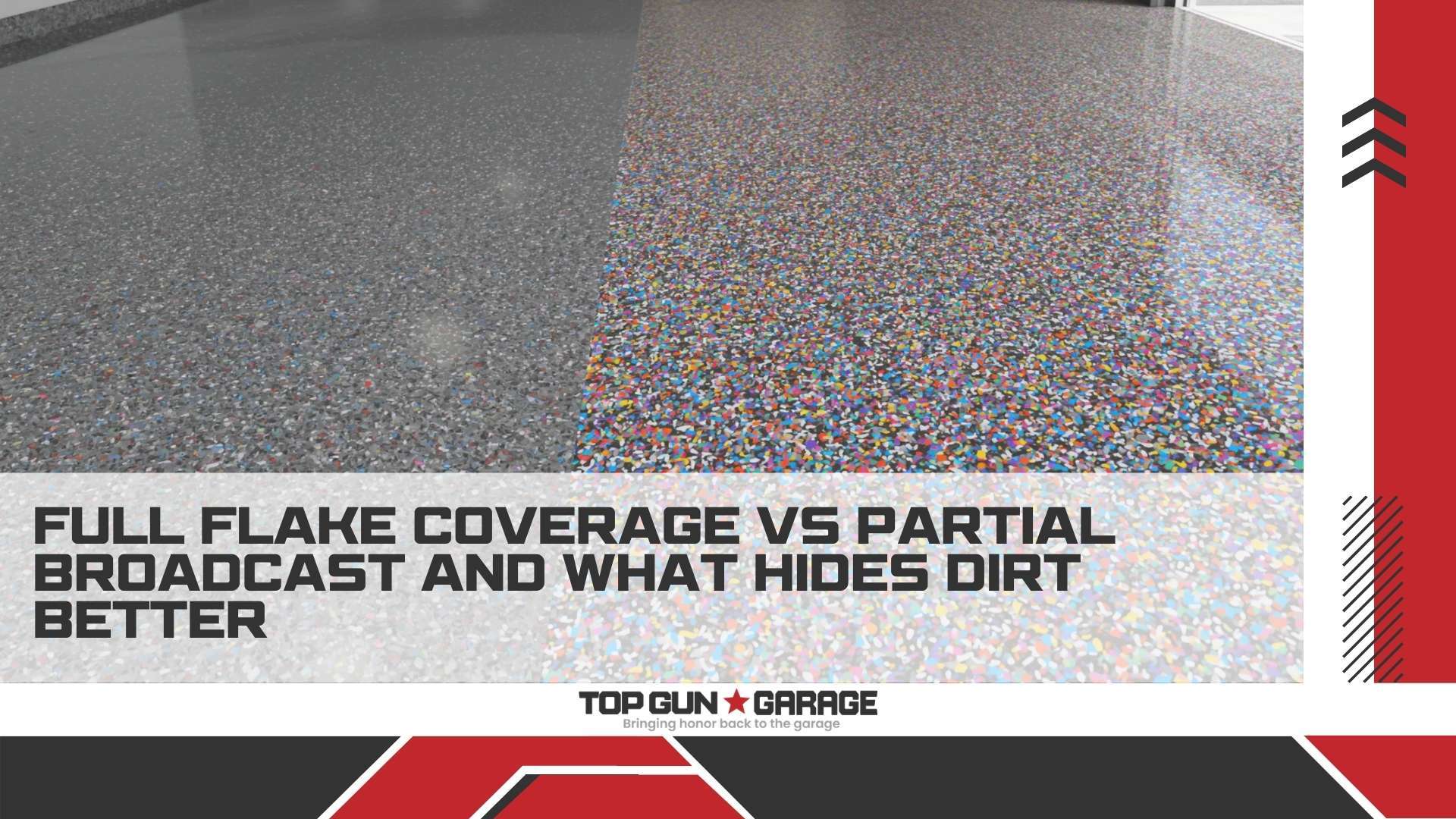
When choosing a garage floor coating, one of the first decisions homeowners face is deciding between full broadcast flake vs partial coverage. Both options use decorative vinyl flakes broadcast onto wet epoxy or polyaspartic coatings, but they create very different results in appearance, durability, and maintenance. For homeowners across Southwest Florida, understanding these differences helps you make a choice that fits your garage’s daily demands and long-term expectations.
Overview
This article explains the key differences between full flake and partial flake broadcast systems. You will learn how coverage levels affect dirt visibility, durability, slip resistance, and overall appearance. We also cover material requirements, application methods, and which option performs better in high-humidity environments like Naples, Fort Myers, and Bonita Springs.
Key Takeaways
- Full broadcast flake coverage hides dirt, scratches, and concrete imperfections more effectively than partial coverage
- Partial broadcast systems cost less upfront but require more frequent cleaning to maintain appearance
- Full coverage systems typically last 15-20 years compared to 8-10 years for partial applications
- Flake density directly impacts slip resistance, making full broadcast safer for wet conditions
- A typical two-car garage requires about 100 pounds of flakes for full broadcast coverage
What Is Full Broadcast Flake Coverage?
Full broadcast flake coverage means the entire floor surface is covered with decorative flakes until no wet epoxy remains visible. Installers apply flakes to “rejection,” meaning the coating cannot absorb any more material. This creates a dense, textured finish that resembles granite or natural stone. When looking at a full broadcast floor, the base coat color becomes irrelevant because the flakes completely dominate the appearance.
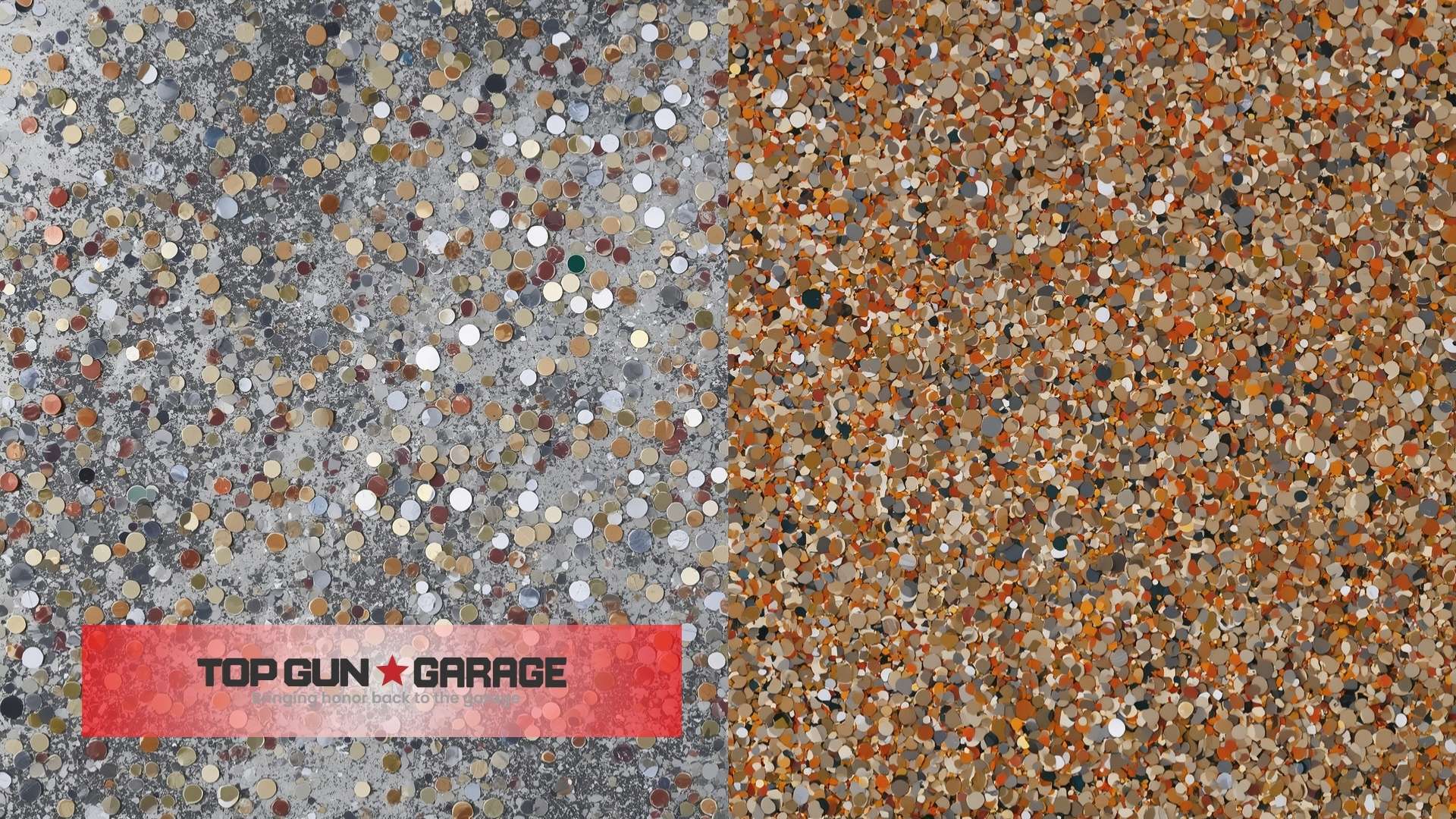
The standard application rate for full coverage is approximately one pound of flakes per five square feet. A standard two-car garage measuring 400-500 square feet requires roughly 80-100 pounds of quarter-inch flakes. Professional installers like Top Gun Garage apply multiple clear topcoats after the flakes cure. The first topcoat fills gaps between flakes, while additional coats create a smooth, sealed surface that protects the entire system.
What Is Partial Broadcast Coverage?
Partial broadcast coverage, also called random or confetti broadcast, scatters flakes lightly across the floor surface. The base coat color remains visible between flakes, creating a speckled appearance rather than full coverage. Application rates typically range from 0.25 to 2 pounds per 100 square feet, depending on the desired density.
This approach uses significantly less material and costs less to install. However, partial systems expose more of the base epoxy layer to direct contact with tires, chemicals, and foot traffic. Many DIY epoxy kits sold at retail stores use partial broadcast methods because they require fewer materials and simpler application techniques.
Dirt Visibility Comparison
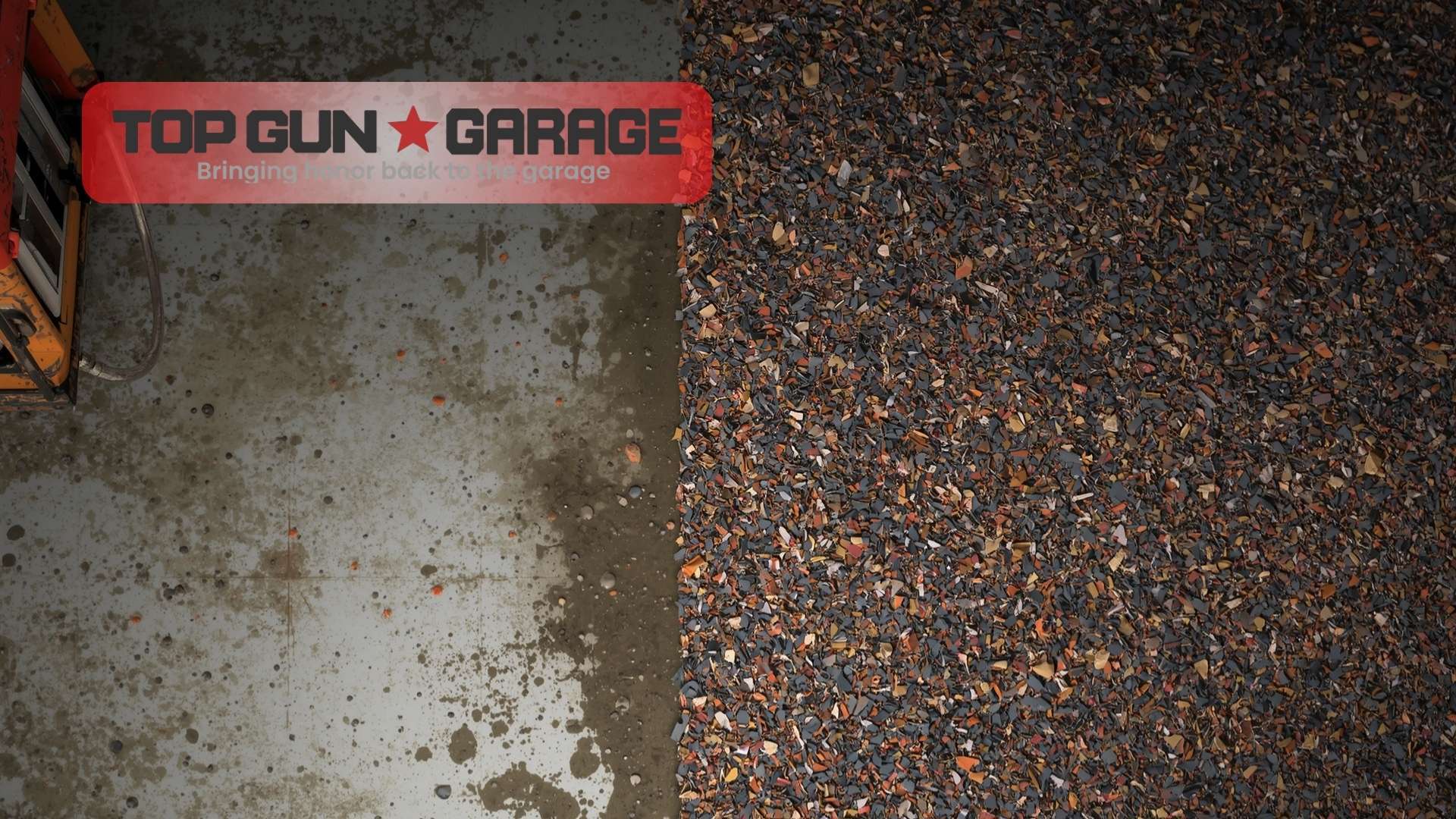
Full broadcast systems outperform partial coverage when it comes to hiding dirt, dust, and debris. The multi-colored flake pattern breaks up visual continuity, making small particles blend into the textured surface. Tire marks, footprints, and minor spills become far less noticeable on a densely flaked floor.
Partial broadcast floors show dirt more easily because the solid-colored base coat remains exposed. Oil drips, sand tracked in from vehicles, and everyday dust stand out against the uniform background. Homeowners with partial coverage often report needing to sweep or mop more frequently to maintain a clean appearance, especially in garages that see heavy daily use.
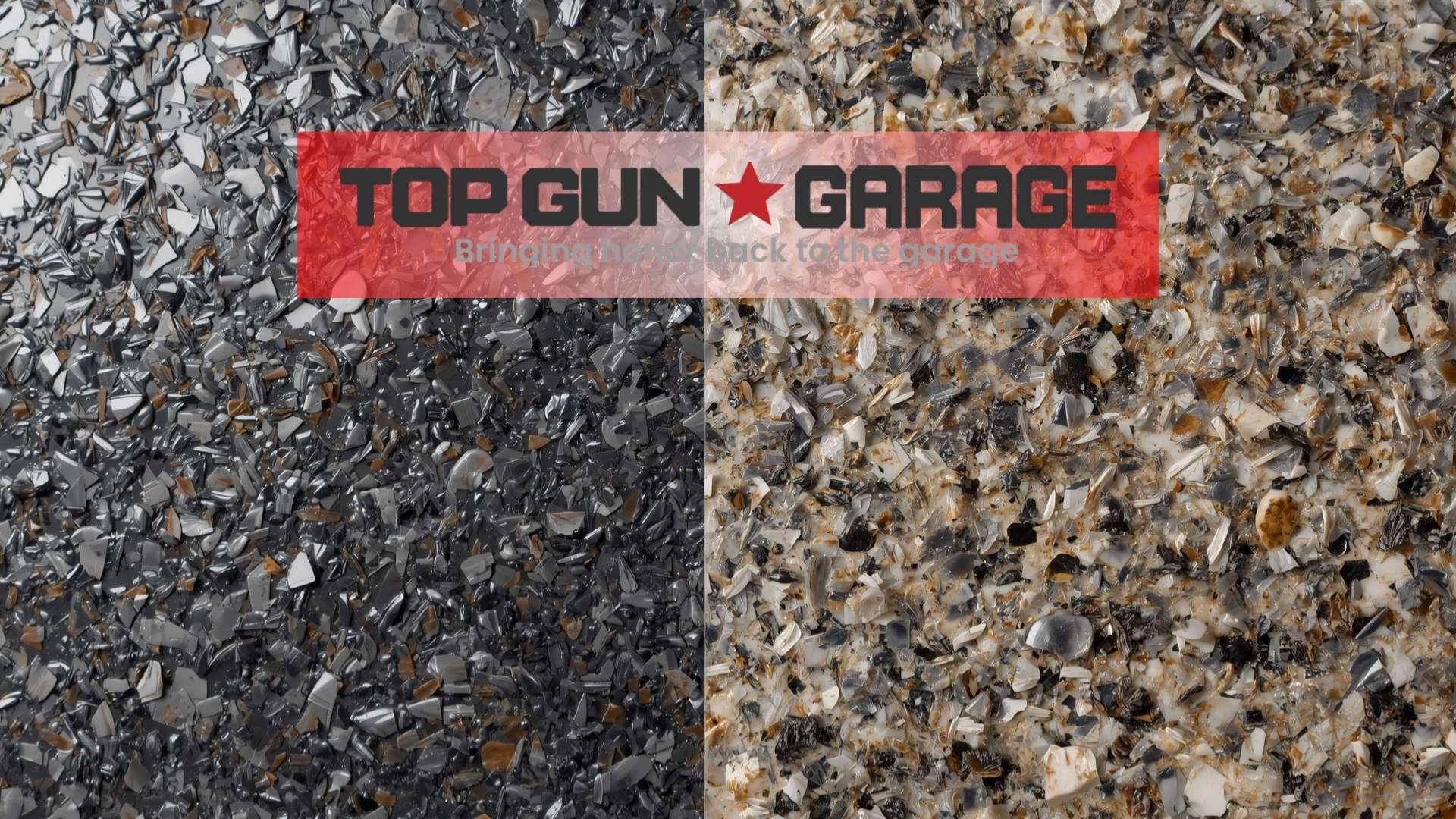
Color choice also affects dirt visibility. Lighter flake blends like white, cream, or tan show dark dirt more readily. Darker blends with grays, blues, and blacks hide most debris but may show lighter dust. Medium-toned blends with multiple colors provide the best overall camouflage. Top Gun Garage offers various flake color options to match any aesthetic while optimizing dirt concealment.
Durability and Lifespan
Coverage level directly affects how long a garage floor coating lasts. Full broadcast systems add an extra layer of protection because the dense flake coverage creates a thicker overall coating. The flakes embedded in epoxy function similarly to fibers in fiberglass, reinforcing the system against impact, abrasion, and chemical exposure.
Professional full broadcast installations typically last 15-20 years with proper maintenance. Partial coverage systems average 8-10 years because the exposed base coat wears faster under direct contact. High-traffic areas like parking spots and workbench zones show wear sooner with partial coverage.
For commercial applications or garages with heavy equipment, full broadcast coverage provides essential protection. Auto shops, car collector garages, and RV storage spaces benefit from maximum coverage that withstands constant vehicle movement and chemical exposure.
Slip Resistance and Safety
The texture created by flake density significantly impacts slip resistance. Full broadcast coverage creates a uniformly textured surface with consistent traction across the entire floor. The embedded flakes provide natural grip underfoot, reducing slip risks when the floor gets wet from rain tracked in by vehicles or condensation from air conditioning systems.
Partial coverage creates uneven traction because some areas have flakes while others remain smooth. This inconsistency can actually increase slip hazards as users move between textured and non-textured zones. In Southwest Florida’s humid climate, where garages frequently encounter moisture, consistent slip-resistant flooring matters for safety.
Climate Considerations for Southwest Florida
Florida’s high humidity and temperature fluctuations create unique challenges for garage floor coatings. Full broadcast systems perform better in these conditions because the complete flake coverage creates a more robust moisture barrier. The dense application reduces the chance of moisture penetrating the coating from humidity or concrete vapor transmission.
According to Florida Building Code requirements, floor coatings in humid regions must address moisture issues. Professional installers test concrete moisture levels before application and use appropriate primers when needed. Full coverage systems with proper preparation resist the mold and mildew that plague many Florida garages.
Coastal communities like Naples, Marco Island, and Sanibel also face salt air exposure. Full broadcast coatings provide better protection against salt damage to concrete because fewer gaps exist in the protective layer.
Cost Comparison
Full broadcast systems cost more upfront due to higher material requirements and longer installation time. A typical two-car garage needs 80-100 pounds of flakes for full coverage compared to 10-20 pounds for partial broadcast. Additional topcoats required for full broadcast also add to material costs.
However, the long-term value calculation often favors full coverage. Considering the extended lifespan (15-20 years vs 8-10 years), reduced maintenance requirements, and better protection against repairs, full broadcast typically delivers better return on investment. Partial coverage may require recoating sooner, potentially doubling overall costs over a 20-year period.
For accurate pricing specific to your project, request a free estimate from a local professional installer who can assess your garage’s condition and recommend appropriate coverage levels.
When to Choose Each Option
Choose Full Broadcast When:
- Your garage sees daily vehicle traffic and regular use
- You want minimal cleaning and maintenance requirements
- The concrete has cracks, stains, or surface imperfections to hide
- You work on vehicles or projects that create oil and chemical spills
- Maximum durability and longevity matter more than upfront cost
Choose Partial Broadcast When:
- Budget constraints limit your investment options
- You prefer a more subtle, decorative appearance
- The garage receives light, occasional use only
- You plan to upgrade to full coverage in the future
Frequently Asked Questions
How much flake material is needed for full broadcast coverage? Full broadcast requires approximately one pound of flakes per five square feet. A 400 square foot two-car garage needs about 80 pounds. Always order 10-15% extra to account for waste and ensure complete coverage without visible gaps.
Is full flake coverage harder to clean than partial? No, properly sealed full broadcast floors are actually easier to clean. The seamless topcoat creates a smooth surface that prevents dirt from penetrating. Regular sweeping and occasional mopping keep the floor looking new with minimal effort.
What flake size works best for garage floors? Quarter-inch (1/4″) flakes are the industry standard for garage floors. This size provides optimal coverage, good texture, and strong adhesion. Smaller flakes require multiple broadcast layers, increasing installation time and cost.
Can I add more flakes to an existing partial broadcast floor? Converting partial to full coverage requires applying new base coat and flakes over the existing surface. This is possible but requires proper surface preparation. Consult with a professional about coating removal options if the existing coating shows wear.
Does flake color affect dirt visibility? Yes, multi-colored blends with medium tones hide dirt most effectively. Solid white or black flakes show contrasting debris more easily. Blends with gray, tan, and brown tones camouflage typical garage dirt while maintaining attractive appearance.
How many topcoats does full broadcast need? Most full broadcast installations require two to three clear topcoats. The first coat encapsulates the flakes and fills gaps. Additional coats build thickness and create the smooth, glossy finish. Learn more about proper cure times between coats.
Will full broadcast flakes yellow over time in Florida sun? UV-stable topcoats prevent yellowing when properly applied. Professional-grade polyaspartic and UV-resistant epoxy topcoats maintain color integrity even with sunlight exposure from windows or when garage doors remain open frequently.
How long does installation take for each coverage level? Full broadcast installation typically takes 2-3 days including cure time between coats. Partial broadcast can sometimes complete in 1-2 days due to fewer materials and coats. Both require similar surface preparation time depending on concrete condition.
Sources
Florida Building Code – Flooring Requirements
Get the Right Coverage for Your Garage
Whether you choose full broadcast or partial coverage, professional installation makes the difference between a coating that lasts and one that fails. Top Gun Garage specializes in high-performance garage floor coatings throughout Naples, Fort Myers, Bonita Springs, and Southwest Florida. Contact us for a consultation that addresses your specific needs, budget, and usage patterns.
Get a Free Estimate today to discover which flake coverage option delivers the performance and appearance your garage deserves.